These Are The Hummingbirds Visiting California Yards Right Now
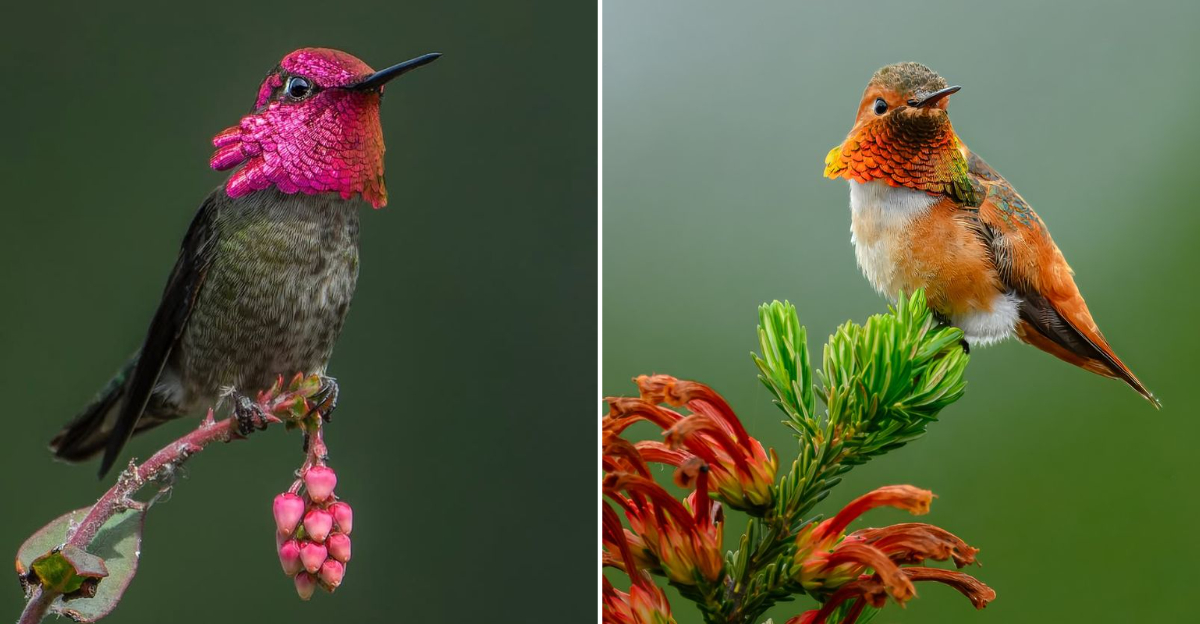
As daylight grows longer and flowers begin to swell with nectar, a special kind of garden guest returns to California yards with energy and color.
Hummingbirds are tiny, vibrant, and impossibly quick, flitting from bloom to bloom with wings that blur like living jewels in the sunshine.
Their visits are one of the most joyful signs of the season, a reminder that life in the garden is buzzing with movement and wonder.
In backyards across the state, a handful of hummingbird species are showing up again, drawn by bright flowers, feeders, and open space to explore.
Spotting them feels like a little gift, a flash of emerald here, a dash of ruby throat there, bringing a burst of liveliness to patios, planting beds, and sunny corners.
If you have hummingbird friendly flowers or feeders out, these dazzling visitors are likely already making themselves at home right now.
1. Anna’s Hummingbird (Calypte anna)
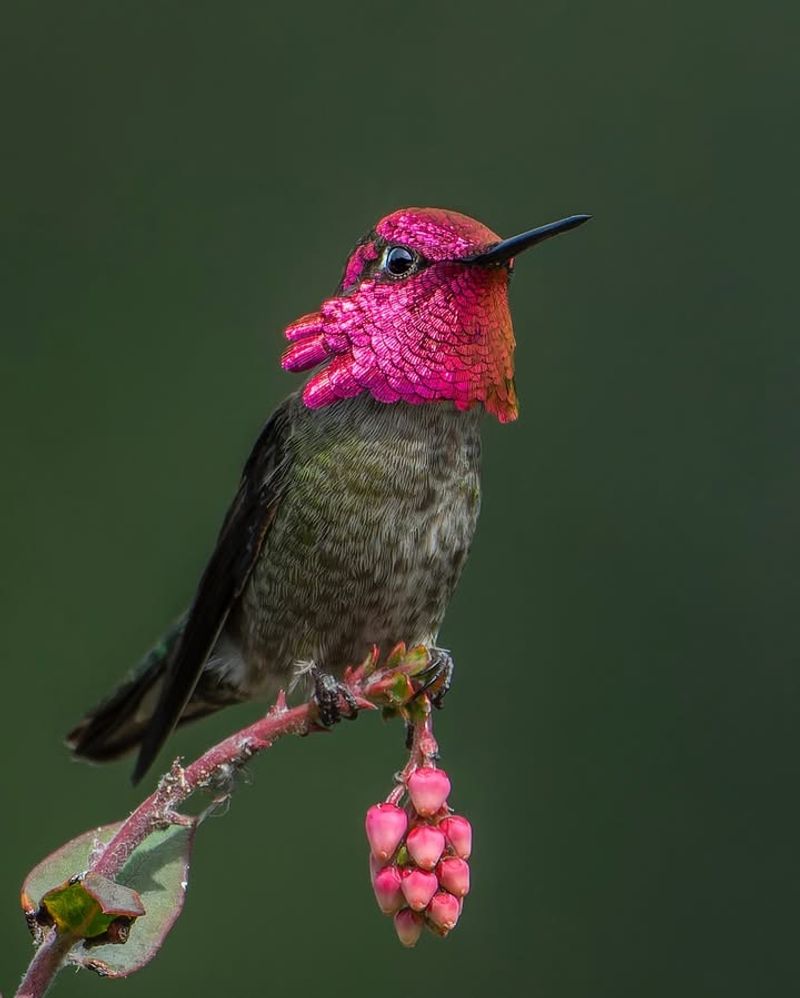
Walk outside on almost any morning in California, and you just might spot one of these bold little birds hovering near your flowers.
Anna’s Hummingbird is the most common hummingbird found year-round across the state, from San Diego all the way up to the Bay Area.
Unlike most hummingbirds that head south for winter, Anna’s sticks around through cold months, making it a true California resident.
The males are easy to recognize. They have a brilliant rose-pink head and throat that seems to light up when sunlight hits just right.
Females are a softer green with a small pink spot on the throat. Both are feisty and will boldly chase other birds away from feeders.
Anna’s Hummingbirds are also known for their song, which is surprisingly loud for such a tiny creature. The male sings a scratchy, buzzy tune from treetops to claim his territory.
They love native California plants like salvia, fuchsia, and red-hot poker. Hanging a nectar feeder in your yard is one of the easiest ways to attract them.
Use a simple mix of four parts water to one part plain white sugar, and skip the red dye. Once you set up a feeder, Anna’s will likely visit within days and return every single day after that.
2. Allen’s Hummingbird (Selasphorus sasin)
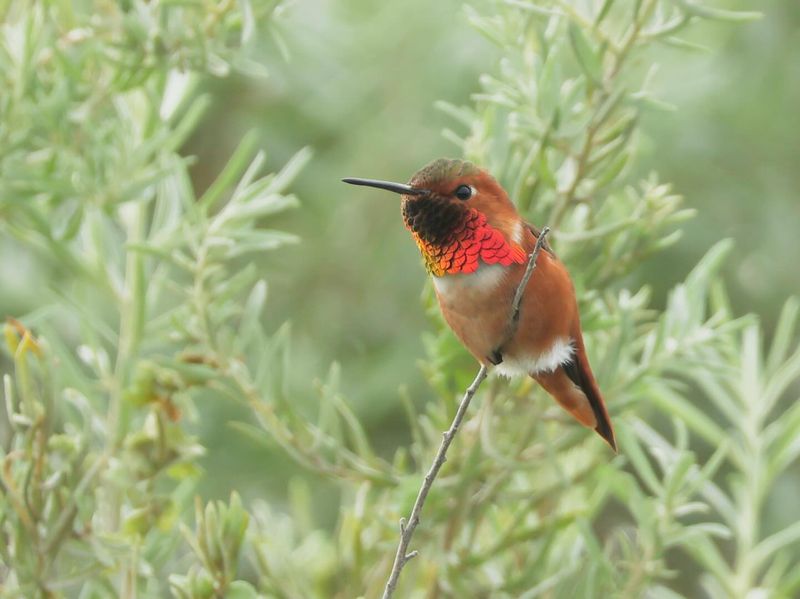
Few birds carry as much personality as the Allen’s Hummingbird. This little guy shows up along the California coast each year, and his arrival feels like a sure sign that spring is just around the corner.
Males return to coastal California as early as January, making them one of the earliest migrating hummingbirds to come back.
The male Allen’s is a real showoff. He has a glittering orange-red throat, rusty-orange sides, and a green back that catches the light beautifully.
Females and young birds are trickier to identify since they look very similar to Rufous Hummingbirds, but location helps narrow it down. Allen’s tend to stay close to the coast, especially in areas like Marin County, the Santa Barbara region, and parts of Southern California.
Your California Garden Changes Every Week. Your Plan Should Too.
Gardening in California changes quickly throughout the season. Every Friday you’ll receive a simple weekly plan showing exactly what to plant, prune, fertilize, harvest, and protect so you never miss the right timing.
During courtship, the male performs a dramatic J-shaped dive to impress females. He swoops up high and then plunges down fast, creating a sharp buzzing sound with his tail feathers.
It is quite a sight to watch from your backyard. Allen’s Hummingbirds love flowering shrubs like monkeyflower, columbine, and paintbrush.
They are highly territorial and will guard a single feeder aggressively. If you notice a small hummingbird chasing every visitor away near the California coast, there is a good chance an Allen’s has claimed your yard as his own.
3. Rufous Hummingbird (Selasphorus rufus)
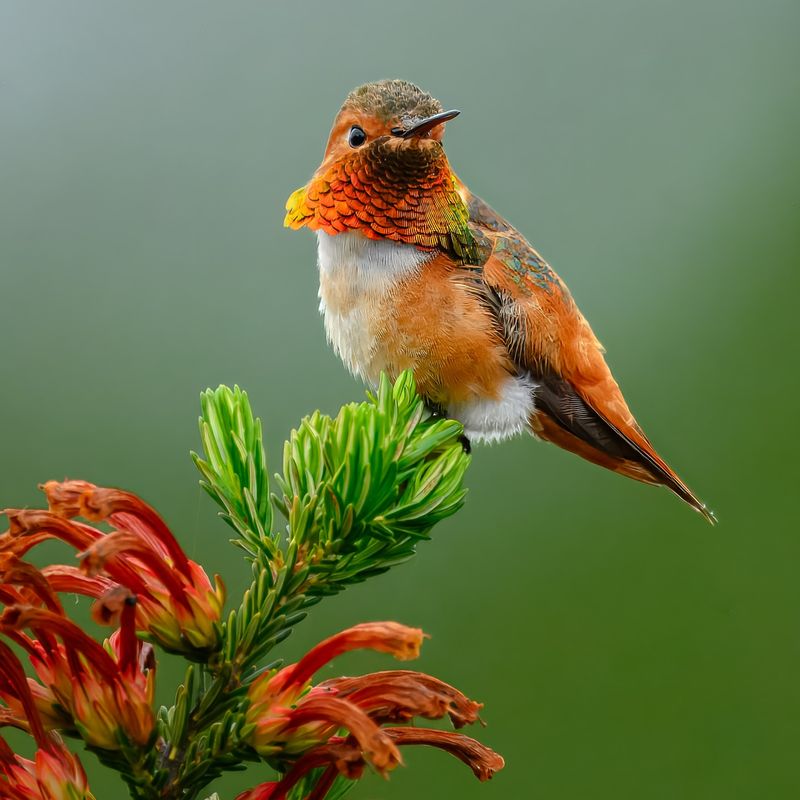
Bold, fiery, and absolutely fearless, the Rufous Hummingbird might be the scrappiest little bird in all of California. Despite being one of the smallest hummingbirds around, this species will challenge birds twice its size without hesitation.
Rufous Hummingbirds pass through California during their migration, typically heading north in spring and returning south through the state in late summer and fall.
The male is hard to miss. He is covered in bright rusty-orange feathers with a blazing red-orange throat that glows in the sunlight.
Females are green above with rusty-orange sides and a spotted throat. Both sexes are known for their aggressive behavior at feeders, often spending more energy chasing rivals than actually drinking nectar.
Rufous Hummingbirds travel one of the longest migration routes of any North American hummingbird, flying thousands of miles between their wintering grounds in Mexico and their breeding areas in the Pacific Northwest. California serves as a key stop along the way.
You are most likely to spot them in Northern California mountain meadows and along coastal corridors. To attract them during migration, keep your feeders clean and full throughout late summer.
They have an incredible memory and will return to the same feeders year after year. Planting red tubular flowers like penstemon and salvia can also encourage these spirited little travelers to stop and rest in your yard.
4. Black-Chinned Hummingbird (Archilochus alexandri)
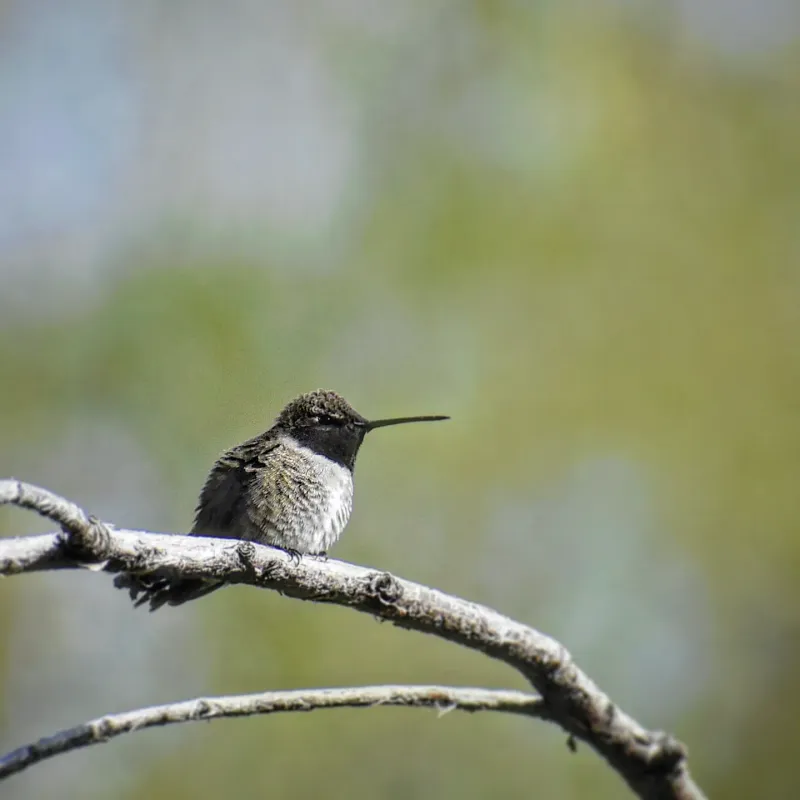
Not every hummingbird announces itself with flashy colors, and the Black-Chinned Hummingbird proves that understated can still be stunning. The male has a velvety black chin with a narrow band of deep purple just below it.
That purple shimmer only shows up in the right light, making every good look at this bird feel like a small reward.
Black-Chinned Hummingbirds are warm-season visitors to California, arriving in spring and heading back south before winter sets in. They tend to prefer inland areas, riparian zones, and lower-elevation mountain habitats.
You are more likely to spot them in parts of the Central Valley, the foothills of the Sierra Nevada, and Southern California deserts than right along the coast.
Females are plain green above with a whitish belly, and they are sometimes confused with other species. One useful clue is watching how they pump their tail while hovering.
Black-Chinned Hummingbirds have a distinctive habit of moving their tail up and down steadily while feeding. They are attracted to a wide variety of flowering plants, including desert willow, agave, and honeysuckle.
Setting up a clean feeder in a shaded spot can bring them in reliably throughout summer. They are generally less aggressive than Rufous or Allen’s Hummingbirds, so they often share feeders more peacefully with other visiting species at California backyards.
5. Costa’s Hummingbird (Calypte costae)
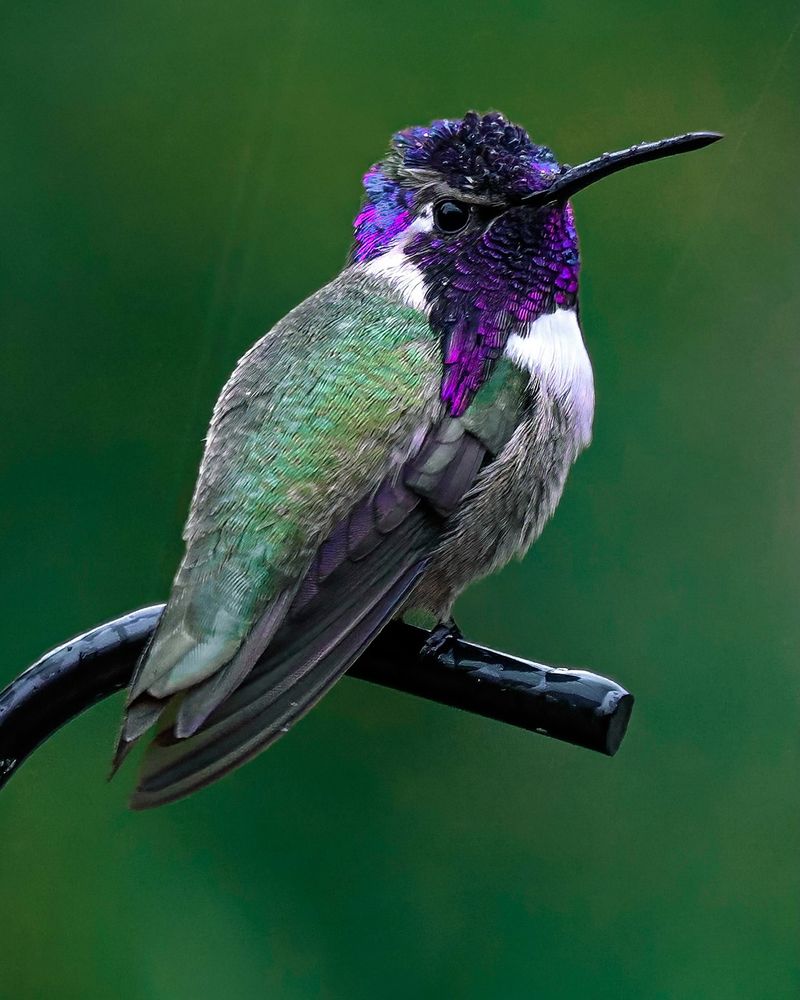
There is something almost regal about the Costa’s Hummingbird. The male wears a brilliant violet-purple crown and throat, with the feathers flaring out dramatically on each side like a tiny mustache.
It is one of the most distinctive looks of any hummingbird found in California, and spotting one for the first time is genuinely thrilling.
Costa’s Hummingbirds are desert specialists. They are most commonly found in Southern California, particularly in the Mojave Desert, the Sonoran Desert edges, and dry coastal scrub habitats.
Unlike many hummingbirds that visit California only during warm months, Costa’s actually breeds in late winter and early spring, taking advantage of desert blooms before the intense summer heat sets in.
The male’s courtship display is memorable. He flies in a steep, looping oval shape while producing a high-pitched whistle with his tail feathers.
Females are plain green with a whitish belly and are much harder to identify without a male nearby for comparison. Costa’s Hummingbirds love desert plants like ocotillo, chuparosa, and desert lavender.
If you live in a dry, sunny part of Southern California, planting native desert flowers is the best way to attract them. A feeder placed in a warm, open area can also work well.
These small birds are remarkably adapted to heat and can thrive where other hummingbirds would struggle.
6. Calliope Hummingbird (Selasphorus calliope)
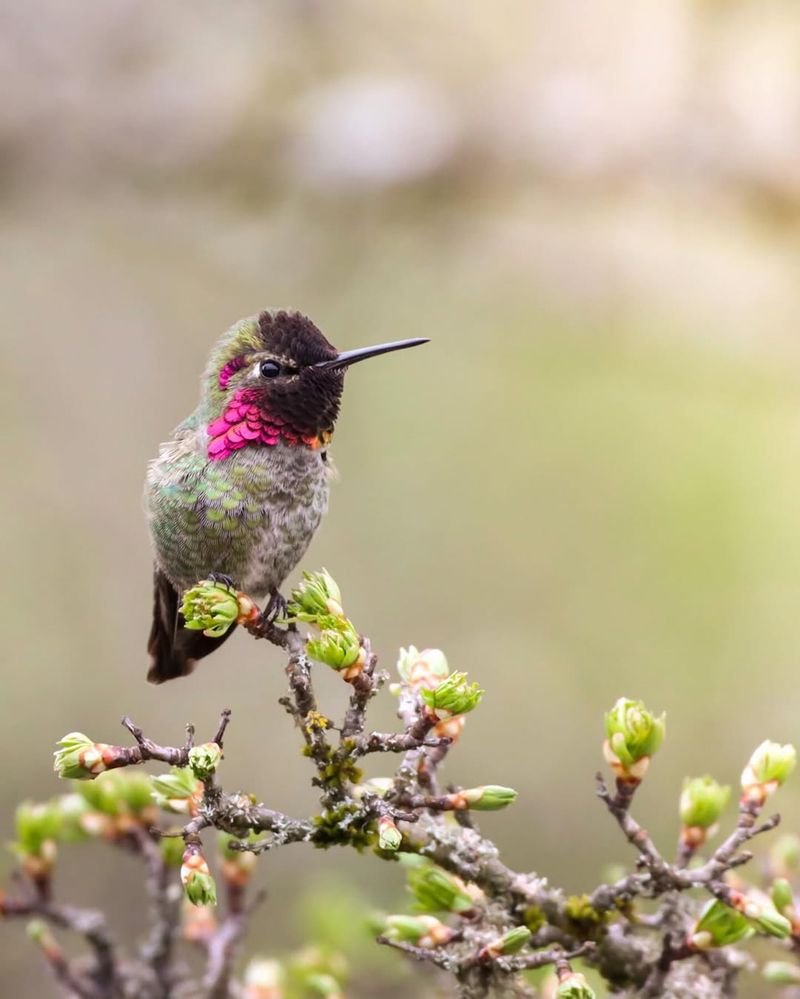
Meet the smallest breeding bird in all of North America, and yes, it visits California. The Calliope Hummingbird may be tiny, but it makes up for its size with an absolutely stunning throat pattern.
The male has streaks of bright magenta-pink on a white background, almost like someone painted thin rays of color across his chest.
Calliope Hummingbirds pass through California during spring and fall migration, with many also breeding in mountain meadows across the Sierra Nevada. They tend to prefer higher elevations and open, flower-filled habitats.
Spotting one is a special treat, partly because of their size and partly because they can be easy to overlook among larger hummingbird species.
Despite being the smallest, Calliope Hummingbirds are surprisingly tough. They regularly migrate through cold mountain passes and can handle chilly temperatures that would slow down larger birds.
Females are plain green with a peachy wash on the sides and a lightly spotted throat. Both sexes have a noticeably short tail and compact body shape that helps tell them apart from other species.
To attract Calliope Hummingbirds during migration, keep feeders up through spring and into early fall. They also respond well to native wildflowers like paintbrush and penstemon.
If you live near the foothills or mountains of Northern or Central California, keep an eye out for this pint-sized traveler stopping by your yard.
7. Broad-Tailed Hummingbird (Selasphorus platycercus)
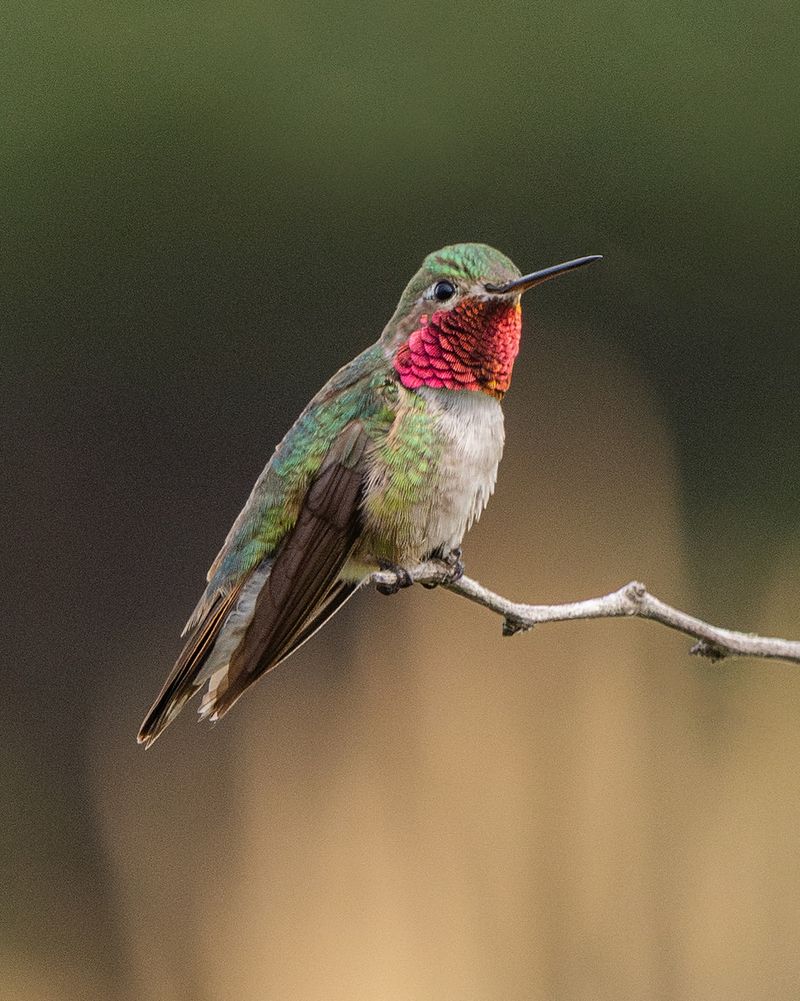
You might hear a Broad-Tailed Hummingbird before you ever see one. The male produces a distinctive loud, metallic trilling sound with his wings as he flies, a cricket-like buzz that carries surprisingly far.
Once you learn that sound, you will recognize it instantly every time one passes through your area of California.
Broad-Tailed Hummingbirds are mainly found in the eastern parts of California, particularly in higher mountain ranges and meadows.
They are more common in states like Colorado and Utah, but they do appear in California, especially during migration and in suitable mountain habitats along the eastern Sierra Nevada.
The male has a rose-red throat similar to Ruby-Throated Hummingbirds, but the two species rarely overlap in range.
Females and immature birds are green above with buffy-cinnamon sides and a spotted throat. They can be tricky to tell apart from Calliope and Rufous Hummingbirds in the field.
One helpful clue is the broader tail that gives this species its name. Broad-Tailed Hummingbirds are adapted to high-altitude living and can even lower their body temperature at night to save energy in cold mountain air.
Planting red tubular flowers and keeping feeders stocked at higher-elevation California properties gives you the best chance of attracting one.
If you are hiking in the Sierra Nevada during summer, listen carefully for that unmistakable wing trill buzzing through the mountain air above you.