10 Native Perennials That Flourish In Georgia’s Shady Yards
Shade in Georgia is not the same as shade up north. It is thicker, heavier, and often paired with humidity that lingers well into summer.
Many popular perennials struggle in these conditions, fading out or rotting in soil that stays damp longer than expected.
Native plants handle it differently. They evolved in Georgia woodlands, along streambanks, and under tall tree canopies where filtered light and rich soil are the norm.
Once established, they need far less fussing than imported varieties that constantly demand adjustments.
If your yard leans more shady than sunny, these native perennials are the ones that actually thrive instead of just surviving.
1. Woodland Phlox Brings Early Color To Shaded Gardens
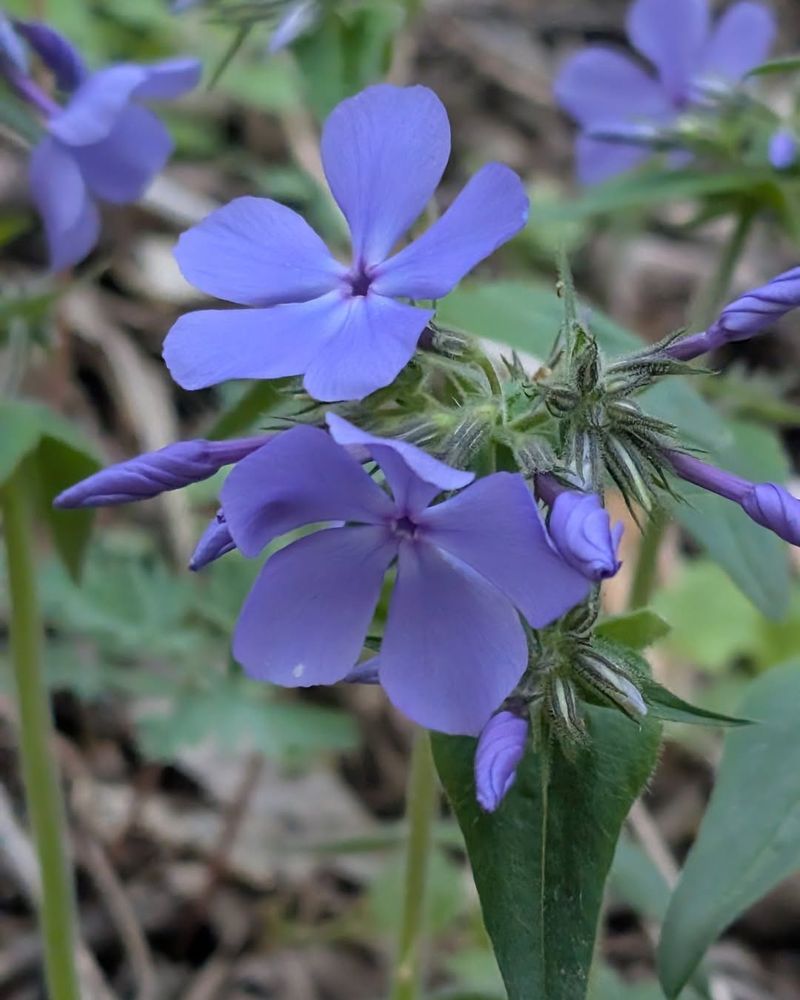
Lavender-blue flowers cover woodland phlox in late March and April, creating drifts of color when Georgia gardens are just waking up. Each bloom has five petals arranged in a flat face, and the sweet fragrance carries surprisingly far on calm mornings.
Height stays around twelve inches, making this plant useful along front edges of shaded beds or tucked between spring bulbs. It spreads gradually through underground stems but never becomes aggressive.
The foliage goes dormant by midsummer in Georgia heat, so plant something nearby that fills in later like ferns or heuchera.
Part shade works better than deep shade for flower production. Too much darkness means fewer blooms and leggy stems reaching for light.
Morning sun with afternoon protection gives the best results across most of Georgia.
Drainage matters more than soil type. Roots rot quickly in spots where water sits after heavy rains.
Add grit or plant on slight slopes if your yard has heavy clay. Divide clumps after flowering finishes if you want to spread them around or share with neighbors.
Rabbits usually ignore it, which helps in suburban areas where wildlife browsing frustrates other planting efforts.
2. Foamflower Brightens Woodland Borders With Spring Blooms
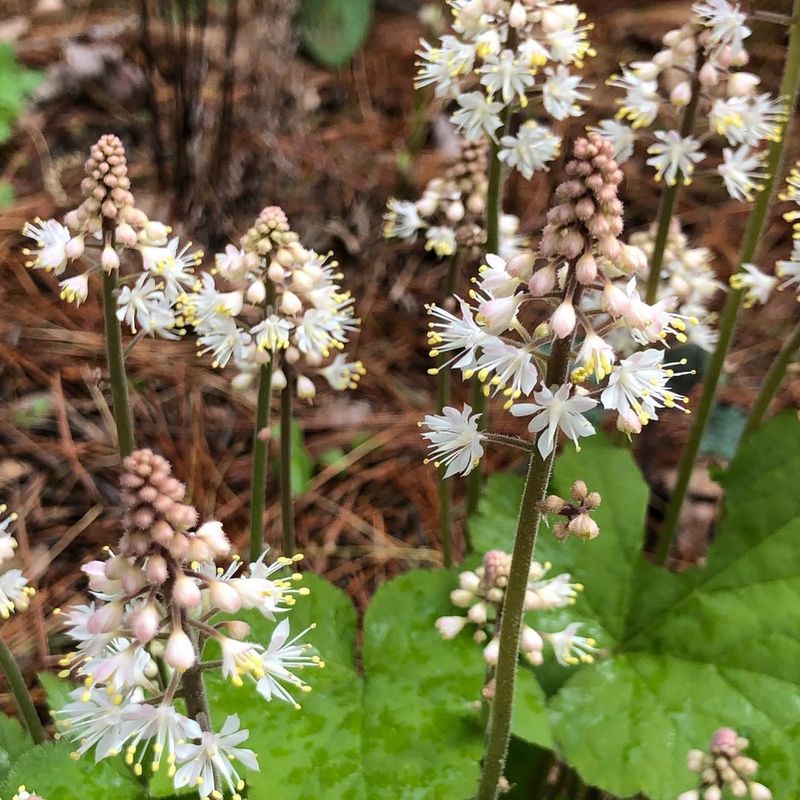
Foamflower sends up fuzzy white or pink flower spikes in April that look like tiny bottlebrushes hovering above heart-shaped leaves.
The blooms attract small pollinators for several weeks before fading, but the foliage sticks around all year in Georgia’s mild winters.
Plant it where you need something short that spreads slowly through runners. It fills in bare spots under azaleas or along shaded walkways without getting pushy about territory.
The leaves develop burgundy markings in fall that add interest when not much else is happening in shade gardens.
Georgia’s clay soil works fine as long as you add some compost at planting time. Water regularly the first summer while roots establish, then it handles dry spells better than you’d expect for something that looks delicate.
Slugs sometimes chew the leaves but rarely cause serious damage.
Divide clumps every few years if they start looking crowded or if you want more plants for other spots. Spring or fall works equally well for moving pieces around.
Pair it with ferns or wild ginger for a layered woodland look that needs minimal fussing once everything settles in.
3. Green And Gold Forms A Tough Native Groundcover For Shade
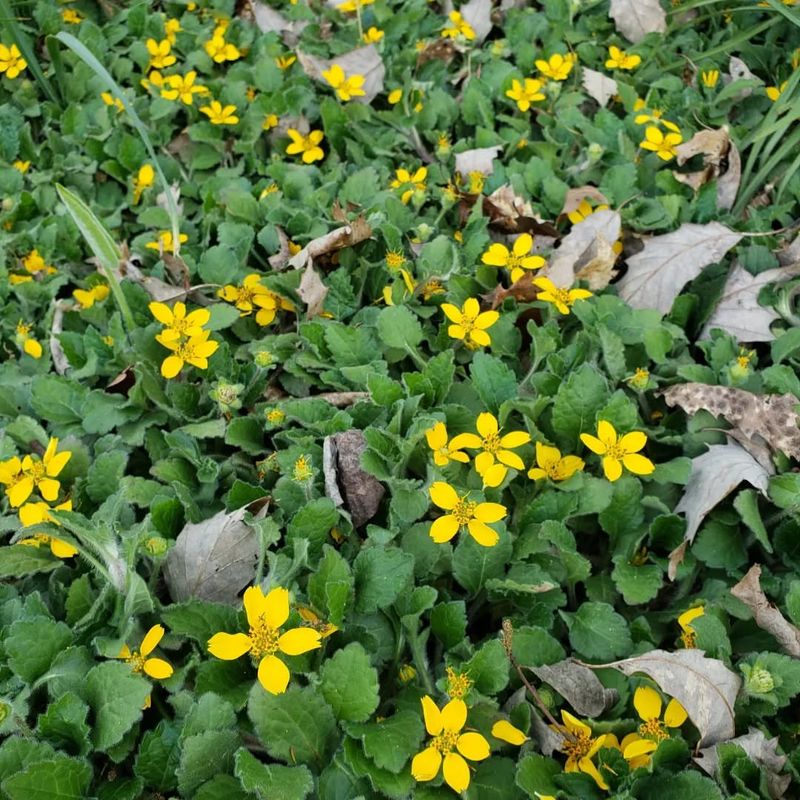
Small yellow daisies pop up from spring through fall on this low-growing native that handles Georgia’s toughest shaded spots.
Your Georgia Garden Changes Every Week. Your Plan Should Too.
Gardening in Georgia changes quickly throughout the season. Every Friday you’ll receive a simple weekly plan showing exactly what to plant, prune, fertilize, harvest, and protect so you never miss the right timing.
Green and gold stays under six inches tall and spreads steadily to form a weed-suppressing mat that actually looks good rather than just functional.
Roots tolerate dry shade once established, which makes this plant valuable under mature trees where little else survives. The evergreen foliage keeps color in the landscape year-round instead of leaving bare dirt through winter months.
Flowering peaks in spring but scattered blooms appear whenever conditions suit the plant.
Planting in fall gives roots time to settle before summer stress arrives. Space plants about twelve inches apart for coverage within two growing seasons.
Closer spacing fills faster but costs more upfront.
This native handles foot traffic better than most groundcovers, though it’s not meant for main walkways. Use it along paths where occasional stepping happens.
Deer leave it alone, and insects rarely bother the foliage. Trim back any ratty-looking leaves in late winter before new growth starts.
It tolerates Georgia clay without amendments but grows faster with better soil. Pair it with taller shade plants for layered texture throughout the garden.
4. Solomon’s Seal Adds Graceful Arching Stems To Quiet Corners
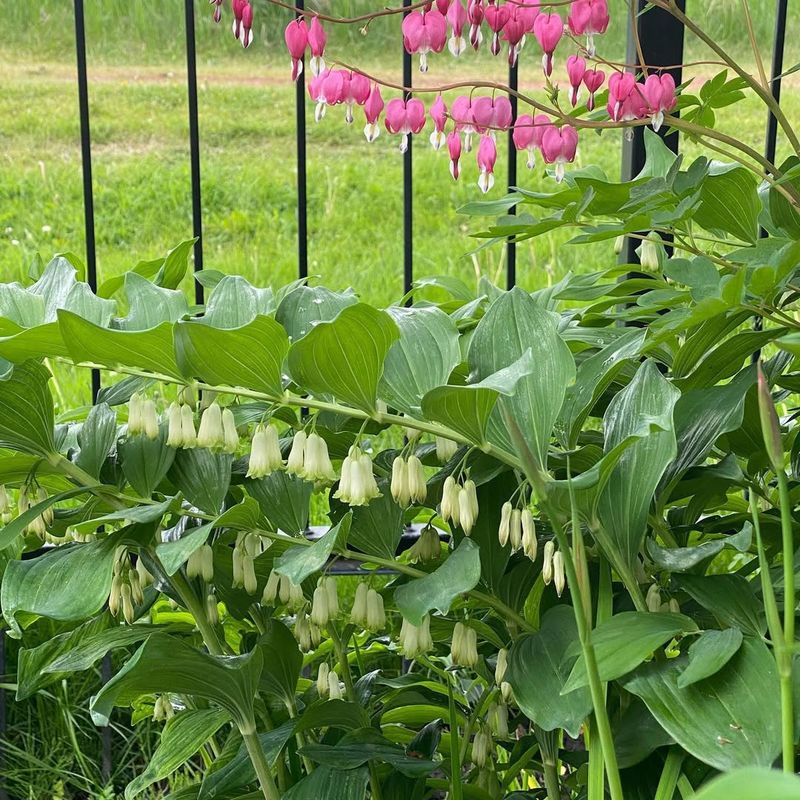
Arching stems lined with oval leaves create an architectural presence that stands out in Georgia shade gardens. Small white bells dangle beneath the stems in spring, followed by blue-black berries that birds appreciate.
The whole plant reaches two to three feet tall depending on growing conditions.
Solomon’s seal works in spots where you need height without bulk. The stems rise straight from the ground each spring, arch gracefully, then fade back completely in winter.
This growth habit makes it easy to interplant with spring bulbs or early groundcovers that bloom before the stems emerge.
Deep to medium shade suits it best. Too much sun causes leaf scorch in Georgia summers, especially in the southern parts of the state.
Consistent moisture helps but isn’t absolutely required after the first year. Mulch around plants to keep soil cooler and reduce watering needs.
Rabbits and deer browse the young shoots occasionally but rarely damage established clumps seriously. Slugs ignore the foliage.
Divide rhizomes in fall if clumps get too crowded or you want more plants. Pieces establish faster than you’d think for something that looks so refined and delicate in the garden.
5. Christmas Fern Stays Evergreen In Georgia Woodlands
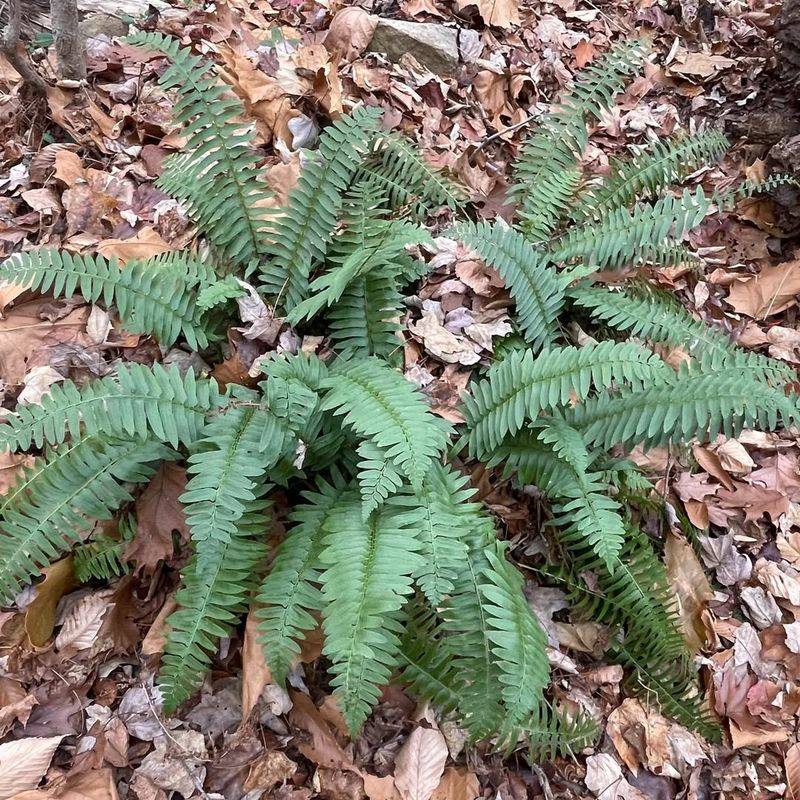
Dark green fronds stay fresh-looking through Georgia winters when most other plants go dormant or look shabby. Christmas fern gets its name from this evergreen habit that made it popular for holiday decorations generations ago.
Each frond grows one to two feet long with a slightly leathery texture that holds up well.
Use it where you need year-round structure in shaded beds. The upright growth habit works behind lower groundcovers or alongside spring ephemerals that disappear by summer.
Clumps expand slowly, never becoming invasive or requiring constant division like some ferns.
Georgia’s native soil suits Christmas fern perfectly without amendments. It handles dry shade better than most ferns once roots establish, though consistent moisture produces fuller clumps.
Plant in fall or early spring for best results.
Old fronds flatten out by late winter and can be trimmed away before new growth unfurls in April. This cleanup step isn’t necessary but makes clumps look tidier.
Deer avoid ferns completely, which helps in areas with browsing pressure. Pair Christmas fern with spring bulbs, wild ginger, or foamflower for a layered woodland look that changes through seasons while maintaining some constant green presence.
6. Wild Ginger Thrives In Deep Shade And Rich Soil
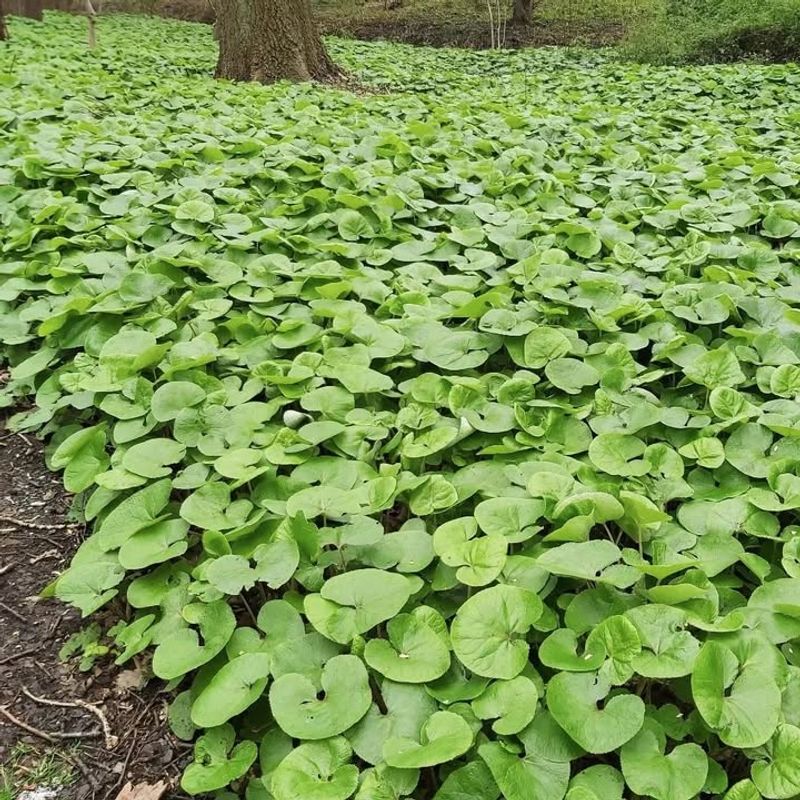
Heart-shaped leaves overlap to form a solid green carpet in the deepest shade where almost nothing else grows. Wild ginger spreads through shallow rhizomes that smell spicy when bruised, though not exactly like culinary ginger.
Small burgundy flowers hide under the leaves in spring, pollinated by ground-dwelling beetles.
Height stays under six inches, making this plant perfect for filling space under shrubs or along shaded foundations. The foliage goes dormant in winter across most of Georgia, leaving bare ground until new leaves emerge in March.
Plan for this dormancy by planting spring bulbs or evergreen ferns nearby.
Rich, moist soil produces the fastest spread and fullest coverage. Georgia clay needs organic matter worked in before planting.
Dry shade slows growth significantly, though established plants tolerate occasional drought better than their delicate appearance suggests.
Space plants eight to twelve inches apart for coverage within two years. Closer spacing fills faster but requires more plants upfront.
Divide clumps in early spring or fall if you want to expand your planting or share with other gardeners. Slugs and deer usually leave wild ginger alone.
The dense foliage suppresses weeds effectively once established across shaded areas.
7. Blue-Stem Goldenrod Lights Up Shade Without Spreading Aggressively
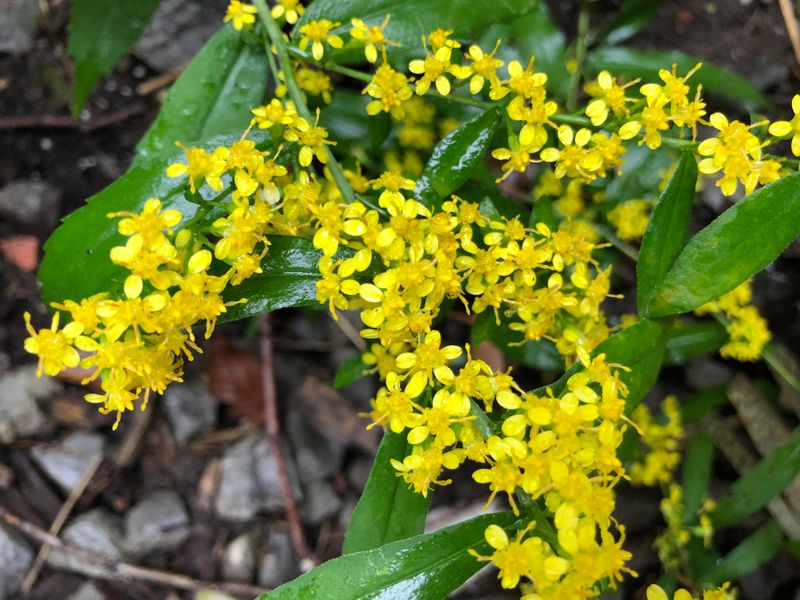
Yellow flowers line the upper stems in late summer and fall when shade gardens need color most. Blue-stem goldenrod differs from its weedy cousins by growing in graceful clumps rather than spreading through aggressive runners.
The stems have a bluish cast that gives this plant its common name.
Height reaches two to three feet in good conditions, creating a mid-layer presence between groundcovers and taller shrubs. Part shade produces more flowers than deep shade, though it blooms reasonably well with limited light.
This goldenrod tolerates more shade than most fall-blooming natives.
Georgia’s clay soil works fine without amendments. Drainage matters more than fertility, as roots rot in constantly wet spots.
Plant in spring or fall for best establishment before summer heat or winter cold arrives.
Butterflies and native bees visit the flowers heavily in September and October. Unlike some goldenrods, this species doesn’t cause hay fever because it’s insect-pollinated rather than wind-pollinated.
Cut stems back in late winter before new growth starts, or leave them standing for winter interest and seed for birds. Clumps rarely need division but can be split in spring if desired.
Pair it with asters or ferns for late-season interest in Georgia shade gardens.
8. Heuchera Handles Humidity While Adding Colorful Foliage
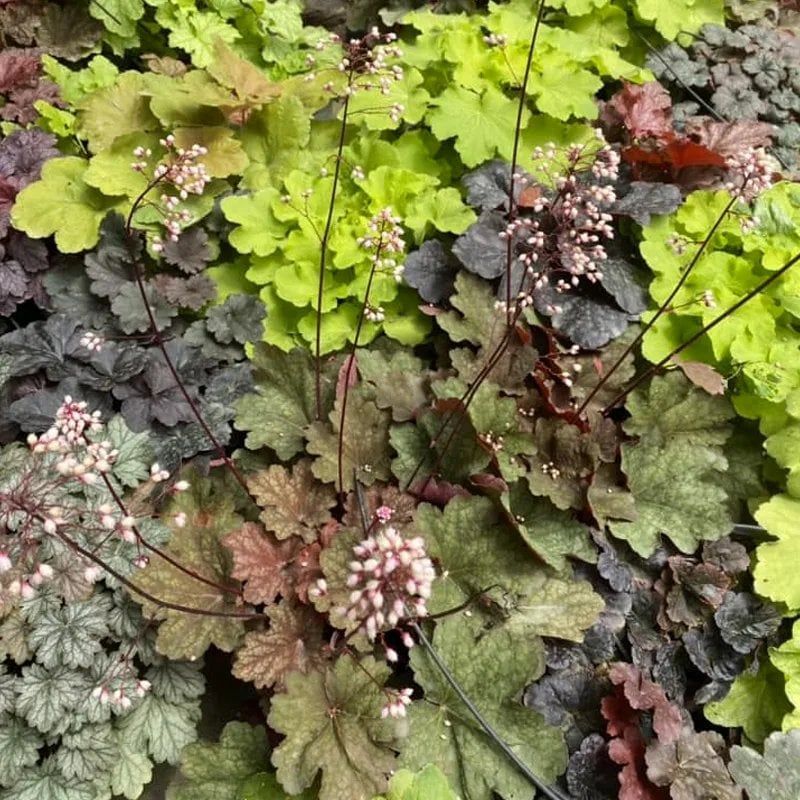
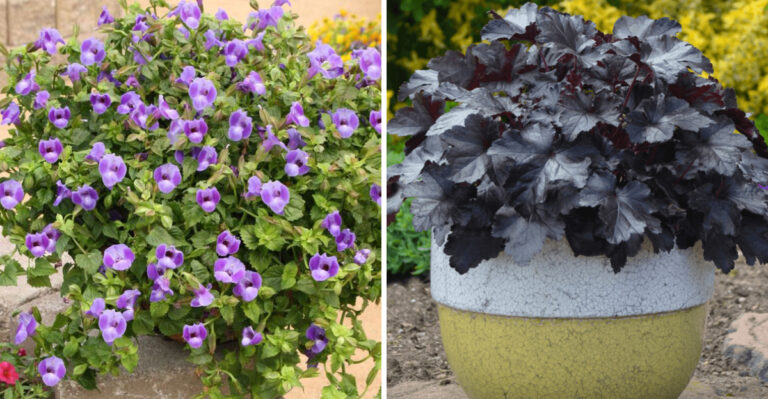
Mottled leaves in shades of green, silver, and burgundy provide color from spring through fall without relying on flowers. Native heuchera tolerates Georgia’s summer humidity better than fancy hybrid coral bells that often struggle with fungal issues.
Airy flower stalks rise above the foliage in late spring with small white or greenish blooms.
Plant it along front edges of shaded beds where the foliage stays visible. Clumps grow twelve to eighteen inches wide and about as tall, creating tidy mounds that need minimal maintenance.
The semi-evergreen leaves hold their color through mild Georgia winters but may look tired by March.
Part shade works better than deep shade for the best foliage color and plant vigor. Too much darkness causes leaves to lose their distinctive patterns and turn plain green.
Morning sun with afternoon protection suits most Georgia locations.
Good drainage prevents crown rot that plagues heucheras in heavy, wet soil. Plant on slight slopes or amend clay with grit before planting.
Trim away any damaged leaves in early spring before new growth emerges. Divide clumps every three to four years to maintain vigor, or when centers start looking woody and sparse.
Deer occasionally browse young plants but usually leave established clumps alone in Georgia gardens.
9. Cardinal Flower Tolerates Part Shade And Moist Soil
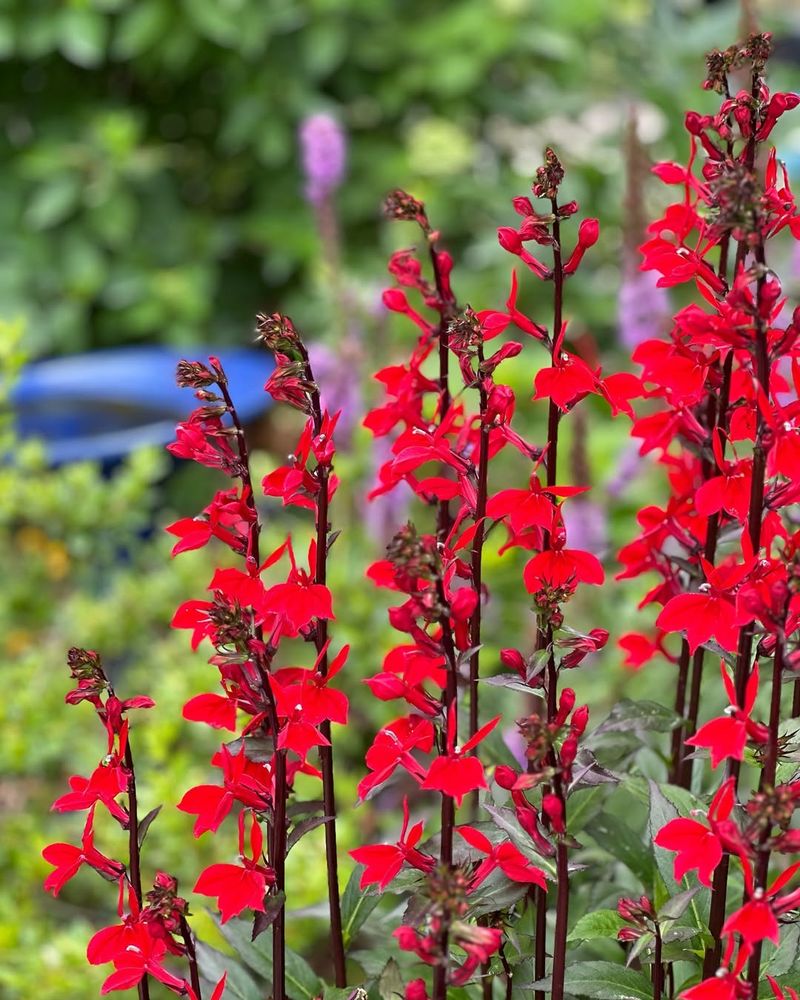
Brilliant red flower spikes stop people in their tracks from July through September. Cardinal flower naturally grows along Georgia stream banks and wet areas but adapts to garden conditions with consistent moisture.
Hummingbirds visit the tubular blooms constantly, often returning to the same plants daily.
Height reaches two to four feet depending on soil moisture and light levels. Part shade produces strong stems and good flowering, while deep shade causes stretching and fewer blooms.
Plant it in low spots that stay damp or near downspouts where extra water collects.
This native needs consistent moisture through Georgia summers. Roots tolerate brief flooding but prefer evenly moist soil rather than standing water.
Mulch heavily to conserve moisture and keep roots cool during hot months.
Cardinal flower behaves as a short-lived perennial in Georgia gardens. Plants often last only two to three years but self-sow readily if conditions suit them.
Let some seed mature and fall naturally to maintain your planting. Young plants appear nearby the following spring.
Divide clumps in early spring or fall if you want to move pieces to new locations. Deer browse the foliage occasionally but rarely damage plants seriously enough to prevent flowering in moist Georgia shade gardens.
10. Turk’s Cap Lily Brings Bold Summer Blooms To Dappled Shade
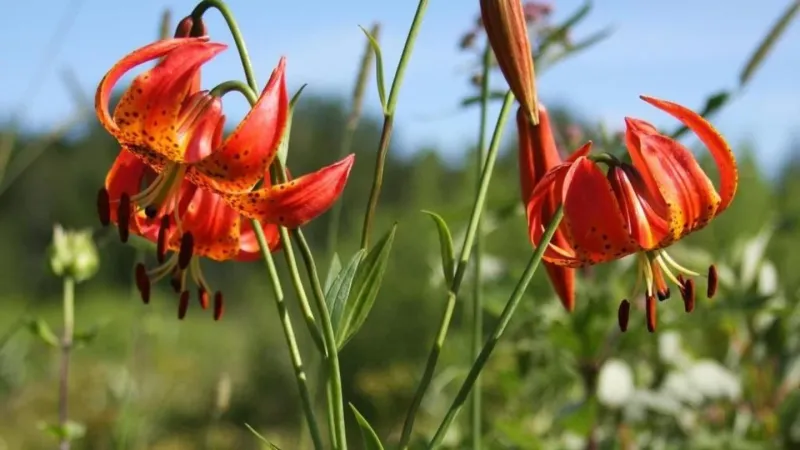
Orange flowers with recurved petals and dark spots appear on tall stems in July, creating dramatic vertical accents in shaded Georgia gardens. Each stem can carry a dozen or more blooms that nod downward, showing off spotted throats to anyone walking beneath them.
Heights reach four to six feet in good conditions.
Dappled shade under tall pines or oaks provides ideal light conditions. Too much shade reduces flowering, while full sun in Georgia causes stress and shorter bloom periods.
Morning light with afternoon protection works well across most of the state.
Bulbs need well-drained soil that stays reasonably moist through summer. Heavy clay causes rot problems, so amend planting areas with compost and grit before setting bulbs.
Plant them about six inches deep in fall or early spring.
Stems emerge late in spring, so mark locations to avoid accidentally digging into bulbs during early garden cleanup. Let foliage mature completely after flowering finishes, as leaves feed the bulbs for next year’s display.
Rabbits and deer browse emerging shoots sometimes but established clumps usually produce enough stems to still flower well.
This native lily naturalizes slowly in suitable Georgia locations, gradually forming impressive colonies that bloom reliably each summer in partial shade.