9 Oregon Shrubs That Wake Up First In March
March in Oregon feels like the garden stretching and yawning after a long winter nap. Rain still lingers, mornings stay chilly, yet the first signs of life begin to stir.
Look closely and you will spot certain shrubs already shaking off the cold, pushing out fresh buds, tiny blooms, and hints of green while the rest of the landscape is still waking up.
These early risers bring welcome color and energy when the garden needs it most. They feed hungry pollinators emerging from winter, brighten gray days, and signal that spring is finally on the way.
Even better, many of these March stars are tough, reliable, and perfectly suited to Oregon’s climate.
Plant a few of these eager shrubs and your yard will never feel sleepy at the start of the season again. While winter fades, your garden will already be buzzing, blooming, and full of fresh spring promise.
1. Red-Flowering Currant (Ribes sanguineum)
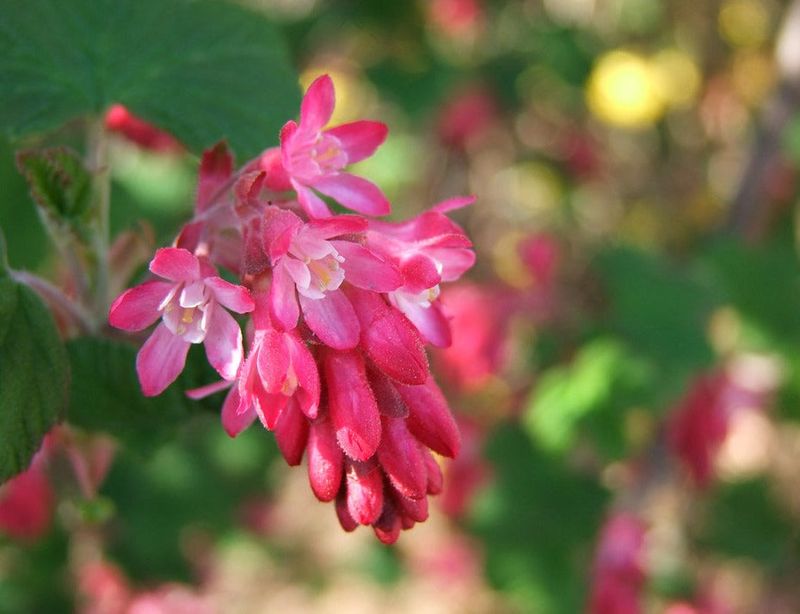
Few shrubs put on a show quite like this one. The Red-Flowering Currant is one of the first plants to burst into color in Oregon each March, and it does so with bold, drooping clusters of deep pink to red flowers that are almost impossible to miss.
Hummingbirds absolutely love it, and you can often spot them darting in before the flowers are even fully open.
Native to western Oregon and the Pacific Northwest, this shrub is tough and low-maintenance once it gets established. It handles clay soil, slopes, and dry summers without much fuss.
Plant it in full sun or partial shade, and it will reward you year after year with reliable early color.
In milder parts of western Oregon, blooms can appear as early as late February. In colder inland areas or higher elevations, expect flowers a few weeks later in March.
Either way, it is one of the most dependable early bloomers you can add to your yard. Mature plants can reach six to ten feet tall, so give it some room to grow and show off its full beauty.
2. Oregon Grape (Mahonia aquifolium)
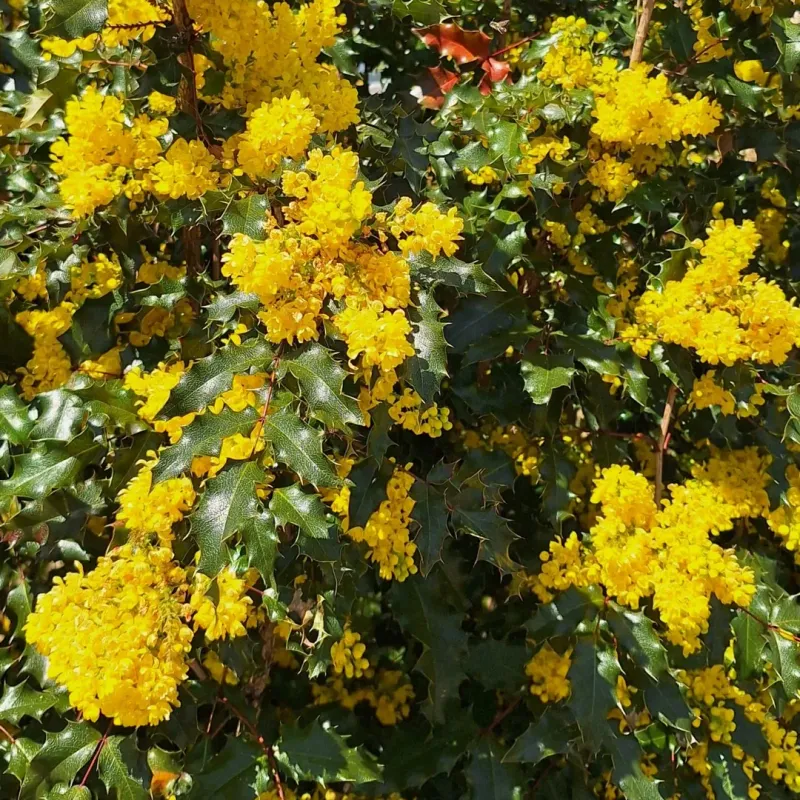
Oregon Grape is literally the state flower of Oregon, so it makes perfect sense that it would be one of the first shrubs to show off in March. Bright yellow flower clusters pop up above its stiff, holly-like leaves, creating a striking contrast that catches the eye right away.
The blooms carry a light, sweet fragrance that feels like a gift after months of gray winter weather.
This shrub is incredibly adaptable. It grows well in full shade, partial shade, or even sunny spots, making it a go-to choice for tricky areas of the yard where other plants struggle.
It is also drought-tolerant once established, which is a big plus in Oregon summers that can turn dry fast.
After the flowers fade, clusters of blue-purple berries appear. Birds go crazy for them, and the berries are edible for people too, often used in jams and jellies.
In milder western Oregon, blooms start in late February or very early March. At higher elevations or colder inland locations, flowering kicks off a little later.
Your Oregon Garden Changes Every Week. Your Plan Should Too.
Gardening in Oregon changes quickly throughout the season. Every Friday you’ll receive a simple weekly plan showing exactly what to plant, prune, fertilize, harvest, and protect so you never miss the right timing.
Either way, Oregon Grape is a beautiful, wildlife-friendly shrub that earns its place in any Pacific Northwest garden.
3. Indian Plum / Osoberry (Oemleria cerasiformis)
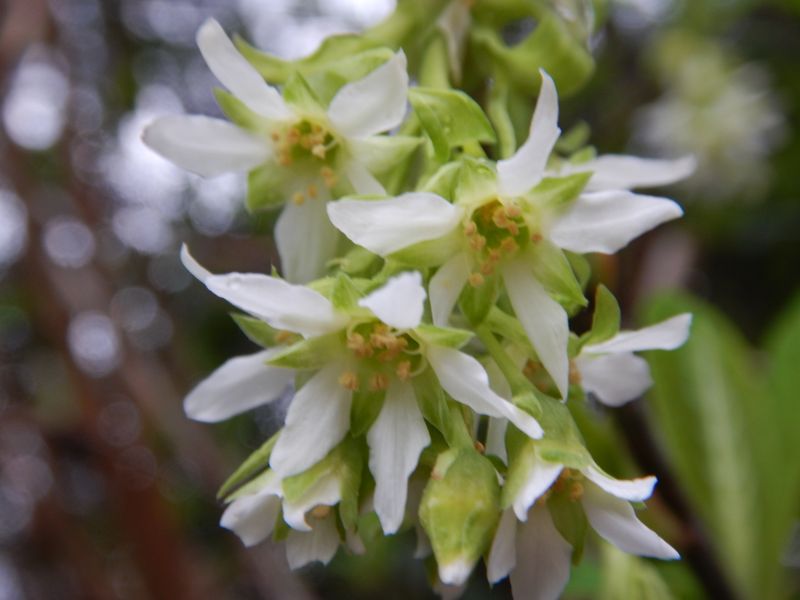
Want to know the very first shrub to wake up in Oregon? That title almost always goes to Indian Plum, also called Osoberry.
By late February or early March, its small white flower clusters are already dangling from bare branches while most other plants are still sound asleep. That early timing makes it a lifeline for the first bees and butterflies of the season.
Indian Plum is a native shrub that grows naturally along stream banks, forest edges, and shady slopes throughout western Oregon. It has a loose, graceful shape and can grow anywhere from six to fifteen feet tall.
The leaves come out early too, giving the plant a fresh green look that brightens up shady corners of the garden.
Small plum-like fruits follow the flowers in late spring, turning from red to dark purple as they ripen. Birds absolutely devour them.
This shrub does best in moist, well-drained soil and partial to full shade, though it can handle a bit of sun. In milder coastal and valley areas of Oregon, Indian Plum often blooms weeks before anything else in the garden.
It is a true early-spring champion worth celebrating.
4. Willow (Shrub Willows) (Salix)
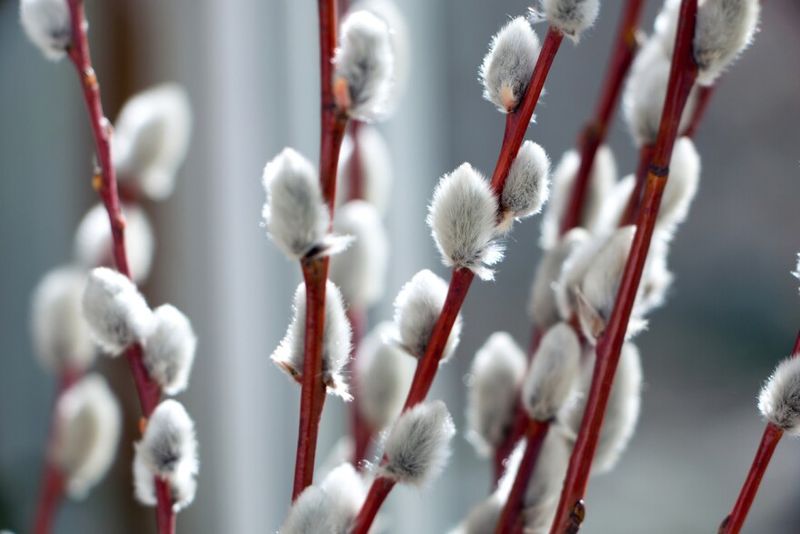
Soft, fuzzy, and surprisingly cheerful, shrub willows are among the earliest plants to show life in Oregon each March. Those silvery gray catkins, often called pussy willows, appear on bare branches before any leaves show up.
They have a velvety texture that kids and adults alike love to touch, and they signal that warmer days are genuinely on their way.
Shrub willows thrive in moist areas, making them ideal for rain gardens, pond edges, or low spots in the yard that collect water. Oregon has plenty of wet winters, so these shrubs fit right into the landscape without needing extra irrigation.
They grow quickly and can reach anywhere from three to fifteen feet tall depending on the species you choose.
Beyond their charm, shrub willows are powerhouse plants for wildlife. Early-season bees depend on the catkin pollen as one of their first food sources of the year.
In western Oregon, catkins can appear in late February during mild winters. Colder inland areas of Oregon typically see them in early to mid-March.
Pruning after the catkins fade keeps the plant tidy and encourages fresh, vigorous growth the following year. They are easy, rewarding, and full of early-spring personality.
5. Hazelnut / Filbert (Corylus cornuta)
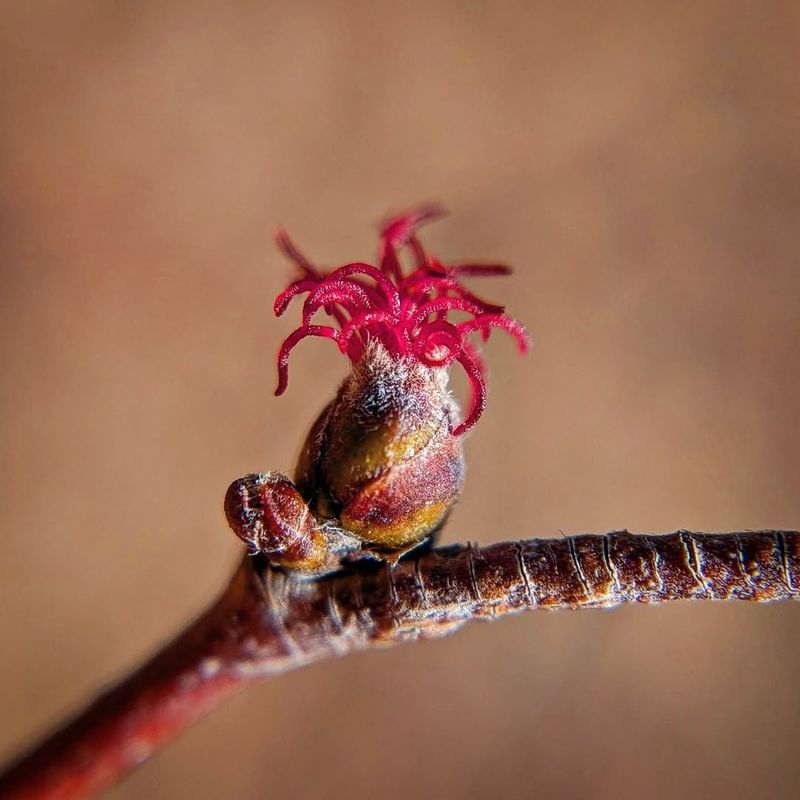
Oregon is famous for its hazelnut orchards, but the native shrubby hazelnut deserves just as much attention. By early March, long yellow catkins hang from the bare branches like little decorations, releasing clouds of pollen into the cool air.
Look closely and you might spot the tiny, bright red female flowers too. They are easy to miss, but they are there, quietly doing the important work of pollination.
Native hazelnut shrubs grow naturally across western Oregon in woodlands and along forest edges. They form multi-stemmed clumps that can reach six to twelve feet tall and wide.
Their loose, arching shape adds a natural, woodland feel to any garden. They are also incredibly low-maintenance once established, tolerating clay soil, shade, and Oregon rain with ease.
Come fall, the hazelnuts that develop are a favorite snack for squirrels, jays, and other wildlife. The foliage also turns warm yellow and orange in autumn, giving the shrub a second season of interest.
In mild western Oregon, catkins can appear in January or February, but peak activity usually lands in March. Inland and higher elevation areas see them a bit later.
Either way, this native shrub earns its place in the Pacific Northwest garden.
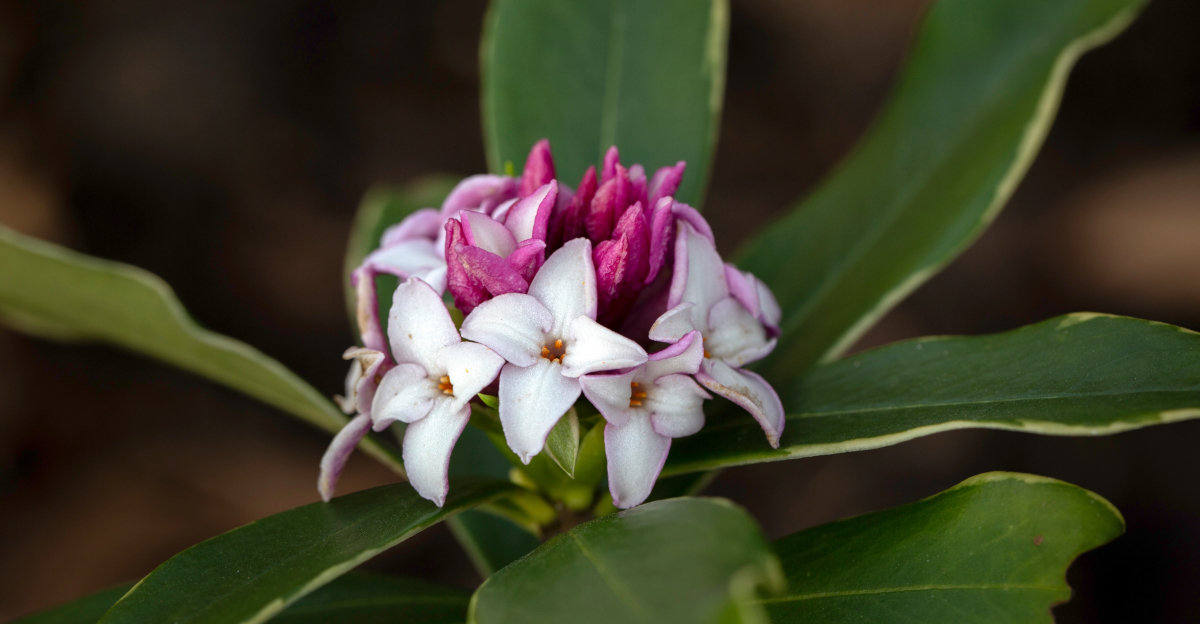
6. Daphne (Winter Daphne) (Daphne odora)
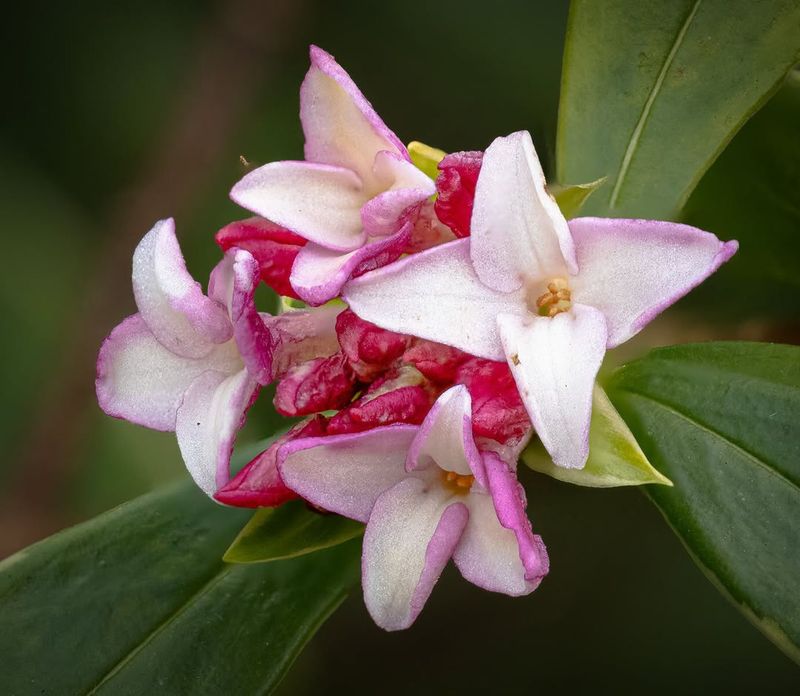
If you have ever walked past a garden in early March and suddenly smelled something incredibly sweet and floral, there is a good chance a Daphne was nearby. Winter Daphne is famous for its knockout fragrance, which can travel a surprising distance on a cool Oregon morning.
The small pink and white flower clusters look delicate, but the scent is bold and unforgettable.
Daphne odora is an evergreen shrub that keeps its glossy, dark green leaves year-round, often with a pretty yellow edge on the variegated varieties.
It typically grows three to four feet tall and wide, making it a perfect choice for a spot near a front door or walkway where the fragrance can be enjoyed up close.
It prefers well-drained soil and does not like to sit in wet conditions for too long.
In the mild, maritime climate of western Oregon, Winter Daphne often starts blooming in January or February, with peak bloom in March. Colder areas of the state will see it open a few weeks later.
It is a somewhat slow grower, but the patience pays off. Once established, this shrub delivers one of the most memorable fragrance experiences in the entire early-spring garden.
7. Pieris / Andromeda (Pieris japonica)
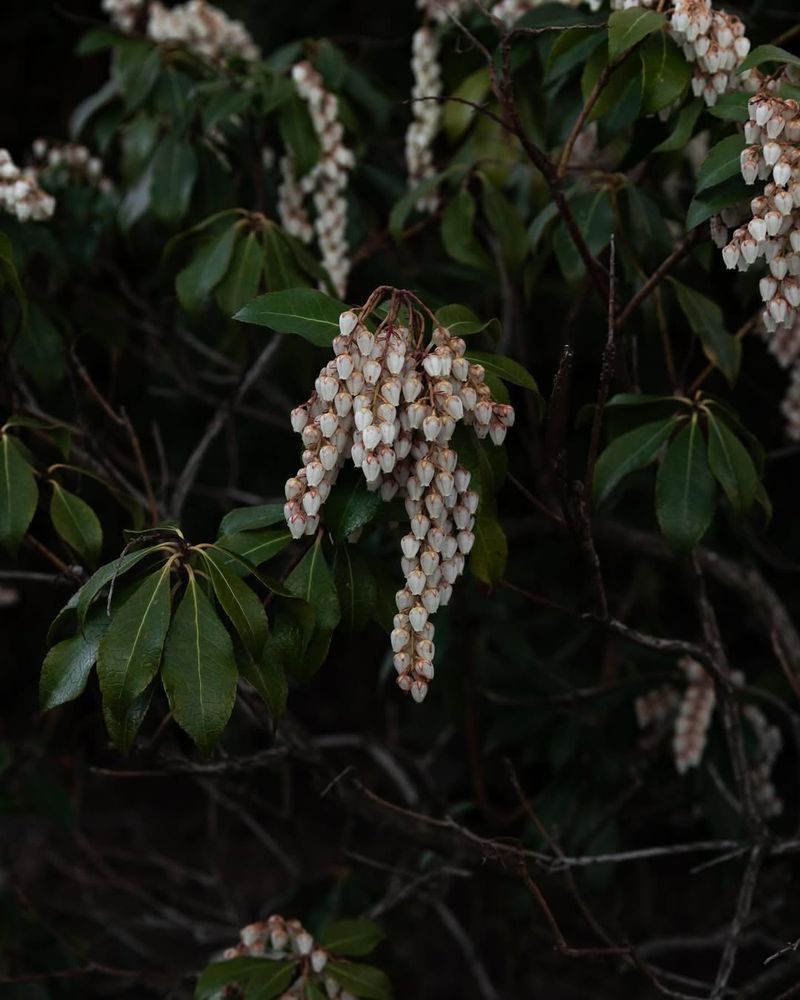
Pieris is one of those shrubs that earns admiring glances all year long, but March is when it truly steals the spotlight. Cascading chains of small, white, bell-shaped flowers droop gracefully from the branch tips, looking almost like delicate strings of pearls.
At the same time, vivid red or bronze new growth emerges alongside the blooms, creating a two-toned effect that feels almost theatrical.
Also called Andromeda, this evergreen shrub is a staple in Oregon gardens, especially in the western part of the state where mild, moist winters suit it perfectly.
It grows best in acidic, well-drained soil with partial shade, making it an excellent companion for rhododendrons and azaleas.
Most varieties reach four to eight feet tall over time, with a tidy, rounded shape that rarely needs heavy pruning.
One thing to keep in mind is that all parts of Pieris are toxic to pets and livestock, so plant it thoughtfully. Despite that caution, it is a widely loved ornamental shrub across the Pacific Northwest.
In warmer parts of western Oregon, flower buds begin to open in late February. Colder inland areas of Oregon see blooms arrive in March.
Either way, Pieris brings reliable, elegant beauty to the early-spring garden season.
8. Flowering Quince (Chaenomeles speciosa)
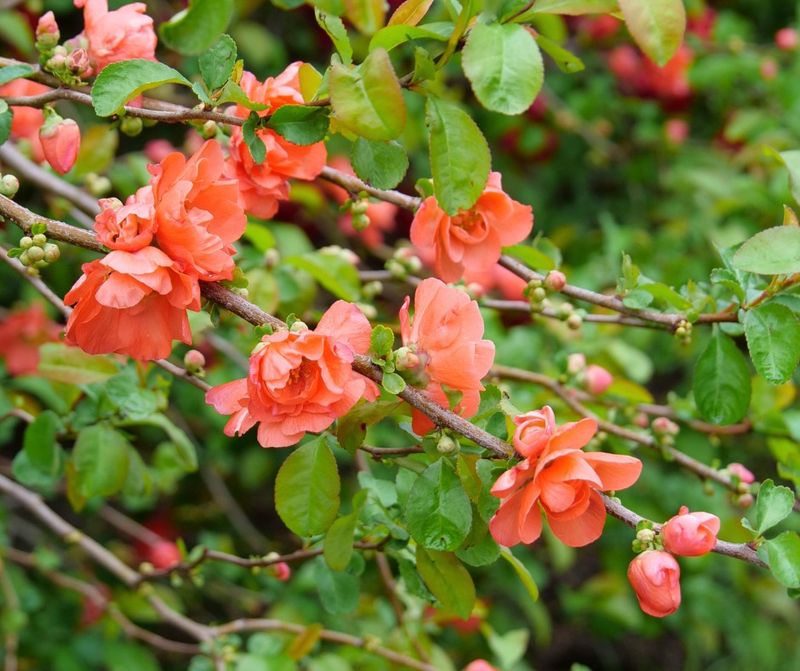
Bright, bold, and practically bursting with energy, Flowering Quince is one of the most eye-catching shrubs you can grow in Oregon.
In March, its branches are covered in vivid flowers ranging from fiery orange-red to soft pink and white, all appearing before a single leaf has opened.
It looks like someone lit the shrub on fire in the best possible way.
Flowering Quince is tough and adaptable, handling a wide range of soil types and growing conditions. It tolerates both drought and heavy Oregon winter rain without complaint.
Full sun brings the best bloom display, but it will also flower in partial shade. The thorny branches make it a great choice for a natural barrier or hedge along a property line.
After the flowers fade, small, hard, apple-like fruits develop in late summer. They are too tart to eat fresh, but they make excellent jelly and are high in pectin.
Wildlife appreciate them too. In milder western Oregon, Flowering Quince can start blooming as early as late January during warm spells, with peak color in March.
Inland and higher elevation gardens in Oregon see blooms arrive a bit later. It is a dependable, cheerful performer that never disappoints in the early-spring garden.
9. Evergreen Huckleberry (Vaccinium ovatum)
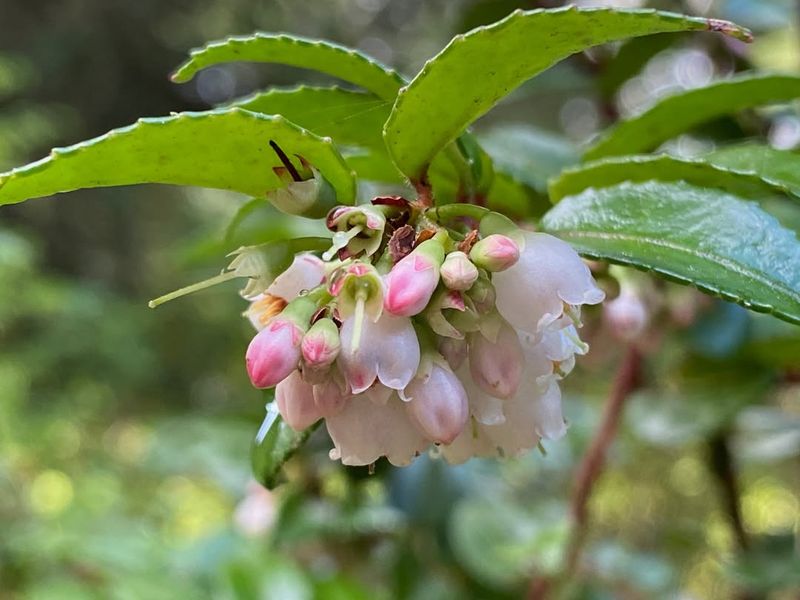
There is something quietly wonderful about Evergreen Huckleberry.
While flashier shrubs grab all the attention in March, this Pacific Northwest native is busy doing something equally impressive: producing small, bell-shaped pink and white flowers that are adored by bees and hummingbirds.
It does not shout, but it absolutely delivers for wildlife and gardeners alike. Native to the coastal forests and woodland edges of Oregon, Evergreen Huckleberry keeps its glossy, deep green leaves year-round.
New spring growth often comes in a warm bronze or reddish color, adding extra visual interest just as the flowers appear.
It grows slowly, reaching anywhere from two to ten feet tall depending on light conditions. In full shade, it stays compact and low.
In more sun, it grows taller and produces more flowers and fruit.
The dark purple-black berries that ripen in late summer and fall are among the best-tasting wild berries in the Pacific Northwest. Bears, birds, and people all compete for them.
In mild coastal and western Oregon areas, flowering can begin in late February. Colder inland areas of Oregon see blooms in March or early April.
This shrub is a true Oregon original and a wonderful addition to any native plant garden in the region.