The Late Winter Blooms In Georgia That Keep Color Going Until Spring
There’s a moment in late winter when everything in Georgia feels stuck between seasons. Trees are still bare, lawns look tired, and most yards seem to be waiting for permission to wake up.
But look a little closer, and you’ll notice something surprising. Certain blooms are already stepping in, carrying color forward when the landscape needs it most.
If that in-between stretch feels too dull for your taste, this is where the right plants change everything. A few well-chosen late winter bloomers can keep your garden lively instead of flat, bridging the gap until spring fully settles in.
Color doesn’t have to pause just because winter isn’t finished.
1. Camellia Japonica Blooming Through Georgia’s Coolest Weeks
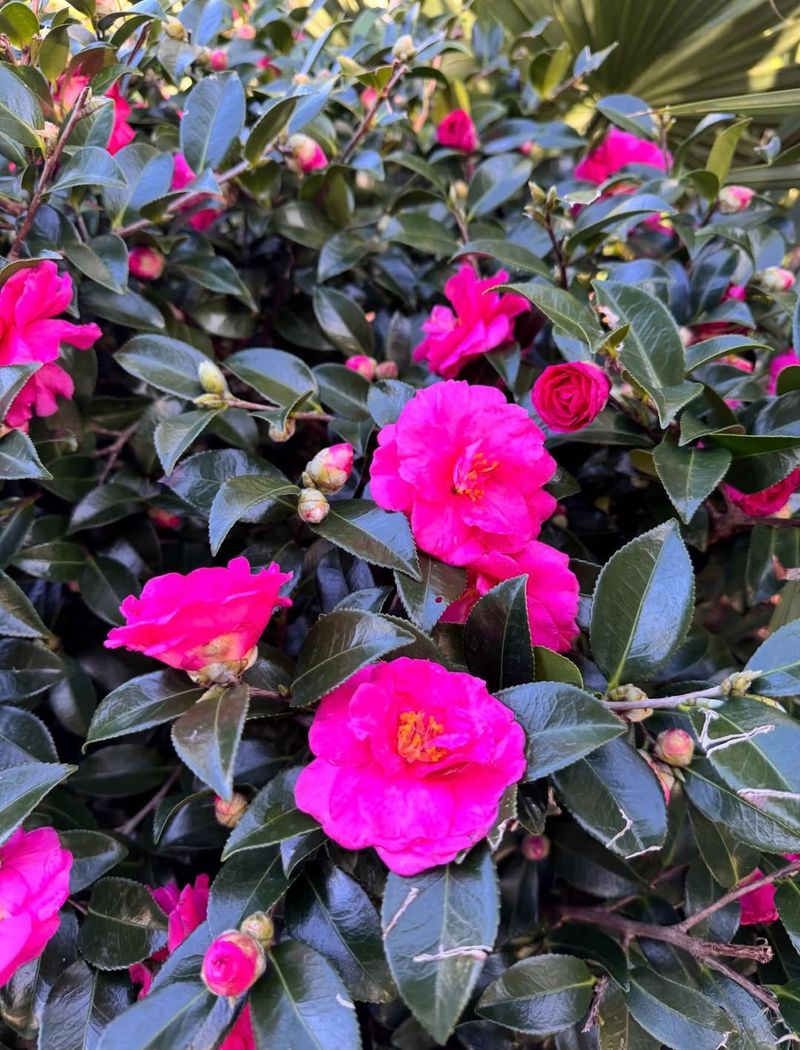
Few sights stop you in your tracks quite like a camellia covered in blooms on a cold February morning in Georgia.
Camellia japonica does exactly that, producing large, waxy flowers in shades of red, pink, white, and even soft lavender while most other shrubs are completely bare.
It blooms from late fall straight through winter and into early spring, giving Georgia gardens a steady anchor of color for months.
Planted in partial shade, camellias thrive in Georgia’s mild but unpredictable winters. They prefer acidic, well-drained soil, which matches much of Georgia’s natural ground composition.
A layer of mulch around the base helps keep roots comfortable during cold snaps without much extra effort on your part.
Camellia japonica shrubs can grow quite large over the years, so give them room when planting. Spacing them near a fence or along a shaded property line works well in most Georgia yards.
Varieties like ‘Professor Sargent’ and ‘Debutante’ are especially popular in the region for their reliability and flower size.
One thing worth knowing is that a hard frost can brown open blooms quickly. Choosing a spot with some overhead protection from a tree canopy can help extend the show.
Overall, no other winter-blooming shrub in Georgia delivers quite the same visual payoff with so little fuss.
Once established, these shrubs settle in for decades and often become a permanent focal point in the landscape. Even when not in bloom, their glossy evergreen leaves keep Georgia yards looking structured and intentional through every season.
2. Lenten Rose Flowering Reliably Before Spring Arrives
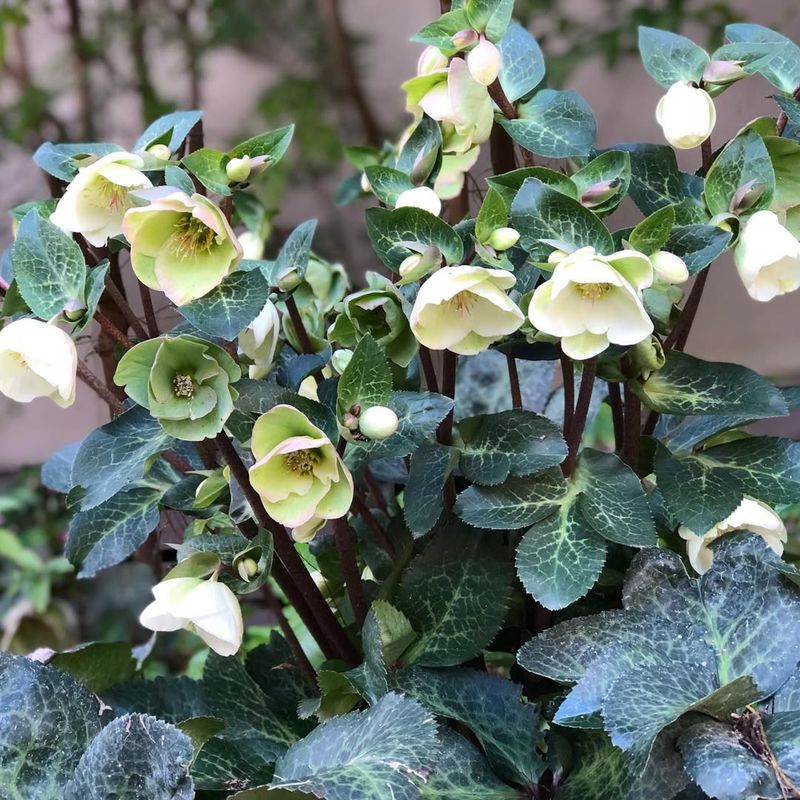
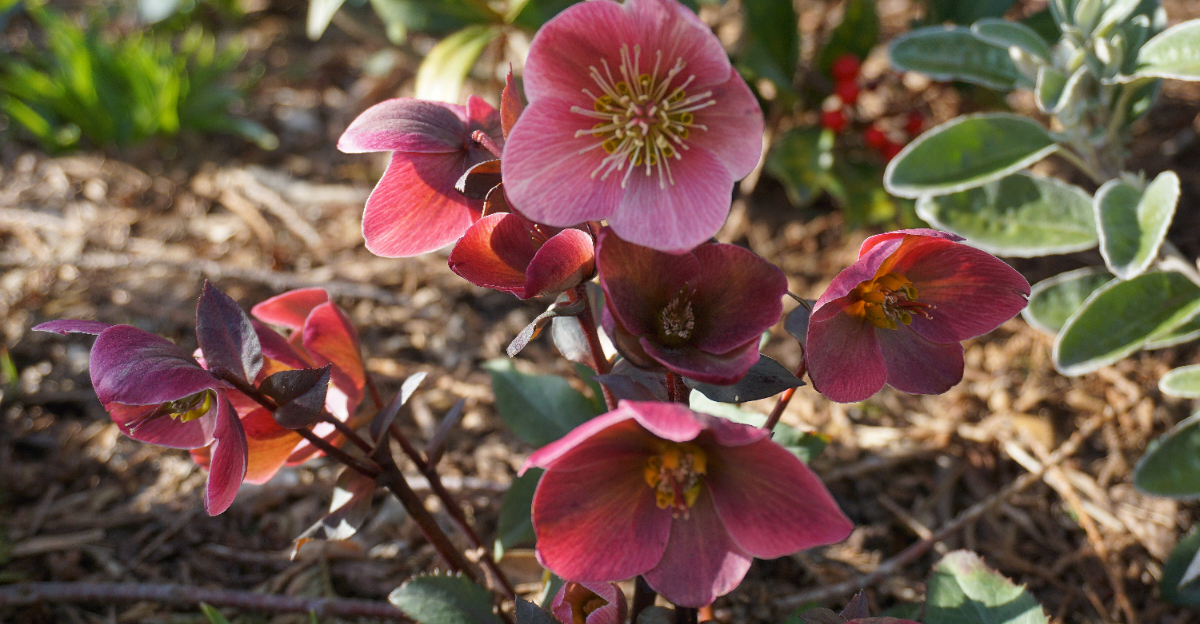
Hellebores have earned a loyal following in Georgia gardens, and it is easy to understand why once you see them blooming in February when almost nothing else is.
Lenten roses push up thick, nodding flowers in dusty purples, creamy whites, and soft pinks right in the middle of the coldest stretch of late winter.
Unlike many plants that need coaxing, hellebores simply show up and perform without much intervention.
Shaded spots under trees or along north-facing foundations suit them perfectly. Gardeners across Georgia often tuck them beneath large oaks or magnolias where other plants struggle to grow.
Their evergreen foliage holds through winter, adding structure to the garden even when flowers are not open.
Lenten roses are slow to get established in their first year, but patience pays off. By year two or three, clumps fill in and bloom counts increase noticeably.
Your Georgia Garden Changes Every Week. Your Plan Should Too.
Gardening in Georgia changes quickly throughout the season. Every Friday you’ll receive a simple weekly plan showing exactly what to plant, prune, fertilize, harvest, and protect so you never miss the right timing.
Older plants in Georgia gardens often self-seed around the base, gradually spreading into a fuller ground cover over time.
Trimming back old foliage in late January before new flower stalks emerge helps showcase the blooms more clearly. Without that step, the old leaves can crowd out the flowers visually.
For Georgia gardeners who want reliable late winter color in shaded spots, Lenten roses are one of the most dependable choices available in any nursery.
3. Winter Jasmine Brightening Bare Stems In Late Winter
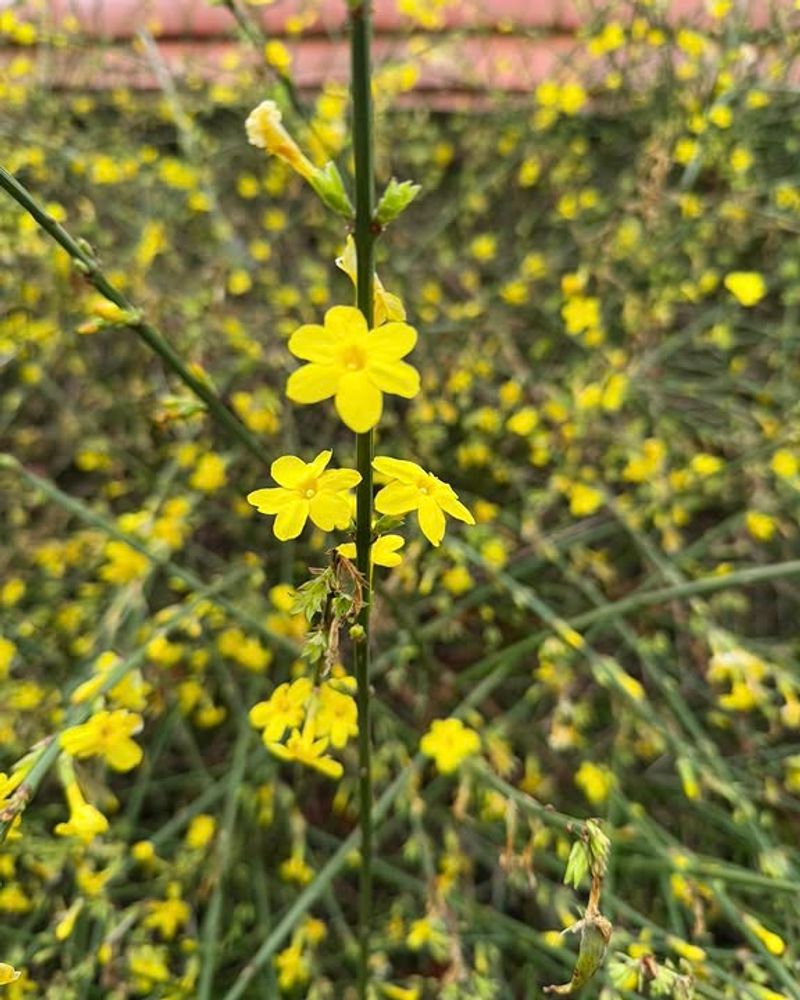
Bright yellow flowers on bare green stems sounds almost too cheerful for January, but winter jasmine pulls it off without any drama.
Jasminum nudiflorum blooms before its leaves appear, covering long arching canes in small yellow flowers that pop against the dull winter landscape in Georgia.
It is one of those plants that surprises people who do not know it, because it looks like spring arrived weeks early.
Winter jasmine grows well as a sprawling shrub or trained along a wall or fence. In Georgia, it handles the occasional hard freeze without losing its flower buds, which is a real advantage during unpredictable late winter weather.
It is not a climbing plant, so it needs some support or a slope where it can cascade naturally.
Pruning right after flowering keeps winter jasmine tidy and encourages better blooms the following season. Without pruning, the canes can get quite tangled and dense.
A hard cutback every few years helps rejuvenate older plants that have started to look woody and sparse.
This plant does not get nearly enough credit in Georgia landscapes. Most gardeners reach for forsythia for yellow winter color, but winter jasmine blooms even earlier and handles shadier spots better.
If your yard has a bank, wall, or fence that needs some life in late winter, winter jasmine is worth adding to the planting list this season.
4. Flowering Quince Adding Bold Color Before Leaf-Out
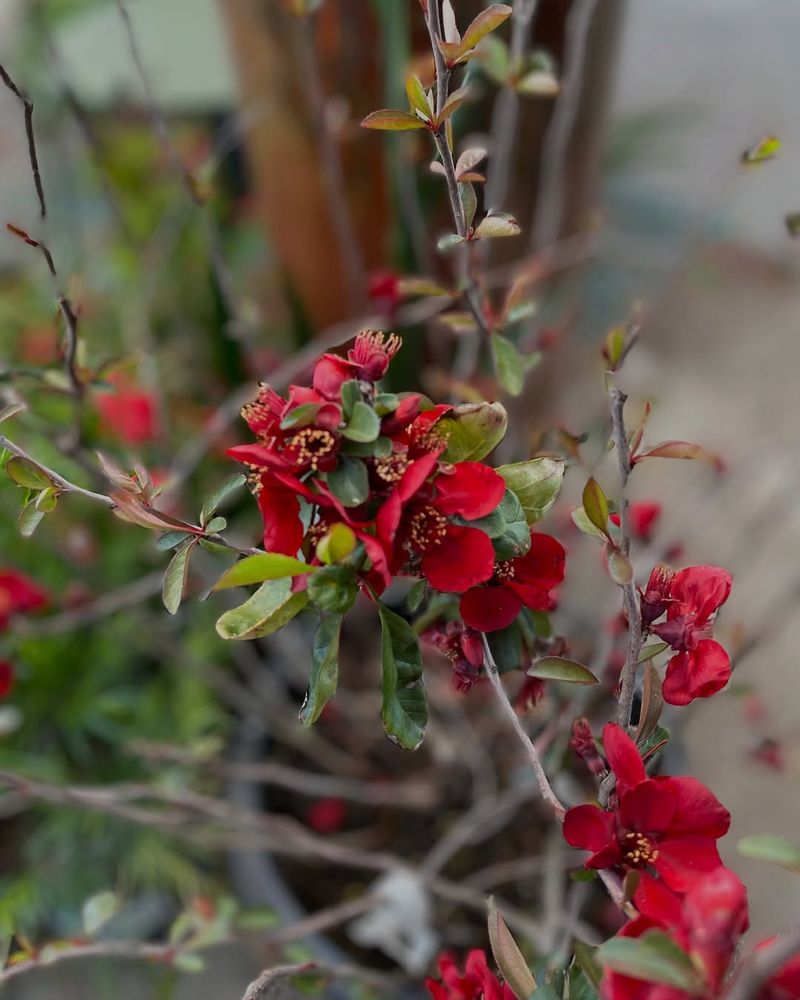
Flowering quince does not ease into the season gently. It explodes with clusters of bright orange, red, or coral flowers directly on bare thorny branches, sometimes as early as late January in Georgia.
Before a single leaf appears, the color is already there, bold and unapologetic. It is one of the more dramatic late winter shrubs available to Georgia gardeners.
Chaenomeles speciosa tolerates a wide range of soil conditions and handles Georgia’s occasional late freezes well. Full sun brings out the heaviest flower production, though it manages in partial shade too.
Planting it along a fence line or at a property border gives it room to spread while also providing some structure to the landscape.
After blooming, small quince fruits develop that are not particularly tasty raw but can be used for jelly. Most Georgia gardeners grow it purely for the flowers, though the fruit adds a bit of late-season interest.
Birds occasionally visit the branches for shelter as well, which is a bonus.
Pruning flowering quince right after it finishes blooming helps control its size and shape. Left alone, it can reach six feet tall and wide fairly quickly.
If you want a shrub that delivers a real burst of color in late winter without needing much attention through the rest of the year, flowering quince fits that role well across most of Georgia.
5. Early Daffodils Signaling The Seasonal Shift
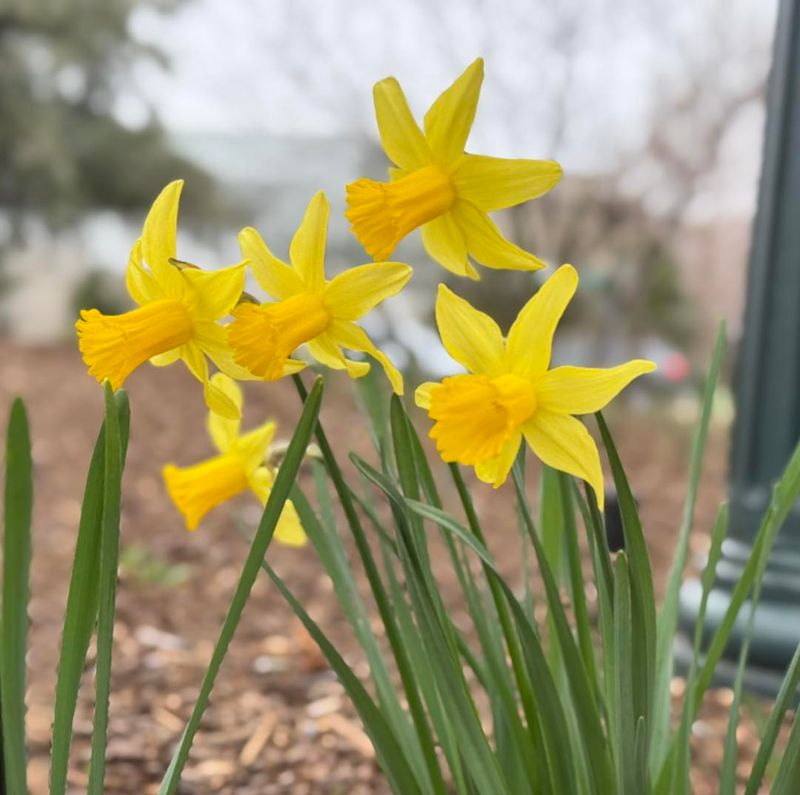
Something about the first daffodil of the year feels like a personal message from the ground that winter is losing its grip.
In Georgia, early-blooming varieties like ‘February Gold’ and ‘Tete-a-Tete’ push up in late January or early February, well ahead of most spring bulbs.
They are small but determined, and once you plant them, they come back every year without any replanting needed.
Daffodils prefer full sun and good drainage. In Georgia, planting them on a slight slope or in raised beds prevents bulb rot during wet winter stretches.
Sandy loam soils common in parts of central and south Georgia actually suit them well. Bulbs planted in fall bloom reliably the following late winter with minimal care.
Squirrels and deer leave daffodils alone, which is a meaningful advantage in many Georgia neighborhoods and rural properties. Unlike tulips, which need protection, daffodils can be planted and largely forgotten until they surprise you with color.
Naturalizing them in lawn areas or under deciduous trees creates a cheerful look in late winter.
After blooming, let the foliage fade completely before removing it. Cutting the leaves too early reduces next year’s bloom.
Mixing early daffodils with later-blooming varieties extends the color show from late winter well into mid-spring, giving Georgia gardens a rolling wave of yellow that connects the two seasons smoothly.
6. Forsythia Covering Branches In Bright Yellow
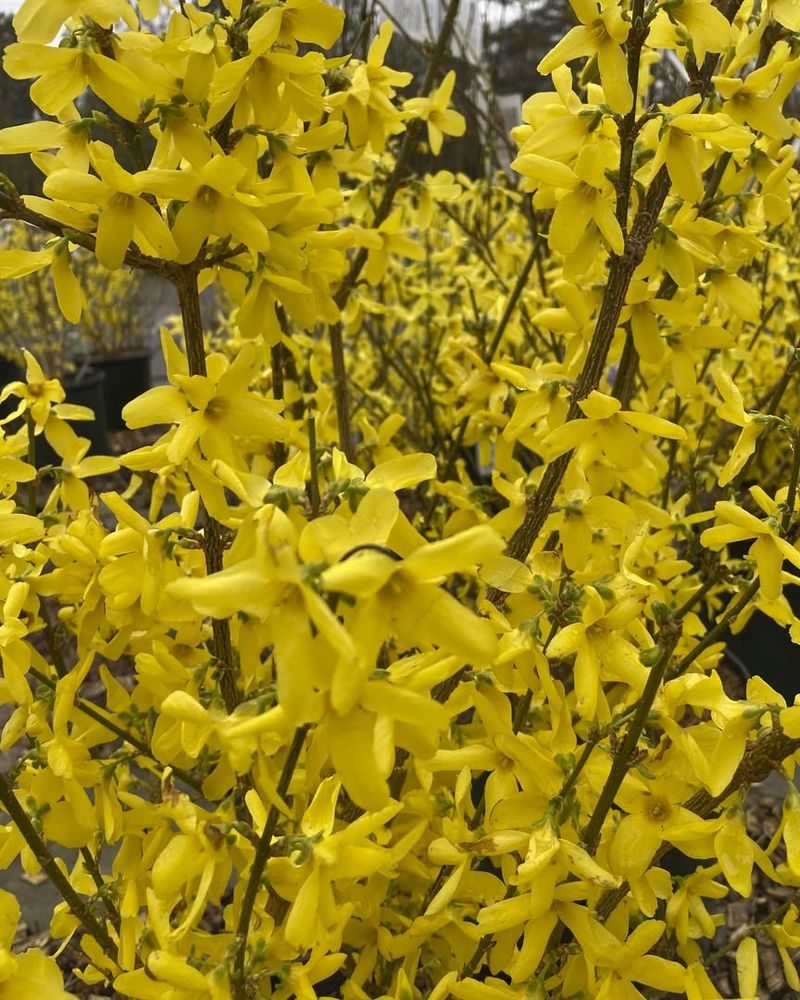
Forsythia is basically impossible to miss in late winter across Georgia. Those long arching branches erupt in solid yellow before any leaves show up, turning ordinary yards into something worth stopping to look at.
It is one of the earliest shrubs to bloom each year, and in Georgia, it can start flowering in late January during mild stretches.
Full sun is where forsythia performs best. It grows quickly and can reach eight feet tall and wide without much encouragement.
Gardeners who want a natural privacy screen or a colorful hedge along a property line find forsythia very practical for that purpose in Georgia landscapes.
Timing the pruning correctly matters more with forsythia than most people realize. Pruning in fall or winter removes the flower buds for the upcoming season.
Right after blooming finishes in late winter or early spring is the window to trim it back without sacrificing next year’s show.
Forsythia is not subtle, and that is part of its appeal. It announces itself loudly at a time of year when the landscape in Georgia really needs some energy.
Pairing it with early-blooming white spirea or pink flowering quince nearby creates a layered color display that carries the yard from late winter into early spring. Few shrubs give back as much visual impact for the amount of care they require.
It settles in quickly and handles Georgia’s temperature swings without much complaint, rarely dealing with serious pest problems.
After the bright yellow fades, dense green growth fills in fast, keeping hedges and borders looking full and structured through the rest of the growing season.
7. Pansies And Violas Holding Strong Through Late Winter
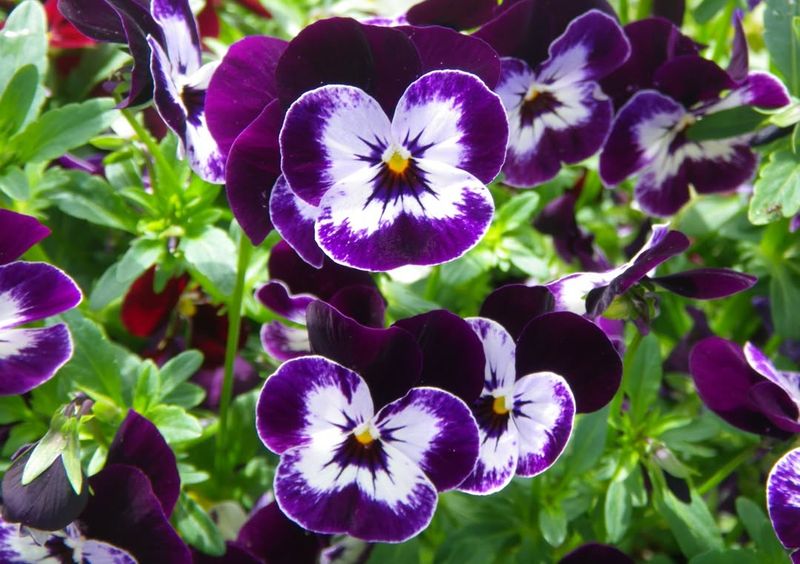
Pansies and violas are the workhorses of the Georgia winter garden, and they rarely get enough credit for it. Planted in fall, they bloom on and off through winter and then hit their stride in late winter when temperatures start to moderate.
By February, a well-planted bed of pansies in Georgia looks genuinely full and colorful without any intervention since fall.
Both plants handle frost well, sometimes looking a bit wilted after a hard freeze but bouncing back within a day or two once temperatures rise.
Violas tend to be slightly more cold-tolerant and smaller-flowered than pansies, but both do the job of keeping color alive in Georgia gardens through the coldest weeks of the year.
Regular deadheading keeps the blooms coming. Pinching off spent flowers every week or two prevents the plants from putting energy into seed production and encourages more flowers instead.
Fertilizing lightly every few weeks through late winter also helps pansies stay vigorous when cool temperatures slow nutrient uptake in the soil.
Pansies and violas work well in containers, window boxes, and garden beds throughout Georgia. Mixing colors in a single container creates a cheerful display near an entryway or on a porch.
As spring arrives, they will eventually fade out as heat builds, but for the entirety of late winter, they are among the most consistent bloomers available to Georgia gardeners at any price point.
8. Eastern Redbud Beginning Its Early Spring Display
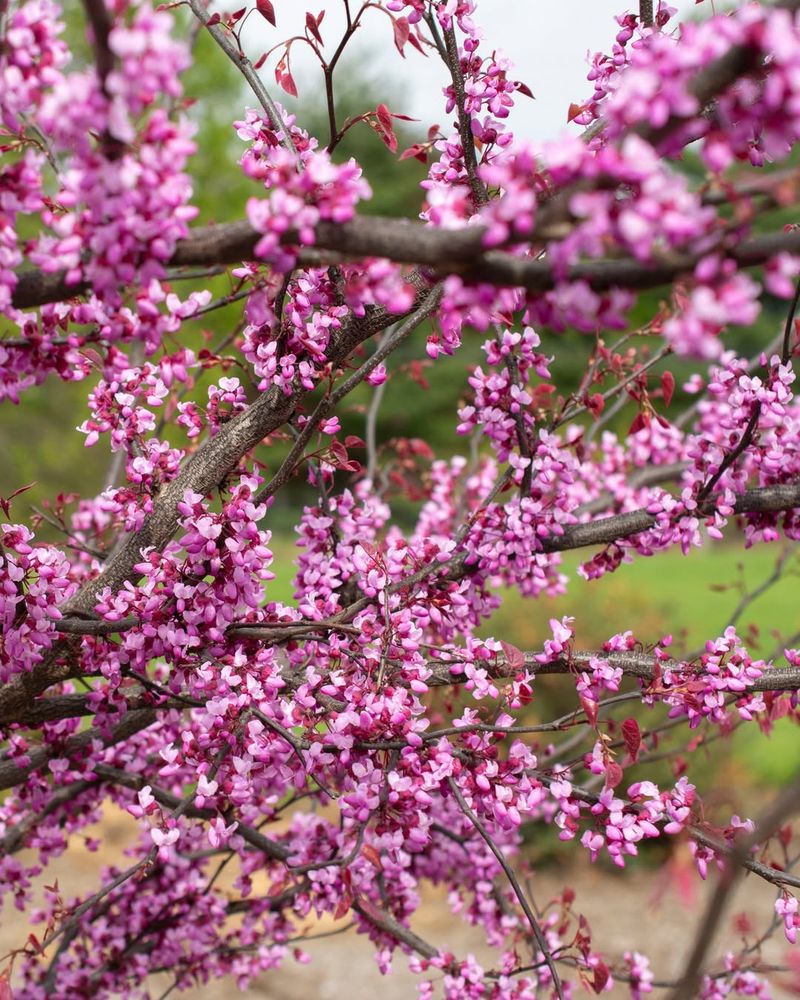
Eastern redbud is the tree that makes you pull over and stare in late February and early March across Georgia.
Branches that looked completely bare just weeks earlier suddenly flush with bright magenta-pink flowers from trunk to tip, creating one of the most striking displays of any native tree in the region.
It bridges late winter and early spring in a way few other plants can match.
Cercis canadensis grows throughout Georgia in a range of conditions, from heavy clay to sandy loam. It tolerates partial shade but blooms most heavily in full sun.
Planting one near a window gives you a front-row seat to the show each year without ever having to step outside in the cold.
Young redbud trees establish quickly and often start blooming within two to three years of planting. Growth is moderate, and most trees reach fifteen to twenty feet tall over time.
The heart-shaped leaves that follow the flowers add seasonal interest through summer and turn yellow in fall before dropping.
Redbud pairs beautifully with white-blooming dogwoods that open a few weeks later, creating a natural color sequence across the Georgia landscape. Planting both together in a yard extends the flowering display from late winter into mid-spring.
For anyone who wants a low-effort tree that delivers a dramatic seasonal moment year after year, Eastern redbud is one of the best choices available for Georgia properties.