The Hydrangea Variety That Handles Georgia’s Clay Soil With Ease
Clay soil in Georgia can test your patience fast. It holds water longer than you expect, drains slower than you’d like, and makes some plants struggle no matter how much effort you put in.
If hydrangeas have disappointed you before, the soil might be the real reason.
The good news is not every hydrangea gives up in heavy ground. One variety stands out for staying strong, blooming reliably, and adapting to those dense conditions without constant soil amendments.
If you want full, dependable blooms without fighting your yard every season, choosing the right hydrangea from the start makes all the difference.
1. Hydrangea Quercifolia Is The Native Shrub That Thrives In Georgia Clay
Oakleaf hydrangea was born for Georgia conditions. While other hydrangeas come from Asia or northern climates where soil stays loose and moisture stays consistent, this species evolved right here in the Southeast.
It spent thousands of years adapting to the exact clay composition, summer humidity, and temperature swings that define Georgia gardens.
Oakleaf hydrangea establishes a sturdier root system than many bigleaf hydrangeas once it settles in. While it still prefers soil that drains reasonably well, it adapts to heavier ground without the constant stress that other types often show.
After the first year or two, established plants handle short dry stretches more steadily and stay better anchored in dense Georgia clay than fussier varieties.
Georgia gardeners often amend soil heavily before planting most hydrangeas, mixing in compost and sand to improve drainage. With oakleaf hydrangea, that extra work becomes optional.
The shrub tolerates clay straight from the ground, though it still appreciates a layer of mulch to moderate temperature extremes.
You’ll find it growing naturally along creek banks and woodland edges throughout north Georgia, where clay dominates and drainage varies from spot to spot.
Planting one means working with your soil instead of fighting it. The shrub handles short wet stretches better than many hydrangeas, as long as the site doesn’t stay consistently waterlogged.
Its flexibility comes from generations of surviving in variable southeastern conditions, not from careful breeding in a nursery.
That native advantage shows up in stronger growth and fewer problems compared to imported varieties that struggle with Georgia’s reality.
2. Deep Roots That Push Through Heavy, Compact Soil
Clay soil in Georgia packs down tightly and can make it difficult for many ornamental shrubs to establish strong growth. Oakleaf hydrangea adapts more reliably than most hydrangea types once it settles in.
While it still performs best in soil that drains reasonably well, it tolerates heavier clay without the constant stress that bigleaf varieties often show.
During the first year, consistent watering helps it establish. After that, mature plants become noticeably steadier through Georgia’s hot midsummer periods.
Mulch plays an important role, helping regulate soil temperature and preserve moisture during dry stretches.
Georgia clay can actually work in the plant’s favor once established, because it holds moisture longer than sandy soils.
As long as the site does not remain consistently waterlogged, oakleaf hydrangea remains stable through both wet springs and dry summers.
Your Georgia Garden Changes Every Week. Your Plan Should Too.
Gardening in Georgia changes quickly throughout the season. Every Friday you’ll receive a simple weekly plan showing exactly what to plant, prune, fertilize, harvest, and protect so you never miss the right timing.
That adaptability makes it a dependable choice for landscapes where soil conditions fluctuate throughout the growing season.
3. Oakleaf Foliage That Stays Strong Through Humid Summers
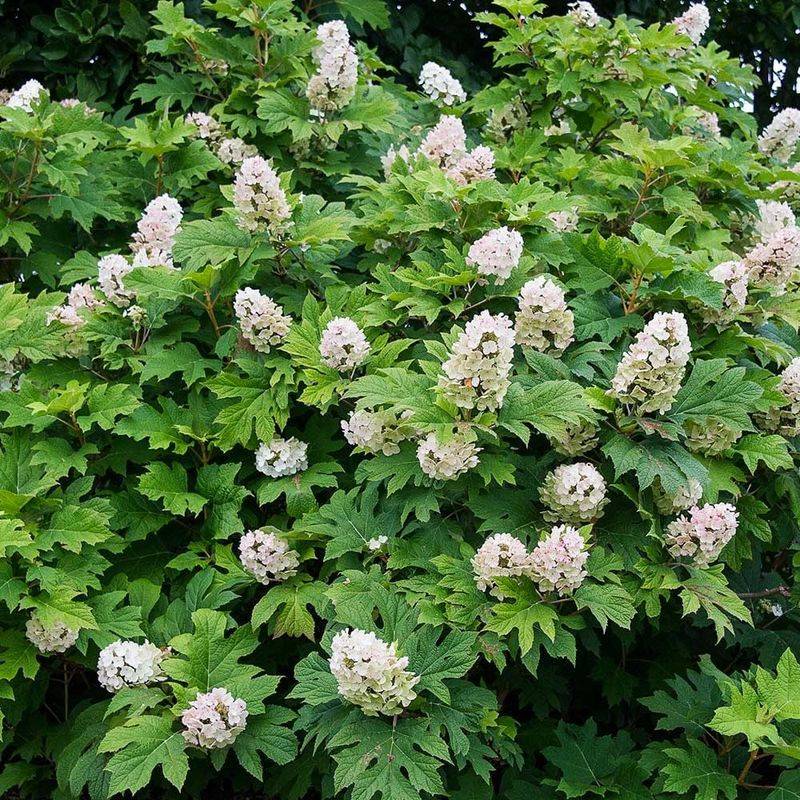
Summer humidity in Georgia creates perfect conditions for fungal diseases. Powdery mildew, leaf spot, and blight attack most hydrangea varieties when moisture sits on foliage during warm nights.
Oakleaf hydrangea leaves handle that humidity without the constant disease pressure that plagues other types.
Leaf structure makes the difference. Each leaf grows thick and leathery with a texture that sheds water quickly instead of holding it on the surface.
Morning dew runs off before the sun rises, reducing the window when fungal spores can germinate.
The leaves also have natural resistance to common southeastern pathogens, developed through centuries of exposure in native habitats from Georgia to Florida.
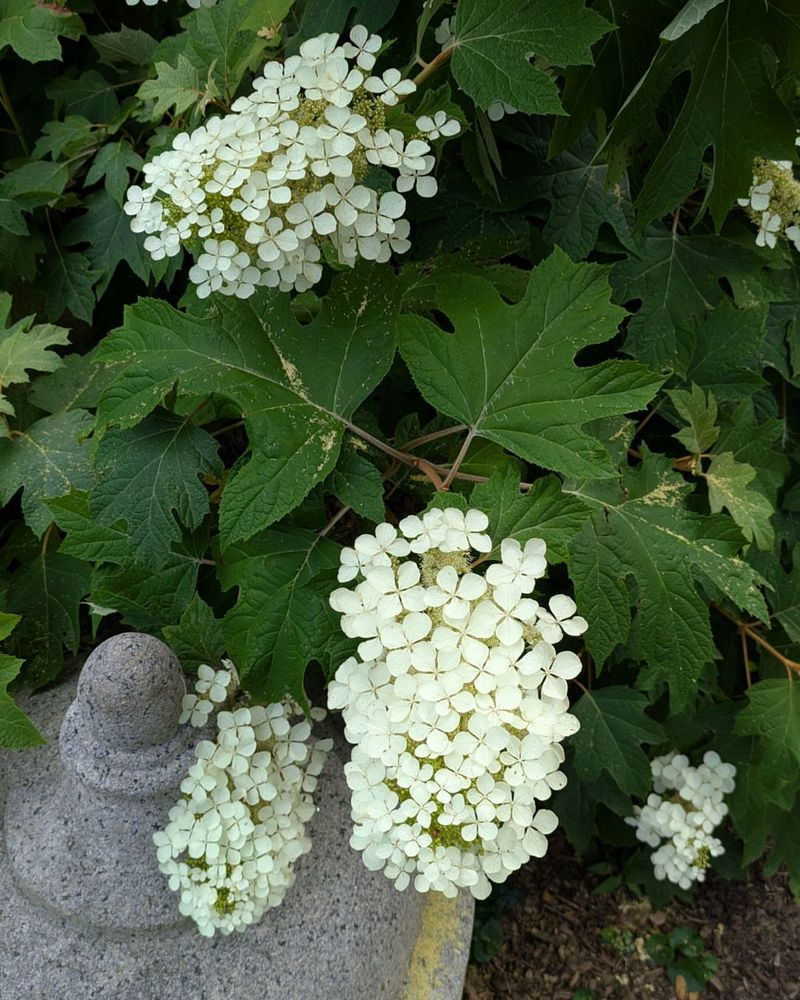
Those distinctive oak-shaped leaves aren’t just decorative. Their lobed design increases air circulation around the plant compared to the smooth, rounded leaves on mophead hydrangeas.
Better airflow means less moisture trapped inside the canopy, which translates to fewer disease problems throughout the growing season.
You’ll notice the difference in late summer when other hydrangeas show spotted, yellowing foliage while oakleaf varieties stay clean and green.
Heat tolerance in the foliage extends the plant’s usefulness in Georgia landscapes. While bigleaf hydrangeas often scorch and brown when temperatures push into the mid-90s, oakleaf hydrangea leaves maintain their color and structure.
They don’t wilt dramatically during hot afternoons, so the shrub looks presentable even during the worst summer weather.
That resilience means less stress for both plant and gardener when Georgia’s climate tests ornamental plantings from June through September.
4. Large Cone-Shaped Blooms That Hold Their Shape In Southern Heat
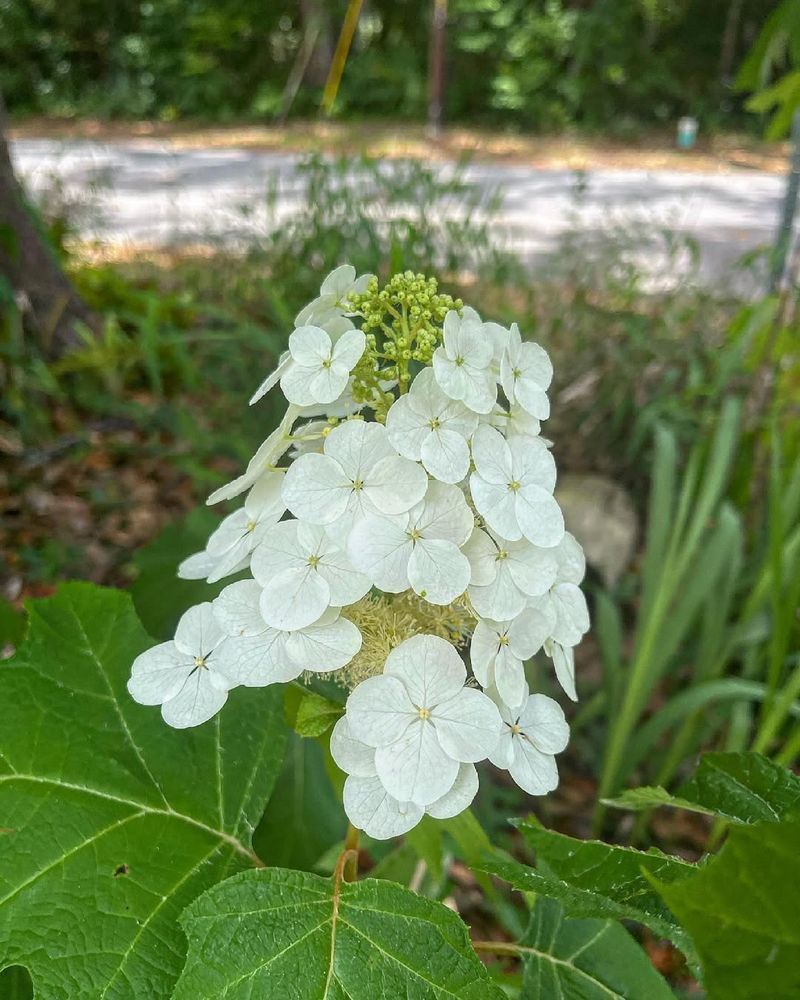
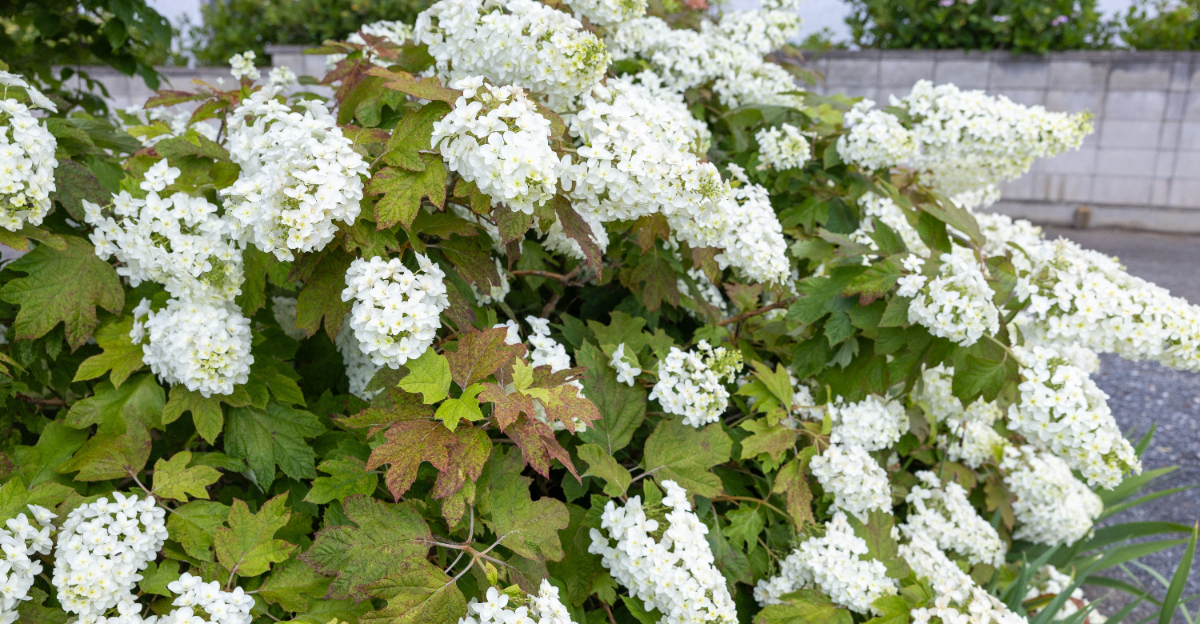
Flower clusters on oakleaf hydrangea grow in upright cones that can reach twelve inches long. Unlike the round mophead flowers that droop and fade quickly in Georgia heat, these cone-shaped blooms stand firm through summer temperatures.
The structure holds even when thermometers hit 95 degrees and humidity makes the air feel like soup.
Bloom timing works perfectly for the southern growing season. Flowers open in late May or early June, just as spring transitions into summer.
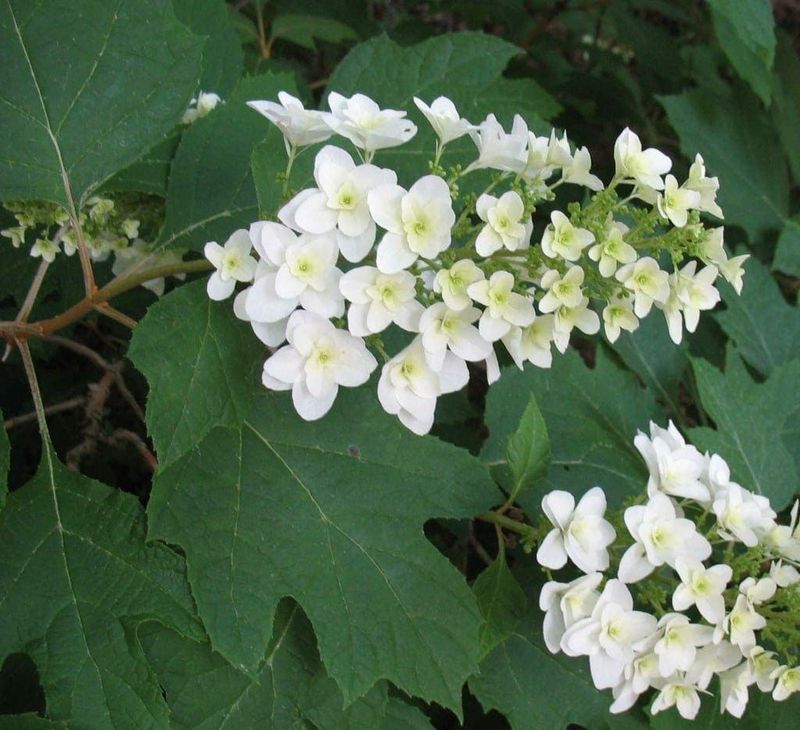
They start bright white, almost glowing against dark green foliage, then gradually shift to pink and finally bronze as they age.
That color progression extends the visual interest for months, giving you three different looks from the same flower cluster without any extra effort.
Heat doesn’t collapse these blooms the way it does with other hydrangea types. The individual florets that make up each cone have thicker petals that resist wilting.
They dry on the plant instead of dropping or turning brown and mushy, creating a natural dried flower effect that some gardeners prefer to the fresh blooms.
By late summer, those aged flowers add texture and subtle color that complements fall perennials and grasses.
Georgia gardens benefit from flowers that don’t demand constant deadheading or cleanup. The cones stay attractive even as they fade, so you can leave them on the shrub through autumn if you want.
Some gardeners cut them for dried arrangements, but many prefer to let them stand as winter interest. That durability in heat and humidity makes oakleaf hydrangea more practical than fussier varieties that require regular grooming to look presentable.
5. A Shrub That Handles Drainage Challenges Better Than Most Hydrangeas
Drainage problems plague Georgia landscapes. Clay soil either holds water too long after heavy rain or bakes dry and repels moisture during droughts.
Most hydrangeas need consistent moisture with good drainage, a combination that’s nearly impossible to maintain in unimproved clay. Oakleaf hydrangea tolerates both extremes without the root rot or stress that affects other varieties.
Spring rains in Georgia can dump several inches in a single storm. Clay soil turns into a muddy basin that stays saturated for days or weeks, creating anaerobic conditions that suffocate most plant roots.
Oakleaf hydrangea roots tolerate temporary waterlogging better than bigleaf or panicle types. They can sit in wet soil during April and May without developing the root diseases that plague less adaptable species.
Summer conditions flip to the opposite extreme. Clay dries out and forms a crusty surface that sheds water instead of absorbing it.
When rain finally arrives, it runs off before penetrating to root depth. Oakleaf hydrangea handles those dry spells without the dramatic wilting you see with other hydrangeas.
Its deep roots find moisture below the dry surface layer, keeping the plant functional even when top growth looks stressed.
That flexibility means less intervention from you. Other hydrangea types need raised beds, amended soil, or irrigation systems to survive Georgia’s variable moisture patterns.
Oakleaf varieties adapt to whatever conditions develop, whether that means wet springs, dry summers, or unpredictable patterns that change from year to year.
The shrub’s native heritage prepared it for exactly these challenges, making it reliable in situations where imported species simply fail.
6. Reliable Fall Color That Extends The Show Beyond Bloom Season
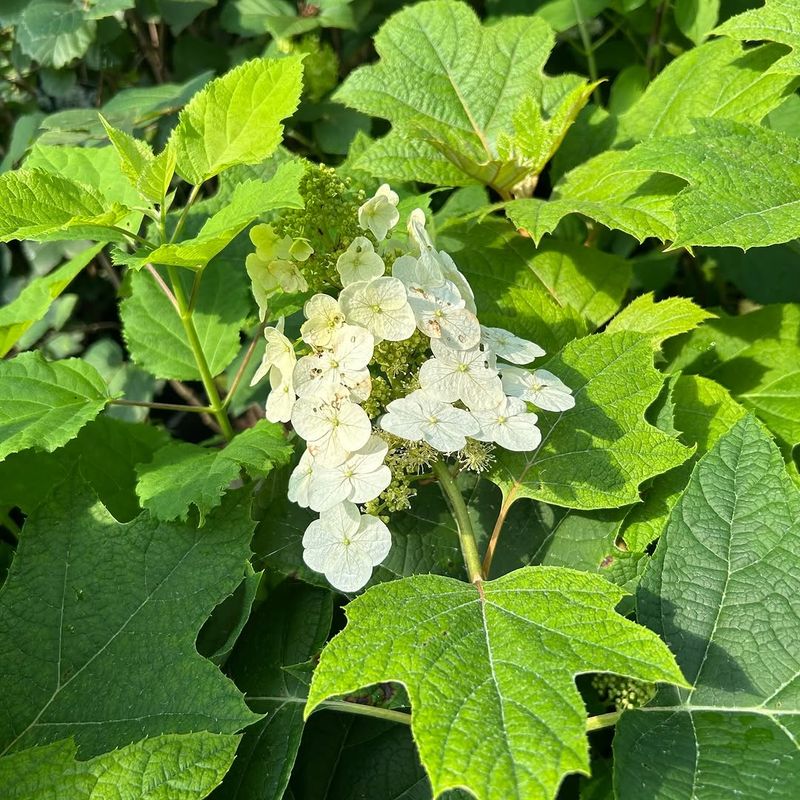
Fall color from oakleaf hydrangea rivals any ornamental shrub in Georgia landscapes. As temperatures cool in October, those oak-shaped leaves shift from green to deep burgundy, mahogany, and purple.
The transformation happens reliably every year, unlike some shrubs that color inconsistently depending on weather conditions.
Color intensity increases with sun exposure. Plants growing in full sun develop the deepest reds and purples, while those in partial shade lean toward softer burgundy tones.
Either way, you get a significant seasonal display that fills the gap between summer blooms and winter dormancy. The show typically peaks in late October through November, depending on where you are in Georgia and when the first frost arrives.
Leaves hold onto the plant longer than many deciduous shrubs. While other species drop foliage quickly after it colors, oakleaf hydrangea leaves persist for weeks.
That extended display gives you more value from the fall color and creates interest well into November or even early December during mild years.
The aged flower cones add to the autumn effect, standing above the colored foliage in shades of tan and bronze.
Georgia gardens need plants that perform across multiple seasons. Spring bulbs fade by May, summer perennials slow down in August heat, and many shrubs look dull by October.
Oakleaf hydrangea delivers in June with flowers, stays presentable through summer with clean foliage, then finishes strong with fall color.
That extended performance makes it more valuable than single-season plants that only look good for a few weeks each year.
7. Low-Maintenance Growth That Fits Natural And Structured Landscapes
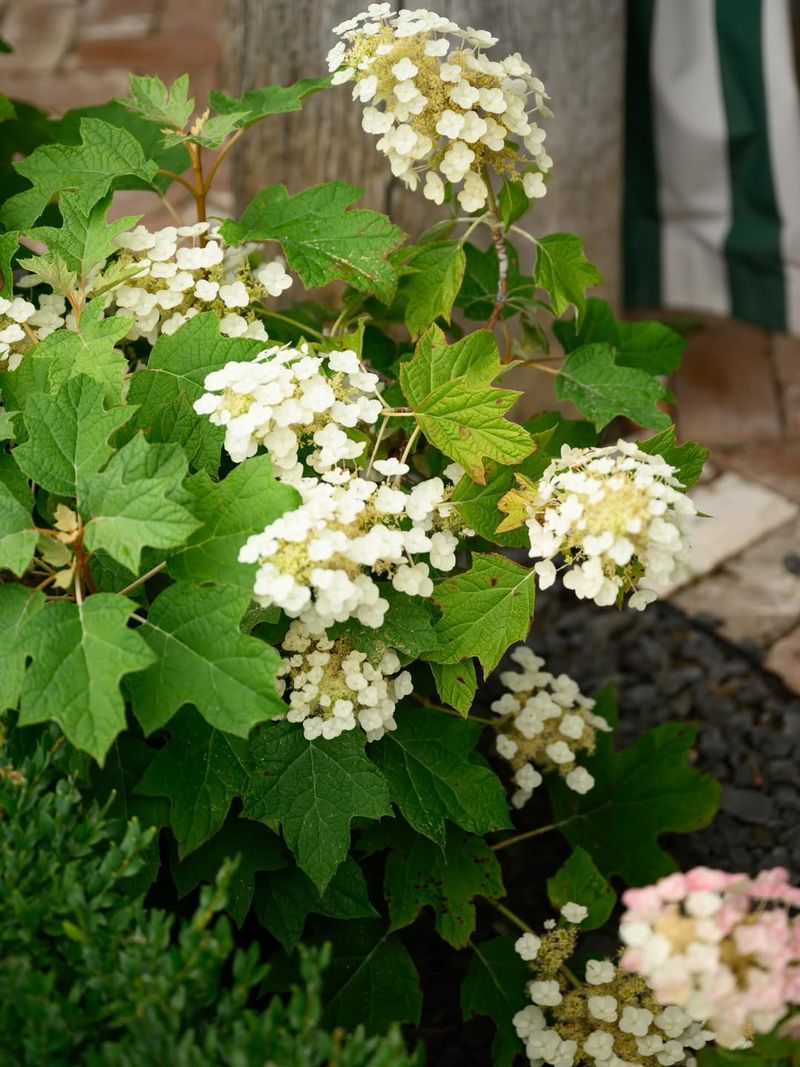
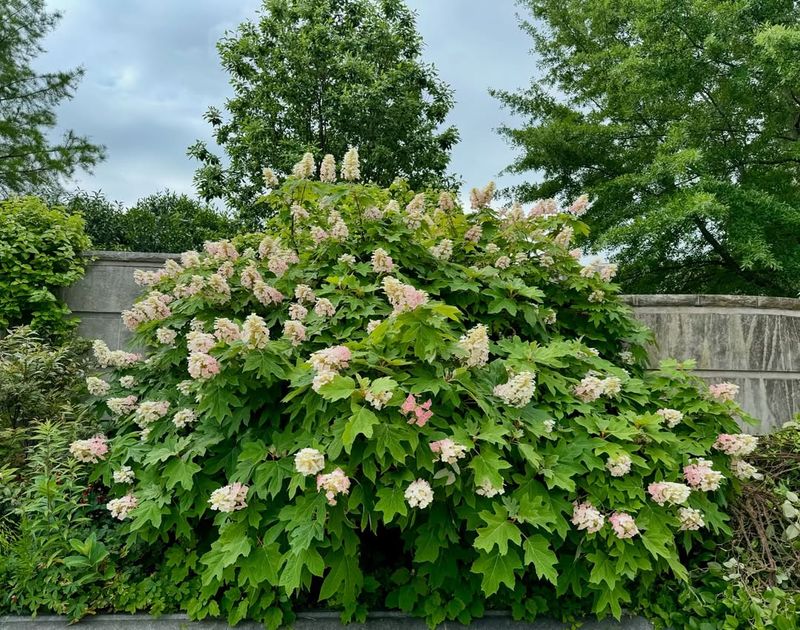
Oakleaf hydrangea grows into a rounded mound without constant shaping. The natural form reaches six to eight feet tall and equally wide at maturity, creating a substantial presence that works as a specimen plant or massed in groups.
Branches spread in layers that give the shrub depth and texture, eliminating the flat appearance of heavily pruned specimens.
Pruning requirements stay minimal compared to other flowering shrubs. You can remove damaged or lifeless wood in late winter and shape it lightly after blooming if needed, but the plant keeps a good form even without frequent pruning.
That hands-off approach appeals to gardeners who want attractive landscapes without weekly maintenance. The shrub doesn’t sucker aggressively or spread beyond its intended space, so you won’t spend time controlling unwanted growth.
Versatility in design makes oakleaf hydrangea useful across different landscape styles. It fits naturally into woodland gardens where native plants dominate, blending with ferns, hostas, and shade perennials.
The same shrub works equally well in structured foundation plantings around Georgia homes, providing mass and seasonal interest without looking wild or unkempt. That adaptability means you can use it confidently whether your style leans formal or casual.
Pest and disease resistance reduces the need for chemical interventions. Oakleaf hydrangea rarely attracts serious insect problems and resists the fungal diseases that plague other varieties in Georgia’s humid climate.
You won’t need regular spray schedules or constant monitoring to keep plants healthy.
That natural toughness, combined with clay soil tolerance and heat resistance, makes it one of the most reliable flowering shrubs for Georgia gardens where conditions challenge less adaptable species.