9 Ohio Flowers To Plant In Early Spring For Long Blooms
Snow still lingers in patches, the air carries a chill, and most gardens across Ohio look months away from color. Early spring tells a different story for those who plant at the right moment.
Beneath cool soil and shifting temperatures, certain flowers establish fast, push strong roots, and reward patience with weeks of steady blooms. Ohio’s spring swings from frost to warm sunshine without warning, so plant choice matters.
The strongest performers handle cold nights, surprise rain, and heavy clay soil without stalling. They do more than survive.
They build momentum that carries color deep into late spring and even early summer. Planting early sets the tone for the entire growing season.
With the right flowers in the ground now, your beds fill sooner, bloom longer, and create a vibrant start long before summer arrives.
1. Creeping Phlox Wakes Up Your Garden With A Carpet Of Color
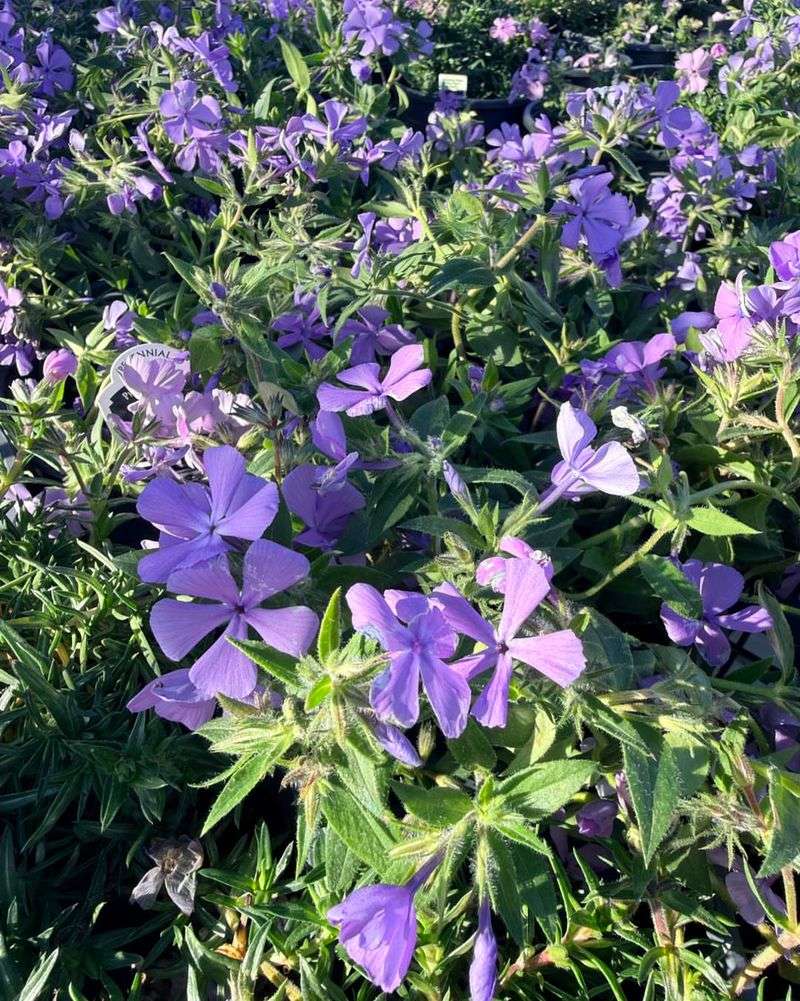
Few sights signal spring quite like a hillside covered in creeping phlox. This low-growing perennial spreads into a thick mat that explodes with color in April and May, right when Ohio gardens are shaking off winter.
The flowers come in shades of pink, purple, white, and blue, and they’re so dense you can barely see the foliage underneath.
Creeping phlox loves full sun and well-drained soil, but it’s surprisingly forgiving of Ohio’s heavy clay as long as water doesn’t sit around the roots. Plant it in early spring while the ground is still cool, and it will establish quickly.
Once settled in, it tolerates heat and drought better than most spring bloomers.
To keep your phlox looking its best year after year, give it a light shearing right after the flowers fade. This encourages thicker growth and prevents the center from thinning out.
In Ohio’s humid summers, good air circulation helps prevent any leaf spot issues, so avoid crowding plants too close together.
Creeping phlox works beautifully cascading over rock walls, edging pathways, or filling in slopes where grass struggles. Pair it with early bulbs like daffodils for a layered spring display that feels effortless.
2. Black Eyed Susan Keeps The Golden Blooms Going Strong
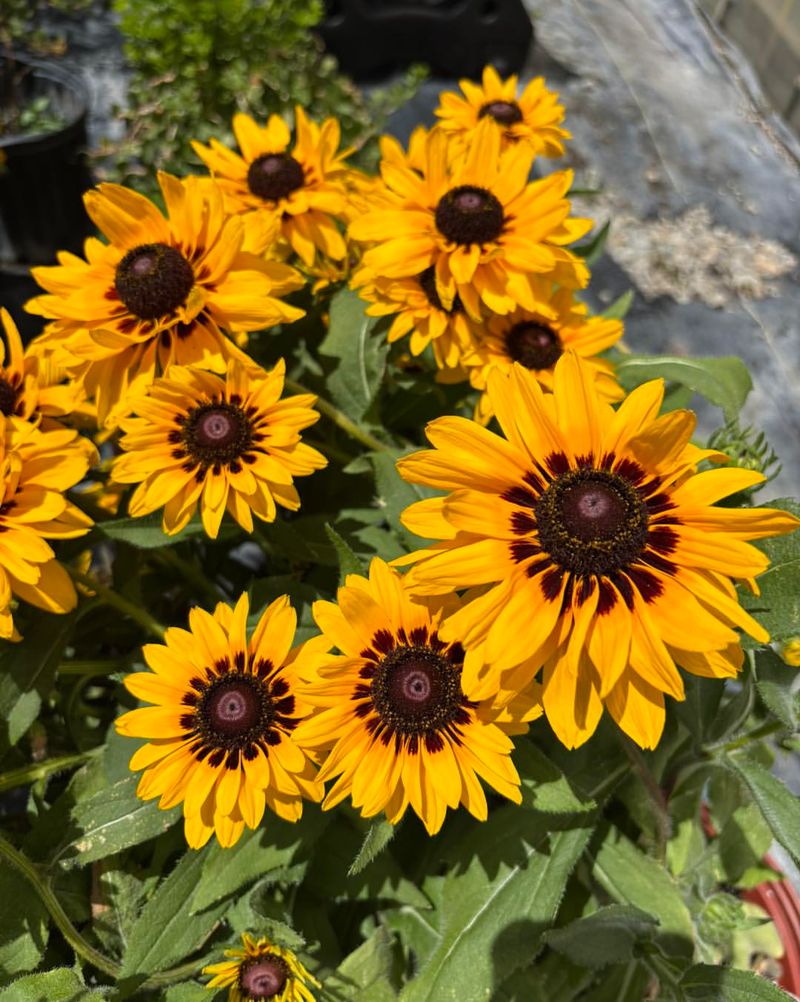
Golden petals with chocolate-brown centers make black-eyed Susans one of the most recognizable flowers in Ohio. Native to our state, these tough perennials start blooming in June and keep going strong through September if you treat them right.
They’re practically made for Midwest gardens, handling heat, humidity, and less-than-perfect soil without complaint.
Plant them in full sun for the best flower production, though they’ll tolerate a bit of afternoon shade. Black-eyed Susans aren’t picky about soil type and actually prefer lean conditions over rich, amended beds.
Too much fertility makes them floppy and reduces blooms.
The secret to keeping flowers coming all season is deadheading. Snip off spent blooms before they set seed, and the plant will push out new flowers instead of putting energy into seed production.
If you want to leave some seed heads for winter interest and feeding birds, wait until late August to stop deadheading.
Your Ohio Garden Changes Every Week. Your Plan Should Too.
Gardening in Ohio changes quickly throughout the season. Every Friday you’ll receive a simple weekly plan showing exactly what to plant, prune, fertilize, harvest, and protect so you never miss the right timing.
Pollinators go wild for black-eyed Susans. Bees, butterflies, and beneficial insects visit constantly, making these flowers a workhorse for supporting local wildlife.
They also make excellent cut flowers that last over a week in a vase.
3. Bee Balm Fills Your Garden With Bold Color And Buzz
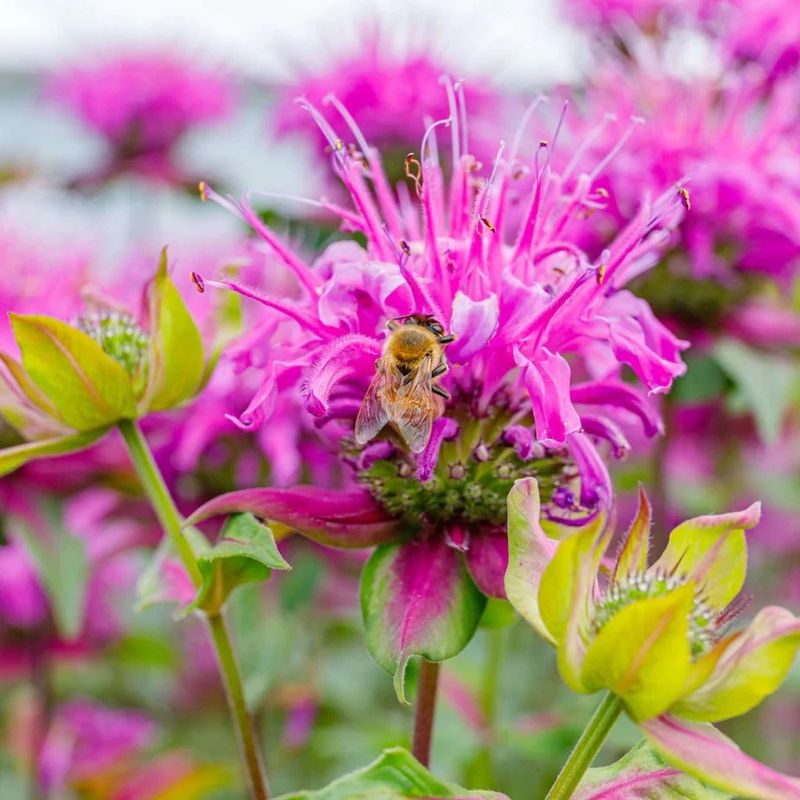
Hummingbirds and bees can’t resist bee balm, and once you see those shaggy, tubular flowers in shades of red, pink, purple, or white, you’ll understand why. Native to eastern North America, bee balm is perfectly adapted to Ohio’s climate and blooms from July through August when many spring flowers have faded.
Give bee balm full sun to light shade and space plants at least 18 inches apart. Crowding is the enemy here because good air circulation prevents the powdery mildew that can plague bee balm in Ohio’s muggy summers.
Newer varieties like ‘Jacob Cline’ and ‘Raspberry Wine’ offer better mildew resistance than older types.
Bee balm spreads through underground rhizomes and can get aggressive in rich, moist soil. Don’t worry though, it’s easy to dig up extras in spring and share with neighbors or move to new spots.
Dividing clumps every three years keeps plants vigorous and blooming heavily.
The flowers are edible with a minty, citrus flavor that’s wonderful in iced tea or salads. Deer tend to leave bee balm alone, which is a bonus for Ohio gardeners dealing with browsing wildlife.
Cut stems back after the first flush of blooms to encourage a second round of flowers in late summer.
4. Coneflower Brings Nonstop Blooms All Season Long
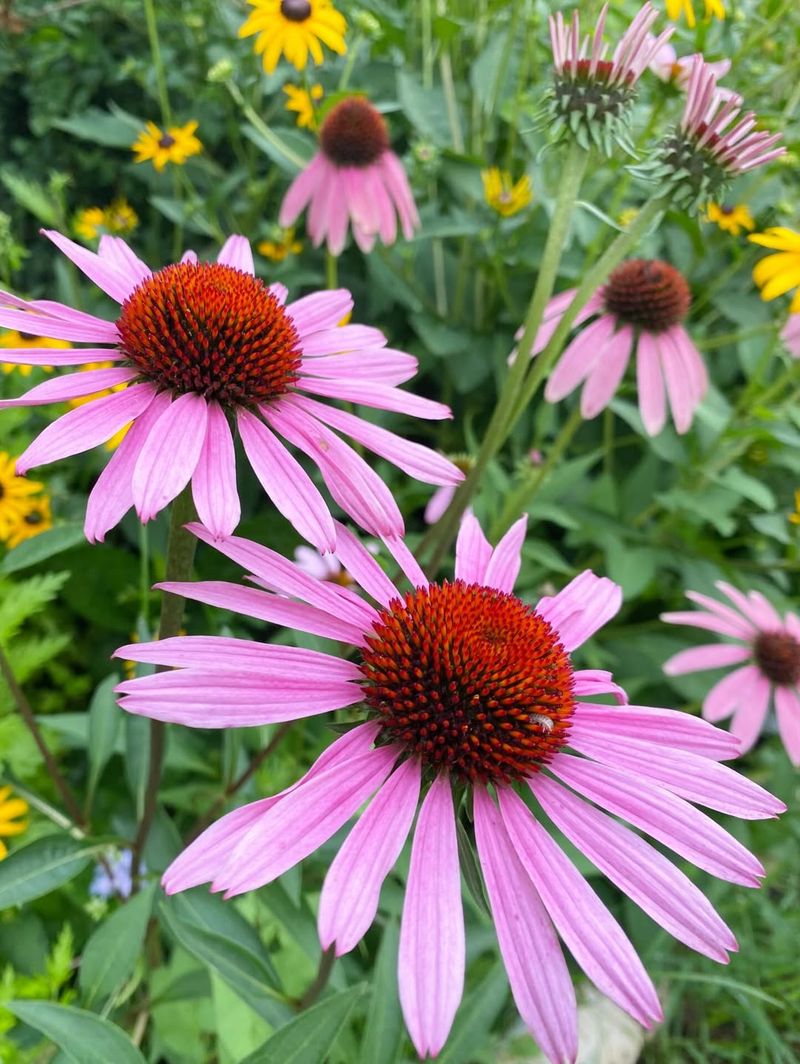
Tough, beautiful, and ridiculously easy to grow, coneflowers are a staple in Ohio gardens for good reason. The classic purple coneflower is native to our region and blooms from June through September, but you’ll also find varieties in white, yellow, orange, and coral if you want more color options.
Coneflowers thrive in zones 5 and 6, handling both our cold winters and hot summers without breaking a sweat. They prefer full sun and well-drained soil but tolerate clay and occasional drought once established.
These are perfect for low-maintenance beds where you want maximum impact with minimal fussing.
For the longest bloom period, deadhead spent flowers regularly through mid-August. This tricks the plant into producing more buds instead of setting seed.
Leave the last round of flowers in place come fall, and you’ll have architectural seed heads that look beautiful dusted with snow and provide food for goldfinches and other seed-eating birds.
Native purple coneflowers are more reliable in Midwest gardens than some of the fancy hybrids, which can be shorter-lived. Stick with straight species or proven varieties like ‘Magnus’ or ‘White Swan’ for plants that will return year after year.
Divide clumps every four years to maintain vigor.
5. Shasta Daisy Delivers Classic Beauty That Lasts
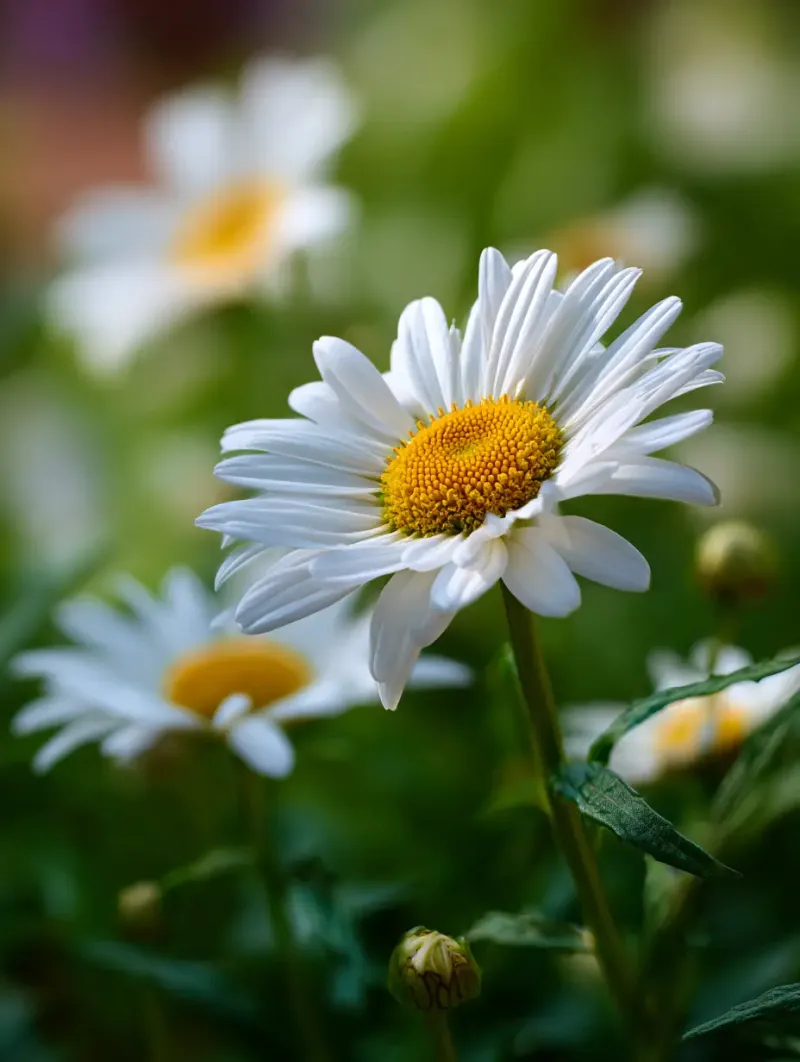
Cheerful white petals around a sunny yellow center make Shasta daisies a garden classic that never goes out of style. These perennials bloom from late May through July in Ohio, and with proper care, you can coax them into a second flush of flowers in early fall.
Plant Shasta daisies in early spring as soon as you can work the soil. They need full sun and soil that drains well, which can be tricky in Ohio’s clay-heavy ground.
Amend planting holes with compost to improve drainage, or plant in slightly raised beds to prevent root rot during wet springs.
Deadheading is essential for repeat blooms. Cut stems back to the base of the plant once flowers fade, and you’ll often get a bonus round of blooms in September.
Shasta daisies are heavy feeders, so a light application of balanced fertilizer in early spring supports strong flower production.
These daisies make excellent cut flowers that last over a week in arrangements. In the garden, they pair beautifully with purple coneflowers, black-eyed Susans, and ornamental grasses for a classic cottage garden look.
Divide clumps every two to three years in early spring to prevent the center from declining and to maintain vigorous blooming.
6. Virginia Bluebells Signal Spring With A Soft Blue Glow
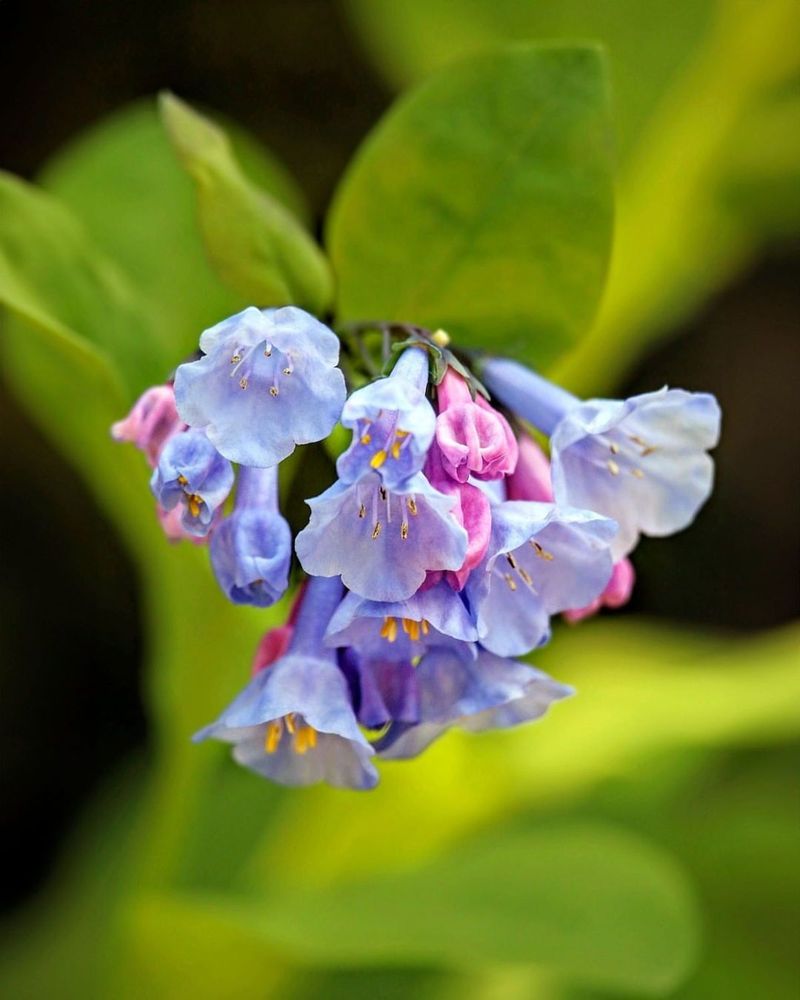
Woodland gardens come alive in April when Virginia bluebells unfurl their clusters of sky-blue, bell-shaped flowers. This Ohio native is an ephemeral, meaning it blooms early, sets seed, and then goes dormant by midsummer.
That disappearing act makes it perfect for layering with hostas, ferns, and other shade plants that fill in later.
Virginia bluebells prefer dappled shade and moist, rich soil similar to their native woodland habitat. They’re surprisingly adaptable though and will grow in sunnier spots if the soil stays consistently moist.
Plant them in early spring while they’re actively growing, spacing bulbs about 12 inches apart.
The flowers emerge pink and gradually shift to blue as they mature, creating a beautiful two-tone effect in the garden. Bluebells self-seed readily in favorable conditions, gradually forming larger colonies that create a stunning spring display.
Don’t worry about them becoming invasive; they’re well-behaved and easy to control.
Because the foliage goes dormant in summer, pair Virginia bluebells with plants that emerge later and will hide the bare spots. Hostas, astilbe, and ferns are perfect companions.
Mark where your bluebells are planted so you don’t accidentally dig them up while they’re dormant.
7. Wild Geranium Thrives Naturally And Blooms With Ease
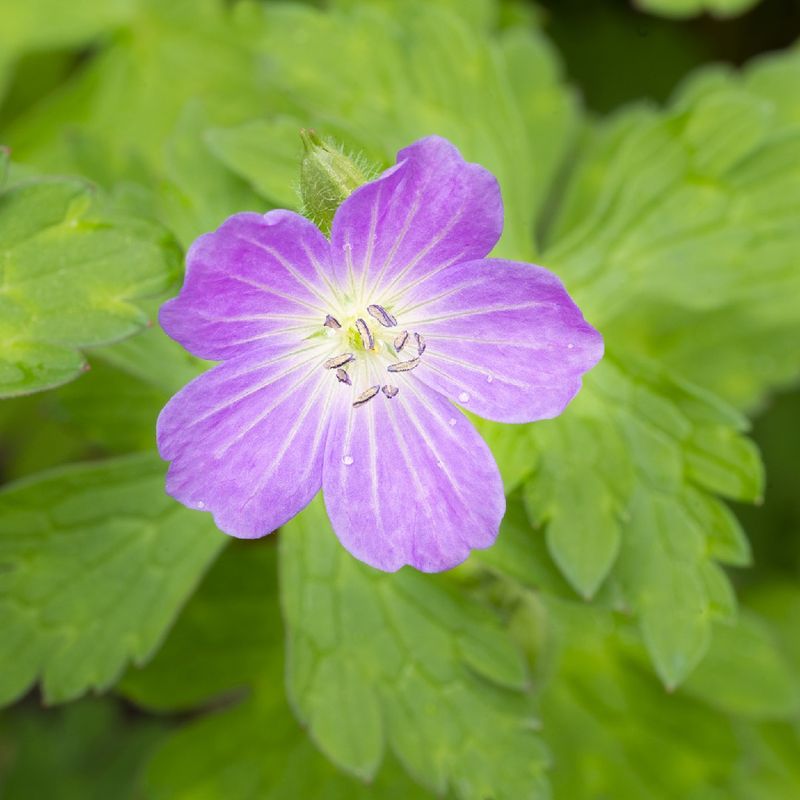
Delicate pink-purple flowers dance above deeply divided foliage when wild geranium blooms from April through June. This Ohio native thrives in partial shade and is one of the easiest perennials you can grow, asking for almost nothing while delivering reliable color every spring.
Wild geranium adapts to a range of light conditions, from bright shade to dappled sun under trees. It prefers moist, well-drained soil but tolerates drier conditions once established.
Plant it in early spring, and it will settle in quickly, often blooming the first year.
The flowers are relatively small but appear in such abundance that they create a soft haze of color across the garden. After blooming, the foliage remains attractive through summer, turning shades of red and orange in fall before going dormant.
This makes wild geranium a valuable four-season plant for shady areas.
Wild geranium self-seeds modestly, gradually spreading into small colonies without becoming aggressive. It pairs beautifully with other native woodland plants like trilliums, bloodroot, and ferns.
Deer and rabbits generally leave it alone, which is a significant advantage in areas with heavy wildlife pressure.
Divide clumps in early spring or fall if you want to spread them around the garden or share with friends.
8. Evening Primrose Lights Up Beds With Sunny Flowers
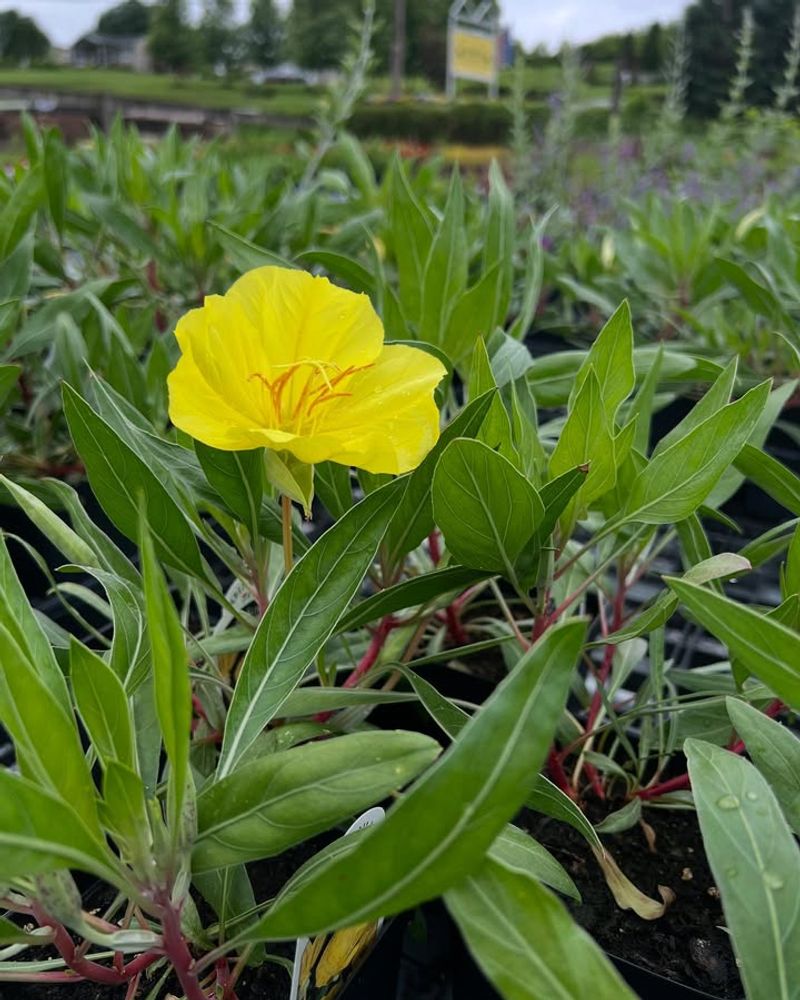
Bright yellow flowers that seem to glow in late afternoon light make evening primrose a standout in summer gardens. This tough perennial blooms from June through September, opening fresh flowers daily that stay open through the next morning.
It’s native to North America and perfectly suited to Ohio’s growing conditions.
Evening primrose thrives in full sun and tolerates poor, dry soil better than most perennials. It’s an excellent choice for challenging spots like parking strips, gravel gardens, or clay soil that bakes hard in summer.
Plant it in early spring, and it will establish quickly with minimal care.
The flowers attract moths and other nighttime pollinators, adding an element of evening garden interest. During the day, bees and butterflies visit frequently.
Evening primrose can self-seed enthusiastically in ideal conditions, so deadhead spent flowers if you want to control its spread, or let it naturalize in informal areas.
This plant is surprisingly drought-tolerant once established, making it valuable during Ohio’s occasional dry summers. The rosette of foliage stays low to the ground, with flower stalks rising 2 to 3 feet tall.
Evening primrose combines beautifully with ornamental grasses, coneflowers, and black-eyed Susans for a prairie-style planting that requires minimal maintenance.
9. Blazing Stars And Native Asters Carry Color Into Fall
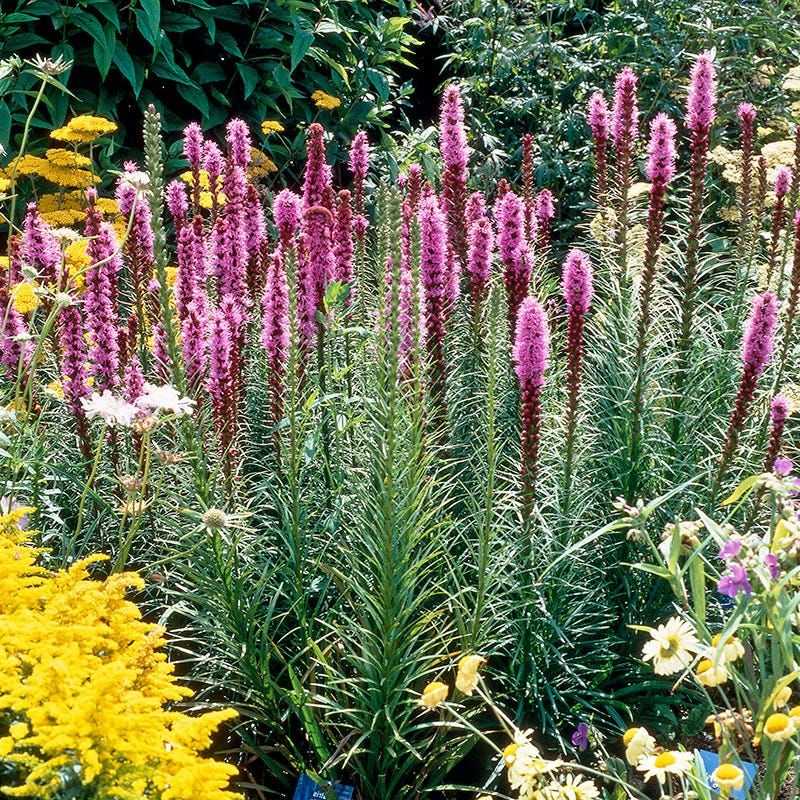
When most flowers are winding down, blazing stars and native asters are just hitting their stride. These two Ohio natives bloom from late summer through fall, providing crucial nectar sources for migrating monarchs and other pollinators preparing for winter.
Planted together, they create a stunning purple-and-gold display that lasts well into October.
Both plants need full sun and well-drained soil to perform their best. Plant them in early spring to give roots time to establish before the heat of summer.
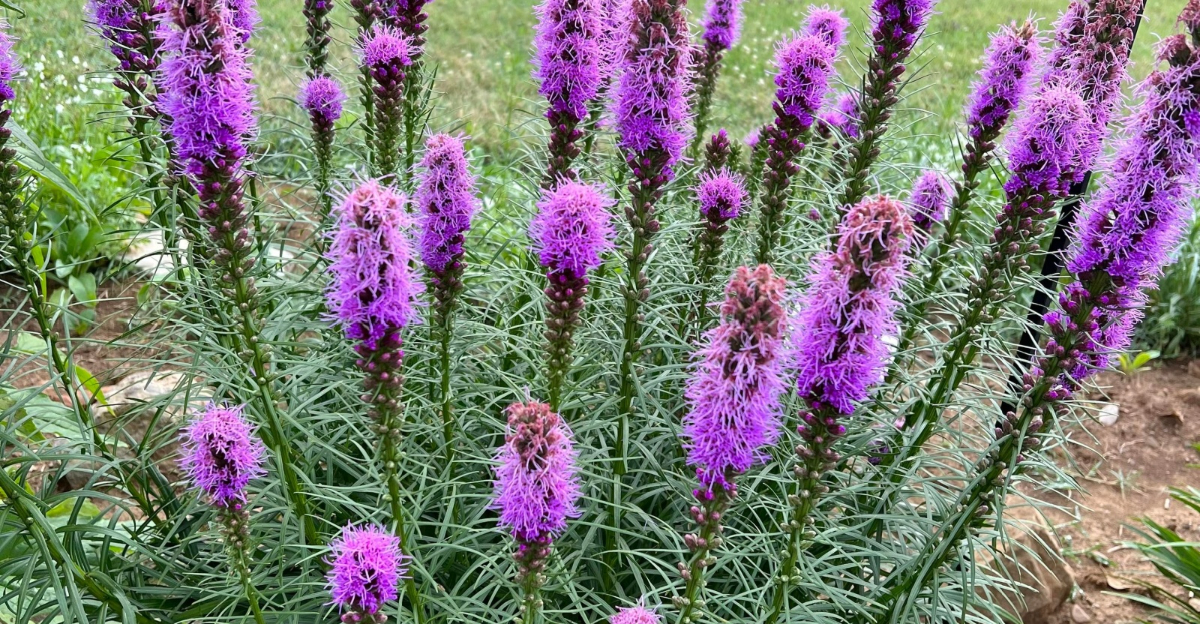
Blazing stars send up tall spikes covered in fuzzy purple flowers that open from top to bottom, while asters form bushy mounds covered in daisy-like blooms.
Spacing matters with these plants. Give blazing stars at least 12 inches between plants and asters 18 to 24 inches to allow for good air circulation.
This prevents powdery mildew issues that can occur in Ohio’s humid late-summer weather. Both plants are deer-resistant, which is valuable in gardens where browsing is a problem.
These late bloomers need minimal care once established. Cut them back to the ground after hard frost in fall, or leave the seed heads standing for winter interest and bird food.
Divide asters every three years to maintain vigor, and leave blazing stars undisturbed unless you want to propagate them.