Big Leaf Caladium Lovers In North Carolina Will Adore These 14 Stunning Varieties
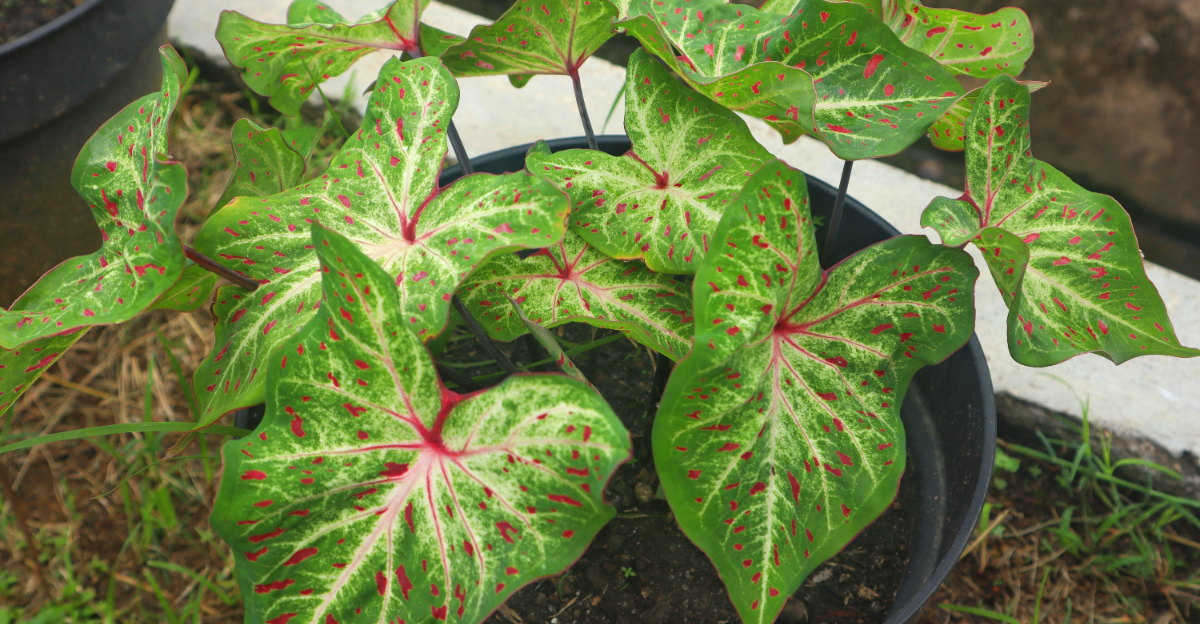
Few plants command attention quite like caladiums, with their oversized leaves painted in bold splashes of pink, red, white, and green. In North Carolina, the long, warm summers create ideal conditions for these tropical beauties to truly thrive.
Once soil temperatures rise, caladiums grow quickly and fill shady beds, borders, and containers with dramatic foliage that feels lush and vibrant.
Their striking leaves brighten spaces where many flowering plants struggle, turning quiet corners into eye catching displays that last from late spring well into early fall.
North Carolina’s humid summer air helps support steady growth, allowing these plants to maintain rich color and strong structure throughout the season.
For gardeners who appreciate bold texture without constant upkeep, caladiums offer dependable performance with minimal effort.
If you are ready to bring tropical flair to your landscape, these fourteen big leaf varieties are perfectly suited to flourish across North Carolina gardens.
1. White Queen A Large White Leaf With Bold Red Veins
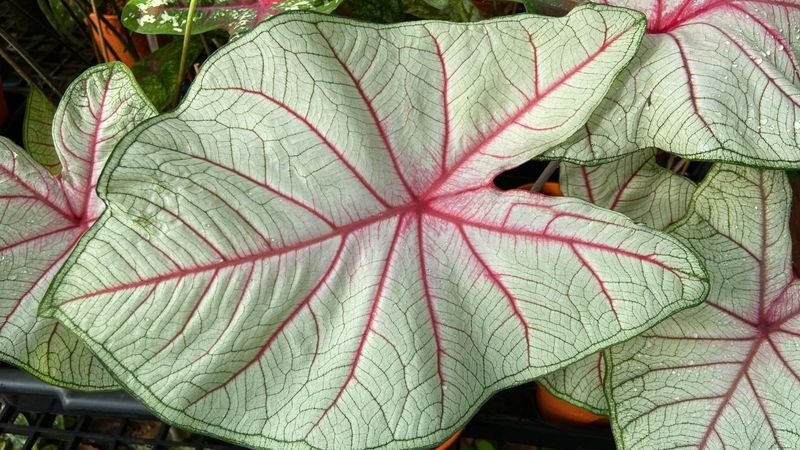
Few caladiums command attention quite like White Queen. The moment its broad, heart-shaped leaves unfurl, you notice the striking contrast between the snowy white surface and the vivid red veins cutting through like brushstrokes on a canvas.
This is a variety that genuinely stops people in their tracks. White Queen is a fancy-leaved caladium, meaning its leaves are large and flat, making them perfect for creating dramatic visual impact in shaded garden beds.
In North Carolina, it performs best when planted after the soil warms to at least 65 degrees Fahrenheit, which typically happens by late May. Planting too early in cool soil can cause the tubers to rot rather than sprout.
This variety thrives in partial to full shade during the hot, humid North Carolina summer. Morning sun with afternoon shade works wonderfully, giving the leaves enough light to maintain their vivid coloration without scorching.
Keep the soil consistently moist but well-drained, and White Queen will reward you generously. Mulching around the base helps retain moisture and keeps soil temperatures stable.
It grows beautifully in containers too, where you can move it easily to the perfect light spot on a porch or patio throughout the season.
2. Candidum A Classic White Caladium With Prominent Green Veins
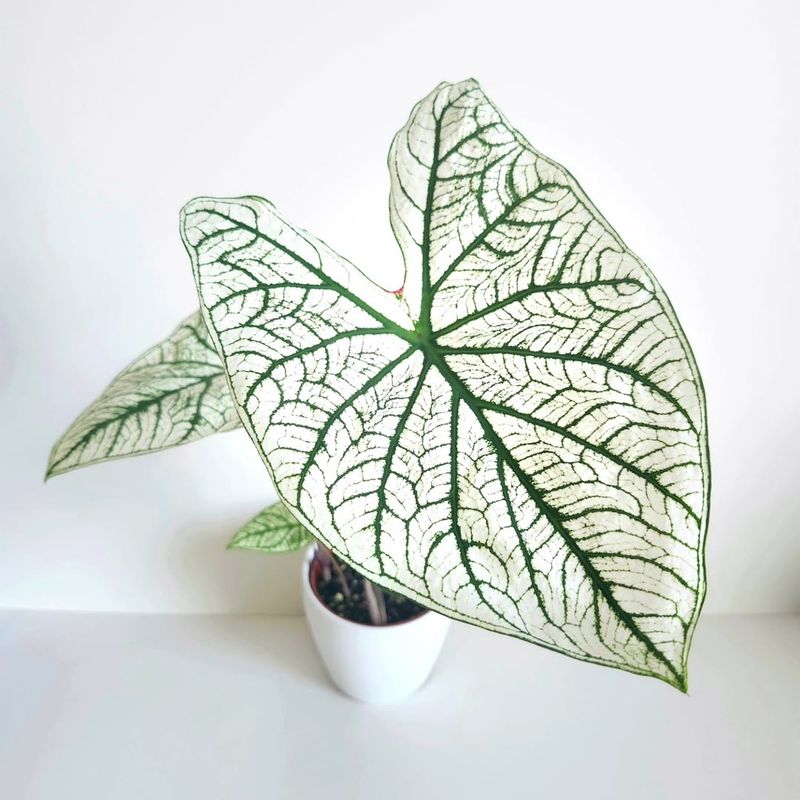
Candidum has been a garden favorite for well over a century, and once you see it growing, you understand exactly why.
Its large, white leaves are almost luminous in shaded spots, and the prominent green veins give each leaf a structured, almost architectural look that feels elegant without being fussy.
This is one of the oldest named caladium cultivars still widely grown today, which speaks volumes about how dependable and beautiful it truly is.
Gardeners in North Carolina have long relied on Candidum to brighten up shaded beds under trees, along north-facing foundations, and in spots where most flowering plants simply refuse to perform.
The white coloring reflects light beautifully, making dim areas feel noticeably brighter. Candidum prefers warm, humid conditions and grows vigorously once summer temperatures settle in.
Plant the tubers in rich, well-draining soil after the last frost risk passes, typically around mid-May in most North Carolina regions.
Your North Carolina Garden Changes Every Week. Your Plan Should Too.
Gardening in North Carolina changes quickly throughout the season. Every Friday you’ll receive a simple weekly plan showing exactly what to plant, prune, fertilize, harvest, and protect so you never miss the right timing.
Water consistently and fertilize lightly every few weeks with a balanced liquid fertilizer to encourage maximum leaf size.
The leaves can reach impressive dimensions under good growing conditions, sometimes spanning 12 inches or more.
Pairing Candidum with dark-foliage companions like colocasia or purple heart creates a stunning contrast that highlights its bright, clean coloring all season long.
3. Carolyn Whorton A Large Pink Center Variety With Green Margins
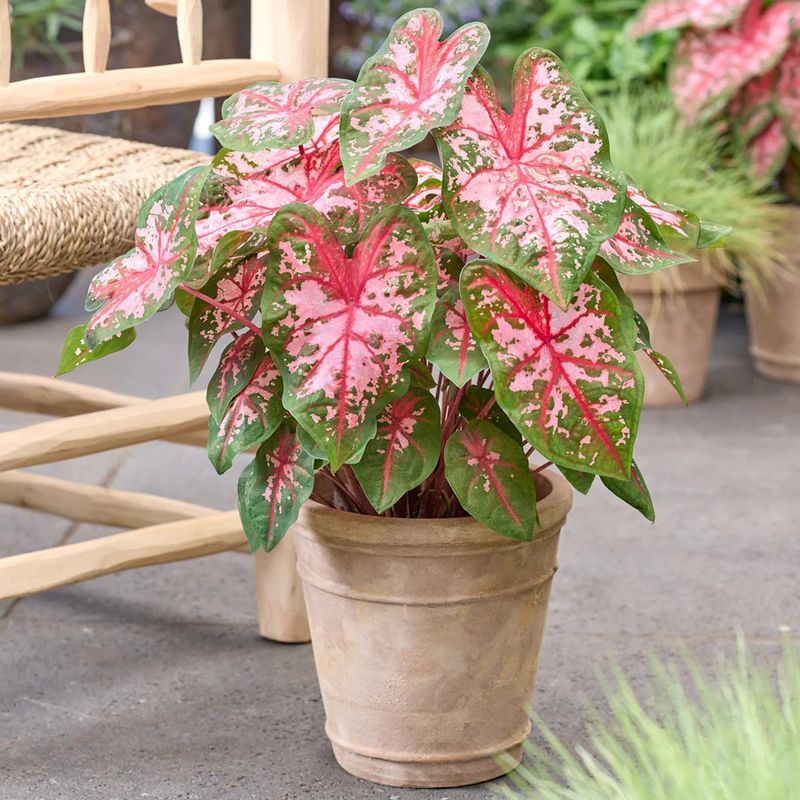
Carolyn Whorton brings a warmth to the garden that feels genuinely welcoming. The broad leaves feature soft, rosy pink centers that gradually blend outward toward vivid green margins, creating a color transition that looks almost hand-painted.
It is one of those plants that makes your garden feel lush and full of personality. What makes this variety especially appealing for North Carolina gardeners is its tolerance for partial sun.
Most caladiums prefer shade, but Carolyn Whorton handles a few hours of direct morning sunlight without the leaves bleaching out or scorching.
This opens up more planting locations in your yard, including spots that receive dappled light under open tree canopies or along east-facing borders that catch gentle morning rays.
The leaves on Carolyn Whorton grow impressively large, easily reaching 10 to 12 inches across under good conditions.
Rich, organically amended soil and consistent watering are key to getting the best size and color from this cultivar.
North Carolina summers, with their heat and humidity, actually suit this variety very well. A light mulch layer keeps roots cool and moisture levels steady during dry spells.
Carolyn Whorton also works beautifully in large containers, where its tropical appearance creates a bold statement on patios, decks, or front porches throughout the warm growing season.
4. Red Flash A Bold Large Leaf Red And Green Variety
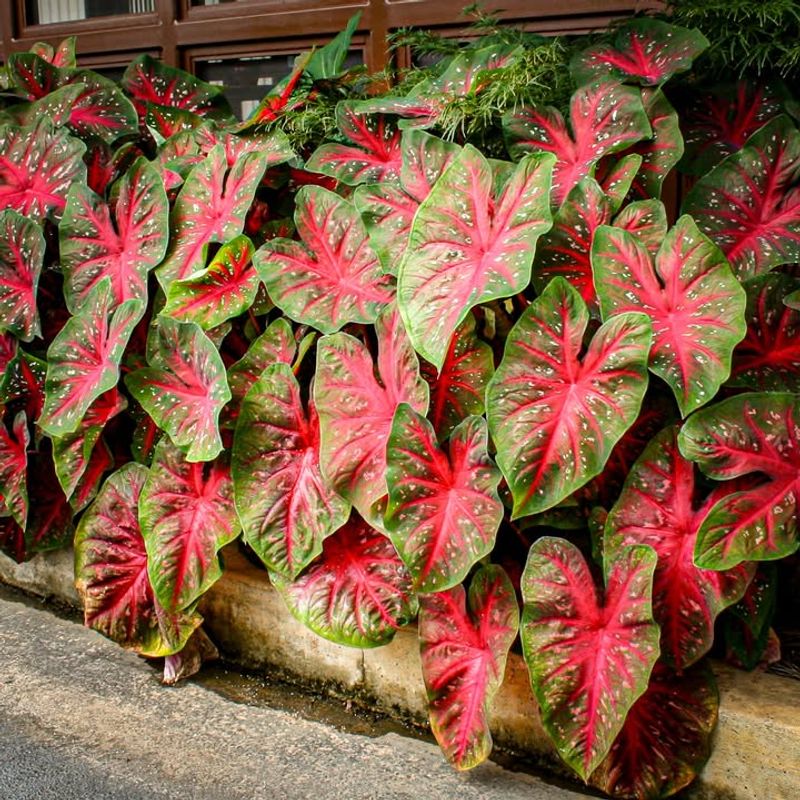
Red Flash is the kind of caladium that earns compliments every single week. Its large leaves feature a deep, rich red center that bleeds outward dramatically, surrounded by a defined green margin that keeps the whole look grounded and balanced.
Some leaves also show pink speckles scattered across the red, adding even more visual texture. This cultivar is one of the better choices for North Carolina gardeners who want bold color in both beds and containers.
It handles heat remarkably well compared to many other caladium varieties, making it a reliable performer through the intense heat of a Piedmont or Coastal Plain summer.
Plant the tubers after soil temperatures reach 65 degrees Fahrenheit, and the plants establish quickly in warm, humid conditions.
Red Flash grows well in partial shade and even tolerates brief periods of direct sun without losing its vivid coloring, which gives you more flexibility in garden design.
The leaves can reach 10 inches or larger, creating a truly tropical effect when massed together in a bed.
For container planting, use a well-draining potting mix and water regularly since containers dry out faster than ground beds.
Pair Red Flash with white-leafed companions like Candidum or Aaron for a bold red-and-white color scheme that draws the eye from across the yard all season long.
5. Frieda Hemple A Traditional Large Red Center Caladium
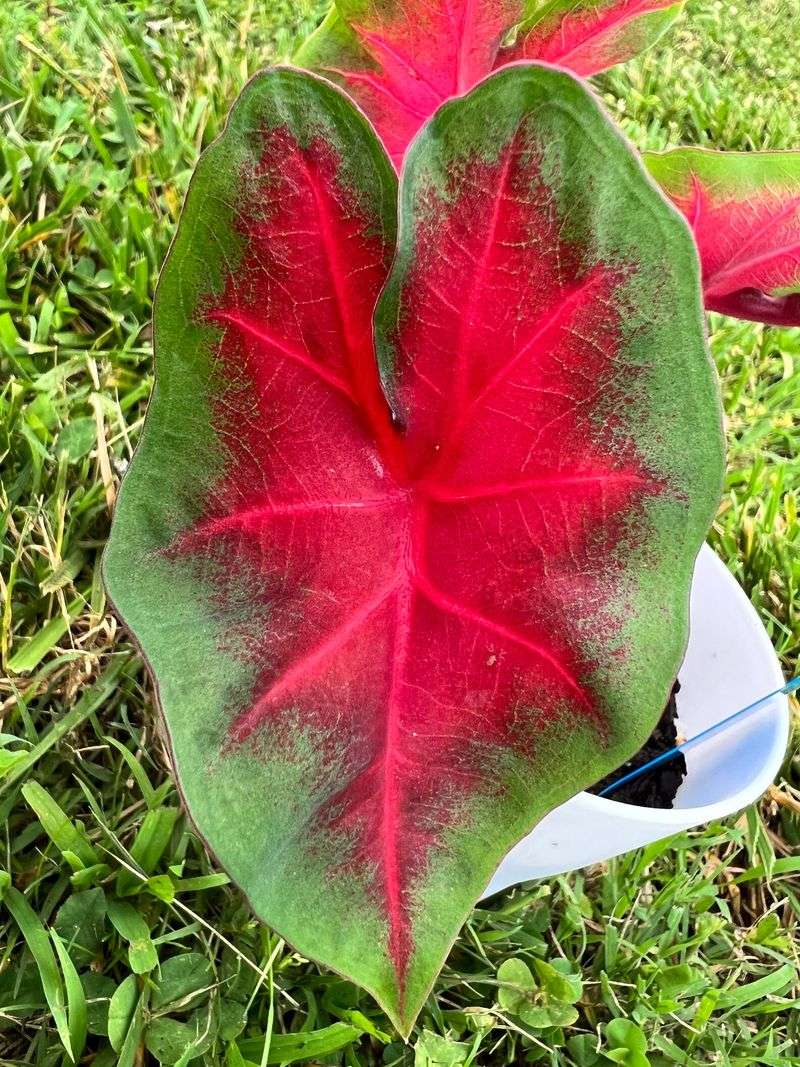
Gardeners who appreciate classic beauty tend to fall hard for Frieda Hemple.
This variety has been around for decades, and its consistently bright red center surrounded by a bold green border has made it one of the most recognized caladium names in American horticulture.
It delivers reliable, saturated color every single season. Frieda Hemple is a thick-leaved, robust cultivar that produces some of the largest leaves in the red caladium category.
The leaves are broad and slightly ruffled at the edges, giving the plant a full, lush appearance that fills garden beds quickly.
In North Carolina, it thrives during the warm months when nighttime temperatures stay consistently above 60 degrees Fahrenheit, which allows the tubers to push out new growth energetically.
One practical advantage of Frieda Hemple is how well it performs in both sun and shade. While it prefers filtered light, it can handle more direct sun than many caladiums, especially in the morning hours.
This makes it easier to place in mixed perennial borders or foundation beds that receive variable light throughout the day.
Feed it monthly with a balanced fertilizer to keep the red coloring vivid and the leaves growing large.
Frieda Hemple also pairs beautifully with ferns, hostas, and impatiens, creating layered, textured planting combinations that look professionally designed and feel richly tropical all summer.
6. Aaron A Large White Leaf Variety With Strong Garden Presence
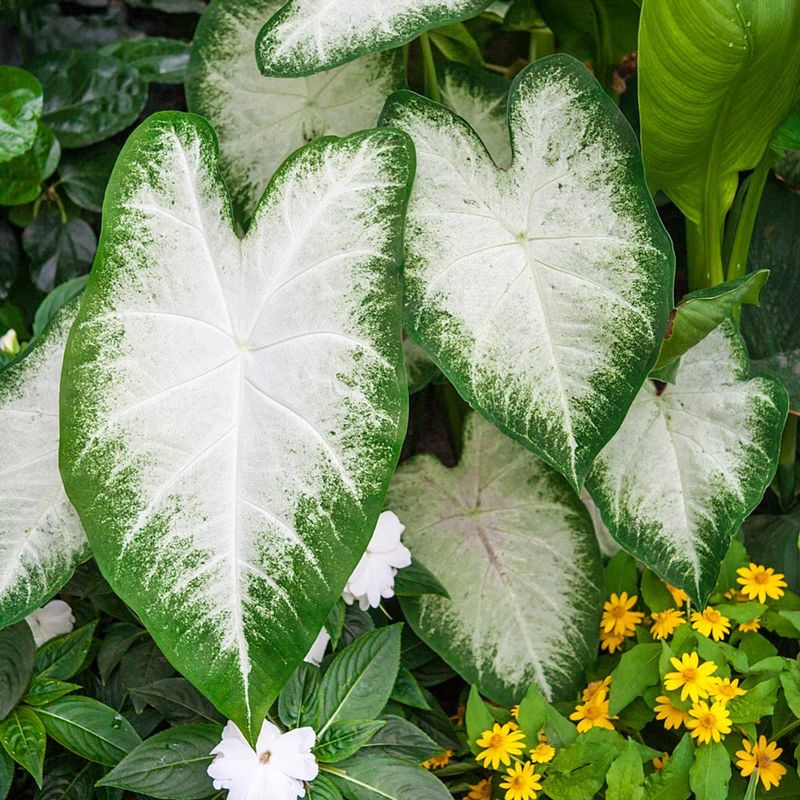
Aaron is one of those caladiums that garden designers reach for again and again because it simply never disappoints.
Its broad white leaves, cleanly edged in soft green, create a fresh and airy presence that brightens shaded spaces without overwhelming surrounding plants.
The contrast between white and green feels crisp, clean, and naturally sophisticated. This cultivar produces exceptionally large leaves, and the plants grow vigorously once warm temperatures arrive in late spring.
Aaron is well-suited to North Carolina’s humid summers, performing reliably from late May through September in most regions of the state.
It works particularly well planted in masses under deciduous trees, where its white foliage catches filtered light and practically glows in the dappled shade.
Aaron handles moderate shade better than many white-leafed caladiums, making it a go-to choice for challenging spots where sunlight is limited.
Plant tubers with the knobby side facing up, about two inches deep in rich, moisture-retentive soil.
Consistent watering matters most during the hottest summer weeks, when heat can stress the plants if the soil dries out completely. A two-inch layer of organic mulch makes a noticeable difference in keeping moisture levels steady.
Aaron also performs beautifully in large planters and window boxes, where its bright foliage creates a long-lasting tropical display that requires very little maintenance throughout the entire growing season.
7. Florida Moonlight A Large Bright White Leaf For Shade
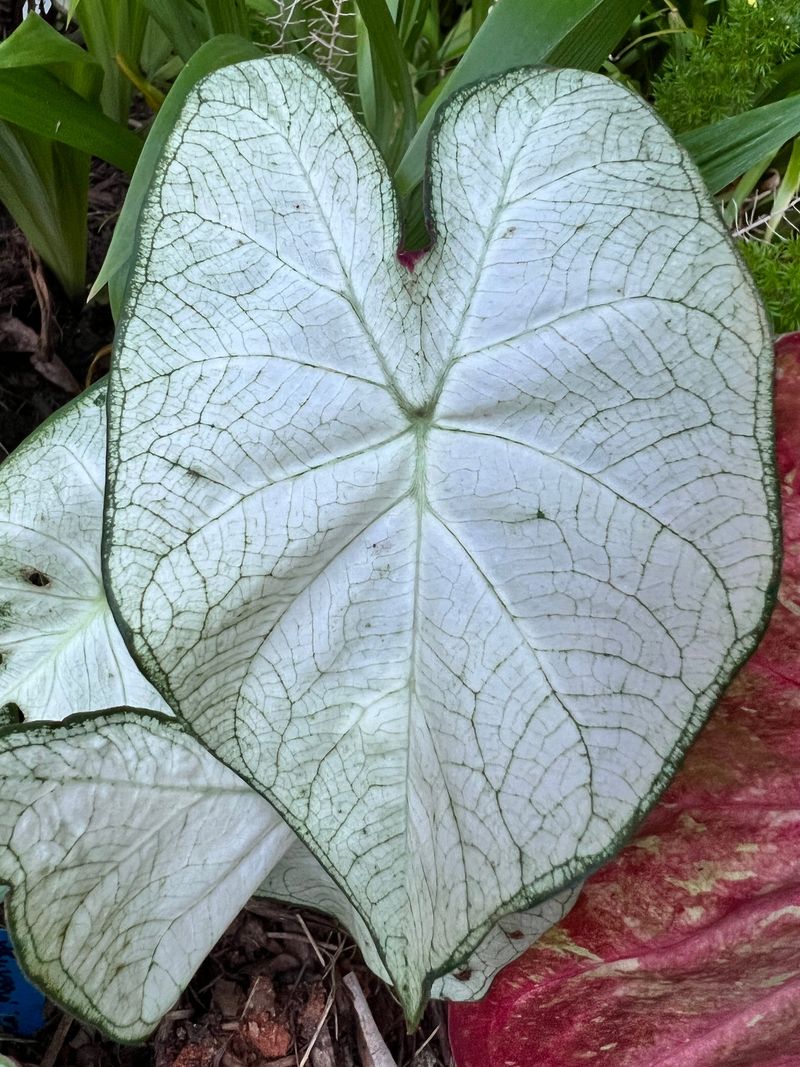
There is something almost magical about Florida Moonlight growing in a shaded garden.
The leaves are an incredibly pure, bright white that seems to glow softly even on overcast days, creating a luminous quality that makes the surrounding greenery look richer and more saturated by comparison.
It is a variety that genuinely transforms a dark corner into something beautiful. Florida Moonlight was developed with shade performance as a priority, and it shows.
The leaves maintain their clean white coloring even in deep shade conditions where other white caladiums might fade to a dull, washed-out appearance.
For North Carolina gardeners dealing with heavily shaded yards under mature oaks or pines, this cultivar is one of the most reliable options available for creating bright, cheerful foliage displays.
The plants grow quickly once soil temperatures warm, typically sending up new leaves every week or two during the peak summer growing period.
Leaves can reach 10 inches or more in ideal conditions, and the plants fill in nicely when spaced about 12 inches apart in a bed.
Florida Moonlight pairs especially well with deep green hostas, dark-leafed colocasia, or colorful impatiens, creating layered combinations that look professionally arranged.
Keep the soil evenly moist and avoid letting it dry out completely between waterings, as moisture stress can cause leaf edges to brown and diminish the plant’s otherwise stunning appearance throughout summer.
8. Postman Joyner A Large Red And Green Heirloom Variety
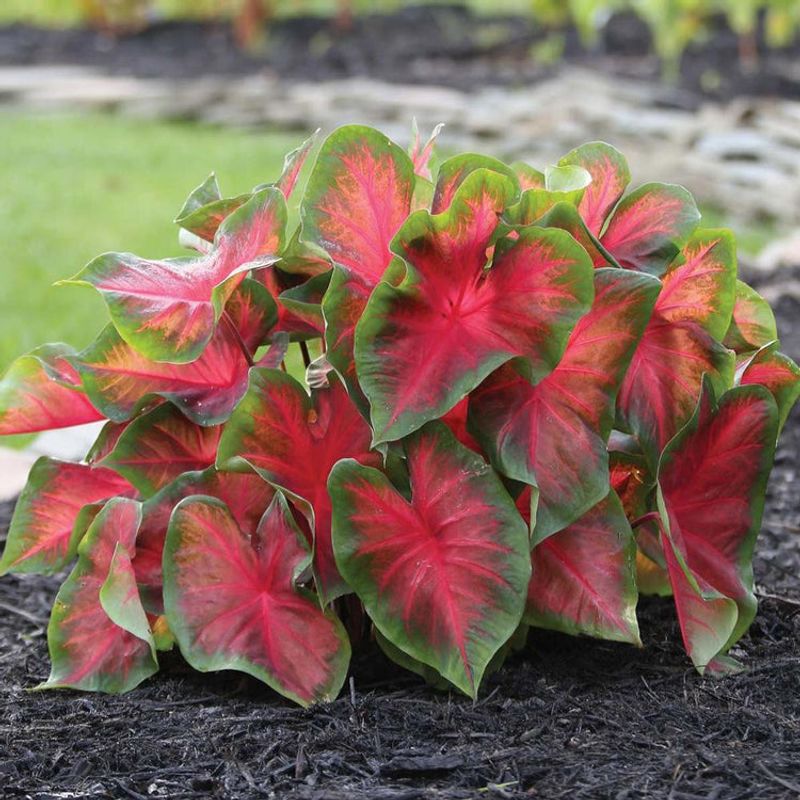
Postman Joyner carries a sense of history that few modern caladium varieties can match.
This heirloom cultivar has been grown in American gardens for generations, prized for its bold red and green coloring and the impressive size of its leaves. Finding it today feels a little like discovering a piece of living garden history.
The leaves of Postman Joyner feature deep red centers with green margins and occasional pink or red speckling scattered across the leaf surface, giving each leaf a unique and slightly unpredictable pattern.
No two leaves look exactly alike, which adds a natural, organic quality to the planting that feels far less uniform than many modern hybrid varieties.
This variation is part of what makes it so charming and visually interesting.
For North Carolina gardeners, Postman Joyner performs best in warm, humid conditions with partial shade and consistently moist soil.
It appreciates the long, hot summers that the state offers, particularly in the Piedmont and Coastal regions.
Plant tubers after soil temperatures stabilize above 65 degrees Fahrenheit and water regularly throughout the growing season.
Feeding with a diluted balanced fertilizer every three to four weeks encourages vigorous leaf production and helps maintain vivid coloring.
This variety looks especially striking planted alongside lighter-colored companions like Candidum or Florida Moonlight, where the contrast between red and white foliage creates a genuinely eye-catching garden display.
9. Fannie Munson A Large Leaf Pink Variety For Warm Climates
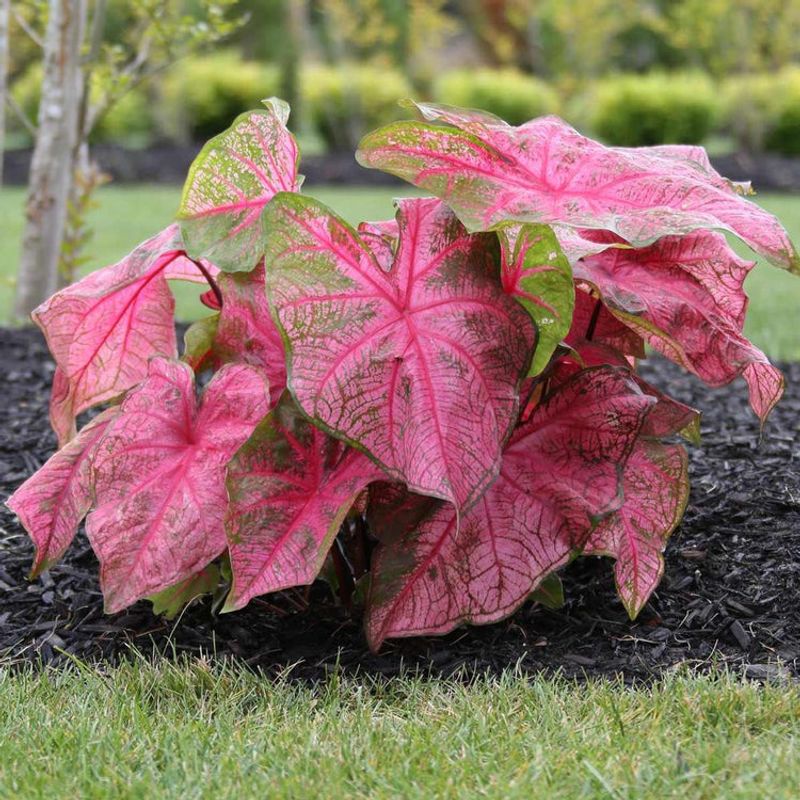
Soft, romantic, and undeniably tropical, Fannie Munson is a caladium that earns its place in any warm-climate garden.
The large leaves feature warm pink centers that radiate outward with varying intensity, framed by green margins that keep the overall look fresh and vibrant. Planted in groups, this variety creates a lush, cottage-garden feel with a tropical twist.
Fannie Munson is one of the more heat-tolerant pink caladiums available, which makes it a particularly smart choice for North Carolina gardeners in the hotter Piedmont and Coastal Plain regions.
Once the tubers establish in warm soil, the plants push out new growth steadily throughout summer and maintain their pink coloring with impressive consistency, even during the hottest weeks of July and August.
This variety tolerates partial sun better than many pink caladiums, giving gardeners more flexibility when choosing planting locations.
A spot with morning sun and afternoon shade produces the best leaf size and color intensity.
Rich, well-amended soil with good drainage keeps the plants healthy and productive all season. Water regularly, especially during dry stretches, and apply a light mulch layer to conserve soil moisture.
Fannie Munson works beautifully alongside white-flowered annuals like vinca or begonias, where the pink foliage and white blooms create a soft, layered combination that feels welcoming and effortlessly elegant from late spring straight through to the first cool nights of fall.
10. White Christmas A Striking Large White Foliage Type
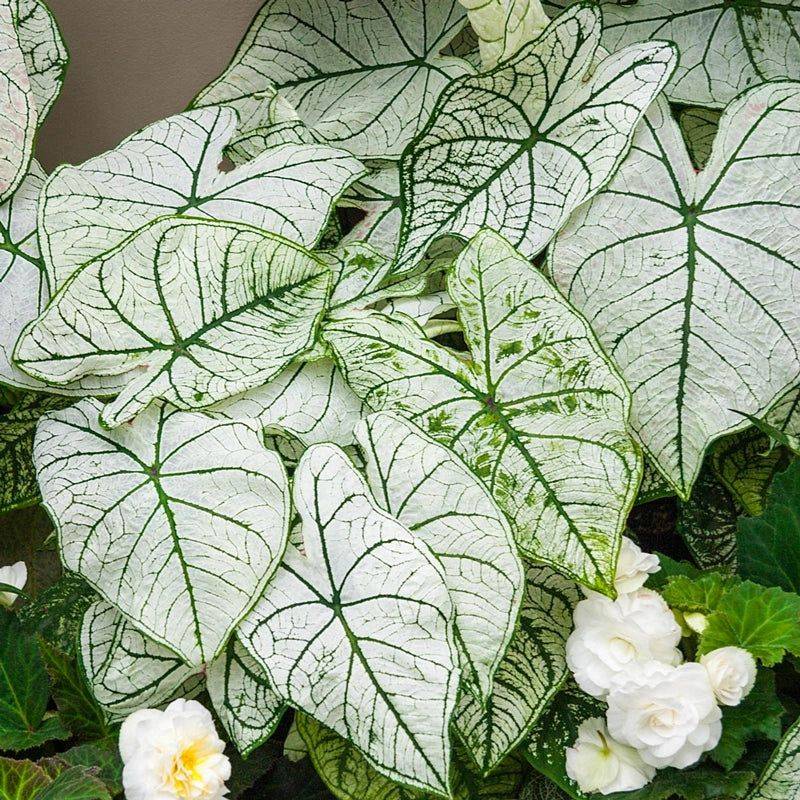
White Christmas earns its name every time a new leaf unfurls. The foliage is almost entirely white, with just thin green edges and occasional faint green veining that keeps the leaf looking defined rather than washed out.
In a shaded garden bed, a grouping of White Christmas caladiums creates a stunning, almost snow-like effect that is completely unexpected in the middle of summer.
This is a large-leafed fancy caladium that produces broad, flat leaves capable of reaching 10 to 14 inches across in optimal growing conditions.
The sheer size of the foliage makes White Christmas one of the most visually impactful caladium varieties available.
North Carolina gardeners who deal with heavily shaded areas under mature tree canopies will find this cultivar particularly valuable, as it maintains its striking coloring even in low-light situations.
Plant tubers in well-prepared, organically rich soil once spring soil temperatures warm consistently above 65 degrees Fahrenheit.
White Christmas benefits from regular fertilization throughout the growing season, as the large leaves require steady nutrition to maintain their impressive size and clean white coloring.
Water consistently and keep the soil evenly moist, avoiding both waterlogged and bone-dry conditions.
Pairing White Christmas with bold green or dark-leafed plants like colocasia or glossy aucuba creates a dramatic contrast that highlights the almost otherworldly whiteness of the foliage, making the entire planting combination feel tropical, intentional, and beautifully curated.
11. Pink Beauty A Large Soft Pink And Green Variety
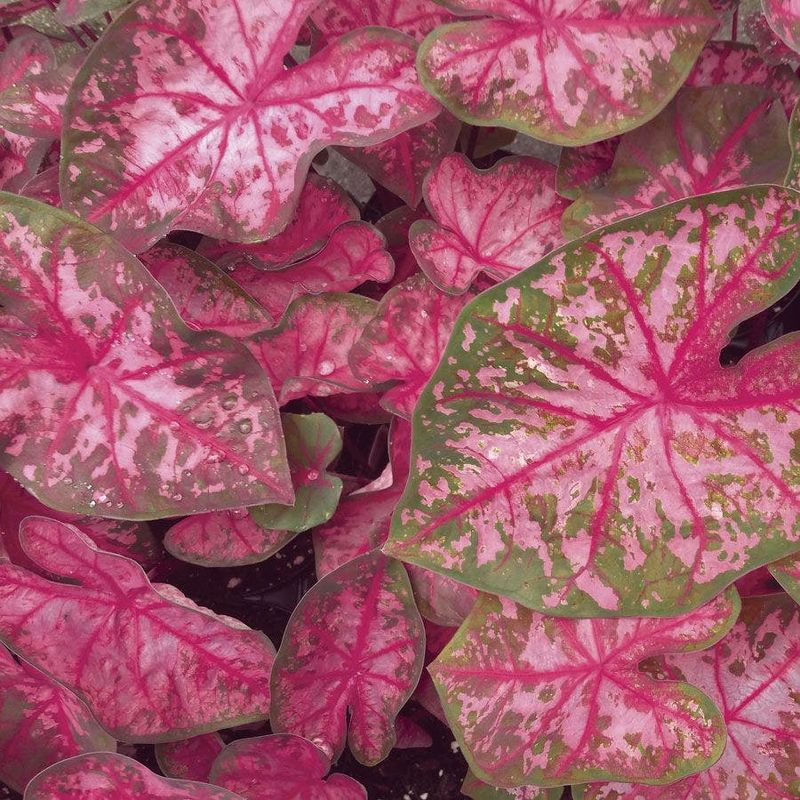
Pink Beauty brings a gentle, cheerful energy to the garden that feels refreshing rather than overpowering.
The large leaves blend soft pink and green in a natural, almost watercolor-like pattern, where the two colors mingle across the leaf surface with varying intensity.
Every leaf is slightly different, giving the plant a relaxed, organic quality that feels right at home in cottage-style or tropical-inspired gardens.
This variety performs reliably in North Carolina’s warm summers, appreciating the combination of heat, humidity, and occasional summer rain that the state provides.
Pink Beauty grows best in partial shade, where the soft pink coloring stays vibrant without fading or bleaching under intense afternoon sun.
Morning light works well for this cultivar, giving the leaves enough energy to maintain good color without the stress of harsh midday exposure.
The leaves grow impressively large in rich, well-drained soil with consistent moisture, often reaching 10 inches or more across.
Spacing plants about 12 inches apart allows each one to spread naturally and fill in the bed without crowding. A slow-release granular fertilizer applied at planting time, followed by light liquid feeding every few weeks, keeps Pink Beauty growing vigorously all season.
This variety pairs wonderfully with purple-leafed plants like Persian shield or purple heart, where the soft pink foliage creates a rich, layered color palette that feels intentional and visually sophisticated throughout the entire North Carolina growing season.
12. Gingerland A Large Speckled Leaf Caladium
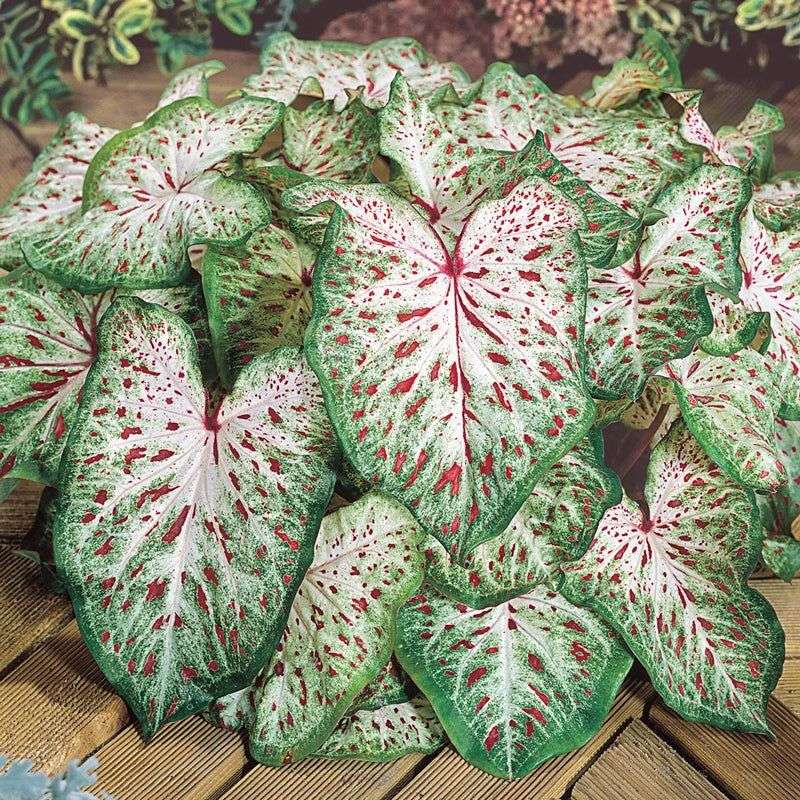
Gingerland plays by its own rules, and that is exactly what makes it so interesting.
While most caladiums rely on solid color blocks or clean veining for their appeal, Gingerland covers its large white leaves with scattered red and pink speckling that looks almost like an artist flicked a fine brush across each leaf.
The green edges frame the whole composition neatly. Technically classified as an strap-leaved caladium in some references, Gingerland produces leaves that are notably large and broad, making it a strong visual presence in the garden.
The speckled pattern varies slightly from leaf to leaf, keeping the overall planting looking lively and dynamic rather than repetitive.
North Carolina summers suit this variety beautifully, as it thrives in warm, humid conditions with consistent moisture and good drainage.
Gingerland handles partial shade well and can tolerate more sun than many caladiums, making it versatile enough to use in a variety of garden locations.
Plant tubers after the last frost risk passes and soil temperatures warm above 65 degrees Fahrenheit for best results.
Regular watering and a light mulch layer help maintain the consistent moisture levels this cultivar prefers.
Gingerland works particularly well in mixed caladium plantings alongside solid-colored varieties like Red Flash or White Queen, where its speckled texture adds visual contrast and keeps the entire planting combination feeling layered, creative, and genuinely unique all season.
13. Florida Cardinal A Large Bold Red Leaf Variety
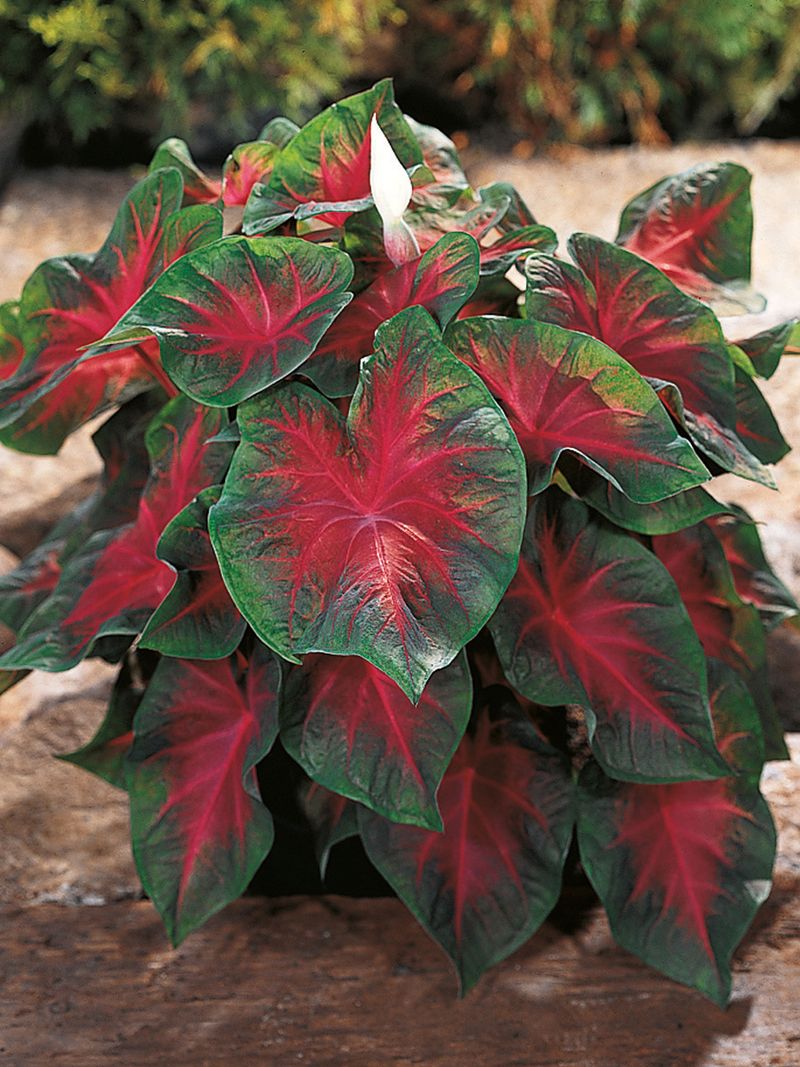
Florida Cardinal is unapologetically bold. The leaves are a deep, saturated red that holds its intensity throughout the growing season, refusing to fade even during the hottest weeks of a North Carolina summer.
If you want a caladium that makes a strong, confident statement in the garden, this is the one to reach for.
Developed with warm-climate performance in mind, Florida Cardinal is part of the Florida series of caladiums, which were specifically bred for heat tolerance and vigorous growth in hot, humid conditions.
This makes it an especially practical choice for North Carolina gardeners in the Piedmont and Coastal Plain regions, where summer temperatures regularly climb into the upper 90s Fahrenheit and humidity stays consistently high from June through August.
The leaves grow large and broad, with a slightly wavy texture that adds visual interest to the bold red coloring.
Florida Cardinal performs well in partial shade, though it can handle a bit more direct sun than many red caladium varieties without losing its vivid leaf color.
Plant in rich, well-draining soil and water consistently to keep the large leaves looking their best. Fertilize lightly every three to four weeks during the growing season to support vigorous leaf production.
Pairing Florida Cardinal with bright white caladiums or silvery dusty miller creates a striking red-and-white combination that looks bold, intentional, and visually exciting from across the entire garden space.
14. Red Frill A Large Leaf Red Cultivar With Decorative Edges
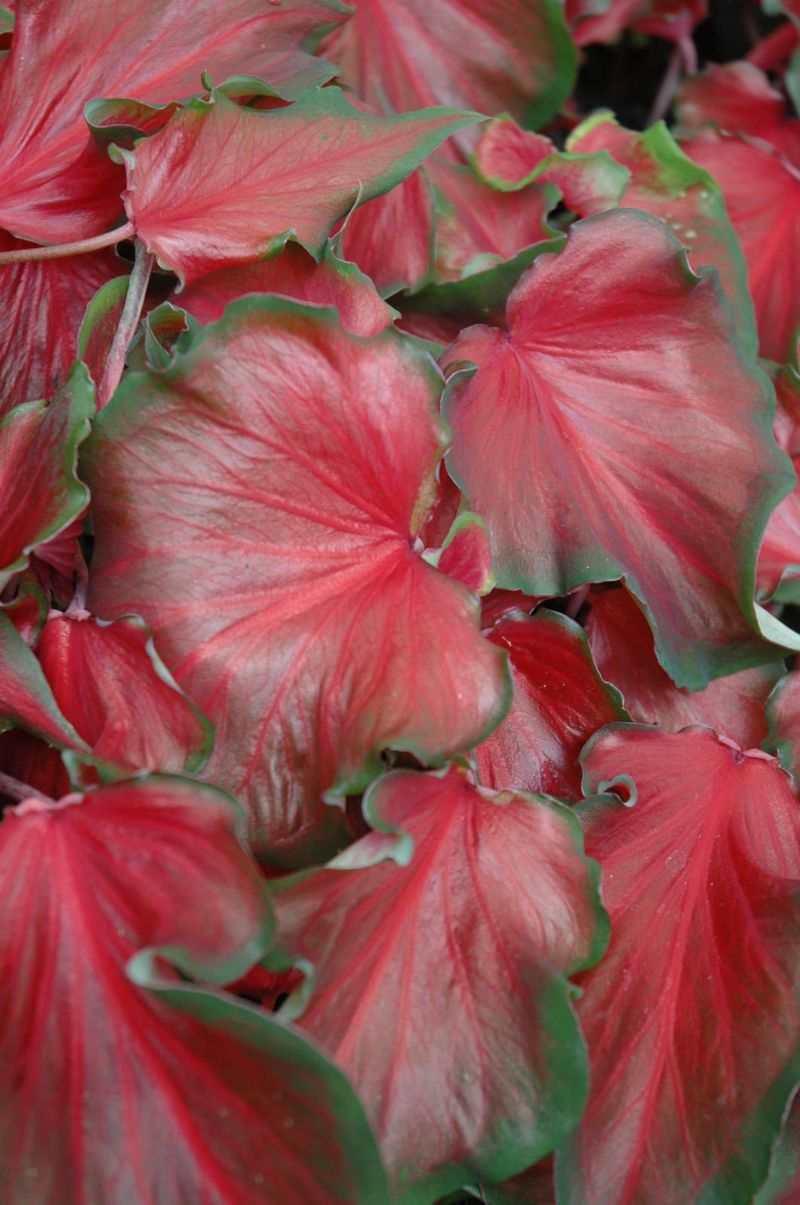
Red Frill adds something extra that most caladiums simply do not have.
Beyond its vibrant red foliage, the leaf edges are distinctly ruffled and frilled, giving each leaf a decorative, almost ornate quality that sets this variety apart from standard flat-leafed caladiums.
It is the kind of plant that makes visitors lean in for a closer look.
The ruffled edges are not just decorative, they also add a three-dimensional texture to the foliage that catches light differently throughout the day, making the red coloring appear to shift slightly depending on the angle and time.
In a container on a shaded porch or patio, Red Frill becomes a genuine focal point that draws attention without requiring any other plants around it.
North Carolina’s warm, humid summers give this variety exactly the growing conditions it needs to produce its most impressive foliage.
Plant Red Frill tubers in rich, moisture-retentive potting mix for containers, or in well-amended garden soil for bed planting, after soil temperatures warm reliably above 65 degrees Fahrenheit.
Partial shade is ideal, with morning sun and afternoon protection giving the best balance of light and leaf protection.
Water regularly and fertilize every three to four weeks with a balanced liquid fertilizer to encourage consistent leaf production throughout the season.
Red Frill pairs beautifully with chartreuse sweet potato vine or bright green ferns, where the contrasting textures and colors create a lush, layered container combination that looks polished and tropical all summer long.