Cardinal Flower Is North Carolina’s Best Native Plant That Brings Hummingbirds To Your Yard
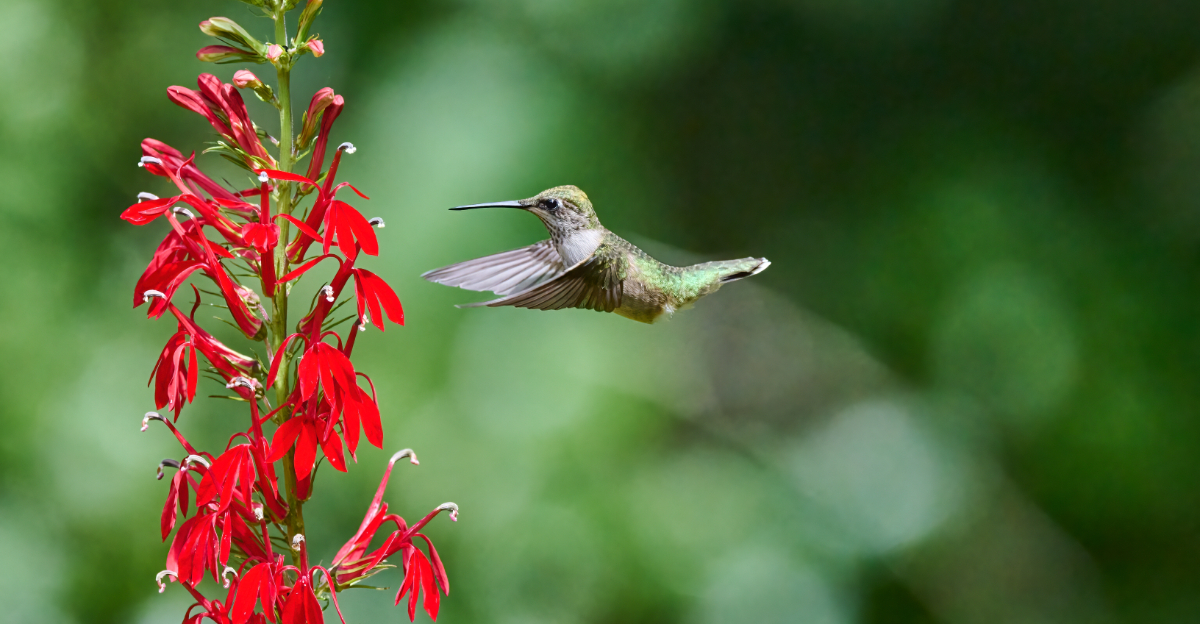
Nothing captures attention in a summer garden quite like a flash of brilliant red rising above lush green foliage.
In North Carolina, Cardinal Flower, known botanically as Lobelia cardinalis, has earned a reputation as one of the most reliable ways to draw hummingbirds into your backyard.
Its tall spikes of vivid scarlet blooms act like natural beacons, inviting these tiny aerial visitors to return again and again.
Beyond its striking color, this native wildflower is well suited to North Carolina’s climate, thriving in moist soil and partial sun with surprisingly little fuss.
Because it evolved in this region, it adapts beautifully to local conditions while supporting pollinators and adding bold vertical interest to garden beds.
Planting Cardinal Flower is not just about adding color. It is about creating a lively, dynamic space filled with movement and energy. Give this standout native a prime spot, and your North Carolina garden will come alive.
Cardinal Flower Is Native To North Carolina
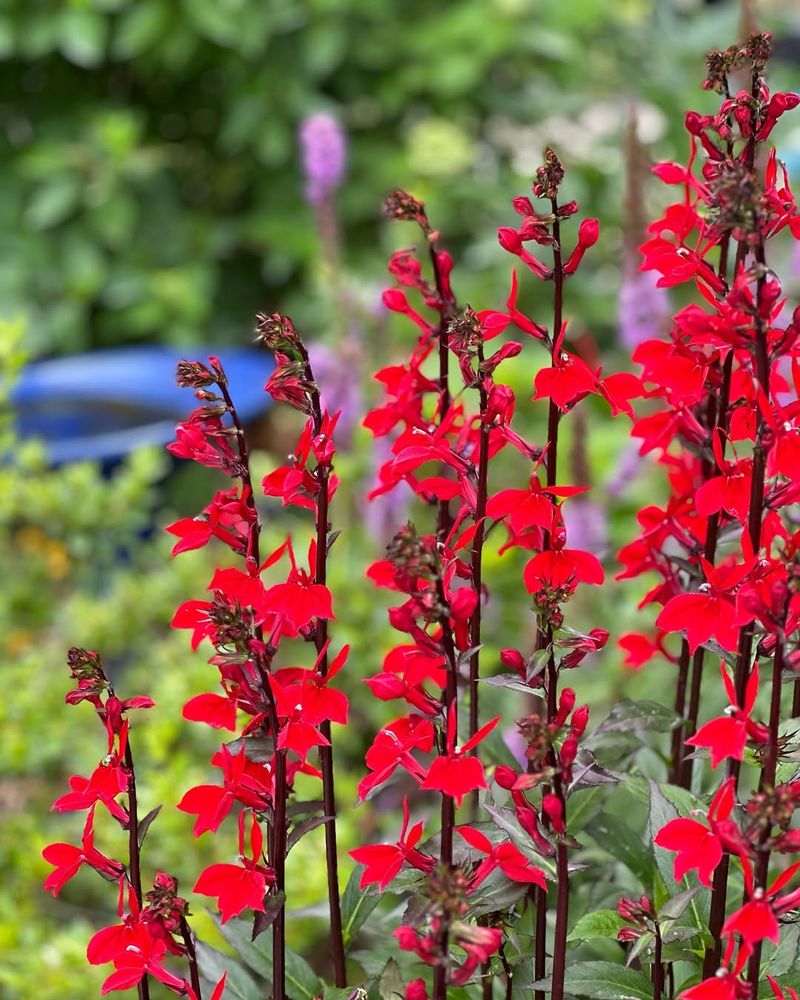
Not every beautiful plant actually belongs where you put it, but Cardinal Flower is a true North Carolina original.
Lobelia cardinalis grows naturally throughout much of the state, thriving in moist woodlands, along streambanks, and near wetland edges where conditions stay reliably damp.
Because it evolved here, it has developed a deep relationship with the local landscape that no exotic ornamental can replicate.
The plant is found across a wide range of North Carolina elevations, from coastal plain habitats to mountain stream corridors.
That widespread natural presence tells you something important: this species knows how to handle the state’s varied conditions.
It does not need to be coaxed or babied the way a non-native plant often does. Planting a native species like Lobelia cardinalis means you are working with nature rather than against it.
The plant already understands North Carolina’s rainfall patterns, soil types, and seasonal rhythms.
Gardeners who choose native plants consistently report fewer problems with pests, less need for fertilizers, and stronger long-term plant performance.
Cardinal Flower brings all of that built-in resilience straight to your yard, giving you a reliable, ecologically sound choice that has been proven by centuries of natural selection right here in the Tar Heel State.
Brilliant Red Tubular Flowers Are Designed For Hummingbirds
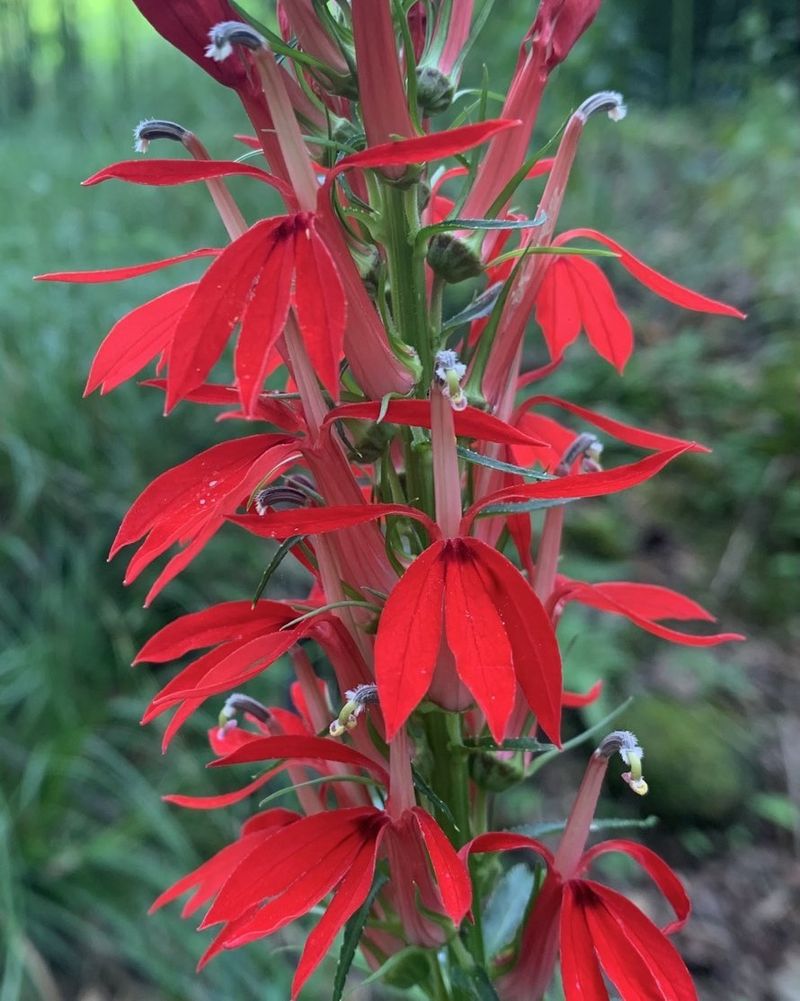
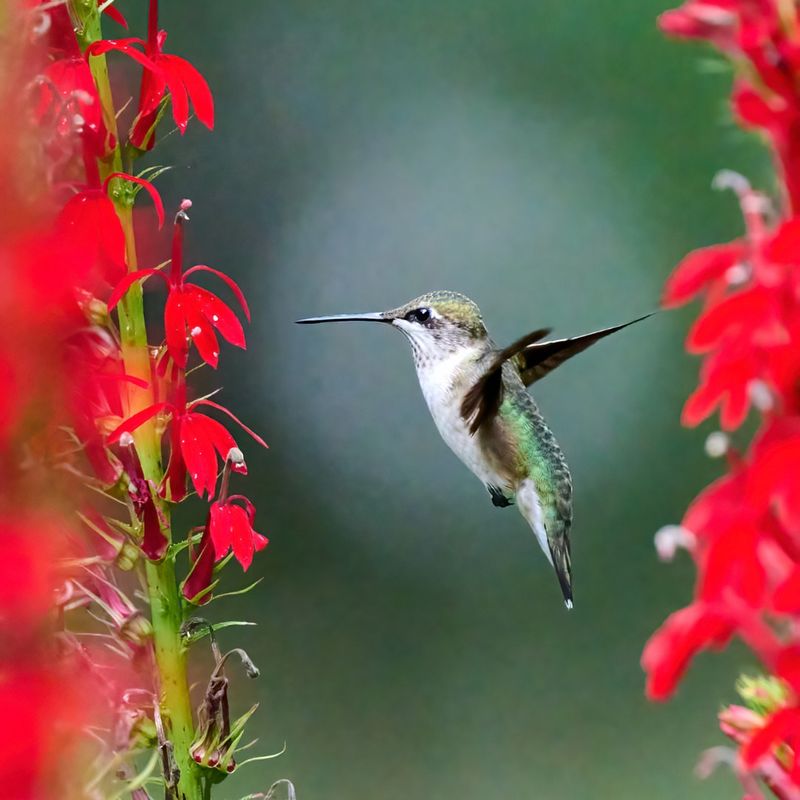
There is a reason hummingbirds zoom straight toward Cardinal Flower the moment they spot it.
The blooms are a vivid, saturated red, and hummingbirds are strongly attracted to that color above nearly all others.
Science backs this up: hummingbirds have excellent color vision tuned toward the red and orange spectrum, making Cardinal Flower practically a neon sign for these tiny birds.
The flower shape is just as important as the color. Each individual bloom is a narrow tube, perfectly sized for a hummingbird’s long, slender bill.
As the bird reaches in to sip nectar, its head brushes against the stamens and picks up pollen, which then gets transferred to the next flower.
It is a beautifully efficient system that both plant and bird have refined together over thousands of years.
Your North Carolina Garden Changes Every Week. Your Plan Should Too.
Gardening in North Carolina changes quickly throughout the season. Every Friday you’ll receive a simple weekly plan showing exactly what to plant, prune, fertilize, harvest, and protect so you never miss the right timing.
Bees and most butterflies struggle to access the nectar inside those long tubes, which means hummingbirds face very little competition at Cardinal Flower blooms.
That exclusivity makes the plant even more appealing to visiting birds, who quickly learn it as a dependable feeding stop.
Once a hummingbird discovers Cardinal Flower in your yard, it will return repeatedly throughout the season, turning your garden into a reliable part of its daily feeding route in a way that few other plants can achieve.
Blooms During Peak Hummingbird Season
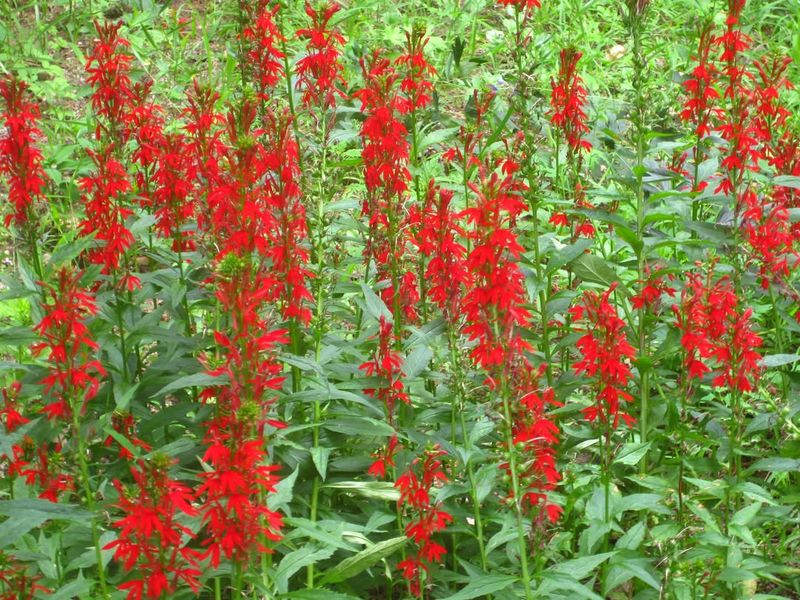
Timing matters enormously when you want to attract hummingbirds, and Cardinal Flower gets the schedule exactly right.
In North Carolina, Lobelia cardinalis typically blooms from mid-summer through early fall, which lines up almost perfectly with the period when ruby-throated hummingbirds are most actively feeding.
These birds are building energy reserves before their long southward migration, so they are hungry, busy, and constantly searching for reliable nectar sources.
Many popular garden flowers bloom in spring or early summer and then fade out just when hummingbirds need fuel the most. Cardinal Flower fills that late-season gap beautifully.
When other nectar sources start winding down, those bold red spikes are still going strong, making your yard a standout destination in the neighborhood.
The bloom period for Cardinal Flower typically stretches across several weeks rather than just a few days, giving hummingbirds a consistent reason to keep visiting.
Gardeners in the Piedmont and coastal regions of North Carolina often see blooms lasting from July well into September. In cooler mountain areas, flowering may peak slightly later.
Planting a few Cardinal Flowers in different spots around your yard can stagger the bloom times slightly, extending the window of activity even further and keeping those hummingbirds entertained and well-fed all the way through their departure season.
High Nectar Production Attracts Repeat Visits
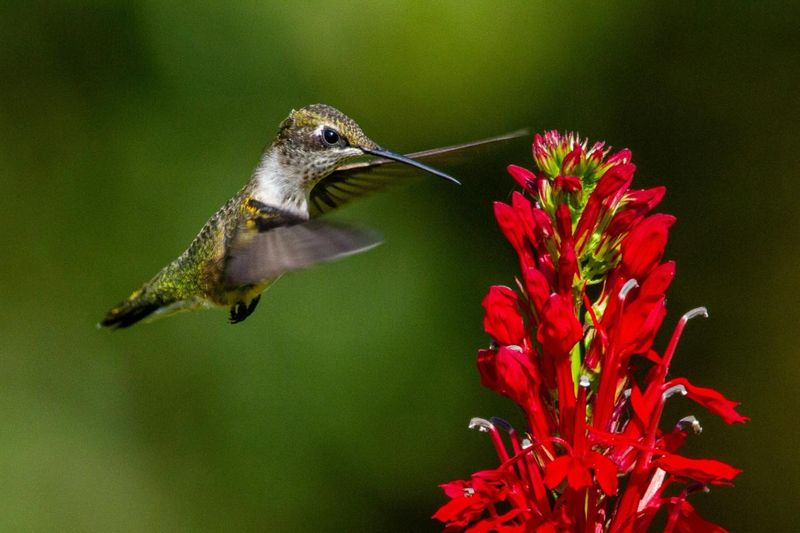
Hummingbirds are smart, efficient foragers. They memorize which plants in their territory produce the most nectar and they return to those plants again and again throughout the day.
Cardinal Flower earns a top spot on that mental map because Lobelia cardinalis is known for producing generous amounts of nectar per flower, making each visit genuinely worthwhile for a bird that needs to consume enormous quantities of energy daily.
A single hummingbird may visit hundreds of flowers every day just to meet its caloric needs.
When a plant delivers high nectar rewards consistently, hummingbirds factor it into their regular feeding circuit.
Cardinal Flower’s combination of visual appeal and abundant nectar production makes it one of the most reliable hummingbird magnets you can grow in a North Carolina garden.
What makes this even more exciting is that the plant produces multiple blooms along each tall flower spike, opening progressively from the bottom upward over several weeks.
That means fresh nectar is available at new blooms even as older ones finish, creating a sustained feeding opportunity rather than a brief burst of activity.
Planting several Cardinal Flowers together amplifies this effect considerably, creating a nectar-rich patch that hummingbirds will treat as a priority destination.
Gardeners who do this often describe watching multiple hummingbirds feeding and chasing each other around the plants, which is genuinely one of summer’s most entertaining backyard spectacles.
Thrives In North Carolina’s Humid Climate
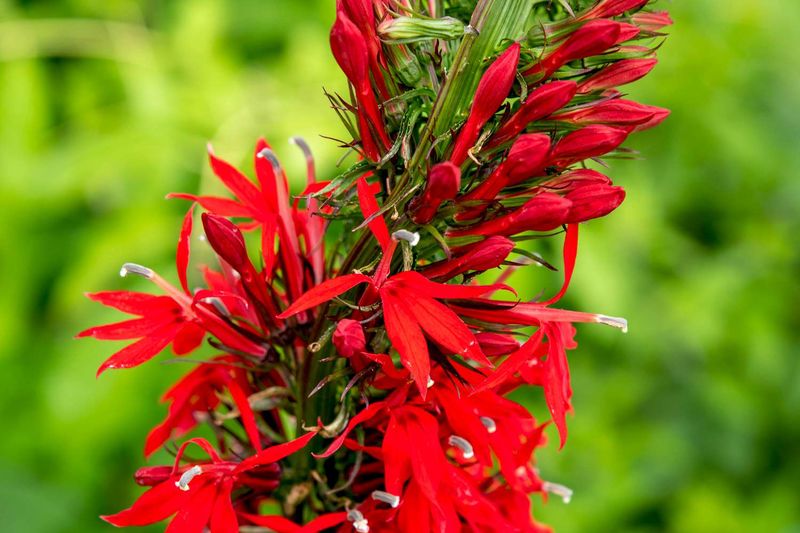
North Carolina summers are hot, sticky, and intense, and plenty of plants struggle under those conditions. Cardinal Flower, however, was practically built for this climate.
As a native species that evolved in the humid southeastern United States, Lobelia cardinalis handles summer heat and high humidity without complaint, continuing to grow and bloom when imported ornamentals are wilting under the pressure.
The plant’s natural range spans much of the eastern United States, where warm, humid summers are the norm.
In North Carolina specifically, the combination of summer rainfall and consistent warmth creates conditions that Cardinal Flower genuinely thrives in rather than merely tolerates.
Gardeners in the Piedmont and coastal plain regions often find that once established, the plant requires minimal supplemental watering because the regional climate does much of the work for them.
Even during stretches of high heat, Cardinal Flower maintains its upright posture and keeps producing fresh blooms along its tall spikes.
This resilience is a huge advantage in a state where summer temperatures regularly climb into the upper eighties and beyond. You do not need to fuss over it with special soil amendments or climate control measures.
Just give it a moist spot with partial to full sun, and North Carolina’s own weather will largely take care of the rest, making this one of the most low-maintenance native plants you can choose for a summer garden.
Grows Well In Moist Or Rain Garden Areas
Got a soggy corner of your yard that other plants refuse to cooperate with? Cardinal Flower might be exactly what that spot has been waiting for.
Lobelia cardinalis has a strong preference for consistently moist soil, which makes it an outstanding choice for rain gardens, pond edges, downspout drainage areas, and any low-lying garden bed that tends to stay damp after a good rain.
Rain gardens have become increasingly popular in North Carolina as homeowners look for smart ways to manage stormwater runoff while still creating attractive landscapes.
Cardinal Flower fits into these systems beautifully because it not only tolerates periodic flooding but actually performs better with that extra moisture.
Its roots help stabilize soil while the plant draws up water efficiently, reducing runoff and adding brilliant color at the same time.
Along pond margins and stream edges, Cardinal Flower creates a naturalistic look that feels intentional and polished rather than accidental.
Pairing it with other moisture-loving native plants like swamp milkweed or blue flag iris builds a layered, ecologically rich planting that supports multiple species of wildlife.
Even in a standard garden bed, keeping Cardinal Flower near a drip irrigation zone or in a spot with naturally better moisture retention will keep it happy and productive.
The key is avoiding dry, well-drained soil, which is one of the few conditions this otherwise adaptable plant genuinely dislikes.
Supports Native Pollinators Beyond Hummingbirds
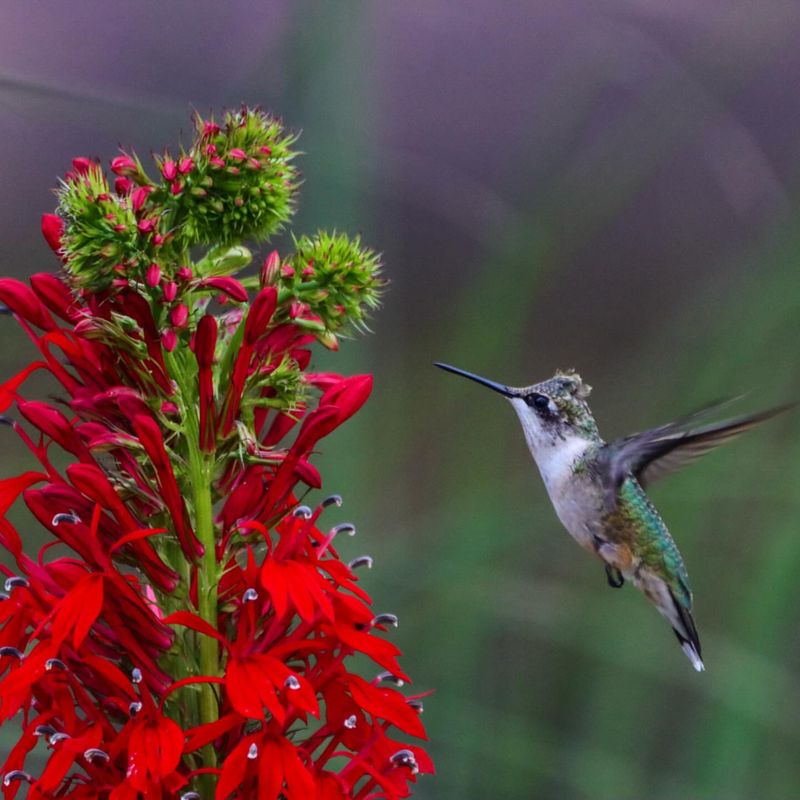
Hummingbirds get most of the credit when people talk about Cardinal Flower, but this plant quietly supports a broader community of native wildlife too.
While the long tubular flowers are primarily adapted for hummingbird pollination, certain large-bodied native bees, particularly bumblebees, have been observed attempting to access Cardinal Flower blooms.
Their visits may contribute to pollination in some cases, though hummingbirds remain by far the most effective and frequent pollinators.
Beyond direct pollination, Cardinal Flower contributes to the overall health of a native garden ecosystem.
Dense plantings provide shelter and microhabitat at ground level, and the seeds produced after flowering offer a small food source for certain songbirds.
When you build a garden around native plants like Cardinal Flower, you are creating layers of ecological value that extend well beyond any single species interaction.
Gardeners who pair Cardinal Flower with other North Carolina native plants, such as native coneflowers, wild bergamot, or ironweed, create a pollinator-friendly landscape that supports everything from monarch butterflies to native solitary bees.
Cardinal Flower anchors the hummingbird-attracting corner of that ecosystem, but it plays well with neighbors and contributes to a richer, more dynamic garden environment overall.
That kind of layered ecological thinking is what separates a truly wildlife-friendly yard from one that simply looks pretty on the surface without doing much for local biodiversity.
Perennial Habit Provides Year After Year Attraction
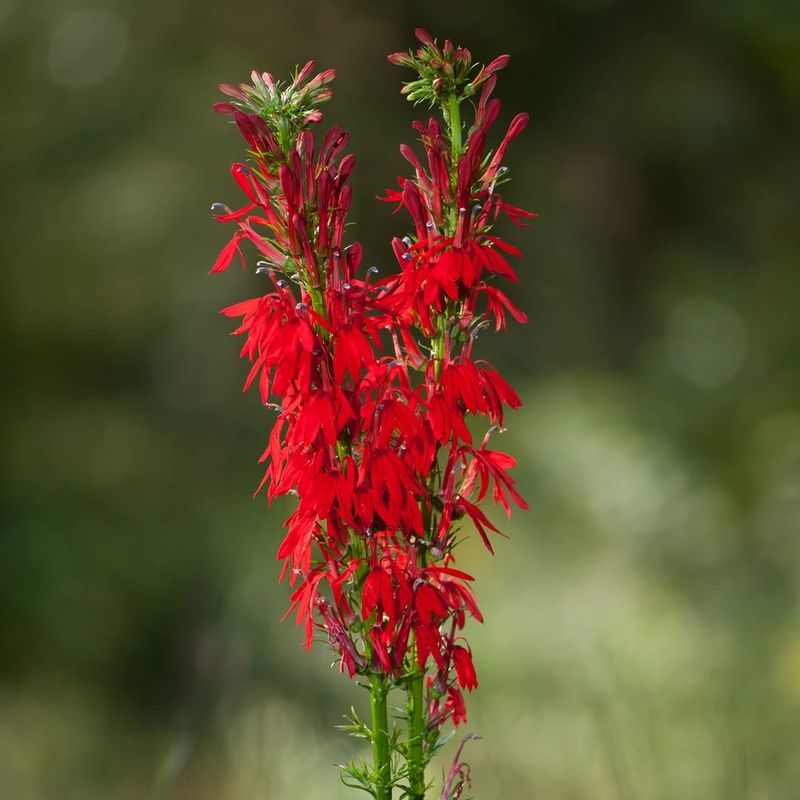
One of the most satisfying things about planting Cardinal Flower is knowing it will come back.
Lobelia cardinalis is a perennial, meaning that under suitable growing conditions it returns each year from its root system, rewarding your initial effort with season after season of brilliant red blooms.
In North Carolina’s climate, established plants reliably resprout in spring and ramp up toward their summer flowering peak without needing to be replanted.
Cardinal Flower also self-seeds readily, meaning that even if an individual plant eventually declines, new seedlings often appear nearby to take its place.
This natural regeneration habit means a small planting can gradually expand into a generous colony over several years, filling a garden bed or streambank edge with increasing color and wildlife value each season.
Many North Carolina gardeners find their original planting multiplies on its own with very little intervention.
The combination of perennial return and self-seeding makes Cardinal Flower an outstanding long-term investment for any wildlife garden.
You put in the effort once, and the plant essentially maintains its own presence in the landscape going forward.
Compared to annual flowers that require replanting every single spring, this kind of low-maintenance staying power is a genuine advantage.
Hummingbirds that visited your yard this summer will return next year expecting to find those red spikes waiting, and with Cardinal Flower, you can confidently deliver exactly that.
Adds Vertical Color To Garden Beds
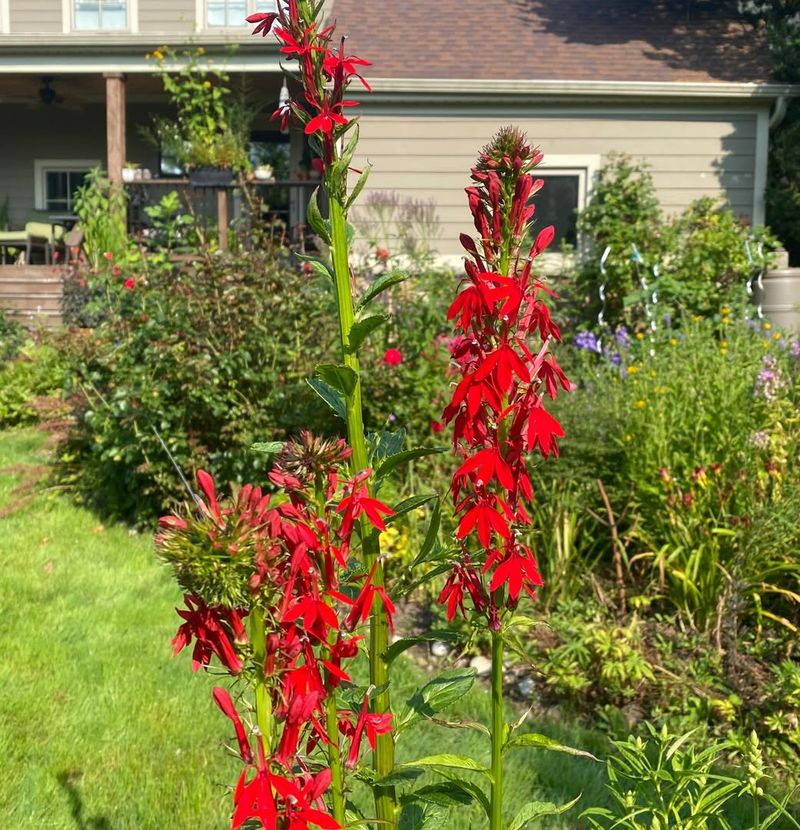
Bold, vertical plants are some of the most valuable tools a gardener has, and Cardinal Flower delivers that upright drama in a way few natives can match.
The flower spikes typically reach two to four feet tall, sometimes even taller in ideal conditions, sending a column of intense red straight up through the garden bed.
That height creates visual structure and draws the eye upward, adding a sense of depth and dimension to plantings that might otherwise feel flat.
From a design standpoint, Cardinal Flower works beautifully as a middle or back-of-border plant, rising above lower groundcovers and spreading perennials while staying below taller shrubs.
The rich green foliage forms a tidy basal rosette that looks attractive even before the blooms appear, giving the plant a clean, polished look throughout the growing season rather than just during its flowering peak.
The contrast between those vivid red spikes and surrounding green or purple-toned plants is genuinely striking.
Pairing Cardinal Flower with native ferns, blue mistflower, or swamp milkweed creates a layered planting that is both ecologically productive and visually impressive.
Garden visitors inevitably notice and ask about those tall red spikes, making Cardinal Flower a natural conversation piece as well as a wildlife magnet.
Few plants manage to be simultaneously this beautiful, this useful to wildlife, and this easy to grow in a North Carolina summer garden setting.
Combines Beauty And Ecological Value In One Plant
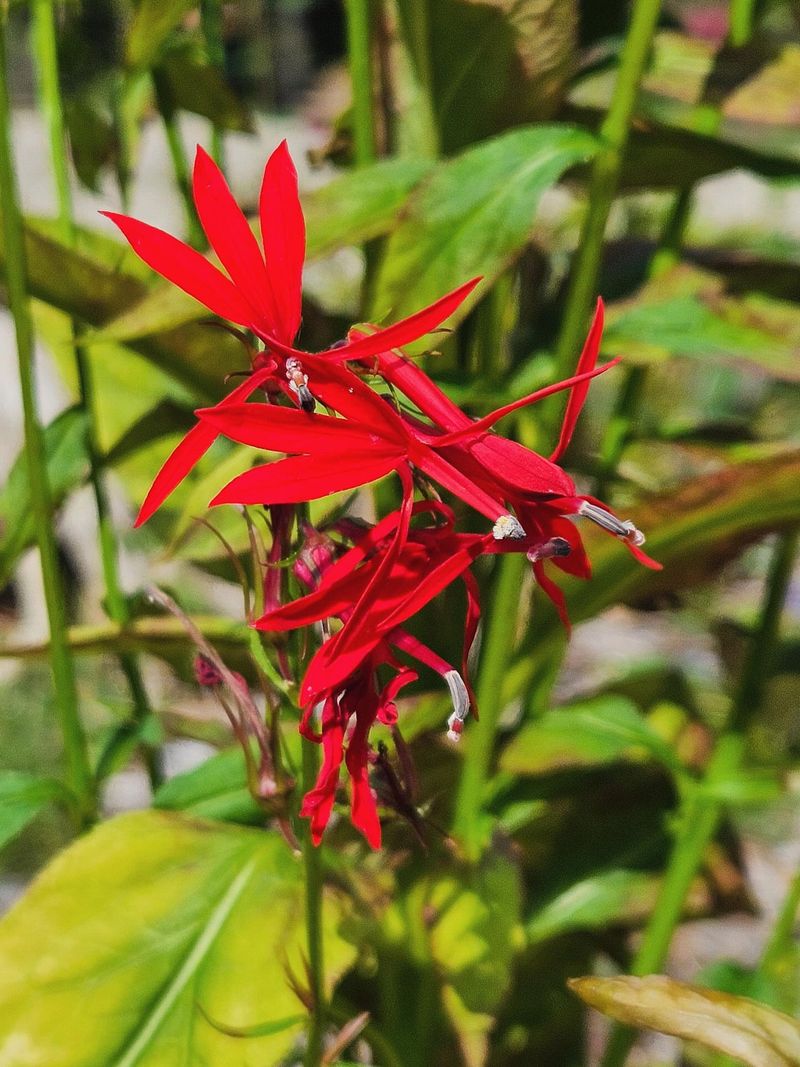
Some plants look great but do very little for the environment around them. Others support wildlife but lack the visual punch to earn a prime spot in a well-designed garden. Cardinal Flower is the rare plant that delivers both without compromise.
As a true native species with deep roots in North Carolina’s ecological history, Lobelia cardinalis supports local food webs, provides critical nectar for migrating hummingbirds, and contributes to the biodiversity that healthy landscapes depend on.
At the same time, those towering red spikes are genuinely gorgeous. Cardinal Flower has earned awards and enthusiastic praise from horticulturalists and garden designers alike, not just ecologists and naturalists.
It holds its own in formal garden settings as confidently as it does in naturalistic wildflower meadows, which speaks to its remarkable versatility as a landscape plant.
Choosing Cardinal Flower means you do not have to choose between a beautiful garden and a responsible one.
You get a plant that earns its place on multiple levels simultaneously, feeding hummingbirds, supporting pollinators, stabilizing moist soil, and dazzling anyone who walks past it in full bloom.
For North Carolina gardeners who want their outdoor spaces to mean something beyond just looking nice, Cardinal Flower represents everything a native plant should be.
It is functional, stunning, resilient, and deeply connected to the natural heritage of this remarkable state.