Georgia Gardeners Should Think Twice Before Growing These 9 Perennials In Containers
A patio full of colorful pots? Sounds like spring dreams come true!
Garden centers make it look easy – grab a few favorite perennials, toss them in a container, and voilà, endless color.
But then July hits, and reality sets in. Pots heat up fast, soil dries out in a snap, and roots run out of space long before your plants do.
Those perennials that look flawless in the ground? Suddenly they’re stressed, cramped, and kinda blah in a pot.
That doesn’t mean containers are a bad idea; they’re awesome for tons of plants. But some perennials just aren’t built for life in a pot, especially here in Georgia.
Their roots want to stretch, dig, and spread. Plant them in tight containers, and you’re signing up for extra watering, more fuss, and less-than-stellar results.
Knowing which plants can handle pots – and which ones can’t – can save your patio and your sanity.
1. Wisteria Loves To Climb But Hates Being Stuck In Pots
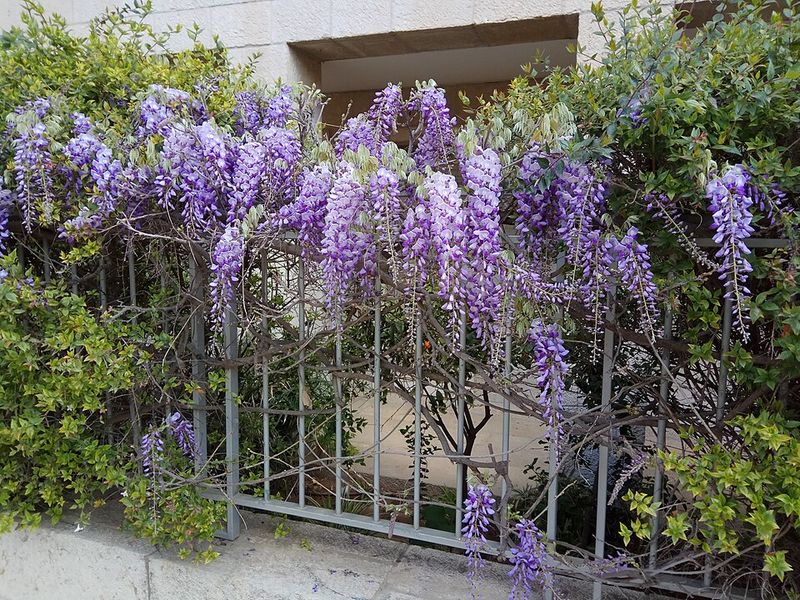
Few plants command attention quite like wisteria draped over a pergola in full bloom. Those cascading clusters of purple or white flowers look straight out of a Southern garden postcard, and it is easy to see why Georgia gardeners are tempted to grow them.
Wisteria sinensis and the native Wisteria frutescens are both vigorous woody vines with serious growth potential. In Georgia’s long growing season, established plants can stretch 20 to 30 feet and continue expanding year after year.
That kind of top growth depends on an equally ambitious root system. In a container, roots hit the walls quickly and begin circling, limiting the plant’s ability to support heavy flowering and strong stems.
Reduced root space often leads to fewer blooms and weaker growth.
Wisteria also demands sturdy structural support. A lightweight container setup rarely offers the anchoring strength these vines require.
In Georgia landscapes, planting directly in the ground near a solid arbor or trellis gives both native and nonnative varieties a far better foundation for long-term performance.
2. Black Eyed Susan Needs Room To Roam Below The Soil
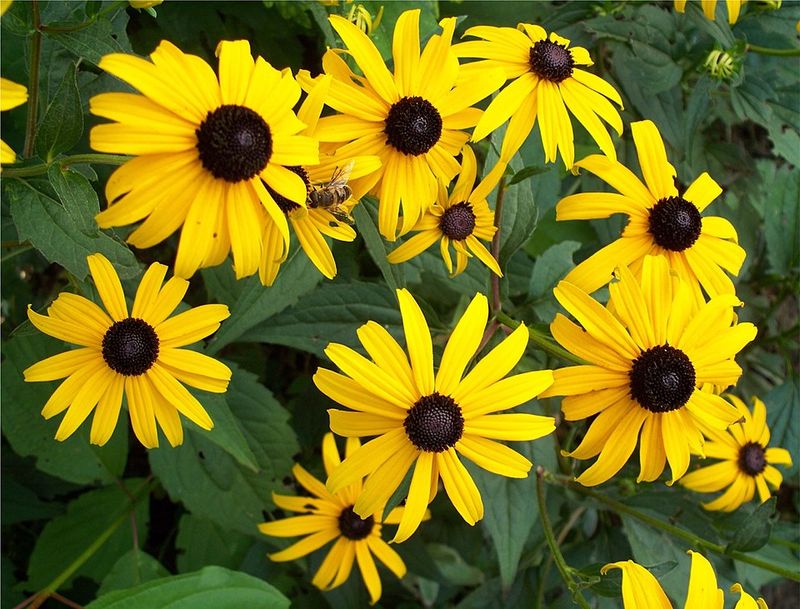
Bright golden petals and dark centers make Black Eyed Susan one of the most recognizable summer flowers in Georgia. For reliable perennial performance in this region, Rudbeckia fulgida is the species most often grown in landscape beds.
Unlike the short-lived Rudbeckia hirta, Rudbeckia fulgida spreads through rhizomes as it matures. That spreading habit helps it form dense, colorful drifts in open garden beds.
In a container, those rhizomes run into hard boundaries quickly, creating a crowded root zone that limits airflow and nutrient uptake.
Georgia summers intensify the problem. Container soil heats up faster than ground soil, and root temperatures can rise well above ambient air temperature in full sun.
Heat combined with overcrowding often leads to reduced bloom production and overall stress.
In-ground planting allows Black Eyed Susan to naturalize gradually, which supports healthier clump development and longer bloom periods. Garden beds also provide more consistent moisture and insulation than patio pots exposed to direct afternoon sun.
Your Georgia Garden Changes Every Week. Your Plan Should Too.
Gardening in Georgia changes quickly throughout the season. Every Friday you’ll receive a simple weekly plan showing exactly what to plant, prune, fertilize, harvest, and protect so you never miss the right timing.
3. Bee Balm Spreads Fast And Fills Pots Quickly
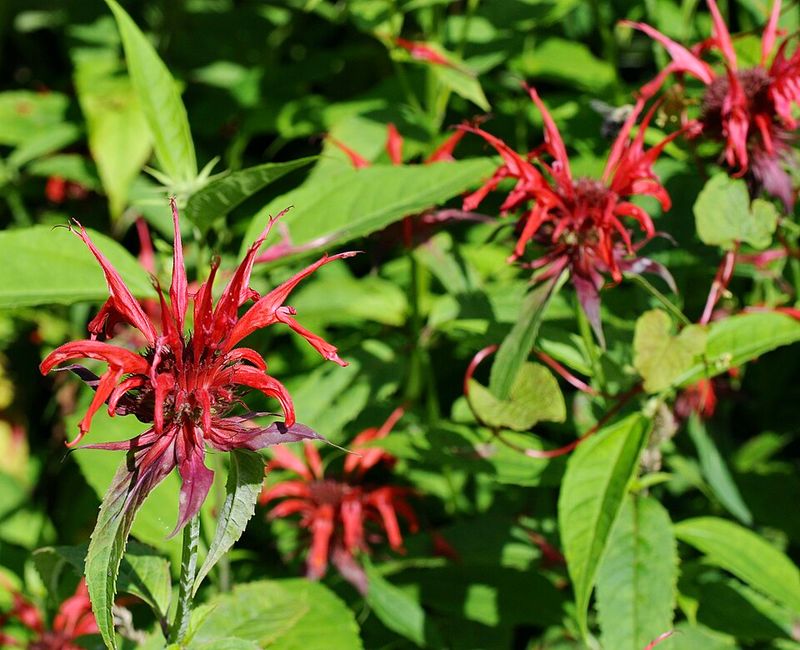
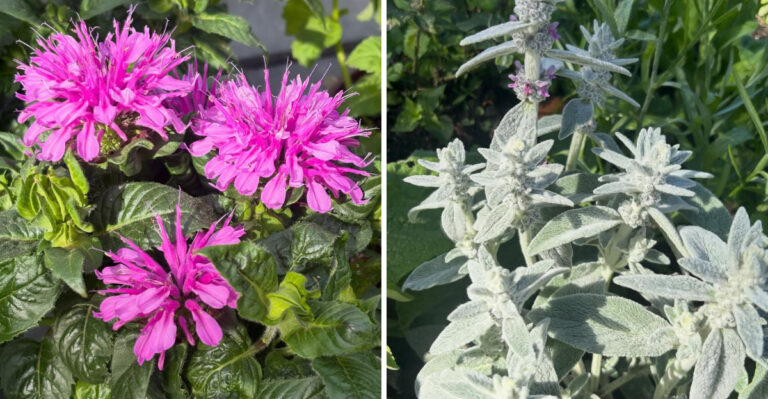
Pollinators flock to bee balm throughout Georgia summers. Hummingbirds, butterflies, and bees are drawn to its vibrant blooms, and gardeners appreciate its bold color.
Monarda didyma spreads steadily through underground rhizomes. In open soil, that trait helps create lush, full clumps.
In containers, expansion happens in a confined space. Within a season or two, roots can become densely packed, limiting airflow and reducing plant vigor.
Humidity adds another layer of challenge. Powdery mildew is common on bee balm in Georgia’s climate, and restricted air movement around container plants can make outbreaks more likely.
Once foliage becomes coated, the plant’s appearance declines quickly.
Dividing bee balm every few years in a garden bed helps maintain strong growth. While compact cultivars are marketed for smaller spaces, even those varieties tend to fill containers faster than expected in Georgia’s extended growing season.
Planting in the ground generally provides better circulation and more stable moisture.
4. Butterfly Weed Develops Deep Roots That Pots Cannot Handle
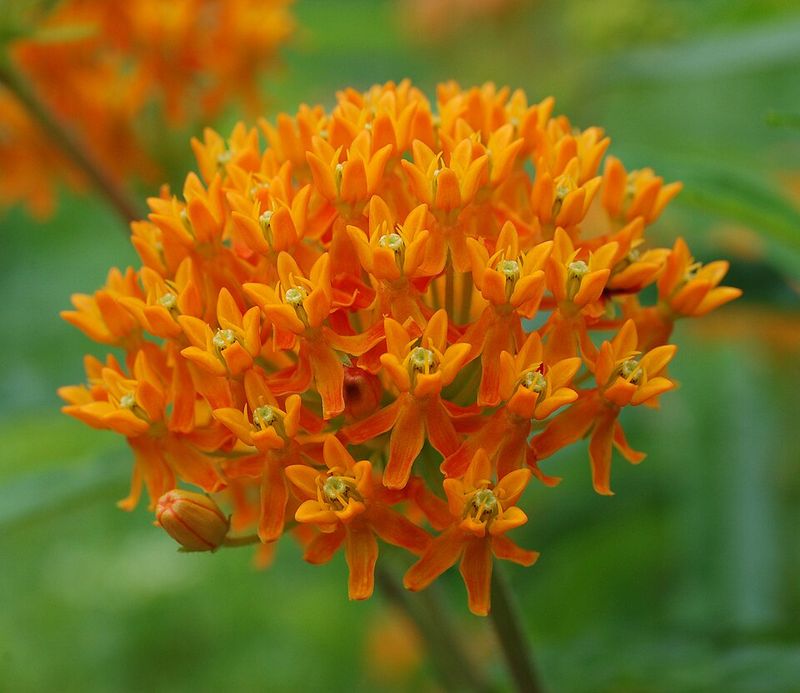
Butterfly weed thrives in Georgia’s sunny landscapes and supports monarchs and other native pollinators. Its bright orange blooms and drought tolerance make it a favorite in native plant gardens.
The key to its resilience lies underground. Asclepias tuberosa forms a deep taproot that allows it to access moisture during dry stretches.
In a container, that taproot reaches the bottom quickly and begins circling or compressing against the base of the pot.
Restricted root development can slow establishment and reduce flowering. Containers also dry out faster than in-ground plantings, which works against a plant adapted to drawing moisture from deeper soil layers.
Because the taproot resents disturbance, transplanting established plants can set them back significantly.
Planting young specimens or direct-seeding into a well-drained garden bed allows the root system to develop naturally and supports stronger long-term performance in Georgia conditions.
5. Peony Struggles With Warm Container Soil In Georgia Summers
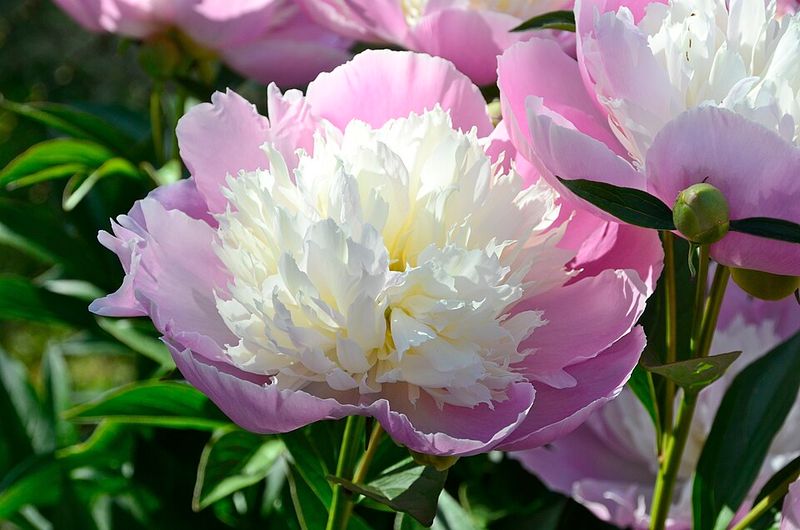
Peonies bring lush spring color to many Georgia gardens, though they sit near the southern edge of their comfort range in parts of the state.
These plants rely on winter chilling to support reliable bud formation. In northern and central Georgia, in-ground plantings often receive adequate chilling hours.
Containers, however, experience sharper temperature swings. During mild winters, roots in pots may warm more quickly during daytime sun exposure, which can affect consistency in bloom production.
Summer heat presents a second challenge. Container soil exposed to direct sun can climb well above air temperature.
Peony roots prefer cooler, stable conditions, and excessive root heat can weaken overall growth.
Garden placement makes a difference. A well-prepared bed with good drainage and some afternoon shade provides more stable soil temperatures than a patio container.
In Georgia’s climate, giving peonies deep soil and moderate summer protection improves their chances of consistent flowering.
6. Russian Sage Grows Large And Prefers Open Ground
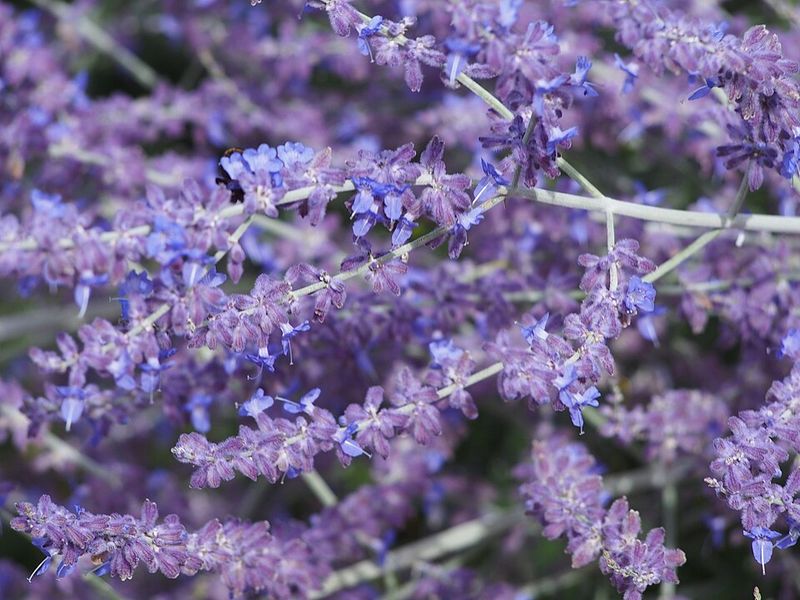
Russian sage, now classified botanically as Salvia yangii, adds airy texture and lavender-blue color to Georgia borders. Once established, it tolerates heat and moderate drought well.
Mature plants often reach four to five feet tall and nearly as wide. That size requires a substantial root system for stability and moisture access.
Containers limit that expansion, which can lead to weaker stems and reduced bloom density.
Drainage is another factor. Russian sage prefers lean, well-drained soil. Containers that retain excess moisture during Georgia’s rainy periods can increase the risk of root stress.
Conversely, small pots may dry too rapidly during peak heat.
Planted directly in full sun with good drainage, Russian sage develops a strong framework and blooms reliably through summer. Open ground gives it the space needed to support both its height and spread.
7. Baptisia Builds Deep Roots That Containers Restrict
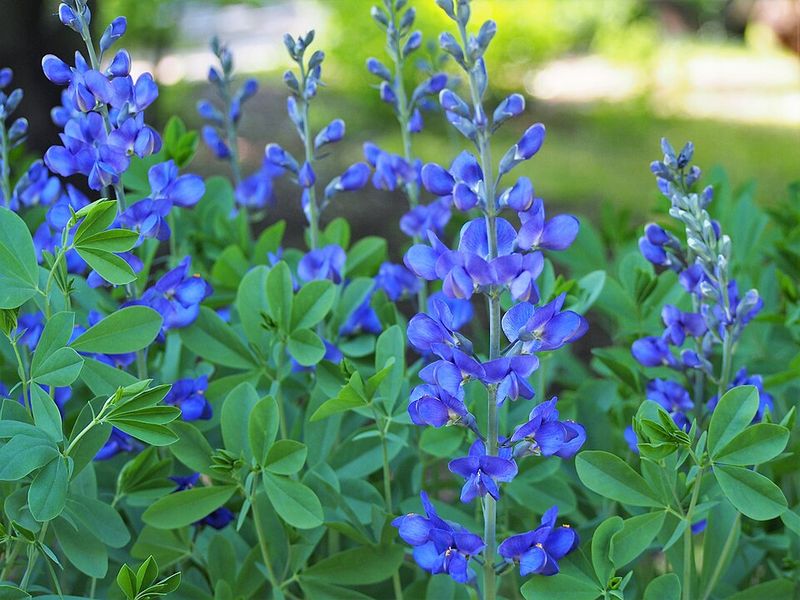
Baptisia australis is a long-lived native perennial valued for its spring flower spikes and sturdy structure. Once established, it tolerates Georgia heat and occasional dry spells with minimal intervention.
Its blue-green foliage also holds up well through summer, giving it ornamental value beyond its bloom period.
Its durability comes from a deep, woody taproot system. Over time, that root network anchors the plant firmly and allows access to moisture stored well below the soil surface.
Mature plants develop a broad, shrub-like presence, often reaching three to four feet tall and wide in Georgia landscapes.
In a container, root depth is limited from the beginning. Restricted development can slow establishment and reduce long-term vigor.
Because mature Baptisia plants respond poorly to disturbance, frequent repotting is not ideal. Once root-bound, the plant may show reduced flowering and slower seasonal growth compared to in-ground specimens.
Planting directly into a permanent garden location allows the root system to expand naturally. In Georgia landscapes, a sunny site with well-drained soil supports healthier growth and stronger flowering than container culture typically provides.
Giving Baptisia space early on rewards gardeners with a resilient plant that can remain in place for many years.
8. Shasta Daisy Can Overheat In Pots During Georgia Heat
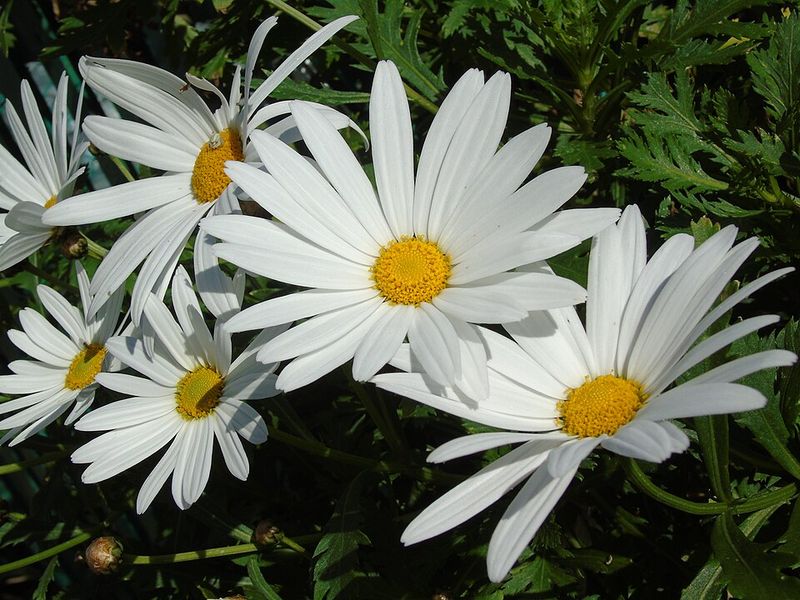
Shasta daisies, botanically known as Leucanthemum X Superbum, offer bright white blooms that stand out in summer borders. In Georgia, they perform best when given moderate conditions and some protection from intense afternoon sun.
In the northern part of the state they often perform more consistently than in the warmer southern counties.
Container growing introduces added stress. Soil inside sun-exposed pots heats quickly, especially during prolonged heat waves.
Roots sit close to the container surface, where temperatures fluctuate most. Dark-colored containers can intensify this effect by absorbing additional heat.
Heat stress may lead to shorter bloom periods and reduced vigor. Over time, crowded roots compound the issue, as Shasta daisies naturally form expanding clumps that benefit from division every few years.
Limited soil volume also makes consistent watering more difficult during Georgia’s dry summer stretches.
Garden beds buffer temperature swings more effectively than containers. Providing afternoon shade and well-drained soil in the ground creates a more stable environment for these classic summer bloomers in Georgia.
In-ground planting also makes routine division easier, which helps maintain strong flowering over time.
9. Obedient Plant Turns Wild When Roots Feel Confined
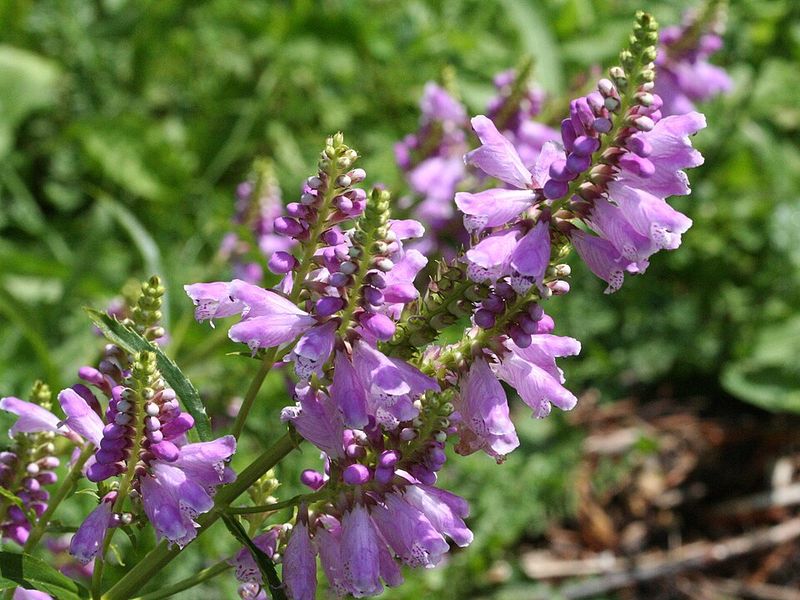
Obedient plant earns its name from the way individual flowers stay in place when moved, not from its growth habit.
Physostegia virginiana spreads steadily through underground rhizomes.In favorable conditions, it can form sizable colonies within just a few growing seasons.
In a garden bed, that spread can be managed with periodic division and edging. In a container, rhizomes quickly reach the sides of the pot and begin circling, forming a dense root mass.
As the root system thickens, water absorption becomes less efficient and growth may appear uneven.
Georgia’s long growing season accelerates that expansion. Overcrowded roots limit airflow and water uptake, which can reduce overall vigor.
Consistent moisture is important for this species, yet containers tend to dry more rapidly during hot spells, especially in full sun.
This plant also prefers consistently moist soil, something more difficult to maintain in containers during Georgia’s hottest stretches.
Planted in a moist border or rain garden area, obedient plant has room to spread and can be divided every couple of years to maintain balance.
In the right in-ground setting, it delivers tall spikes of late-season color with far less stress than it experiences in a confined pot.