7 Ways California Gardeners Get Stapelia To Bloom Successfully
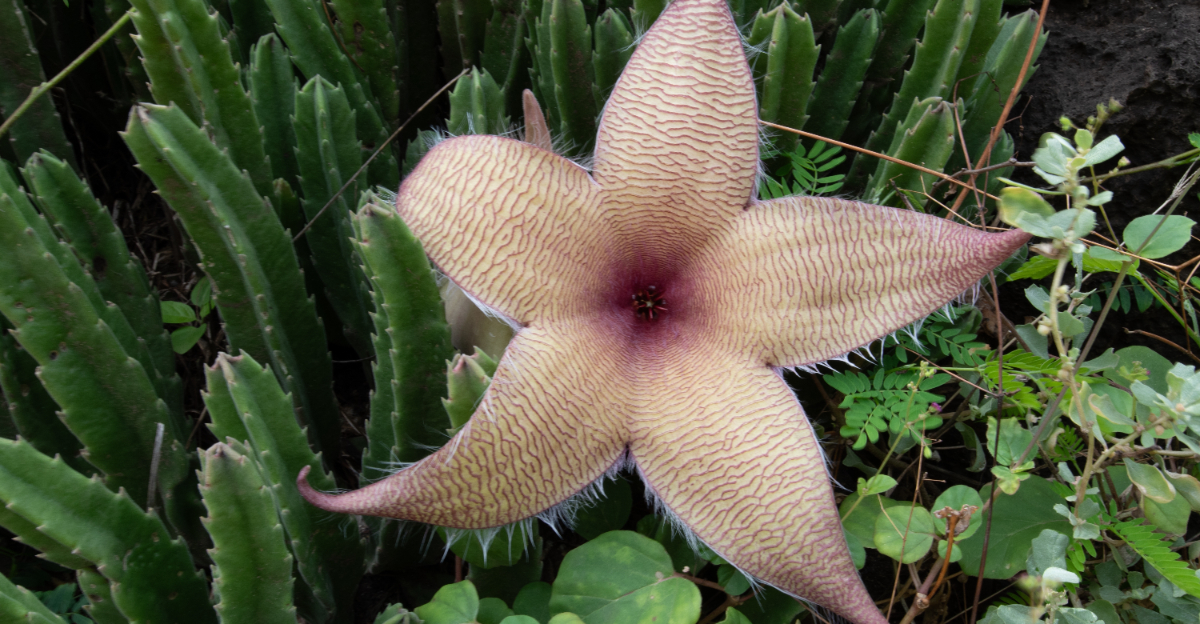
Growing Stapelia in California feels a little like tending a secret. One minute you have quirky, cactus-like stems sitting quietly in a pot.
The next, a jaw dropping star-shaped bloom unfurls and completely steals the show. These dramatic succulents are famous for their wild patterns and bold presence, but getting them to flower takes a bit of strategy.
The good news is California’s sunny climate gives you a serious advantage. Warm temperatures, bright light, and long growing seasons create the perfect stage for those unforgettable blooms.
The trick is dialing in the details. Think gritty soil, smart watering, and just the right amount of sun without scorching those fleshy stems.
Once you understand what makes Stapelia happy, blooming becomes much more predictable. And when those oversized, starfish-like flowers finally open, you will know every bit of effort was worth it.
1. Give It Bright Indirect Light
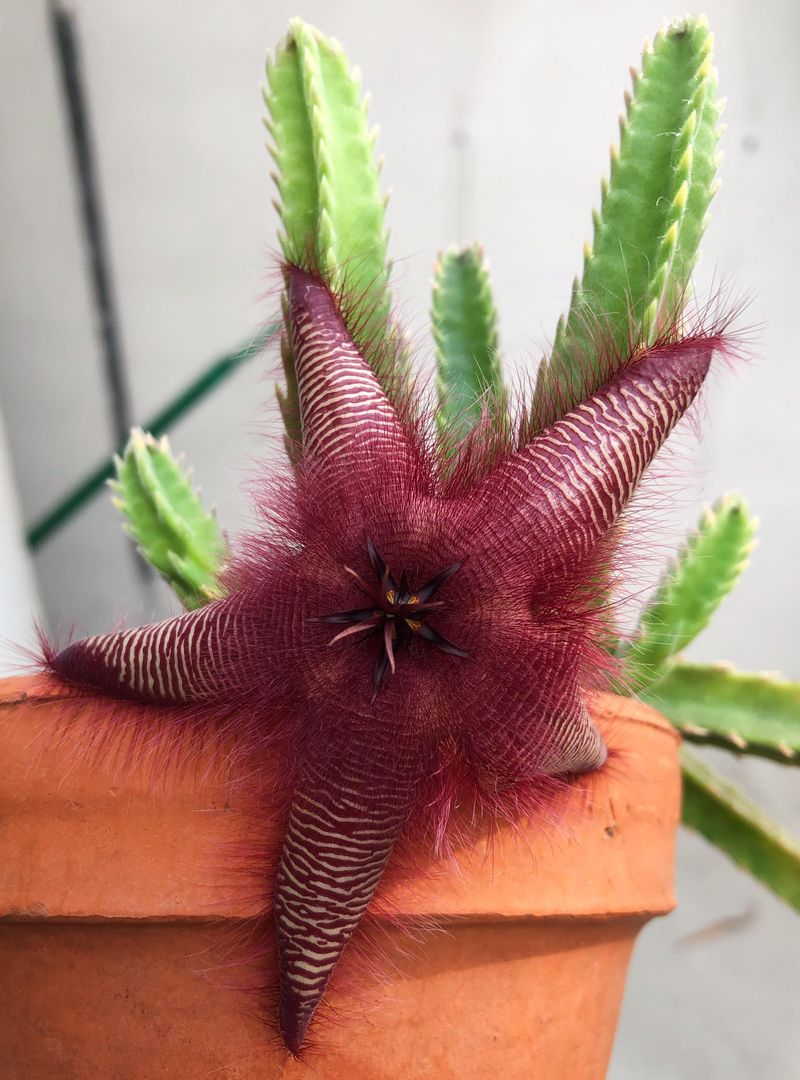
Light is everything for Stapelia, but there’s a catch most beginners miss. Direct, harsh afternoon sun can actually scorch the stems and stress the plant out.
What Stapelia really loves is bright, indirect light for most of the day.
In California, especially in places like Los Angeles or the Inland Empire, the summer sun is intense. A south-facing window with a sheer curtain works beautifully.
You can also place it on a covered patio where it gets plenty of brightness without the brutal midday rays hitting it straight on.
Outdoors, try tucking it under a pergola or near a taller plant that filters some of the light. Stapelia will reward you with lush, healthy stems when the light feels just right.
Weak, leggy growth is usually a sign the plant isn’t getting enough brightness. On the flip side, bleached or shriveled stems mean too much direct sun.
Finding that sweet spot takes a little trial and error, but it’s worth it. California’s long sunny days give Stapelia plenty of energy to build up what it needs to eventually push out those spectacular blooms.
2. Use Fast Draining Cactus Soil
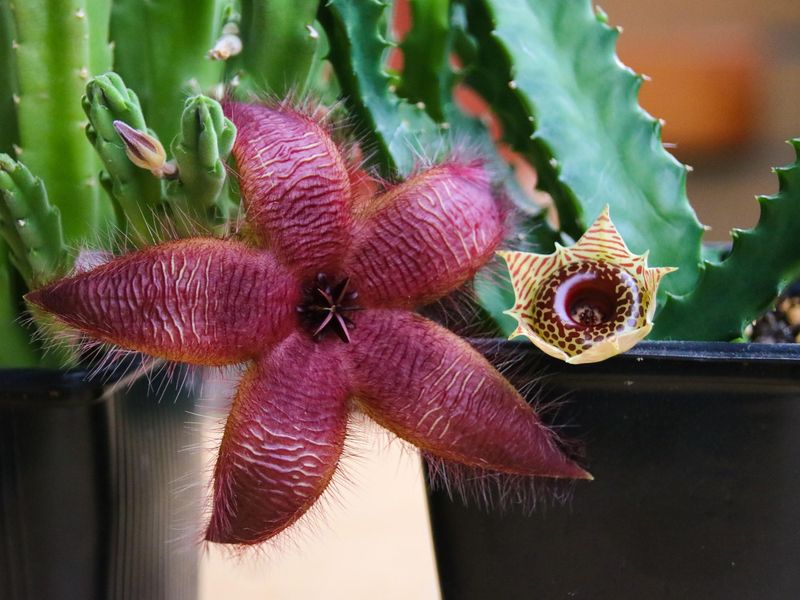
Soil might not sound exciting, but it is honestly one of the biggest factors in whether your Stapelia blooms or just sits there looking bored. Regular potting mix holds too much moisture and can cause the roots to rot before the plant ever gets a chance to flower.
Cactus and succulent soil mixes are designed to drain fast and stay loose. You can find them at most garden centers across California, from small nurseries in Santa Barbara to big box stores in Fresno.
For even better drainage, mix in extra perlite or coarse sand at about a 50/50 ratio.
The goal is soil that dries out quickly after watering. When roots sit in wet soil for too long, the plant shifts all its energy into survival mode instead of blooming mode.
Fast-draining soil keeps the roots healthy and happy, which is exactly the environment Stapelia needs to thrive.
Clay or terracotta pots work especially well because they allow moisture to escape through the sides. Pair a terracotta pot with a good cactus mix, and you’ve already set your Stapelia up for a much better shot at producing flowers.
Your California Garden Changes Every Week. Your Plan Should Too.
Gardening in California changes quickly throughout the season. Every Friday you’ll receive a simple weekly plan showing exactly what to plant, prune, fertilize, harvest, and protect so you never miss the right timing.
3. Water Deeply Then Let It Dry
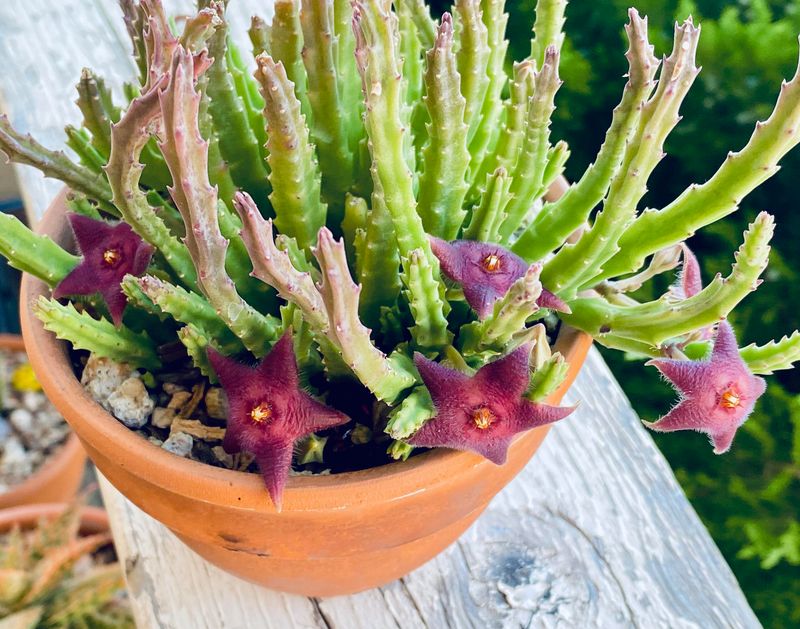
Watering Stapelia is less about how often you do it and more about how you do it. The right technique makes a noticeable difference.
When you water, soak the soil thoroughly so the water reaches all the roots. Then stop and walk away.
The second half of that process is just as important as the first. Let the soil dry out completely before you water again.
In most parts of California during summer, that might mean waiting one to two weeks between waterings depending on your climate zone and pot size.
Overwatering is the number one mistake people make with Stapelia. It doesn’t show up right away, which makes it sneaky.
The stems slowly soften and the plant weakens over time. By the time you notice something is wrong, the roots may already be struggling.
During winter, cut back watering significantly. Stapelia goes into a rest period when temperatures cool down, and it needs far less water during that time.
Gardeners in cooler coastal areas of California like San Francisco should be especially careful not to overwater in the colder months. Mastering this watering rhythm is one of the best things you can do to encourage blooming.
4. Keep Roots Slightly Root Bound
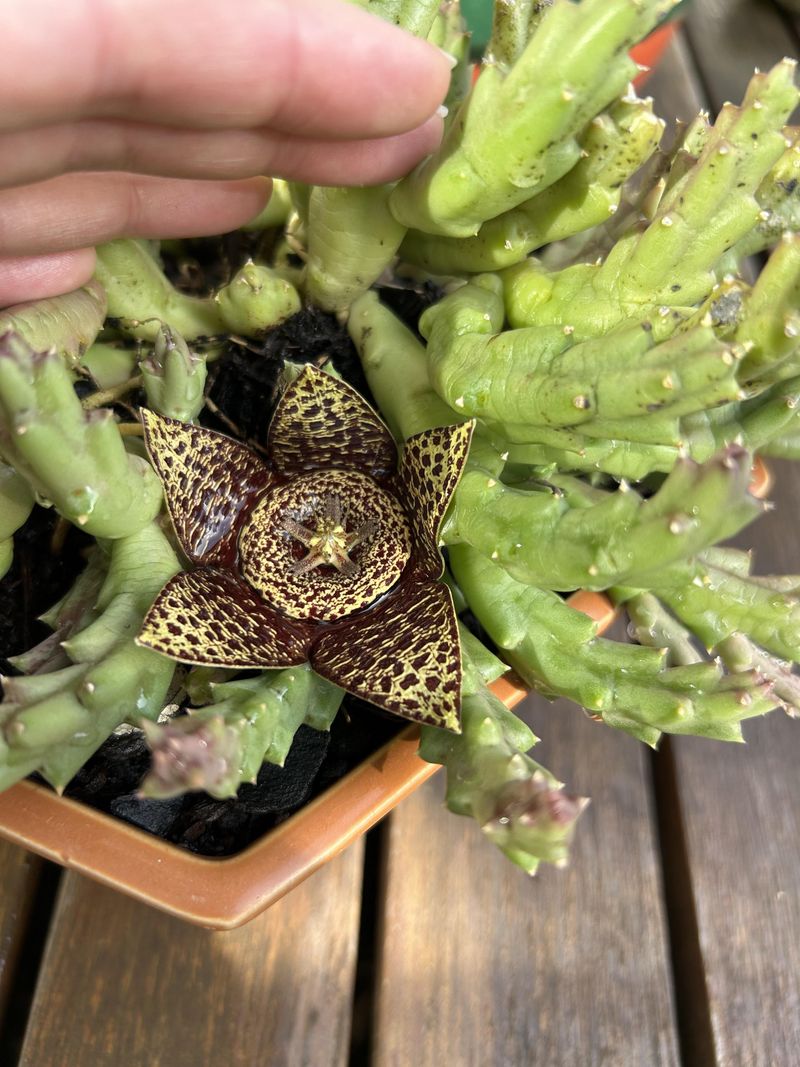
Most plants panic when their roots run out of space, but Stapelia is a little different. A slightly root-bound Stapelia is actually a blooming Stapelia.
When the roots fill the pot but aren’t bursting out the bottom, the plant feels just enough pressure to shift into flowering mode.
Think of it like a gentle nudge. When the plant senses that its space is limited, it starts focusing on reproduction rather than just growing more stems.
That’s when you’re most likely to see those wild, star-shaped flowers appear.
California gardeners who keep their Stapelia in smaller pots often report more consistent blooms than those who keep repotting into larger containers. It’s a counterintuitive trick, but it works really well.
If you do need to repot because roots are escaping the drainage holes, go up only one pot size at a time.
Choose a snug pot rather than a roomy one. Terracotta pots are great for this because they let you see and feel how the plant is doing.
Once you notice blooms appearing regularly, resist the urge to move it into a bigger home. Keeping that cozy, slightly tight fit is part of what keeps the flowers coming back each season.
5. Protect It From Cold Nights
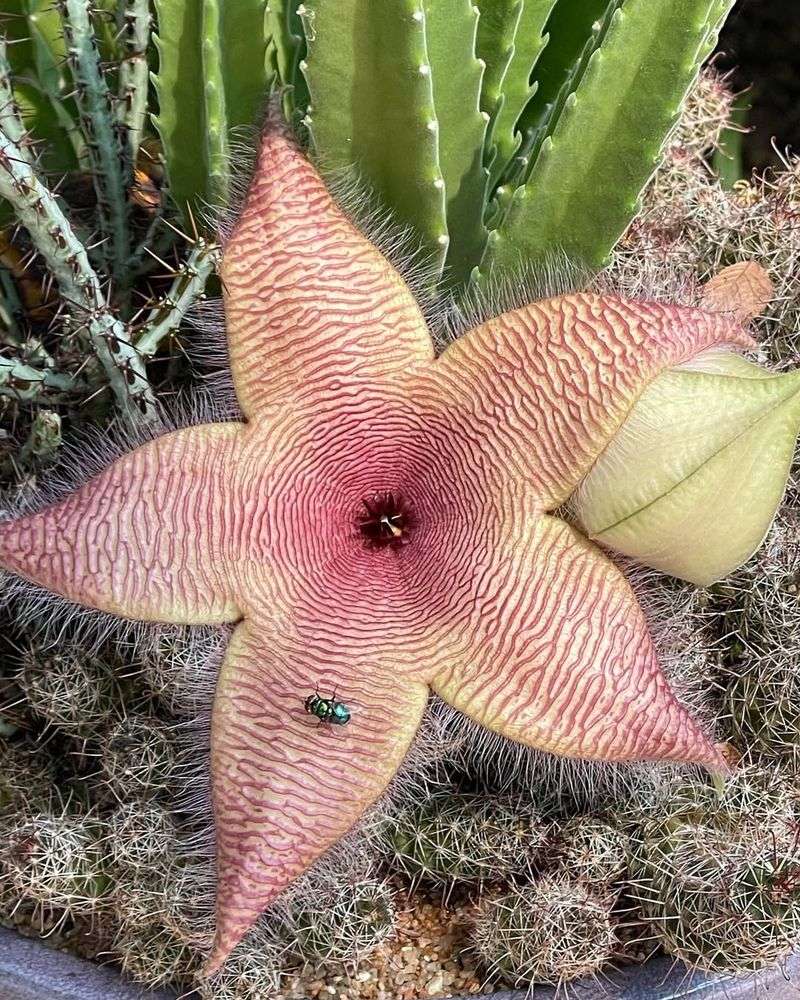
California has a reputation for warm weather, but nights can get surprisingly cold, especially in inland valleys, mountain communities, and coastal areas where marine layers roll in. Stapelia is not a fan of temperatures dropping below 50 degrees Fahrenheit.
Cold nights can stress the plant and delay or prevent blooming entirely.
If you’re growing Stapelia outdoors in places like Riverside, Bakersfield, or even parts of the Bay Area, keep an eye on the nighttime forecast from fall through early spring.
When temps are heading toward the low 50s or below, it’s time to bring the plant inside or cover it with a frost cloth.
Moving it to a garage, sunny porch, or warm windowsill for the night usually does the trick. Stapelia doesn’t need to be pampered around the clock, just protected from those chilly dips that can slow it down.
Even a few cold nights in a row can set the plant back significantly.
The good news is that most of California’s climate is genuinely well-suited for Stapelia. A little awareness of overnight temperatures goes a long way.
Once spring arrives and nights warm back up, the plant bounces back quickly and gets ready to produce its next round of blooms.
6. Avoid Overfeeding With Nitrogen
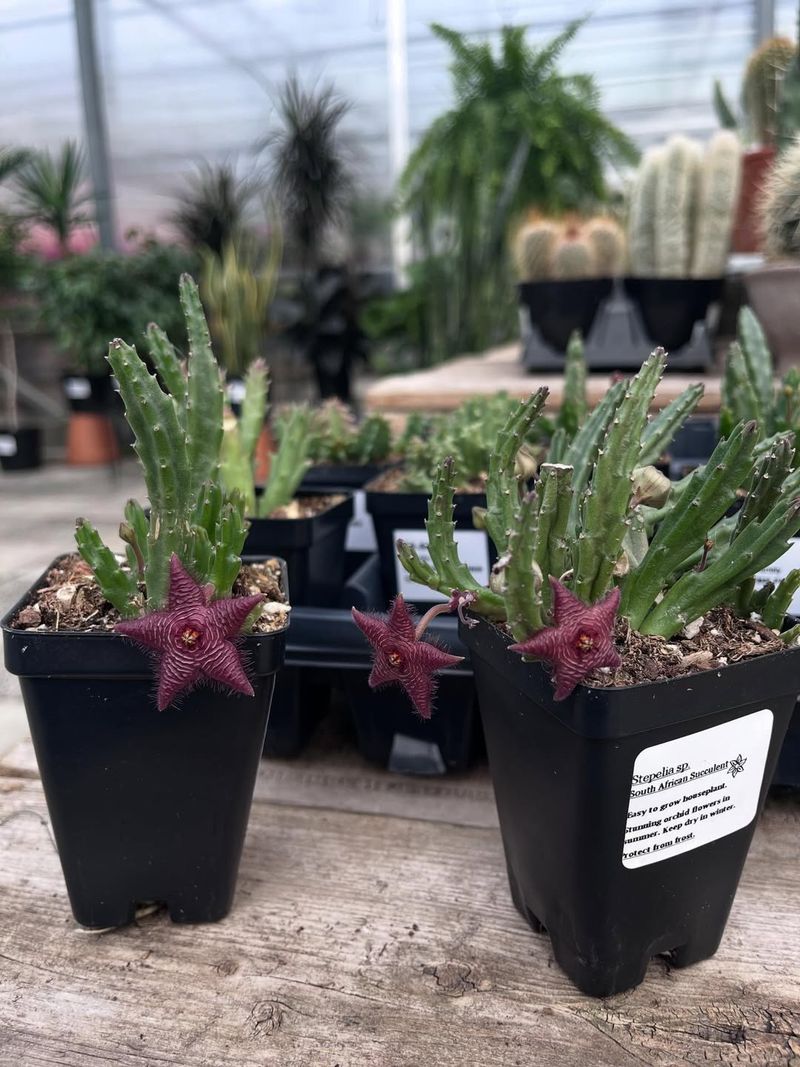
Fertilizer can feel like a shortcut to bigger, better plants, but with Stapelia, less is definitely more. Too much nitrogen pushes the plant to grow lots of lush green stems and almost no flowers.
Nitrogen is the first number on any fertilizer label, and it’s the one to watch carefully.
For Stapelia, a low-nitrogen fertilizer works best. Look for something labeled for cacti and succulents, which typically has a balanced or lower first number like 2-7-7 or similar.
These formulas support root health and flowering without triggering excessive leafy growth.
Feed your Stapelia lightly during the growing season, which in California usually runs from late spring through early fall. Once a month at half strength is plenty.
Skip fertilizing entirely during winter when the plant is resting. More fertilizer does not mean more flowers with this plant.
Gardeners in California sometimes make the mistake of using leftover vegetable garden fertilizer on their succulents. Those blends are often high in nitrogen and can push Stapelia into a growth mode that works against blooming.
Stick to a formula designed for succulents, apply it sparingly, and your plant will focus its energy exactly where you want it, producing those amazing star-shaped flowers.
7. Increase Light Before Bloom Season
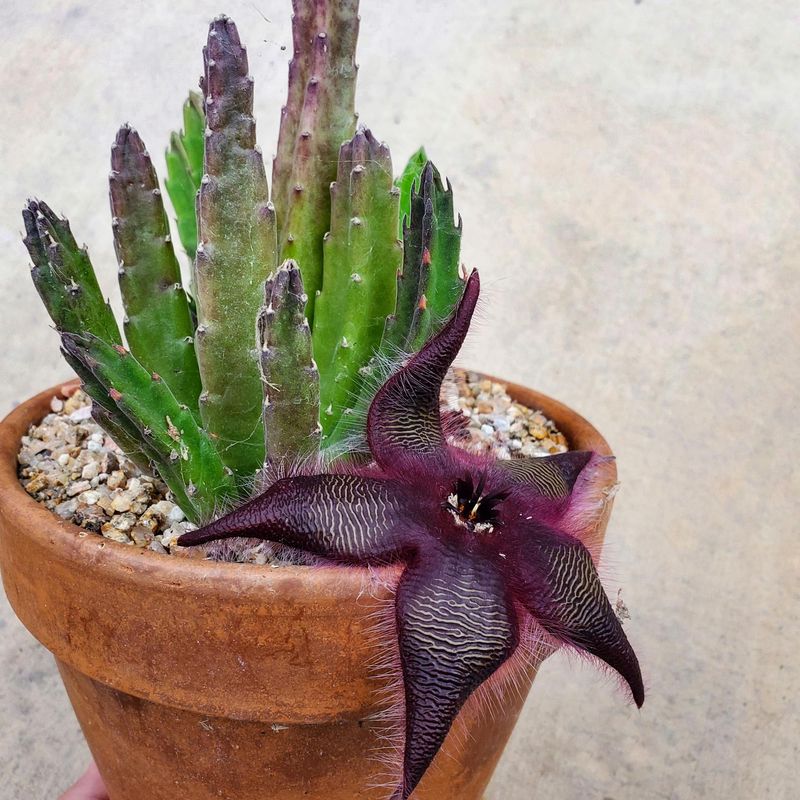
One of the most effective tricks California gardeners use is giving Stapelia a light boost right before bloom season kicks in. As late winter transitions into spring, gradually moving the plant to a brighter location signals to it that warmer, longer days are coming.
That shift in light encourages the plant to start preparing for flowers.
You don’t need to make a dramatic change overnight. Start by adding an extra hour or two of bright light each day over the course of a couple of weeks.
If the plant has been sitting in a dimmer indoor spot through winter, moving it to a bright south-facing window or a sunny patio spot in early March works really well in most California locations.
The combination of increasing light and warming temperatures acts like a natural alarm clock for Stapelia. It wakes the plant up from its winter rest and gets it into active growth mode.
That’s when you’ll start seeing new stem growth, and shortly after, the early signs of buds forming.
Gardeners in sunny areas like Palm Springs or San Diego have a natural advantage here because their winters are milder.
But even in cooler parts of California, this gradual light increase strategy works consistently and is one of the simplest ways to time your Stapelia blooms with the season.