7 Native Plants That Thrive In Michigan’s Heavy Clay Soil
Dig into Michigan clay and you quickly understand why so many gardeners feel defeated before they even begin.
Thick, dense, and slow to drain, heavy soil can seem like an obstacle standing between you and a thriving landscape. Yet beneath that stubborn texture lies an advantage many overlook.
Clay holds moisture longer than sandy soil and stores valuable nutrients that plants can draw from over time. The key is not trying to fight it, but choosing species that evolved to thrive in exactly these conditions.
Across Michigan, several native plants have adapted to compacted, moisture retaining ground, developing strong root systems that handle seasonal swings with ease.
When matched correctly to your soil, they grow vigorously, produce reliable blooms, and return year after year without constant amendments.
By selecting plants naturally suited to clay, you transform a challenge into an asset and create a Michigan garden that looks effortless, resilient, and beautifully in sync with its environment.
1. Swamp Milkweed (Asclepias incarnata)
Few plants handle soggy, compacted ground as gracefully as swamp milkweed.
Native to Michigan’s wetlands and moist meadows, this hardy perennial has spent thousands of years adapting to exactly the kind of waterlogged clay soil that frustrates so many gardeners.
Its roots are built to push through dense, heavy ground without complaint, pulling up moisture and nutrients with ease.
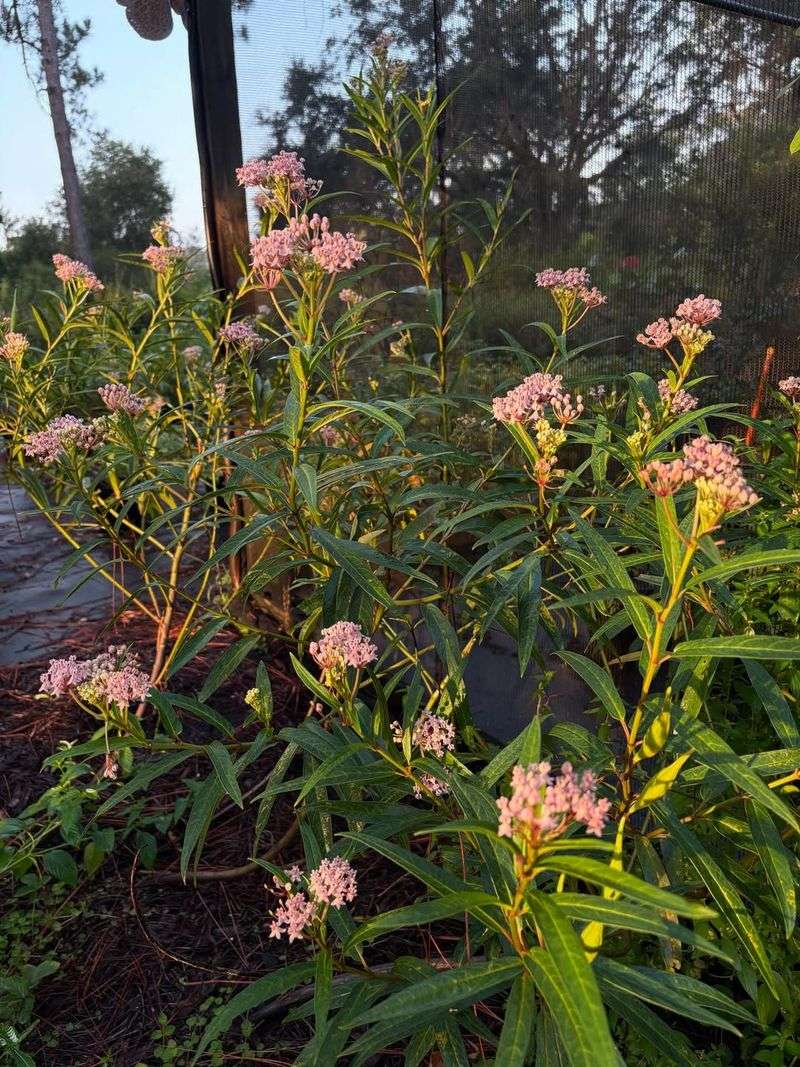
Swamp milkweed typically grows between three and five feet tall, producing clusters of rose-pink flowers from midsummer into early fall.
Those blooms are a magnet for monarch butterflies, native bees, and a wide range of pollinators that Michigan gardens desperately need.
Planting it near low-lying areas or spots where water tends to pool after rain is a smart move. Unlike many ornamental plants that struggle in poorly drained spots, swamp milkweed thrives when its feet stay wet for extended periods.
It spreads gradually through rhizomes, filling in bare patches over time without becoming aggressive or invasive. Full sun is ideal, though it tolerates partial shade quite well.
Once established, it needs almost no extra care, making it one of the most rewarding native choices you can add to a Michigan clay garden.
2. Blue Flag Iris (Iris versicolor)
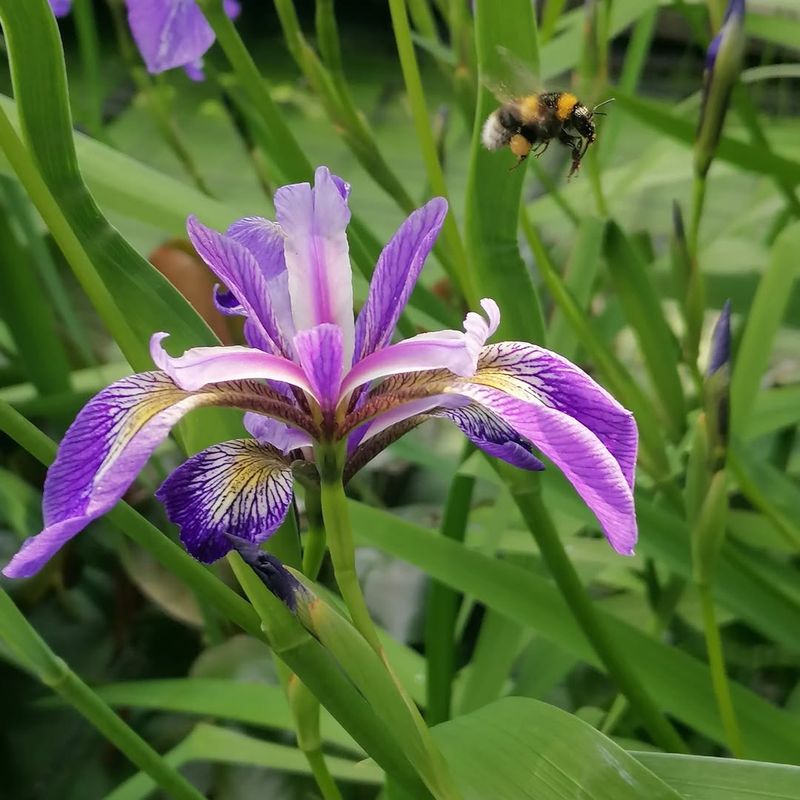
There is something almost magical about blue flag iris rising from dense, wet clay soil and producing stunning violet-blue blooms that look like they belong in a painting.
Native to Michigan’s marshes and wet shorelines, this iris has a natural affinity for heavy, moisture-retentive soils that drain poorly and stay damp through much of the growing season.
It does not just tolerate those conditions; it genuinely prefers them. Blue flag iris grows two to three feet tall and blooms in late spring to early summer, offering a burst of color right when the garden needs it most.
The intricate flowers feature delicate veining and a yellow-orange splash at their center, making each bloom look hand-crafted. Bees and hummingbirds visit frequently, adding even more life to the space around it.
Planting blue flag iris along the edges of rain gardens, retention ponds, or low areas where clay holds standing water is one of the smartest landscaping decisions a Michigan gardener can make.
Your Michigan Garden Changes Every Week. Your Plan Should Too.
Gardening in Michigan changes quickly throughout the season. Every Friday you’ll receive a simple weekly plan showing exactly what to plant, prune, fertilize, harvest, and protect so you never miss the right timing.
It spreads through rhizomes over time, creating a thick, weed-suppressing clump that stabilizes soil and prevents erosion.
Full sun to part shade suits it perfectly, and once established it rarely needs supplemental watering or fertilizing. This iris is built for Michigan conditions through and through.
3. Joe-Pye Weed (Eutrochium maculatum)
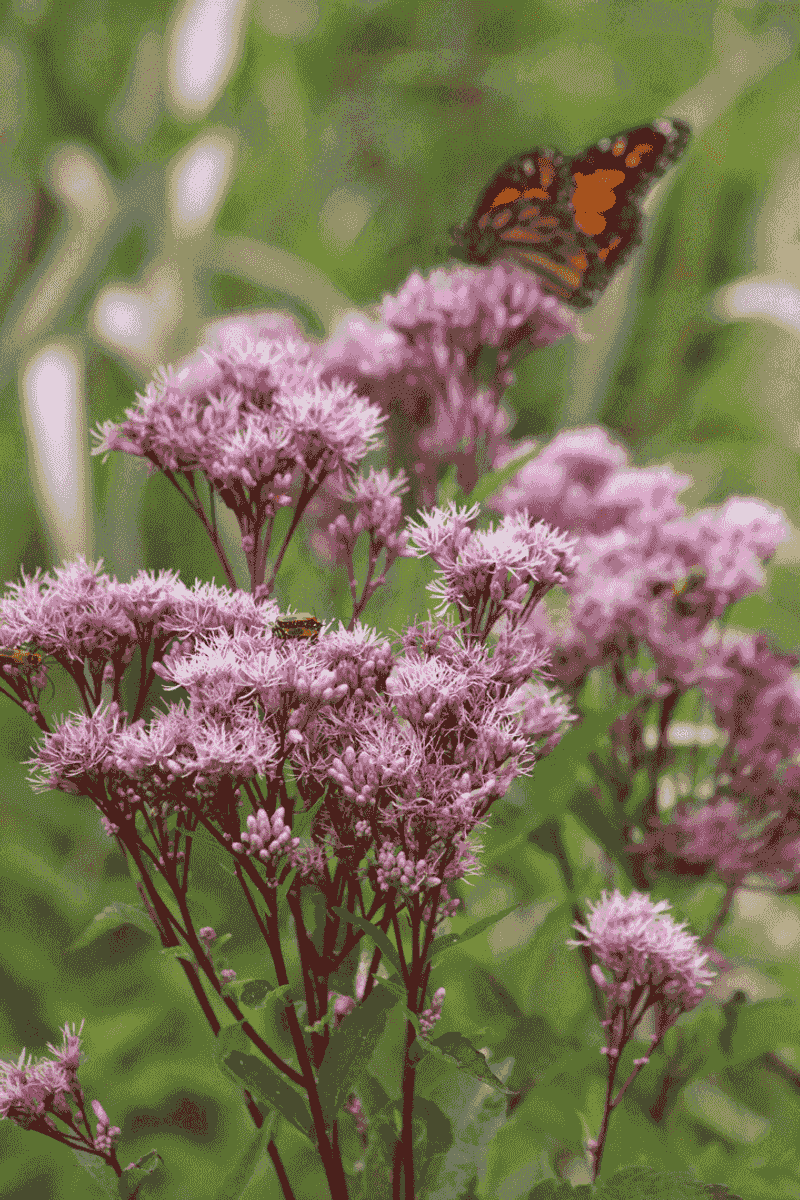
Standing up to seven feet tall with massive domes of dusty-pink flowers, Joe-Pye weed commands attention in any garden.
This bold, native perennial has deep roots in Michigan’s meadows and wetland edges, where clay soil and seasonal flooding are just part of life.
Far from being a setback, those conditions are exactly where Joe-Pye weed does its best work. The plant blooms from mid to late summer, right when many other perennials are winding down.
That late-season color is incredibly valuable, giving pollinators a reliable food source as the season shifts toward fall.
Butterflies, especially swallowtails, flock to the flower clusters in impressive numbers. Gardeners who want to support local wildlife will find Joe-Pye weed almost indispensable.
Heavy clay soil actually works in Joe-Pye weed’s favor because it holds the moisture this plant craves during hot Michigan summers.
Plant it in full sun to light shade, ideally in a spot that receives consistent moisture or sits in a slightly lower area of the yard.
Its tall stature makes it a natural backdrop plant for layered garden designs, and its sturdy stems rarely need staking.
Over time, established clumps grow impressively full, creating a dramatic focal point that requires very little maintenance to keep looking its absolute best year after year.
4. New England Aster (Symphyotrichum novae-angliae)
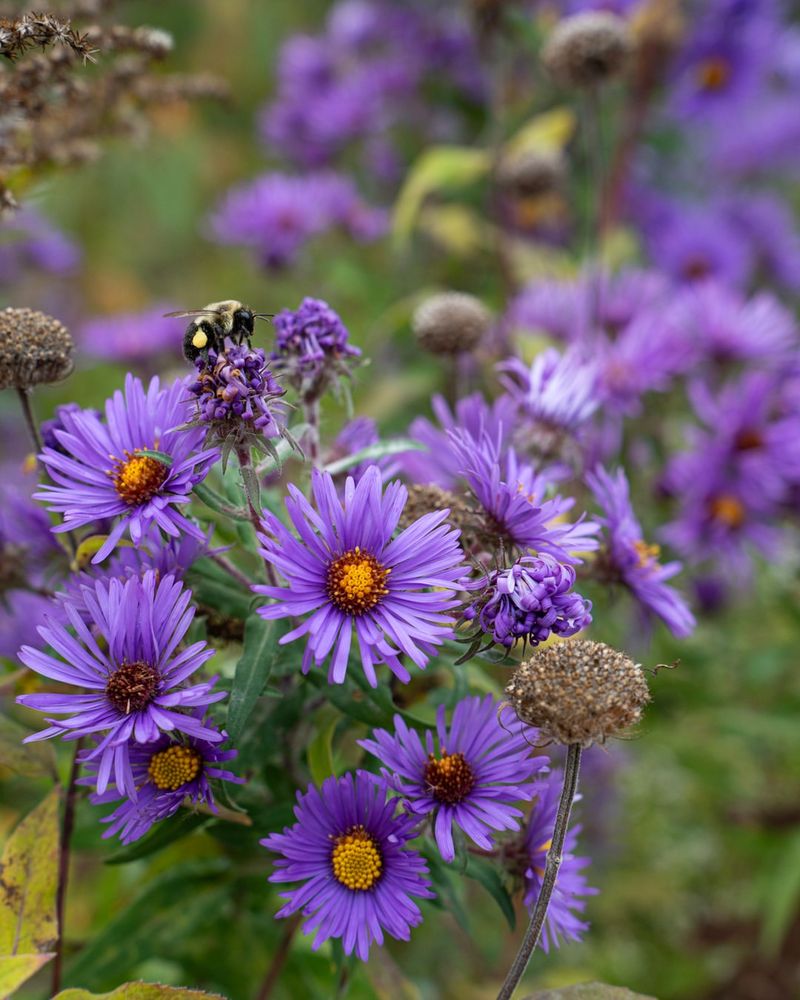
When most of the garden has faded by October, New England aster bursts into color like it has been saving its energy all season long.
Native to Michigan’s prairies and roadsides, this tough perennial handles clay soil and fluctuating moisture levels with remarkable ease. It is one of the most reliable fall-blooming natives you can grow in the Great Lakes region.
New England aster produces masses of deep purple to violet flowers with bright yellow centers, creating a vivid contrast that stops people in their tracks.
The blooms appear from late August through October, providing a critical nectar source for migrating monarch butterflies and late-season bees preparing for winter.
Few plants offer that kind of ecological value at the end of the growing season. Clay soil suits this aster well because the plant evolved alongside Michigan’s natural soil conditions for centuries.
It tolerates periods of wet clay after heavy rains and then handles drier stretches without flinching.
Full sun brings out the most prolific blooming, though partial shade works fine too. Cutting plants back by half in early June, a technique called the Chelsea chop, keeps them more compact and encourages even heavier flowering later.
Established clumps spread steadily, filling garden beds with color and supporting wildlife every single fall without fail.
5. Wild Bergamot (Monarda fistulosa)
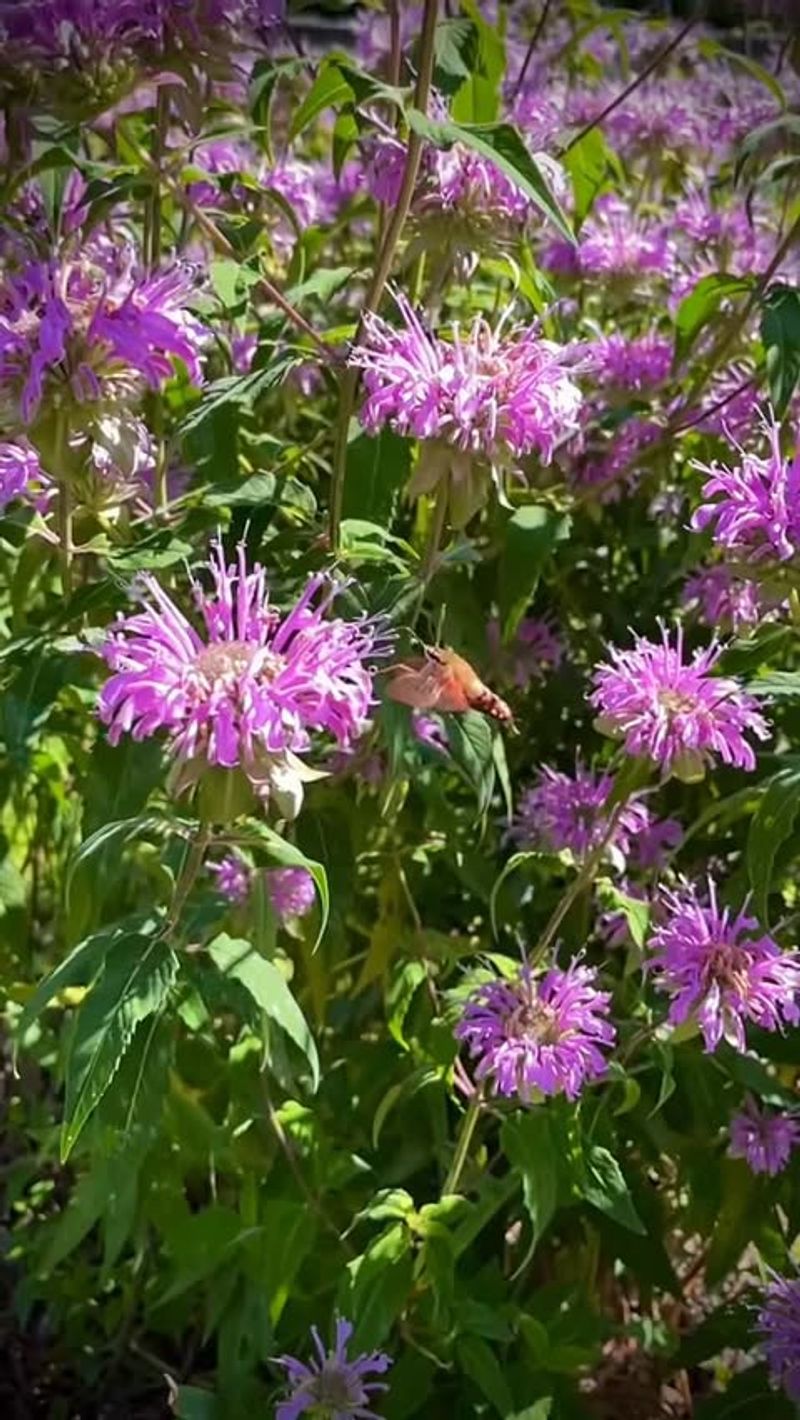
Wild bergamot has a personality as bold as its fragrance.
Crush one of its leaves and you get an immediate hit of oregano-like scent that explains its long history in Native American herbal traditions.
This Michigan prairie native is surprisingly adaptable to heavier soils, especially when drainage is at least moderate, making it a fantastic choice for clay gardens that do not stay waterlogged for long periods.
Growing two to four feet tall, wild bergamot produces lavender-pink, spiky flower heads that bloom from June through August. Bumblebees absolutely adore it, and hummingbirds visit regularly as well.
The plant spreads through both seeds and rhizomes, gradually forming a loose, airy colony that fills space beautifully without crowding out neighboring plants.
One of wild bergamot’s best qualities is its drought tolerance once established, which balances nicely with clay soil’s tendency to hold moisture through wet spells and then firm up during drier stretches.
Plant it in a spot that receives full sun for at least six hours daily, since good air circulation helps prevent the powdery mildew that can occasionally appear on the foliage.
Choosing it for rain garden edges, sunny borders, or naturalized areas gives it the best chance to perform.
With minimal care, wild bergamot rewards gardeners with years of cheerful blooms and constant pollinator activity throughout the summer months.
6. Switchgrass (Panicum virgatum)
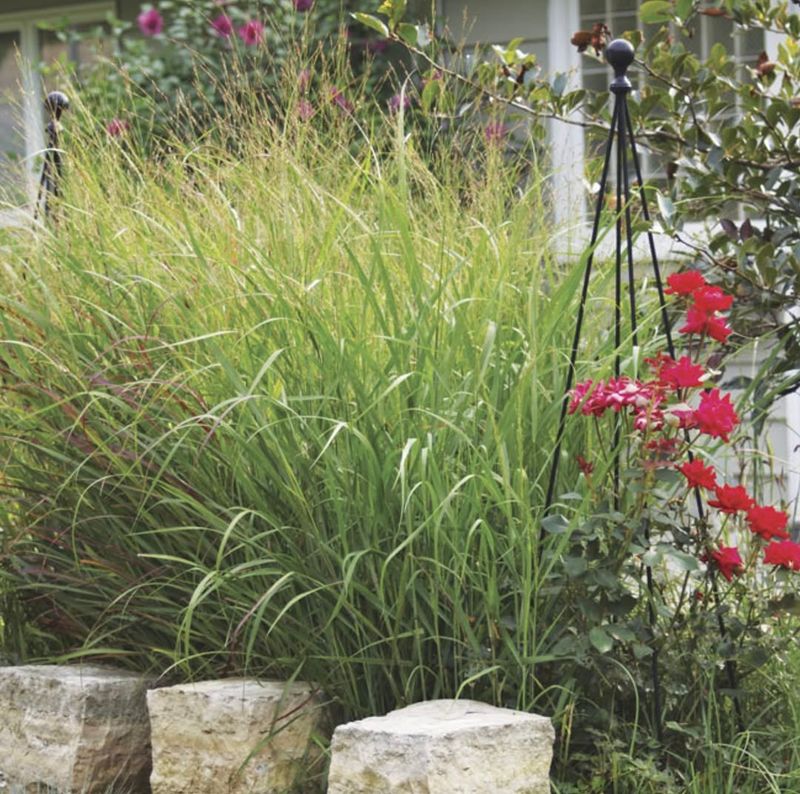
Switchgrass is one of those plants that does something truly remarkable beneath the surface.
While it looks graceful and airy above ground, its roots are driving deep into heavy clay soil, sometimes reaching six feet or more below the surface.
Over time, those powerful roots break up compacted clay layers, improve drainage, and build organic matter as they cycle through seasons. It is practically a soil improvement project disguised as a beautiful ornamental grass.
Native to Michigan’s prairies and open meadows, switchgrass grows three to six feet tall depending on the cultivar, producing feathery seed heads that catch the light beautifully from late summer through winter.
Birds love those seeds, and the dense clumps provide excellent cover for small wildlife during cold Michigan months.
Cultivars like ‘Shenandoah’ turn a brilliant red in fall, adding serious seasonal color to the landscape.
Planting switchgrass in clay soil is genuinely one of the smartest long-term investments a Michigan gardener can make.
It tolerates wet spring conditions and dry summer spells with equal composure, never asking for much beyond a spot in full sun.
Cut clumps back to about four inches in late winter before new growth begins to keep them looking tidy.
Within just two or three seasons, the surrounding soil will noticeably improve in structure and drainage, benefiting every plant growing nearby in the garden.
7. Black-Eyed Susan (Rudbeckia hirta)
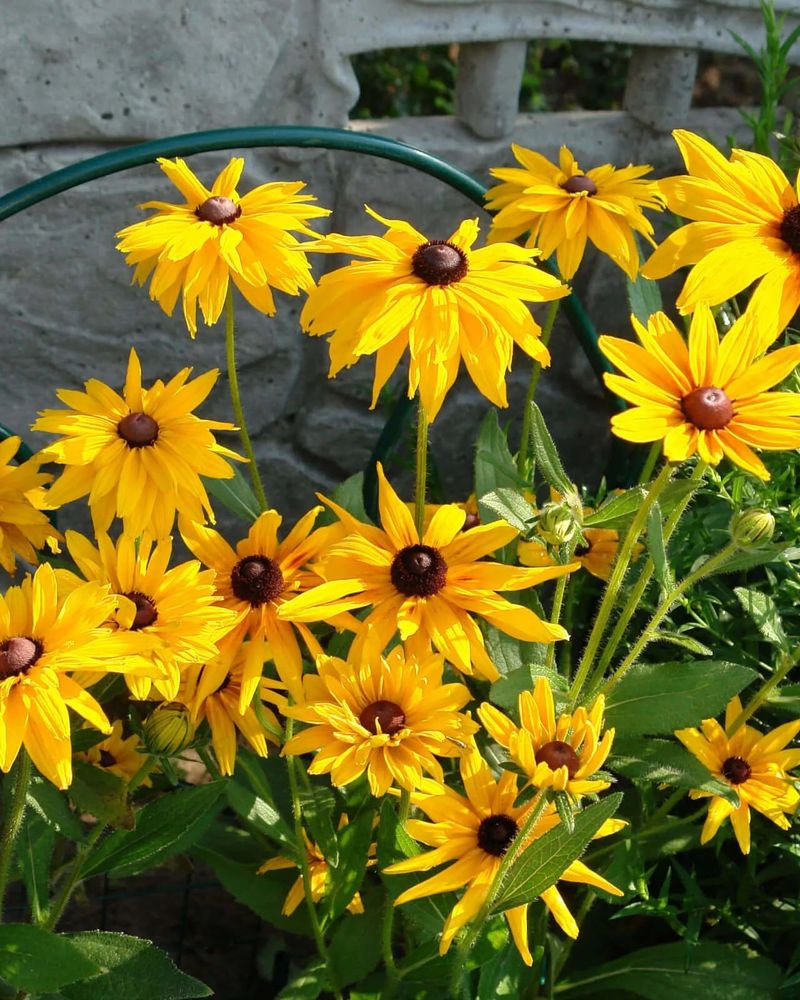
Bright, cheerful, and almost impossible to discourage, black-eyed Susan is the kind of wildflower that makes gardening feel effortless.
Native across Michigan’s fields, roadsides, and open woodlands, this golden beauty handles compacted clay soil with a toughness that surprises many first-time native plant gardeners.
Where other flowers sulk and struggle, black-eyed Susan just keeps on blooming. Each flower features rich golden-yellow petals surrounding a dark, domed center that gives the plant its memorable name.
Blooms appear from June through September, offering months of continuous color that attracts bees, butterflies, and goldfinches who feast on the seed heads in late summer.
Leaving those seed heads standing through winter adds texture to the garden and keeps birds fed when food is scarce.
Clay soil actually benefits black-eyed Susan by holding moisture during Michigan’s sometimes unpredictable summers, giving roots consistent access to water without requiring frequent irrigation.
Full sun is where this plant truly shines, though it manages well in slightly shadier spots too. It self-seeds freely, which means a small initial planting can grow into a generous, naturalized patch over just a few seasons.
Thin seedlings occasionally to prevent overcrowding and keep air moving through the colony.
For gardeners who want maximum color with minimum effort in challenging clay soil, black-eyed Susan is simply one of the best choices available anywhere in Michigan.