8 Cactus That Handle Arizona Heat In Sunny Containers
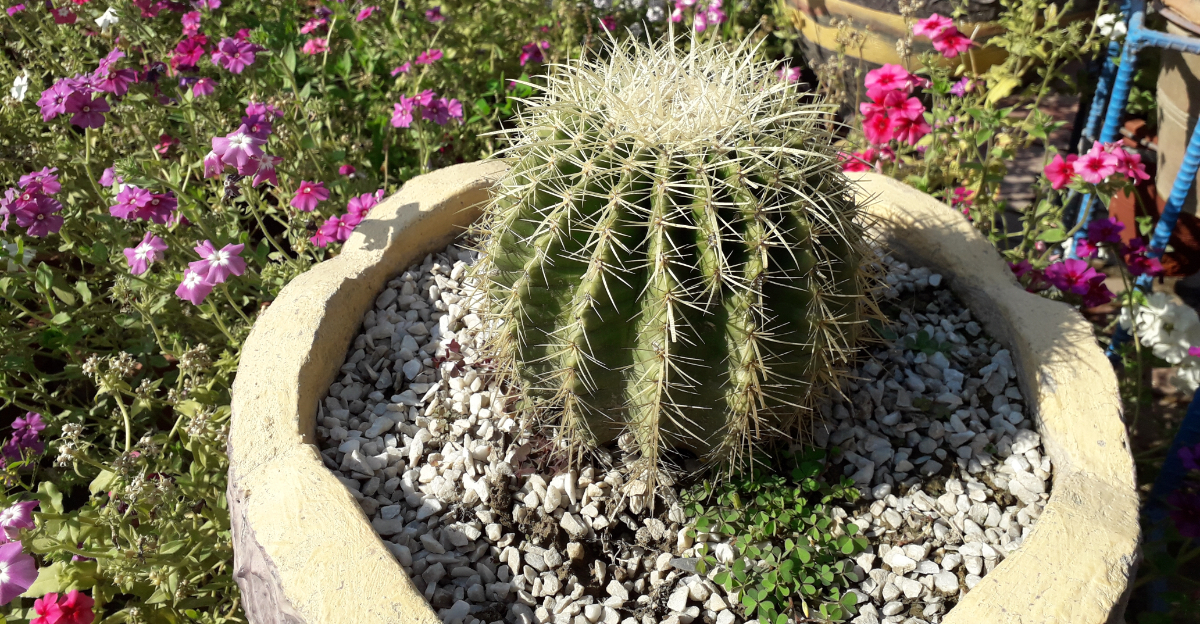
Arizona heat has a way of exposing every weak plant choice, especially in sunny containers. When pots sit in full sun all day, the soil heats up fast, moisture disappears, and anything not built for that intensity starts to show stress.
If you’ve had containers fade, shrivel, or scorch by early summer, it’s not bad luck. It’s the wrong match for the climate.
The good news is that some cacti truly handle Arizona heat without losing their structure or color. They stay steady in bright, direct sun and don’t demand constant attention to survive.
If you want sunny containers that still look strong when temperatures climb, these cacti are made for exactly that kind of heat.
1. Golden Barrel Brings Bold Shape That Shrugs Off Desert Sun
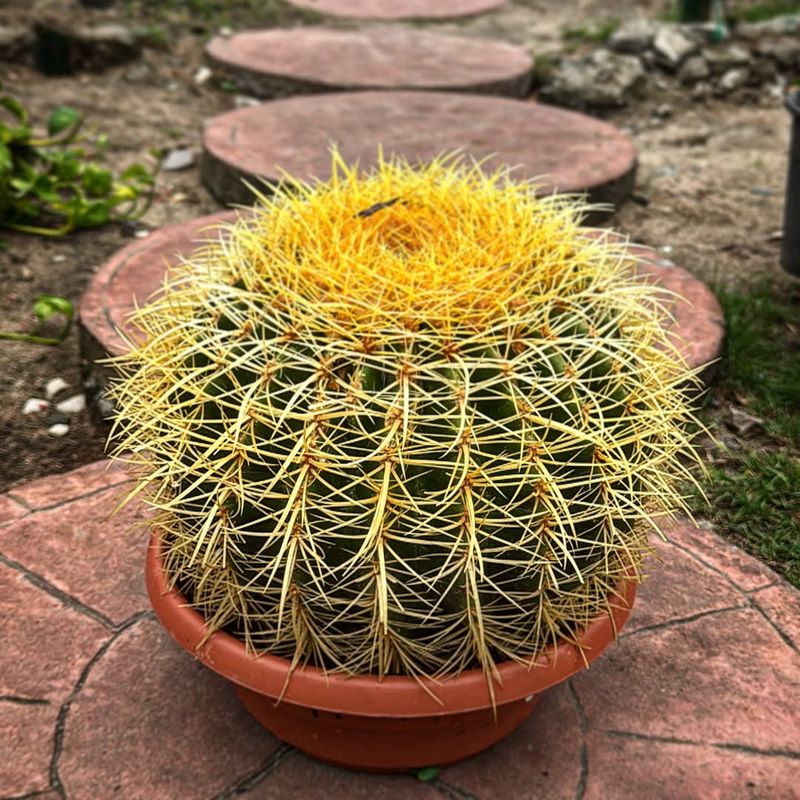
Golden barrel cactus turns containers into focal points without asking for much in return. Its round shape and bright yellow spines catch light beautifully, and the symmetry holds up even when temperatures climb past 110 degrees.
Arizona gardeners appreciate how this cactus actually prefers the heat that stresses other plants.
Container life suits golden barrels better than ground planting in many cases. Pots provide the sharp drainage these cacti need, and you can position them where they’ll get maximum sun exposure.
They grow slowly, so a single plant stays manageable in the same pot for years without outgrowing its space or requiring frequent repotting.
Reflected heat from concrete or stucco walls doesn’t faze golden barrels. They handle the intensified conditions that come with patio placement, where temperatures can spike even higher than open garden areas.
This makes them perfect for spots where other cacti might show stress or discoloration.
Watering needs drop to almost nothing during Arizona summers. The cactus stores moisture efficiently and doesn’t demand attention during the hottest months.
A deep soak every three weeks usually suffices, and overwatering causes more problems than underwatering ever will. Golden barrels prove that bold garden statements don’t require complicated care routines.
In Arizona’s low desert, they also benefit from a slightly raised pot or feet under the container to improve airflow and prevent excess moisture from lingering at the base.
With the right sun exposure and restrained watering, golden barrel cactus stays firm, vibrant, and sculptural year after year.
2. Hedgehog Cactus Rewards Full Sun With Unexpected Spring Color
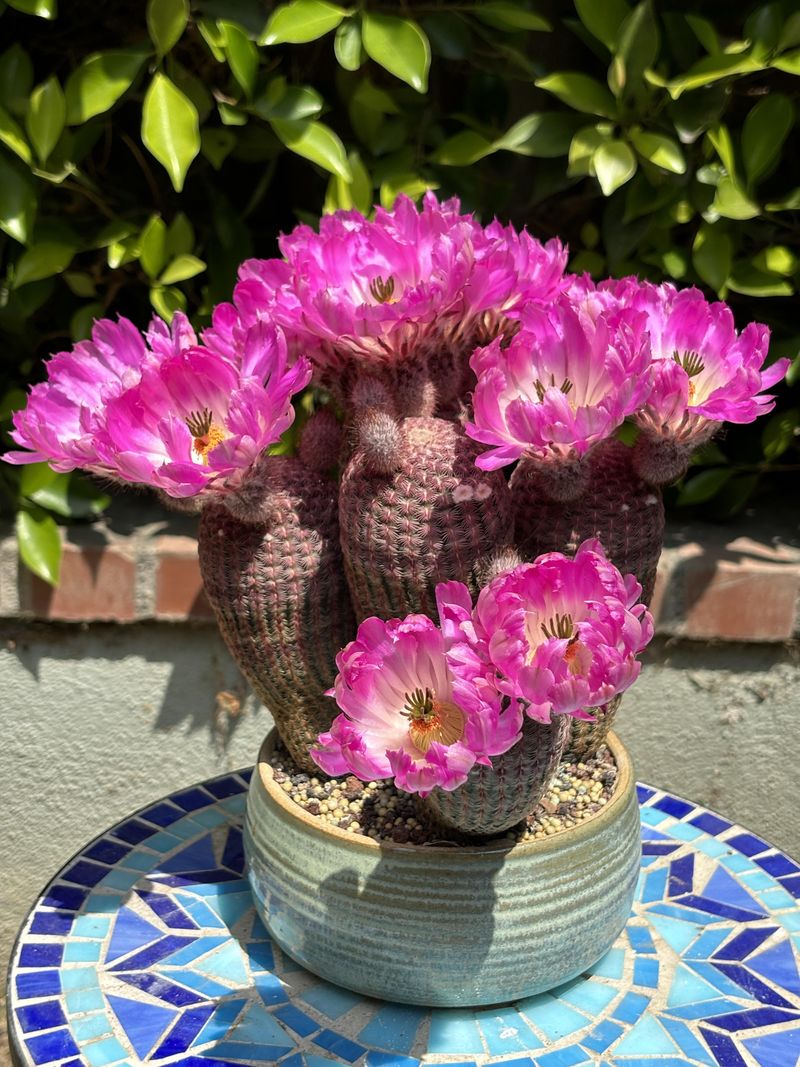
Hedgehog cactus surprises people who think all cacti look the same. Clusters of cylindrical stems create interesting texture, and the spring bloom display stops visitors in their tracks.
Magenta or orange flowers emerge when you least expect color in the desert garden.
Full sun exposure in Arizona containers actually improves flowering. Hedgehog cacti need that intense light to trigger their best bloom cycles, and containers positioned on south-facing patios provide exactly what they want.
The reflected heat that would stress shade-preferring plants helps these cacti thrive and produce more vibrant flowers.
Size stays compact enough for container culture throughout the plant’s life. Clumps spread slowly, filling pots with multiple stems that create natural-looking arrangements.
Your Arizona Garden Changes Every Week. Your Plan Should Too.
Gardening in Arizona changes quickly throughout the season. Every Friday you’ll receive a simple weekly plan showing exactly what to plant, prune, fertilize, harvest, and protect so you never miss the right timing.
You won’t face the problem of rapid growth that forces frequent transplanting or pot upgrades.
Arizona’s dry summer heat suits hedgehog cacti perfectly. They tolerate long periods between watering once established in containers, and the fast-draining potting mix prevents root issues that plague these plants in heavier soils.
Summer care becomes almost hands-off, freeing you to focus on other garden tasks.
Winter cold tolerance adds another advantage for Arizona growers. Hedgehog cacti handle occasional freezes that hit higher elevation areas around Flagstaff or Prescott.
This versatility means you can grow them throughout the state without worrying about winter protection in most locations.
3. Beavertail Handles Blazing Containers Without Fading
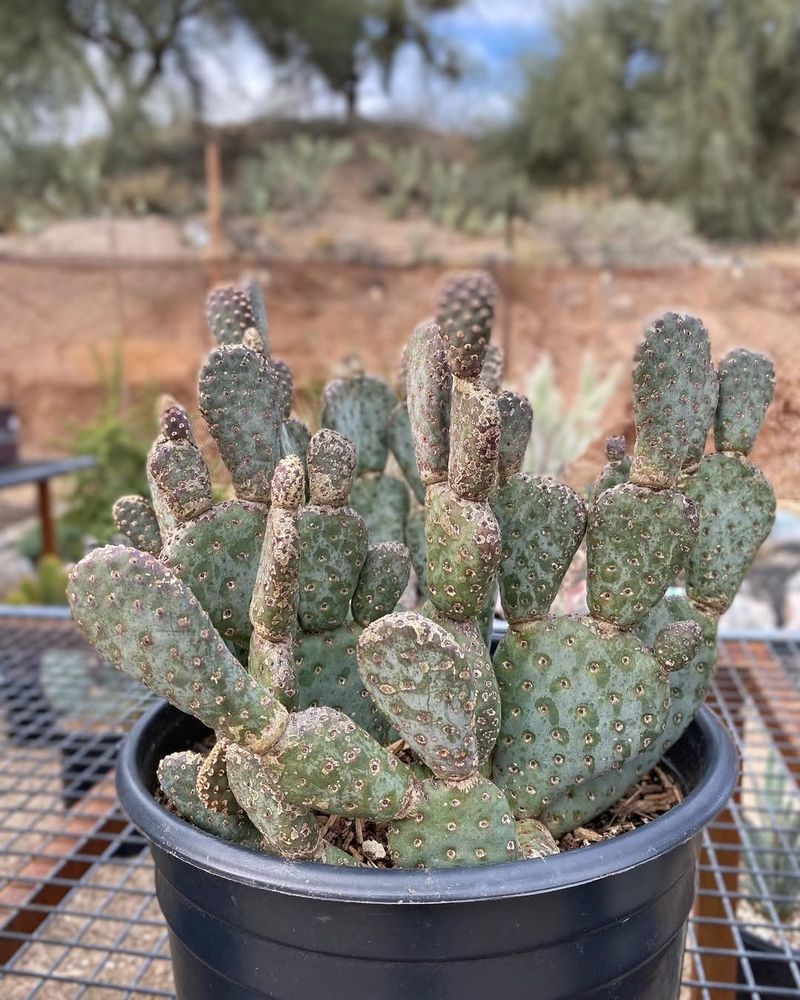
Beavertail cactus brings a different silhouette to container collections. Flat, paddle-shaped pads stack in sculptural arrangements that look intentional rather than random.
The blue-green color holds strong even when summer temperatures in Arizona push past comfortable levels.
Container placement near reflective surfaces doesn’t bother beavertails at all. White stucco walls or light-colored concrete that bounce extra heat onto plants actually seem to energize these cacti.
They maintain their color and form when other varieties start showing stress from the intensified conditions.
Growth habit stays manageable without pruning or intervention. Pads develop at a reasonable pace, creating fuller plants over time without overwhelming their containers.
This predictable growth pattern makes planning container arrangements easier since you know roughly what size to expect.
Spring flowers add pink or magenta bursts to the unusual pad structure. Blooms appear along pad edges, creating rings of color that contrast beautifully with the blue-green background.
The flowering period coincides with Arizona’s most pleasant weather, giving you a show when you’re actually spending time outdoors.
Watering requirements drop to minimal levels during summer. Beavertails store moisture efficiently in those flat pads, and they tolerate dry conditions that would stress leafy plants.
Monthly watering often suffices during the hottest months, making these cacti perfect for busy gardeners or vacation properties.
4. Santa Rita Turns Rich Purple Under Arizona Heat
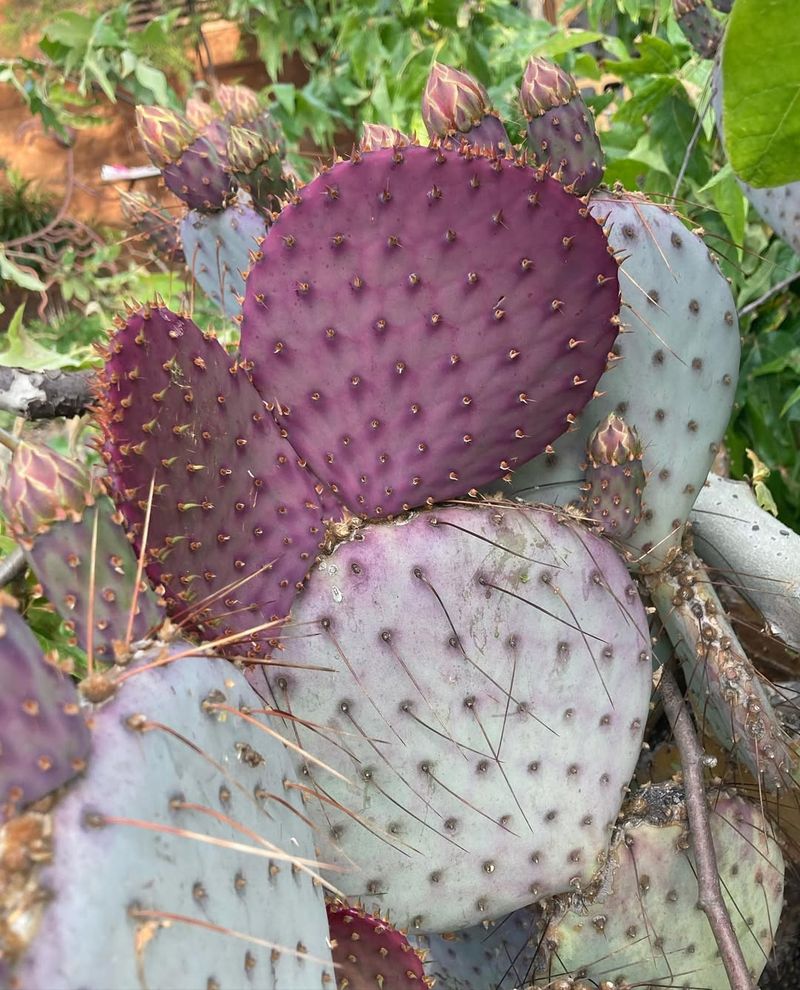
Santa Rita prickly pear delivers color that intensifies rather than fades in Arizona heat. Pads shift from blue-green to deep purple as temperatures climb and sun exposure increases.
Container placement in full sun brings out the richest tones, creating a living color feature that changes with the seasons.
Heat stress that damages other plants actually improves Santa Rita’s appearance. The purple coloration develops as a response to intense light and temperature extremes, so Arizona’s summer conditions work in your favor.
Containers on patios or against sun-drenched walls produce the most dramatic color shifts.
Size remains appropriate for container growing throughout the plant’s life. Santa Rita stays more compact than some prickly pear varieties, and growth slows enough that repotting becomes an occasional task rather than an annual chore.
A well-chosen pot can house the same plant for several years.
Reflected heat from surrounding surfaces doesn’t create problems. Santa Rita tolerates the amplified conditions that come with patio placement, where temperatures can spike higher than open garden areas.
This resilience makes it ideal for spots where you want bold color but face challenging growing conditions.
Water needs stay minimal once the cactus settles into its container. Summer irrigation can stretch to three or four weeks between deep soakings, and the plant shows remarkable drought tolerance.
This hands-off care requirement appeals to gardeners who want visual impact without constant maintenance.
5. Fishhook Barrel Thrives Where Other Plants Burn Out
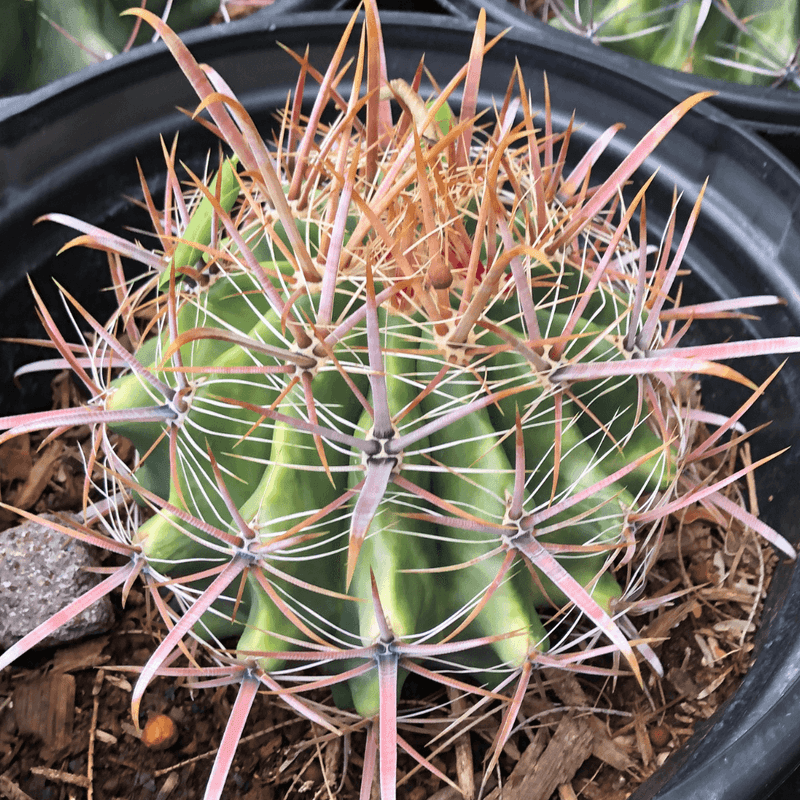
Fishhook barrel cactus laughs at conditions that send other plants into decline. Curved spines give this variety its name and create interesting shadow patterns that shift throughout the day.
Arizona’s intense sun brings out the best in these cacti rather than causing the stress you’d see in less adapted plants.
Containers amplify heat, and fishhook barrels respond by growing stronger. The confined root space and fast drainage that pots provide actually mirror the harsh conditions these cacti evolved to handle.
You’re working with the plant’s natural preferences rather than fighting against them.
Barrel shape develops symmetrically without special attention or positioning. The cactus grows true to form whether you place it in a corner or the center of a patio arrangement.
This reliability makes design planning simpler since you know the mature shape will match your expectations.
Yellow or orange flowers appear at the crown during Arizona’s warmest months. Summer blooms create a surprise element when most flowering has finished for the season.
The flowers emerge from the top of the barrel, adding height and color to the already architectural form.
Watering becomes almost an afterthought during peak summer. Fishhook barrels store substantial moisture reserves and tolerate extended dry periods without showing distress.
Monthly deep watering usually provides enough moisture, and the biggest risk comes from watering too frequently rather than not enough.
6. Totem Pole Cactus Stands Tall In Reflective Patio Heat
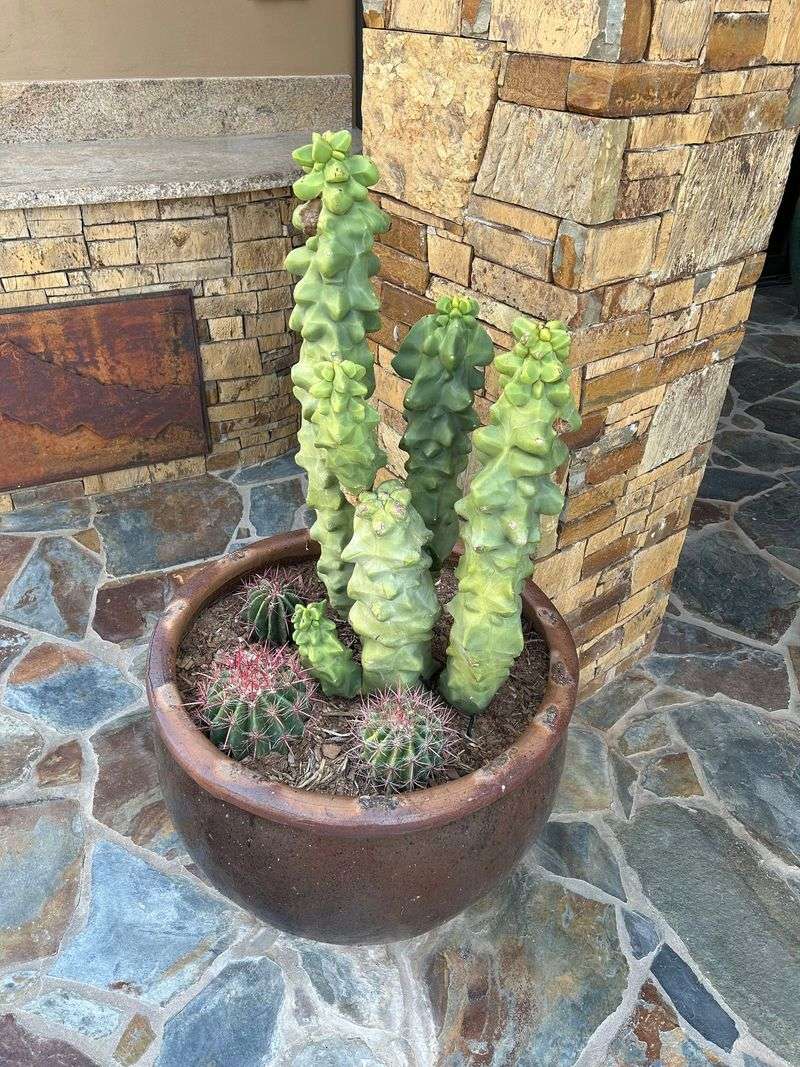
Totem pole cactus breaks the mold with its smooth, spineless columns. Vertical growth creates dramatic height in containers without requiring the floor space that spreading varieties demand.
Arizona gardeners use these cacti to add architectural interest to narrow spots where other plants won’t fit.
Reflected heat from walls and pavement doesn’t slow totem poles down. They actually seem to prefer the intensified conditions that come with patio placement, growing steadily even when temperatures make other areas of the garden uncomfortable.
The smooth surface doesn’t trap heat the way spiny varieties might, and the cactus handles full sun exposure without hesitation.
Container culture suits totem poles better than ground planting in many situations. Pots provide the excellent drainage these cacti need, and you can move them if you decide to rearrange your patio layout.
The vertical growth habit means they don’t spread beyond their container boundaries or interfere with neighboring plants.
Height develops slowly enough that the same pot works for years. Totem poles grow upward rather than outward, so container size becomes less of an issue than with barrel or pad-forming varieties.
This predictable growth pattern makes long-term planning easier and reduces the need for frequent repotting.
Watering needs stay minimal throughout Arizona summers. The cactus tolerates dry conditions exceptionally well, and overwatering causes more problems than underwatering.
Monthly irrigation during the hottest months usually provides sufficient moisture for healthy growth.
7. Mexican Fence Post Loves Intense Sun And Fast Drainage
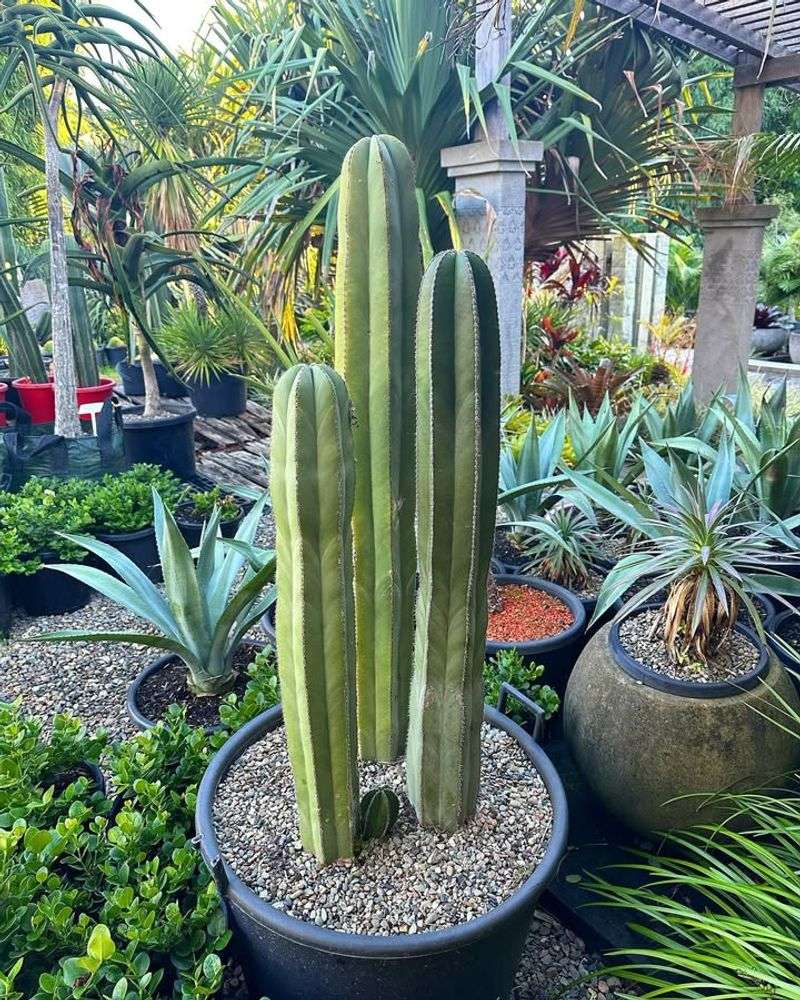
Mexican fence post cactus creates living sculptures in Arizona containers. Multiple vertical columns rise from a single base, forming clusters that look deliberately arranged.
The columnar growth habit adds height and structure to patio arrangements without taking up excessive floor space.
Intense sun exposure brings out the best growth patterns in Mexican fence posts. These cacti evolved in harsh desert conditions and actually prefer the full sun that Arizona containers provide.
Reflected heat from nearby surfaces doesn’t create problems, and the cactus maintains its form and color even during the most brutal summer weeks.
Fast drainage becomes crucial for container success with this variety. Mexican fence posts can’t tolerate standing water or heavy potting mixes that retain too much moisture.
Containers with multiple drainage holes and a gritty, well-draining mix prevent the root issues that plague these cacti in unsuitable conditions.
Growth rate stays moderate enough for manageable container culture. Columns add height gradually over seasons rather than shooting up overnight.
This predictable pace means you won’t face sudden size problems or need emergency repotting when the cactus outgrows its space.
Summer watering drops to infrequent deep soakings. Mexican fence posts store moisture efficiently and tolerate extended dry periods without showing stress.
Monthly irrigation during Arizona’s hottest months usually suffices, and the bigger risk comes from watering too often rather than not enough. This hands-off approach suits busy gardeners perfectly.
8. Desert Senita Handles Hot Walls And Long Summers With Ease
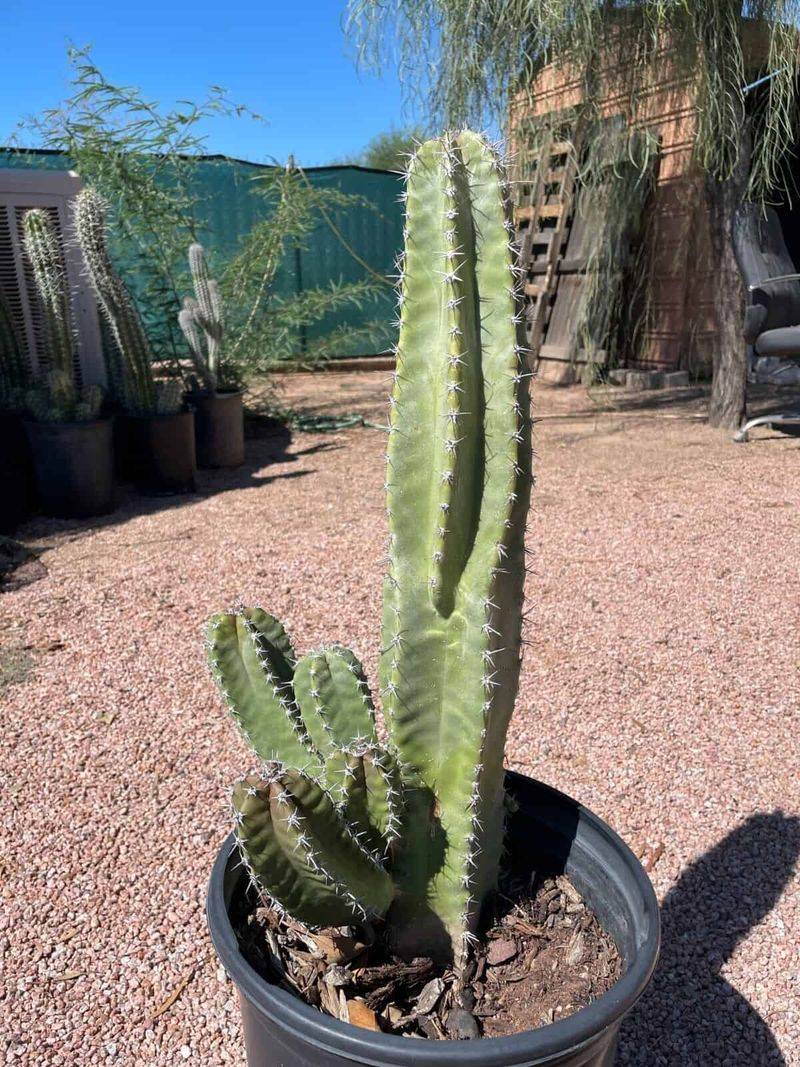
Desert senita cactus offers something different from the typical container choices. Gray-green columns develop a fuzzy appearance at their tops, creating texture that catches your eye from across the patio.
Arizona’s long summers don’t faze these cacti, and they actually seem to thrive when positioned against hot walls that would stress less adapted plants.
Hot wall placement that creates problems for other cacti works perfectly for senitas. The reflected heat and intensified sun exposure mirror the extreme conditions these plants face in their native habitat.
Containers placed against south or west-facing walls produce strong growth and healthy color throughout the season.
Column formation creates interesting multi-stemmed clusters over time. New growth emerges from the base, gradually filling containers with multiple columns that create natural-looking arrangements.
This clustering habit means a single plant becomes more impressive as it matures, increasing visual impact without requiring additional plants.
Summer care requirements drop to almost nothing. Desert senitas tolerate extended dry periods and don’t demand attention during Arizona’s hottest months.
Monthly watering usually provides sufficient moisture, and the cactus shows remarkable resilience when irrigation gets delayed or forgotten.
Container size can start moderate and increase gradually as the plant matures. Senitas don’t require immediate placement in oversized pots, and you can upgrade container size as the cluster develops.
This flexibility makes starting with younger plants more practical and less expensive than beginning with large specimens in huge containers.