These Backyard Lighting Touches Make Arizona Homes Stand Out
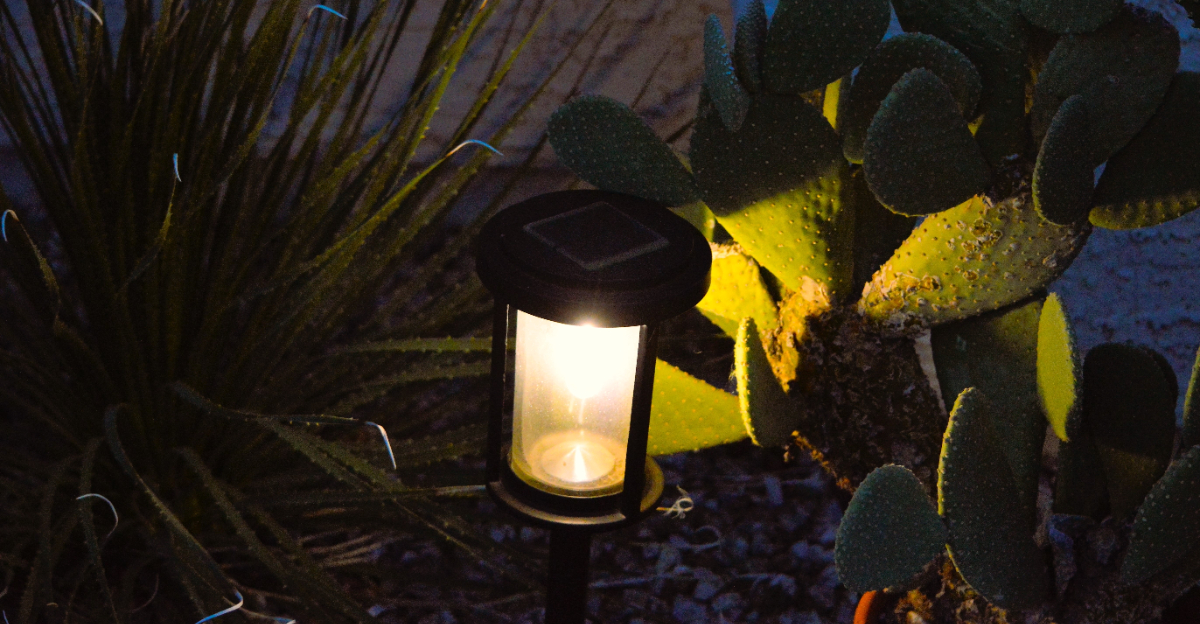
In Arizona, outdoor living does not stop when the sun goes down. Once daylight fades, lighting becomes the detail that shapes how a home feels from the street and from the patio.
The right touches do more than brighten a walkway. They highlight texture, define structure, and create depth against stucco, stone, and desert landscaping.
Backyard lighting works best when it feels intentional rather than overpowering. Soft uplights can emphasize architectural lines, while subtle path lighting guides movement without glare.
Even small accents around seating areas or garden beds can transform the atmosphere after dark.
Thoughtful lighting choices give an Arizona home presence long after sunset and turn an ordinary backyard into a space that feels layered, warm, and designed with purpose.
1. Warm Path Lighting Creates A Clean, Welcoming Entry
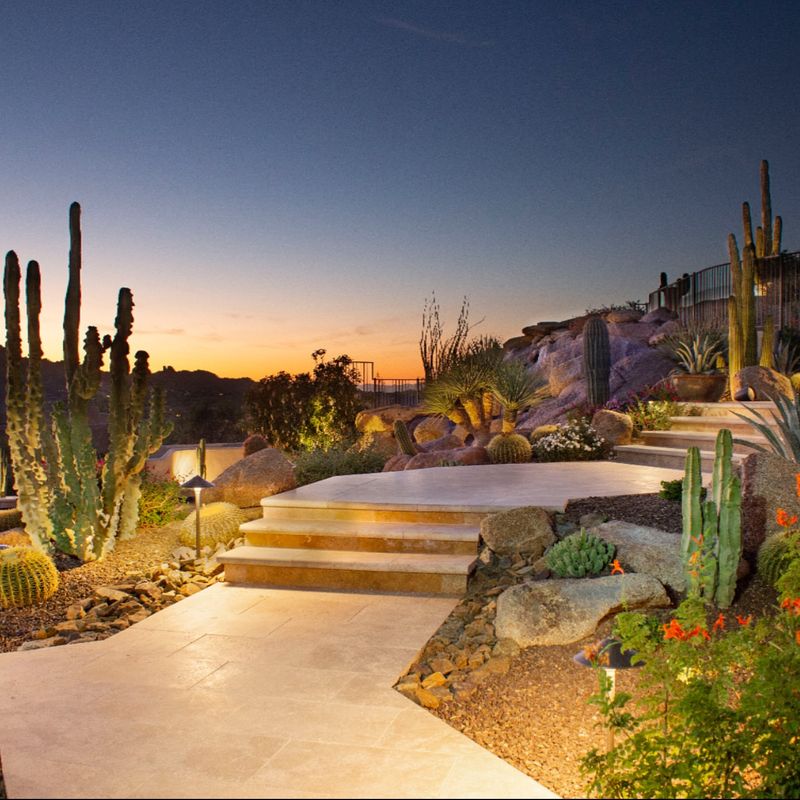
First impressions happen fast, and nothing says “welcome home” quite like a beautifully lit pathway leading to your front door.
Path lighting serves double duty by guiding visitors safely while showcasing your landscaping investment with a polished, intentional glow that neighbors notice.
Warm-toned LEDs work particularly well in Arizona settings because they complement the natural earth tones found throughout desert environments.
Spacing matters more than most homeowners realize. Fixtures placed every six to eight feet along walkways provide consistent illumination without creating awkward dark patches or overly bright spots that blind guests as they approach your entrance.
Low-profile fixtures keep the focus on the path itself rather than the light source.
Mushroom-style or bollard lights that stand 12 to 18 inches high work beautifully in Arizona yards, staying visible without competing with your home’s architectural features or blocking sightlines across your carefully planned xeriscaping.
Installation depth affects performance significantly in our climate.
Properly burying and protecting electrical connections prevents damage from heat, shifting soil, and occasional monsoon flooding.
Choose fixtures with sealed, weather-resistant housings rated for outdoor desert conditions to prevent dust intrusion and heat damage.
Position lights slightly off to the side of the walkway rather than directly in the center to create softer, more natural illumination.
Using a timer or photocell ensures your pathway lights turn on automatically at dusk and switch off at sunrise, keeping your Arizona home consistently polished without daily adjustments.
2. Uplighting Desert Trees Highlights Natural Structure
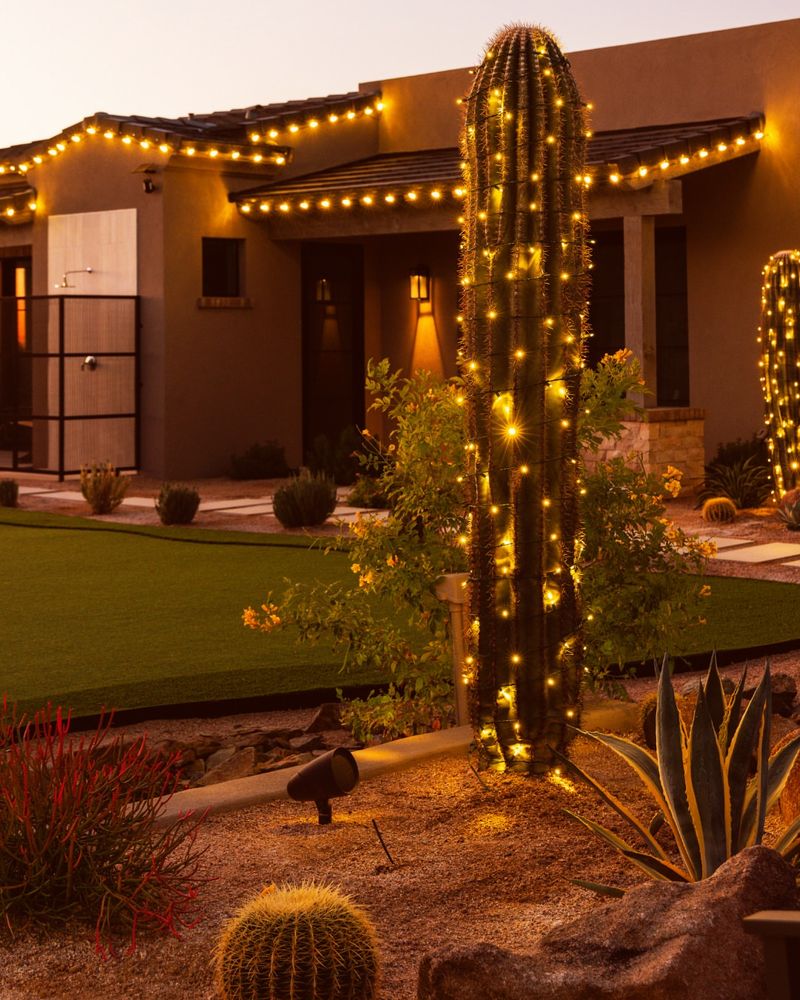
Saguaros, palo verdes, and mesquites develop stunning silhouettes that deserve attention once the sun goes down.
Uplighting transforms these iconic desert plants into living sculptures that anchor your entire outdoor lighting scheme with drama that photographs beautifully and impresses every guest.
Positioning fixtures at the base and angling them upward reveals textures invisible during daylight hours.
The ribbed surface of a saguaro becomes art when properly lit, while the delicate branch structure of a palo verde creates intricate shadow patterns against walls and fences that change with every breeze.
Narrow beam angles between 10 and 25 degrees concentrate light exactly where you want it without spilling onto neighboring properties or washing out into empty sky.
Wider floods waste energy and create light pollution that bothers everyone within view of your property.
Your Arizona Garden Changes Every Week. Your Plan Should Too.
Gardening in Arizona changes quickly throughout the season. Every Friday you’ll receive a simple weekly plan showing exactly what to plant, prune, fertilize, harvest, and protect so you never miss the right timing.
Color temperature shapes the mood in desert plantings. Warm light enriches golden bark and reddish tones, while neutral white keeps saguaros looking naturally silvery-green without a fake tint.
Multiple fixtures per tree create depth and dimension that single lights cannot achieve.
Placing two or three spots around larger specimens eliminates harsh shadows and provides more even coverage that looks professionally designed rather than like an afterthought added during a weekend hardware store run.
3. Step Lights Improve Safety On Sloped Or Raised Patios
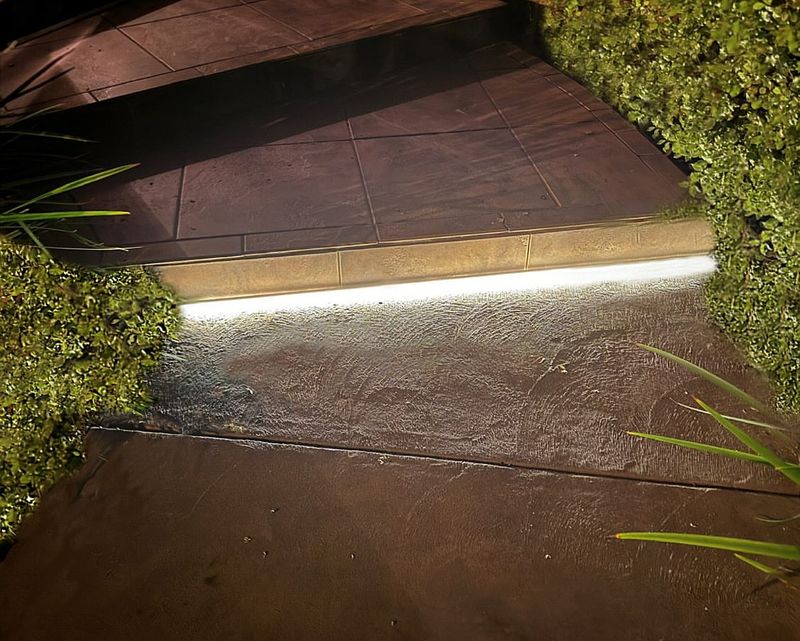
Arizona homes often feature multi-level outdoor spaces that take advantage of natural slopes or create defined entertaining zones through raised patios and sunken seating areas.
Steps between these levels become genuine hazards after dark, especially when guests have had a drink or two and depth perception suffers in dim conditions.
Recessed step lights built into risers shine light exactly where feet land. These low-profile fixtures sit flush with the surface, reducing trip risks while aiming light down onto the tread instead of into your eyes, where glare can cause missteps.
Bronze and copper finishes blend naturally with Arizona hardscape like flagstone, travertine, and desert-toned pavers.
Stainless steel can feel too modern for many Southwestern homes, while black fixtures fade into dark stone but look harsh against the lighter materials common in Phoenix and Tucson yards.
Voltage considerations matter for longevity in our extreme climate.
Low-voltage systems running at 12 volts handle summer heat better than line-voltage options. They’re also safer for DIY installation if you’re comfortable with basic electrical work and local building codes allow homeowner installs.
Spacing every other step works well for most residential applications.
Lighting every riser creates a runway effect that feels commercial instead of residential. Skipping too many leaves dark gaps where accidents are more likely during evening gatherings that stretch late into the night.
4. Wall Wash Lighting Softens Stucco And Stone At Night
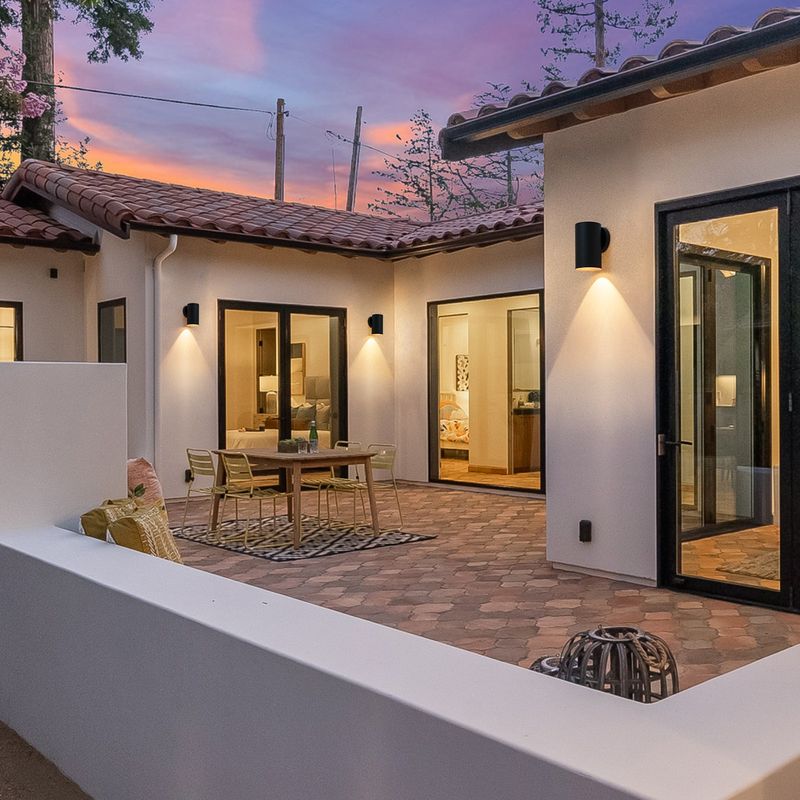
Stucco exteriors dominate Arizona residential architecture, and these textured surfaces come alive under properly designed wall washing that transforms flat facades into dimensional backdrops worthy of magazine features.
Strategic placement creates gentle gradients that make homes appear larger while adding sophistication that standard flood lighting never achieves.
Fixtures mounted 18 to 24 inches away from walls and aimed at slight angles produce the smoothest coverage without hot spots or dark patches.
Distance matters tremendously because lights placed too close create harsh circles of brightness, while those positioned too far waste lumens on empty air instead of highlighting architectural investment.
Grazing places lights close to walls at sharp angles, highlighting bumps and imperfections. Washing sets fixtures farther out to soften texture and create smooth, even coverage that flatters older stucco instead of exposing every flaw.
Natural stone accents around entries and outdoor fireplaces benefit from dedicated washing that brings out color variations invisible during daylight.
Flagstone, river rock, and stacked stone installations show depth and character under controlled illumination that makes these premium materials justify their higher costs through enhanced visual impact.
Adjustable fixtures give you flexibility as landscaping matures and needs shift. Plants grow, outdoor habits change, and being able to redirect beams without reinstalling everything saves money while keeping your lighting effective for years.
5. String Lights Add Comfortable Patio Ambience
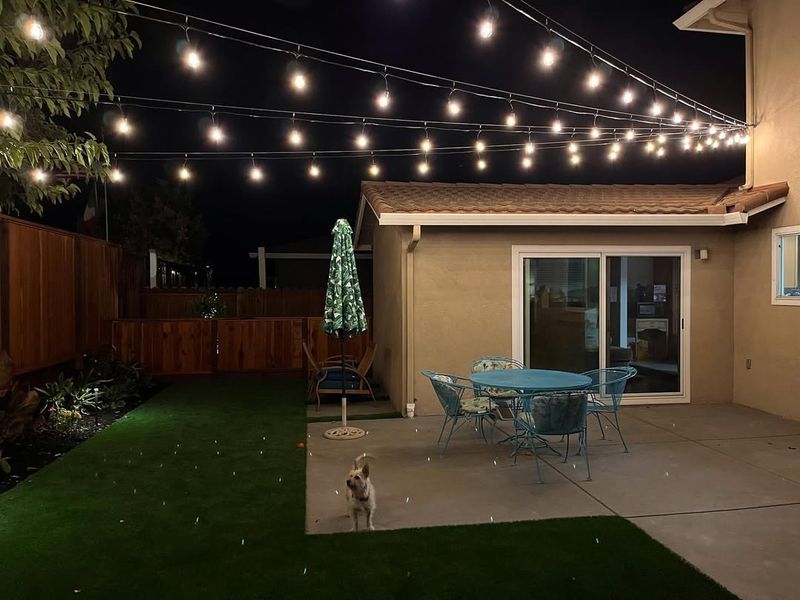
Overhead string lights instantly make outdoor spaces feel like resort destinations where you actually want to spend time rather than just pass through on the way to somewhere else.
These versatile fixtures create ceiling effects in open-air settings, defining dining and conversation zones while providing just enough illumination for evening activities without harsh brightness that ruins the mood.
Commercial-grade strings outlast consumer versions by years, making them worth the extra investment despite higher upfront costs.
Professional options use thicker wire, reinforced sockets, and weather-resistant construction built for Arizona’s intense UV and monsoon winds. They reduce constant bulb replacements and prevent frustrating outages that can ruin a party.
Globe sizes between two and three inches in diameter provide balanced light for most residential patios.
Smaller bulbs look charming but don’t give enough practical illumination, while oversized globes feel carnival-like and can overwhelm modest outdoor spaces with visual clutter.
Zigzag patterns create more interesting visual effects than simple parallel runs across pergolas and ramadas.
Varying heights and directions adds dimension while ensuring more even light distribution across seating areas, eliminating dark corners where guests congregate because nobody wants to sit in shadows during social gatherings.
Dimmer compatibility extends functionality dramatically by allowing mood adjustments throughout evenings.
Brighter settings work well during dinner prep and active entertaining. Lower levels create a more intimate feel for late-night conversations under Arizona’s star-filled desert skies.
6. Solar Accent Lights Perform Well In Arizona Sun
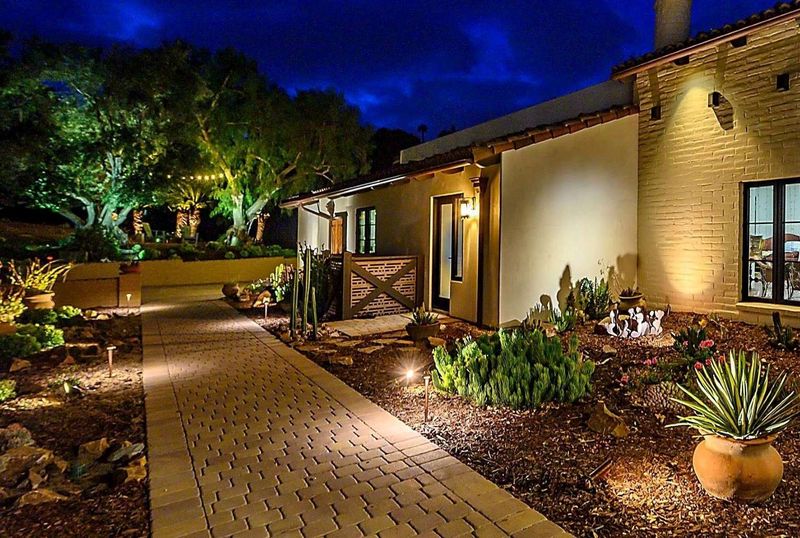
Arizona receives more sunshine than almost anywhere in America, making solar lighting particularly effective here compared to cloudier regions where these fixtures struggle to charge adequately.
Modern solar technology has improved dramatically, with today’s quality units providing reliable illumination that actually serves functional purposes rather than just weak decorative glows.
Premium solar fixtures feature larger photovoltaic panels and higher-capacity batteries that store enough energy to power LEDs throughout our longer summer evenings.
Cheap units from big-box stores often disappoint because undersized components cannot capture and store sufficient charge, leaving you with lights that fade after just a few hours when you need them most.
Full sun placement ensures the best charging performance. Areas with six or more hours of direct light work well, while shaded spots under ramadas, trees, or overhangs never reach full output no matter the price or packaging claims.
Accent applications suit solar technology better than primary lighting tasks.
Solar lights work well for highlighting plants, defining bed edges, or adding a soft glow to decorative features. Expecting them to light an entire patio or handle security needs usually leads to disappointment and wasted money.
Seasonal performance varies even in Arizona as winter days shorten and sun angles change.
Fixtures that shine all summer may weaken from November through February. Still, our mild climate allows better charging than northern states, where snow and freezing temperatures cut battery efficiency.
7. Low-Voltage Spotlights Define Architectural Details
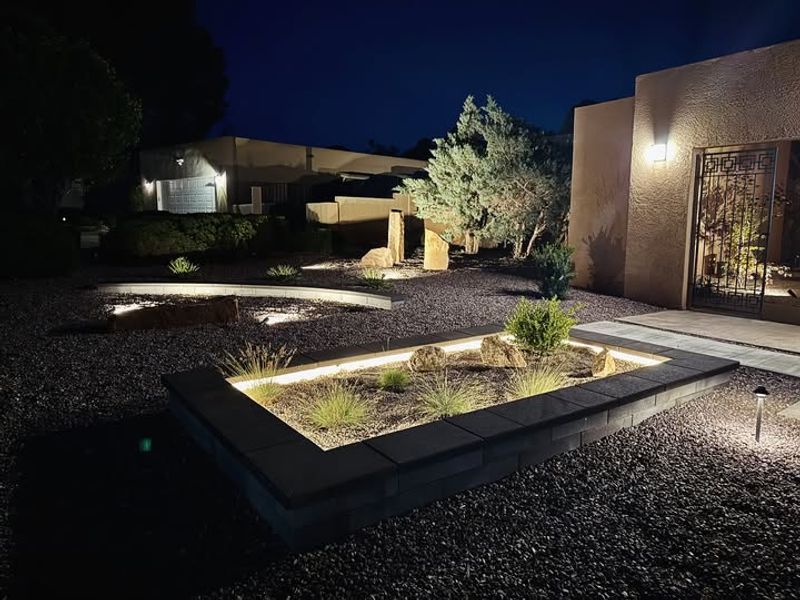
Architectural investments deserve recognition after sunset, and precision spotlights transform decorative columns, entry arches, and custom metalwork into focal points that establish your home’s character from the street.
These targeted fixtures direct attention exactly where you want it while using minimal energy compared to older halogen systems that generated more heat than useful light.
Twelve-volt systems are popular because they balance safety and performance. They lower shock risk while still delivering enough brightness to make architectural features stand out.
Beam spread can make or break architectural lighting. Narrow 10–15 degree spots highlight columns and niches, while wider beams work better for textured walls or entry gates that need broader coverage.
Fixture positioning requires careful planning to avoid glare and unwanted shadows.
Lights set too close create harsh shadows and unflattering contrast. Placed too far, they lose intensity and fail to highlight the details that should be visible from the street.
Adjustable mounting hardware is invaluable as you fine-tune your lighting in the first few weeks. The ability to tweak angles without reinstalling everything helps you refine the look and avoid costly corrections later.
Layering spotlights at different heights can add dimension that makes architectural details feel more dramatic after dark.
When carefully calibrated, these focused beams elevate curb appeal without overwhelming the rest of your outdoor lighting design.
8. Shielded Fixtures Reduce Glare And Harsh Brightness
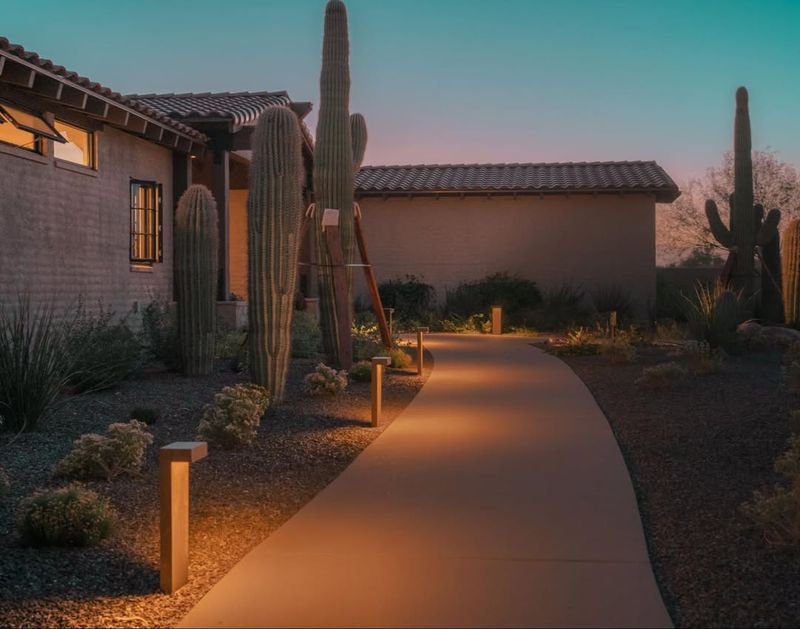
Glare ruins otherwise beautiful lighting schemes by creating uncomfortable bright spots that force people to look away rather than appreciate your thoughtfully designed outdoor spaces.
Shielded fixtures solve this problem by controlling light direction, keeping illumination where you need it while preventing stray beams from hitting eyes directly and causing temporary vision problems.
Dark sky ordinances in many Arizona communities require shielding to reduce light pollution that affects astronomical observations and desert wildlife.
Several cities, including Flagstaff and Tucson, enforce regulations mandating fully shielded fixtures for new installations. Compliance is not just courteous but legally necessary to avoid fines and forced modifications.
Hooded designs aim light downward onto the intended area instead of spilling it into the night sky. This improves efficiency because the light stays on your property rather than being wasted upward and contributing to distant sky glow.
Louver accessories add shielding to existing fixtures that lack adequate glare control.
These retrofit options cost far less than complete replacement while solving brightness problems that bother neighbors and reduce your own enjoyment of outdoor spaces during evening hours when you should be relaxing rather than squinting.
Proper shielding actually enhances visibility by eliminating competing light sources that confuse our eyes and reduce contrast.
Reducing brightness while controlling direction often makes spaces feel better lit. The human eye adapts more easily to even light levels than to harsh bright spots and deep shadows that create disorienting contrast.
Well-designed shielding also protects the nighttime character of Arizona neighborhoods, keeping homes visible without overpowering the surrounding desert.
When every fixture is properly aimed and covered, your lighting feels refined instead of overwhelming, creating balance that lasts long after sunset.