8 Native Michigan Flowers That Bring Pollinators To Your Garden
Michigan gardens come alive when pollinators start visiting, and the right flowers make all the difference.
Across the state, native wildflowers are doing far more than adding color to the landscape. They quietly draw in bees, butterflies, and hummingbirds that keep gardens productive and full of movement.
Because these plants evolved in Michigan’s climate, they already know how to handle freezing winters, humid summers, and unpredictable seasonal swings.
Gardeners from the Lower Peninsula to the Upper Peninsula are discovering that native flowers often grow stronger and require far less care than many imported plants.
If you want a yard that looks vibrant while supporting local wildlife, planting native flowers is one of the smartest choices you can make.
These eight beautiful Michigan wildflowers are among the best options for attracting pollinators and creating a garden that thrives season after season.
1. Wild Lupine (Lupinus Perennis)
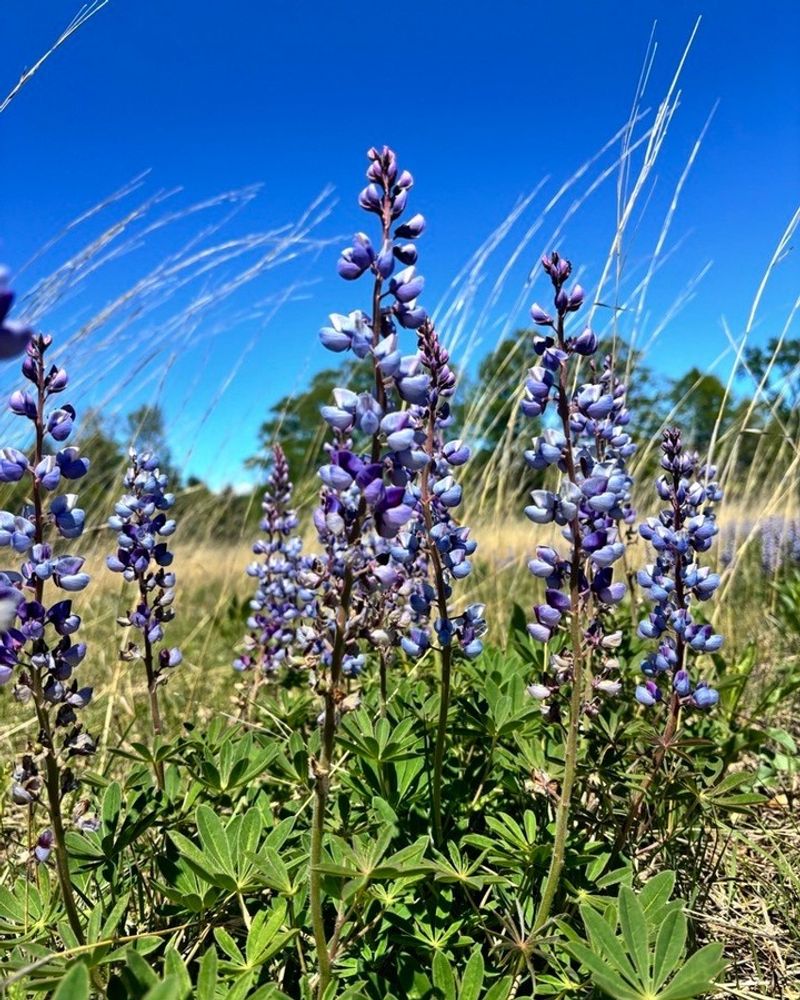
Wild Lupine has a story that goes beyond just being a pretty flower. It is the only known host plant for the Karner blue butterfly, a species that is listed as endangered and found in parts of Michigan.
Planting Wild Lupine in your garden is not just a design choice, it is a genuine conservation act that helps protect one of Michigan’s most fragile butterfly species.
The flowers grow in tall, elegant spikes of blue to purple blooms that look almost architectural rising up from the ground.
They prefer sandy, well-drained soil and full sun, which means they are perfectly suited to Michigan’s natural oak savanna and sandy plain habitats.
If your yard has a dry, sunny spot where other plants struggle, Wild Lupine might thrive there beautifully.
Bumblebees are especially skilled at accessing the nectar inside Lupine flowers because of a technique called buzz pollination, where they vibrate their flight muscles to shake pollen loose.
Watching a fat bumblebee work through a Lupine spike on a warm Michigan morning is genuinely entertaining.
Wild Lupine blooms in late spring to early summer, filling that gap before summer perennials take over.
It pairs wonderfully with Wild Columbine and early-blooming native grasses.
Scatter seeds in fall for natural establishment, or start transplants in early spring for blooms in the first or second growing season.
2. Purple Coneflower (Echinacea Purpurea)
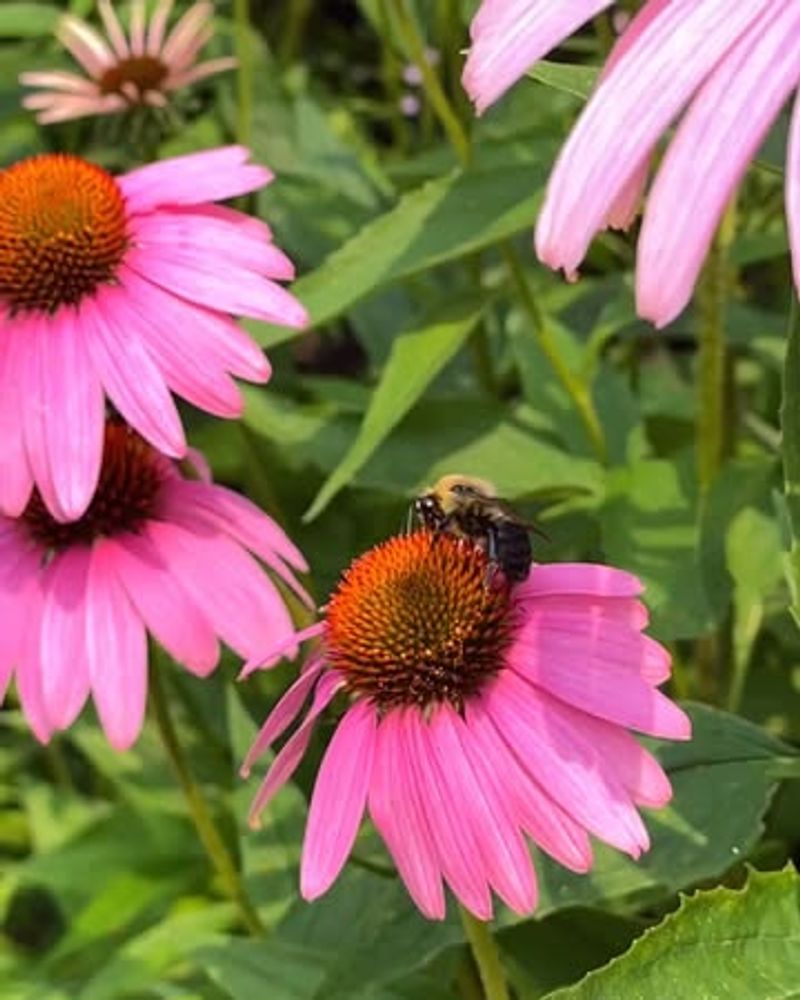
Few flowers stop people in their tracks quite like the Purple Coneflower. Those bold pink-purple petals fanning out from a spiky orange center look almost tropical, yet this plant is completely at home across Michigan.
Gardeners love it because it blooms from mid-summer all the way into fall, giving pollinators a long and reliable food source.
Bees absolutely flock to the raised orange center, which acts like a natural landing pad. Monarch butterflies, swallowtails, and even goldfinches visit regularly, making this one of the most wildlife-friendly plants you can grow.
Plant it in full sun with well-drained soil, and it will reward you year after year with very little fuss.
One cool thing about Echinacea is that it has been used in herbal remedies for centuries by Native American tribes across the Midwest.
Your Michigan Garden Changes Every Week. Your Plan Should Too.
Gardening in Michigan changes quickly throughout the season. Every Friday you’ll receive a simple weekly plan showing exactly what to plant, prune, fertilize, harvest, and protect so you never miss the right timing.
Beyond its history, it is simply a powerhouse in any pollinator garden. Michigan summers can be tough on plants, but Purple Coneflower handles heat, drought, and poor soil without skipping a beat.
Once established, it spreads slowly into cheerful clumps that make your garden look like something out of a nature magazine.
Plant a few together for the biggest visual impact and the best results for local bees.
3. Wild Bergamot (Monarda Fistulosa)
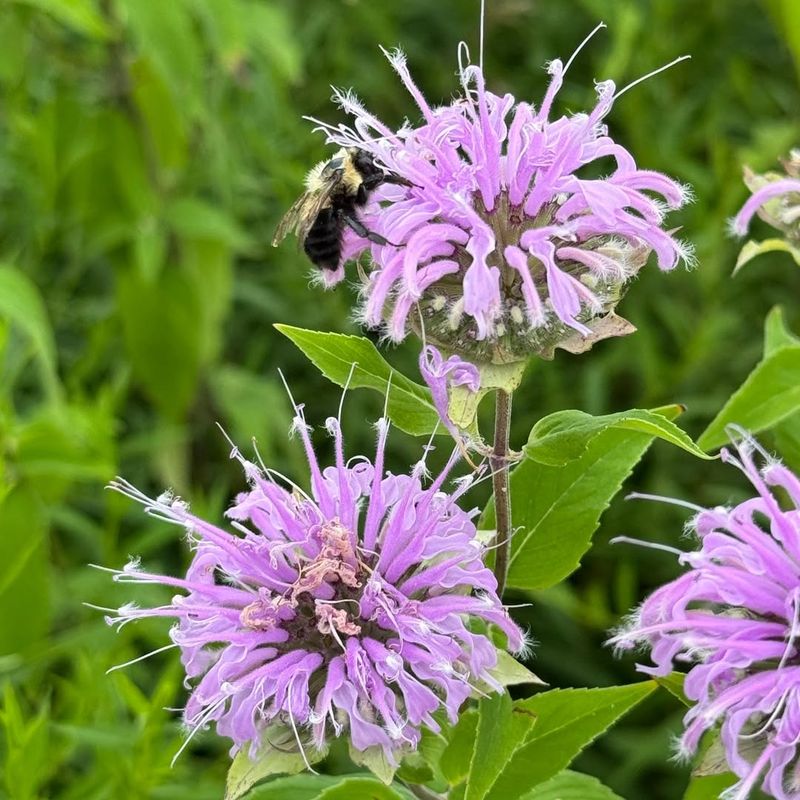
Walk past Wild Bergamot on a warm Michigan afternoon and you will notice it before you even see it.
The plant releases a strong, minty-oregano scent that practically announces itself, and pollinators cannot get enough of it.
Bees, butterflies, and hummingbirds all seek out those lavender to pale pink tubular flowers that bloom through mid to late summer.
Also called bee balm, Wild Bergamot is one of the most versatile native plants for Michigan gardens.
It grows well in full sun or partial shade, which means it works in spots where other sun-loving plants might struggle.
The flowers cluster into round, globe-shaped heads that look fantastic alongside taller prairie plants or mixed into a cottage-style garden border.
Historically, Native American communities used Wild Bergamot as a medicinal herb and added it to teas for its aromatic properties.
Today, Michigan gardeners prize it mainly for its ability to bring in an incredible variety of pollinators. Bumblebees in particular are huge fans, often visiting repeatedly throughout the day.
The plant spreads naturally over time, filling gaps and creating a lush, informal look that feels very at home in a Michigan landscape.
Give it well-drained soil, water it during dry spells when it is getting established, and it will bloom reliably for many seasons without much care from you at all.
4. Goldenrod (Solidago Spp.)
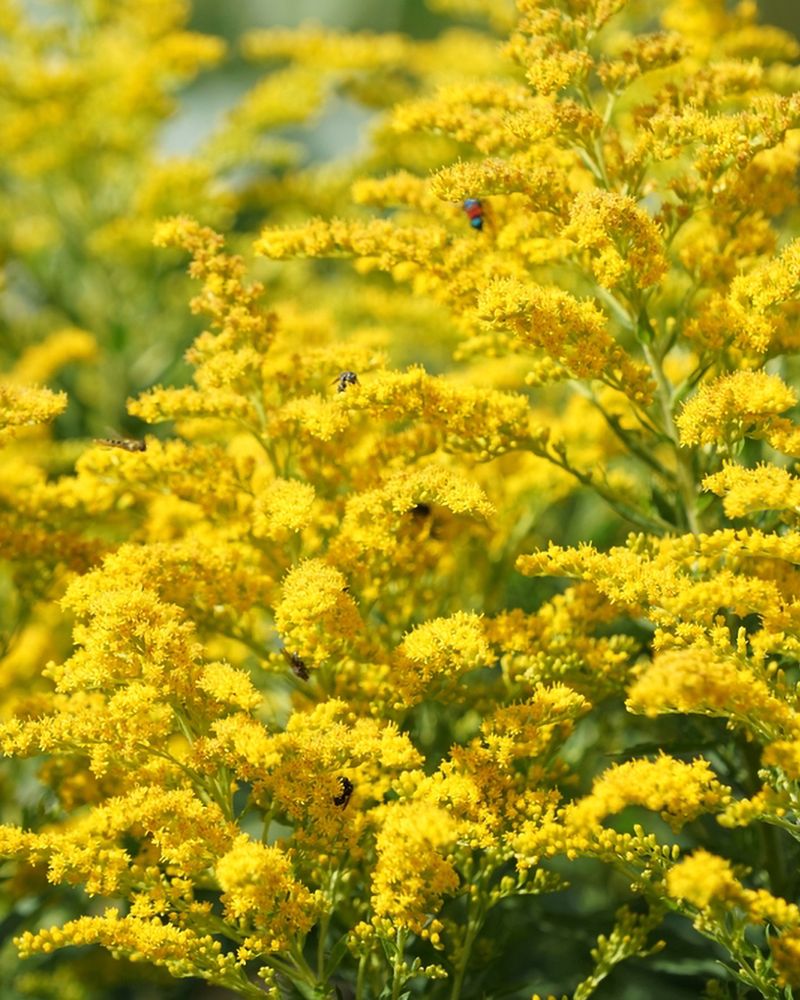
Goldenrod gets a bad reputation that it absolutely does not deserve. Many people blame it for fall allergies, but the real culprit is ragweed, which blooms at the same time and releases airborne pollen.
Goldenrod pollen is actually too heavy and sticky to travel through the air, so it relies entirely on insects for pollination, which is exactly why so many pollinators love it so much.
The bright yellow plumes of Goldenrod light up Michigan meadows and roadsides from late summer through fall, providing one of the richest nectar sources of the entire season.
Over 100 species of bees visit Goldenrod, along with countless butterflies, beetles, and other beneficial insects.
Monarch butterflies feeding on Goldenrod before their migration south is one of the most iconic sights a Michigan gardener can witness in September.
Solidago species are incredibly tough and adaptable, growing well in full sun and a wide range of soil types from sandy to clay.
Some varieties spread aggressively through rhizomes, so choosing compact cultivars like Solidago rugosa or Solidago sphacelata can keep things tidy in a smaller yard.
Goldenrod also provides important late-season seeds that songbirds eat through winter, adding even more wildlife value to your Michigan garden.
Plant it alongside New England Aster for a stunning gold and purple fall combination that looks breathtaking and keeps pollinators buzzing right up until the first hard frost arrives.
5. Black-Eyed Susan (Rudbeckia Hirta)
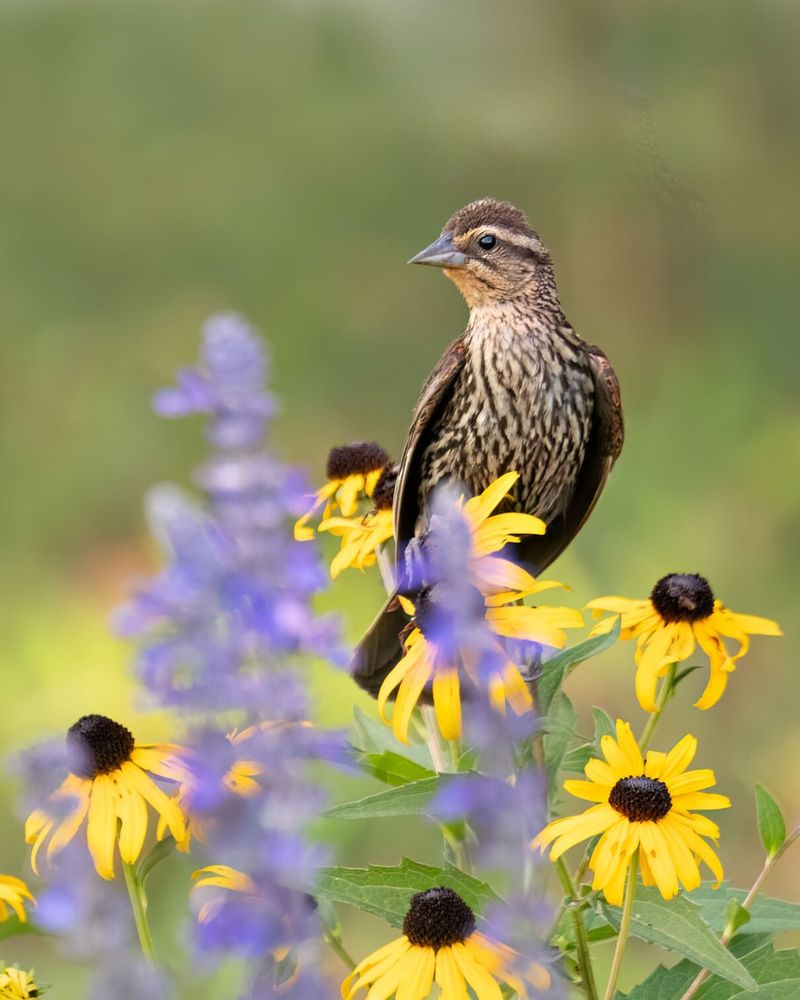
There is something genuinely cheerful about a field full of Black-Eyed Susans. Their sunny yellow petals and rich dark centers look like tiny suns scattered across the garden, and they bloom from June all the way through October.
That long season makes them one of the best options for keeping Michigan pollinators fed throughout summer and into early fall.
Bees, beetles, and butterflies all love this plant. It tolerates a wide range of soil types, handles both dry and average conditions, and thrives in full sun.
Whether you plant it along a fence, in a meadow-style bed, or mixed with other native Michigan wildflowers, Black-Eyed Susan fits right in without demanding much attention at all.
Fun fact: Rudbeckia hirta is actually the state flower of Maryland, but it grows just as happily across Michigan landscapes.
Gardeners often pair it with Purple Coneflower and Wild Bergamot for a colorful trio that blooms from early summer through the first frost.
Birds also enjoy the seed heads left behind after the blooms fade, so skipping the fall cleanup actually benefits local wildlife even more.
If you are just starting a pollinator garden in Michigan, Black-Eyed Susan is one of the first plants to add to your list because it is forgiving, fast-growing, and absolutely stunning in large groups.
6. Butterfly Weed (Asclepias Tuberosa)
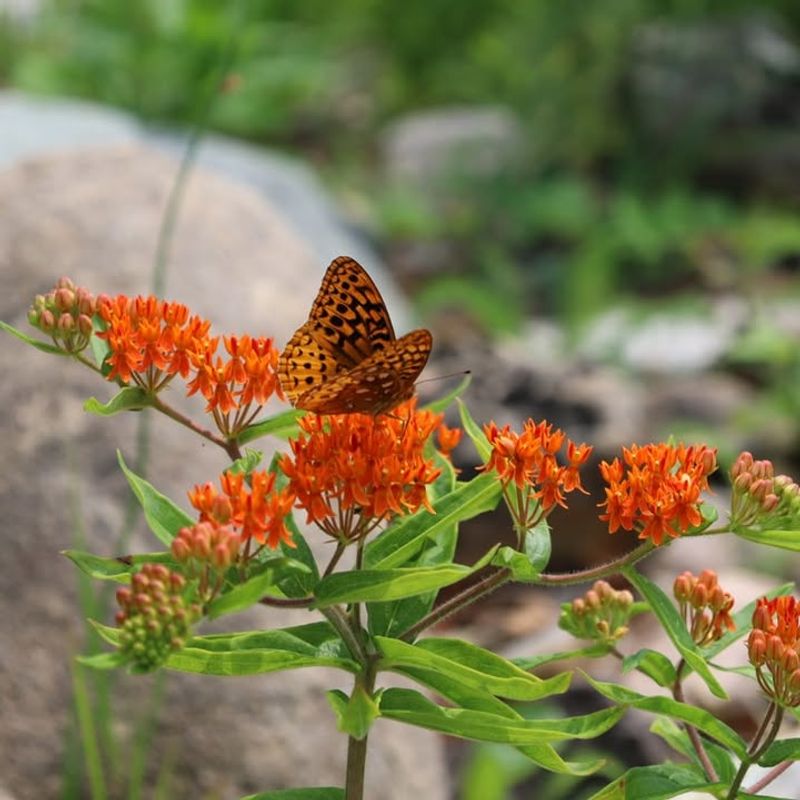
Bright orange blooms on a hot Michigan summer day, covered in monarch butterflies, that is the Butterfly Weed experience.
Asclepias tuberosa earns its name honestly because monarchs do not just visit this plant, they depend on it.
It is a milkweed species, which means monarch caterpillars use it as their only food source, making it one of the most ecologically important plants you can add to a Michigan garden.
Beyond monarchs, this plant pulls in swallowtails, fritillaries, bees, and a long list of other pollinators with its vivid orange flower clusters.
It blooms from June through August, loves full sun, and actually prefers dry, well-drained soil.
Unlike many garden plants, Butterfly Weed thrives in conditions that would stress out less-adapted species, making it nearly effortless to grow once it is established.
One thing to keep in mind is that Butterfly Weed is slow to emerge in spring, so mark its location so you do not accidentally dig it up.
The deep taproot makes it very drought-tolerant but also means it dislikes being moved once planted.
Seed pods that form after blooming split open dramatically to release silky, wind-carried seeds, which is a fun bonus for kids and gardeners who want to collect and share seeds.
Plant it in groups of three or more for a bold splash of color that absolutely no pollinator will overlook.
7. New England Aster (Symphyotrichum Novae-Angliae)
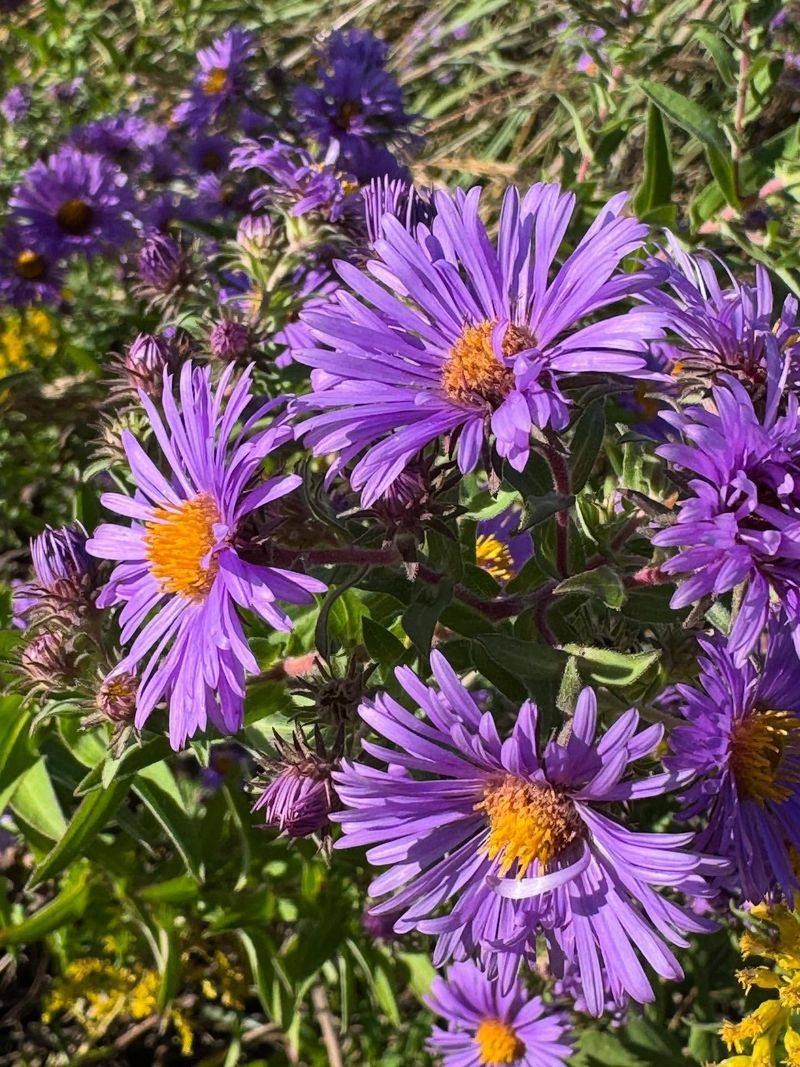
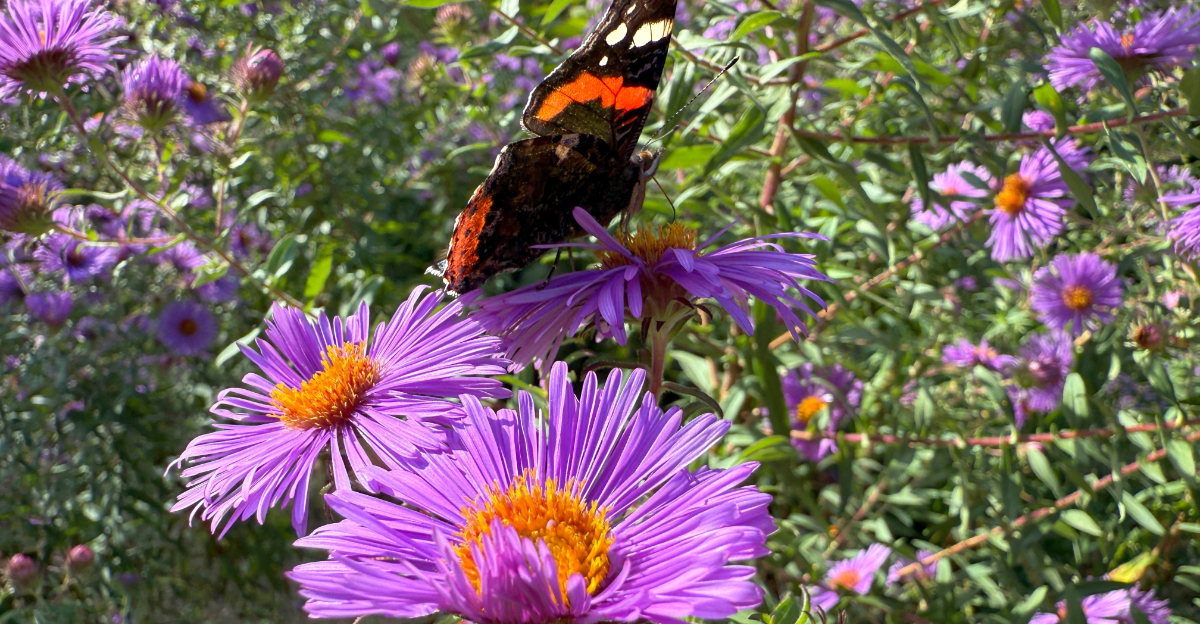
When most flowers are calling it a season, New England Aster is just getting started. This plant blooms in late summer and continues well into fall, which makes it one of the most valuable plants in any Michigan pollinator garden.
Bees and butterflies that are preparing for the colder months ahead rely heavily on late-season nectar sources, and New England Aster delivers in a big way.
The flowers are a deep, rich purple with bright yellow centers, and they cover the plant so thoroughly that it almost disappears under the blooms.
Monarchs migrating south through Michigan stop to feed on New England Aster regularly, making it an important fuel stop on their long journey.
Bumblebees, honeybees, and dozens of native bee species also visit consistently throughout the fall blooming period.
Growing to about three to six feet tall, New England Aster makes a bold statement at the back of a garden border.
It thrives in full sun and moist to average well-drained soil, and it handles Michigan clay soils better than many other native plants.
Pinching the stems back in early summer keeps the plants more compact and encourages even more blooms come fall.
Pair it with Goldenrod for a classic Michigan autumn color combination of purple and gold that pollinators and garden visitors will absolutely love seeing together in your yard.
8. Wild Columbine (Aquilegia Canadensis)
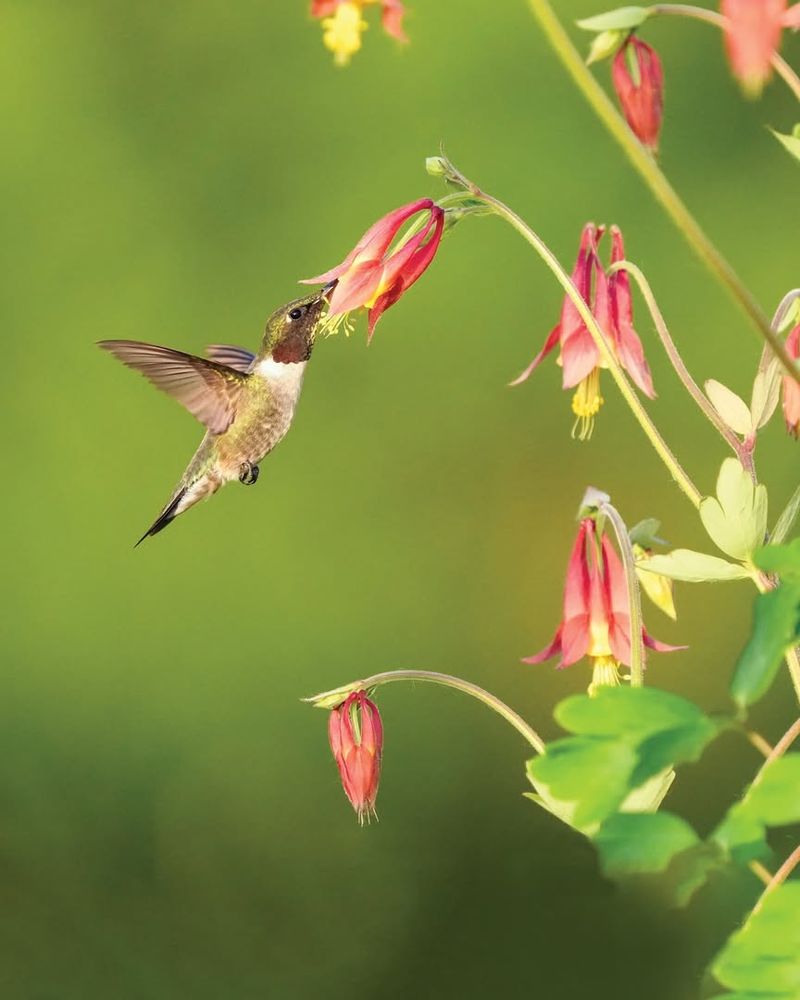
Wild Columbine is one of those plants that looks almost too delicate to be real. The nodding red and yellow bell-shaped flowers hang from slender stems like tiny lanterns, and they sway gently in the spring breeze.
What makes them extra special is that their long, nectar-filled spurs are perfectly shaped for hummingbirds, which arrive in Michigan each spring just as Columbine blooms begin to open.
Ruby-throated hummingbirds are the primary pollinators of Wild Columbine, though long-tongued bumblebees and certain native bee species also manage to access the nectar.
Shorter-tongued bees sometimes chew a hole in the spur to steal nectar without pollinating the flower, which is a clever little shortcut that fascinates naturalists.
Blooming in April through June, Wild Columbine fills the spring gap when few other native Michigan plants are flowering yet.
Unlike many sun-loving prairie plants, Wild Columbine actually prefers partial shade and rocky or well-drained woodland soil, making it a perfect choice for shaded Michigan gardens under trees or along north-facing slopes.
It self-seeds generously, so one plant can turn into a lovely naturalized colony over a few seasons.
The ferny blue-green foliage remains attractive even after blooming ends, giving the garden texture and interest through summer.
Pair it with Wild Lupine or native ferns for a woodland corner that feels genuinely wild and wonderfully alive all season long.