7 Simple Tricks For Growing Blueberries In Containers In Georgia

If you’ve ever thought growing blueberries in Georgia was only for big gardens, think again. Even a few containers can hold a surprise for your porch or patio.
These plants have a way of turning ordinary spaces into something unexpectedly rewarding.
The secret isn’t complicated, but noticing it can completely change how you see container gardening. With a little attention, what starts as a simple pot can quickly become a highlight of your garden.
The leaves, the shape, and eventually the little pops of color tell a story you won’t want to miss.
This season, your container blueberries can quietly prove that even small spaces hold big possibilities. Paying attention now sets up more than just growth.
It creates a garden experience that’s enjoyable, satisfying, and full of small surprises waiting to unfold.
1. Choose Low-Chill Blueberry Varieties That Suit Georgia

Blueberries aren’t all the same, and picking the wrong type for Georgia will leave you frustrated with tiny harvests or plants that never seem happy.
Most blueberries need a certain number of cold hours during winter to produce fruit, but Georgia doesn’t get super cold for long stretches.
That’s why rabbiteye and southern highbush varieties work best here.
Rabbiteye blueberries handle Georgia’s heat like champs and don’t need as many chill hours as northern types. Varieties like Premier, Climax, and Brightwell are popular choices across the state.
Southern highbush types such as Misty and O’Neal also do well, especially in containers where you can adjust their growing conditions.
You’ll want at least two different varieties planted near each other because blueberries produce way more fruit when they can cross-pollinate. Even though each plant sits in its own container, keeping them close helps bees move pollen between bushes.
Check with local nurseries in Georgia to find out which specific varieties grow best in your exact area, since conditions vary from the mountains to the coast.
Dwarf or compact varieties are especially good for containers since they don’t spread out as much. Look for plants labeled as suitable for pots, and avoid northern highbush types that need way more cold than Georgia winters provide.
Starting with the right variety makes everything else easier and sets you up for years of reliable berry production.
Fertilize blueberries with an acid-loving plant fertilizer formulated for azaleas or camellias to keep pH in the ideal 4.5–5.5 range. Protect plants from late spring frosts by covering blossoms with lightweight frost cloths when temperatures dip unexpectedly.
2. Use Acidic Soil Designed For Blueberries

Blueberry roots absolutely require acidic soil to absorb nutrients properly, and regular potting mix won’t cut it. The pH needs to stay between 4.5 and 5.5, which is much more acidic than what most plants prefer.
Without the right acidity, your blueberry leaves will turn yellow and growth will stall no matter how much you water or fertilize.
Creating the perfect soil mix is simpler than it sounds. Combine equal parts peat moss and quality potting soil designed for acid-loving plants.
Your Georgia Garden Changes Every Week. Your Plan Should Too.
Gardening in Georgia changes quickly throughout the season. Every Friday you’ll receive a simple weekly plan showing exactly what to plant, prune, fertilize, harvest, and protect so you never miss the right timing.
Some gardeners in Georgia also add pine bark or composted pine needles to boost acidity and improve drainage. Never use soil straight from your yard because it’s probably not acidic enough and might contain pests or diseases.
You can buy pre-made azalea or camellia potting mix, which works great for blueberries too. These mixes are already formulated with the right pH and drainage characteristics.
If you want to be precise, grab a cheap soil pH test kit from any garden center and check your mix before planting.
The soil will gradually become less acidic over time as you water, so plan to refresh the top few inches each spring with fresh acidic mix.
Adding sulfur pellets specifically made for acidifying soil can help maintain the right pH throughout the growing season.
Georgia’s water varies by location, so if yours is alkaline, you might need to use rainwater or add acidifiers more often to keep your blueberries thriving.
Incorporating a slow-release acidifier, like aluminum sulfate, when planting can help maintain consistent acidity in the soil for several months.
3. Pick Large Containers With Good Drainage
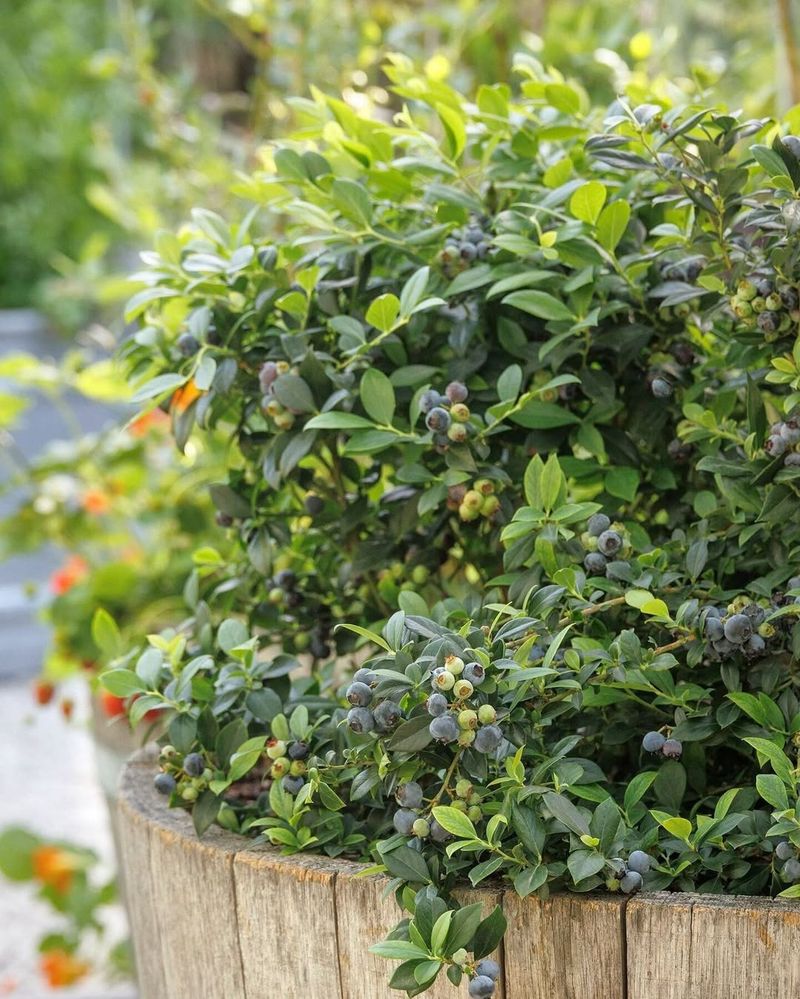
Container size matters way more than most people realize when growing blueberries. A tiny pot will stunt root growth and dry out too fast during Georgia’s hot summers.
Start with at least a 5-gallon container for young plants, but plan to move up to an 18 to 24-inch pot as your blueberry matures over the next couple years.
Drainage holes are absolutely essential because blueberry roots hate sitting in water. Look for containers with multiple holes on the bottom, not just one in the center.
If you fall in love with a decorative pot that doesn’t have enough drainage, drill extra holes yourself or use it as an outer sleeve with a properly draining pot inside.
Material choice affects how often you’ll water and how long the container lasts. Plastic pots are lightweight and hold moisture longer, which helps during Georgia’s scorching summer afternoons.
Ceramic or terra cotta pots look beautiful but dry out faster and can crack during unexpected winter freezes. Fabric grow bags have become popular because they provide excellent drainage and air circulation to roots.
Whatever container you choose, make sure it’s stable enough not to tip over when the plant gets bushy and heavy with fruit. Elevating containers on pot feet or bricks improves drainage and prevents roots from sitting in water that collects underneath.
Bigger pots also insulate roots better from temperature swings, which matters during Georgia’s unpredictable spring and fall weather.
Adding a layer of small rocks or coarse gravel at the bottom can improve drainage, though it shouldn’t replace proper soil mix.
Using a saucer under the pot helps catch excess water but make sure to empty it regularly to prevent root rot.
4. Place Containers Where Plants Get Full Sun

Sunlight directly impacts how many berries you’ll harvest, so location isn’t something to guess about. Blueberries need at least six to eight hours of direct sun daily to produce sweet, plentiful fruit.
Less sun means fewer flowers, smaller berries, and weaker plants that struggle with pests and diseases.
Find the sunniest spot on your porch, patio, or balcony in Georgia and claim it for your blueberries. South-facing locations usually get the most consistent light throughout the day.
Watch how shadows move across your space during different times to identify where sun lingers longest.
Container growing gives you flexibility that in-ground plants don’t have. If one spot isn’t working out, you can move your pots to test different locations until you find the sweet spot.
During the absolute peak of Georgia summer when temperatures soar above 95 degrees, a little afternoon shade won’t hurt and might actually prevent leaf scorch.
Avoid placing containers right against walls or fences that block morning sun, which is gentler and helps dry dew from leaves. Good air circulation around plants reduces fungal problems common in Georgia’s humid climate.
If you’re growing on a balcony, make sure railings or overhangs don’t cast too much shade during prime growing season from spring through early fall.
Remember that sun angles change with seasons, so a spot that’s perfect in June might be too shady come September.
Using reflective surfaces nearby, like light-colored walls or patios, can boost sunlight exposure and help berries ripen more evenly. Rotate containers every few weeks to ensure all sides of the plant get balanced light and promote uniform growth.
5. Keep Soil Consistently Moist But Never Waterlogged

Watering blueberries in containers requires paying attention because the soil dries out faster than ground plantings. Roots need steady moisture to support leaf growth and berry development, but too much water suffocates roots and causes rot.
Finding that balance is easier once you understand what to look for.
Stick your finger about two inches into the soil every morning during Georgia’s growing season. If it feels dry at that depth, water thoroughly until liquid runs from the drainage holes.
During hot summer stretches, you might need to water daily or even twice a day for smaller containers. Cooler spring and fall weather means less frequent watering, maybe every two or three days.
Mulching the soil surface with two to three inches of pine bark or pine straw helps retain moisture and keeps roots cooler. This is especially valuable in Georgia where afternoon temperatures can spike unexpectedly.
The mulch also slowly adds acidity as it breaks down, which blueberries appreciate.
Avoid light, frequent sprinkling that only wets the surface because roots will stay shallow and weak. Deep watering encourages roots to grow down into the container where conditions stay more stable.
If you travel often or have a busy schedule, consider setting up a drip irrigation system with a timer to maintain consistent moisture.
Watch for signs of stress like wilting leaves in the evening or berries that shrivel before ripening, which usually means your watering routine needs adjustment.
6. Feed Plants With Fertilizer Made For Acid-Loving Plants

Regular all-purpose fertilizer can actually harm blueberries because it often contains ingredients they can’t tolerate. Blueberries are sensitive to nitrates and chlorides, which show up in many standard plant foods.
Specialized fertilizers for azaleas, rhododendrons, or acid-loving plants provide nutrients in forms blueberries can actually use without causing leaf burn or poor growth.
Feed your container blueberries in early spring just as new leaves start appearing, which is usually March or early April in most of Georgia. Use a slow-release granular fertilizer sprinkled on the soil surface, then water it in thoroughly.
Follow package directions carefully because too much fertilizer causes more problems than too little.
Some gardeners prefer liquid fertilizers diluted in water and applied every few weeks during the growing season. This approach gives you more control but requires remembering to fertilize regularly.
Organic options like cottonseed meal or fish emulsion work well and release nutrients gradually as they break down.
Avoid fertilizing after mid-summer because it encourages tender new growth that won’t harden off before winter. Even in Georgia’s mild climate, late-season growth can get damaged by unexpected cold snaps.
Watch your plants for signs they need feeding, like pale leaves or slow growth, but don’t assume more fertilizer always fixes problems since overfeeding causes similar symptoms.
Testing your soil pH annually helps you understand whether your fertilizing routine is working or needs tweaking for your specific containers and water quality.
Apply a light layer of compost around the base in early spring to improve soil structure and add slow-release nutrients without overloading the plant.
7. Protect Roots With Mulch During Hot Weather

Georgia summers can be brutal on container plants because pots heat up way faster than ground soil. When containers bake in direct sun, root temperatures can climb high enough to damage or stress blueberry plants.
Roots are sensitive and prefer staying cool even when air temperatures soar into the 90s.
A thick layer of organic mulch acts like insulation, keeping soil temperatures more stable throughout the day. Pine bark nuggets, pine straw, or shredded hardwood mulch all work well.
Spread mulch about two to three inches deep across the entire soil surface, but keep it pulled back an inch or so from the main stem to prevent rot.
Mulch does double duty by slowing water evaporation, which means you won’t need to water quite as often during heat waves. As organic mulch breaks down, it gradually adds nutrients and helps maintain the acidic pH blueberries require.
Pine products are especially good because they naturally acidify soil as they decompose.
Refresh your mulch layer each spring before temperatures start climbing, and add more throughout summer if it gets thin. Avoid piling mulch too deep because that can keep soil too wet and prevent air from reaching roots.
Light-colored mulch reflects more heat than dark mulch, which can help during the absolute hottest parts of Georgia summer.
Positioning containers where they get morning sun but afternoon shade during peak heat also reduces stress on roots even with good mulch coverage.
Choose larger containers when possible, as they hold more soil and stay cooler longer than small pots. Using self-watering containers or adding a water reservoir at the bottom can help keep roots consistently moist during extreme heat.