The 2026 Plants Arizona Gardeners Are Choosing For Their Yards

The plants showing up in Arizona yards are slowly changing. More gardeners are paying attention to what truly survives the desert heat, what stays attractive through long summers, and what actually makes sense for water-wise landscapes.
Instead of fighting the climate, many people are choosing plants that thrive in it. That shift is shaping what gardens across the state are starting to look like in 2026.
Walk through neighborhoods around Phoenix, Tucson, or other desert cities and you will notice the difference.
Colorful bloomers that tolerate intense sun, sculptural desert plants, and tough perennials that handle dry soil are becoming more common in everyday yards.
These plants are not just surviving Arizona conditions. They are performing well and keeping landscapes vibrant through the hottest months.
If you are planning changes in the garden this year, these are the plants many Arizona gardeners are starting to rely on.
1. Bougainvillea Brings A Burst Of Bold Tropical Color

Nothing stops a neighbor in their tracks quite like a wall of bougainvillea in full bloom. In Arizona, where color can feel scarce during the dry months, this plant delivers in a way few others can.
Those papery, electric bracts, ranging from hot pink to deep orange to white, practically glow in the afternoon sun.
Bougainvillea loves heat, and Arizona has plenty of it. Plant it along a south or west-facing wall and it will reward you with waves of color from spring through fall.
It does need some water when young, but as it settles into your yard, it handles dry spells without complaint.
One thing Arizona gardeners figure out quickly: bougainvillea blooms best when it is a little stressed. Cutting back on water before bloom season actually pushes it to flower harder.
Prune it back after each bloom cycle to keep the shape tidy and encourage the next round of color.
Watch out for the thorns, especially when planting near walkways or kids’ play areas. Use thick gloves and long sleeves when trimming.
In Phoenix and Scottsdale, bougainvillea is practically a backyard staple at this point, and its reputation keeps growing every year for good reason.
It also works beautifully on pergolas, fences, and courtyard walls where the branches can climb and spill over in dramatic layers of color.
With the right placement and an occasional trim, bougainvillea quickly turns a plain Arizona yard into something that feels vibrant and alive.
2. Red Yucca Stands Out With Hummingbird Friendly Blooms

Hummingbirds show up every single year the moment red yucca starts blooming, and watching that happen never gets old.
Tall, arching flower spikes loaded with coral-red tubular blooms stretch up to five feet, and those tiny birds zero in on them like they have GPS.
If you want wildlife in your Arizona yard without a lot of fuss, this plant earns its spot fast.
Red yucca is not actually a yucca at all. It belongs to the agave family, which explains why it handles Arizona heat and drought so well.
Grass-like, dark green leaves fan out in a clump that stays attractive all year, even when the plant is not in bloom. It fits naturally into desert landscaping without looking out of place.
Your Arizona Garden Changes Every Week. Your Plan Should Too.
Gardening in Arizona changes quickly throughout the season. Every Friday you’ll receive a simple weekly plan showing exactly what to plant, prune, fertilize, harvest, and protect so you never miss the right timing.
Plant it in full sun and well-drained soil. Sandy or gravelly soil works fine, which is great news for most Arizona yards where heavy clay is not usually the problem.
Water it occasionally during the first season to help it get rooted, then you can mostly leave it alone.
Red yucca also works well planted in groups. Three or five plants clustered together along a walkway or border create a strong visual statement.
It blooms from spring into summer and sometimes pushes out a second flush of flowers later in the season.
Unlike many flowering plants, red yucca keeps its tidy shape year round, so the garden never looks bare even between bloom cycles.
Once established, it becomes one of those Arizona plants that quietly thrives with very little attention.
3. Desert Marigold Lights Up The Garden With Golden Flowers

Bright yellow flowers covering low mounds of silvery foliage, blooming from spring well into fall, and barely needing any attention at all.
That pretty much sums up desert marigold, and it explains why so many Arizona gardeners are tucking it into their beds and borders in 2026.
Baileya multiradiata is a native wildflower here, which means it knows exactly what to do in Arizona soil and sun. Rocky ground, caliche layers, full desert exposure, none of it slows this plant down.
It reseeds itself readily, so once you have it in your yard, it tends to come back and spread on its own over time.
Plant it in spots that get full sun all day. Afternoon shade will reduce blooming, and this plant really does its best work when the sun hits it hard.
Space plants about twelve to eighteen inches apart to give them room to form their natural mounded shape.
Water young plants weekly until they settle in, then cut back to watering every two to three weeks during dry stretches. During rainy periods, you can skip irrigation entirely.
Deadheading spent blooms is optional, but doing it encourages the plant to push out fresh flowers more consistently.
It pairs beautifully with purple sage and red yucca in Tucson and Phoenix-area xeriscapes.
4. Parry’s Agave Adds A Sculptural Look With Blue Rosettes

Some plants do the heavy lifting with color. Parry’s agave does it with pure form.
Those tight, symmetrical rosettes of blue-gray leaves look like something an architect designed, and they hold that shape year-round without any trimming or fussing on your part.
Agave parryi is one of the most cold-hardy agaves available, which matters in northern Arizona where temperatures can drop hard in winter.
It handles everything from Flagstaff elevations to Phoenix valley heat, which makes it one of the most flexible options in the state.
Most agaves are not that adaptable, so this one stands out.
Each leaf tip comes to a sharp terminal spine, so placement matters. Keep it away from high-traffic areas, especially paths where kids or pets move through regularly.
A raised planter, a rock garden, or a corner bed works perfectly. It stays relatively compact, usually reaching two to three feet tall and wide at maturity.
Parry’s agave blooms once in its lifetime, sending up a dramatic stalk loaded with yellow flowers that can reach fifteen feet or more. After flowering, the main rosette fades, but offsets around the base fill in the space naturally.
In Arizona landscapes, it pairs well with desert spoon, ocotillo, and low ornamental grasses to create a layered, textured look.
5. Desert Willow Produces Elegant Orchid Like Blooms

Ask anyone who has a desert willow in their Arizona yard and they will tell you the same thing: the flowers catch everyone off guard.
People expect something tough and scrubby from a desert tree, and then they see those delicate, ruffled blooms in shades of pink, lavender, and white, and they stop and stare.
Chilopsis linearis is native to the Southwest and is completely at home in Arizona conditions. It grows fast for a desert tree, putting on several feet of height in a single season when it has decent water and full sun.
In established yards around Tucson and the Phoenix metro area, specimens can reach fifteen to twenty-five feet tall with a graceful, open canopy.
Bloom time runs from late spring through summer, often continuing into fall if monsoon rains arrive on schedule. Hummingbirds and bees work those flowers constantly.
After blooming, long seed pods hang from the branches and stay through winter, giving the tree a different kind of visual interest in the off-season.
Desert willow drops its leaves in winter, so plan for that if you want year-round privacy. It leafs back out in spring reliably.
Prune young trees to shape them during the first couple of years, then step back and let the natural form develop. It really does not need much intervention to look good.
6. Texas Ranger Handles Extreme Heat With Ease

Purple flowers exploding across silvery leaves right after a monsoon rain is one of those Arizona summer moments that reminds you why desert gardening is worth it.
Texas ranger, also called purple sage or Leucophyllum frutescens, puts on that show reliably every year, and it asks for almost nothing in return.
Heat does not bother this shrub at all. Full sun, reflected heat from walls and pavement, temperatures well above 110 degrees Fahrenheit, it handles all of it without skipping a beat.
In Phoenix, where summer conditions push most plants to their limit, Texas ranger just keeps going. That kind of reliability is hard to find.
Silvery, felted foliage stays attractive even when the plant is not in bloom. It has a soft, rounded shape that works in formal borders or naturalistic desert plantings equally well.
Spacing plants four to six feet apart lets them fill in without crowding, and they rarely need shaping unless you want a tighter hedge look.
Avoid overwatering, which is the most common mistake people make with this shrub. Too much water leads to leggy growth and reduces flowering.
Let the soil dry out completely between waterings. In Tucson and Scottsdale yards, Texas ranger is a go-to choice for low-water hedges and foundation plantings that hold up through the toughest months of the year.
7. Firecracker Penstemon Draws Pollinators With Bright Red Flowers

Tall, narrow stems loaded with tubular red flowers swaying in a warm desert breeze, with hummingbirds darting in from every direction.
That is firecracker penstemon doing its thing, and it is a genuinely exciting plant to have in an Arizona yard during bloom season.
Penstemon eatonii is native to the Colorado Plateau and desert Southwest, so it is already dialed in to Arizona growing conditions. It tends to bloom in late winter and spring here, which fills a gap when not much else is flowering yet.
That early bloom window is exactly when migrating hummingbirds are passing through, making this plant a real magnet for them.
Firecracker penstemon grows best in well-drained soil with full sun exposure. Rocky, gravelly ground suits it perfectly.
Avoid heavy clay or spots where water pools after rain, since standing moisture around the roots causes problems. In higher elevation areas of Arizona like Prescott and Sedona, it performs especially well and naturalizes into the landscape over time.
Plants tend to be short-lived, often lasting three to five years, but they reseed themselves if you let the seed heads stand through fall and winter.
Cutting back spent stalks after blooming keeps things tidy, but leaving some stalks standing lets seeds scatter and new plants establish naturally.
Grouping several plants together creates a bold, eye-catching display that keeps pollinators busy for weeks.
8. Desert Milkweed Supports Butterflies And Native Wildlife

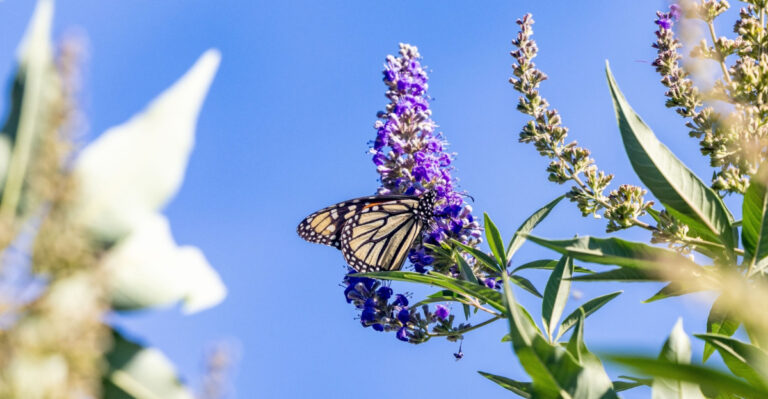
Monarch butterflies need milkweed to complete their life cycle, and in Arizona, desert milkweed is the version that actually belongs here.
Asclepias subulata grows wild across the Sonoran Desert, and planting it in your yard connects your space to something much bigger than just a garden bed.
Unlike tropical milkweed, which stays green year-round and can confuse migrating monarchs into skipping their migration, desert milkweed goes dormant in winter the way nature intended.
That natural cycle matters for butterfly populations, and Arizona gardeners are paying more attention to that distinction in 2026 than ever before.
Visually, desert milkweed has a striking, upright presence. Slender, pale green stems reach three to four feet tall, and clusters of creamy yellow flowers appear from spring through fall.
It is not flashy in the way bougainvillea or Texas ranger is, but it has a clean, structural quality that works well in native plant gardens and natural-style landscapes.
Plant it in full sun with excellent drainage. Sandy, rocky Arizona soil is exactly what it prefers.
Water young plants to help them root, then back off significantly. Established plants handle long dry stretches without any help.
Queen butterflies, which are common across Arizona, use it heavily alongside monarchs. Planting several together in Tucson or Phoenix yards creates a reliable pollinator hub that stays active through most of the year.