9 Climbing Plants That Will Quickly Cover Fences In Georgia
Bare fences can make a yard feel unfinished, especially in spring when the rest of the garden is waking up. That is why many Georgia gardeners turn to climbing plants when they want quick coverage and a more natural look.
With the right vine, a plain fence can transform into a wall of greenery, flowers, or even seasonal color in a surprisingly short time.
Georgia’s warm climate and long growing season give many climbing plants the perfect conditions to take off once temperatures rise.
Some vines grow fast enough to start filling in fences within a single season, especially when they are planted in a sunny spot and given sturdy support to climb.
But not all climbing plants behave the same way. Some grow quickly but stay manageable, while others can spread aggressively if they are not kept in check.
Choosing the right vines can help create beautiful coverage without turning the fence into a maintenance headache later on.
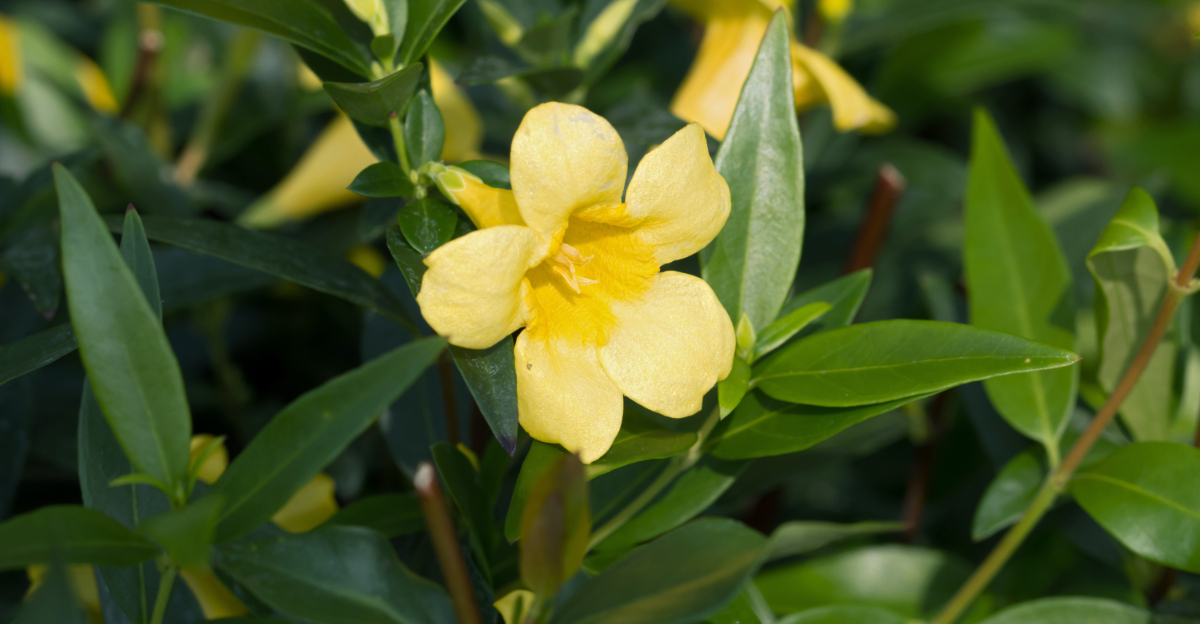
1. Carolina Jessamine Fills Fences With Bright Yellow Spring Flowers

Few things signal the end of a Georgia winter quite like Carolina Jessamine lighting up a fence with clusters of yellow blooms.
It starts flowering before most other plants even wake up, usually right around late February or early March depending on where you are in the state.
Carolina Jessamine is an evergreen vine, so your fence stays covered with glossy green leaves all year long. That alone makes it worth planting, but the spring flower show is what really gets people talking.
Neighbors will stop and ask what it is every single year.
Plant it in full sun for the best bloom display, though it handles partial shade reasonably well. It climbs by twining, so give it something to grab onto early and it will figure out the rest on its own.
Growth can reach 15 to 20 feet without much fuss.
Keep kids and pets away from all parts of the plant, since it is toxic if eaten. Aside from that, it is a reliable, fast-covering vine that performs consistently across most of Georgia, from the piedmont down to the coastal plain.
Trim it back lightly after blooming to keep the shape tidy.
2. Crossvine Climbs Fast With Bold Orange Blooms
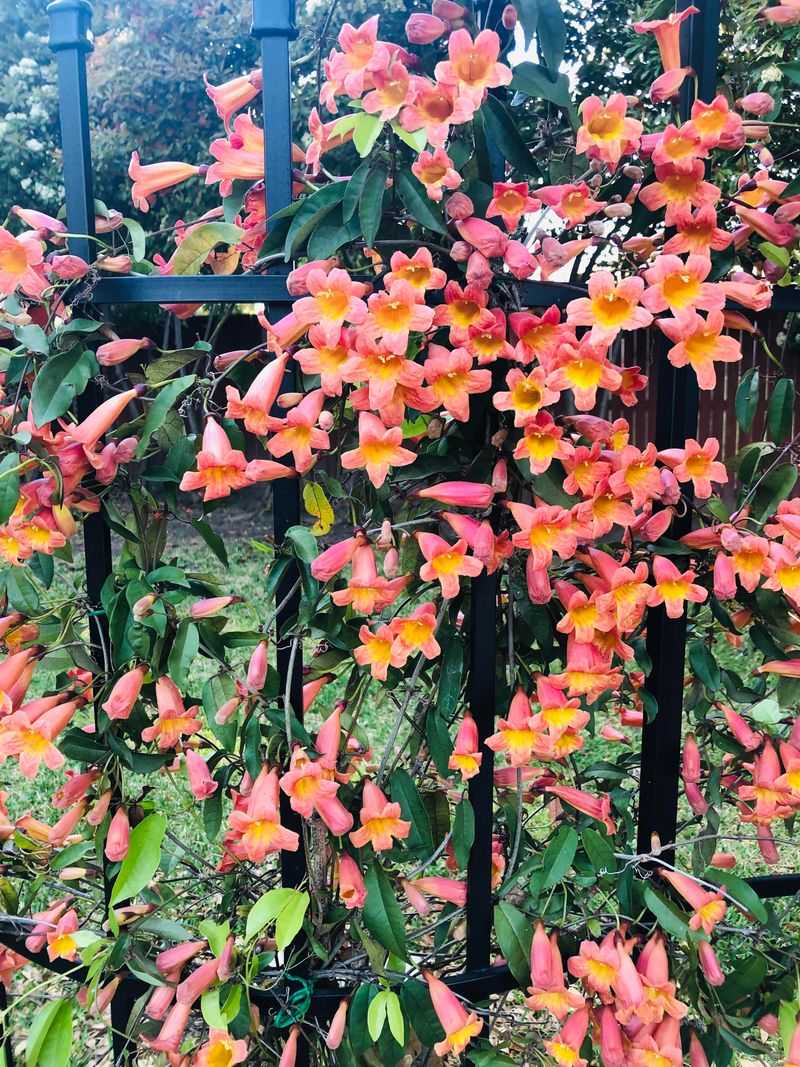
Crossvine is one of those plants that earns its spot on a Georgia fence without asking for much in return. It puts out bold clusters of orange and red trumpet-shaped flowers in spring, and hummingbirds find it almost immediately after the blooms open.
What separates Crossvine from other fast climbers is the way it attaches. It uses small adhesive pads and tendrils to grip surfaces, which means it can scale a wood fence, a brick wall, or a chain-link barrier with equal ease.
No extra support structures required in most cases.
Growth is aggressive in a good way. You can expect 15 to 20 feet of coverage in a single growing season under the right conditions, especially in full sun with average soil.
Georgia summers push this vine hard, and it responds by spreading fast.
Your Georgia Garden Changes Every Week. Your Plan Should Too.
Gardening in Georgia changes quickly throughout the season. Every Friday you’ll receive a simple weekly plan showing exactly what to plant, prune, fertilize, harvest, and protect so you never miss the right timing.
Leaves are semi-evergreen across most of Georgia, meaning you get decent coverage even in winter. The name comes from the cross-shaped pattern visible when you cut the stem.
Trim it in late winter before new growth kicks in to keep the coverage looking intentional rather than chaotic. It rewards a little attention with a lot of beauty.
3. Coral Honeysuckle Covers Fences And Attracts Hummingbirds
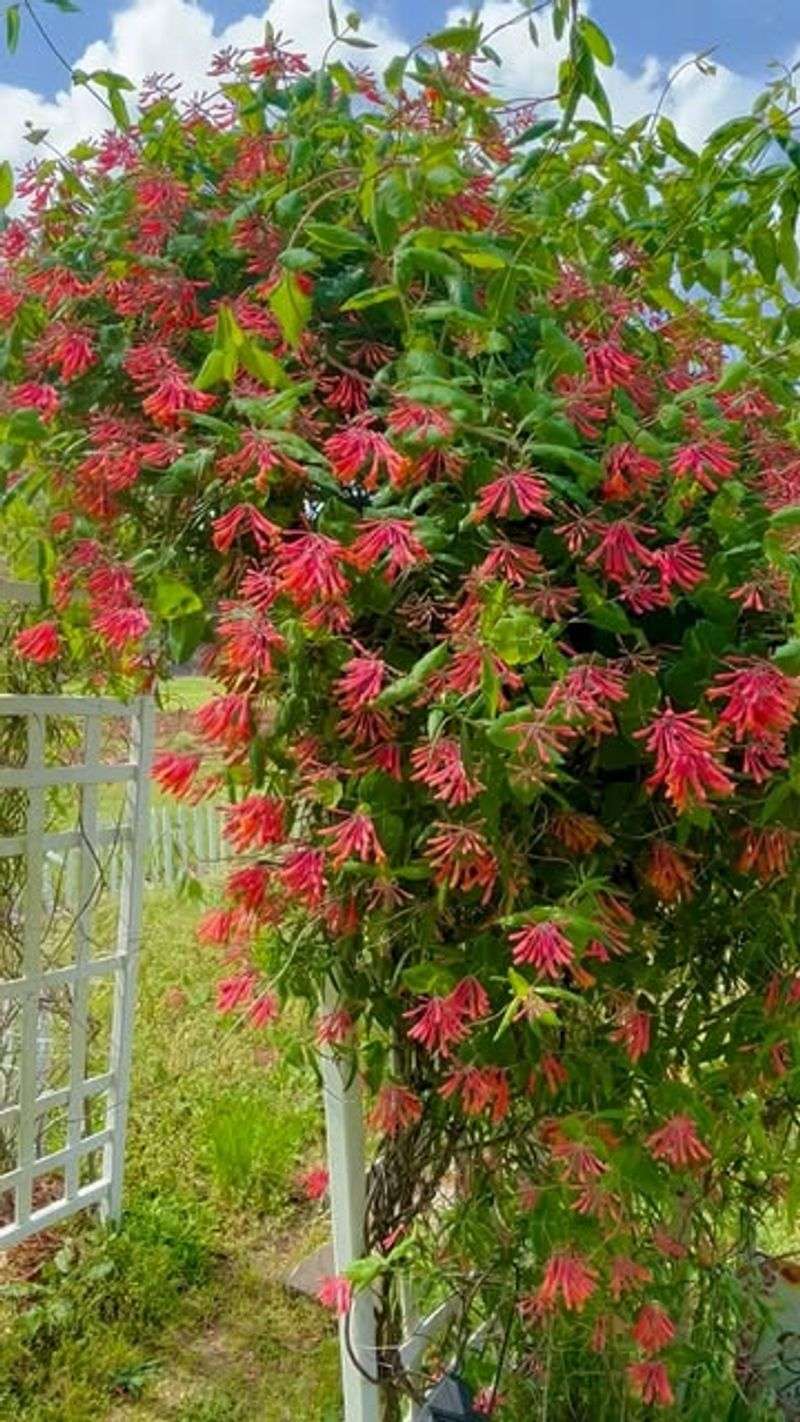
Coral Honeysuckle is the well-behaved cousin of Japanese Honeysuckle, and Georgia gardeners who have dealt with invasive vines will appreciate that distinction immediately. It covers fences beautifully without taking over your entire yard or your neighbor’s yard.
Red and coral-colored tubular flowers appear from spring through fall, which is a longer bloom window than most flowering vines can offer. Ruby-throated hummingbirds, which are common throughout Georgia during the warmer months, are drawn to it consistently.
Plant it near a window or porch and you will have a front-row seat to the action.
Full sun brings out the most flowers, but Coral Honeysuckle handles partial shade without much complaint. It twines around fence rails, posts, and wire with ease.
Expect it to reach 10 to 20 feet over a couple of seasons, spreading steadily rather than explosively.
Water it regularly during the first season to get the roots established, then back off and let it handle Georgia’s summer heat on its own. Red berries follow the flowers in fall, which brings in birds beyond just hummingbirds.
It is a genuinely useful plant for anyone trying to support local wildlife while also covering an ugly fence line.
4. Passionflower Vine Grows Quickly With Exotic Purple Flowers

Nothing in a Georgia garden stops people mid-step quite like a Passionflower bloom. The flowers look almost engineered, with their layered purple and white petals arranged around a central crown that seems too complex to be real.
It is one of the most visually striking vines you can put on a fence.
Beyond the looks, Passionflower vine is genuinely fast. It can push 15 to 20 feet in a single season, especially when summer heat hits in earnest.
Georgia’s climate suits it well, and it will spread across a fence with surprising speed once the weather warms up past 70 degrees consistently.
It serves double duty for anyone interested in supporting butterflies. Gulf Fritillary and Zebra Longwing butterflies use it as a host plant, so expect to see caterpillars on the leaves during summer.
That is a feature, not a problem, since the vine bounces back without trouble.
Cut it back hard in late winter if it gets out of hand. New shoots emerge quickly in spring.
Passionflower also produces edible fruit called maypops, which are a bonus that most people do not expect. Plant it in full sun along a fence and let Georgia’s long growing season do the rest of the work for you.
5. American Wisteria Creates Elegant Cascading Flower Clusters

American Wisteria gets everything right that its Asian relatives get wrong.
It produces the same gorgeous cascading clusters of purple or white flowers in spring, but without the aggressive root system that can crack foundations or overtake a landscape in just a few years.
Wisteria frutescens, the species that performs best in Georgia, blooms reliably every spring and sometimes pushes out a second smaller flush of flowers in summer.
The fragrance is noticeable but not overwhelming, which is a nice balance for a backyard fence situation.
It grows 15 to 25 feet and needs strong support. A wooden privacy fence works, but make sure the posts are solid before you commit to planting.
A mature Wisteria can get heavy, and a weak fence will show the strain within a few seasons.
Prune it twice a year, once right after spring flowering and again in late summer, to keep the size manageable and encourage better bloom production the following year. Full sun is non-negotiable for good flowering.
Shade-grown plants produce leaves but very few flowers. In Georgia, where sun is rarely in short supply, that usually is not an issue worth worrying about.
Give it strong support and bright light and it will reward you every spring.
6. Virginia Creeper Rapidly Covers Fences With Thick Green Foliage

Speed is Virginia Creeper’s defining quality. If covering a fence fast is the goal, very few vines in Georgia move as quickly.
A single plant can push 10 feet of new growth in one season without any special care or encouragement from you.
Summer brings a solid wall of deep green foliage made up of five-leaflet leaves that look lush and full.
Then fall arrives and the whole plant shifts to brilliant shades of red and burgundy, which is one of the better seasonal displays any Georgia fence vine can offer.
It earns its spot twice over.
Virginia Creeper attaches using adhesive pads at the tips of its tendrils. It sticks to wood, brick, vinyl, and chain link without needing to be trained or tied.
Just plant it at the base of your fence and step back.
Birds eat the small blue-black berries that appear in late summer, so it pulls its weight for wildlife too. Full sun to full shade, dry soil to moist, coastal Georgia to the north Georgia mountains, it adapts across the board.
Trim it back if it starts creeping beyond the fence line onto structures or neighboring plants. Annual pruning in late winter keeps it tidy and within bounds.
7. Climbing Hydrangea Adds Lush Coverage In Shady Spots

Shady fences are tough to cover well, and that is exactly where Climbing Hydrangea earns its reputation.
Most fast-growing vines need full sun to perform, but this one handles deep shade and still produces its flat-topped white flower clusters every summer without complaint.
Growth is slower in the first two or three years while roots develop, but patience pays off. After that establishment period, Climbing Hydrangea picks up speed and starts covering fence sections with thick, textured foliage that looks intentional and refined.
It is worth the wait.
The flowers appear in early summer and hold their shape for weeks. Even after petals drop, the dried seed heads stick around through fall and winter, adding structure to the fence during the months when most other plants look bare and uninteresting.
It clings to surfaces using aerial rootlets, similar to how ivy attaches, so it does not need a lot of hardware or training to climb. Moist, well-drained soil suits it best.
In Georgia’s warmer southern regions, afternoon shade actually helps it thrive rather than holding it back. Plant it on the north or east side of a fence for best results.
A well-fed plant in good soil can eventually reach 30 feet or more.
8. Dutchman’s Pipe Grows Large Leaves That Form Natural Screens

Forget about flowers for a moment. Dutchman’s Pipe is all about the leaves, and they are spectacular.
Each one can grow up to a foot across, deep green, and heart-shaped, overlapping each other in a way that creates one of the most effective natural privacy screens you can grow on a Georgia fence.
It climbs by twining and moves fast once summer temperatures rise. A single vine can cover 20 to 30 feet of fence in a few seasons.
Plant a few of them along a long fence line and the coverage fills in quickly from multiple directions at once.
Pipevine Swallowtail butterflies depend on this plant as a host, and female butterflies will find it within the first season.
Watching them lay eggs and seeing caterpillars develop on the leaves is a genuine bonus for anyone who enjoys backyard wildlife observation.
Dutchman’s Pipe prefers partial shade to full sun and moist soil, which suits the shadier parts of a Georgia yard well. The unusual pipe-shaped flowers appear in late spring but stay hidden under the foliage, so most people never notice them unless they look closely.
Trim back wayward stems in late winter before new growth begins to keep the coverage dense and even across the entire fence.
9. Hyacinth Bean Vine Climbs Quickly With Colorful Purple Flowers

For gardeners who want instant results, Hyacinth Bean Vine delivers faster than almost anything else you can plant in Georgia. It is an annual, which means you start fresh each year, but it climbs 10 to 15 feet in a single season without breaking a sweat.
Purple stems, deep green leaves, pink-purple flowers, and glossy dark purple seed pods all appear on the same plant at the same time during summer. Few vines offer that much visual variety at once.
It looks exotic, but it grows from seed just like beans, which makes it incredibly easy to start.
Direct sow seeds into the ground after Georgia’s last frost date, usually mid-March to early April depending on your county. Germination happens within a week or two, and the vine takes off from there.
Full sun and average soil are all it really needs to perform well through the summer heat.
By August, most plants are fully covering their fence section with dense, colorful growth. Seed pods are ornamental but should not be eaten raw.
Save a few dried pods at the end of the season and you have free seeds for next year. For a rental home, a new fence, or a temporary privacy solution in Georgia, Hyacinth Bean Vine is a smart, practical choice that looks anything but temporary.