This Is Why Boxwoods Turn Brown In March In Ohio

Boxwoods usually rank among the most dependable shrubs in Ohio landscapes. They stay green through winter, hold their shape year after year, and rarely demand much attention from homeowners.
That is why the sudden change in early spring can feel so confusing. March arrives, snow begins to melt, and those once glossy leaves start turning dull bronze or brown almost overnight.
A hedge that looked perfectly healthy in January suddenly appears stressed just as the gardening season begins. Many Ohio homeowners assume the worst and start wondering if their shrubs survived the winter at all.
In most cases, the plants are still alive and capable of recovering. Something else is happening behind the scenes during late winter and early spring.
Several common conditions in Ohio can quietly affect boxwoods long before the damage becomes visible.
1. Winter Burn Damages Boxwood Leaves

Walk through almost any Ohio neighborhood in early March and you will likely spot boxwoods with brown, papery foliage clinging to their branches. That telltale discoloration is usually winter burn, one of the most common forms of cold-weather injury affecting evergreen shrubs.
Ohio State University Extension notes that winter burn happens when evergreen leaves continue losing moisture through their surfaces during cold, dry weather, but the roots cannot replace that lost water fast enough.
Boxwood leaves are always releasing small amounts of moisture into the air, even in winter. When temperatures drop sharply and the air turns dry, that moisture loss speeds up dramatically.
The roots, struggling in cold or frozen soil, simply cannot pump water up to the leaves quickly enough to keep pace. The result is leaf tissue that dries out from the inside, turning tan or brown by late winter.
Homeowners in Ohio can reduce winter burn by watering boxwoods deeply in late autumn before the ground freezes. Applying a two to three inch layer of mulch around the base also helps the soil hold moisture longer.
Some gardeners use burlap screens on the windward side of shrubs to slow moisture loss during the coldest months.
2. Frozen Soil Prevents Roots From Absorbing Water

Picture a drinking straw that is completely blocked at the bottom. No matter how hard you try to pull liquid through, nothing moves.
That is essentially what happens to a boxwood when Ohio soil freezes solid in January and February. The roots are physically unable to absorb water from ground that has turned to ice, leaving the entire plant without a reliable moisture supply for weeks at a time.
Boxwoods are evergreen, which means their leaves stay active through winter and keep losing moisture to the air. When roots are locked in frozen ground, the plant cannot replace what the leaves are losing.
Over time, the foliage dehydrates and turns brown, especially on the outer edges and tops of the shrub where exposure is greatest. Ohio winters frequently bring extended freezing periods that keep the ground hard for weeks, making this a recurring problem in Ohio landscapes.
Watering boxwoods thoroughly before the first hard freeze gives the surrounding soil a moisture reserve that can carry the plant through short cold spells. Mulching with shredded bark or wood chips insulates the root zone and delays deep freezing.
Your Ohio Garden Changes Every Week. Your Plan Should Too.
Gardening in Ohio changes quickly throughout the season. Every Friday you’ll receive a simple weekly plan showing exactly what to plant, prune, fertilize, harvest, and protect so you never miss the right timing.
Research from university extension programs consistently recommends fall watering and mulching as the most effective tools against root-zone dehydration during winter.
3. Cold Winter Winds Dry Out Evergreen Foliage

Anyone who has spent a February afternoon in Ohio knows how biting the wind can feel. That same relentless wind is quietly doing serious damage to boxwood shrubs across the state, stripping moisture from evergreen leaves far faster than calm conditions ever would.
Wind dramatically increases the rate at which leaves lose water, a process called transpiration, and boxwoods caught in exposed locations suffer the most visible browning by late winter.
The side of a boxwood shrub facing the prevailing wind typically shows the worst damage. Leaves on that side dry out first, turning brown and brittle while the sheltered side of the same plant may still look fairly green.
Ohio State University Extension recognizes wind desiccation as a leading cause of winter injury in boxwoods, particularly for shrubs planted in open areas without natural windbreaks like fences, walls, or taller plantings.
Protecting boxwoods from wind is one of the most effective ways to reduce browning. Installing a burlap barrier on the windward side of the shrub before December can make a noticeable difference by spring.
Planting boxwoods near a building, fence, or dense hedge also provides natural shelter. Choosing a planting location with some wind protection is a smart first step when adding new boxwoods to Ohio landscapes.
4. Late Winter Sun Scorches Exposed Leaves
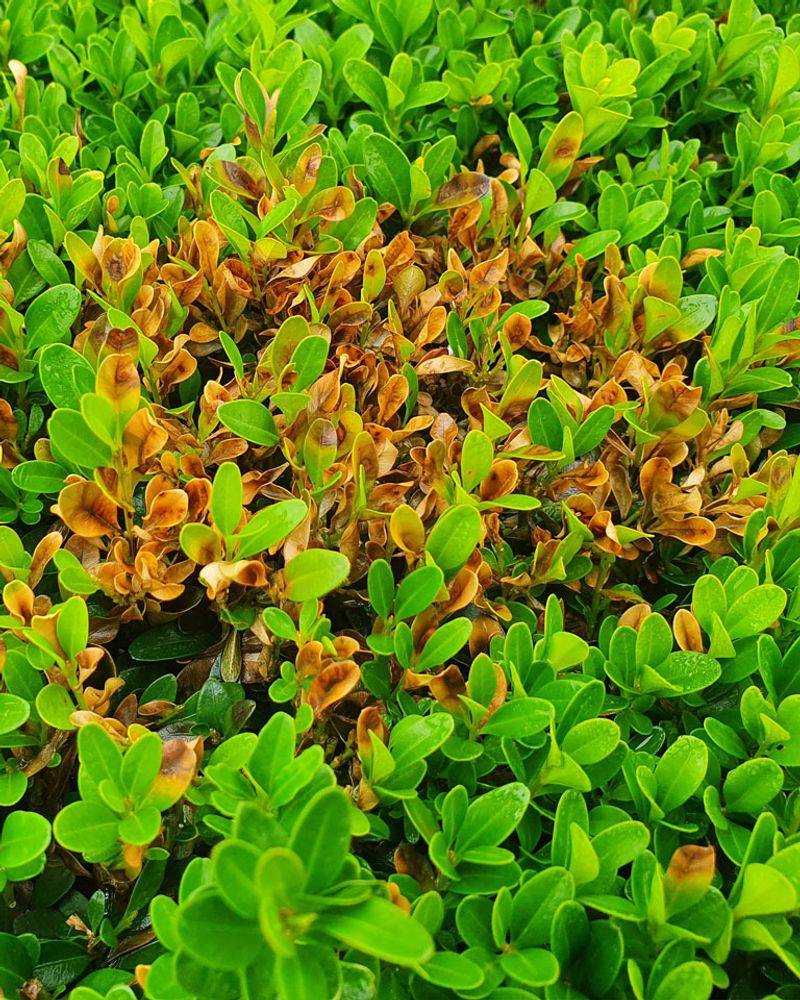
Bright February sunshine might feel welcome after months of gray Ohio skies, but for boxwood shrubs, that late-winter sun can be surprisingly harmful. When strong sunlight hits evergreen foliage on a cold day, the leaf tissue warms up and becomes more active, increasing moisture demand.
The roots, still locked in cold or frozen soil, cannot meet that demand, and the leaves end up stressed and discolored as a result.
Snow cover makes this problem even worse. A fresh layer of snow on the ground acts like a mirror, reflecting sunlight upward onto the lower and inner branches of boxwoods.
This reflected light hits foliage that would normally be shaded, exposing leaves that are not used to direct sun exposure.
The combination of cold air temperatures and intense reflected light creates conditions that rapidly dry out leaf tissue, leaving behind the brown patches homeowners notice in March.
South-facing and west-facing boxwoods in Ohio landscapes tend to show the most sun scorch because they receive the most direct and reflected winter light. Wrapping shrubs loosely in burlap can filter sunlight without blocking air circulation.
Planting boxwoods on the north or east side of a structure naturally reduces their exposure to harsh afternoon winter sun, which can go a long way toward keeping foliage green through the season.
5. Salt Damage From Roads And Sidewalks

Homeowners in Ohio often spread rock salt or chemical deicers along driveways and sidewalks without thinking much about the nearby shrubs. But boxwoods planted close to treated pavement are quietly absorbing a steady dose of salt all winter long.
Salt damage is a sneaky problem because it looks almost identical to wind burn and winter desiccation, making it easy to misdiagnose until you notice that the browning is concentrated on the side of the shrub nearest to the road or walkway.
Salt harms boxwoods in two main ways. Salt spray kicked up by passing vehicles or foot traffic lands directly on leaves, pulling moisture out of the leaf tissue through osmosis and causing rapid browning.
Salt also accumulates in the soil around the roots, raising the soil’s salt concentration to levels that make it harder for roots to absorb water even when the ground is not frozen.
Ohio State University Extension warns that repeated salt exposure over multiple winters can seriously weaken boxwood health.
Choosing plant locations away from heavily salted areas is the simplest prevention. When that is not possible, burlap barriers can block salt spray from reaching foliage.
Flushing the soil around boxwoods with generous amounts of water in early spring helps dilute and move salt away from the root zone. Switching to sand or cat litter as a traction aid near shrubs is another practical option for Ohio homeowners.
6. Heavy Snow And Ice Stress Branches

After a heavy Ohio snowstorm, boxwoods can look almost picturesque with their branches blanketed in white. But underneath that postcard image, something less charming is happening.
The weight of accumulated snow and ice puts enormous physical stress on boxwood branches, bending them outward, splitting their natural form, and sometimes snapping them entirely.
Once a branch cracks or splits away from the main plant, the exposed wood and surrounding foliage can turn brown quickly.
Ice storms are particularly damaging because ice is far heavier than snow and coats every surface evenly, adding weight that even sturdy boxwood branches struggle to support.
When branches are forced apart or bent at unnatural angles, the plant’s vascular system, which carries water and nutrients through the stems, can be disrupted.
Damaged vascular tissue means that even if the ground thaws and moisture becomes available, affected branches may not receive it properly, resulting in brown foliage that persists well into spring.
Gently brushing heavy snow off boxwood branches with a soft broom after a storm can prevent a lot of this structural stress. Always brush upward from below rather than pressing down, which would add more force to already burdened branches.
Some Ohio gardeners loosely tie their larger boxwoods with twine before winter to help the branches support each other through heavy snowfall events.
7. Poor Drainage Weakens Winter Hardiness

Soggy soil is one of boxwood’s least favorite conditions, and Ohio’s clay-heavy soils make poor drainage a surprisingly common problem across the state.
When water sits around the root zone for extended periods in autumn and early winter, the roots become stressed before cold weather even sets in.
Stressed roots are far less capable of supporting the plant through the harsh conditions that follow, leaving boxwoods much more vulnerable to winter injury of all kinds.
Waterlogged soil also freezes differently than well-drained soil. Excess moisture in the ground expands when it freezes, which can physically damage fine feeder roots that the plant depends on for water and nutrient uptake.
When those feeder roots are damaged, the boxwood enters the coldest part of winter already compromised. Ohio landscapes with heavy clay soil or low-lying areas that collect runoff are especially prone to this cycle of waterlogging and root injury.
Improving drainage before planting is the best approach. Raising the planting bed by even a few inches can make a meaningful difference in wet Ohio soils.
Adding organic matter like compost helps loosen clay and improve water movement through the root zone.
For established boxwoods in poorly draining spots, creating a shallow swale or French drain nearby can redirect water away from the root zone and reduce winter stress significantly.
8. Early Spring Temperature Swings Stress Plants

March in Ohio has a reputation for being unpredictable, and boxwoods feel every one of those wild temperature swings.
A warm afternoon in the mid-fifties can fool evergreen foliage into becoming more metabolically active, drawing on whatever moisture and energy reserves the plant has stored.
Then, when temperatures crash back below freezing that same night, the newly active leaf tissue is caught off guard and can suffer cellular damage that shows up as browning within days.
These freeze-thaw cycles are especially stressful because they happen repeatedly throughout late February and March in Ohio. Each warming period encourages the plant to ramp up activity, and each sudden freeze forces it to shut back down.
The repeated back-and-forth exhausts the plant’s energy reserves and weakens cell walls in the foliage over time.
University horticulture research describes this pattern as one of the key reasons why late-winter browning is so common in climates like Ohio’s, where spring does not arrive in a straight line.
There is not much homeowners can do to control the weather, but keeping boxwoods well-mulched and properly watered through autumn gives them the best possible reserves heading into those unpredictable March weeks.
Avoiding late-season fertilization with nitrogen is also important, since it can push new growth at the wrong time and make the plant even more sensitive to sudden temperature drops.