15 Common California Weeds And How To Identify Them
Weeds have a funny way of showing up exactly where you don’t want them. One minute your garden beds look clean and tidy, and the next a mystery plant appears like it owns the place.
Did you plant it? Definitely not. Is it growing faster than everything else? Of course it is. California gardens are especially good at growing weeds. The mild climate, sunny weather, and fertile soil create the perfect environment for all kinds of uninvited plants.
Some pop up in lawns, others sneak into flower beds, and a few seem determined to grow right through cracks in the driveway.
The tricky part is figuring out what you’re actually dealing with. Not every weed looks the same, and some can spread surprisingly fast if you ignore them.
Once you know how to identify the most common ones, it becomes much easier to keep them under control.
1. Crabgrass
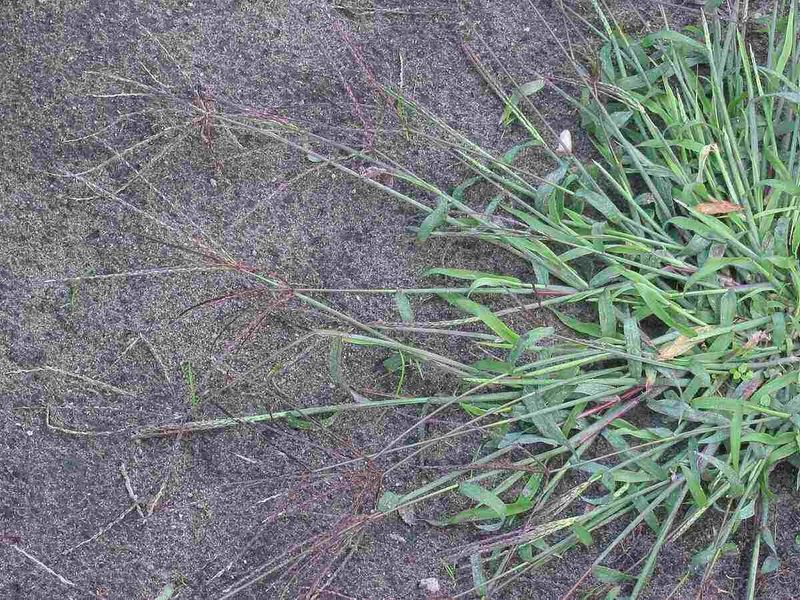
Walk across almost any California lawn in summer and you will probably step on crabgrass without even knowing it. This warm-season annual grass is one of the most stubborn invaders in the state.
It spreads low to the ground and fans out in a star-like pattern that makes it hard to miss once you know what to look for.
The blades are flat, wide, and slightly hairy, usually lighter green than your regular lawn grass. Crabgrass thrives in hot, dry conditions, which makes California the perfect home for it.
You will spot it most often in thin or bare patches of lawn where it quickly moves in and takes over.
One plant can produce up to 150,000 seeds in a single season, so catching it early really matters. The best way to prevent it is to keep your lawn thick and healthy.
A dense lawn leaves no room for crabgrass to get started. If you already see it, pulling it before it seeds is your best move.
Pre-emergent herbicides applied in early spring are also very effective at stopping crabgrass before it even sprouts in California yards.
2. Bindweed (Wild Morning Glory)
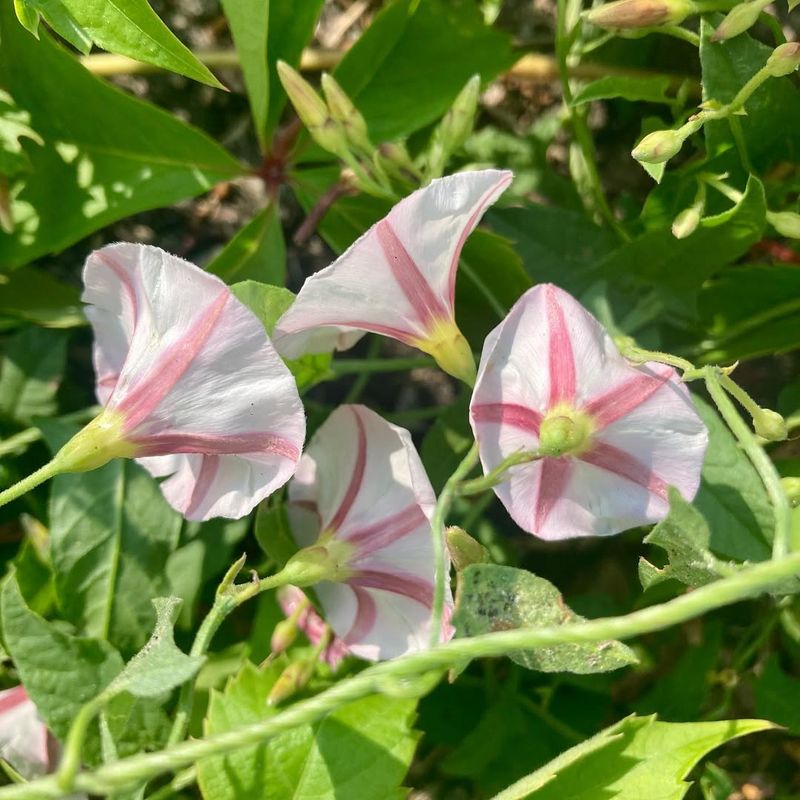
If you have ever watched a vine slowly wrap itself around your fence, your garden plants, or even your sprinkler heads, there is a good chance you were looking at field bindweed. Known around California as wild morning glory, this plant is one of the most persistent weeds in the state.
Bindweed has arrow-shaped leaves and produces small funnel-shaped flowers that are white or pale pink. The flowers look pretty, but do not let that fool you.
Underground, this plant grows an extensive root system that can reach several feet deep, making it incredibly difficult to remove completely.
It is a perennial vine that twines around anything it touches, including crops, garden plants, and fences. In California, it is especially common in gardens, roadsides, and agricultural fields.
Because the roots go so deep, pulling the vine from the surface does not stop it. New growth will sprout back from the roots left behind.
Consistent removal of the above-ground growth weakens the plant over time. Covering the area with thick mulch or landscape fabric can also help reduce its spread.
Your California Garden Changes Every Week. Your Plan Should Too.
Gardening in California changes quickly throughout the season. Every Friday you’ll receive a simple weekly plan showing exactly what to plant, prune, fertilize, harvest, and protect so you never miss the right timing.
Patience is the most important tool when managing bindweed in California landscapes.
3. Spurge
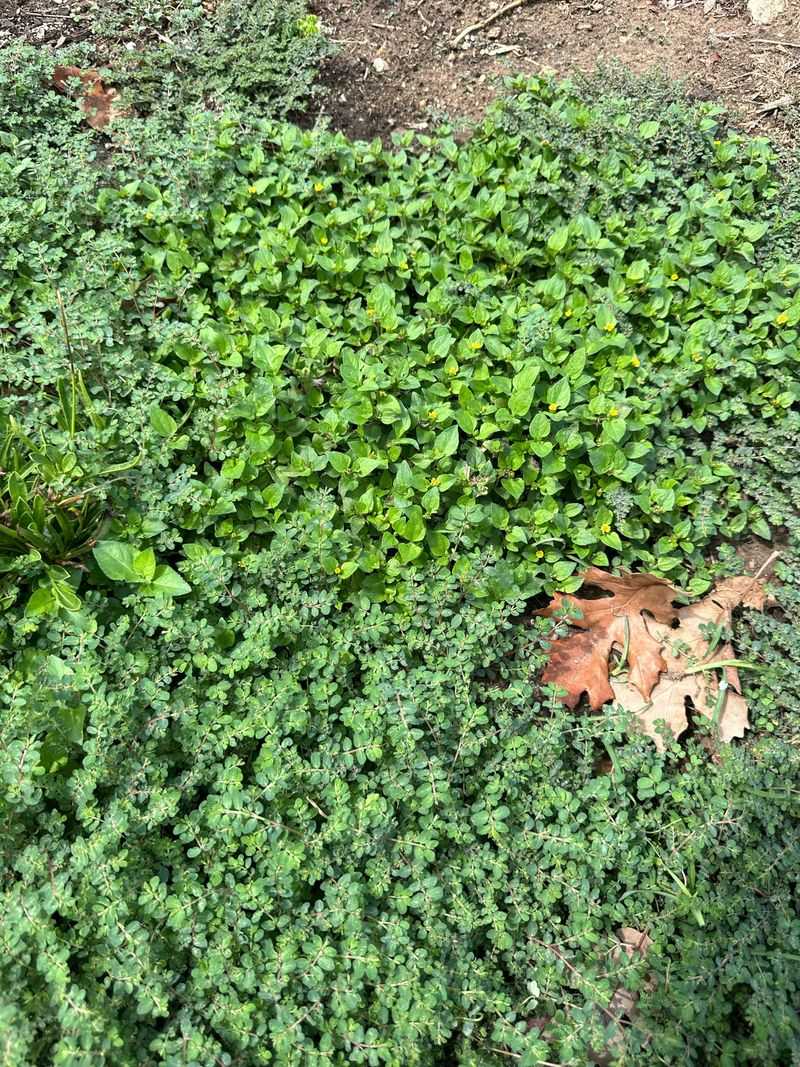
Spotted spurge is the kind of weed that seems to appear out of nowhere overnight. One day your garden path looks clean, and the next there is a flat, spreading mat of small leaves covering the ground.
It is one of the most common summer weeds found across California.
The leaves are small, oval, and often have a dark red or purple spot in the center, which makes identification pretty easy. When you break a stem, a milky white sap oozes out.
That sap can irritate skin, so wearing gloves when handling spurge is a smart idea. The plant grows flat against the ground and spreads outward in a circular mat.
Spurge loves hot pavement, dry soil, and sunny spots, making California’s warm climate ideal for it. You will find it creeping through sidewalk cracks, garden beds, and patios all summer long.
It reproduces quickly through seeds, so removing it before it flowers is key. Hand-pulling works well when the soil is moist.
For larger patches, a hoe or a targeted herbicide can help. Mulching garden beds at least two to three inches deep also does a great job of blocking spurge from sprouting in California gardens.
4. Nutsedge
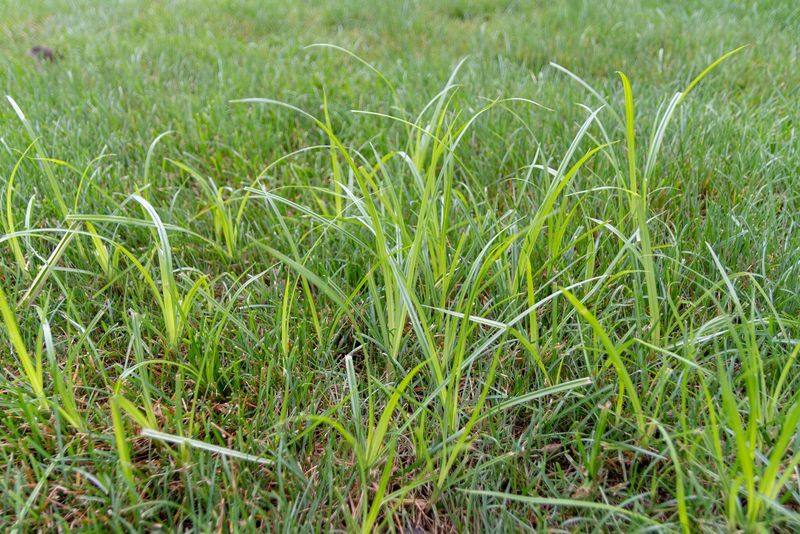
At first glance, nutsedge looks a lot like regular grass. That is exactly what makes it so tricky to spot and manage.
Look more carefully and you will notice that the stems are triangular instead of round. That three-sided stem is the classic giveaway that separates nutsedge from true grasses.
There are two types commonly found in California: yellow nutsedge and purple nutsedge. Yellow nutsedge has light yellow-green leaves and yellowish seed heads, while purple nutsedge is darker with reddish-brown seed clusters.
Both grow faster than most lawn grasses, especially in warm weather, and they stick out above the lawn surface quickly after mowing.
Nutsedge is a perennial and spreads through underground tubers called nutlets, which is how it got its name. Those nutlets can remain in the soil for years, making complete removal very challenging.
Nutsedge thrives in wet or poorly drained soil, so fixing irrigation and drainage issues in your California yard can reduce its spread. Avoid overwatering your lawn, as moist conditions encourage this weed.
Selective herbicides labeled for sedge control are the most effective treatment, especially when applied while the plant is young and actively growing.
5. Chickweed
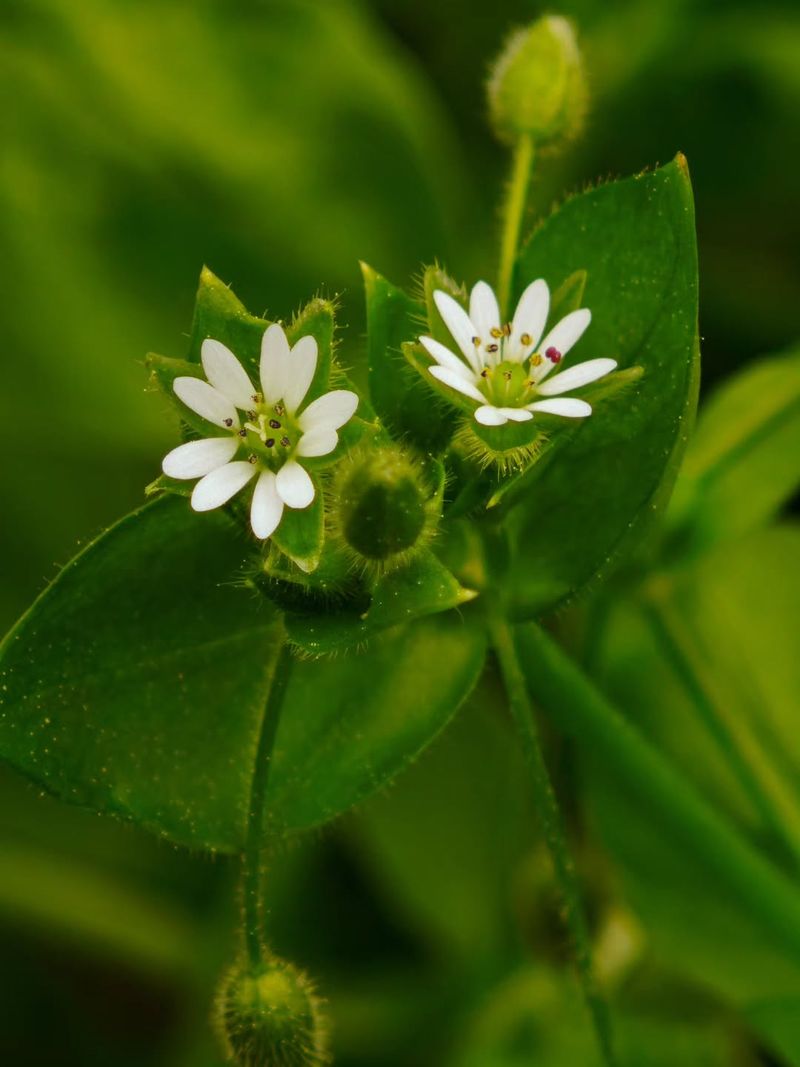
Chickweed has a quiet way of sneaking into gardens during the cooler months. While most weeds take a break in winter, chickweed is just getting started.
It is a cool-season annual that thrives in the mild, moist winters found across much of California, especially in coastal areas and northern regions.
The plant grows low and sprawling, with small, bright green oval leaves that grow in opposite pairs along the stems. The flowers are tiny and white with five petals, but each petal is so deeply notched that the flower looks like it has ten petals.
A single line of fine hairs running along the stem is another helpful identification clue.
Chickweed loves shaded, moist spots, which is why it often shows up under trees, in garden beds, and along the edges of lawns. It is actually edible and has been used in salads and as a remedy in herbal traditions, but in your garden it can crowd out seedlings and young plants.
Hand-pulling works very well since the roots are shallow. Removing it before it sets seed prevents the next generation from taking over.
A layer of mulch also does a great job of keeping chickweed from sprouting in California garden beds.
6. Oxalis (Sourgrass)
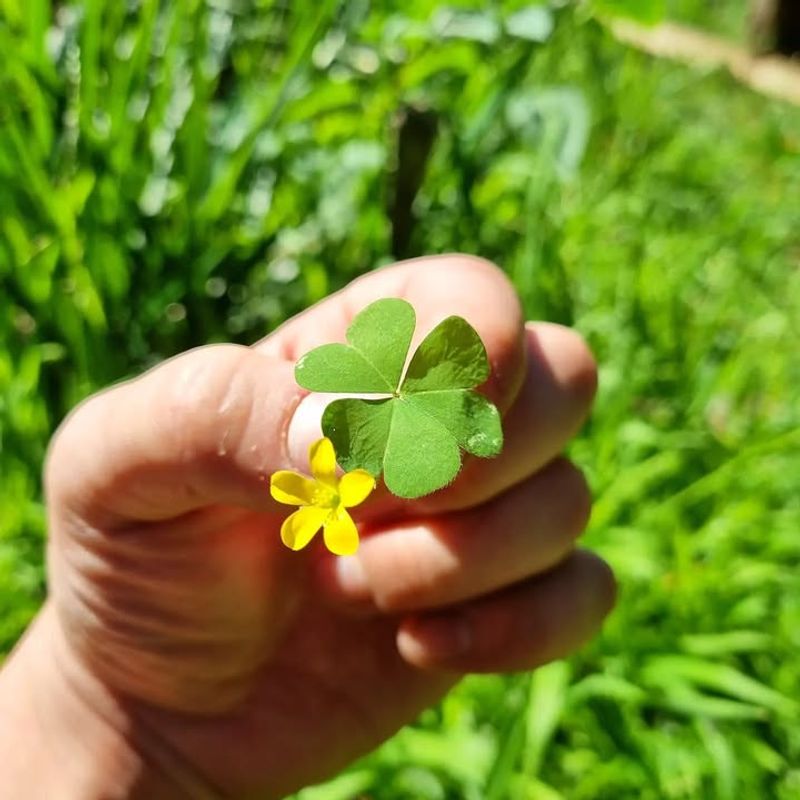
Kids across California have been chewing on oxalis leaves for generations because of their tangy, sour taste. That lemony flavor comes from oxalic acid in the plant, which is also where the name oxalis comes from.
While it might be fun to nibble on, this little weed is a major headache for gardeners.
Oxalis, often called sourgrass, has clover-like leaves made up of three heart-shaped leaflets. The most common species in California produces bright yellow flowers, though some varieties have pink or white blooms.
The leaves fold up at night and on cloudy days, which is a fun identifying feature to look for.
It spreads through tiny bulbs underground, as well as through seed pods that explode and scatter seeds several feet away when touched. That makes it one of the harder weeds to fully control in California.
Pulling it often leaves bulbs behind, which regrow quickly. Digging deep to remove the bulbs is more effective but takes time.
Smothering it with thick mulch can help reduce growth over time. For heavy infestations in California lawns and garden beds, a post-emergent herbicide labeled for oxalis control can be used.
Consistency is everything when managing this persistent little weed.
7. Bermuda Grass
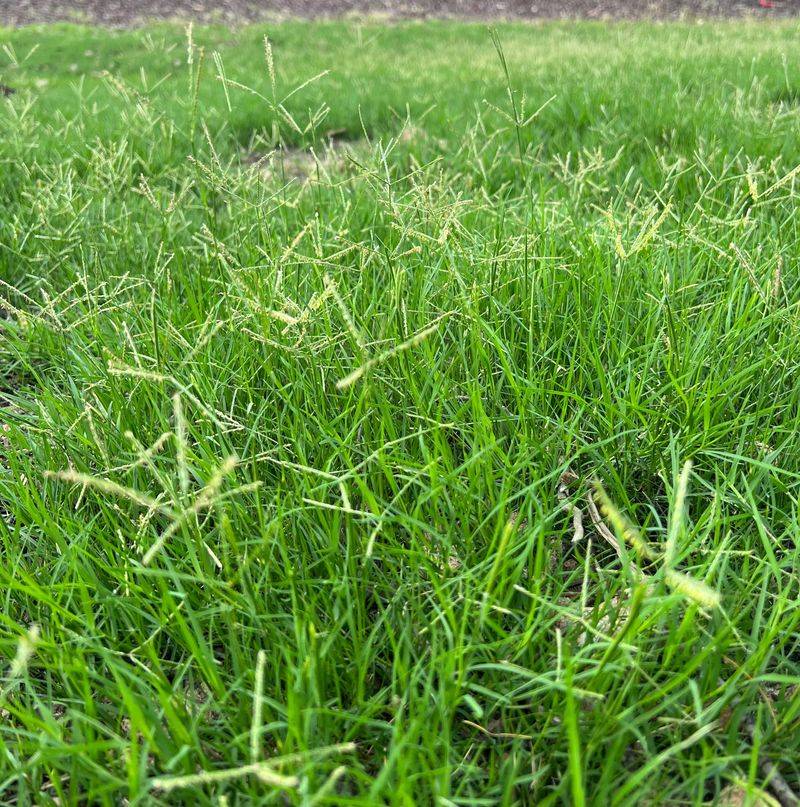
Bermuda grass is a classic example of the right plant in the wrong place. As a turf grass, it is tough, heat-tolerant, and widely used on California sports fields and golf courses.
But when it invades garden beds and non-lawn areas, it becomes one of the most aggressive weeds in the state.
It spreads through above-ground runners called stolons and underground stems called rhizomes, making it very hard to contain. The leaves are short, narrow, and blue-green, and the plant produces small seed heads that look like a tiny hand with three to seven finger-like spikes spreading from a single point.
Bermuda grass thrives in California’s hot, sunny summers and can survive drought conditions that would finish off most other plants. Once it gets into a garden bed, it weaves through the roots of other plants and becomes very difficult to pull out cleanly.
Removing it by hand is tedious but possible when done thoroughly. Solarization, which involves covering the area with clear plastic during California’s hot summer months to heat the soil, can help eliminate it.
Herbicides labeled for grass control in garden beds are also effective. Staying on top of it early makes management much more realistic.
8. Foxtail
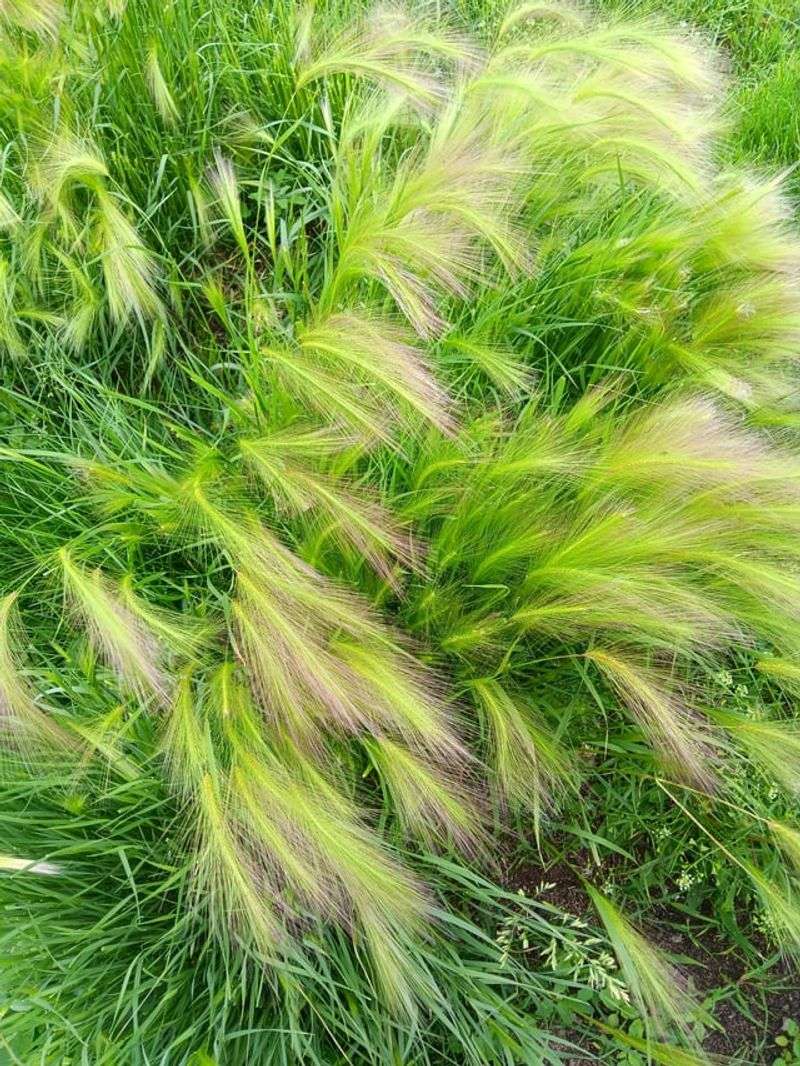
If you have ever pulled a spiky seed out of your dog’s paw after a walk through a California field, you already know foxtail. These grasses are named for their long, bushy seed heads that look just like a fox’s tail.
They are extremely common along roadsides, trails, and open spaces throughout the state.
There are several foxtail species in California, including green foxtail, yellow foxtail, and bristly foxtail. All of them produce the same distinctive seed heads covered in sharp, backward-pointing bristles.
Those bristles allow the seeds to burrow into soil easily, but they can also work their way into animal fur, skin, and even ears, which makes foxtail a real concern for pet owners.
Foxtail is an annual grass that germinates in spring and produces seeds by midsummer. The plant itself has flat, smooth leaf blades with a slightly twisted appearance.
Removing foxtail before the seed heads form is the most important step in controlling it. Once the seeds mature, they scatter easily and create next year’s problem.
Mowing regularly in open areas prevents seed heads from forming. In garden beds and along fences in California, hand-pulling or hoeing while plants are young and small is the most practical approach to management.
9. Purslane
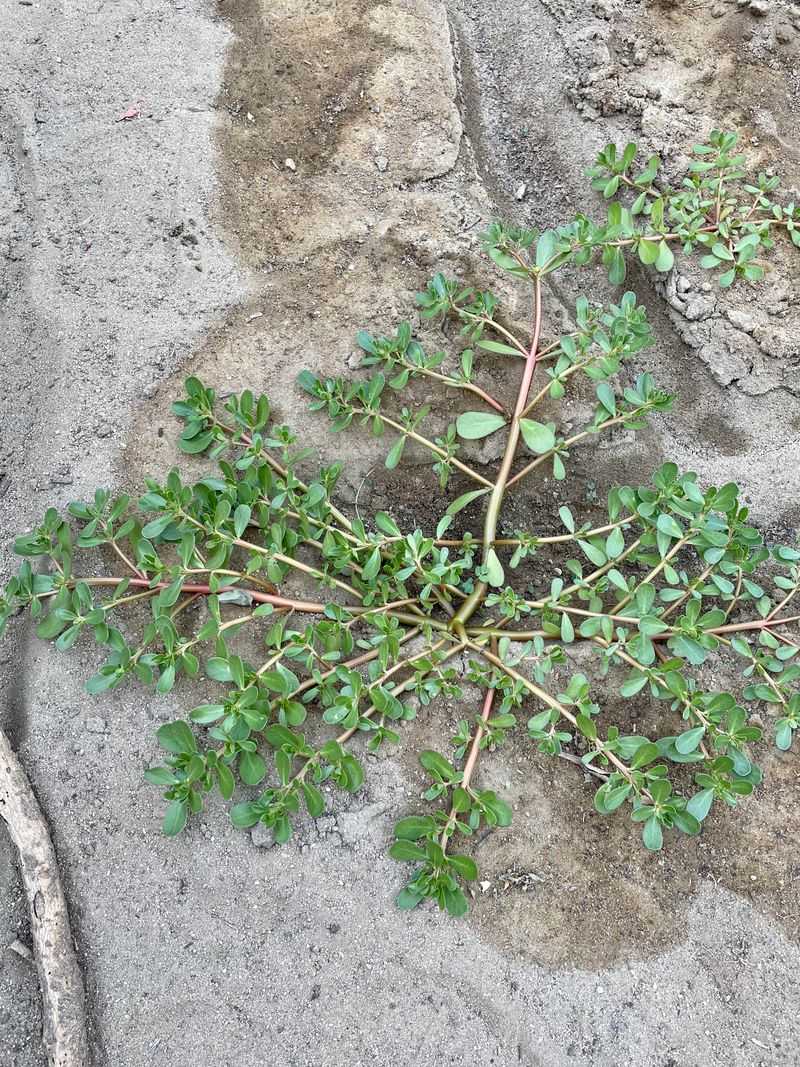
Here is something surprising about purslane: it is actually edible and considered a nutritious green in many parts of the world. It is rich in omega-3 fatty acids and vitamins.
But in California gardens and vegetable beds, it is also one of the most common summer weeds you will encounter.
Purslane has thick, fleshy stems that are often reddish or pinkish, and small, smooth, paddle-shaped leaves that look almost like a succulent. The whole plant has a shiny, slightly waxy appearance.
It grows flat and low, spreading outward in a mat across bare soil, garden paths, and vegetable beds throughout California.
It thrives in hot, dry conditions and is incredibly tough. Even after pulling, pieces left on the ground can re-root if the soil is moist.
That is why it is important to remove pulled plants from the garden entirely rather than leaving them on the soil surface. Purslane reproduces through seeds and stem fragments, so catching it before it flowers reduces future problems.
Mulching garden beds heavily slows its growth significantly. If you are feeling adventurous, you can actually toss the young leaves into a salad.
Just make sure you are confident in your identification before eating any wild plant you find growing in your California yard.
10. Pigweed
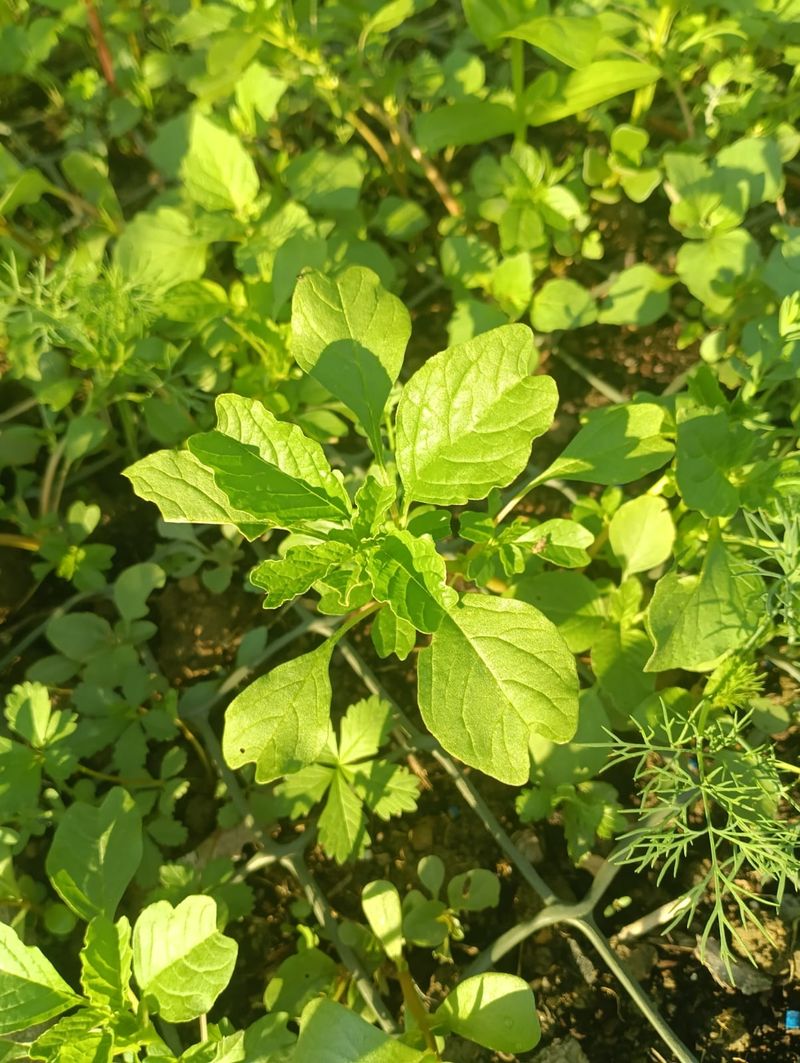
Pigweed is not a single plant but a group of related species in the amaranth family, and several of them are extremely common across California. Redroot pigweed is probably the most widespread.
It grows fast, gets tall, and produces a shocking number of seeds before the season ends.
The plant has an upright, slightly reddish stem that can grow several feet tall in a single season. The leaves are oval to diamond-shaped with wavy edges, and the undersides are often lighter in color.
At the top of the plant, dense clusters of tiny green flowers form rough, bristly spikes that become packed with seeds.
One pigweed plant can produce over 100,000 seeds, which is why populations can explode quickly in California gardens, farms, and disturbed areas. The seeds remain viable in the soil for years, adding to the challenge of management.
Young seedlings are easy to pull or hoe, so catching pigweed early is very important. Cultivating the soil shallowly can bring seeds to the surface where they sprout and can then be removed.
Avoid deep tilling, which brings buried seeds up and creates more germination. Mulching and dense planting in garden beds helps prevent pigweed from getting the sunlight it needs to establish itself in California.
11. Thistle
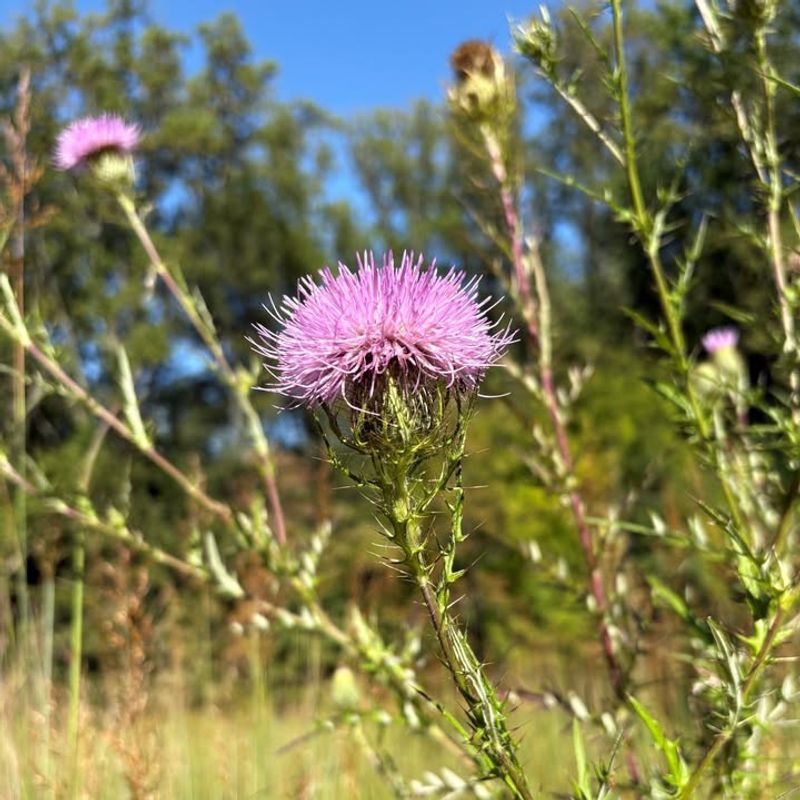
Few weeds are as unmistakable as a thistle. Those sharp, spine-tipped leaves are impossible to grab without a good pair of gloves, and the bright purple or pink flowers are actually quite beautiful up close.
Several thistle species grow across California, including bull thistle, milk thistle, and Italian thistle.
Thistles have deeply lobed leaves edged with stiff, sharp spines. The stems are often covered in prickly wings that run along their length.
The flowers sit at the top of the stems in round, brush-like heads that range from pink to purple. When the seeds mature, they are attached to fluffy white fibers that carry them through the air, similar to dandelion seeds.
Thistles are biennial or annual plants depending on the species. They tend to grow in disturbed areas, roadsides, fields, and pastures throughout California.
Removing them before they flower prevents seed production and spread. Because the spines make handling uncomfortable, using thick gloves and long-handled tools is a good idea.
Cutting the stem below the soil surface is more effective than pulling from above. Repeated cutting weakens the plant over time.
For large infestations in California fields or pastures, targeted herbicide application in early spring while plants are still in the rosette stage is the most efficient approach.
12. Mallow (Cheeseweed)
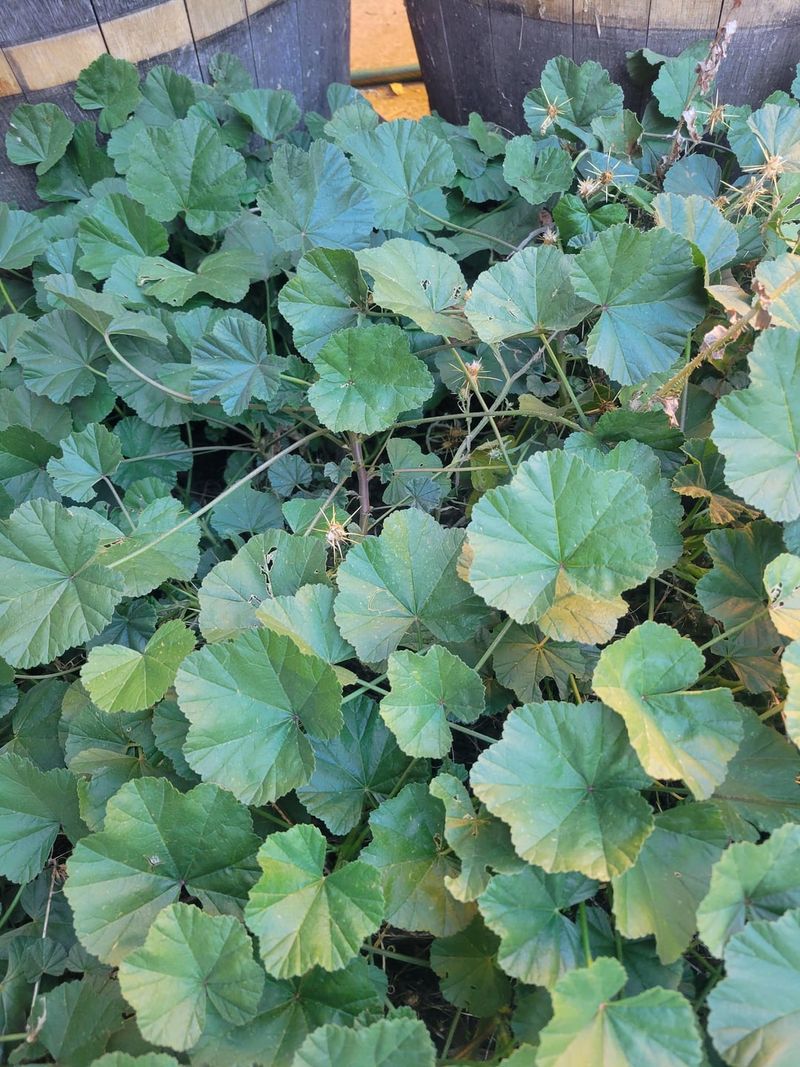
The nickname cheeseweed gives this plant away before you even look at it. Common mallow produces small, round, flat seed pods that look exactly like a tiny wheel of cheese, which is the easiest way to confirm your identification.
It is one of the most frequently seen weeds in California gardens, lawns, and along sidewalks.
The leaves are round and lobed with a slightly wrinkled texture, and they grow on long stalks from a central base. The flowers are small and pink to lavender with five petals.
The plant can grow as a low, spreading mat or reach upward in a more upright form depending on conditions and the amount of sunlight available.
Mallow is a cool-season annual or biennial that germinates in fall and winter in California, taking advantage of the mild, moist conditions. It has a long taproot that makes hand-pulling more effective when the soil is wet and loose.
Pulling it when young, before it sets those distinctive cheese-wheel seeds, prevents the next generation from spreading. A hoe works well for larger plants in open soil.
Mulching your garden beds in fall can prevent seeds from germinating. Mallow is not harmful to touch, making it easier to manage by hand than some other California weeds.
13. Poison Hemlock
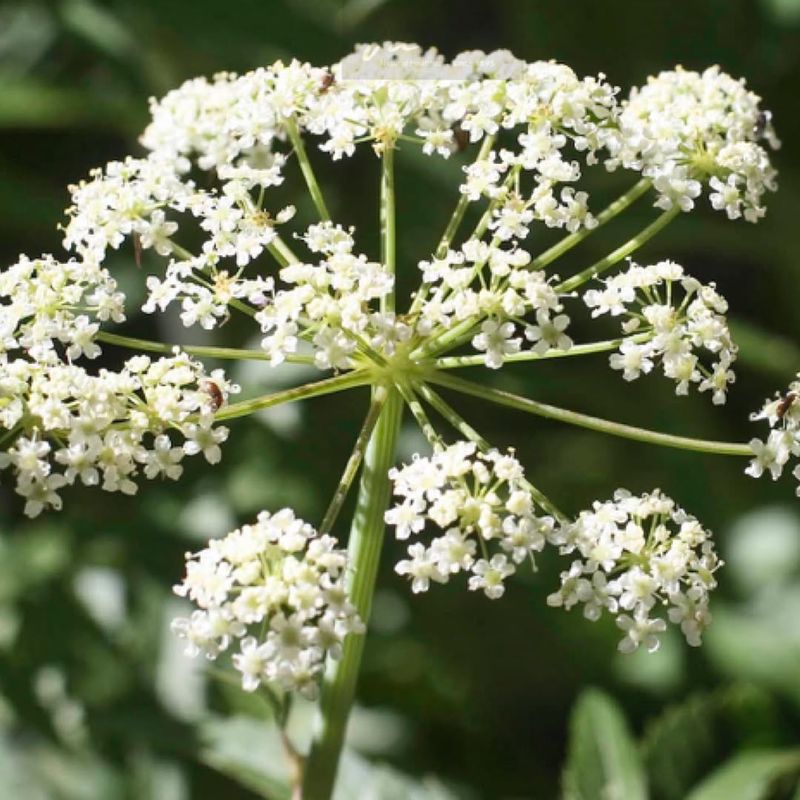
It is a highly toxic plant, and every part of it is dangerous to humans and animals. It has caused harm throughout history and is believed to be the plant used to end the life of the ancient Greek philosopher Socrates.
Knowing how to identify it is genuinely important.
The plant is tall and can reach six to eight feet in height. The stems are hollow, smooth, and green with distinctive purple or reddish-purple blotches and spots.
The leaves are finely divided and feathery, similar in appearance to carrot or parsley leaves. The flowers are small and white, arranged in flat-topped umbrella-like clusters at the tops of the stems.
Poison hemlock is found throughout California, often growing along roadsides, ditches, stream banks, and in disturbed areas. It thrives in moist soil and can form large colonies quickly.
Never handle it with bare hands, and avoid breathing in any smoke if it is ever burned near you. If you need to remove it, wear gloves and protective clothing.
Cutting it before it seeds helps limit spread. For large infestations in California, contacting your local county agricultural extension office for guidance is the safest and smartest approach to management.
14. Yellow Star-Thistle
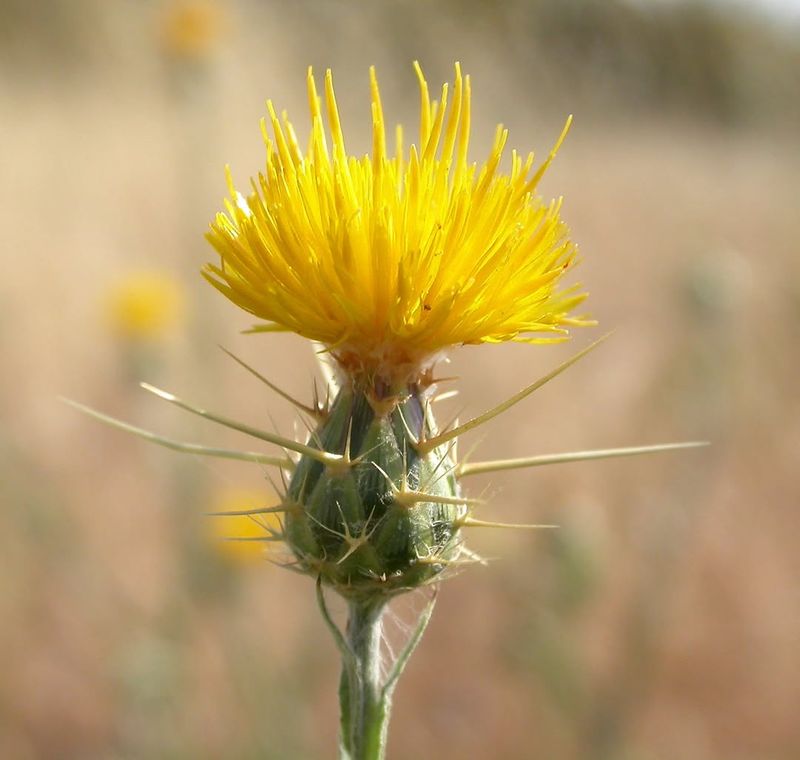
Yellow star-thistle is one of California’s most widespread and problematic invasive weeds. It covers millions of acres across the state, particularly in the Central Valley, foothills, and coastal ranges.
Once it takes hold in an area, it crowds out native plants and grasses at an impressive rate.
The plant produces bright yellow flowers surrounded by long, stiff, sharp spines that radiate outward like a star, which is exactly how it got its name. The lower leaves are deeply lobed, while the upper leaves are narrow and run down the stem, giving it a winged appearance.
The whole plant has a grayish-green color and a rough texture.
Yellow star-thistle is a winter annual that germinates with fall rains in California and grows through spring before flowering in summer. The sharp spines make it uncomfortable for grazing animals, which allows it to spread further as competing plants are removed.
It is also toxic to horses when consumed in large quantities over time. Early removal before flowering is critical to preventing seed production.
Hand-pulling young rosettes in winter or early spring is effective. For large infestations across California rangelands and roadsides, a combination of mowing, targeted herbicide use, and replanting with competitive native grasses gives the best long-term results.
15. Dandelion
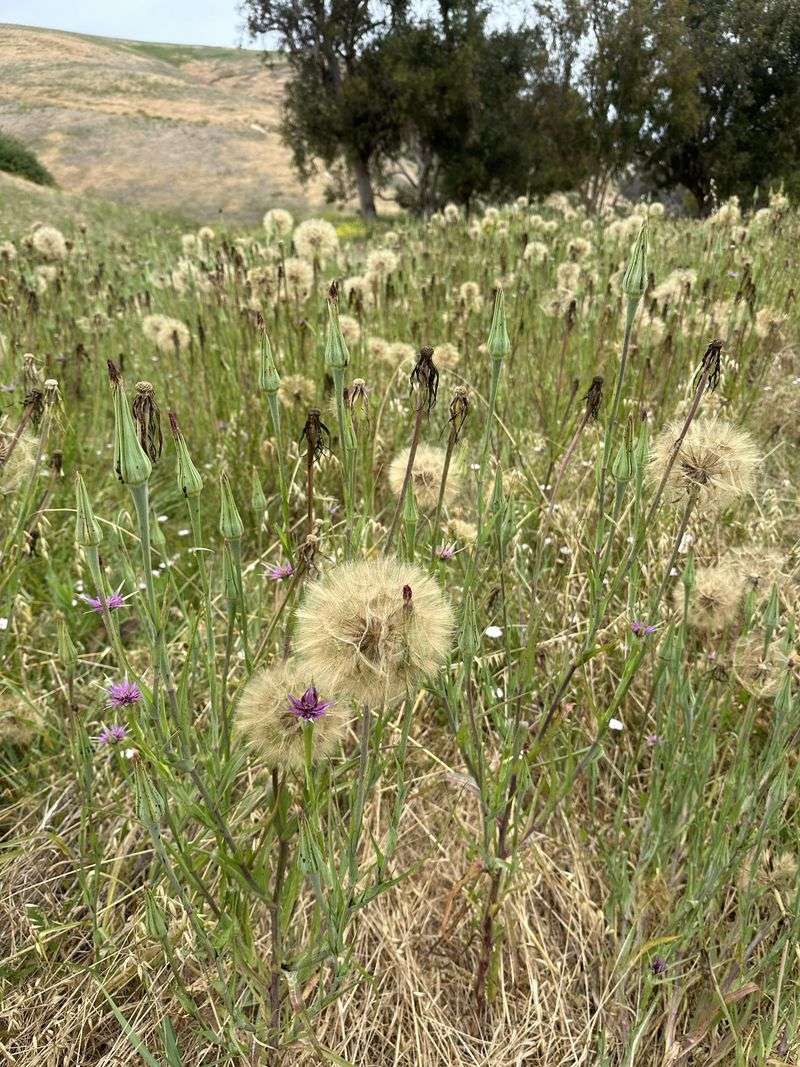
Most people recognize a dandelion the moment they see one. Those cheerful yellow flowers and puffy white seed heads are hard to mistake.
But while kids love blowing the seeds into the wind, gardeners in California know that each puff sends dozens of new plants across the yard.
Dandelions have deeply toothed, jagged leaves that grow in a flat rosette close to the ground. The leaves point back toward the center, which is actually how the plant got its name.
It comes from the French phrase meaning lion’s tooth. The hollow flower stems release a milky white sap when broken.
Dandelions grow just about everywhere in California, from coastal gardens to inland lawns and roadsides. They are perennials, meaning the same plant comes back year after year from a long, thick taproot.
If you pull the plant but leave the root behind, it will regrow. To fully remove a dandelion, you need to dig out the entire taproot.
A long weeding tool works well for this. Keeping your lawn fertilized and mowed at the right height helps prevent dandelions from taking hold in the first place.