6 Birds That Signal Spring Is Finally Arriving In Michigan
Every year in Michigan, the first true sign of spring does not come from the calendar. It comes from the sky.
As winter slowly loosens its grip, familiar bird calls begin returning to backyards, wetlands, and open fields across the state. After spending months farther south, many migratory birds make their way back north, bringing movement and color to the quiet landscape.
Across the Upper and Lower Peninsulas, birdwatchers know this seasonal return is one of the most exciting moments of the year. The arrival of these species signals that warmer weather is close behind.
Parks, forests, and even neighborhood trees begin filling with activity as birds reclaim their summer territories.
For nature lovers in Michigan, these returning visitors are more than just beautiful to watch. They are some of the most reliable signs that spring is truly on its way.
1. American Robin
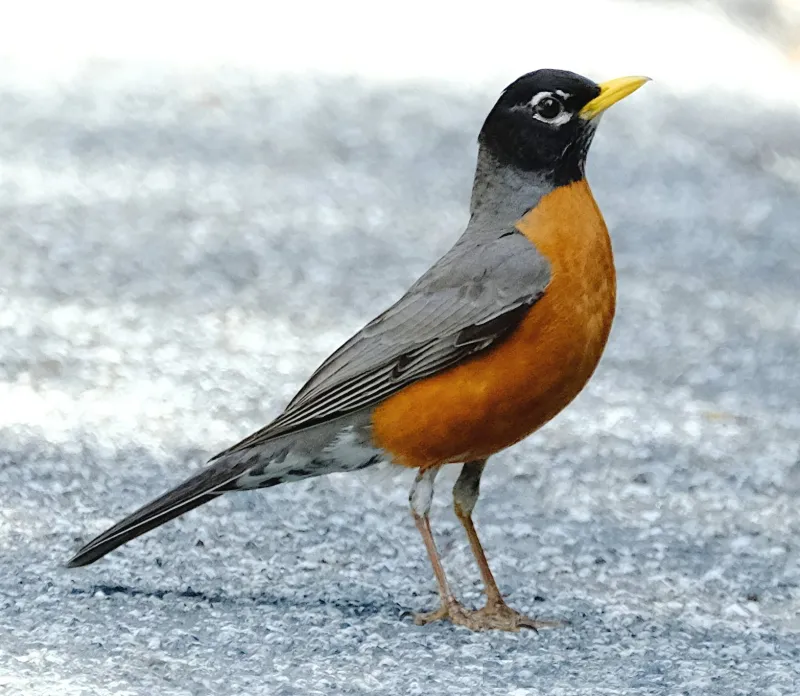
Few sights in Michigan feel as instantly hopeful as a plump, orange-chested robin hopping across a soggy lawn after a long winter. The American Robin is widely recognized as one of the most classic signs that spring has truly arrived, and for good reason.
Their cheerful, melodic song rings out from treetops and backyards across the entire state, bringing a welcome sense of warmth after months of cold and gray skies.
Interestingly, not every robin migrates all the way to the tropics. Many spend winter in the southern United States, roosting in large flocks in wooded areas and surviving on berries.
As temperatures climb and the ground begins to thaw, they start pushing northward again in search of the earthworms and soft insects they love so much.
In Michigan, large numbers of robins typically reappear from late February through March, often arriving before the last snowflakes have even melted. You will commonly spot them pulling worms from lawns, perching on fence posts, or singing boldly from high branches.
Setting out a shallow birdbath and keeping part of your lawn free of deep mulch can help attract them to your yard early in the season.
Watching a robin tug a worm from the soil is one of those small, genuinely joyful moments that Michigan spring delivers every single year.
2. Red-Winged Blackbird
Before most people have even thought about putting away their winter coats, a bold and unmistakable call echoes across Michigan’s marshes and roadside ditches.
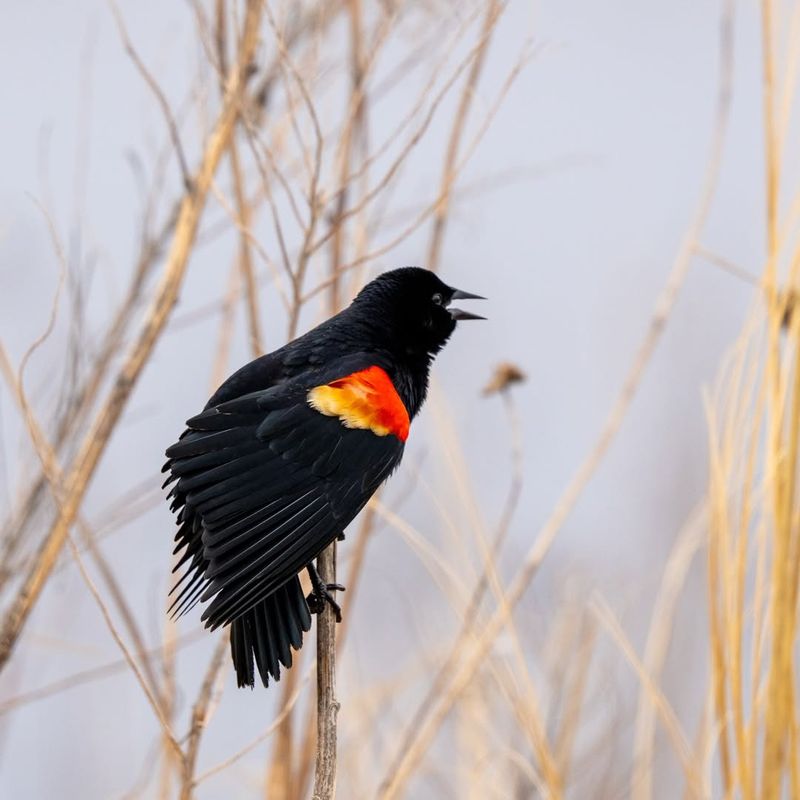
That sharp, bubbling “conk-la-ree” belongs to the male Red-winged Blackbird, one of the earliest migrants to return to the state each year.
Males arrive first, staking out prime spots in cattail marshes, wetland edges, and drainage ditches before the females even show up.
Seeing a male Red-winged Blackbird puffed up on a cattail stem, flashing those brilliant red and yellow shoulder patches, is a genuinely thrilling early spring moment in Michigan. They are fierce, vocal, and completely committed to defending their chosen patch of marsh.
Birders who visit wetlands in late February or early March in southern Michigan are almost guaranteed to hear these birds long before spotting them.
Your Michigan Garden Changes Every Week. Your Plan Should Too.
Gardening in Michigan changes quickly throughout the season. Every Friday you’ll receive a simple weekly plan showing exactly what to plant, prune, fertilize, harvest, and protect so you never miss the right timing.
The typical arrival window for Red-winged Blackbirds in southern Michigan runs from late February through mid-March, making them reliable early-season indicators.
Driving along rural roads near ponds or flooded fields, you will often hear dozens calling from the reeds before a single tree has budded.
If you want to attract them, try scattering mixed grain or cracked corn near a wet area in your yard. Their return every spring is a reminder that Michigan’s natural rhythms are always ticking forward, no matter how stubborn the cold feels.
3. Eastern Bluebird
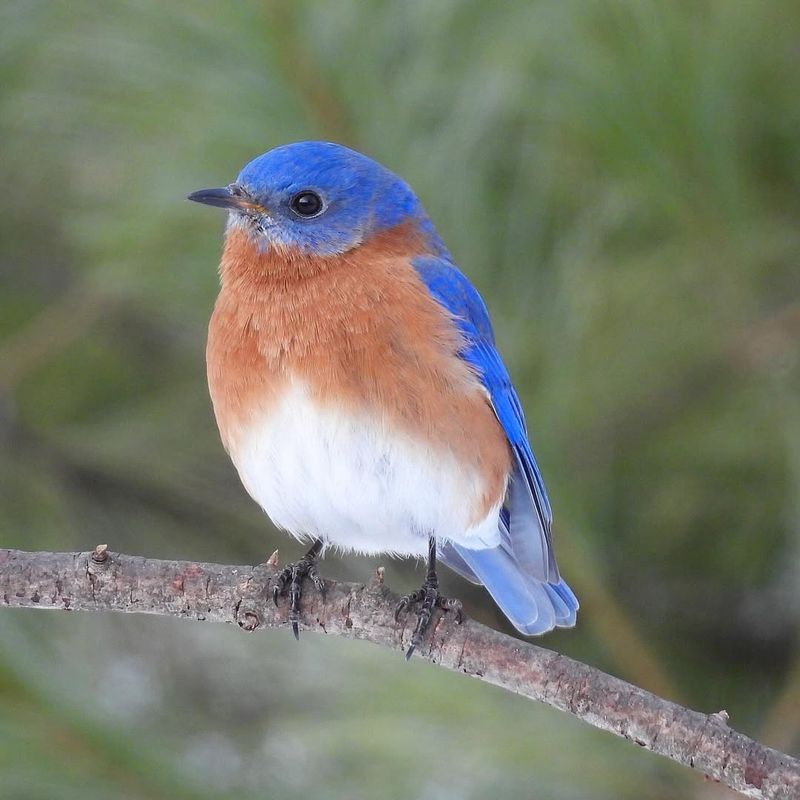
Catching a flash of brilliant blue streaking across an open field on a mild March afternoon is one of Michigan’s most breathtaking early spring experiences.
The Eastern Bluebird is genuinely one of the most beautiful birds in the entire state, and its return each year feels like a gift after months of brown and gray winter landscapes.
Males wear a striking combination of deep blue on their backs and wings with a warm rusty orange across the chest that practically glows in good light.
Some Eastern Bluebirds spend the winter in the southern United States, moving north as soon as insects begin to appear again in late winter. They are not picky eaters early in the season, and will feed on small berries and fruit when insects are still scarce.
Open fields, meadows, orchards, and areas with scattered trees are their favorite habitats across Michigan.
Bluebirds typically begin arriving in Michigan from mid-March through early April, and putting up a proper nest box before they arrive can make a huge difference in attracting a nesting pair.
Boxes mounted on smooth metal poles in open areas away from heavy tree cover work best.
Monitoring and cleaning nest boxes each spring gives bluebird populations a real boost. Watching a pair of Eastern Bluebirds claim a nest box and begin raising a family is one of the most rewarding experiences any Michigan backyard birder can enjoy all season long.
4. Killdeer
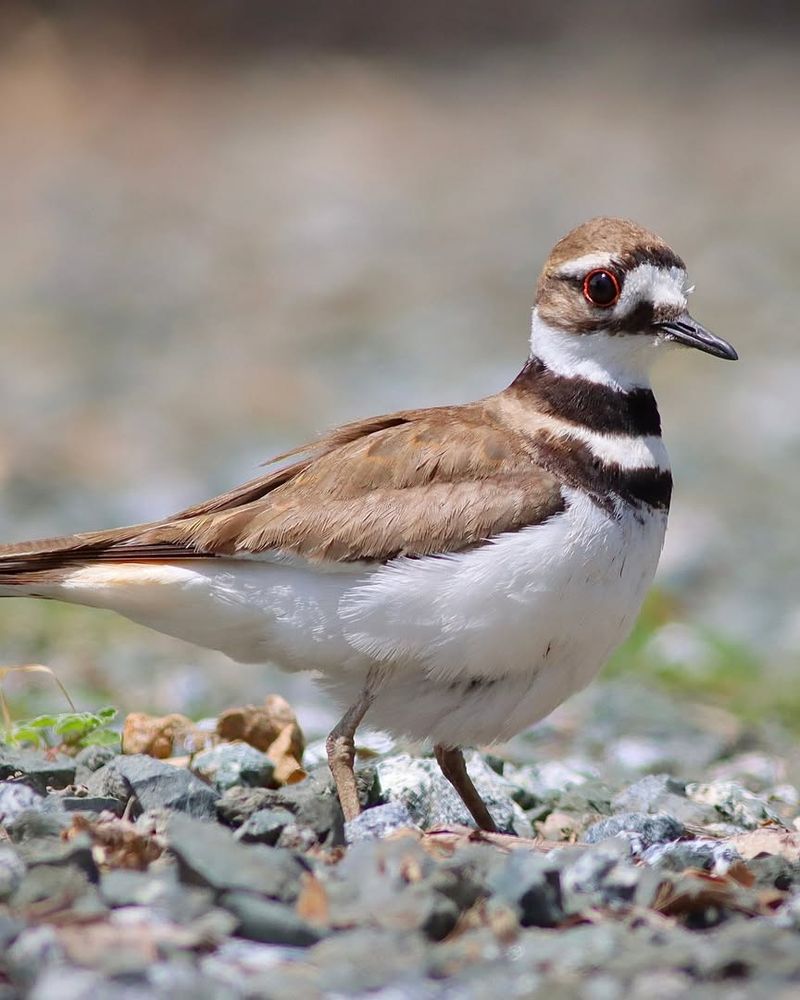
Loud, fast, and nearly impossible to overlook, the Killdeer announces its own arrival with a piercing “kill-dee” cry that echoes across open fields and gravel lots. This energetic shorebird does not need a beach or a lakeside to feel at home.
Killdeer are perfectly happy nesting on gravel driveways, airport edges, farm fields, and parking lot margins, which makes them one of the most widely noticed spring arrivals anywhere in Michigan.
What makes the Killdeer especially interesting is its double black chest band, a feature that sets it apart from most other shorebirds at a glance. Males and females look nearly identical, and both are fiercely protective of their nesting sites.
If you ever get too close to a Killdeer nest, you might witness their famous broken-wing display, where the bird drags one wing along the ground to lure you away from its eggs.
In Michigan, Killdeer commonly return from early March through late March, especially in the southern parts of the state where snow melts earliest. Open, muddy, or gravelly areas are prime spots to look for them shortly after winter begins releasing its hold.
Farmers and rural residents often notice them in freshly tilled fields before most other spring birds have shown up.
Spotting a Killdeer running across a muddy lot in early March is one of those small but genuinely exciting signs that Michigan is waking back up for another beautiful season.
5. Sandhill Crane
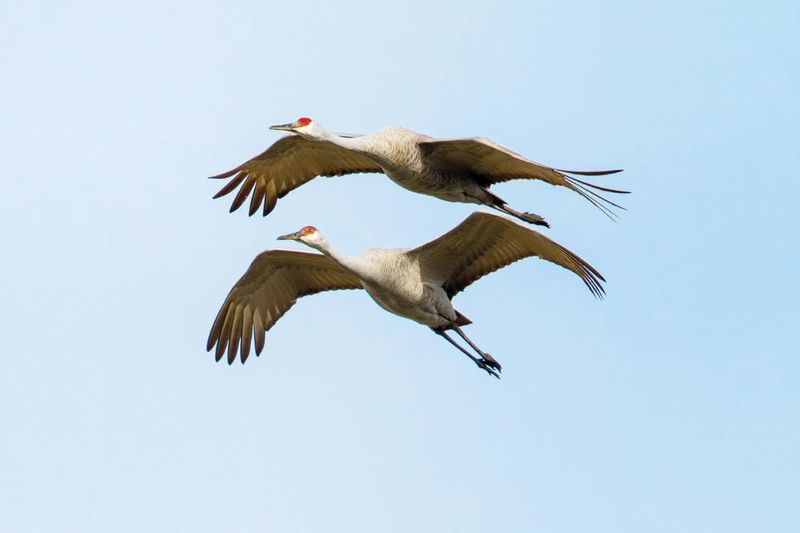
There is nothing quite like hearing the rattling, bugling call of a Sandhill Crane rolling across an open Michigan landscape on a crisp March morning. These are big, ancient-looking birds, standing nearly four feet tall with a wingspan that can reach six feet or more.
Their return to Michigan each spring feels genuinely dramatic, and once you hear that wild, prehistoric call echoing overhead, you will never forget it.
Sandhill Cranes spend their winters in the southern United States, particularly in Florida, Georgia, and along the Gulf Coast. As days grow longer and temperatures begin rising, they start the long journey back north toward their Michigan breeding grounds.
Wetlands, flooded farm fields, and open meadows are the first places to check when you suspect cranes might be passing through your area.
In Michigan, Sandhill Cranes typically begin appearing from early March through late March, often moving in pairs or small flocks.
Watching them perform their elaborate dancing displays, where they bow, jump, and spread their wings, is an absolutely unforgettable sight.
Certain spots in southern Michigan, including areas around Calhoun County and Washtenaw County, are known for attracting large concentrations of cranes during spring migration. Binoculars and a little patience are all you need to enjoy them.
Pulling over on a rural road to watch a pair of cranes feeding in a misty field is one of those pure Michigan spring moments that feels timeless and completely worth the stop.
6. Tree Swallow
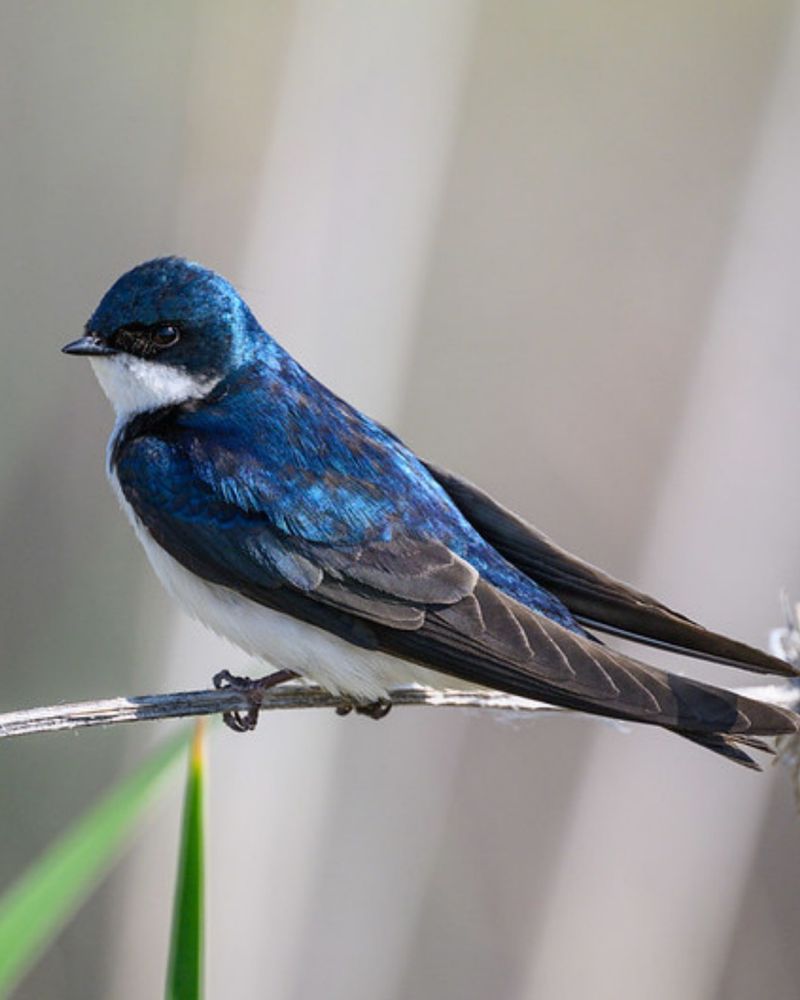
When Tree Swallows start swooping low over Michigan’s lakes and marshes in late March, you know the season has truly shifted.
These sleek, fast-flying birds have an almost metallic blue-green shimmer on their backs that catches the light beautifully, making them one of the most visually striking early spring arrivals in the state.
Watching a group of Tree Swallows twisting and diving over open water is one of those scenes that never gets old.
Tree Swallows are insect eaters, and their return to Michigan depends almost entirely on the availability of flying insects near open water.
They are among the hardiest of the swallow family and can handle a cold snap better than most, partly because they can supplement their diet with small berries when insects are temporarily scarce.
This flexibility allows them to push north earlier than many other insect-eating species.
In southern Michigan, Tree Swallows typically arrive from late March through early April, gravitating toward lakes, ponds, marshes, and rivers where insects hatch first.
Putting up nest boxes near open water is one of the best ways to attract nesting pairs to your property.
Boxes mounted on poles over water or at the edge of a field near a pond work especially well. Seeing a pair of Tree Swallows investigate a nest box on a bright April morning is a sure sign that Michigan spring is not just arriving but truly settling in for good.