This Colorful Hummingbird Becomes Active Around Tucson, Arizona In Spring
As spring settles across Tucson, one small bird begins appearing more often in desert gardens and neighborhoods. A flash of color zips past flowering plants, pauses briefly at a bloom, and then disappears just as quickly.
Hummingbirds are some of the most fascinating visitors Arizona yards can have, and this particular species is known for its striking colors and energetic flight.
During the spring season, these tiny birds become more active around Tucson as they search for nectar and insects. Gardens with blooming plants, feeders, and a few quiet perches can quickly catch their attention.
It does not take much for a yard to become a regular stop once the conditions feel right.
For many Arizona gardeners and bird lovers, spotting this colorful hummingbird is one of those small seasonal moments that makes spring feel fully underway in the Sonoran Desert.
1. Costa’s Hummingbird Starts Appearing More Often In Spring
Spring flips a switch for Costa’s Hummingbirds around Tucson, and suddenly they are everywhere. As early as February and into April, males begin staking out territory, zipping between flowering shrubs and calling out with their high-pitched whistles.
Spotting one feels like finding a tiny jewel in the desert landscape.
Costa’s Hummingbirds are built for the Sonoran Desert. Unlike some other species that only pass through, these birds actually breed in the region, which means spring is prime time to observe their full range of behaviors.
They are not shy, and if you have the right plants in your yard, they will find you quickly.
Around Tucson, they tend to favor open desert scrub and suburban gardens with native flowering plants. Chuparosa and fairy duster are two plants that consistently draw them in.
If you have either of these growing, watch closely during morning hours when feeding activity peaks.
Costa’s Hummingbirds are smaller than a lot of people expect. Males weigh barely more than a penny, yet they are fiercely territorial and will chase off birds much larger than themselves.
Watching a male defend his favorite flower patch is genuinely entertaining.
Spring is also when their courtship flights happen. Males fly in steep, looping arcs to impress females, making a sharp whistling sound at the bottom of each dive.
Catching one of these displays in your own Tucson backyard is one of those moments that reminds you how remarkable the desert really is.
2. Males Display Their Bright Purple Crown And Throat
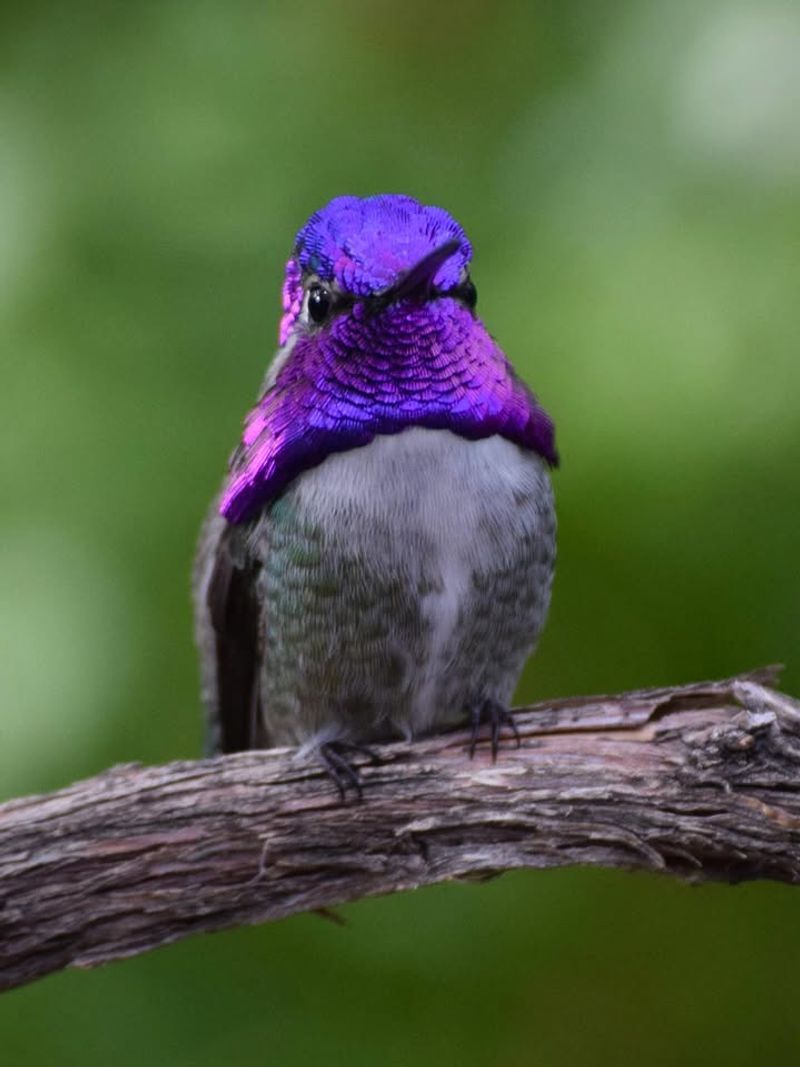
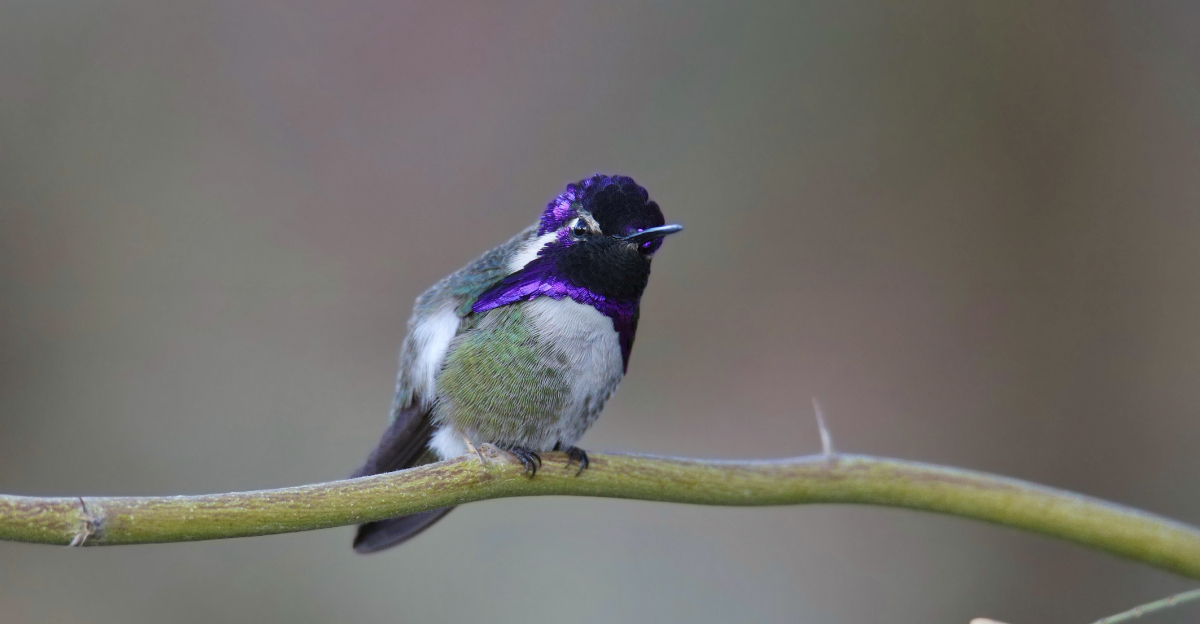
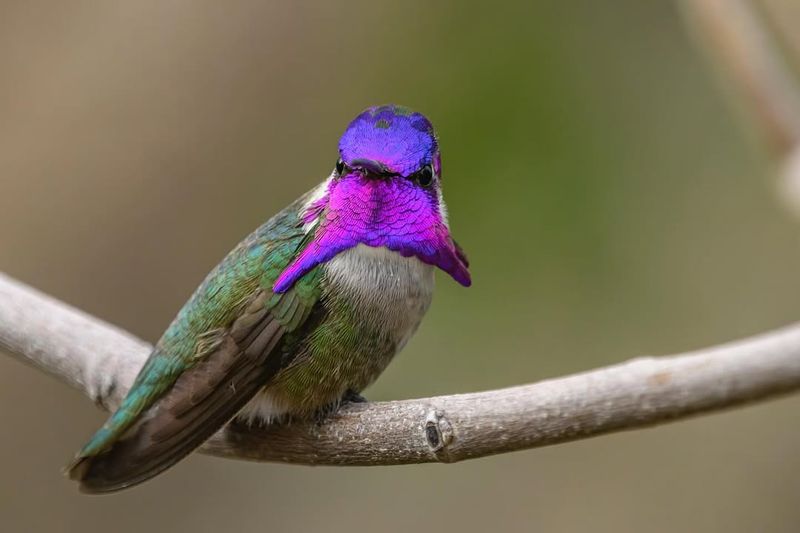
Few birds in North America can match the color of a male Costa’s Hummingbird in full light. His crown and throat feathers, called a gorget, glow in shades of deep violet and electric purple that shift depending on the angle of the sun.
In flat light, those feathers can look almost black, but catch them at the right moment and the color is absolutely electric.
What makes the gorget extra striking is how far the feathers extend down and outward on both sides of the throat. Unlike most hummingbirds where the color stays close to the chin, Costa’s males have gorget feathers that flare out like a wide collar.
Your Arizona Garden Changes Every Week. Your Plan Should Too.
Gardening in Arizona changes quickly throughout the season. Every Friday you’ll receive a simple weekly plan showing exactly what to plant, prune, fertilize, harvest, and protect so you never miss the right timing.
It gives them a look that is completely their own.
Females are much more understated, with grayish-white underparts and soft greenish backs. Honestly, telling females apart from other hummingbird species in Tucson takes practice.
But once you have seen a male Costa’s in good light, you will not forget it.
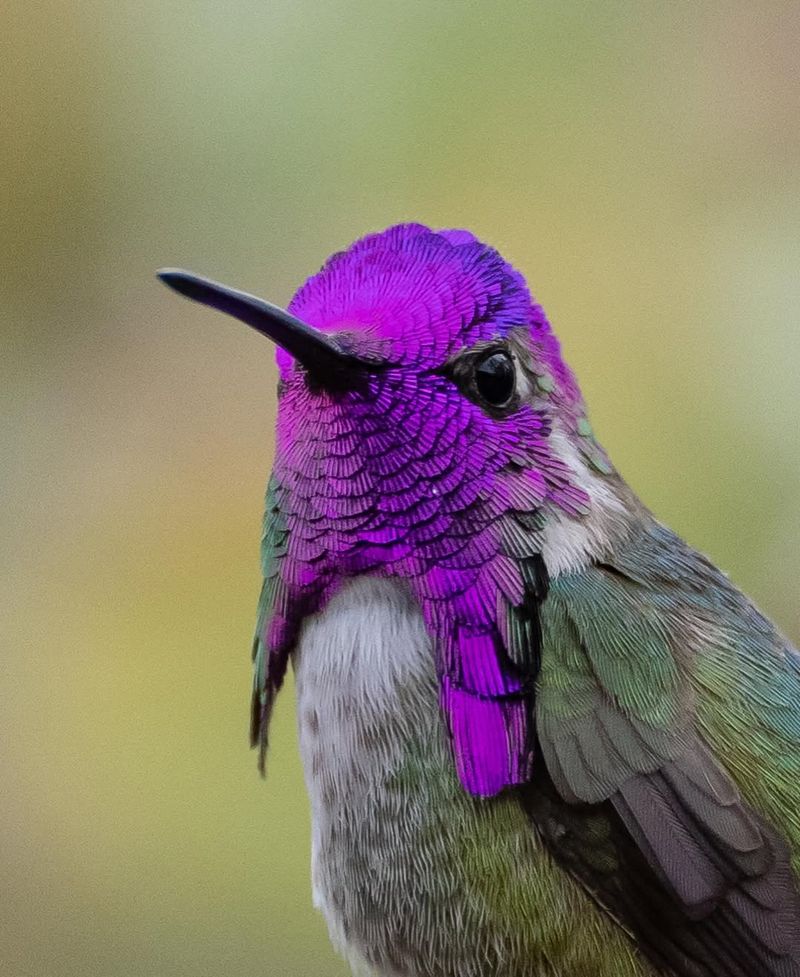
Color intensity in hummingbirds is not from pigment the way it is in most birds. Their feathers contain microscopic structures that refract light, producing what scientists call structural coloration.
So the purple you see is really light bending through tiny air pockets in the feather barbules.
On bright Tucson mornings, males often perch on exposed branches and face the sun directly, almost like they are showing off. Keeping a pair of binoculars nearby during spring is worth it just for these moments.
3. Plant Nectar Rich Flowers To Attract Them
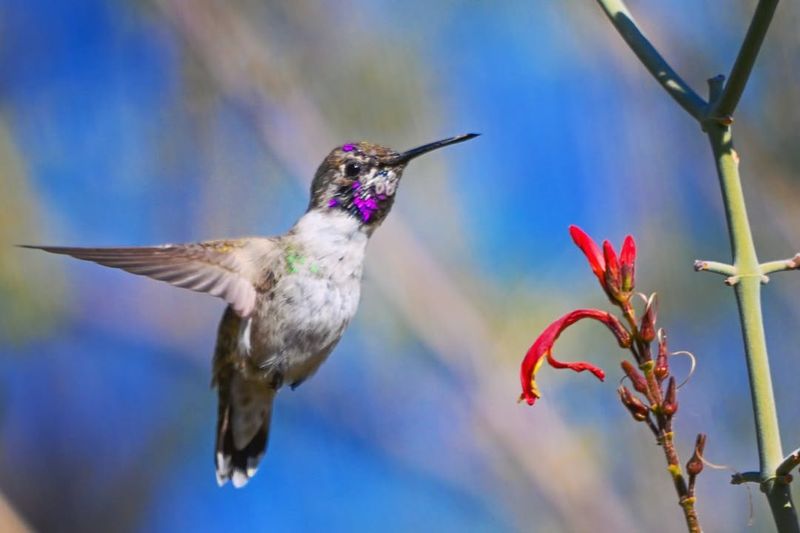
Planting the right flowers is honestly the single most effective thing you can do to bring Costa’s Hummingbirds into your Tucson yard.
Native plants are far more reliable than ornamental ones because they have evolved alongside these birds and produce nectar in quantities and timing that match hummingbird needs perfectly.
Chuparosa is a top pick. Its tubular red-orange flowers bloom heavily in late winter and early spring, right when Costa’s Hummingbirds are most active in the Tucson area.
Fairy duster is another excellent choice, producing soft pink powder-puff blooms that hummingbirds visit repeatedly throughout the day.
Penstemon species, especially desert penstemon, are worth adding to any hummingbird garden. Their tall spikes of tubular flowers provide both nectar and a visual landing signal for passing birds.
Ocotillo is dramatic and effective too, with bright red blooms that appear just as spring migration picks up.
Placement matters more than most people realize. Planting in clusters rather than spreading single plants around gives hummingbirds a reason to stay and forage longer.
A dense patch of chuparosa near a window makes for incredible watching without disturbing the birds at all.
Skip the hybrid or double-flowered varieties often sold at big box stores. Breeders sometimes prioritize looks over function, and those flowers frequently produce little to no nectar.
Stick with straight species or locally sourced native plants from Tucson-area nurseries that specialize in Sonoran Desert plants. Your hummingbirds will notice the difference.
4. Hummingbird Feeders Can Provide Extra Nectar
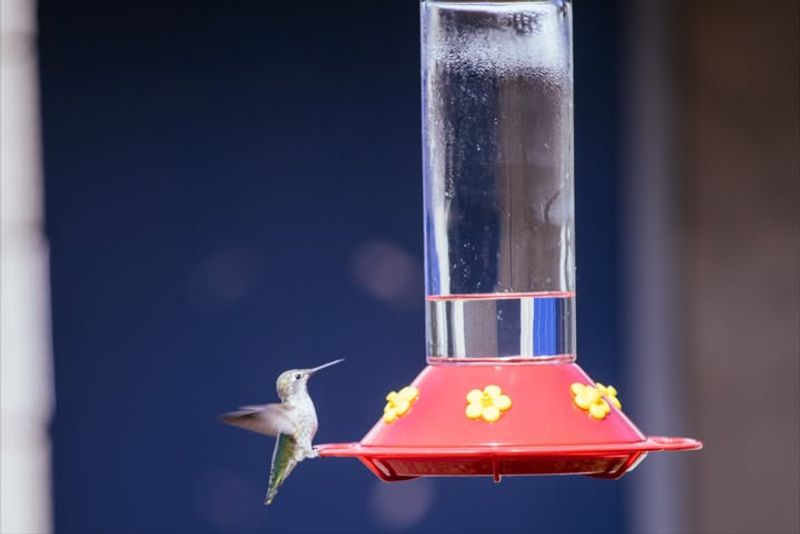
A good feeder can absolutely extend the time Costa’s Hummingbirds spend in your Tucson yard, especially during stretches when fewer flowers are blooming.
Feeders work best as a supplement to native plants rather than a replacement, but they genuinely help bridge gaps in the natural nectar supply.
Making your own nectar is straightforward. Combine one part plain white granulated sugar with four parts water and stir until fully dissolved.
No food coloring needed, and definitely skip honey, brown sugar, or artificial sweeteners since those can cause health problems for hummingbirds. Red feeders attract attention on their own without any dye in the water.
Placement around your Tucson property makes a real difference. Shade during the hottest part of the afternoon slows fermentation, which keeps nectar fresh longer.
Hanging feeders near native plantings rather than in the middle of open space also helps, since hummingbirds feel more secure feeding close to cover.
Cleaning the feeder every two to three days during warm weather is not optional. Tucson heat causes nectar to ferment and grow mold faster than most people expect.
A cloudy or yellowish solution means it is already past its prime. Rinse thoroughly with hot water, and use a small bottle brush to reach inside the ports.
Multiple feeders spaced apart can reduce territorial squabbles. Costa’s males are notoriously aggressive about defending feeding spots, so spreading resources around your yard gives more birds a fair chance to feed without constant chasing.
5. Shallow Water Sources Encourage More Visits
Water is something a lot of people forget when setting up a hummingbird-friendly yard, and it can make a surprisingly big difference in how often Costa’s Hummingbirds stop by.
Around Tucson, where spring temperatures climb fast and the desert air stays dry, a reliable water source is genuinely attractive to wildlife of all kinds.
Hummingbirds do not bathe the way robins or sparrows do. They prefer to fly through a fine mist or land briefly in moving shallow water rather than splash around in a traditional bird bath.
A standard deep bird bath with still water is mostly useless to them. What works much better is a mister or dripper attachment that creates a light spray just above the water surface.
Misters designed for bird gardens are inexpensive and easy to attach to a garden hose. Set one up near a low shrub or native plant where hummingbirds already spend time, and they will start using it within a few days once they figure out it is there.
Morning hours tend to see the most activity.
Keep the water source clean. Algae builds up fast in Tucson’s spring sun, and stagnant water can attract mosquitoes.
Emptying and rinsing the basin every couple of days keeps things fresh without much effort.
Adding a water feature near your existing feeders or native plants creates a complete habitat setup. Costa’s Hummingbirds that have reliable food and water in one spot will return consistently through the entire spring season and sometimes beyond.
6. Avoid Pesticides That Remove Their Insect Food
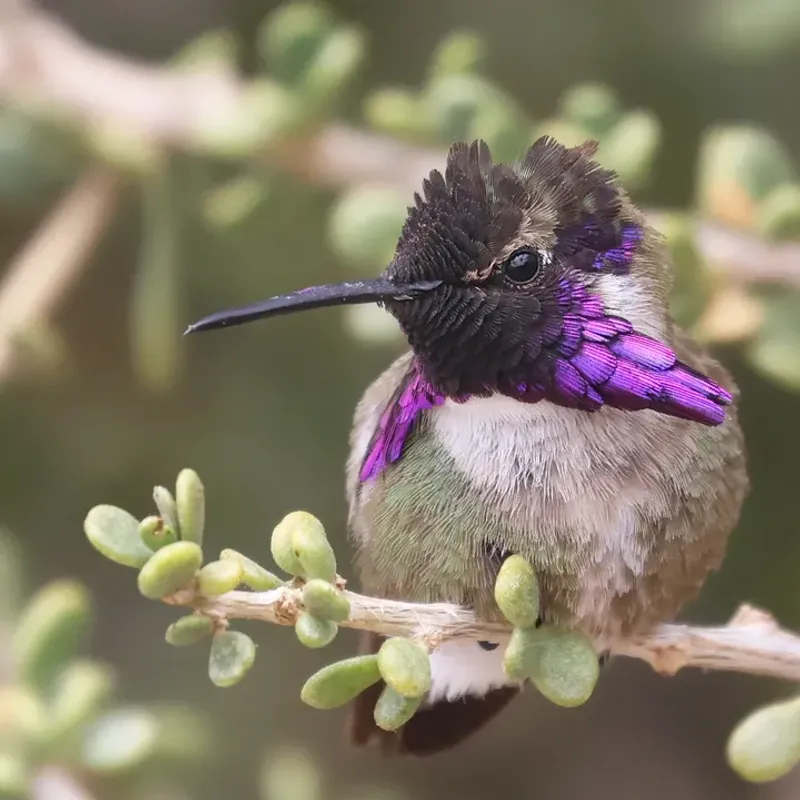
Nectar gets most of the attention when people talk about feeding hummingbirds, but insects are just as important to Costa’s Hummingbirds.
Protein from small bugs, spiders, and gnats fuels muscle development, supports breeding, and is especially critical for feeding growing nestlings.
A yard loaded with flowers but sprayed heavily with pesticides can actually be a poor habitat despite looking great on the surface.
Broad-spectrum insecticides, including many common garden sprays, wipe out the tiny invertebrate community that hummingbirds depend on. Aphids, fungus gnats, small beetles, and spiders are all fair game for a foraging Costa’s.
Eliminating that food source forces birds to spend more energy searching elsewhere instead of settling into your Tucson yard.
Systemic pesticides are particularly problematic because they get absorbed into plant tissue. When hummingbirds probe flowers treated with systemics, they can ingest residues along with the nectar.
Research on pollinators has raised real concerns about this, and hummingbirds face similar risks even if the science is less developed than it is for bees.
Going pesticide-free does not mean surrendering your garden to pests. Encouraging natural predators like ladybugs, lacewings, and parasitic wasps keeps problem insects in check without chemicals.
Native plants also tend to handle local pest pressure better than non-native ornamentals.
Around Tucson, a healthy desert garden with native plants rarely needs intervention anyway. Letting the ecosystem balance itself out creates exactly the kind of insect-rich environment that keeps Costa’s Hummingbirds coming back spring after spring.
7. Small Perches Give Hummingbirds A Place To Rest
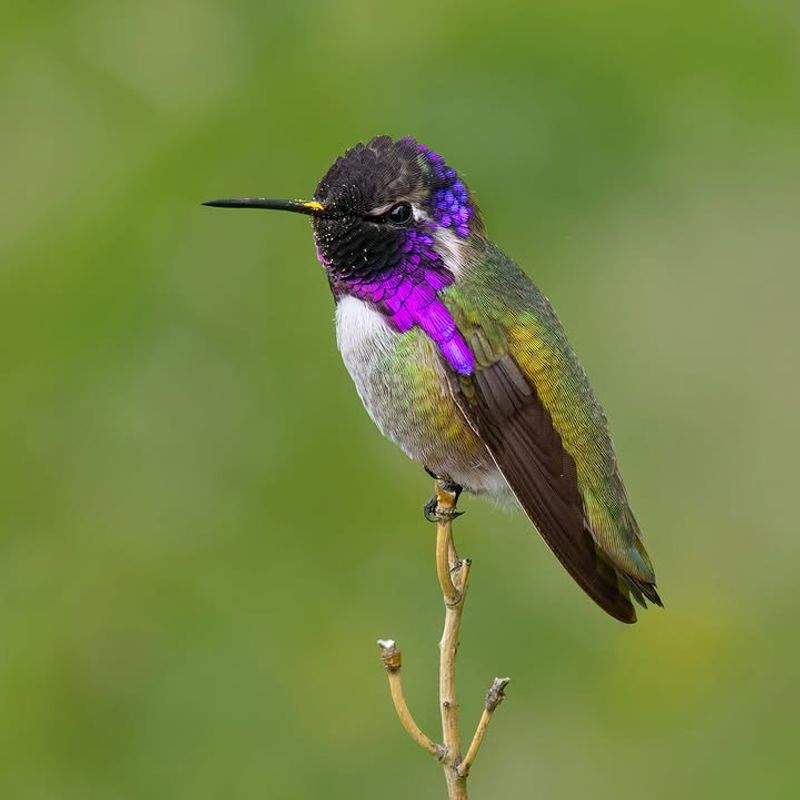
Hummingbirds spend more time sitting than most people realize. Between feeding flights, males especially like to park themselves on a high, exposed perch where they can scan their territory and watch for rivals.
A yard with no suitable perches is a yard that hummingbirds pass through rather than settle into.
Natural perches work best. Bare branch tips, dry twigs at the top of a shrub, or the upper stems of ocotillo are all favorites around Tucson.
Costa’s males tend to choose spots with a clear line of sight in multiple directions, so an exposed perch above surrounding vegetation is ideal rather than one buried in foliage.
Leaving some older branches on native shrubs instead of pruning everything back tight serves a real purpose.
What looks untidy to some gardeners is actually prime hummingbird real estate. A single bare twig sticking up above a palo verde or desert willow can become a favorite lookout post that one male uses repeatedly all season.
Thin perches are preferred over wide ones. Hummingbird feet are small and surprisingly strong, designed for gripping narrow branches rather than flat surfaces.
Watching one sit completely still for several minutes between bursts of frantic activity gives you a whole new appreciation for how they manage their energy.
Adding a few simple bamboo stakes or thin decorative branches near your feeders and flowers gives Costa’s Hummingbirds the resting infrastructure they need.
Small adjustments like this can turn a decent hummingbird yard in Tucson into a genuinely great one.