8 Small Trees That Are A Great Fit For Smaller Arizona Backyards
Not every Arizona backyard has room for a large shade tree. Smaller yards, patios, and compact landscapes often need trees that stay manageable while still bringing beauty and character to the space.
The right small tree can add height, seasonal color, and light shade without overwhelming the yard or crowding nearby plants.
Arizona’s climate also plays a big role when choosing trees. Intense sun, dry air, and long hot summers mean the best choices are trees that naturally handle desert conditions while staying relatively compact as they grow.
Fortunately, there are several trees that fit perfectly into smaller Arizona backyards. These trees stay more controlled in size while still offering attractive blooms, interesting foliage, or graceful structure that can make a yard feel more complete.
1. Desert Willow Produces Orchid-Like Flowers On A Small Tree
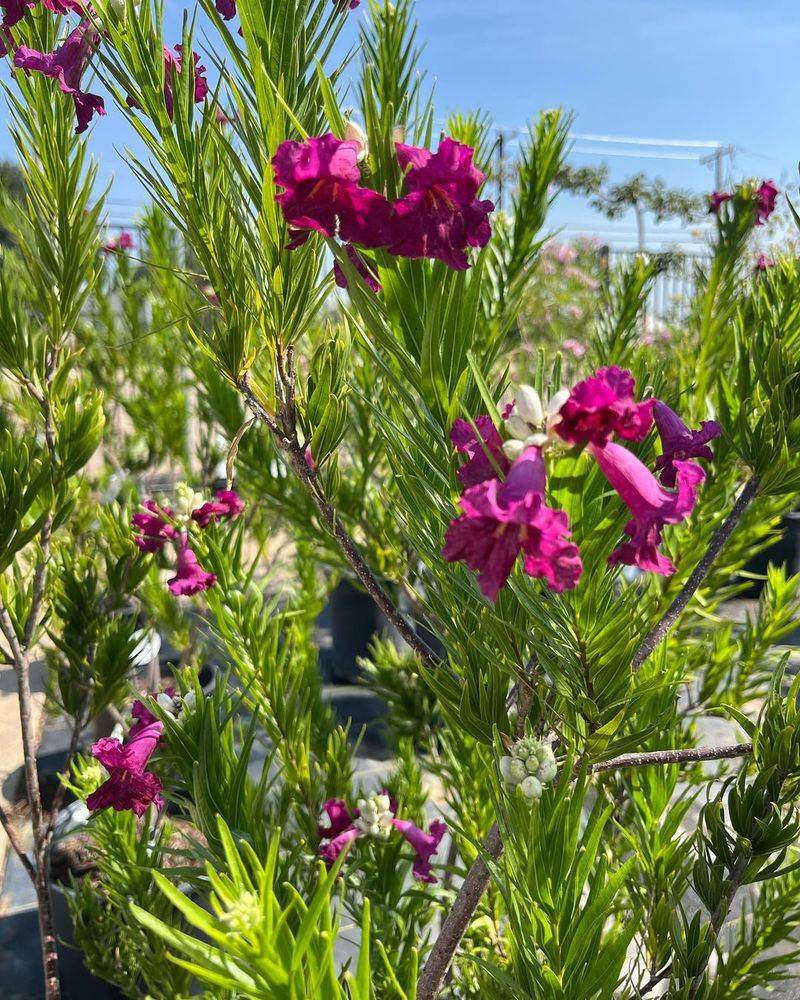
Few trees put on a flower show quite like the Desert Willow.
From late spring through early fall, it pushes out waves of trumpet-shaped blooms in shades of pink, lavender, and deep purple that look straight out of a tropical garden catalog — except this tree is completely at home in the Arizona heat.
Chilopsis linearis stays relatively small, usually topping out between 15 and 25 feet depending on how much water it gets. In a compact backyard, you can keep it trimmed closer to the lower end without stressing the tree.
Hummingbirds absolutely swarm it during bloom season, which is a bonus if you enjoy a little backyard wildlife action.
Planting it in full sun is non-negotiable — partial shade leads to weak growth and fewer flowers. It handles alkaline soils well, which is great news for most Arizona gardeners who deal with caliche and rocky ground.
Water it deeply but infrequently during its first couple of summers, then back off significantly as it settles in. Avoid overwatering because soggy roots are its biggest weakness in the low desert.
Pruning in late winter shapes it nicely and encourages a strong flush of new blooms when warm weather returns. For a small yard in Arizona, this tree punches well above its weight class in both beauty and toughness.
2. Texas Mountain Laurel Forms A Compact Evergreen With Fragrant Blooms
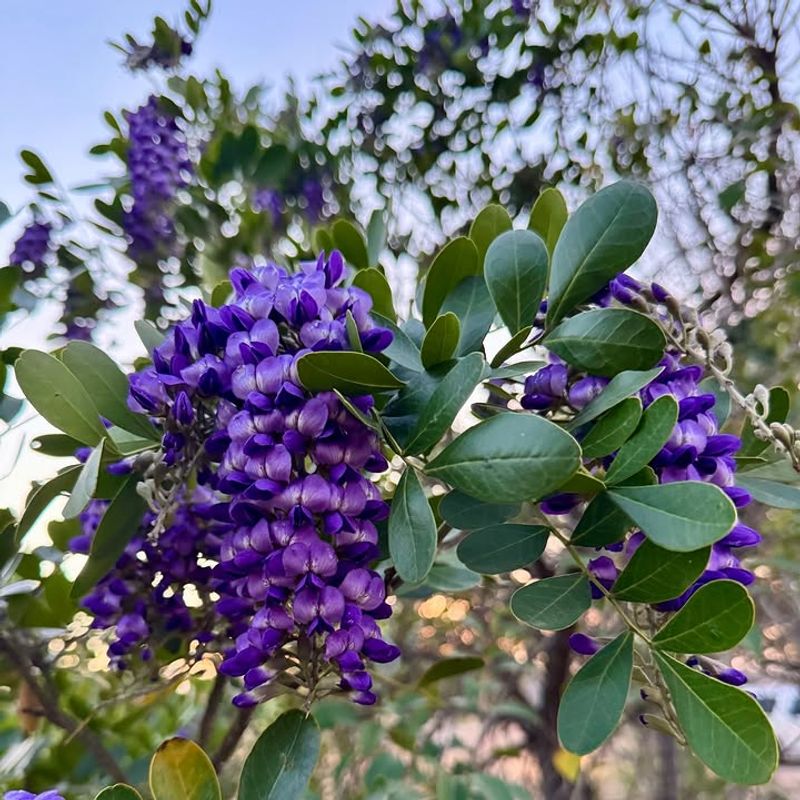
Walk past a Texas Mountain Laurel in full bloom and you might actually stop and look around for a grape soda stand.
That sweet, unmistakable scent from its purple flower clusters is one of the most recognizable fragrances in Arizona spring gardens, and it hits you from several feet away.
Dermatophyllum secundiflorum grows slowly, which is honestly a feature rather than a flaw when you have limited backyard space. Expect it to reach around 10 to 15 feet over many years, keeping a naturally tidy, rounded shape that rarely needs heavy pruning.
Its dark, glossy evergreen leaves look sharp all year, even during the driest months when other plants start looking rough.
Full sun is where it performs best, and it handles reflected heat from walls and pavement without complaint — something many Arizona homeowners deal with in tight backyard spaces. Drainage matters a lot with this tree.
Your Arizona Garden Changes Every Week. Your Plan Should Too.
Gardening in Arizona changes quickly throughout the season. Every Friday you’ll receive a simple weekly plan showing exactly what to plant, prune, fertilize, harvest, and protect so you never miss the right timing.
Plant it in well-draining soil and avoid spots where water tends to pool after monsoon storms. Watering deeply every couple of weeks during summer keeps it healthy without promoting overly fast, weak growth.
One thing worth knowing: the bright red seeds inside the pods are toxic, so keep that in mind if pets or young children spend time in your yard. Beyond that concern, it is a genuinely tough, attractive tree for Arizona landscapes.
3. Desert Museum Palo Verde Provides Light Shade Without A Huge Canopy
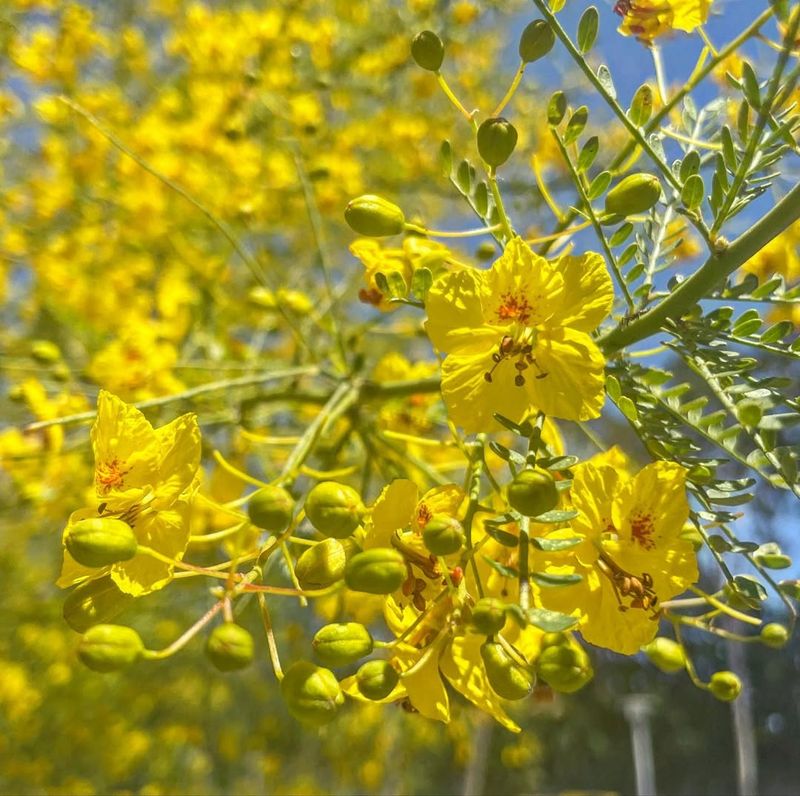
Ask almost any Arizona landscape pro which small tree they recommend most often, and the Desert Museum Palo Verde comes up almost every time.
It is a hybrid variety that took the best traits of several native palo verdes — the bright yellow spring flowers, the striking green bark, the drought toughness — and left out the thorns that made older varieties a pain to deal with near walkways and patios.
It stays in the 15 to 20 foot range, with an open, airy canopy that filters sunlight rather than blocking it completely. That matters a lot in smaller Arizona yards where you still want to grow something underneath the tree without dealing with deep shade.
Succulents, low-growing shrubs, and native grasses all do fine beneath its canopy.
Spring bloom season is genuinely spectacular — the entire tree lights up in golden yellow and the flowers attract huge numbers of bees and other pollinators. It drops petals and seed pods, so expect a bit of cleanup, but nothing overwhelming.
Sandy, rocky, or caliche-heavy soils are all fine. Deep watering every few weeks during the hottest stretch of summer helps it stay vigorous and green.
Once it has had a season or two to anchor itself in your yard, it handles extended dry spells with very little help. For smaller Arizona backyards, the canopy scale is just about right.
4. Anacacho Orchid Tree Brings Showy Spring Flowers To Small Yards
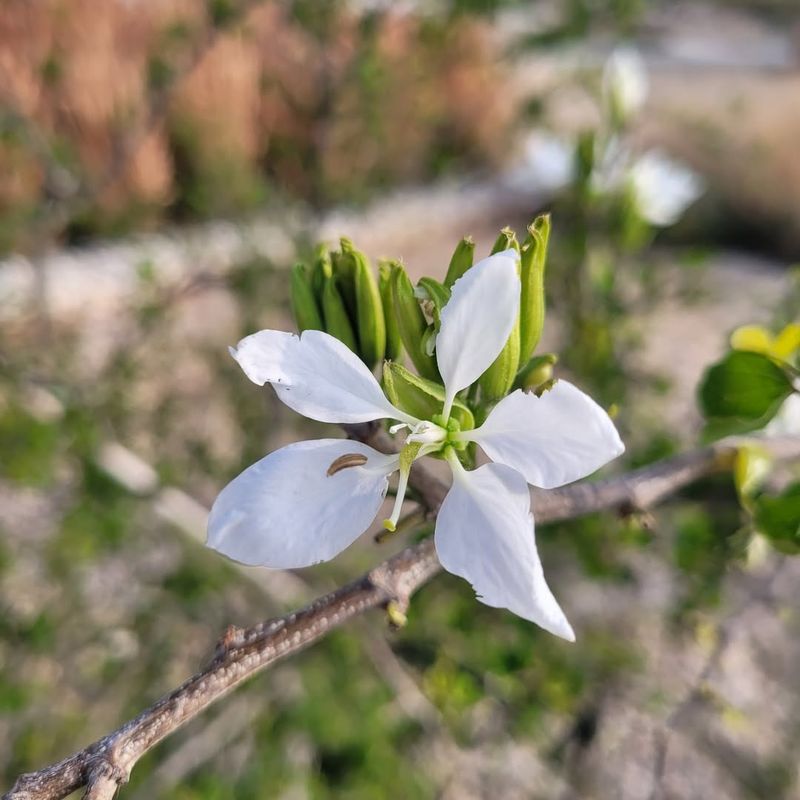
Not every flowering tree that thrives in Arizona looks like it belongs in the desert.
Anacacho Orchid Tree is a perfect example — its delicate white and soft pink blooms look like something you would find in a tropical greenhouse, yet it handles Arizona heat and cold snaps with real toughness.
Bauhinia lunarioides stays compact, typically reaching 8 to 12 feet, making it genuinely suited for tight spaces near patios, fences, or along narrow side yards.
The butterfly-shaped leaves are distinctive even when the tree is not in bloom, giving it visual interest throughout the growing season.
Spring is when it really shines, covering itself in orchid-like flowers that attract bees and butterflies in good numbers.
Full sun placement gets the best results, and it handles the intense afternoon exposure that bakes most southern and western-facing Arizona yards without showing much stress.
It is thornless, which makes it a more comfortable choice near seating areas or anywhere kids and pets roam.
Soil drainage is important — like many desert-adapted trees, it does not tolerate standing water around its roots. Water it regularly during its first season to help it establish, then ease off as it matures.
Trimming lightly after the main bloom cycle keeps the shape tidy without sacrificing next season’s flowers. For a small Arizona backyard that needs color without bulk, this tree delivers consistently.
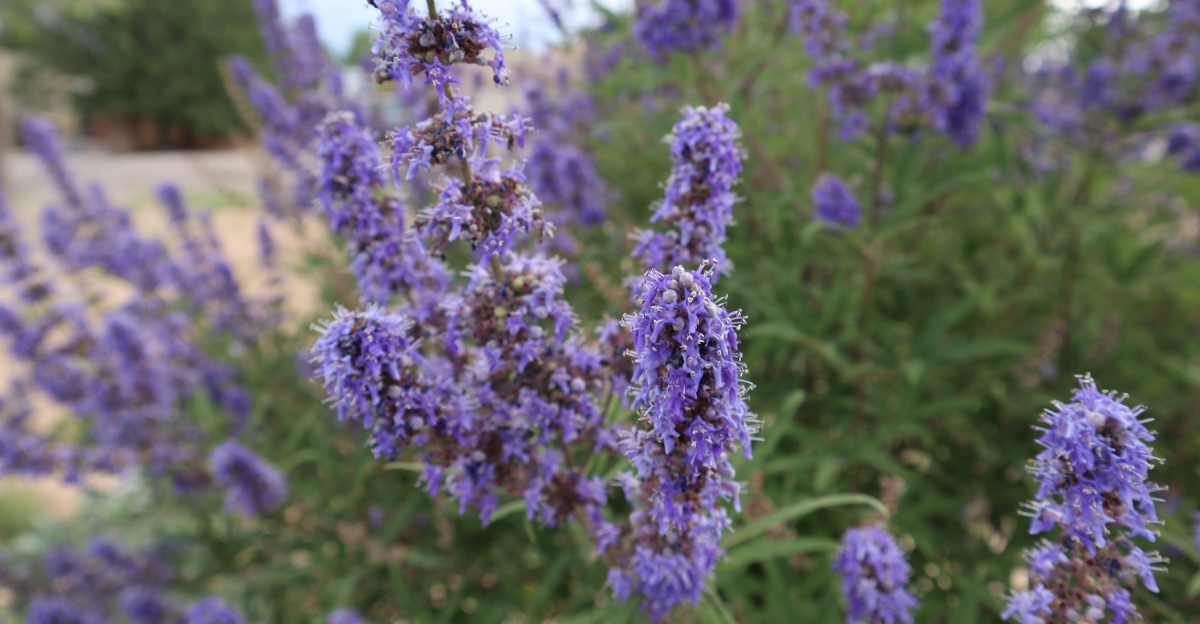
5. Chaste Tree Produces Purple Flower Spikes In Warm Climates
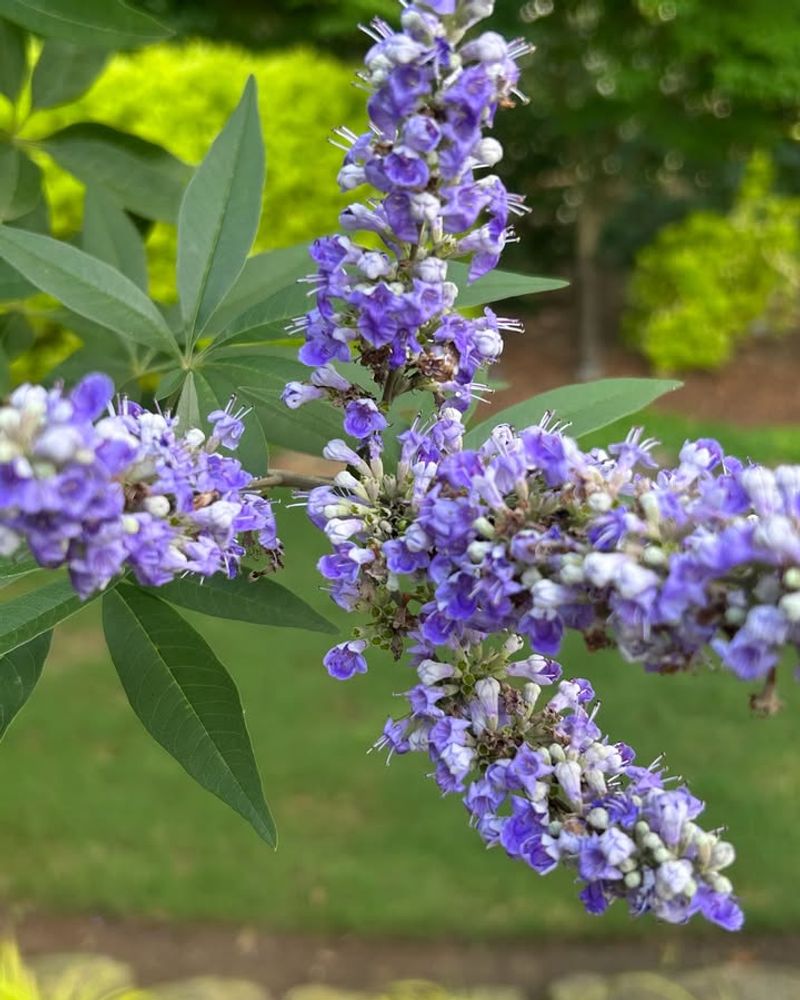
Purple flower spikes shooting up in the middle of an Arizona summer? That is exactly what Chaste Tree delivers, and it does it during a season when most flowering plants have already called it quits for the year.
Vitex agnus-castus blooms heavily from late spring into summer, sometimes pushing out a second flush of color if you cut the spent flower stalks back.
It grows as a large shrub or small multi-trunk tree, usually reaching 10 to 20 feet depending on how you train it and how much water it receives.
In smaller Arizona backyards, keeping it pruned as a multi-stem tree in the 10 to 15 foot range works well and gives it a graceful, open shape.
The gray-green foliage has a pleasant herbal scent when you brush against the leaves.
Pollinators genuinely love it — butterflies and bees pile onto the flower spikes throughout the bloom season, making it one of the more wildlife-friendly choices for a small yard.
It prefers well-draining soil and performs best with moderate water during the hottest months.
Overwatering leads to overly fast, floppy growth that weakens the branch structure. Prune it back fairly hard in late winter to encourage a full, dense canopy and a heavy flower display.
It handles the heat of the Phoenix and Tucson areas well, and light frost does not set it back much. A reliable performer for warm Arizona climates.
6. Sweet Acacia Adds Fragrant Yellow Spring Blooms
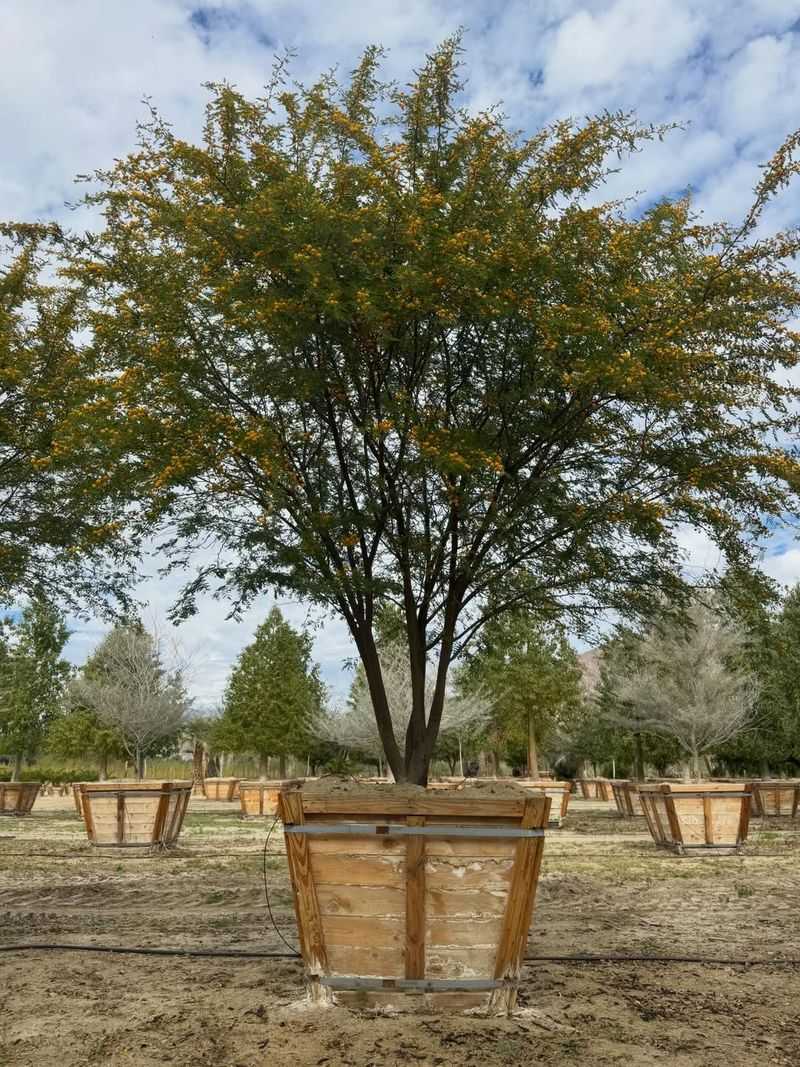
Sweet Acacia has one of the most distinctive fragrances of any tree you can grow in Arizona.
In late winter and early spring, those small, bright yellow puffball flowers release a honey-sweet scent that drifts across the yard and actually makes you want to spend time outside before the heat fully kicks in.
Acacia farnesiana grows to about 15 to 20 feet with a wide, spreading canopy that provides decent filtered shade. In a compact Arizona backyard, it works best when planted with some space around it so the natural arching branch structure can develop properly.
Be aware that it has thorns, so placement away from high-traffic walkways and play areas is smart planning.
It is deeply drought-adapted and thrives in the rocky, alkaline soils common across much of Arizona. Established trees handle long dry stretches without much trouble, though a deep watering every few weeks during peak summer heat keeps the foliage looking its best.
The feathery, fine-textured leaves give the canopy a soft appearance that contrasts nicely against block walls and gravel mulch. Birds use it heavily for nesting cover, and the flowers draw in bees and other pollinators reliably each spring.
For anyone in the Tucson or Phoenix areas looking for a tough, fragrant tree with real desert character, Sweet Acacia is a strong option that rarely disappoints once it settles into your yard.
7. Little Leaf Cordia Handles Heat While Staying Relatively Small
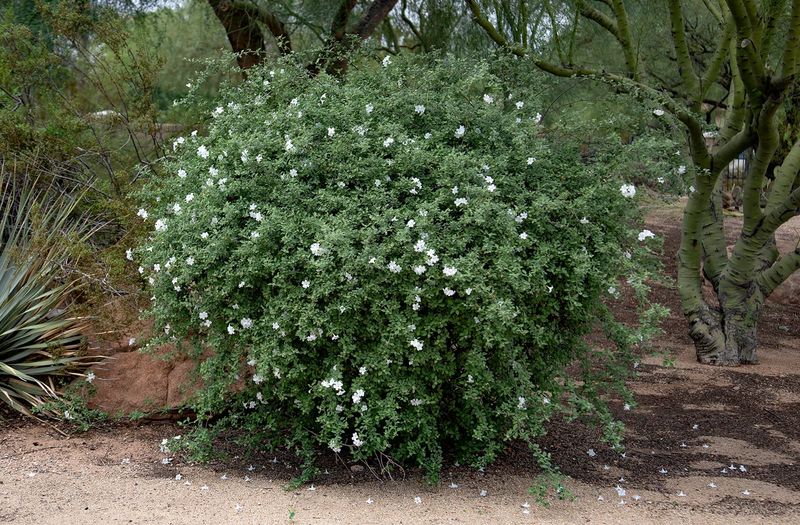
Summer heat in Arizona is relentless, and most trees show it. Little Leaf Cordia does not flinch.
Cordia parvifolia pushes out clusters of small white flowers even during the hottest stretches of July and August, when temperatures in Phoenix and Tucson regularly hit triple digits and most flowering plants have completely shut down.
It stays small — typically 6 to 10 feet tall — which makes it one of the better choices for genuinely tight spaces like narrow side yards, small courtyards, or spots close to a patio where a larger tree would quickly become a problem.
The rough-textured, small leaves give it a rugged, natural look that fits right into a desert garden without looking out of place.
Root systems on this tree tend to be polite, which matters when you are planting near walls, irrigation lines, or existing hardscape. Full sun is where it wants to be, and reflected heat from walls and concrete does not bother it at all.
It handles alkaline and rocky soils without complaint. Water it regularly during the first season to get the roots anchored, then reduce frequency as the tree matures.
Minimal pruning is needed — mostly just removing any crossing or rubbing branches to keep the structure clean.
For small Arizona backyards where space is genuinely limited and heat is extreme, few trees handle those conditions as quietly and reliably as Little Leaf Cordia.
8. Netleaf Hackberry Supports Wildlife And Fits Desert Landscapes
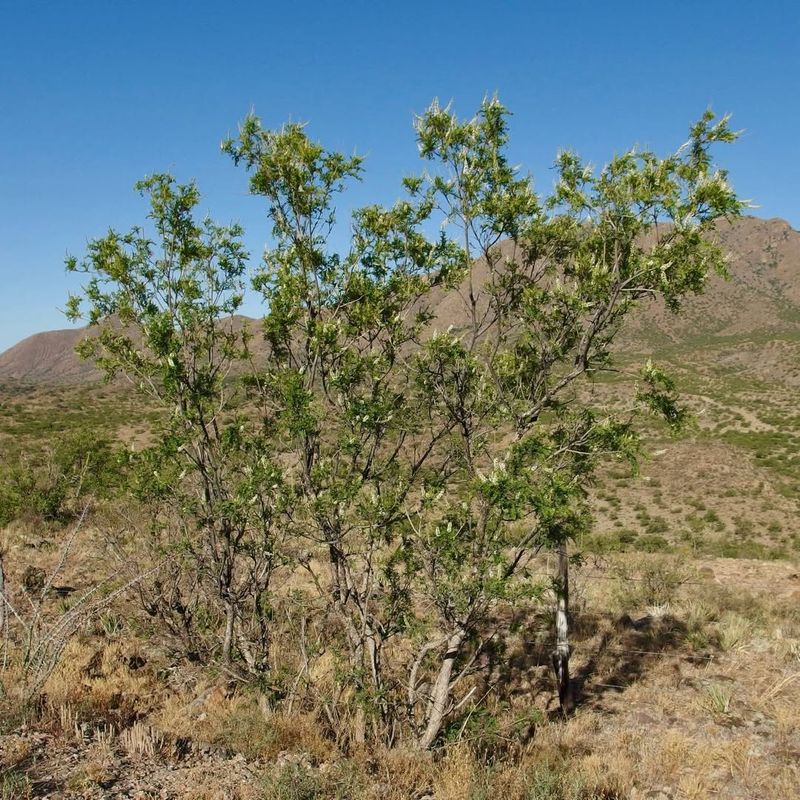
Netleaf Hackberry does not come with flashy flowers or dramatic fall color, but it earns its place in an Arizona backyard through sheer usefulness.
Celtis reticulata is one of the most wildlife-supportive native trees you can plant in the region, producing small fleshy berries that birds — thrashers, robins, cedar waxwings — actively seek out during fall and winter.
It grows to around 20 to 25 feet at most, keeping a modest, spreading form that works well in smaller yards without overwhelming the space. The deeply textured, rough bark gives it a rugged character that looks completely natural in desert surroundings.
Leaves are small and slightly rough to the touch, creating a dense enough canopy to offer real shade during summer afternoons.
One thing that sets it apart from many other Arizona-friendly trees is its tolerance for a wide range of soil types and conditions. Rocky slopes, clay-heavy spots, dry washes — it adapts to all of them without much complaint.
It also handles the monsoon season better than many drought-adapted species, tolerating occasional flooding around the root zone without showing stress. Water it during the first couple of summers to help it establish, then step back and let it do its thing.
Pruning is rarely needed beyond basic shaping in late winter. For anyone in Arizona wanting a native tree that genuinely gives back to the local ecosystem, Netleaf Hackberry is an honest, dependable choice.