8 Perennial Groundcovers That Keep Weeds Out Of Virginia Gardens
Give weeds a few warm, rainy days in Virginia, and they’ll take over a garden bed like they own the place.
Gardeners know the struggle with weeds all too well, especially in the humid Tidewater region and the clay-heavy soils common in central parts of the state. One week your garden beds look tidy, and the next they’re dotted with stubborn plants pushing their way through the soil.
While mulch and hand-pulling can help for a while, many experienced gardeners rely on a more lasting solution: perennial groundcovers. These low-growing plants spread to form thick mats that shade the soil and make it much harder for weeds to take hold.
Even better, they come back year after year with very little effort. If you want a natural way to keep weeds under control while giving your garden beds a fuller look, these perennial groundcovers have become favorites among Virginia gardeners.
1. Creeping Phlox
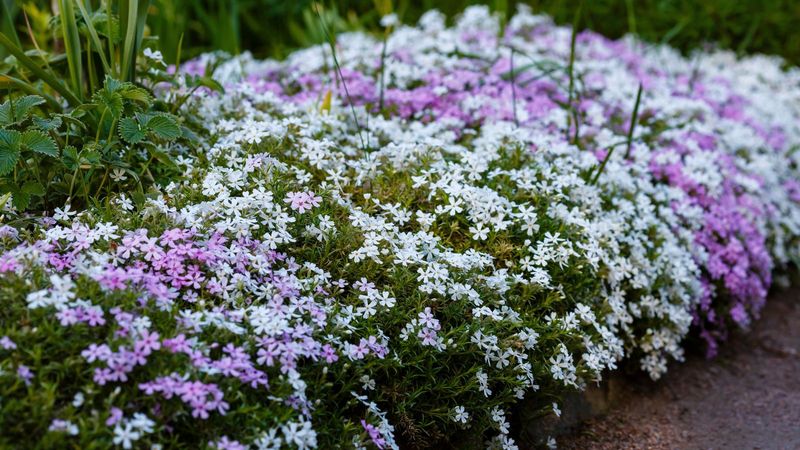
Few plants put on a show quite like creeping phlox does every spring in Virginia. One week your slope looks bare, and the next it is buried under a carpet of pink, purple, or white blooms.
Virginia gardeners absolutely love this plant, and it is easy to see why.
Creeping phlox thrives in the well-drained, slightly acidic soils common across much of Virginia. It handles the hot, humid summers in the Piedmont and the colder winters in the Shenandoah Valley without complaint.
Once established, it spreads steadily and forms a tight mat that smothers weeds before they even get a foothold.
Plant it along slopes, rock gardens, or the front edges of beds where you want a low-maintenance solution. It only grows about six inches tall, so it will never block your other plants.
Trim it lightly after blooming to keep the growth dense and tidy.
Creeping phlox pairs beautifully with ornamental grasses and spring bulbs, making your garden look intentional and polished. It attracts early-season pollinators like bees and butterflies, adding even more value beyond weed suppression.
Virginia Master Gardeners frequently recommend it as a starter groundcover for beginners.
Watering needs are minimal once the roots are established, usually by the second growing season. Avoid heavy clay soils or spots that stay wet after rain, as root rot can become a problem.
With a little patience in year one, creeping phlox rewards you with years of nearly zero maintenance and stunning seasonal color.
2. Liriope Muscari

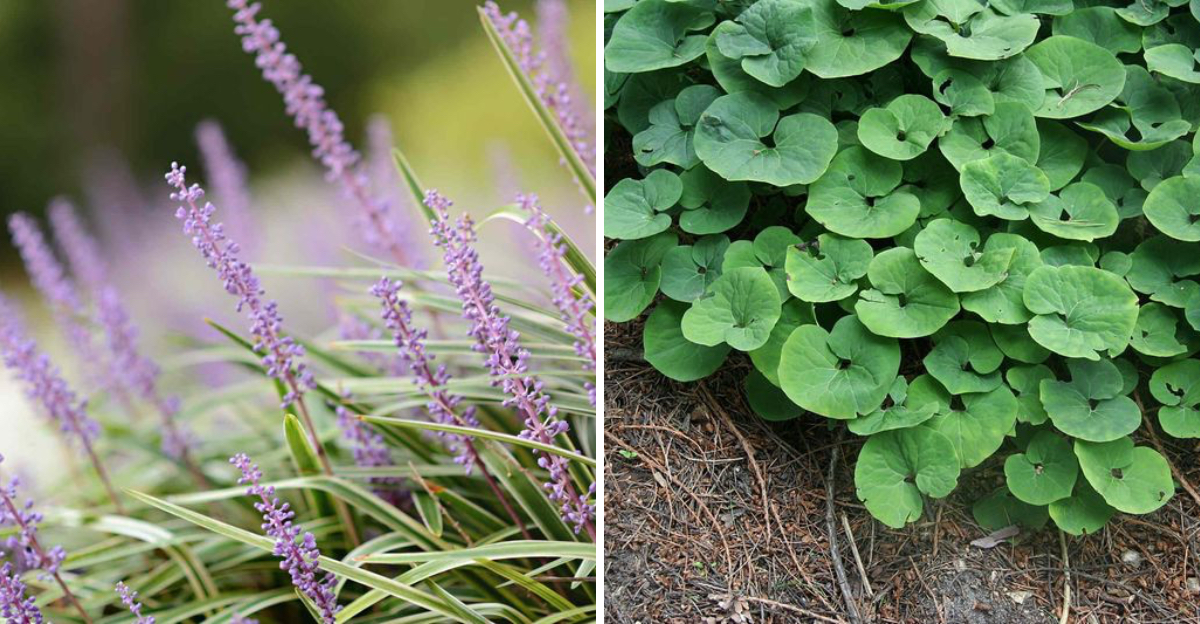
Walk through almost any established Virginia neighborhood and you will notice liriope edging driveways, shading tree bases, and lining walkways.
One species that shows up again and again is Liriope muscari, a dependable groundcover that has earned the trust of gardeners across the state.
Gardeners often call it lilyturf, and once you grow Liriope muscari, it becomes clear why it inspires such loyalty. This plant handles Virginia’s unpredictable weather with ease.
Summer heat, occasional drought, dense shade beneath tall oaks, and even the occasional late frost rarely slow it down. The deep green, grass-like foliage stays attractive through much of the year, making it a valuable choice for low-maintenance landscapes.
Your Virginia Garden Changes Every Week. Your Plan Should Too.
Gardening in Virginia changes quickly throughout the season. Every Friday you’ll receive a simple weekly plan showing exactly what to plant, prune, fertilize, harvest, and protect so you never miss the right timing.
Where Liriope muscari truly stands out is weed suppression.
Its dense clumps gradually form a thick mat that leaves little room for weed seeds to germinate. Once established, beds of liriope often require very little weeding, saving gardeners significant time and effort.
Plant it in masses under trees where grass struggles to grow, or use it to create a clean border along garden beds and walkways. Spacing plants about 12 inches apart allows them to fill in nicely within a couple of growing seasons.
Maintenance is simple.
A single late-winter trim removes old foliage and encourages fresh, vibrant growth in spring.
In late summer, Liriope muscari produces elegant purple flower spikes, followed by small black berries that birds often enjoy during the colder months. This makes it not only practical for gardeners but also beneficial for local wildlife.
For shady spots, erosion-prone slopes, or areas where weeds constantly win the battle, Liriope muscari remains one of the smartest and most reliable groundcover choices you can plant in a Virginia garden.
3. Ajuga
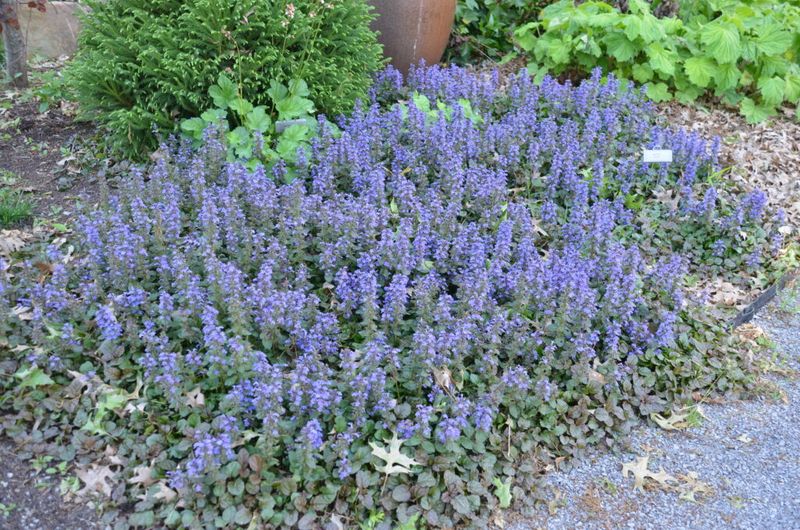
Ajuga is the plant that makes visitors stop and ask what it is every single spring. When those electric blue flower spikes shoot up from the low, spreading rosettes, the effect is genuinely striking.
Virginia gardeners love it not just for the looks but because it genuinely earns its keep as a weed suppressor.
Also called bugleweed, ajuga spreads by sending out horizontal runners called stolons that root wherever they touch the ground. This spreading habit is exactly what makes it so effective at crowding out weeds.
Within a couple of seasons, a small planting can cover a surprisingly large area with a dense, colorful mat.
Virginia’s varied growing conditions suit ajuga well across most of the state. It tolerates partial to full shade, handles clay soils better than many groundcovers, and survives the occasional dry spell once established.
Northern Virginia gardeners particularly favor it for shaded front beds where foot traffic keeps grass from thriving.
The foliage itself is part of the appeal. Depending on the variety, leaves range from deep chocolate-bronze to burgundy to a striking green and cream variegated pattern.
Choosing the right variety lets you add serious texture and color to spaces that might otherwise feel flat and uninspiring.
Crown rot can occur in poorly drained soils, so avoid planting ajuga in soggy spots. Dividing clumps every few years keeps the plants vigorous and prevents the center from dying out.
For shaded beds, slopes, and tricky transitional spaces, ajuga delivers beauty and reliable weed control in one compact, colorful package.
4. Wild Ginger
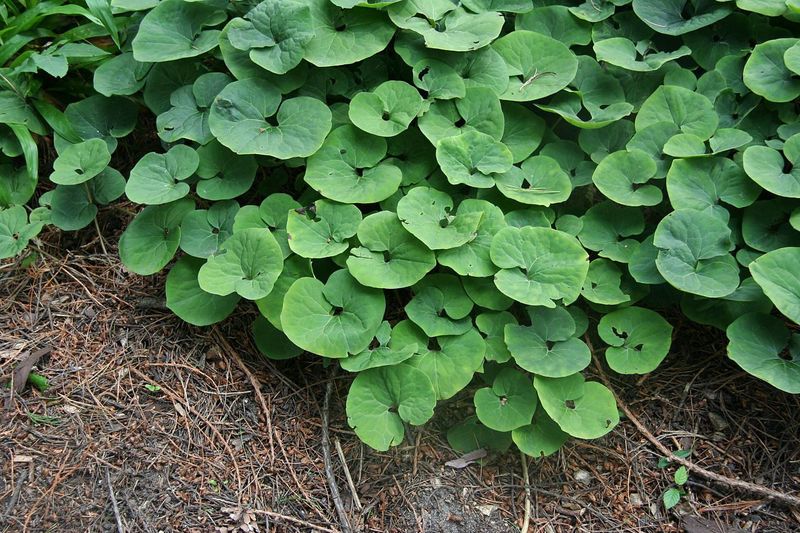
Wild ginger is the native plant enthusiast’s secret weapon for weed control in Virginia’s shaded gardens.
Unlike many groundcovers that come from overseas, Asarum canadense is a true Virginia native, naturally at home in the woodland understory environments found across the state.
Planting it feels less like gardening and more like restoring what was always meant to grow there. The large, heart-shaped leaves are velvety soft and form a lush canopy that shades the soil completely.
That dense leaf coverage prevents weed seeds from receiving the light they need to sprout, making wild ginger one of the most naturally effective weed suppressors in the native plant toolkit.
It spreads slowly but steadily by underground rhizomes, building a colony that grows more effective with each passing year. Virginia’s native woodland soils, rich in organic matter and slightly acidic, are exactly what wild ginger prefers.
It thrives in the deep shade of hardwood forests and shaded home landscapes that mimic those conditions. The Appalachian foothills and Piedmont regions of Virginia are particularly well suited to growing it successfully.
Hidden beneath the foliage in early spring are the plant’s unusual brownish-red flowers, small and tucked right at soil level. They are not showy, but they have a quirky charm that native plant lovers appreciate.
The flowers are actually pollinated by ground-crawling insects rather than flying pollinators, which is a fascinating ecological detail worth knowing.
Wild ginger is slower to establish than non-native options, so patience is required in the first couple of seasons.
Pair it with other natives like trillium or Solomon’s seal for a layered, naturalistic woodland garden that virtually manages itself.
5. Chrysogonum Virginianum
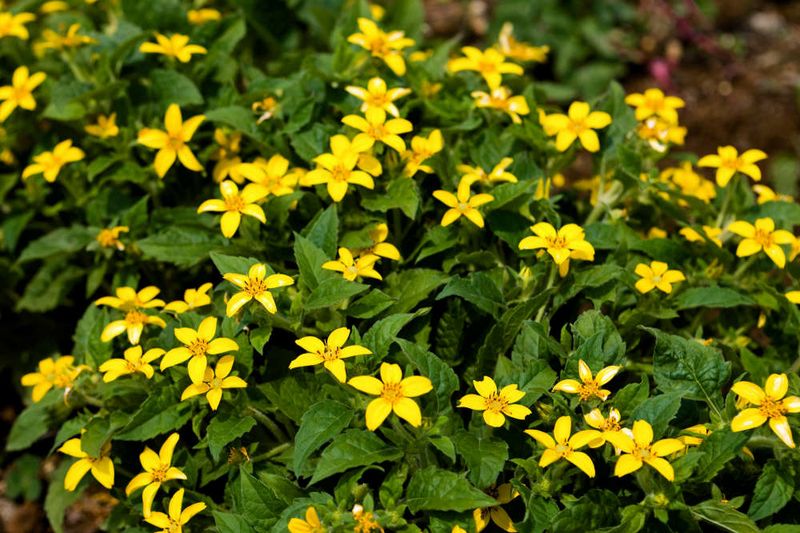
Chrysogonum virginianum is native to Virginia and much of the eastern United States, making it feel right at home in local landscapes.
Many gardeners consider it a quiet hometown hero that blends naturally into woodland gardens, shaded borders, and relaxed cottage-style plantings.
Its cheerful, star-shaped yellow flowers begin appearing in spring and continue blooming well into fall, providing color for months at a time. Few groundcovers offer such a long flowering season.
The bright blooms sit just above the soft green foliage and create a warm, sunny look even in partially shaded areas.
Chrysogonum virginianum spreads gradually, forming a thick carpet that fills empty spaces and helps block out weeds. Over time the dense mat keeps soil covered and reduces the need for constant garden maintenance.
This plant thrives in light shade and dappled sunlight, making it a perfect choice for planting under trees, along woodland paths, or beside shaded garden beds. Once established, it asks for very little attention while continuing to brighten the landscape season after season.
6. Allegheny Spurge
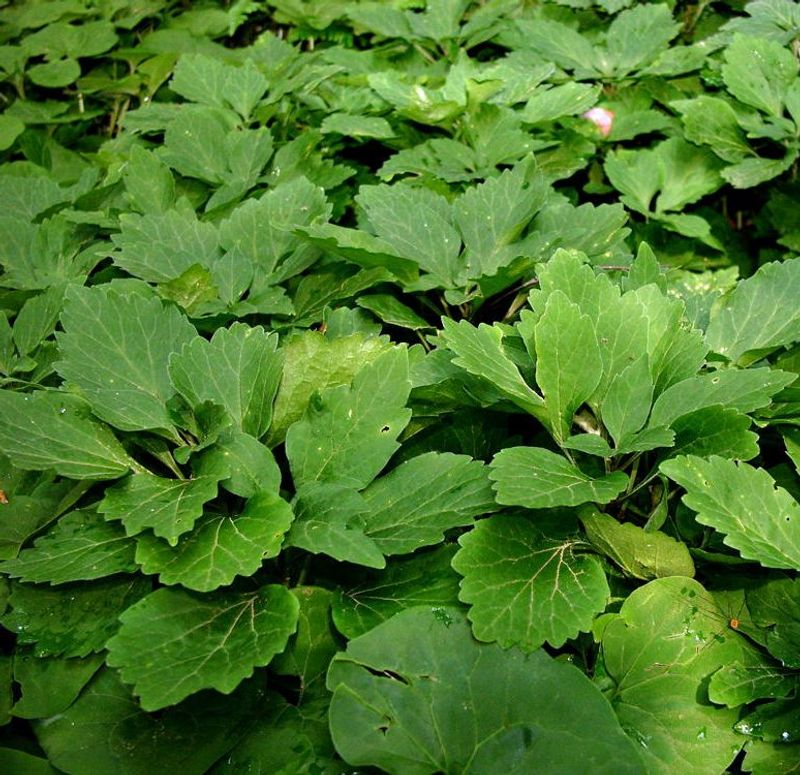
Tucked beneath a tall oak or along a shaded woodland path, Allegheny spruge looks like it has always belonged there. This native Virginia groundcover forms a slow but steady carpet of deep green, leathery leaves that stay attractive through most of the year.
Many leaves develop soft mottling as they mature, adding gentle texture and visual interest throughout the planting.
In early spring, Allegheny spruge produces subtle white flower spikes that rise just above the foliage. The blooms are delicate rather than flashy, giving the plant a quiet woodland charm that attentive gardeners appreciate.
Because it is a true native to the eastern United States, Allegheny spruge handles Virginia’s humid summers and cold winters without difficulty. It grows especially well in deep shade where many other groundcovers struggle to survive.
Over time, Allegheny spruge spreads gradually and forms a dense mat that covers the soil and helps suppress weeds naturally.
This thick growth reduces the need for frequent mulching or constant hand-pulling, allowing shaded garden spaces to stay tidy, full, and easy to maintain throughout the seasons.
7. Heartleaf Foamflower
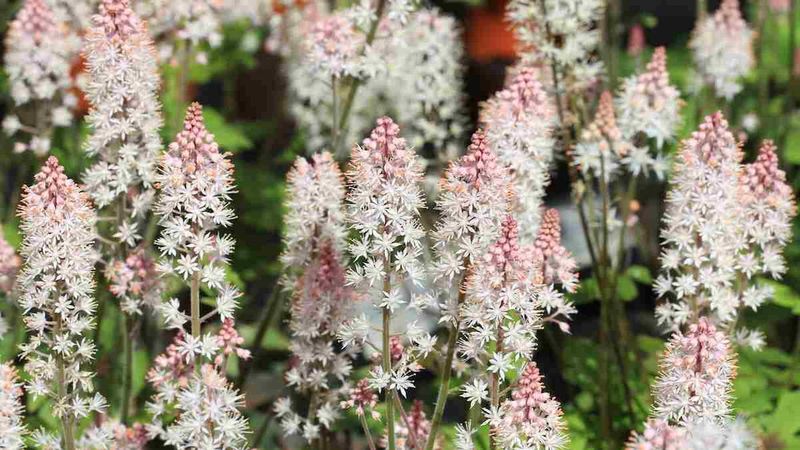
Named for its soft, foamy flower spikes that float above the foliage like tiny clouds, Heartleaf Foamflower is one of the most charming native groundcovers you can grow in Virginia.
This woodland perennial feels perfectly suited to shaded gardens, where Heartleaf Foamflower spreads steadily by slender runners and gradually forms a lush carpet across the soil.
Gardeners often plant Heartleaf Foamflower in areas where many other plants struggle to survive.
Beneath tall trees, along woodland paths, or in cool shaded borders, it settles in comfortably and begins filling open spaces with soft green foliage.
Over time, Heartleaf Foamflower creates a natural-looking groundcover that helps keep soil cool and protected. The heart-shaped leaves remain attractive throughout the growing season.
Many plants develop rich burgundy markings through the center of each leaf, adding color and depth even when Heartleaf Foamflower is not in bloom. These patterns bring visual interest to shady beds from spring through fall.
When spring arrives, Heartleaf Foamflower sends up delicate stems covered in airy white or pale pink blossoms. The tiny flowers create a soft, cloud-like effect above the foliage and attract small native pollinators that move quietly through the garden.
As it spreads, Heartleaf Foamflower forms a dense layer of foliage that helps crowd out weeds naturally. This living groundcover reduces the need for constant mulching and keeps shaded garden areas looking full, calm, and effortlessly beautiful year after year.
8. Carex Pensylvanica
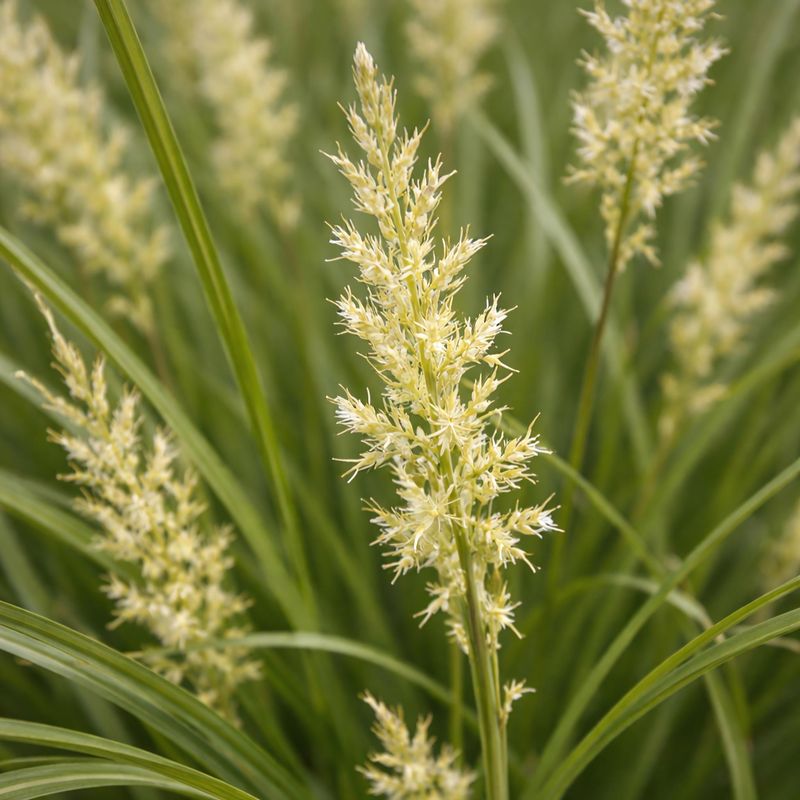
Most grass-like plants demand full sun, but Pennsylvania sedge quietly thrives where many other groundcovers struggle to survive.
Carex pensylvanica naturally carpets woodland floors with fine, arching blades of soft green, creating a texture that feels both wild and beautifully tidy. In Virginia landscapes, this native sedge brings a calm, natural look to shaded gardens.
One of the greatest strengths of Pennsylvania sedge is its ability to grow in dry shade, a condition that frustrates many gardeners.
Areas beneath large trees often have limited sunlight and heavy root competition, leaving little moisture for other plants. Pennsylvania sedge handles these conditions with surprising ease and gradually establishes a soft, flowing ground layer.
Over time, Pennsylvania sedge spreads slowly by underground rhizomes. Instead of aggressively taking over, it expands at a gentle pace, forming a tight, low mat that helps prevent weeds from finding open soil.
This natural coverage reduces the need for constant weeding and helps keep woodland gardens looking clean and well established.
Another appealing feature of Pennsylvania sedge is its height. The foliage usually stays around four to six inches tall, creating the appearance of a natural lawn without the demanding upkeep.
In many landscapes, mowing becomes optional, and the plant keeps its graceful shape with little effort.
Wildlife resistance is another benefit. Pennsylvania sedge is typically ignored by deer, which makes it especially valuable in areas where browsing animals damage traditional garden plants.
For shady yards, woodland edges, or spaces under mature trees where grass refuses to grow, Pennsylvania sedge offers a durable, elegant, and low-maintenance groundcover that blends naturally into Virginia landscapes.