9 Shrubs With Brilliant Golden Foliage To Illuminate Your North Carolina Garden
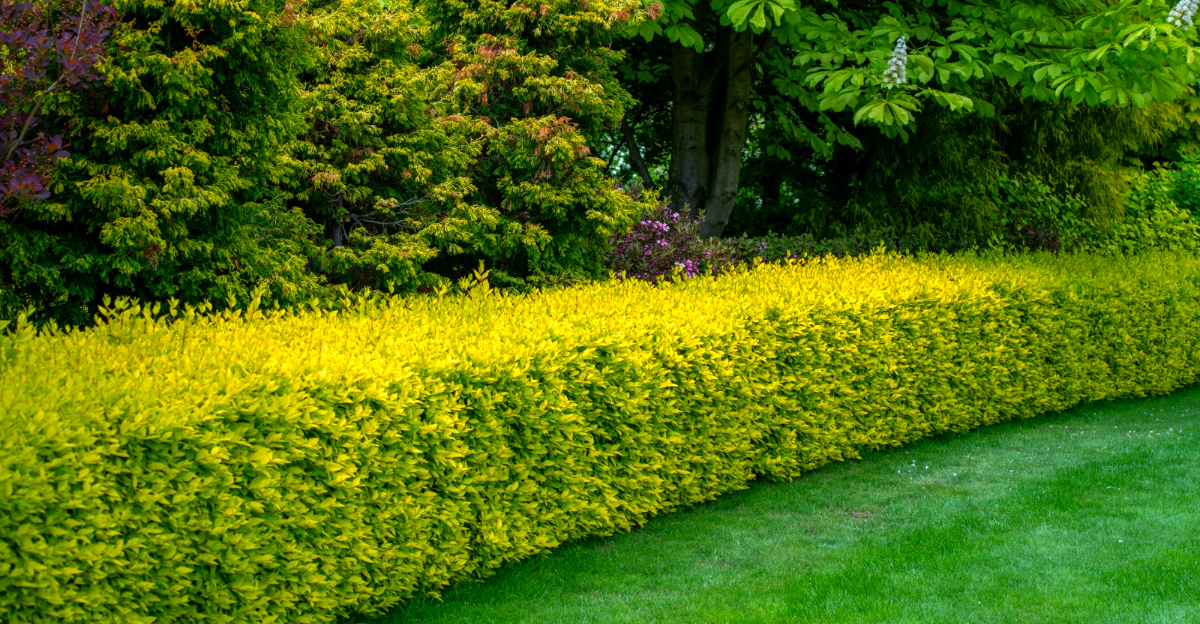
Ever feel like your garden needs a little extra sunshine, even on the cloudiest days? That’s where golden-foliaged shrubs come in.
These plants don’t just add color; they inject a permanent, luminous warmth into your landscape that makes every season feel a bit brighter.
From the misty mountain ridges in the west to the humid coastal plains in the east, North Carolina’s diverse geography is the perfect stage for these year-round showstoppers.
Whether you’re looking to frame a formal driveway in the Piedmont or electrify a dull, shady corner in Charlotte, these sun-colored shrubs are as reliable as they are beautiful.
They’re remarkably tough, adaptable to our native soils, and surprisingly low-maintenance.
Choosing the right variety will transform ordinary greenery into a garden that glows all year long.
1. Golden Barberry Lights Up Sunny Borders
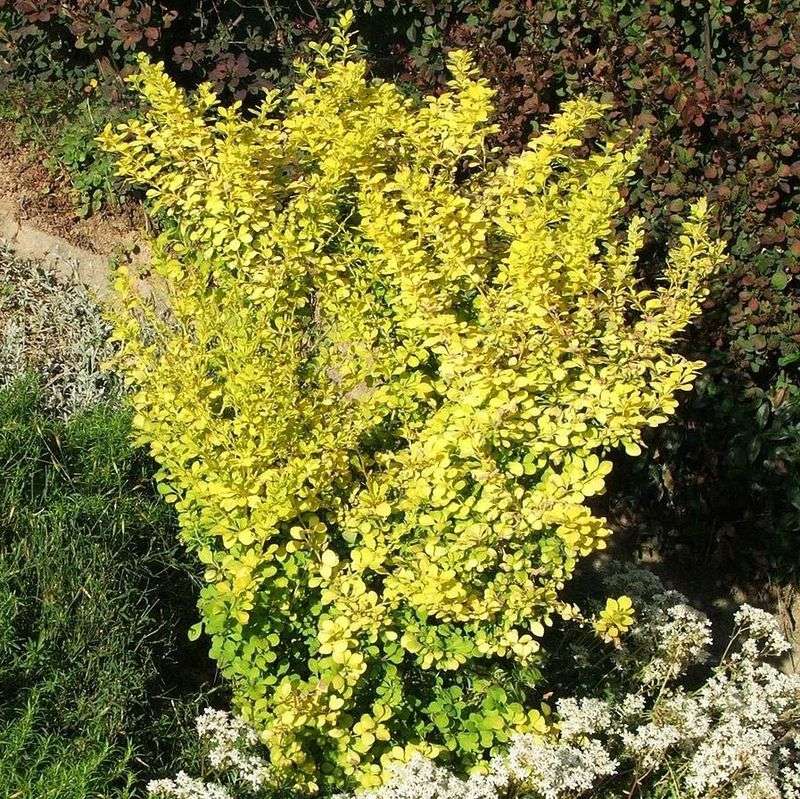
Few shrubs pack as much visual punch in a small footprint as Golden Barberry, a compact grower that practically radiates light on a bright Carolina afternoon.
Known botanically as Berberis thunbergii ‘Aurea,’ this shrub produces intensely golden-yellow leaves that hold their color through spring and summer, especially when planted in full sun.
In North Carolina’s Piedmont and coastal plain, where summer sun is plentiful, the foliage can almost appear to glow from across the yard.
Golden Barberry typically reaches two to three feet tall and wide, making it a smart choice for low borders, foundation plantings, or mass plantings along a walkway.
It adapts well to a range of well-drained soils, including the clay-heavy soils common across much of North Carolina’s interior.
Once established, this shrub handles dry spells without much fuss, though a deep watering during extended summer heat helps it stay at its best.
Pruning is straightforward – simply trim lightly after flowering to keep the shape tidy. In fall, the foliage shifts to shades of orange and red before leaf drop, adding a second season of interest.
Be aware that the stems carry small thorns, so wear gloves when working around this plant. Its compact size and striking color make it a reliable choice for gardeners who want bold impact with minimal upkeep.
2. Sunshine Ligustrum Brightens Year-Round Spaces
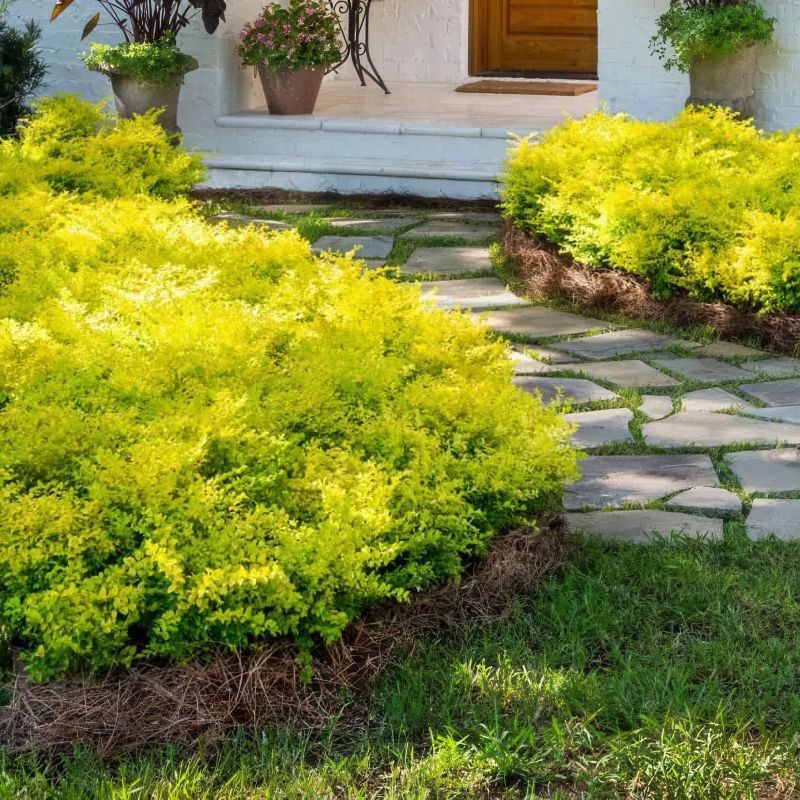
Walk through almost any well-designed North Carolina garden center in spring and you will spot Sunshine Ligustrum front and center, and for very good reason.
This evergreen shrub, a sterile selection of Ligustrum sinense, holds its lime-gold foliage color throughout every season, which is a rare and valuable trait in the landscape.
Unlike many golden shrubs that fade to green by midsummer, Sunshine Ligustrum keeps its vibrant color from January through December.
Growing to about five or six feet tall and wide at maturity, this shrub works beautifully as a screening plant, a low hedge, or a bold accent in mixed borders.
It performs well across most of North Carolina, tolerating the humid summers of the coastal plain and the milder winters of the Piedmont with equal ease.
Full sun brings out the richest gold color, though it adapts reasonably well to partial shade, where the foliage leans a bit more toward chartreuse.
Your North Carolina Garden Changes Every Week. Your Plan Should Too.
Gardening in North Carolina changes quickly throughout the season. Every Friday you’ll receive a simple weekly plan showing exactly what to plant, prune, fertilize, harvest, and protect so you never miss the right timing.
Soil adaptability is one of this shrub’s underrated strengths – it handles clay, loam, and sandy soils without complaint, provided drainage is adequate. Watering needs are moderate once established.
Because it is a sterile cultivar, it does not set seed, which is an important environmental consideration when planting ligustrum in North Carolina. Regular light pruning keeps it dense and well-shaped throughout the year.
3. Ninebark Brings Bold Golden Drama
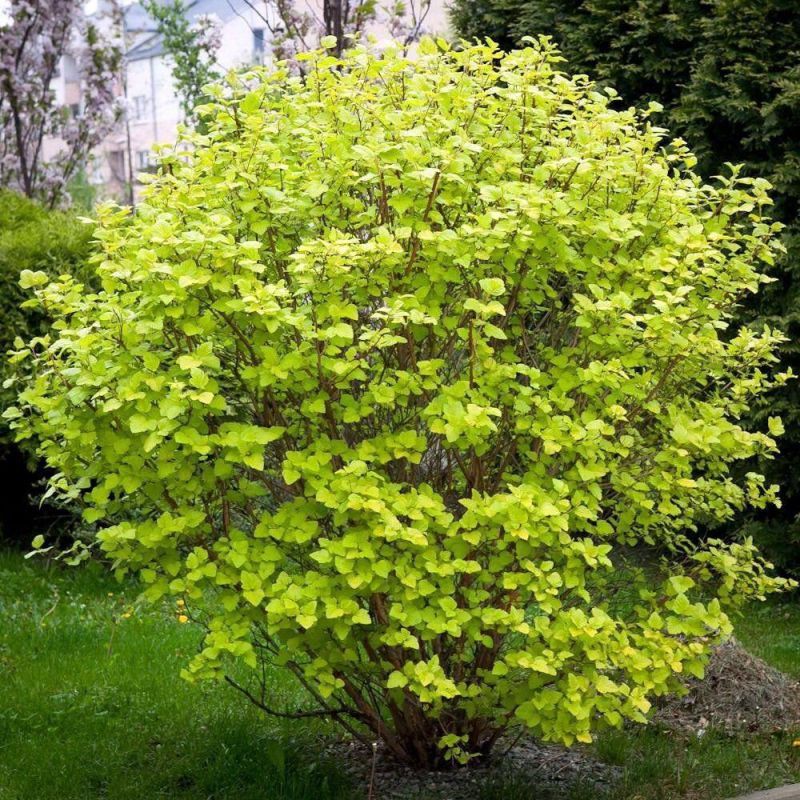
There is something genuinely theatrical about a well-grown Ninebark in full leaf – the arching branches, the large maple-shaped leaves, and that rich golden color combine to create a shrub that commands attention in any planting.
Physocarpus opulifolius, commonly called Ninebark, includes several golden-leafed cultivars that thrive across North Carolina’s varied climate zones, from the mountains to the coast.
The golden-leafed forms are especially striking in spring when new growth emerges in a warm, buttery yellow.
Most golden Ninebark cultivars reach six to eight feet tall and equally wide, so give this shrub plenty of room to show off. It performs best in full sun, where the foliage color stays brightest, but it tolerates partial shade reasonably well.
North Carolina’s clay soils suit Ninebark fine as long as water does not pool around the roots for extended periods. Consistent moisture during the first growing season helps establish a strong root system.
In late spring, clusters of small white or pale pink flowers appear along the stems, attracting bees and other pollinators to the garden. As summer progresses, reddish seed capsules add another layer of visual interest.
Pruning is best done right after flowering to avoid removing next year’s buds.
The peeling, cinnamon-colored bark on mature stems adds winter texture long after the leaves have dropped, giving this shrub genuine four-season appeal in North Carolina gardens.
4. Golden Privet Creates Striking Hedges
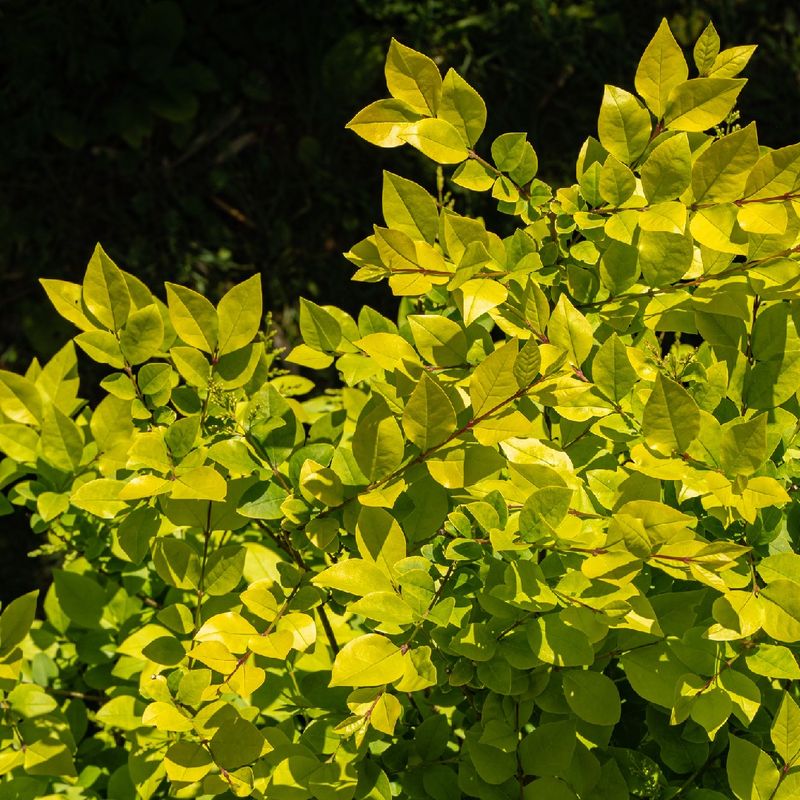
When a homeowner in North Carolina needs a fast-growing, high-impact hedge that delivers color along with privacy, Golden Privet is a strong candidate worth serious consideration.
Ligustrum x vicaryi produces leaves with bright golden-yellow coloring that is most intense in full sun, creating a warm, luminous hedge line that stands out against darker green backdrops.
The color is consistent and reliable across spring, summer, and into fall.
Left unpruned, this shrub can reach ten feet or taller, but most gardeners keep it trimmed to a manageable height of four to six feet for use as a formal or semi-formal hedge.
It responds exceptionally well to shearing, bouncing back quickly with dense, compact regrowth.
In North Carolina’s Piedmont region, where many homeowners contend with heavy clay soils and hot summers, Golden Privet holds up admirably. It tolerates both full sun and partial shade, though full sun consistently produces the most vivid leaf color.
Watering needs are moderate, and established plants handle short dry spells without much trouble.
One important note for North Carolina gardeners: some privet species have invasive tendencies in the region, so selecting a named cultivar and monitoring for any seedling spread is a responsible practice.
Pruning two to three times per growing season keeps the hedge dense and prevents unwanted spread.
Used thoughtfully, Golden Privet delivers genuine screening power with a warm, golden aesthetic that few other hedging plants can match.
5. Gold Dust Aucuba Shines in the Shade
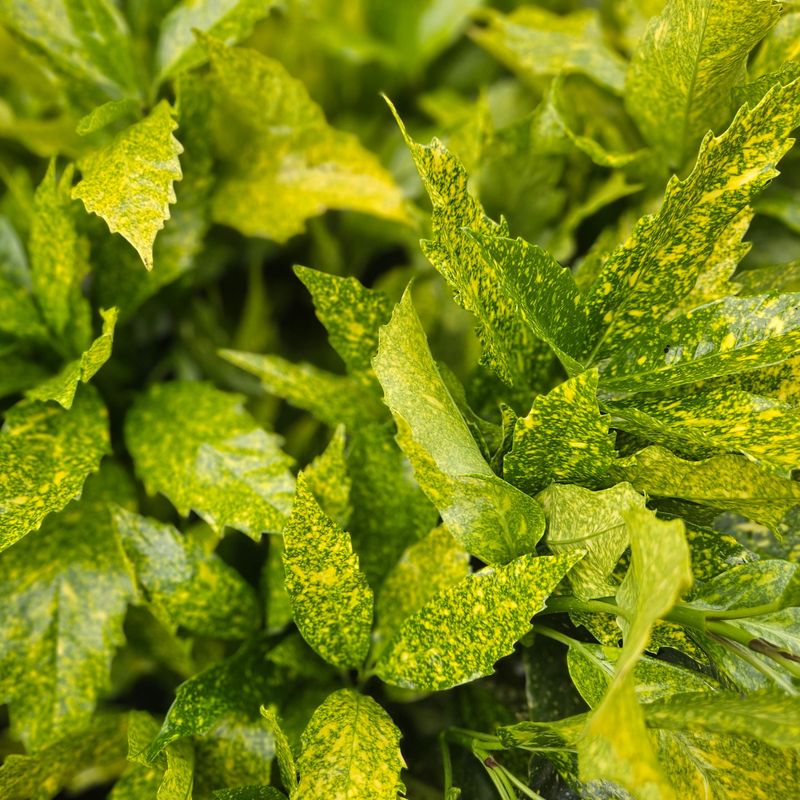
Most golden shrubs demand sunshine to deliver their best color, but Gold Dust Aucuba flips that expectation entirely – it thrives in shade and still brings remarkable brightness to spots where most plants struggle.
Aucuba japonica ‘Gold Dust’ produces glossy, leathery leaves generously speckled with yellow and gold markings that seem to sparkle even in low light.
For North Carolina gardeners dealing with the dense shade cast by mature oaks or pines, this shrub is a genuine find.
Growing four to six feet tall and wide at a relaxed pace, Gold Dust Aucuba suits foundation plantings on the north side of a home, shaded courtyard gardens, or woodland borders.
It handles dry shade once established, which is a significant advantage in North Carolina landscapes where large tree roots compete aggressively for soil moisture.
The thick, waxy leaves also hold up well through the state’s humid summers and mild winters.
Female plants produce clusters of bright red berries in fall and winter, provided a male aucuba is planted nearby for pollination. Those berries add a festive pop of color during the quieter months in the garden.
Soil should be well-drained and moderately fertile – amending heavy clay with organic matter before planting gives the roots a much better start. Minimal pruning is needed beyond removing any winter-damaged stems in early spring.
For a shaded North Carolina corner that needs life and color, Gold Dust Aucuba earns its reputation.
6. Golden Elderberry Adds Soft, Luminous Leaves
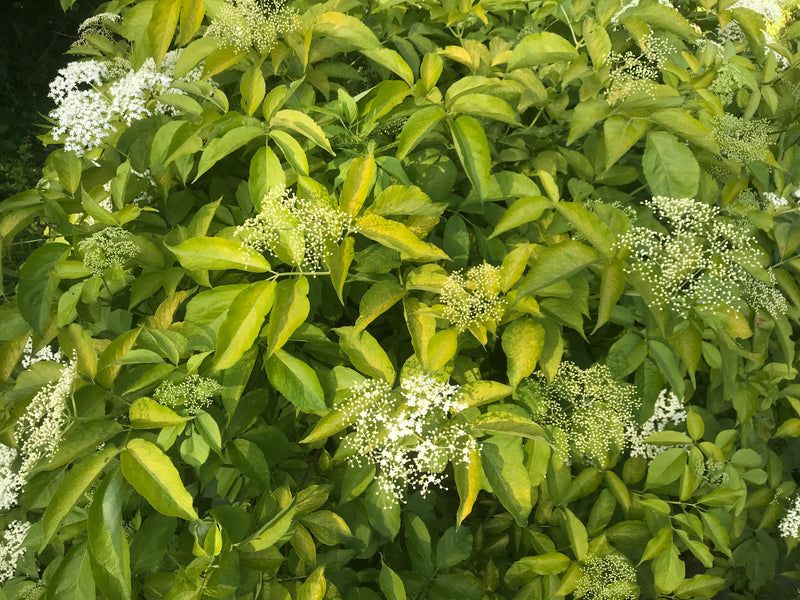
Elderberry has a long and fascinating history in American gardens, valued for both its ornamental appeal and its wildlife-friendly berries, and the golden-leafed form takes that heritage and turns up the visual volume considerably.
Sambucus canadensis ‘Aurea,’ often called Golden Elderberry, produces large, pinnately compound leaves in a soft chartreuse-to-gold tone that illuminates shaded or partly shaded garden spots with a gentle, luminous quality.
It is a deciduous native species with real presence in the landscape.
In North Carolina, this shrub tends to perform best in the Piedmont and mountain regions, where afternoon shade moderates the summer heat that can scorch the delicate golden leaves.
Morning sun with afternoon shade is an arrangement this plant genuinely appreciates.
It grows vigorously, reaching eight to ten feet in good conditions, so plan accordingly when choosing a planting site. Consistent soil moisture is important – Golden Elderberry prefers soils that do not dry out completely between waterings.
Creamy white, flat-topped flower clusters appear in late spring and are a reliable magnet for pollinators including native bees and butterflies. Dark purple berries follow in summer, attracting birds and other wildlife throughout the season.
Hard pruning in late winter or early spring keeps the plant tidy and encourages fresh, brightly colored new growth.
For naturalistic plantings, rain gardens, or moist borders in North Carolina, Golden Elderberry brings both ecological value and undeniable golden beauty to the space.
7. Golden Spirit Smokebush Delivers Seasonal Flair
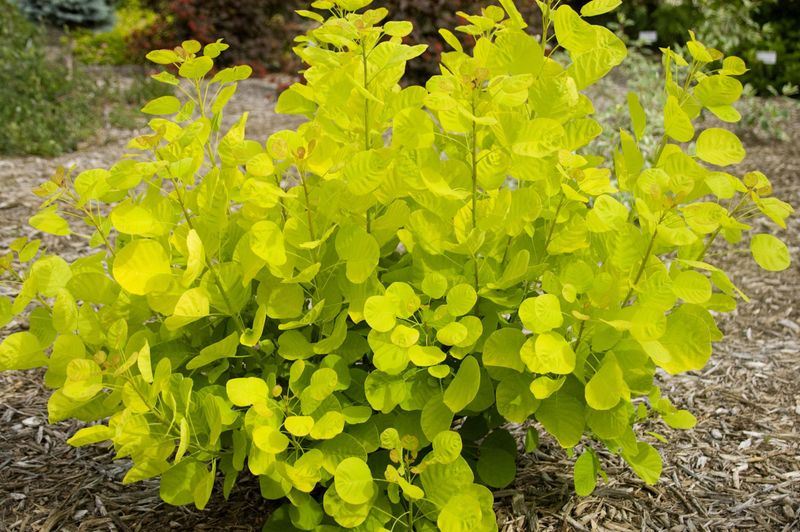
Smokebush earns its name from the hazy, smoke-like plumes that develop from spent flowers in summer, and the golden-leafed cultivar known as Golden Spirit adds a whole extra dimension to that already theatrical display.
Cotinus coggygria ‘Ancot,’ sold as Golden Spirit, produces rounded leaves in a warm golden-yellow that ages to a soft lime-green by midsummer, then shifts to fiery shades of orange and red in fall.
Few shrubs offer this kind of evolving seasonal color show.
Golden Spirit Smokebush grows six to ten feet tall and wide, suiting it for use as a specimen plant, a large border anchor, or a colorful backdrop for smaller perennials and shrubs.
It thrives in full sun and well-drained soil, making it well-suited to many sites across North Carolina’s Piedmont where soils tend to be moderately fertile and fast-draining once amended.
It handles heat well but appreciates occasional deep watering during dry summer stretches.
Pruning strategy depends on what you want from this plant. Hard pruning in late winter encourages large, vivid leaves but reduces or eliminates the smoky plumes.
A lighter approach – removing only dead or crossing stems – preserves the full seasonal display of foliage, flowers, and fall color. Either way, the plant responds well to pruning and recovers quickly.
For North Carolina gardeners who want a shrub that genuinely changes character with every season, Golden Spirit Smokebush is an outstanding and often underused option.
8. Golden Globe Arborvitae Brings Winter Color
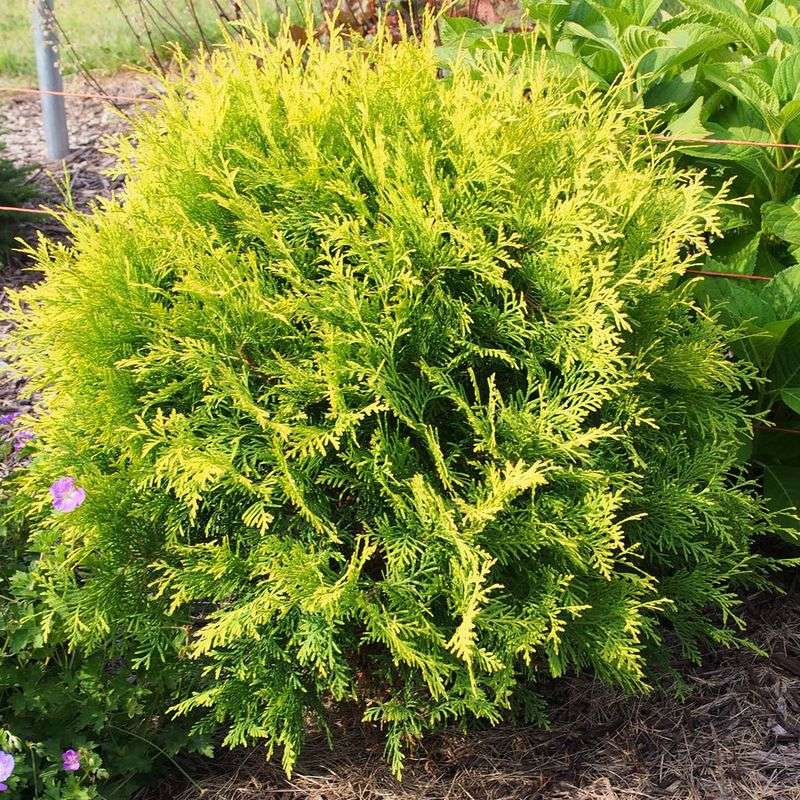
Winter in a North Carolina garden can feel long and colorless if the planting palette leans too heavily on deciduous shrubs, and that is exactly where Golden Globe Arborvitae steps in to save the season.
This compact evergreen conifer, a selection of Thuja occidentalis, maintains its cheerful golden-yellow foliage color throughout the coldest months, offering a warm visual anchor when most of the garden has gone quiet.
The color actually tends to intensify during fall and winter, which is a pleasant surprise for first-time growers.
Growing slowly to about three or four feet tall and wide in a naturally rounded form, Golden Globe Arborvitae fits neatly into foundation plantings, formal garden designs, container arrangements, or mixed shrub borders.
It requires very little pruning to maintain its tidy globe shape, which makes it an appealing option for gardeners who prefer low-maintenance plants.
Full sun brings out the richest gold color, though it tolerates light shade with only a modest reduction in foliage vibrancy.
Well-drained soil is important for this arborvitae – soggy conditions around the roots are its primary weakness.
In North Carolina’s heavier clay soils, raised planting and generous organic matter amendment at planting time make a meaningful difference in long-term health.
Watering during dry summer periods helps young plants establish strong root systems.
Deer can occasionally browse arborvitae foliage, so in rural North Carolina landscapes, some protective measures may be worth considering during the first few years after planting.
9. Forever Goldy Arborvitae Offers Long-Lasting Brilliance
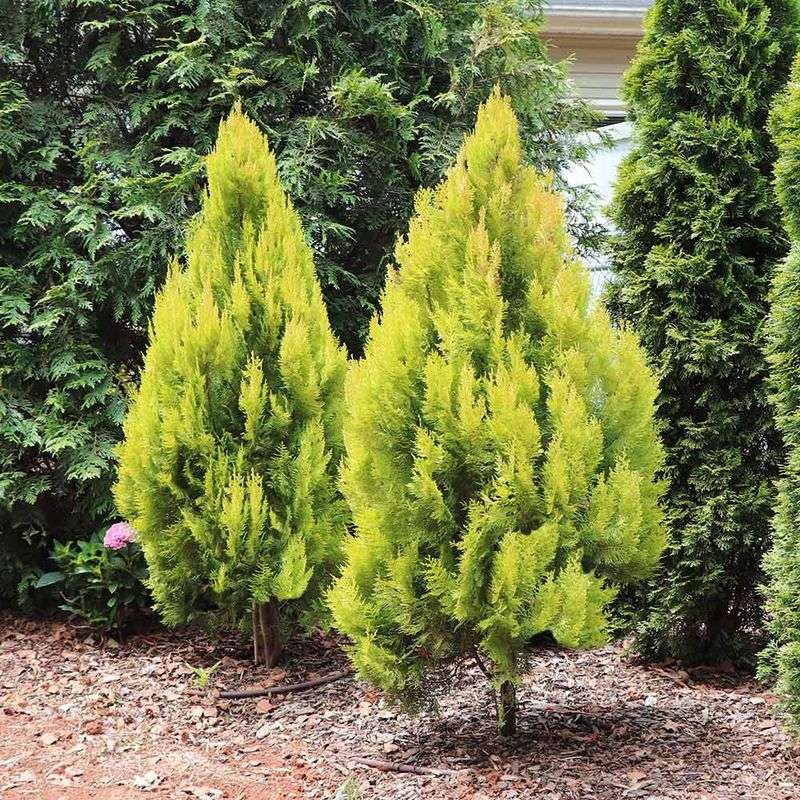
If consistency is what a North Carolina gardener values most in a golden shrub, Forever Goldy Arborvitae may be the most reliable option on this entire list.
This compact evergreen, a selection of Thuja occidentalis, holds its rich golden-yellow foliage color through all four seasons without fading, greening up, or losing its vibrancy even through the heat of a Carolina summer.
That kind of dependable color is genuinely hard to find in the shrub world.
Forever Goldy grows slowly and steadily into a dense, upright-oval form reaching about four to five feet tall and two to three feet wide at maturity.
That restrained size makes it a versatile player in the landscape – useful as a vertical accent in a border, a low-maintenance foundation plant, or a container specimen for a sunny patio or deck.
The scale-like foliage has a fine, soft texture that contrasts beautifully with broader-leafed plants in mixed plantings.
Like most arborvitae, Forever Goldy performs best in full sun with well-drained, moderately moist soil.
In North Carolina, amending dense clay with compost before planting helps roots establish more readily and reduces the risk of standing water around the crown.
Supplemental watering during summer dry spells is a good habit during the first two growing seasons. Once established, this shrub is notably low-maintenance – no regular pruning is needed to keep its shape.
For year-round golden color with minimal effort, Forever Goldy delivers exactly what its name suggests.