10 Climbing Plants That Will Cover Your Alabama Fence In No Time
Got a bare fence in your Alabama yard? You’re missing out on a living green wall.
Climbing plants are nature’s own curtains, growing fast and full, turning a plain fence into a lush green wall.
Alabama’s warm climate, long growing season, and rich soil make it one of the best places in the country for vigorous climbing plants.
Some bring colorful blooms, others create thick greenery or fill the air with sweet fragrance. Either way, the right vine can transform a plain fence faster than you might expect.
1. Trumpet Vine
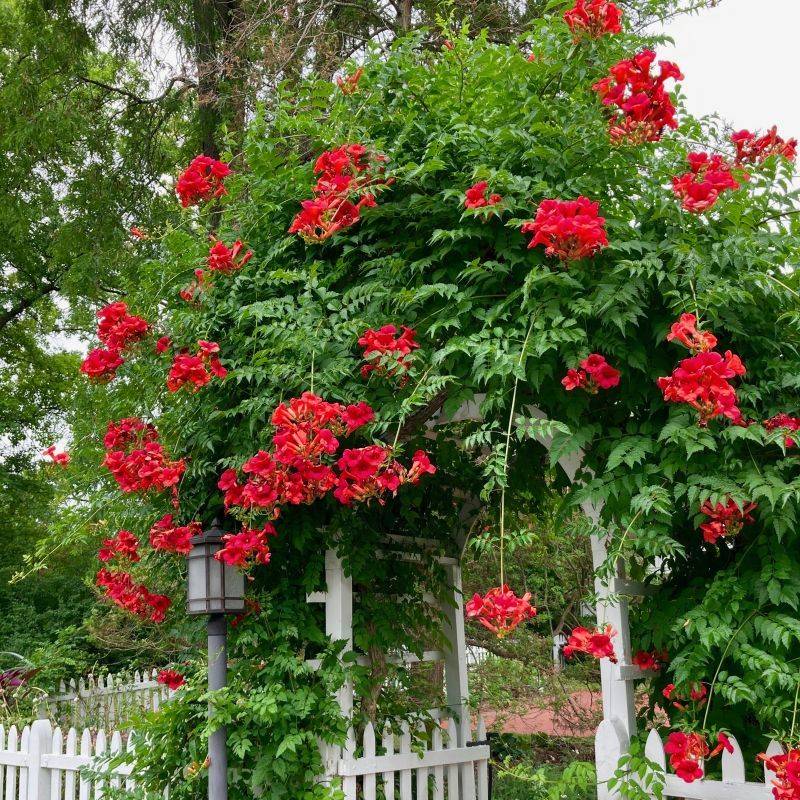
Few plants put on a show quite like the trumpet vine. Its bold, fire-orange blooms can practically stop traffic on a summer day, turning any fence or trellis into a vivid spectacle.
This native vine thrives in heat and humidity, making it remarkably low-maintenance for gardeners. Once established, it grows at an astonishing pace, you can almost watch it climb before your eyes.
Trumpet Vine clings to fences, walls, and arbors using tiny adhesive roots, giving it the ability to scale high structures without much support.
A single plant can easily reach 30 to 40 feet, covering a long stretch of fence in just one season.
Its resilience through long, warm months makes it a favorite among gardeners who want a vibrant, self-sustaining addition to their landscape.
Beyond its dramatic blooms, trumpet vine is a magnet for hummingbirds, turning your garden into a lively wildlife haven. Its tubular flowers are perfect for these tiny pollinators, ensuring that your fence isn’t just colorful, it’s buzzing with life.
One caution: trumpet vine spreads aggressively, so trimming it back each spring is essential to prevent it from taking over other areas of your yard.
For best results, plant it in full sun and well-drained soil, and watch as this spectacular vine transforms your outdoor space into a fiery, flowering masterpiece.
2. Coral Honeysuckle
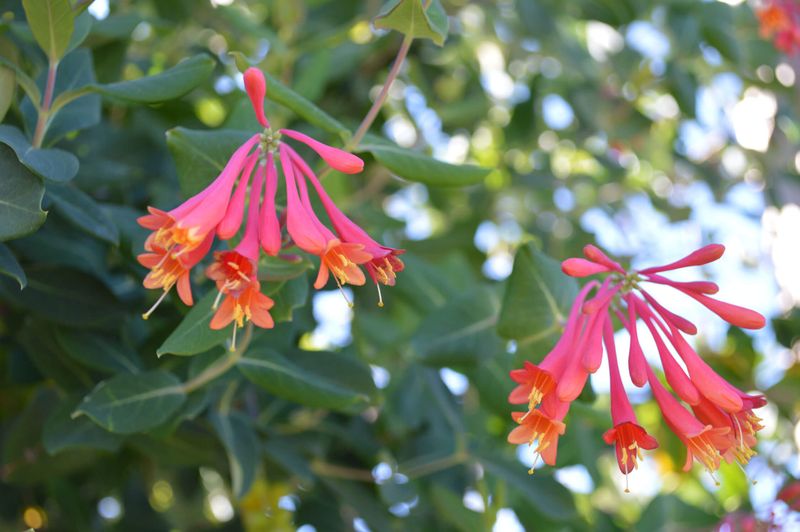
Coral Honeysuckle is Alabama’s sweetheart of the vine world. Its stunning red and orange tubular flowers bloom from spring all the way through fall.
Unlike its invasive Japanese cousin, Coral Honeysuckle is a well-behaved native plant that plays nicely with the rest of your garden. It is one of the best choices you can make for a fence in the Heart of Dixie.
Growing up to 20 feet long, this vine wraps gracefully around fence posts and rails without causing any damage to the structure.
It loves the full sun, though it can handle a bit of afternoon shade during those scorching July days. The blooms attract hummingbirds and butterflies, turning your fence into a living, buzzing ecosystem.
Coral Honeysuckle is also drought-tolerant once it gets established, which is great news for gardeners who do not want to water every single day. Plant it in spring after the last frost and watch it take off through the warm months ahead.
With just a little pruning each year, this vine will keep your fence looking gorgeous season after season.
3. Confederate Jasmine
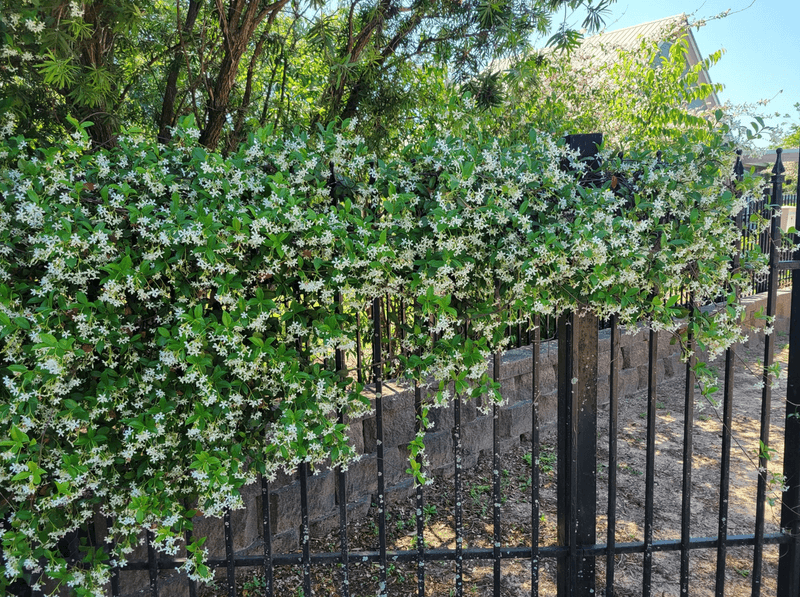
Walk past a fence covered in Confederate Jasmine on a warm evening. Its sweet, intoxicating fragrance will stop you in your tracks.
Your Alabama Garden Changes Every Week. Your Plan Should Too.
Gardening in Alabama changes quickly throughout the season. Every Friday you’ll receive a simple weekly plan showing exactly what to plant, prune, fertilize, harvest, and protect so you never miss the right timing.
Also called Star Jasmine, this evergreen vine produces masses of small white star-shaped flowers that blanket the plant every spring. It is one of those vines that makes your whole yard smell like a fancy perfume store.
Confederate Jasmine is a champion, because it is handling both heat and mild winters with ease. It is an evergreen, meaning it keeps its glossy dark green leaves year-round, so your fence never looks bare even in the middle of December.
This makes it especially popular in cities like Birmingham and Montgomery where curb appeal matters all twelve months of the year.
This vine grows at a moderate pace, reaching about 20 feet, and it does well in full sun or partial shade.
It clings to fences using twining stems, so weaving it through a chain-link or lattice fence works perfectly.
Feed it with a balanced fertilizer in early spring and you will be rewarded with an explosion of blooms that perfume the entire neighborhood.
4. Wisteria
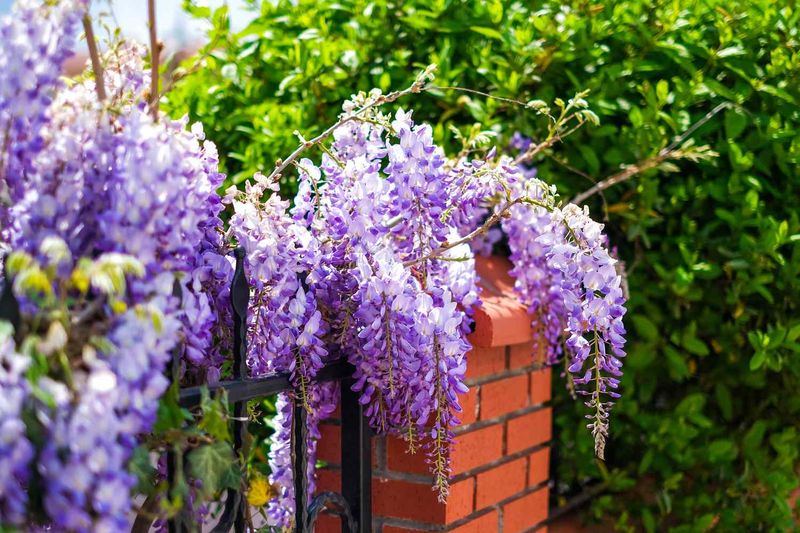
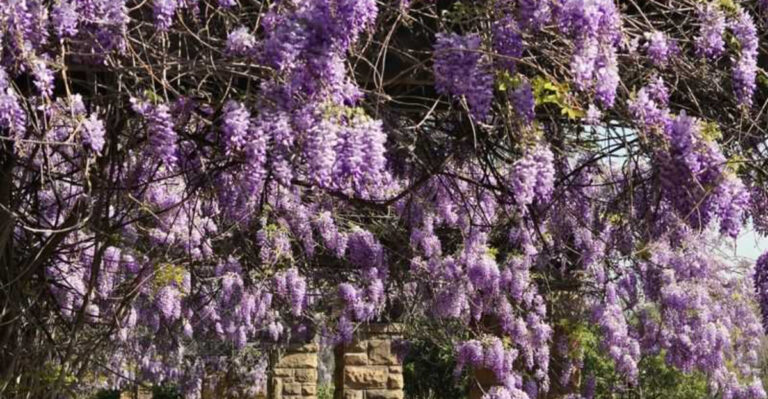
A Wisteria fence in bloom is pure drama, with purple flowers cascading like living curtains.
Wisteria is one of the most iconic plants you will spot across Alabama in the spring, draping over fences, trellises, and old porches all across the state.
When it blooms, it looks like something straight out of a fairy tale.
American Wisteria is the variety to choose for Alabama gardens because it is less aggressive than the Asian types and still puts on a breathtaking show.
It grows quickly, climbing up to 30 feet, and it produces those legendary flower clusters in shades of purple, lilac, and white.
The blooms appear in spring and sometimes again in late summer, giving you two seasons of pure magic.
Wisteria does best in full sun and needs a sturdy fence because the mature vines can get quite heavy over time. Pruning is important with this plant, both in summer and late winter, to keep it shapely and encourage more flowering.
Gardeners who put in the effort to manage their Wisteria are rewarded with one of the most spectacular fences in the entire neighborhood.
5. Passionflower
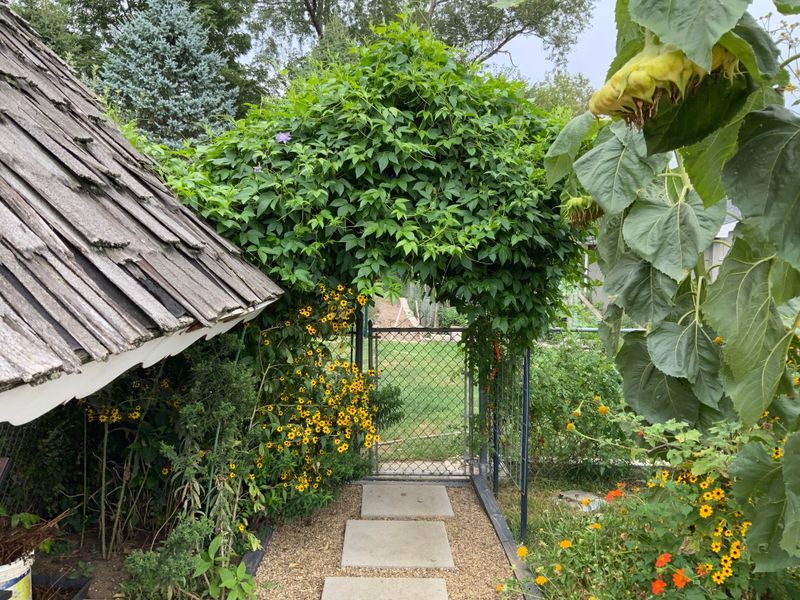
Passionflower is Alabama’s most exotic vine. Its intricate purple, white, and blue blooms look straight out of a tropical rainforest.
This native vine is actually wild across the state, growing along roadsides and fence lines throughout the state. Spotting one in bloom for the first time is genuinely surprising because it looks almost too fancy to be real.
Beyond its stunning looks, Passionflower is the host plant for the Gulf Fritillary butterfly, meaning planting it turns your fence into a butterfly nursery.
It grows vigorously in the state’s warm climate, reaching up to 30 feet in a single season under good conditions.
The vine uses tendrils to grip onto fences, making it a natural climber that needs very little encouragement. Passionflower also produces edible fruits called maypops later in the season, which are a fun bonus for adventurous gardeners.
Plant it in a sunny spot with well-drained soil and it will reward you with months of blooms from early summer through fall.
It is a conversation starter every single time someone visits your yard, guaranteed.
6. Climbing Hydrangea
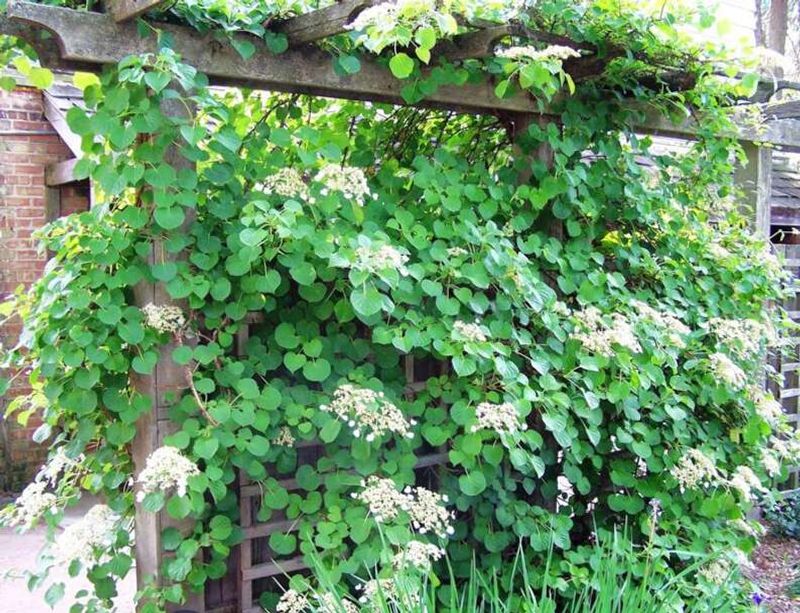
Most people think of hydrangeas as big, bushy shrubs, so finding out there is a climbing version feels like discovering a secret garden weapon.
Climbing Hydrangea is a stunning vine that produces large, flat-topped clusters of white flowers and brings an elegant, old-fashioned charm to any fence. It is especially beautiful in shaded yards where other climbing plants might struggle to bloom.
This vine attaches itself to surfaces using aerial roots, so it can cling to wood, brick, or metal fences without any extra help from you.
It is a slower grower than some of the other vines on this list, but once it gets established in this climate, it takes off with impressive speed. Patience in the first year or two pays off big time when this vine matures into a full, lush wall of green and white.
Climbing Hydrangea is also one of the toughest vines for Alabama’s occasional cold snaps, handling winter temperatures without much trouble.
It thrives in partial to full shade, making it a go-to choice for north-facing fences or spots under large trees.
Prune lightly after flowering to keep the shape tidy and encourage healthy new growth each season.
7. Virginia Creeper
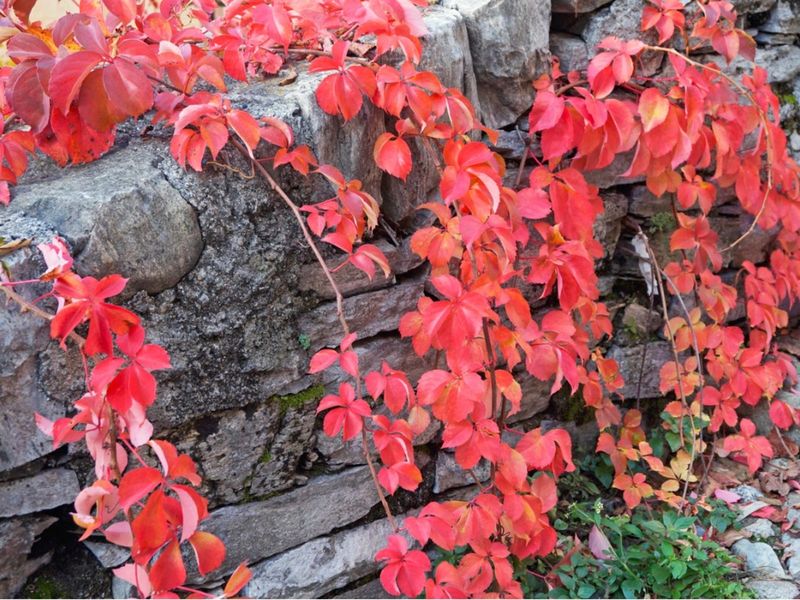
By October, Virginia Creeper transforms any fence into a blazing wall of crimson, stealing the fall spotlight.
This fast-growing native vine is incredibly tough, spreading across fences, walls, and trellises with almost zero effort on your part. If speed is what you need, Virginia Creeper is your answer.
During the spring and summer, the vine displays deep green leaves with a tropical lushness that provides excellent privacy coverage along your fence line.
It climbs using adhesive pads on its tendrils, gripping tightly to almost any surface without causing major damage when properly managed.
Alabama gardeners love it because it thrives in just about any soil type and handles both sun and shade without complaining. Virginia Creeper is also a fantastic wildlife plant, producing small dark berries in the fall that birds absolutely flock to.
It can grow up to 50 feet, so one plant can cover an impressive length of fence in a single growing season in Alabama’s warm climate.
Trim it back in late winter to keep it looking neat and prevent it from spreading into areas where you do not want it to go.
8. Moonflower
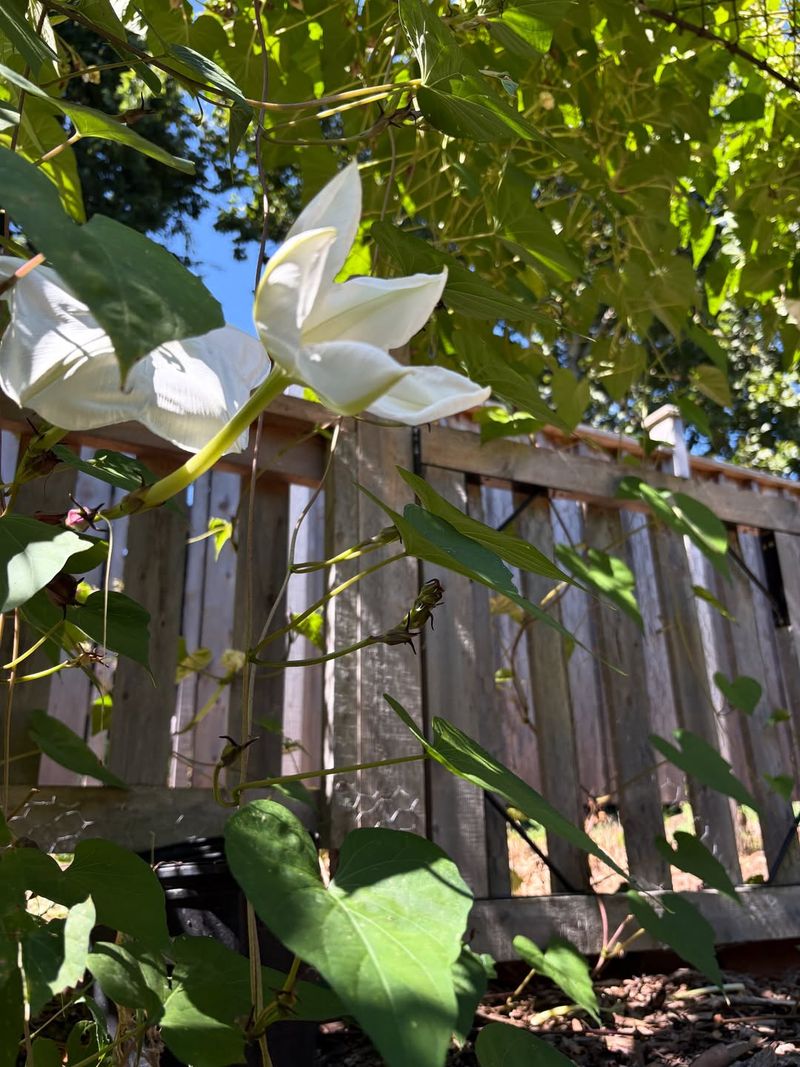
Imagine stepping outside on a warm evening and watching giant white flowers slowly open right before your eyes as the sun goes down.
Moonflower is a magical vine that blooms at night, producing huge, dinner-plate-sized white flowers that glow in the moonlight and fill the air with a sweet fragrance.
Gardeners who love spending time on their porch or patio after dark are absolutely obsessed with this plant.
Moonflower is a fast grower that can cover a fence with dense green foliage in just one season, making it both beautiful and practical for privacy.
It thrives in the heat, actually loving the long, hot summers that other plants find exhausting.
Plant the seeds directly in the ground after the last frost and they will germinate quickly and climb aggressively through the warm months.
The vine uses twining stems to wrap around fence posts and rails, so a simple chain-link or wooden fence works perfectly as a support structure.
Moonflower pairs beautifully with Morning Glory, which blooms during the day, giving you a fence covered in flowers around the clock.
Where summer evenings are long and lovely, Moonflower is the ultimate porch garden vine.
9. Crossvine
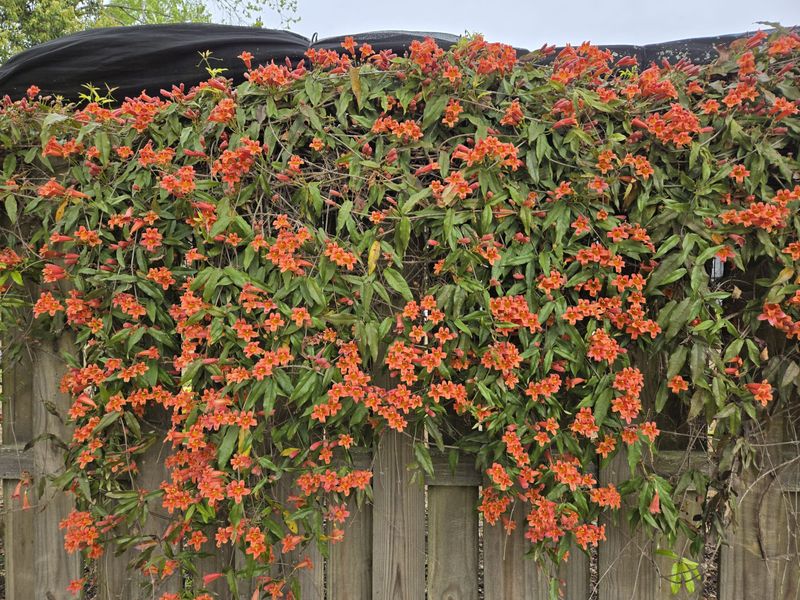
Crossvine is one of Alabama’s best-kept gardening secrets.
A native vine that explodes with orange and yellow trumpet-shaped flowers every spring before most other plants even wake up.
Its name comes from the cross-shaped pattern you see when you cut through the stem, which is a fun little detail that makes it extra memorable. Early blooms mean early hummingbirds, and that is always a win in any garden.
This semi-evergreen vine is incredibly tough, handling the heat in summer and its occasional freezes in winter without missing a beat.
It climbs using adhesive discs, so it grips fences, walls, and trellises tightly and covers them densely with rich green foliage all season long. In milder winters, the leaves stay on the plant, giving you year-round coverage on your fence.
Crossvine grows at a solid pace, reaching up to 50 feet at full maturity, which means a long fence is no problem for this powerhouse plant.
It performs best in full sun to partial shade and is not picky about soil, adapting well to the varied soil types found across the state.
A little pruning after the spring bloom keeps it looking tidy and encourages a strong flush of new growth heading into summer.
10. Morning Glory
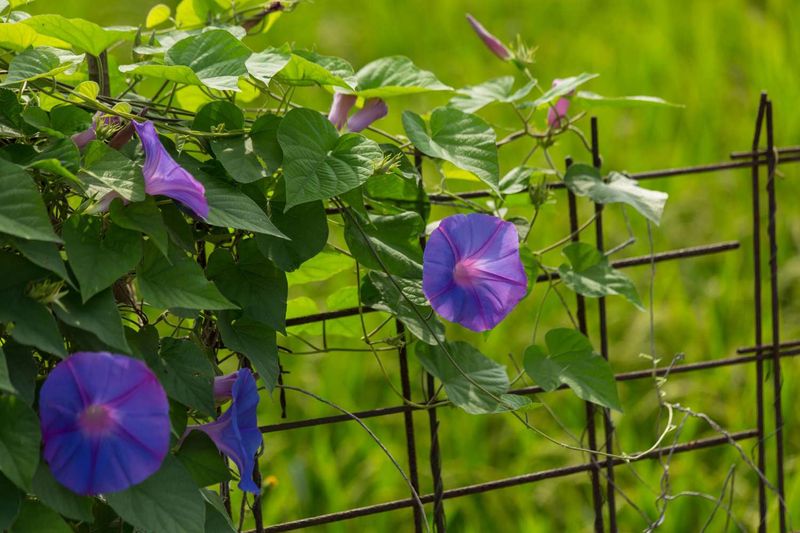
Every summer morning feels a little more cheerful when you look out the window and see blooms of Morning Glory.
This fast-growing annual vine is one of the easiest plants to grow from seed, and it rewards even beginner gardeners with a spectacular display of purple, blue, pink, and white flowers.
Kids especially love planting Morning Glory because they can watch it grow and bloom so quickly. Morning Glory is a sun worshipper, opening its flowers in the bright morning light and closing them up in the afternoon heat.
Where sunny days are plentiful, this vine absolutely thrives and can cover a fence from top to bottom in just a few weeks after planting. It uses twining stems to climb, so any fence with rails, wire, or lattice gives it plenty to grab onto.
Since Morning Glory is an annual in Alabama, you will need to replant it each spring, but it often self-seeds so generously that new plants pop up on their own.
Direct sow seeds in a sunny spot after the last frost date passes and water regularly until established.
It is cheap, cheerful, and absolutely unstoppable once the summer heat kicks in.