What California Gardeners Should Plant Before March Is Over
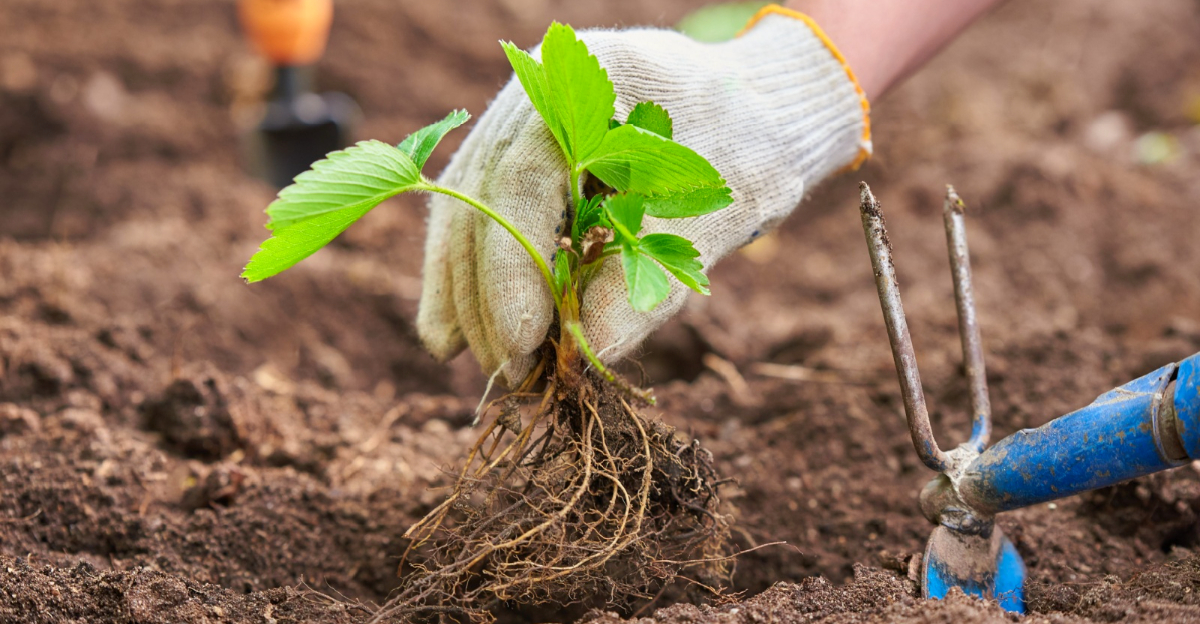
March is the ultimate “goldilocks” moment for California gardeners. The soil is finally waking up, the days are stretching out, and the window for cool-season planting is wide open across the state.
While much of the country is still staring at frost, our Mediterranean climate gives us a massive head start that only pays off if you get moving right now.
Whether you are gardening in the salty coastal breeze or the sun-drenched Central Valley, hitting the ground running before March ends is the secret to success.
Tucking your seeds and transplants into the earth now leads to earlier harvests and much tougher plants.
It is the best way to ensure your garden doesn’t just survive the transition into summer but truly thrives.
1. Sow Cool-Season Vegetables For Early Harvest
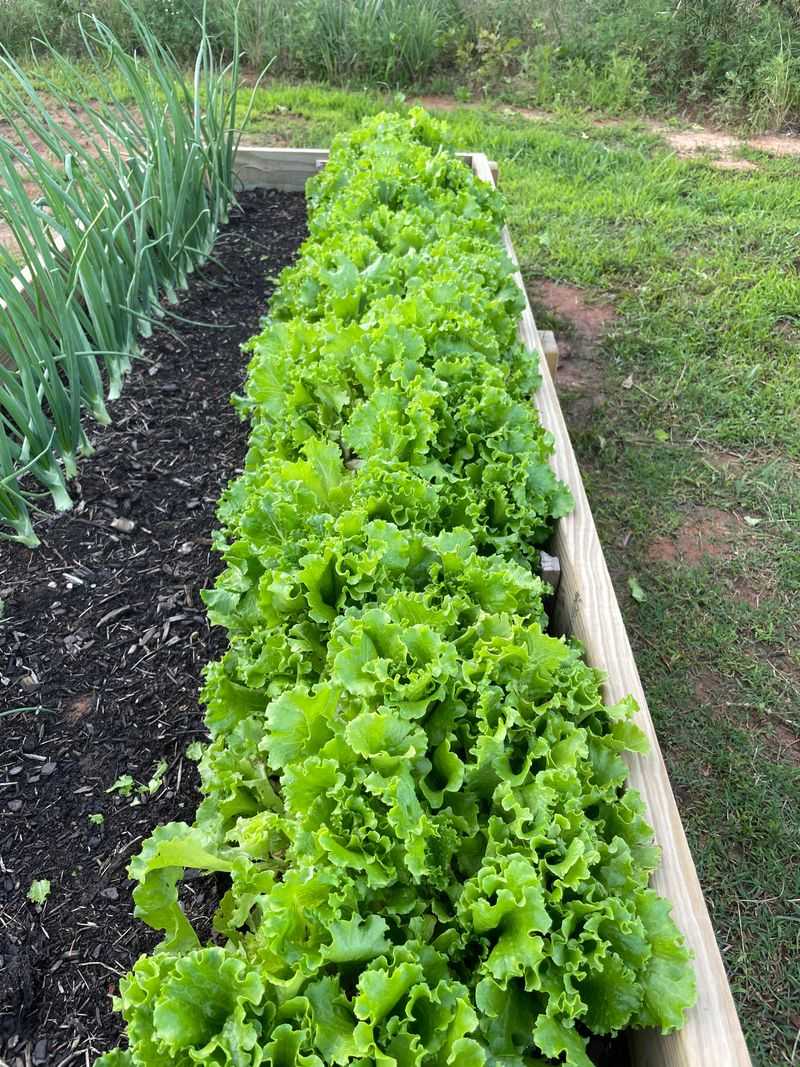
Late winter and early spring bring some of the most forgiving growing conditions California gardeners will see all year.
Soil temperatures hover in a sweet spot that cool-season crops love, and mild days mean seedlings face far less stress than they would in summer heat.
Crops like lettuce, spinach, arugula, Swiss chard, beets, and radishes all germinate quickly and grow steadily when planted before the end of March.
Prepare your bed by loosening the soil at least eight inches deep and mixing in a two-inch layer of compost. These vegetables do best in full sun along the coast and in partial afternoon shade in hotter inland valleys.
Direct-sow seeds according to packet spacing, and keep the soil consistently moist until germination, which usually happens within five to ten days for most greens.
Radishes are ready in as little as three to four weeks, making them a satisfying quick win for newer gardeners. Spinach and lettuce can be harvested as cut-and-come-again crops, meaning you snip outer leaves and the plant keeps producing.
In coastal California, cool-season greens can keep going well into June.
Inland gardeners should plan for a shorter window before summer heat arrives, so succession-sow every two weeks starting now to maximize your harvest before warm weather sets in.
2. Plant Peas For Sweet Spring Pods
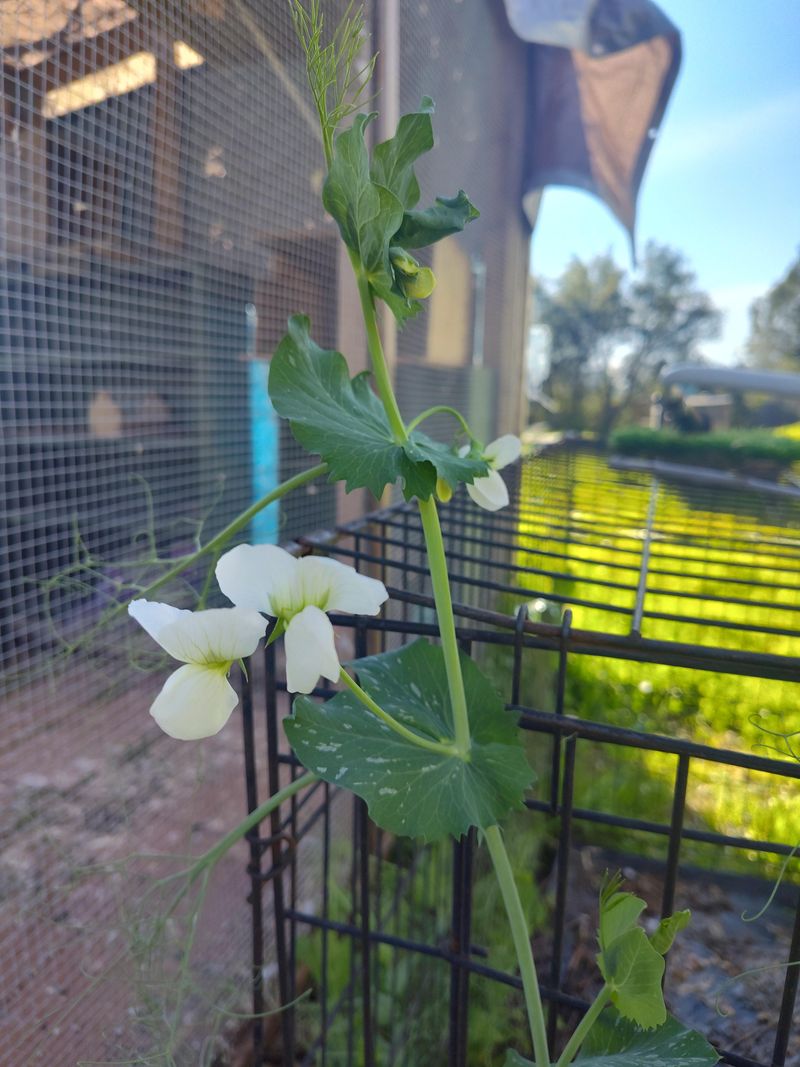
Few things signal the arrival of spring in a California garden quite like a row of peas climbing a trellis in the morning light.
Peas are a cool-season crop that genuinely thrives in the mild temperatures of late winter and early spring, and planting them before the end of March gives the vines time to establish and produce before summer heat shuts them down.
Both snap peas and shelling peas work well across most California regions.
Soak seeds overnight before planting to speed up germination. Sow them about one inch deep and two to three inches apart along a trellis, fence, or wire support that stands at least four to six feet tall for climbing varieties.
Peas prefer full sun and well-drained soil with a slightly neutral pH.
Work a handful of balanced vegetable fertilizer into the planting area before sowing, but avoid heavy nitrogen applications since peas fix their own nitrogen from the air.
Your California Garden Changes Every Week. Your Plan Should Too.
Gardening in California changes quickly throughout the season. Every Friday you’ll receive a simple weekly plan showing exactly what to plant, prune, fertilize, harvest, and protect so you never miss the right timing.
Water consistently but avoid waterlogged soil, which can cause root issues. In coastal California, peas can be productive well into May.
Inland gardeners in the San Joaquin Valley or the Sacramento area should expect pods to mature faster due to warmer afternoons, so check plants daily once flowering begins.
Harvest pods regularly to encourage the plant to keep setting new flowers and extending your overall picking season.
3. Scatter California Poppy Seeds For Bright Blooms
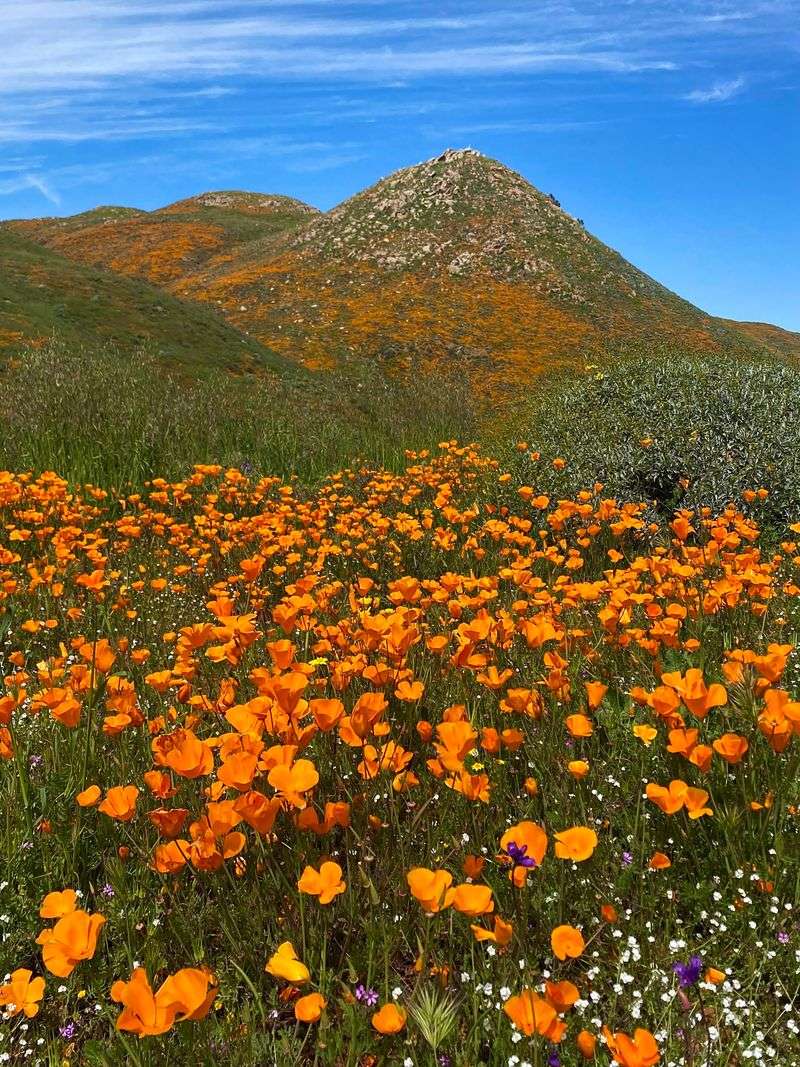
California’s state flower is as tough as it is beautiful, and late winter through early March is the ideal window to scatter seeds and let nature take over.
The California poppy thrives on neglect once established, asking for nothing more than well-drained soil and plenty of sunshine.
Sowing seeds now allows them to experience the cool, moist conditions they need for strong germination before spring warmth triggers explosive growth.
Prepare a sunny bed by loosening the top inch of soil and removing weeds.
Scatter seeds thinly across the surface and rake them in very lightly – poppies need light to germinate and should not be buried more than a quarter inch deep.
Water the area gently after sowing and keep it lightly moist until sprouts appear, which usually takes one to two weeks depending on soil temperature and sun exposure.
Once established, California poppies are remarkably drought-tolerant, making them a smart choice for water-conscious California gardeners.
They reseed readily, so a single planting can return for years in the right spot.
These cheerful orange blooms attract native bees and other beneficial insects, adding pollinator value alongside their visual appeal. In coastal gardens, expect blooms to appear by late April.
Inland and foothill gardens often see color earlier. Avoid transplanting poppies since they strongly prefer to be direct-sown and dislike having their roots disturbed.
4. Establish Native Perennials For Pollinator Support
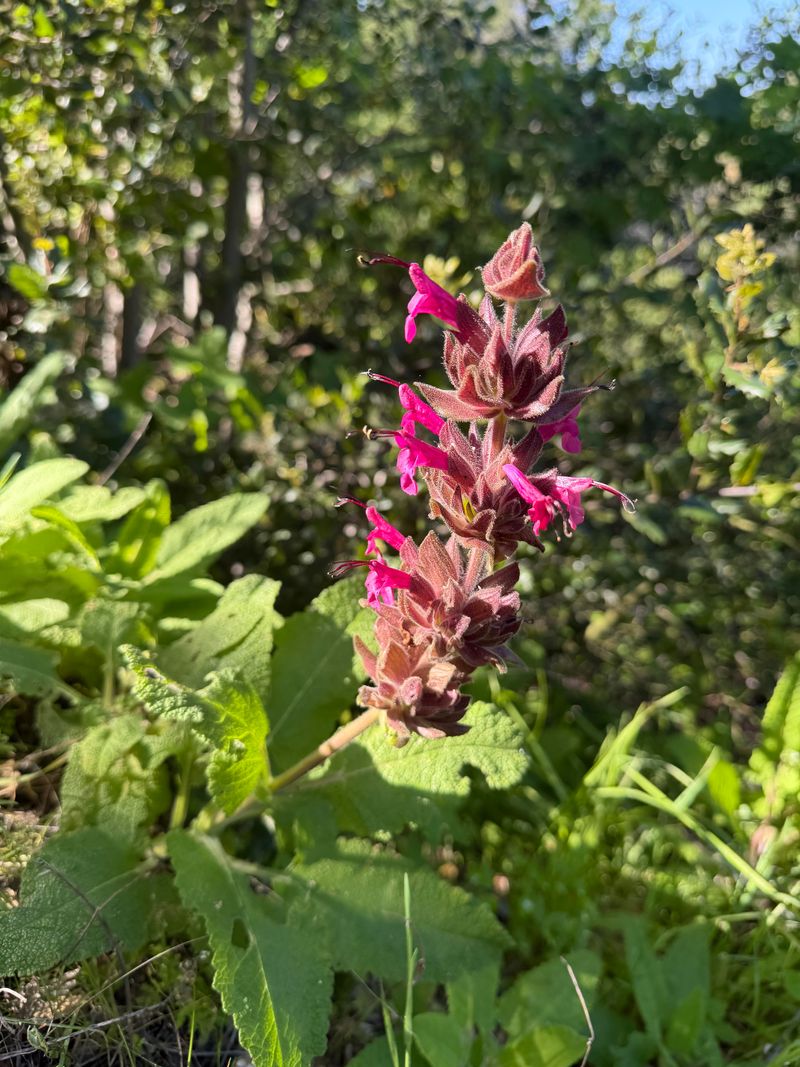
Planting California native perennials before March ends gives them the best possible start – cool temperatures and seasonal rainfall help roots settle in without the shock of transplanting into hot, dry summer soil.
Natives like Cleveland sage, coyote mint, yarrow, buckwheat, and toyon are not just beautiful; they create living habitat for native bees, butterflies, and hummingbirds that make the entire garden more productive and resilient.
Choose a site with full to partial sun and well-drained soil. Most California natives struggle in heavy clay that stays wet for long periods, so amend with coarse sand or plant on a slight slope if drainage is poor.
Dig a hole twice as wide as the root ball and set the plant at the same depth it was growing in the container.
Water thoroughly at planting and then every week or two during the first spring while roots are still establishing.
One of the biggest advantages of native perennials is their ability to thrive on reduced irrigation once established, which usually takes one full growing season. Coastal California gardeners can often rely on natural rainfall alone after the first year.
Inland and foothill gardeners may need occasional summer watering during the hottest months.
Avoid heavy fertilizing since most natives are adapted to lean soils and excess nutrients can actually reduce flowering and shorten the plant’s lifespan.
A two-inch layer of mulch around each plant helps retain moisture and suppress weeds through spring.
5. Set Bare-Root Fruit Trees While Dormant
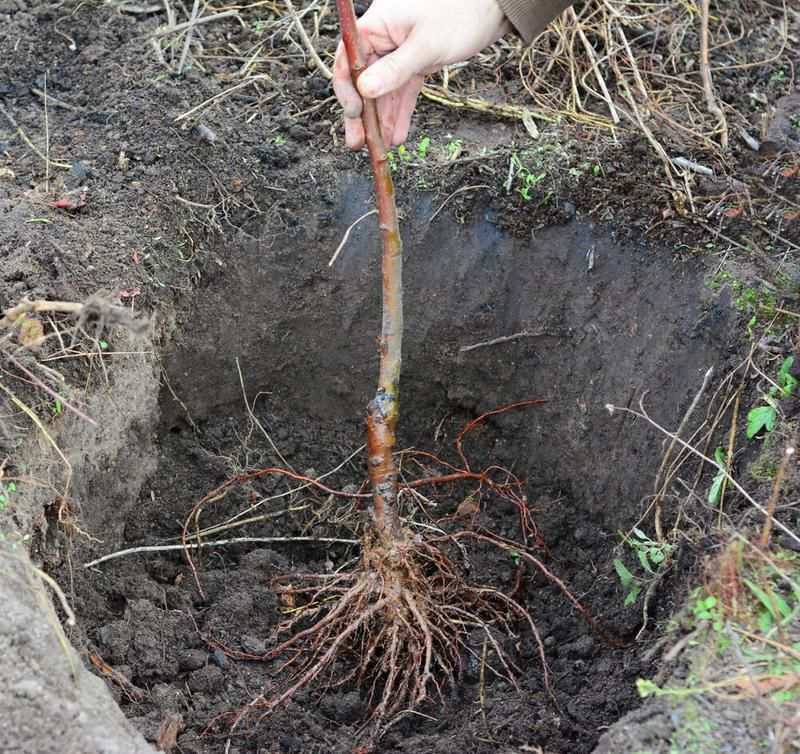
Bare-root season in California runs from roughly December through early March, and if you have not yet planted a fruit tree, now is the time to move.
Bare-root trees are sold without soil around their roots while they are still dormant, which makes them easier to handle, less expensive than container trees, and – when planted correctly – surprisingly quick to establish.
Cherries, apricots, peaches, plums, and apples are all commonly available bare-root in California nurseries through the end of winter.
Before planting, soak the roots in a bucket of water for several hours to rehydrate them. Dig a wide, shallow planting hole – wider than the root spread and just deep enough so the graft union sits two to four inches above the soil line.
Backfill with native soil rather than amended compost, which can discourage roots from spreading outward into the surrounding ground. Water deeply at planting and stake the young tree loosely to prevent wind rock.
California’s mild winters and long, warm growing seasons make it one of the best places in the country to grow stone fruit.
Chilling hours – the number of hours below 45 degrees Fahrenheit a tree needs to break dormancy – vary by region, so choose varieties suited to your local climate.
Low-chill varieties work well in coastal and Southern California areas, while inland valleys and foothill gardens can support higher-chill varieties that produce more abundantly with cold winters.
6. Plant Strawberries For A Summer Treat
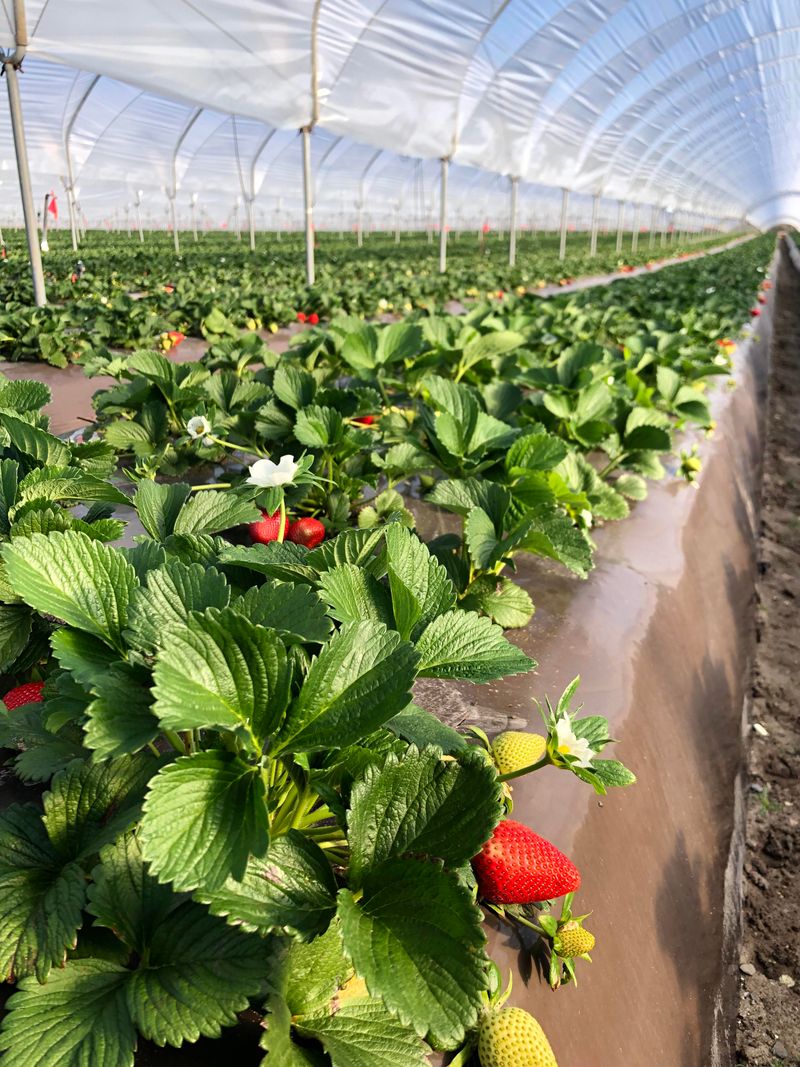
Strawberries planted in March have just enough cool weather ahead of them to put down strong roots before the heat of summer arrives, setting up gardeners for a generous harvest by late spring and early summer.
California produces more strawberries commercially than any other state, and home gardeners can enjoy the same success with the right varieties and a little soil preparation.
June-bearing types give one large flush of fruit, while day-neutral varieties like Seascape produce smaller but more consistent yields throughout the season.
Choose a sunny location with at least six to eight hours of direct light and well-drained, slightly acidic soil.
Amend the bed with compost before planting and set transplants so the crown – the point where leaves meet the roots – sits right at the soil surface, neither buried nor raised too high.
Space plants about twelve to eighteen inches apart in rows. Mulching around plants with straw helps retain moisture, regulate soil temperature, and keep berries clean as they develop.
Water regularly, aiming for about one inch per week, and avoid overhead watering once plants begin flowering to reduce fungal issues. Coastal California gardens tend to produce sweeter berries due to the cool, foggy mornings.
Inland gardeners should water more frequently during warm spells and consider light afternoon shade cloth to protect flowers from intense heat.
Remove runners during the first season to direct energy into fruit production rather than spreading new plants.
7. Sow Garlic And Onion Sets For Summer Harvest
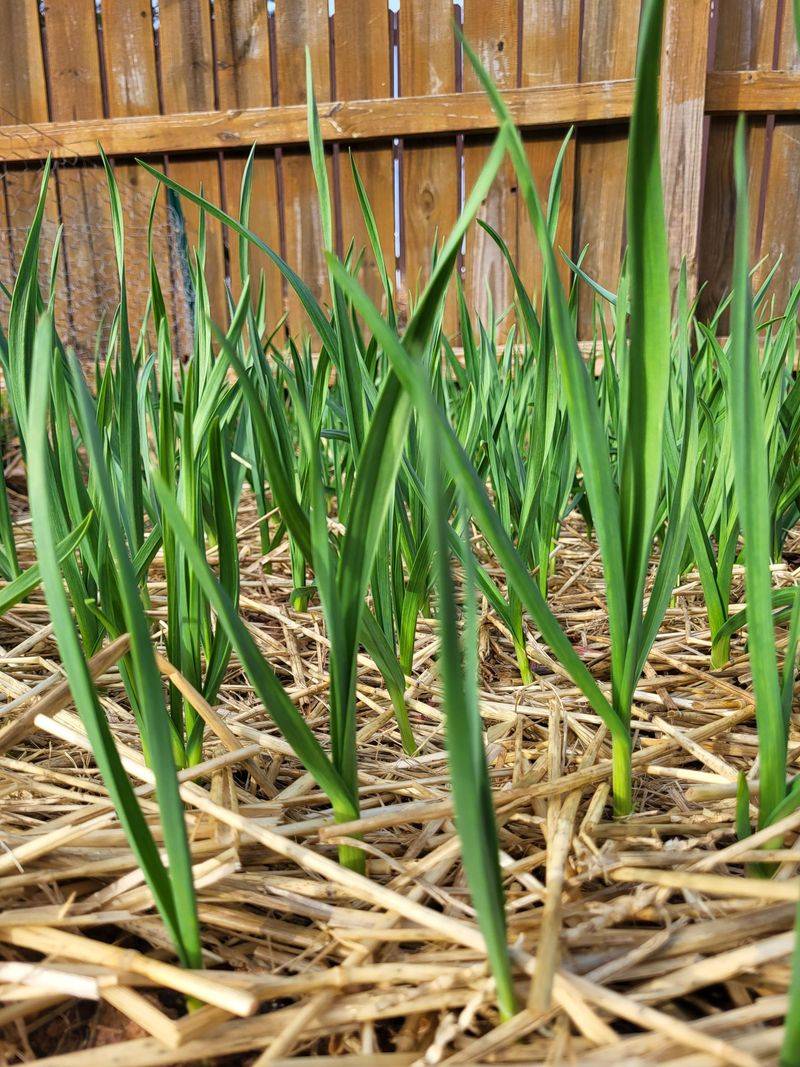
Garlic planted in fall gets most of the attention, but March is actually a solid window for planting onion sets and even garlic in California if you missed the earlier planting date.
Onion sets – small dormant bulbs sold in bags at garden centers – establish quickly and can be harvested as green onions within a few weeks or left in the ground to form full bulbs by early summer.
Short-day onion varieties like Granex and Red Burgundy are particularly well-suited to California’s latitude and day-length patterns.
Choose a bed with full sun and loose, well-drained soil. Onions are heavy feeders, so incorporate a nitrogen-rich fertilizer or well-aged compost before planting.
Set onion sets about one inch deep and four to six inches apart in rows spaced twelve inches apart. For garlic, select firm, healthy cloves from a reputable source and plant them pointed-end up at the same depth.
Both crops benefit from consistent moisture during their early growth stages.
Avoid planting in areas where onions or garlic were grown in the previous two seasons to reduce the risk of soilborne fungal problems.
In coastal California, the mild spring temperatures support steady leafy growth before bulbing begins.
Inland gardeners should expect faster maturity as temperatures rise. Stop watering about two weeks before harvest to allow the outer skins to cure properly.
Harvest when about half the tops have fallen over naturally, then cure bulbs in a dry, shaded, well-ventilated spot for two to three weeks.
8. Add Herbs For Fresh Flavor All Season
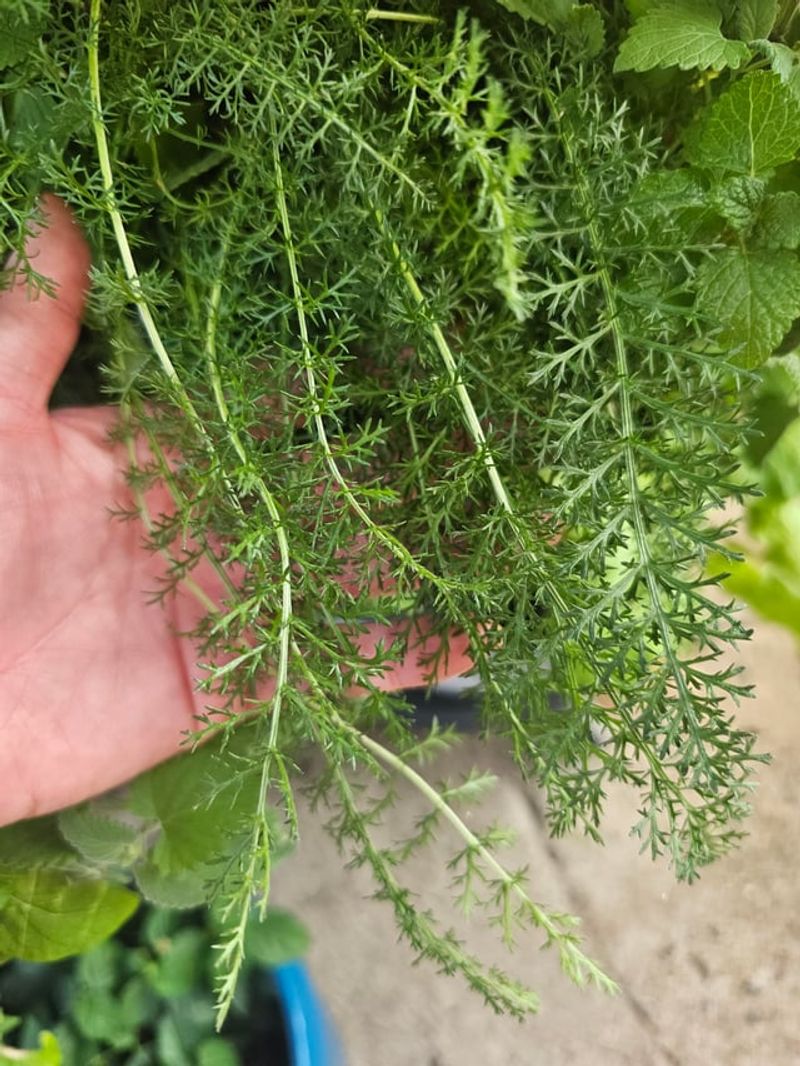
Growing your own herbs is one of the most practical and rewarding things a California gardener can do, and March is the right month to get cool-season varieties in the ground.
Parsley, cilantro, chives, and dill all prefer the mild temperatures of late winter and early spring, germinating quickly and producing lush, flavorful foliage before summer heat sends them bolting to seed.
Having fresh herbs just steps from the kitchen genuinely changes the way you cook.
Most herbs prefer well-drained soil and full sun, though cilantro and parsley tolerate light afternoon shade in warmer inland areas. Loosen the soil in a raised bed or container, mix in compost, and either direct-sow seeds or set out transplants from a nursery six-pack.
Cilantro should be direct-sown since it resents transplanting. Chives can be started from seed or divided from an existing clump if you already have one growing in the garden.
Water herbs consistently but avoid keeping the soil soggy, which can cause root problems in shallow-rooted plants like basil – though basil itself should wait until May when nights are reliably warm.
For now, focus on the cool-season performers.
In coastal California, cilantro and parsley can thrive for months without bolting. Inland gardeners should succession-sow cilantro every three weeks starting now, since it bolts quickly once temperatures climb past 80 degrees Fahrenheit.
A light trim every week or two encourages bushy, productive growth and delays flowering.
9. Plant Early-Blooming Bulbs For Colorful Borders
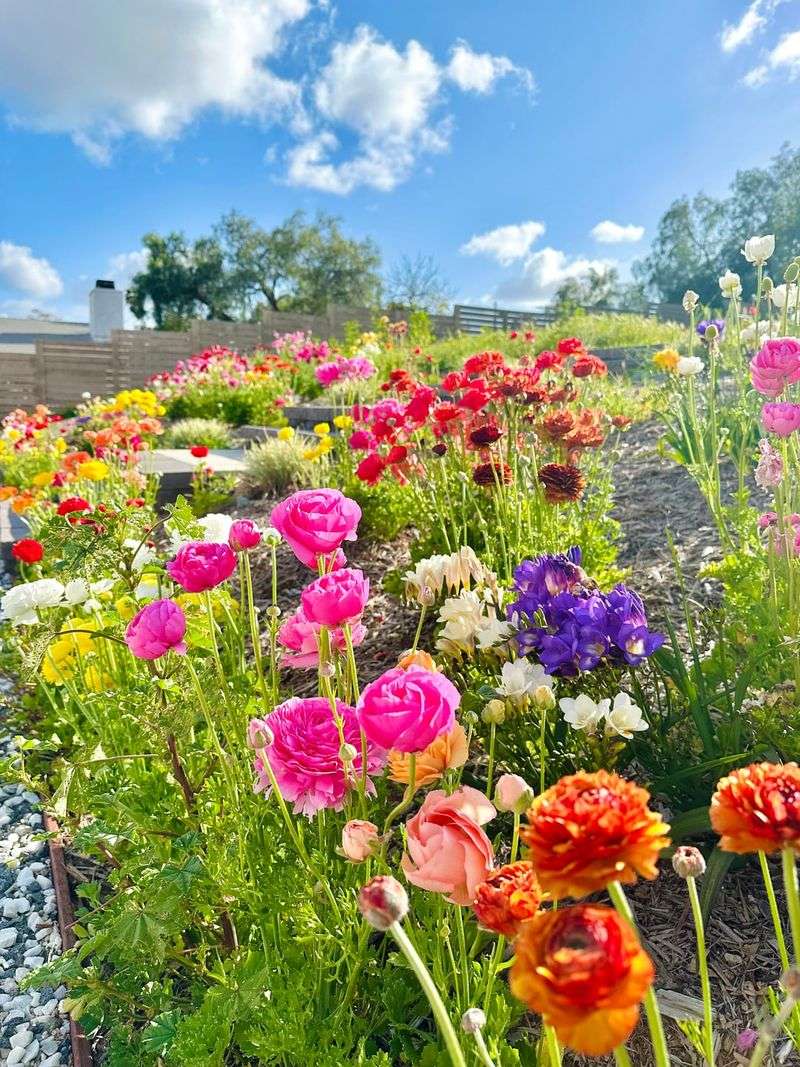
Spring-blooming bulbs like ranunculus, anemones, freesias, and sparaxis are some of the most cheerful additions a California gardener can make to a late-winter or early-spring planting list.
Unlike tulips and daffodils, which need extended cold to bloom well, these tender and semi-tender bulbs are right at home in California’s mild winters and are best planted in late winter through March for peak spring color.
They look spectacular in borders, containers, and cutting gardens.
Plant corms and tubers in well-drained soil with full sun. Ranunculus corms should be soaked in water for three to four hours before planting, then set claw-side down about two inches deep and six inches apart.
Anemone corms can be soaked similarly and planted at the same depth. Freesias and sparaxis go in about two inches deep as well.
All of these bulbs appreciate consistent moisture during active growth but need good drainage to avoid rot.
In coastal California, these bulbs often naturalize and return for several seasons without being lifted.
Inland and foothill gardeners may find that lifting and storing corms after foliage fades extends their longevity, especially where summers are very hot and dry.
Fertilize lightly with a low-nitrogen, high-phosphorus bulb fertilizer when shoots first emerge to encourage strong flowering. Deadhead spent blooms to keep plants tidy and redirect energy.
Once flowers fade and foliage yellows, reduce watering gradually to allow the corms to go dormant naturally.