9 Cold-Hardy Evergreen Shrubs For Michigan Front Yards
Michigan gardeners are finally watching the last snowbanks shrink, but as the first spring bulbs peek through, the landscape can still feel gray and hollow.
While we wait for the rest of the garden to wake up, cold-hardy evergreen shrubs are already doing the heavy lifting.
They are the secret to a front yard that looks polished and vibrant before the first leaf even unfurls on your maples. These workhorses provide the structure Michigan landscapes crave during this muddy transition.
By choosing the right varieties now, you ensure your yard can shrug off late frosts and unpredictable spring storms while providing vital shelter for returning birds.
From low-maintenance hedges to striking specimens, these nine shrubs are built to handle our climate and keep your home looking lush from now straight through next winter.
1. Arborvitae Creates A Year Round Green Screen
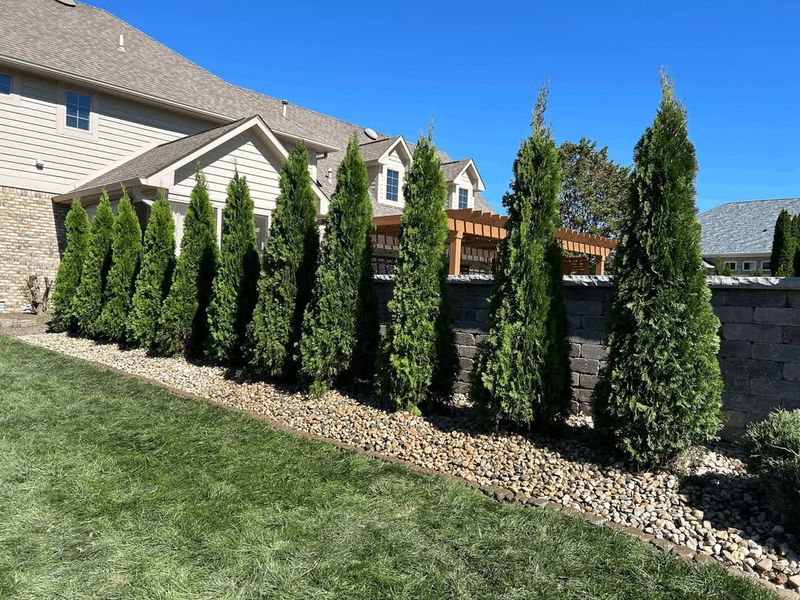
Few sights are more reassuring in a Michigan front yard than a solid wall of deep green arborvitae standing tall after a heavy snowstorm.
Thuja occidentalis, commonly called Eastern arborvitae or Northern white cedar, is one of the most reliable privacy shrubs you can plant in Michigan.
It is native to the Great Lakes region, which means it is genuinely built for this climate.
Arborvitae thrives in USDA hardiness zones 3 through 7, making it a safe bet even in Michigan’s coldest northern counties.
It prefers full sun but tolerates light shade, and it adapts well to a wide range of soil types as long as drainage is reasonable.
Mature height varies by cultivar, with popular varieties like Emerald Green reaching 10 to 15 feet and Techny growing even taller over time.
Plant arborvitae in a staggered double row for a dense windbreak along a driveway or property line. Space plants about 3 to 4 feet apart for a tight screen.
Minimal pruning is needed, which makes maintenance easy. Birds love nesting in its dense branches, adding wildlife value alongside its striking year-round visual presence.
2. Juniper Adds Texture And Color In Any Yard
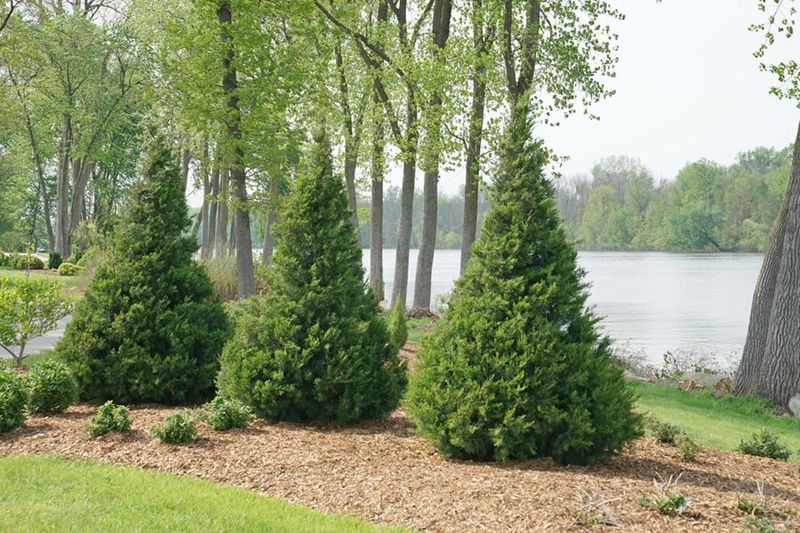
Walk through almost any established Michigan neighborhood and you will spot junipers doing their quiet, reliable work in front yard beds, along foundations, and spilling over retaining walls.
Juniperus species offer an enormous range of shapes, from low groundcover types to upright columnar forms, making them one of the most versatile evergreen shrubs available to Michigan gardeners.
Junipers are extremely cold-hardy, with many cultivars rated to zones 3 or 4. They thrive in full sun and actually prefer lean, well-drained soils, which makes them a practical choice for sandy or rocky Michigan sites where other shrubs struggle.
Blue chip, Sea Green, and Skyrocket are popular cultivars that bring varying textures and color tones ranging from silvery blue to bright green.
One underappreciated quality of juniper is its winter color. Many varieties take on warm bronze or purple tones as temperatures fall, adding unexpected interest to the front yard during the coldest months.
Junipers also provide dense cover for birds seeking shelter from winter storms. Pruning is minimal, though removing dead interior branches occasionally helps airflow and keeps plants looking tidy.
Your Michigan Garden Changes Every Week. Your Plan Should Too.
Gardening in Michigan changes quickly throughout the season. Every Friday you’ll receive a simple weekly plan showing exactly what to plant, prune, fertilize, harvest, and protect so you never miss the right timing.
Pair a low-spreading juniper with a taller arborvitae for layered front yard texture.
3. Yew Offers Dark Green Elegance All Winter
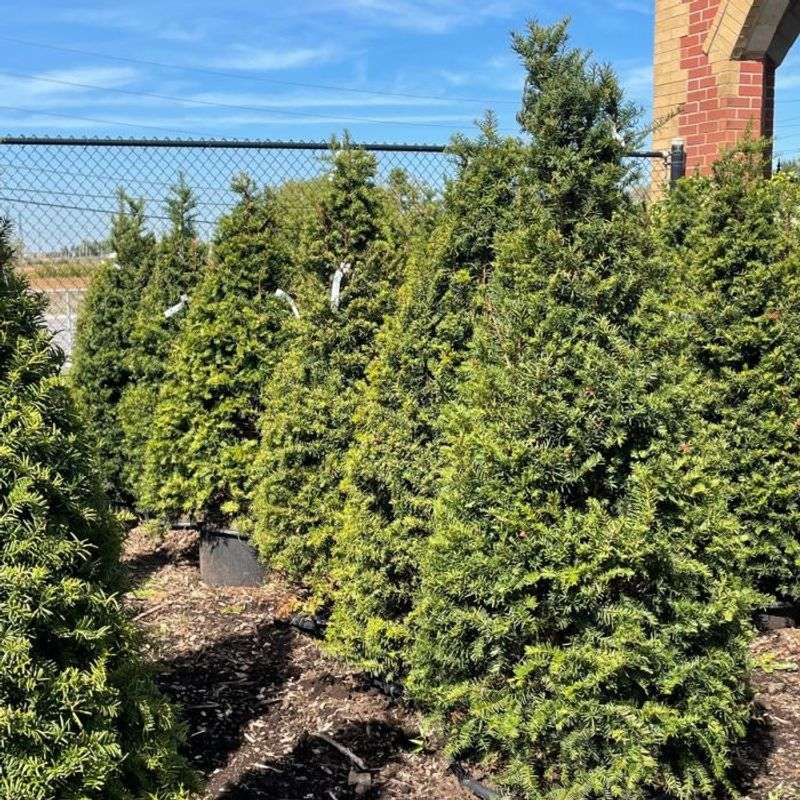
When the landscape goes dormant and most shrubs fade to brown, yew holds its rich, dark green color with a quiet confidence that is hard to match.
Taxus cuspidata, the Japanese yew, and its many hybrids are among the most shade-tolerant evergreen shrubs available for Michigan front yards, which makes them a go-to choice for north-facing foundations or spots under large trees.
Yews are rated for zones 4 through 7 and handle Michigan winters well when planted in a sheltered location away from desiccating winter winds.
They prefer well-drained soil and do not tolerate standing water, so raised beds or sloped sites work best.
Growth is relatively slow, but over time dense forms like Hicksii or Densiformis create elegant, formal hedges that respond beautifully to shearing.
Bright red berries appear in fall and persist through winter, adding seasonal interest and attracting birds. Yews are highly adaptable to pruning and can be shaped into tight hedges, rounded specimens, or even simple topiary forms.
Keep in mind that all parts of the yew plant are toxic to people and pets, so placement away from play areas is a smart consideration for most Michigan households.
4. Boxwood Brings Classic Form And Structure
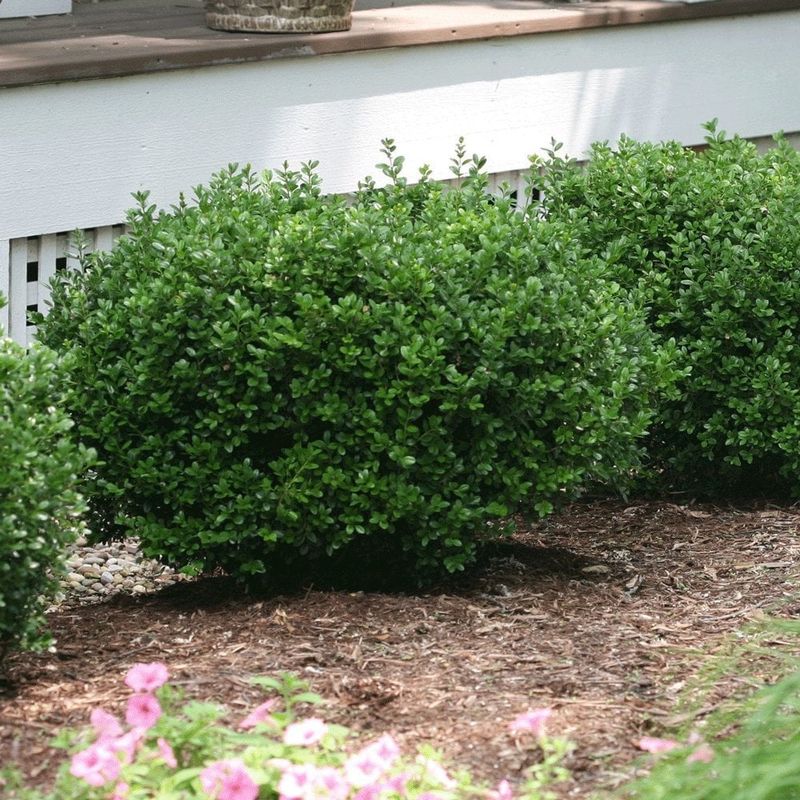
There is something timeless about a well-placed boxwood hedge framing a front door or lining a walkway.
Buxus species have been used in formal garden design for centuries, and their dense, small-leafed foliage holds a crisp, tidy appearance through Michigan’s winters when planted in a protected spot.
Cold-hardy cultivars have made boxwood much more accessible to Michigan gardeners than older varieties once were.
Green Velvet and Green Mountain are two standout cultivars for Michigan, both rated to zone 4. They prefer full sun to part shade and well-drained, slightly alkaline soil.
Mulching the root zone helps protect against frost heaving during Michigan’s freeze-thaw cycles, which can be hard on shallow-rooted shrubs. Avoid planting in low spots where cold air settles or water pools after snowmelt.
Winter bronzing is a common characteristic in boxwood, where foliage temporarily shifts to a yellow-bronze tone during the coldest months before returning to green in spring.
This is a natural response to cold and not a sign of stress.
Boxwoods respond well to light annual pruning in late spring. Combine them with taller evergreen shrubs like arborvitae or yew for a layered, structured front yard design that looks polished all year long.
5. Holly Provides Evergreen Leaves And Winter Interest
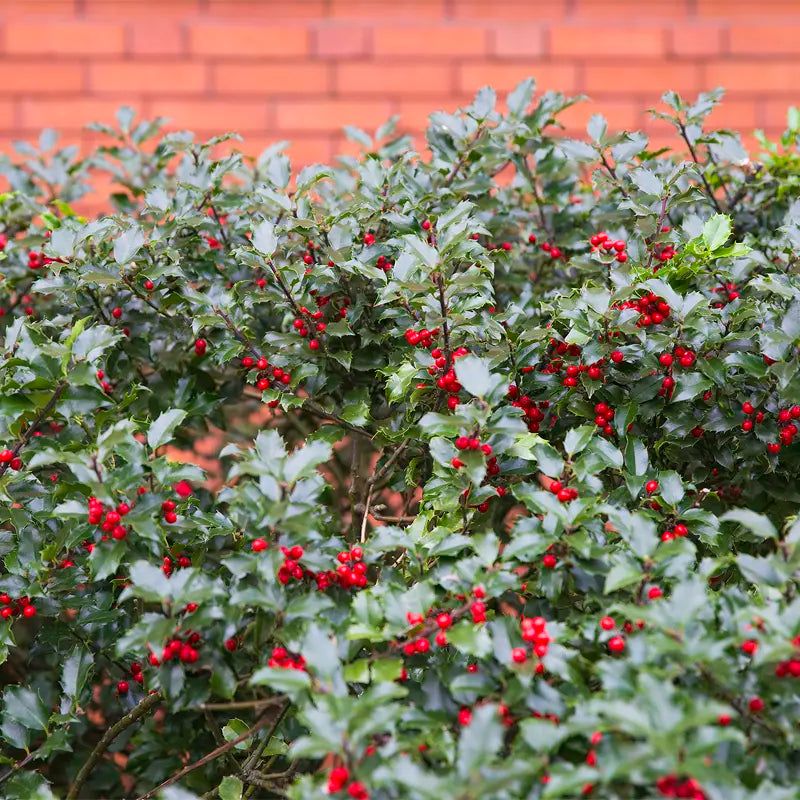
Few plants deliver as much visual punch in a Michigan winter as a holly shrub loaded with glossy leaves and bright red berries.
Ilex meserveae hybrids, including Blue Princess and Blue Girl, are bred specifically for cold climates and bring both ornamental beauty and practical toughness to Michigan front yards.
The deep blue-green foliage stays vibrant even through the harshest cold snaps.
Blue Girl and Blue Princess hollies are rated for zones 5 through 9, making them well-suited for most of Michigan’s lower peninsula. They prefer full sun to part shade and moist, well-drained, slightly acidic soil.
One important planting note: female hollies require a male pollinator nearby to produce berries.
Blue Boy or Blue Prince work well as male companions and should be planted within about 50 feet of the female plant.
The glossy red berries that appear in fall persist through winter, providing an important food source for robins, cedar waxwings, and other birds that winter in Michigan. Holly makes an excellent foundation planting or low-maintenance hedge.
Inkberry holly, Ilex glabra, is a native alternative with black berries that is especially suited to moist or wet soils and supports native wildlife throughout the season.
6. Rhododendron Blooms And Holds Leaves In Cold
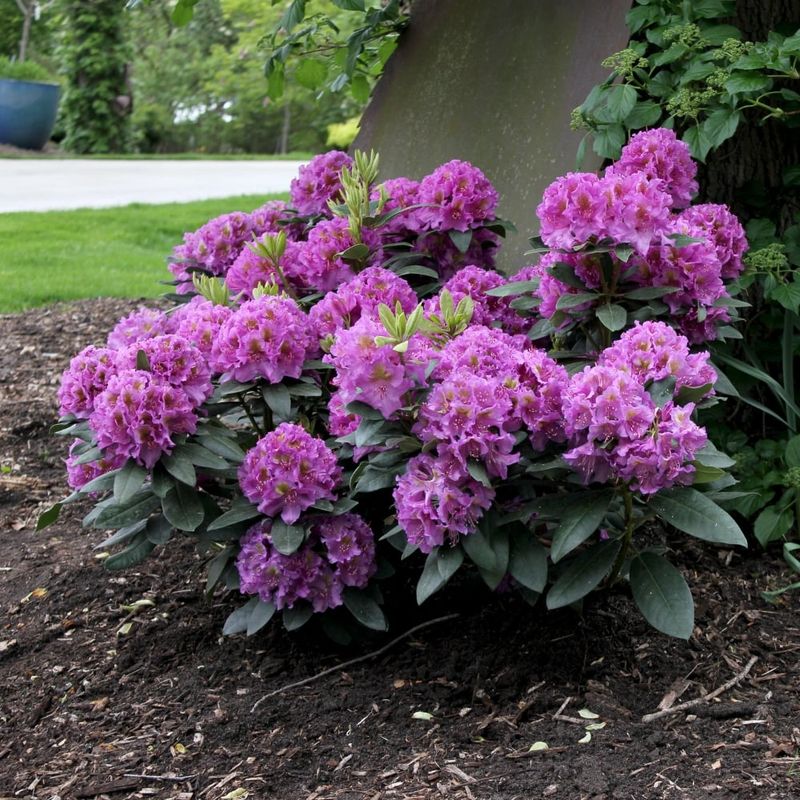
Seeing a rhododendron burst into bloom while patches of snow still linger on the ground is one of the most exciting moments in a Michigan spring garden.
PJM Elite and PJM Compact are two cold-hardy rhododendron cultivars that have become favorites among Michigan gardeners because they reliably survive zone 4 winters and reward that patience with stunning early-season color.
Rhododendrons prefer partial shade, especially protection from afternoon sun and drying winter winds. They need moist, well-drained, acidic soil with a pH between 4.5 and 6.0.
Amending Michigan’s often clay-heavy soils with peat moss or composted pine bark helps create the loose, acidic environment these shrubs love. Avoid planting in low areas where water collects, as soggy roots are a common problem in spring.
PJM cultivars typically reach 3 to 6 feet tall and wide, making them a great mid-height choice for layered front yard planting.
The deep green foliage turns a rich plum-burgundy in fall, adding a second season of visual interest beyond the spring flower show.
Rhododendrons attract early pollinators including native bees and hummingbirds during their bloom period, giving your front yard ecological value alongside its undeniable curb appeal.
7. Leatherleaf Mahonia Adds Tough Foliage And Winter Flowers
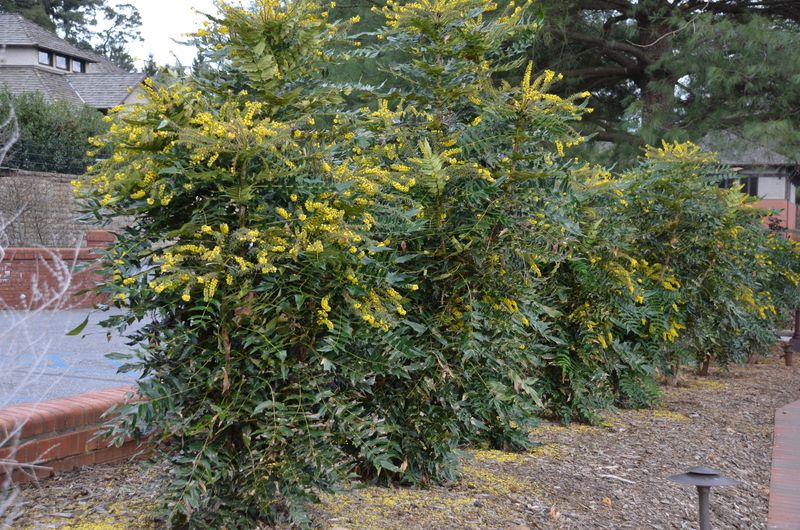
Not many shrubs can pull off flowering in late winter while snow is still on the ground, but leatherleaf mahonia manages it without breaking a sweat.
Mahonia bealei is a bold, architectural evergreen shrub with spiny, holly-like leaflets arranged along stiff upright stems.
Its unusual appearance gives Michigan front yards a dramatic, almost tropical-looking accent that stands out against the muted winter landscape.
Leatherleaf mahonia is rated for zones 5 through 8, placing it within reach for most of Michigan’s lower peninsula, especially in urban areas with slightly warmer microclimates.
It strongly prefers shade or partial shade and moist, well-drained, organically rich soil.
North or east-facing foundation beds sheltered from harsh winter winds are ideal planting spots, as exposure to drying winter sun can cause foliage damage.
Fragrant yellow flower clusters appear from late winter into early spring, drawing in any early-foraging native bees that are out on warm days. Blue-black berries follow the flowers and attract birds through spring.
Mature plants reach 5 to 10 feet tall with an equally wide spread.
Leatherleaf mahonia pairs beautifully with lower-growing shade-tolerant evergreens like leucothoe or pieris for a layered, textured shade garden planting that looks interesting in every season.
8. Leucothoe Arching Leaves Add Color And Grace
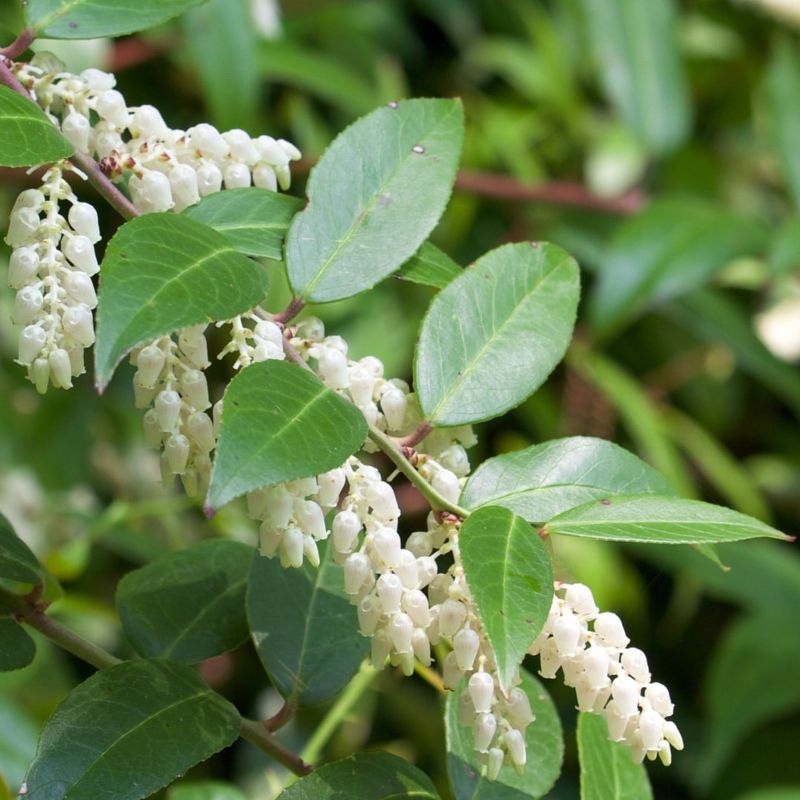
Graceful is probably the best single word to describe leucothoe.
With its long, arching stems and narrow, lance-shaped leaves, Leucothoe fontanesiana adds a flowing, almost waterfall-like quality to shaded front yard beds that most other evergreen shrubs simply cannot replicate.
It is a plant that earns compliments from neighbors who have never seen it before.
Drooping leucothoe is rated for zones 4 through 6, making it a solid fit for Michigan’s lower peninsula. It thrives in partial to full shade and moist, acidic, well-drained soil.
Much like rhododendron, it benefits from soil amended with peat or compost to improve acidity and drainage.
Avoid planting in exposed, windy spots because winter wind and sun can cause leaf browning, especially on newer growth.
One of leucothoe’s best qualities is its seasonal color change. The foliage shifts from glossy green in summer to rich burgundy and bronze tones in fall and winter, giving the plant a completely different look depending on the time of year.
Mature plants reach about 3 to 5 feet tall and spread slightly wider. Plant leucothoe in front of taller shade-loving shrubs like mahonia or rhododendron to create a soft, layered look that fills the bed beautifully at multiple heights.
9. Pieris Offers Evergreen Foliage And Early Blooms
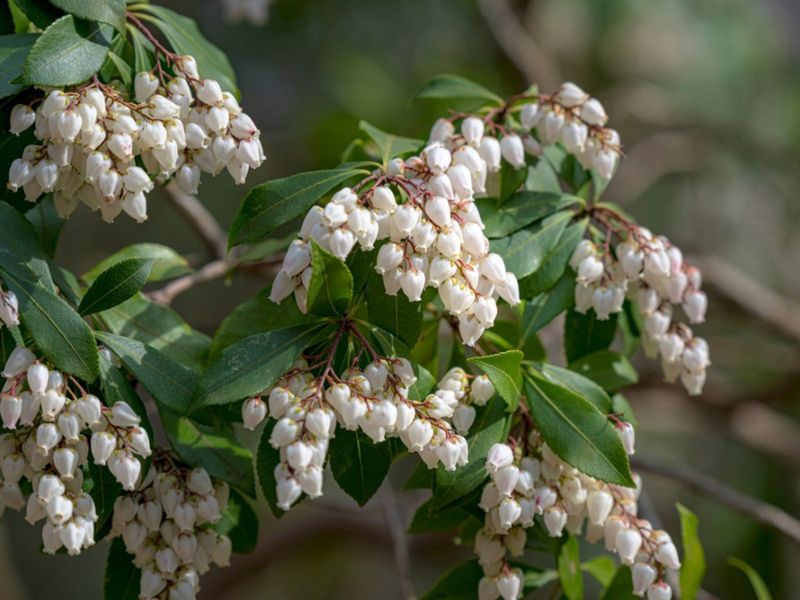
Early spring in Michigan can feel like it will never fully arrive, which is exactly why pieris earns so much appreciation from gardeners who grow it.
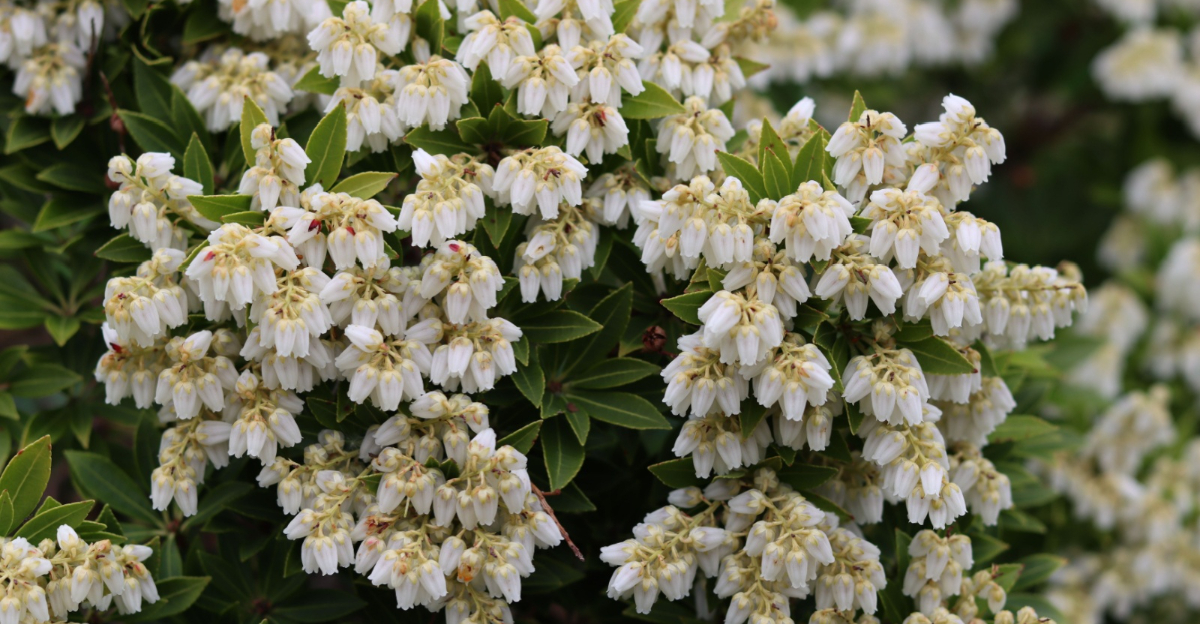
Pieris japonica, commonly called Japanese andromeda, begins forming its drooping flower buds in fall, holds them all winter long, and then opens them into elegant chains of small white or pink bell-shaped flowers in early spring, sometimes while frost is still possible.
Pieris is rated for zones 4 through 8 and grows well in partial shade with moist, well-drained, acidic soil.
It shares soil preferences with rhododendron and azalea, making it an excellent companion plant in a mixed acid-loving shrub bed.
Amending with compost or peat moss helps in Michigan’s clay-heavy soils. Avoid hot, dry, or exposed sites, as pieris prefers cool, sheltered conditions.
The new growth that emerges in spring is a standout feature, flushing in shades of bright red or copper before maturing to deep green.
This colorful new foliage adds a second wave of seasonal interest alongside the flowers.
Mature plants reach 6 to 8 feet tall and about 4 to 6 feet wide. Pair pieris with leucothoe or boxwood in a shaded foundation bed for a layered, four-season planting that looks polished from the street.