8 Best Trees For Privacy In Georgia Gardens
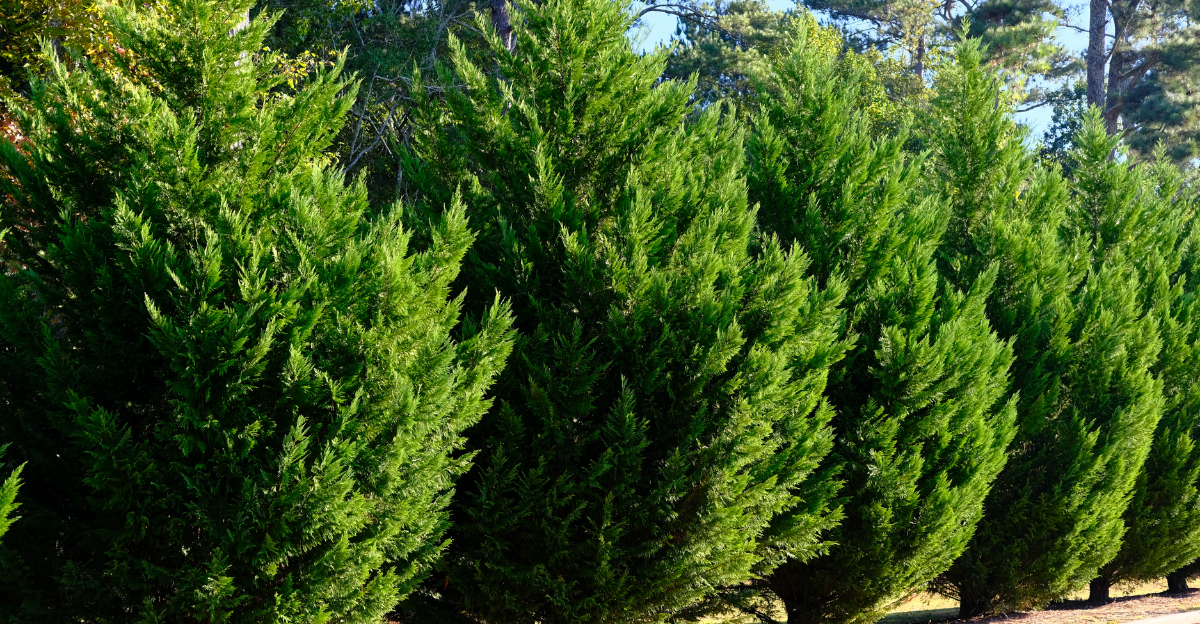
Georgia gardens are full of beauty, but sometimes the neighborhood view or passing traffic makes you crave a little more privacy.
Many gardeners remember planting small shrubs that never fully blocked the view, leaving their outdoor spaces feeling exposed.
The right trees can change everything. Tall, dense, and well-chosen species can provide natural screening, shade, and even wind protection.
From evergreens that stay vibrant all year to deciduous trees that offer seasonal interest, selecting privacy trees for your garden helps create a personal outdoor haven where you can relax, entertain, or simply enjoy quiet mornings with coffee.
Planting trees now sets the stage for years of outdoor comfort. Once they start filling in, you’ll notice your garden evolving into a private, peaceful retreat that invites longer afternoons and outdoor enjoyment.
1. Thuja Green Giant With Towering Year-Round Privacy
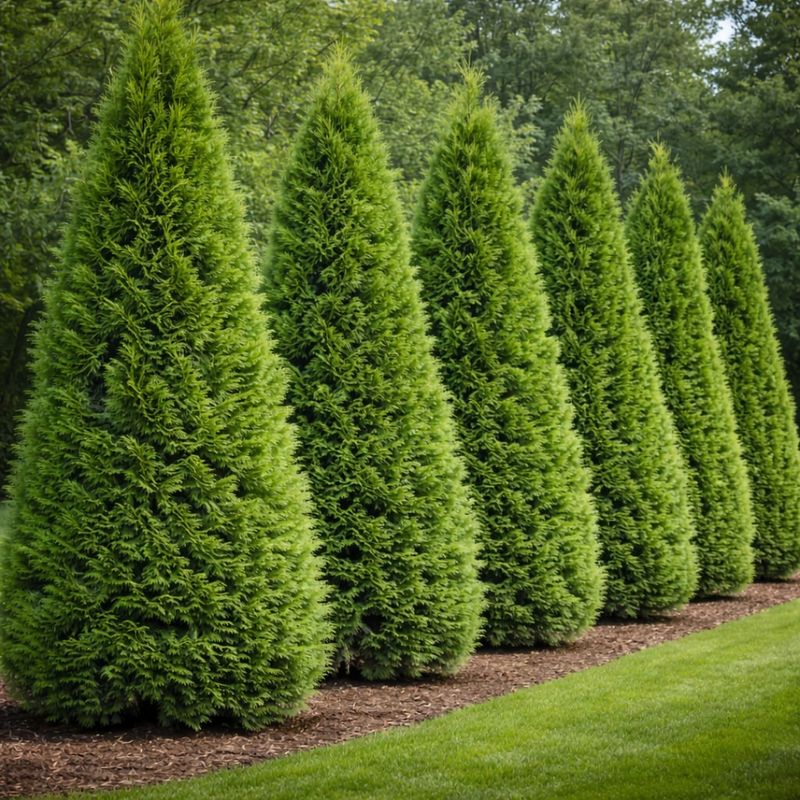
If speed matters to you, the Thuja Green Giant might just be your new best friend in the garden. This powerhouse evergreen can shoot up to three feet per year, reaching a mature height of 50 to 60 feet.
That kind of rapid growth means you will have a thick, green privacy wall in just a few years after planting.
Thuja Green Giant is a hybrid arborvitae that adapts beautifully to Georgia’s warm, humid climate. It handles heat well and can tolerate a range of soil types, from sandy coastal soils to the red clay found across much of the state.
Once it gets settled in, it is surprisingly low-maintenance and does not need much fussing over.
Thuja Green Giant is generally less favored by deer than some other plants, but heavy deer pressure may still lead to browsing in some areas, so local deer activity should be considered. The dense, feathery foliage stays dark green all year long, giving your yard a polished, finished look in every season.
Plant them about six to eight feet apart to create a solid, unbroken screen.
Watering regularly during the first growing season will help the roots establish strong, deep systems. After that, the trees become much more self-sufficient.
They prefer full sun but can handle a bit of afternoon shade without losing their shape or color. For homeowners across Georgia looking for a reliable, fast-growing privacy solution, Thuja Green Giant consistently earns top marks from landscapers and garden enthusiasts alike.
2. Leyland Cypress That Grows Fast And Stays Dense
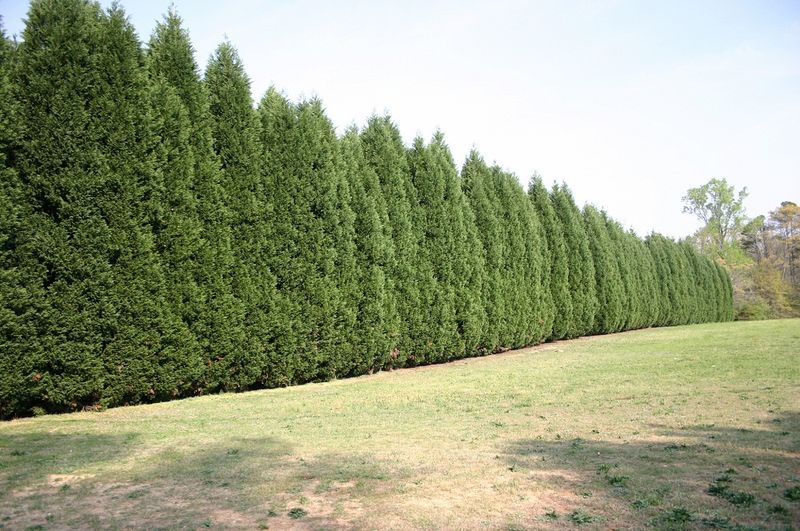
Walk through almost any Georgia neighborhood and you are likely to spot a row of Leyland Cypress trees standing tall along a property line. These trees have earned their reputation as one of the most popular privacy screens in the South, and for good reason.
They grow fast, look great, and do an excellent job of blocking unwanted views.
Leyland Cypress can reach heights of up to 60 feet and typically grows about two to three feet per year under the right conditions. They prefer full sun and well-drained soil, which makes them a natural fit for many parts of Georgia.
If your yard gets plenty of sunshine throughout the day, these trees will reward you with thick, feathery green branches that fill in beautifully.
Your Georgia Garden Changes Every Week. Your Plan Should Too.
Gardening in Georgia changes quickly throughout the season. Every Friday you’ll receive a simple weekly plan showing exactly what to plant, prune, fertilize, harvest, and protect so you never miss the right timing.
One thing to keep in mind is spacing. Planting them about six to ten feet apart gives each tree enough room to grow properly while still creating that dense, wall-like effect most homeowners want.
Too close together and they can struggle for nutrients; too far apart and the privacy gaps can be noticeable.
Watering consistently during the first year is key to getting them off to a strong start. After establishment, they become fairly drought-tolerant, which is helpful during Georgia’s hot summer months.
Leyland Cypress also holds up well against wind, making it a smart choice for open properties or yards near busy roads. It is a classic, dependable option that Georgia gardeners have trusted for decades.
3. Eastern Red Cedar With Fragrant, Evergreen Foliage
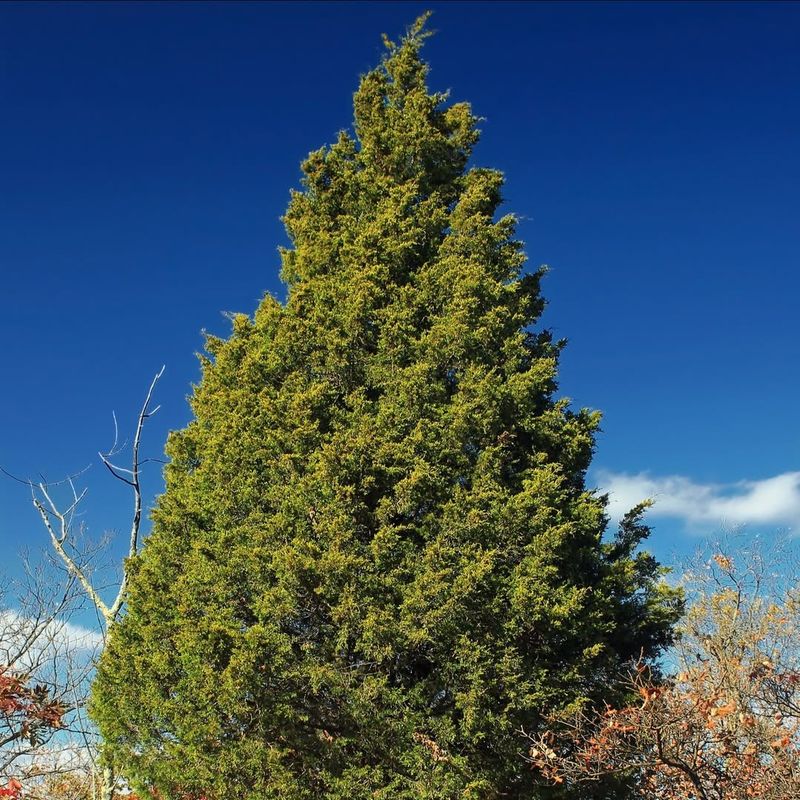
There is something wonderfully rugged about the Eastern Red Cedar. This native evergreen has been growing across Georgia long before landscapers ever started planting it in rows, and its toughness is a big part of what makes it so valuable.
It thrives in conditions that would stress out many other trees, including rocky soil, poor drainage, and long dry spells.
Eastern Red Cedar can grow 40 to 50 feet tall with a spread that creates impressive coverage. The dense, dark green to blue-green foliage provides a year-round screen that feels completely natural and fits right into Georgia’s native landscape.
Eastern Red Cedar provides berry‑like cones that many bird species use as a food source, especially in winter when other food options are limited.
Because it is native to the region, Eastern Red Cedar requires very little extra care once it is established. You will not need to worry much about watering, fertilizing, or pest control.
It simply grows and thrives on its own, which makes it an excellent low-effort option for busy homeowners throughout Georgia.
One fun fact: the wood of Eastern Red Cedar has a distinct, pleasant aroma and has been used for centuries in closets and chests to repel insects naturally. For privacy purposes, planting these trees about six to eight feet apart works well for building a solid screen.
Whether you live in North Georgia’s hills or the flat coastal plain, this hardy native tree is a fantastic long-term investment for your property.
4. American Holly And Its Glossy, Bird-Attracting Leaves
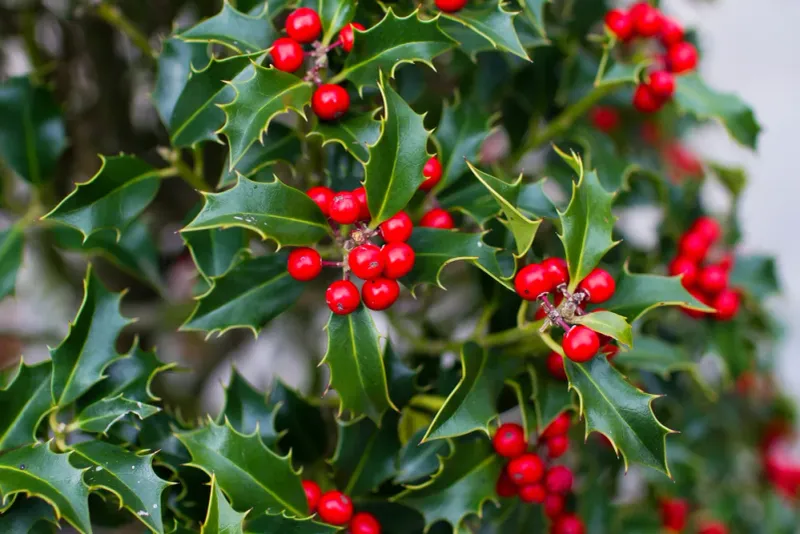
Few trees bring as much year-round charm to a Georgia garden as the American Holly. With its glossy, deep green leaves and brilliant red berries that appear in fall and winter, this tree is as beautiful as it is functional.
Its dense, spiny foliage creates a significant barrier that can help discourage people and some wildlife from crossing, making it an effective natural screen in many settings.
American Holly is a true native of the eastern United States and feels right at home in Georgia’s climate. It grows at a moderate pace, typically adding one to two feet per year, and can reach heights of 40 to 50 feet at maturity.
The thick, spiny leaves stay on the tree all year, so your privacy screen never has a bare or thin season.
Wildlife benefits greatly from American Holly, especially songbirds and cedar waxwings that flock to the berries during the colder months. Planting a row of these trees along your property line creates not just privacy but a lively, natural habitat that adds life and movement to your yard throughout the year.
American Holly grows best in full sun to partial shade and prefers moist, well-drained, slightly acidic soil, which is common across much of Georgia. If you want berries, you will need at least one male tree planted near your female trees for pollination.
With proper spacing of about eight to ten feet, this elegant native tree creates a striking, long-lasting privacy screen that Georgia gardeners love.
5. Nellie Stevens Holly With Vibrant Green Screening Power
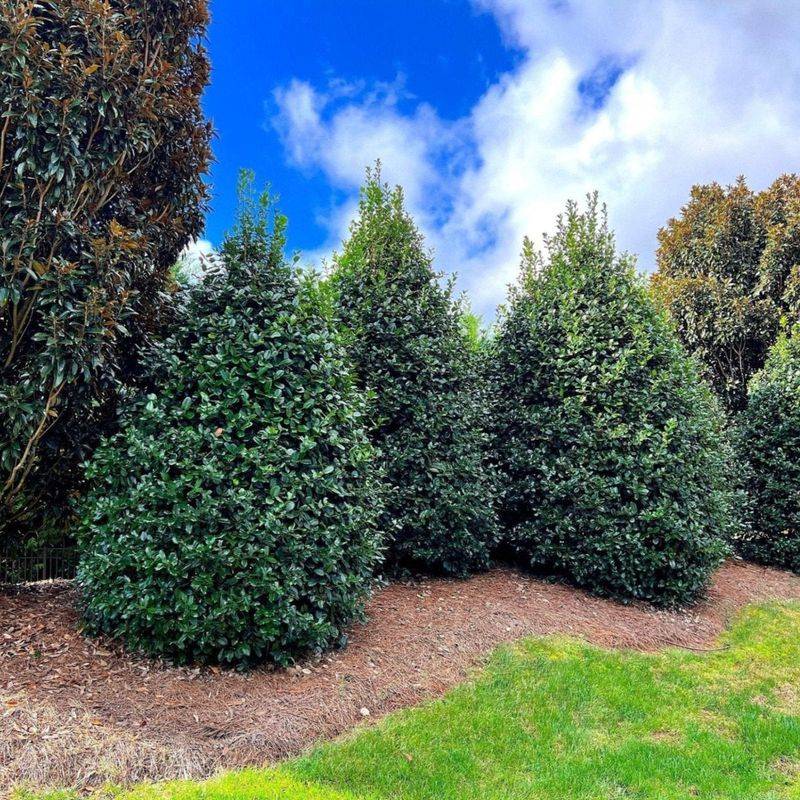
The kind of tree that makes neighbors stop and ask, “What is that, and where can I get one?” Nellie Stevens holly stands out in any garden. This hybrid holly has become incredibly popular across Georgia because it checks nearly every box a homeowner could want in a privacy tree.
It grows fast, stays dense, looks polished year-round, and even produces cheerful red berries in winter.
Growing in a naturally pyramidal shape, Nellie Stevens Holly can reach 15 to 25 feet tall and about 8 to 12 feet wide. It fills in quickly and holds its shape without needing constant trimming.
The glossy, dark green leaves are thick and spiny, creating a barrier that is both visually appealing and practically impenetrable.
One of its standout qualities is wind resistance. Georgia can experience strong storms, especially during summer and fall, and Nellie Stevens Holly handles those conditions without much damage.
It also performs well in full sun, which makes it adaptable to most open backyard settings across the state.
Unlike some hollies, Nellie Stevens Holly often sets berries without a nearby pollinator, though berry production may still improve with compatible pollinators nearby. Plant them about five to six feet apart for a tight, formal hedge look, or give them eight to ten feet for a more natural, layered screen.
Either way, this holly is a top performer in Georgia gardens and one of the most recommended privacy trees by landscape professionals throughout the region.
6. Wax Myrtle That Fills Your Garden With Fragrance
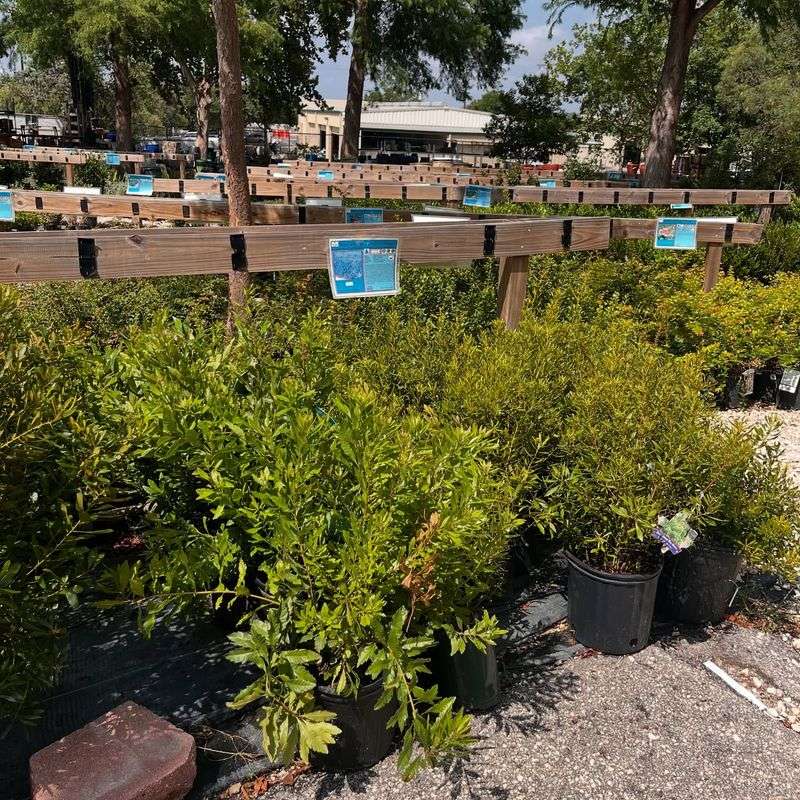
One of the underappreciated gems of the Southern landscape, wax myrtle adds beauty and versatility to any garden. While it does not always get the attention of flashier trees, it quietly does an outstanding job of creating privacy, especially in areas where space is limited or conditions are tough.
Native to the southeastern United States, it is perfectly at home throughout Georgia from the coast all the way up to the Piedmont.
Growing as either a large shrub or a small multi-trunk tree, Wax Myrtle typically reaches 10 to 15 feet tall. It is semi-evergreen to fully evergreen in most parts of Georgia, meaning it holds onto its aromatic, olive-green leaves through most of the year.
The pleasant fragrance of the leaves when brushed is a small bonus that gardeners always enjoy.
Speed is another reason to love this plant. Wax Myrtle grows quickly, often putting on two to three feet of growth per year under good conditions.
It tolerates wetter and more poorly drained soils than many other privacy trees, making it a strong choice for low‑lying or moist garden areas, though extremely saturated conditions may still limit performance.
Birds are drawn to the small, waxy blue-gray berries that appear in late summer and persist through winter, adding ecological value to your privacy planting. Wax Myrtle also responds well to pruning, so you can shape it into a formal hedge or let it grow freely for a more natural look.
For Georgia homeowners wanting a fast, flexible, and wildlife-friendly privacy solution, Wax Myrtle is an easy and reliable choice.
7. Live Oak With Majestic Shade And Sturdy Presence
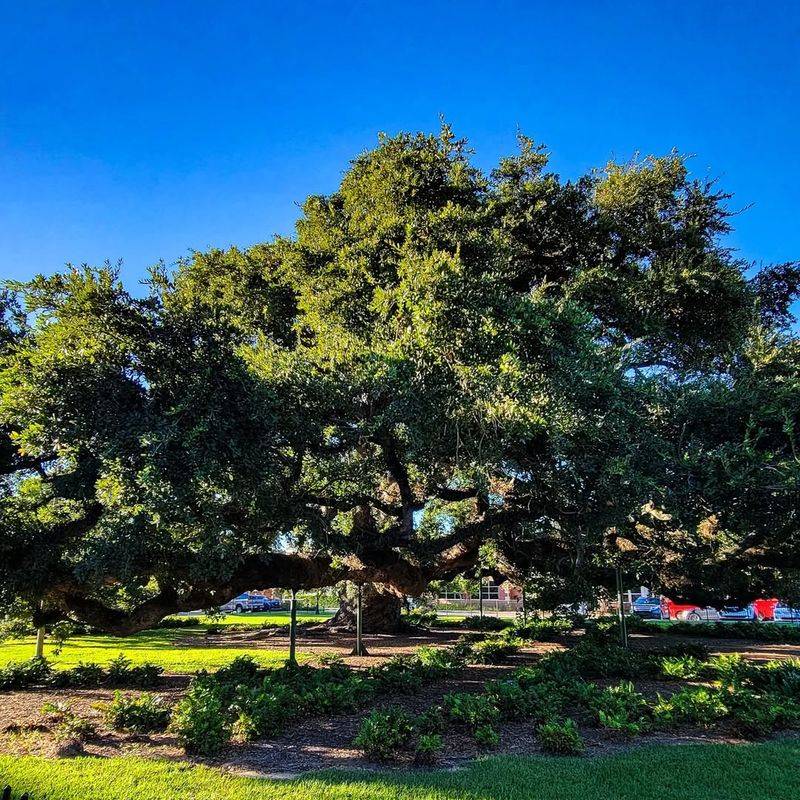
There is no tree more iconic to the Georgia landscape than the Live Oak. With its massive, sweeping branches and thick canopy of small, leathery evergreen leaves, the Live Oak commands attention in any yard.
It is generally slower growing than many privacy trees on this list, but its stature, longevity, and dense canopy make it a noteworthy option for long‑term screening.
Live Oak is technically semi-evergreen, holding its leaves through winter and dropping them briefly in early spring before new growth pushes them out. This means you get year-round coverage for the most part, with only a brief, minor leaf exchange in late winter.
The dense canopy is excellent at blocking sightlines from neighboring properties or passing traffic.
These trees are built to last, with some Live Oaks in Georgia believed to be several hundred years old. Once established, they are highly drought-tolerant and remarkably resistant to strong winds, including tropical storms that occasionally move through the state.
Their deep root systems make them a stable, long-term investment in your landscape.
Live Oak grows best in full sun and well-drained soil, and it thrives in the coastal and lower Piedmont regions of Georgia where the climate stays mild. Because of their eventual size, which can reach 60 to 80 feet wide, they need plenty of room.
Plant them as a statement specimen or in a loose row for a grand, estate-style privacy screen that will impress for generations. For homeowners who think long-term, Live Oak is truly in a class of its own.
8. Sweetbay Magnolia And Its Creamy, Aromatic Blooms
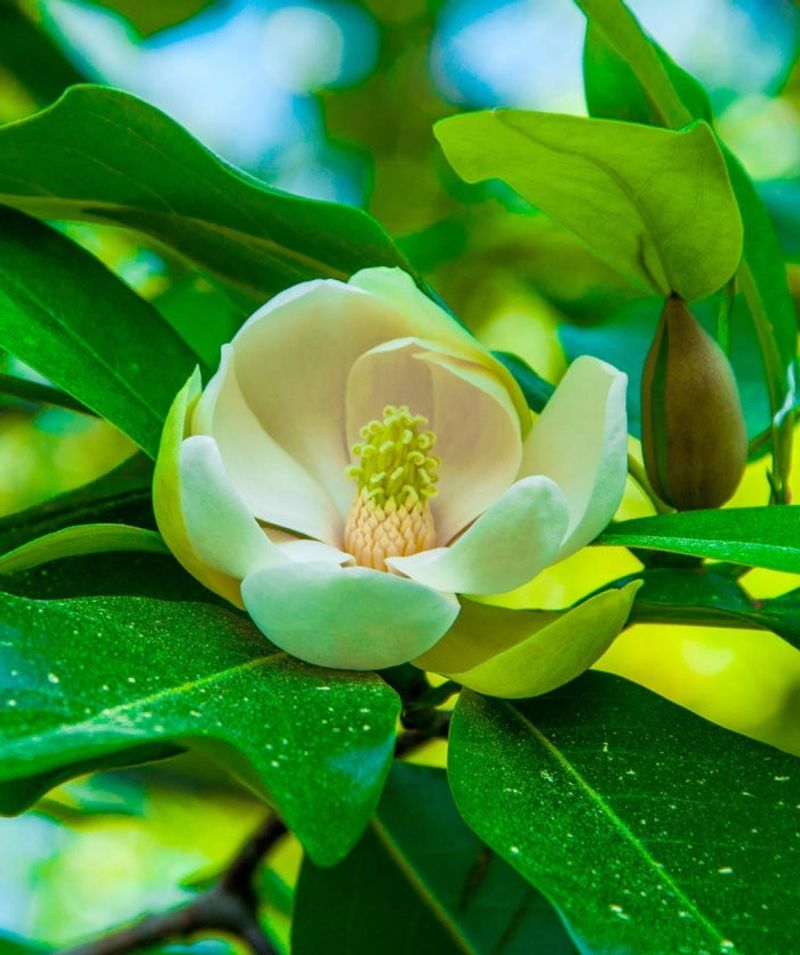
Offering attractive form and fragrant blooms that many gardeners enjoy, sweetbay magnolia is a valued choice for privacy plantings in suitable sites. Unlike its famous cousin, the Southern Magnolia, Sweetbay stays on the smaller side, typically reaching 10 to 35 feet depending on the location and growing conditions.
That more manageable size makes it a fantastic choice for smaller yards or tighter spaces where a full-sized tree would feel overwhelming.
The creamy white flowers that bloom in late spring and early summer carry a soft, sweet vanilla-like scent that drifts through the garden on warm Georgia evenings. Even after the blooms fade, the tree remains attractive with glossy, dark green leaves that are silvery white on the underside, creating a shimmering effect when the breeze moves through the branches.
One of Sweetbay Magnolia’s biggest strengths is its love of wet conditions. Many trees struggle in poorly drained or consistently moist soils, but Sweetbay actually thrives in those environments.
This makes it an ideal choice for low-lying areas, rain gardens, or spots near ponds and streams that are common across Georgia’s diverse landscape.
In warmer parts of Georgia, Sweetbay Magnolia behaves as a nearly evergreen tree, holding its leaves well into winter before briefly dropping them in early spring. Planted in a row or cluster, it forms a lovely, layered screen that feels more like a natural woodland edge than a formal hedge.
For gardeners who want privacy with personality, Sweetbay Magnolia is a truly special option worth considering.