10 Palms That Look Great In North Carolina Front Yards
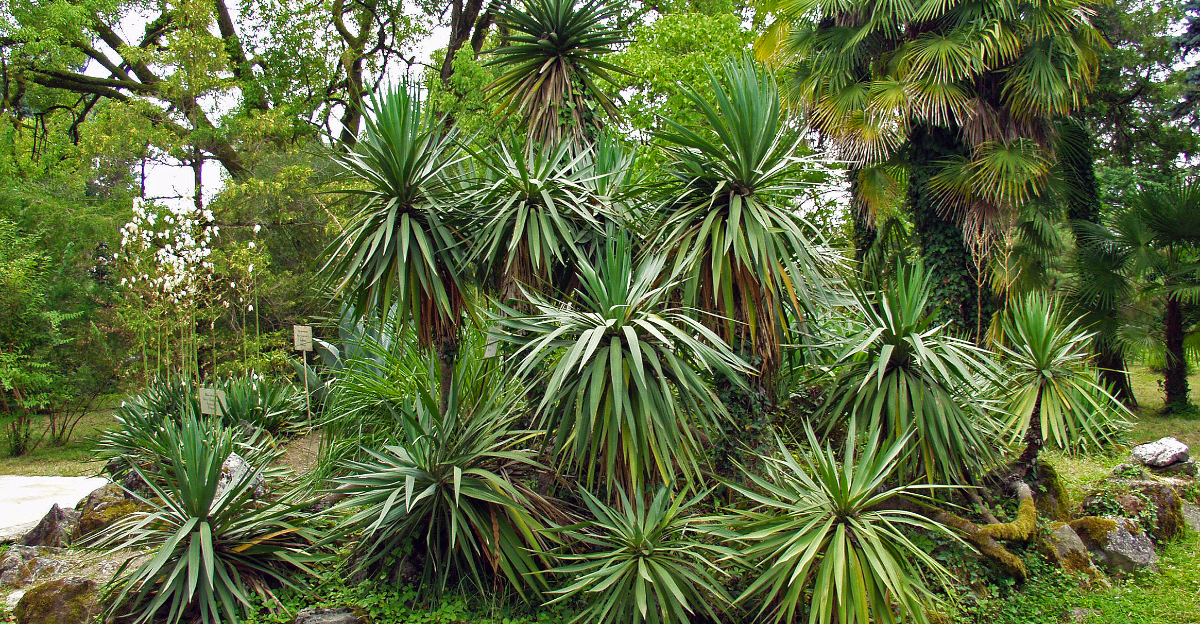
Palm trees may seem like something you would only find in tropical climates, but many North Carolina homeowners are discovering that certain varieties grow surprisingly well here.
In the right location, these striking plants can bring a bold and unexpected look to a front yard while handling the state’s changing seasons better than most people realize.
Across the Coastal Plain and into the warmer parts of the Piedmont, several cold hardy palms have proven they can thrive in North Carolina landscapes. Their tall, dramatic fronds create a tropical feel that instantly sets a yard apart from the rest of the neighborhood.
From coastal towns like Wilmington and the Outer Banks to protected spots further inland, the right palm can add a unique touch to your landscape.
With careful selection, North Carolina gardeners can enjoy the beauty of palms without worrying about winter setbacks.
1. Windmill Palm
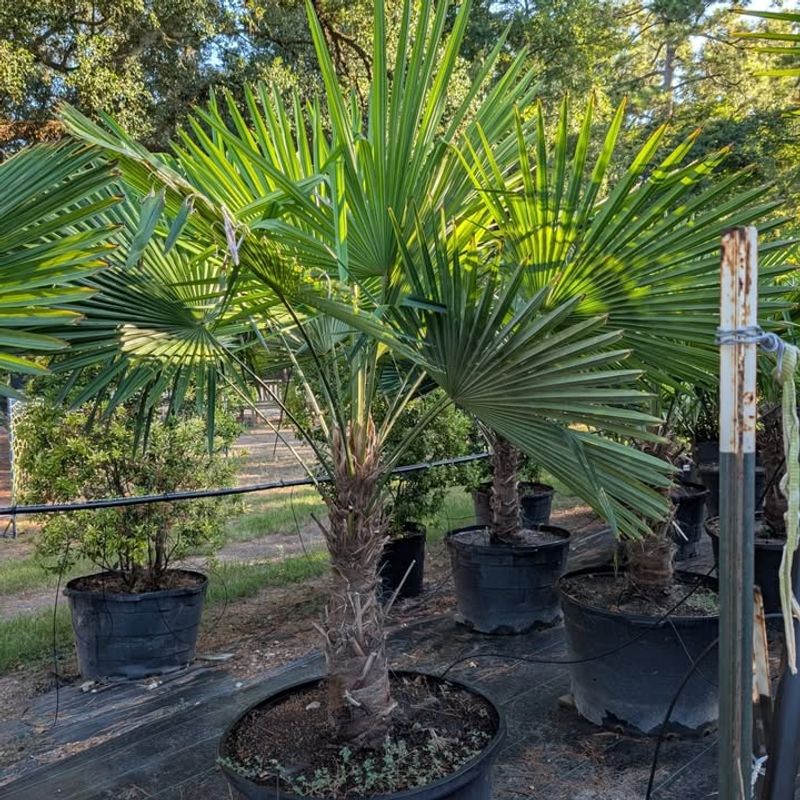
If you want a palm that can actually handle a North Carolina winter, the Windmill Palm is one of the best choices you can make.
Known by its botanical name Trachycarpus fortunei, this palm has earned a serious reputation for cold hardiness, surviving temperatures as low as 5 degrees Fahrenheit.
That kind of toughness is rare in the palm world, and it makes this tree a standout option for gardeners across the state.
The Windmill Palm grows a slender trunk wrapped in dark, shaggy fibers that give it a rugged, textured appearance you will not find on many other trees. Its fan-shaped leaves spread out in a full, rounded canopy that looks lush and tropical even during cooler months.
The overall look is clean, elegant, and surprisingly well-suited for residential front yards throughout the coastal plain and warmer Piedmont regions.
Growing slowly to around 20 to 40 feet tall over many years, this palm stays manageable for most home landscapes. It does best in well-drained soil with full to partial sun, and once established, it requires very little maintenance.
Gardeners in North Carolina have planted Windmill Palms with great success in both coastal and inland areas, though colder mountain zones may require a very protected microclimate. For a reliable, striking focal point in your front yard, this palm is hard to beat.
2. Needle Palm
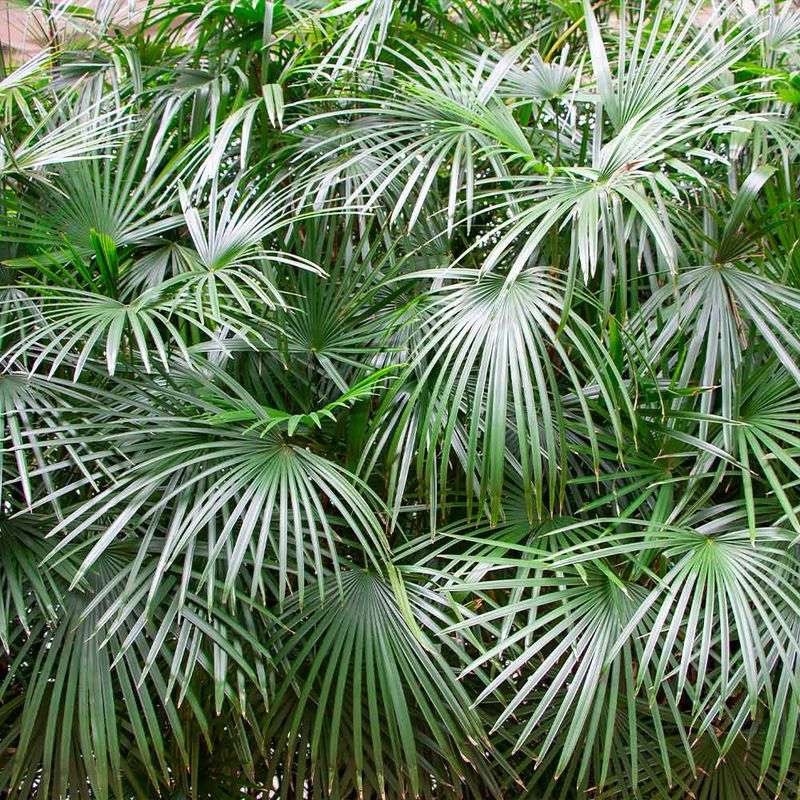
Tough, native, and genuinely impressive, the Needle Palm is considered one of the most cold-tolerant palms on the entire planet.
Rhapidophyllum hystrix grows naturally across the southeastern United States, including parts of North Carolina, which means it already knows how to handle the local climate without much fuss.
Gardeners who want a palm that feels right at home in this region will find the Needle Palm a very satisfying choice.
Rather than growing a single tall trunk, this palm spreads out in a dense, clumping form that gives it a full, bushy appearance. The large fan-shaped fronds arch outward gracefully, creating a lush tropical look that works beautifully in front yard plantings.
One unique feature worth knowing is the sharp needle-like spines found at the base of the plant, which actually make it a great natural barrier along borders or foundation areas.
Your North Carolina Garden Changes Every Week. Your Plan Should Too.
Gardening in North Carolina changes quickly throughout the season. Every Friday you’ll receive a simple weekly plan showing exactly what to plant, prune, fertilize, harvest, and protect so you never miss the right timing.
The Needle Palm grows slowly, usually staying between 4 and 8 feet tall, making it an excellent option for smaller yards or tighter spaces. It thrives in partially shaded to full sun spots with moist, well-drained soil.
Because it is native to the region, it handles North Carolina summers and winters with impressive resilience. Palms in North Carolina generally perform best in the coastal plain and warmer Piedmont areas, and the Needle Palm fits perfectly into both zones.
3. Dwarf Palmetto
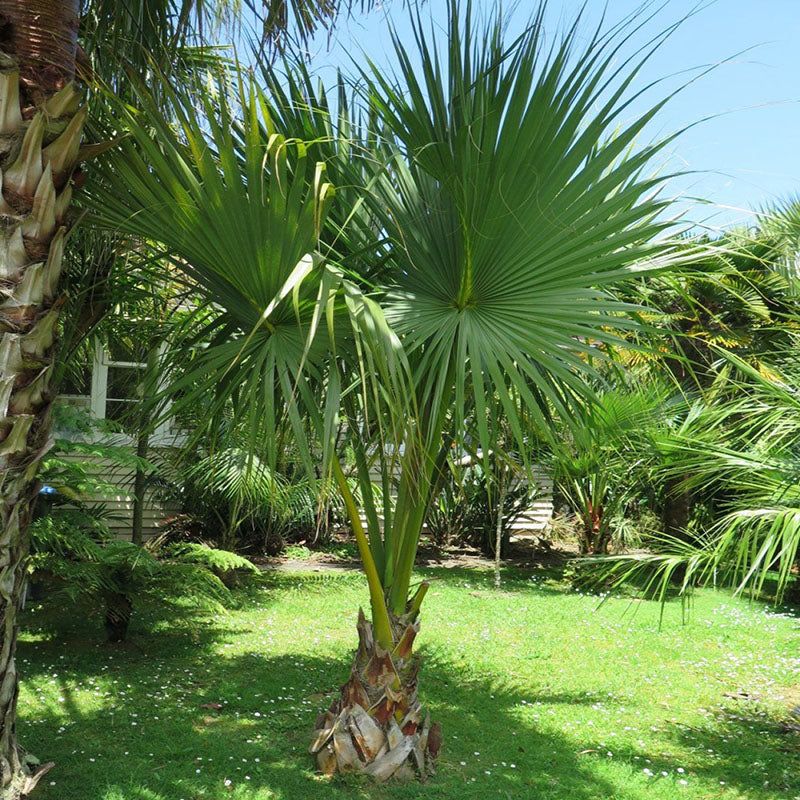
Low-growing, native, and full of character, the Dwarf Palmetto brings an authentic southeastern feel to any front yard in North Carolina.
Sabal minor grows naturally across the southeastern United States and is well-adapted to the warm, humid conditions found throughout the coastal plain and lower Piedmont regions of the state.
Finding a palm that is already native to your region takes a lot of guesswork out of the planting process.
What makes the Dwarf Palmetto especially interesting is its trunkless or nearly trunkless form. Rather than shooting upward like many palms, it grows close to the ground with large, bold fan-shaped leaves that spread outward in a dramatic, eye-catching way.
The leaves often have a beautiful blue-green color that adds a cool, soft contrast to other plants in the landscape. It typically reaches about 3 to 6 feet in height, making it very easy to place near entryways, along walkways, or in garden beds.
This palm handles both wet and dry conditions better than many other species, and it tolerates partial shade quite well. It works wonderfully as a ground-level accent plant rather than a tall focal point, giving your front yard a layered, naturalistic look.
For homeowners in warmer parts of North Carolina who want a low-maintenance, native palm with real visual impact, the Dwarf Palmetto is a genuinely smart and attractive choice.
4. Pindo Palm
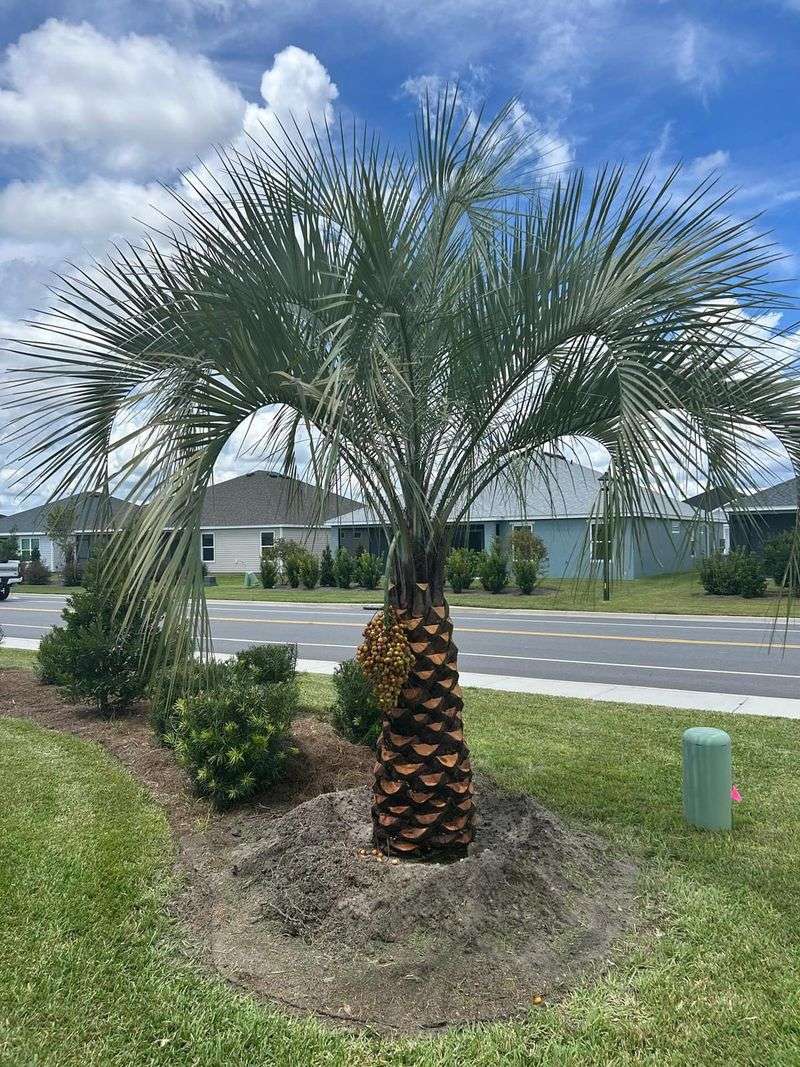
Sometimes called the Jelly Palm because of the sweet, edible fruit it produces, the Pindo Palm is one of the most charming cold-hardy palms you can add to a coastal North Carolina yard.
Butia odorata brings a bold, tropical look with its arching blue-green feathery fronds that curve gracefully downward, giving the tree an almost weeping silhouette that looks stunning from the street.
Unlike many palms that prefer strictly warm climates, the Pindo Palm handles temperatures down to around 15 degrees Fahrenheit, making it a realistic option for coastal areas and some warmer Piedmont locations in North Carolina.
It grows a thick, stout gray trunk that adds real visual structure to the landscape, and its overall size stays manageable at roughly 15 to 20 feet tall at full maturity.
That makes it a great fit for residential front yards where you want presence without overwhelming the space.
The Pindo Palm thrives in full sun and well-drained soil, preferring sandy coastal conditions that are common throughout eastern North Carolina. It is drought-tolerant once established and requires minimal pruning beyond removing old fronds as they age.
The fruit clusters it produces in summer are a fun bonus, attracting birds and wildlife to your yard. For homeowners near the coast who want a palm with personality, edible fruit, and real staying power through mild winters, the Pindo Palm is a wonderful pick.
5. European Fan Palm
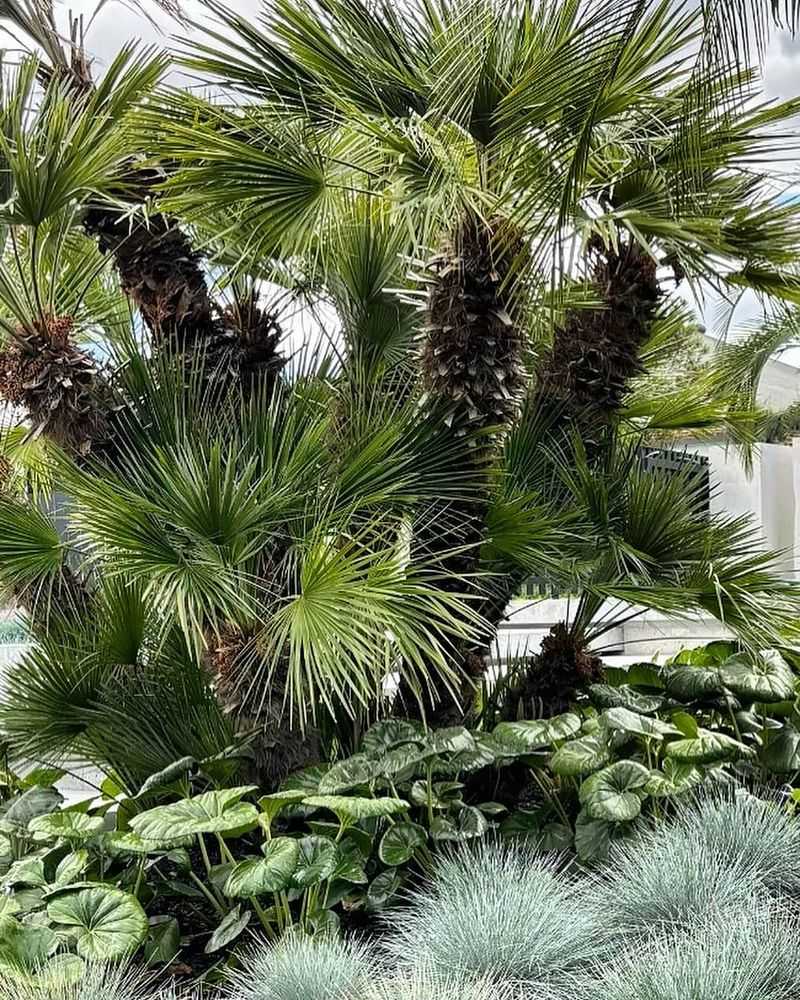
Bold, textured, and full of Mediterranean personality, the European Fan Palm brings a completely different energy to a North Carolina front yard compared to single-trunk palms.
Chamaerops humilis grows in a clumping form, meaning it pushes up multiple stems over time, creating a dense, sculptural mass of fan-shaped leaves that looks both dramatic and refined.
It is one of the few palms that actually grows wild in Europe, thriving along the Mediterranean coast in rocky, sun-baked terrain. That rugged origin story explains why this palm handles cooler temperatures better than many tropical species.
It can tolerate temperatures down to around 15 to 20 degrees Fahrenheit, which makes it a viable option for protected landscapes in North Carolina, especially in the coastal plain and warmer Piedmont zones.
Placing it near a south-facing wall or in a sheltered garden bed gives it the extra warmth it needs to perform well through winter.
The European Fan Palm grows slowly, usually reaching 6 to 15 feet in height and spreading outward as the clumps fill in. It thrives in full sun with excellent drainage and handles dry conditions well once established.
The spiky leaf stems add a sharp, architectural texture that pairs beautifully with softer ornamental grasses or flowering shrubs in front yard designs.
For North Carolina gardeners who want a bold, multi-stemmed palm that earns attention all year long, this is a top contender.
6. Cabbage Palmetto
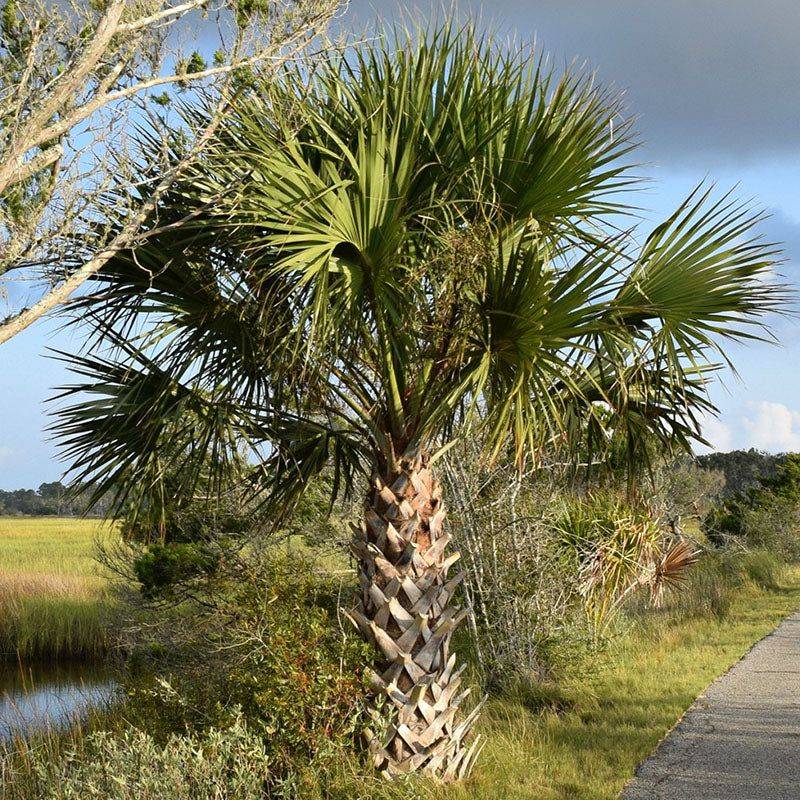
Few palms feel as authentically southeastern as the Cabbage Palmetto, a species so beloved it serves as the state tree of South Carolina and appears on that state’s flag.
Sabal palmetto grows naturally along the southeastern U.S. coast, and in North Carolina it thrives particularly well in coastal areas with sandy soils and mild winters.
Seeing a row of Cabbage Palmettos lining a front yard near the coast is one of those classic sights that immediately says warm, breezy, and beautiful.
This palm grows a tall, thick trunk with a rough, cross-hatched texture that develops as old leaf bases fall away over time. The large, fan-shaped fronds at the top form a full, rounded canopy that moves gracefully in coastal breezes.
It is also impressively salt-tolerant, which makes it especially well-suited for properties close to the ocean or sound where salt spray can challenge other plants.
Cabbage Palmettos can eventually reach 40 to 60 feet tall, so they work best in spacious front yards where their mature size will not crowd structures or overhead lines.
They prefer full sun and sandy, well-drained soil, and they are quite drought-tolerant once established.
Palms in North Carolina generally perform best in the coastal plain, and the Cabbage Palmetto is one of the most reliable species for that region. For a bold, stately statement tree with deep roots in southeastern tradition, this palm is an outstanding choice.
7. Saw Palmetto
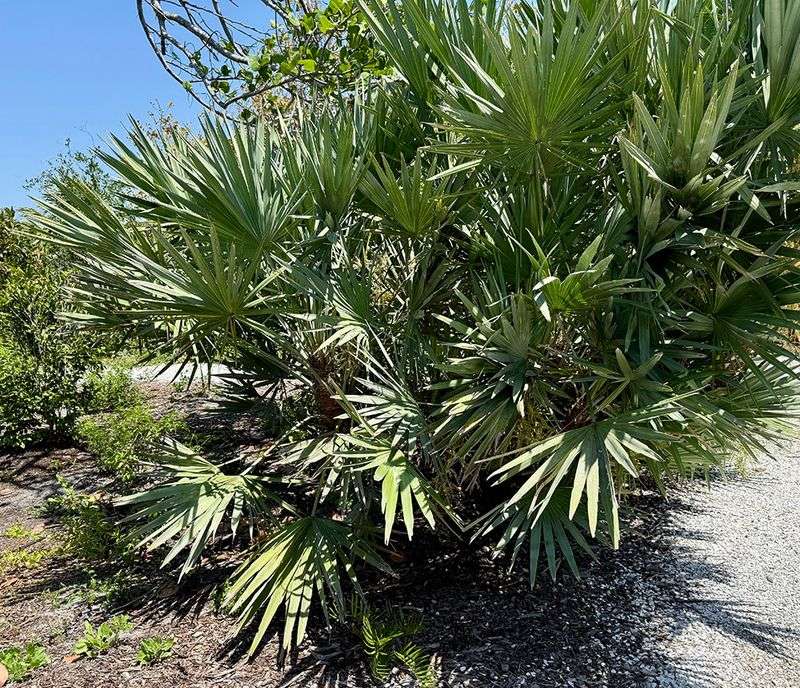
Not every palm needs to tower over your roofline to make an impact. The Saw Palmetto is a low-growing, shrubby palm that hugs the ground and spreads outward, creating a dense, natural-looking mass of fan-shaped fronds that works beautifully in casual or wildlife-friendly front yard designs.
Serenoa repens is a staple plant of coastal southeastern habitats, and it brings that same rugged, natural character to residential gardens in North Carolina.
Growing typically between 5 and 10 feet tall and spreading 4 to 10 feet wide, the Saw Palmetto fits comfortably into spaces where a taller palm would feel out of proportion.
Its fronds range from green to striking silver-blue depending on the variety, offering some nice options for gardeners who want to match or contrast with other plants in the yard.
The name comes from the sharp, saw-like teeth along the leaf stems, so planting it away from foot traffic areas is a smart move.
Saw Palmetto thrives in sandy, well-drained soil with full sun, conditions that are common throughout coastal North Carolina. It handles drought well once established and actually produces clusters of small dark berries that attract birds and other wildlife through the fall.
This palm grows best in the coastal plain region of North Carolina, though it may struggle in colder inland zones without significant protection. For a low-maintenance, wildlife-friendly, ground-level palm, Saw Palmetto is a genuinely rewarding option.
8. Mediterranean Fan Palm
Slow and steady wins the race, and the Mediterranean Fan Palm is a perfect example of that idea in the plant world.
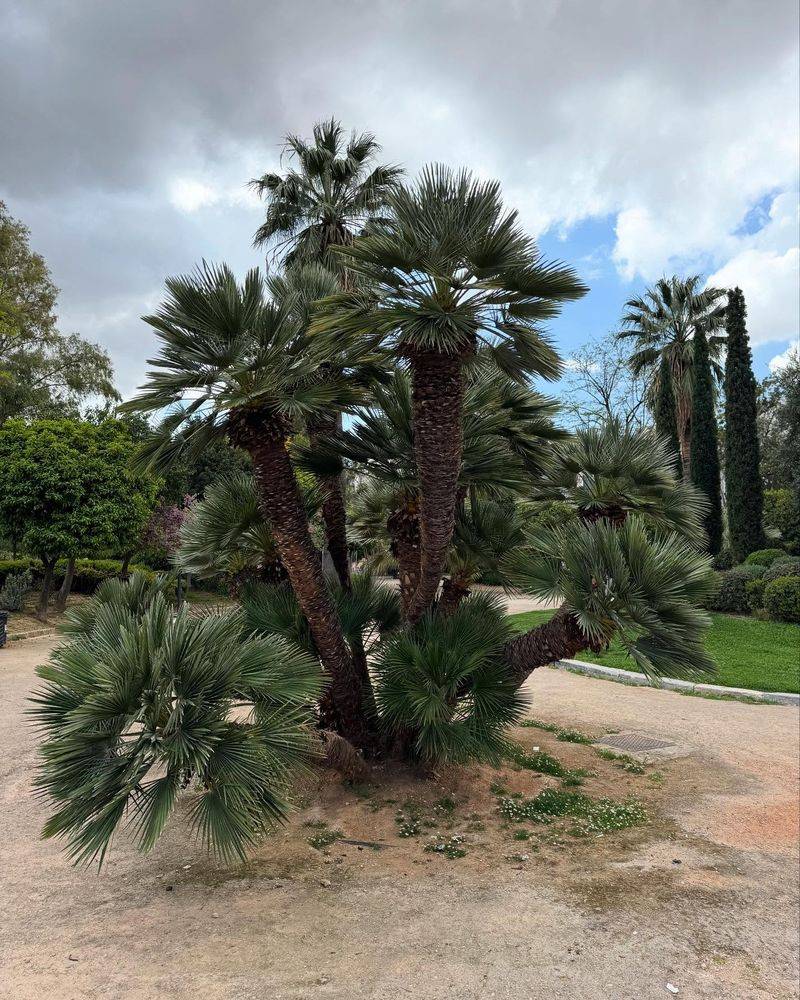
Chamaerops humilis earns its reputation as a dependable ornamental palm by growing patiently over many years, gradually forming multiple thick trunks that give it a naturally sculptural, almost ancient appearance.
That multi-trunk structure makes it look like something straight out of a Mediterranean hillside garden, and it brings that same timeless quality to North Carolina front yards.
Unlike many palms that grow in a predictable single-trunk form, the Mediterranean Fan Palm gets more interesting with age as new stems push up from the base and the overall clump fills out.
The stiff, fan-shaped fronds have a slightly blue-green color and radiate outward from each stem in a starburst pattern that catches light beautifully throughout the day.
Its slow growth rate, usually just a few inches per year, means it stays proportional and manageable in most residential settings for a long time.
This palm performs best in full sun with well-drained soil and handles dry spells with ease once it is established.
It can tolerate temperatures down to around 15 degrees Fahrenheit, which makes it a realistic option for warmer parts of North Carolina, particularly in the coastal plain and southern Piedmont.
Colder inland or mountain areas would require a very sheltered microclimate. For a palm that builds character over time and rewards patient gardeners with striking results, the Mediterranean Fan Palm is a standout choice.
9. Windmill Palm Dwarf Forms
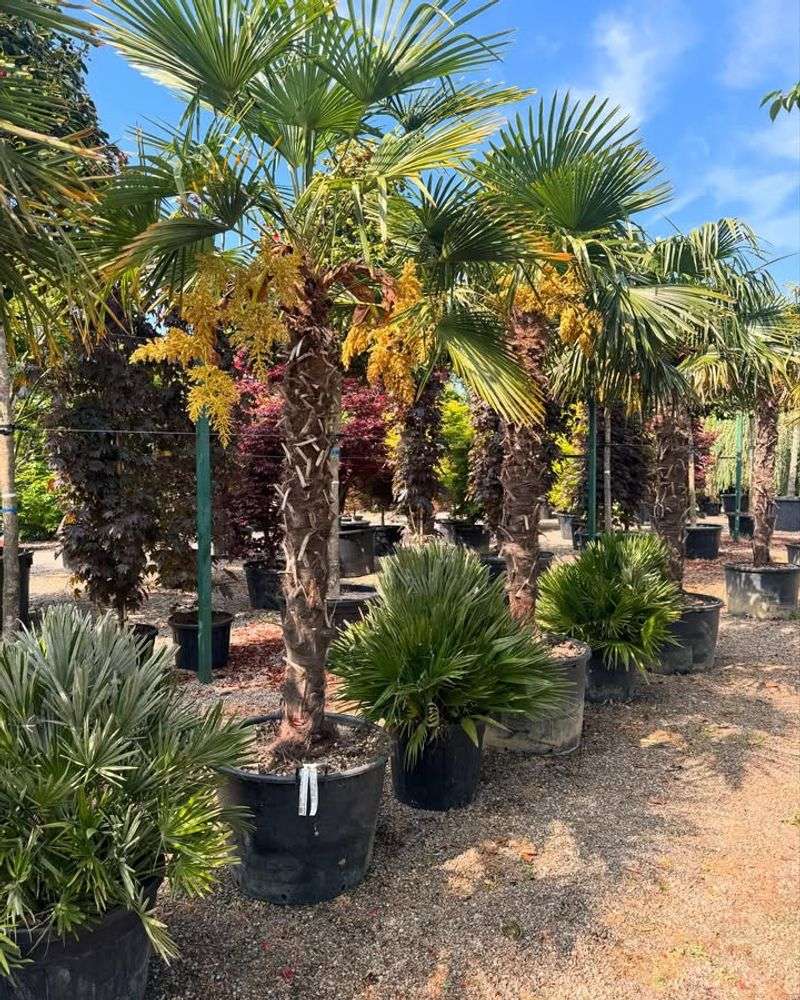
Younger or more compact forms of the Windmill Palm offer all the tropical appeal of the full-sized version in a package that fits neatly into smaller front yards and tighter landscape designs.
Trachycarpus fortunei at an early stage of growth stays relatively short for many years, making it a practical and visually appealing choice for homeowners who want that classic palm look without waiting decades for a towering tree to develop.
The same cold-hardiness that makes the full-grown Windmill Palm so popular in North Carolina applies just as much to these younger plants.
The compact size of younger Windmill Palms makes them incredibly versatile in front yard design. You can use them as framing plants on either side of an entryway, tuck them into garden beds near the foundation, or place them as a focal point in a smaller lawn area.
Their fan-shaped leaves and fiber-covered trunks look just as striking at 6 feet as they do at 20 feet, which is part of what makes them so appealing for residential use.
These palms grow best in full to partial sun with well-drained soil, and they respond well to occasional deep watering during dry summer months.
North Carolina gardeners in the coastal plain and warmer Piedmont regions have the best success with them, though very sheltered spots in colder inland areas can sometimes work as well.
If you want a palm that feels manageable now and grows more impressive with every passing year, a younger Windmill Palm is a smart long-term investment for your front yard.
10. Sabal Brazoriensis (Brazoria Palm)
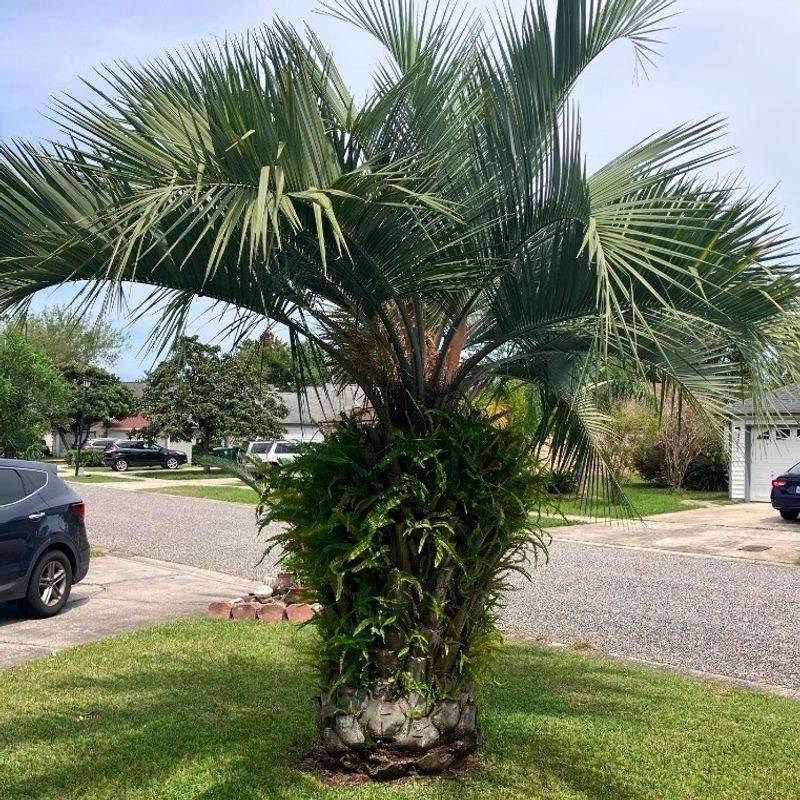
Hybrid plants often combine the best traits of their parent species, and the Brazoria Palm is a great example of that idea in action.
Sabal x brazoriensis is a naturally occurring hybrid between Sabal minor and Sabal mexicana, and it brings together cold tolerance and vigorous growth in a way that makes it a genuinely exciting option for warmer parts of North Carolina.
Its strong, upright growth habit and bold fan-shaped fronds give it a presence in the landscape that turns heads from the street.
The Brazoria Palm develops a stout trunk over time and produces large, arching fronds that create a full, tropical canopy. Its cold hardiness is one of its strongest selling points, with the ability to handle temperatures well below freezing in many cases.
That resilience, combined with its relatively fast growth compared to some other cold-hardy palms, makes it attractive for homeowners who want visible results without waiting an extremely long time.
This palm grows best in full sun with well-drained soil and handles both dry spells and humid summers in North Carolina without too much trouble.
It is most reliable in the coastal plain and warmer Piedmont regions of the state, where winters stay mild enough to support its growth year after year.
Colder mountain zones or exposed inland locations would need very protected microclimates or container growing. For North Carolina gardeners looking for a cold-tough, fast-establishing palm with real visual power, the Brazoria Palm is absolutely worth considering.