8 Common Mistakes Arizona Gardeners Make With Olive Trees
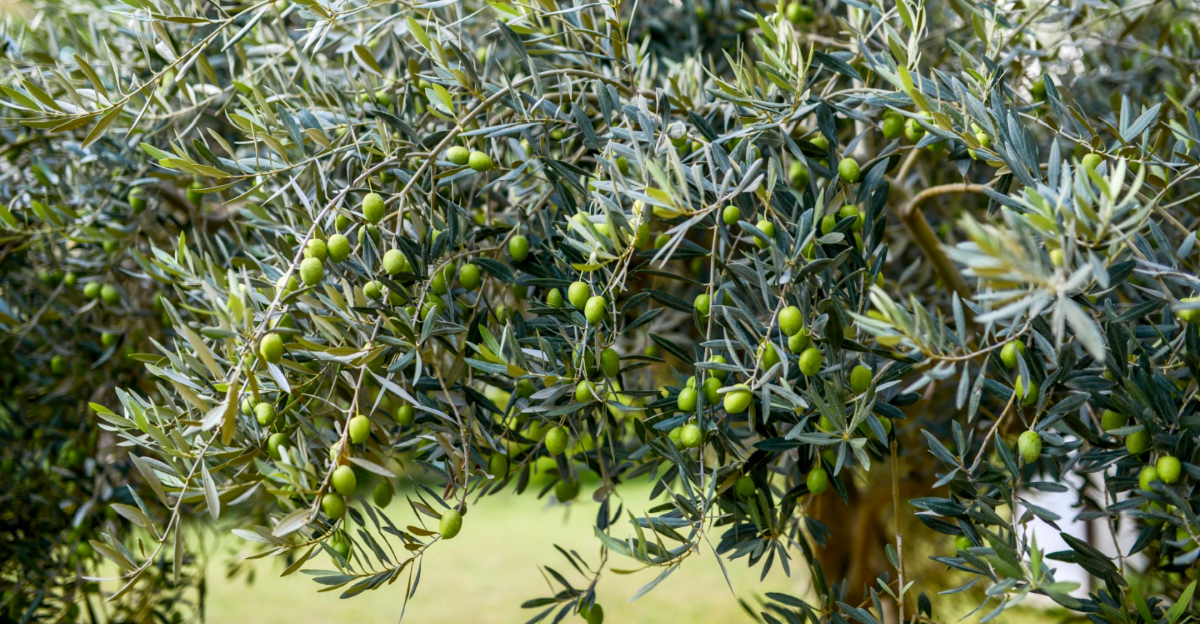
An olive tree can turn a dusty Arizona backyard into a Mediterranean escape, but these striking desert additions are pickier than they look.
While they love our intense heat and bright blue skies, many gardeners find themselves frustrated when their trees struggle to thrive in our unique environment.
The problem often starts when we treat them like any other backyard tree, ignoring the challenges of alkaline soil and rocky caliche.
Success with olives in the desert requires a different playbook, especially when it comes to irrigation and site selection.
Beyond the soil, there are even local rules to navigate, as a variety that is welcomed in one neighborhood might be restricted in another due to pollen or fruit.
Doing a little homework now is the secret to a healthy, hassle-free tree that actually belongs in your landscape.
1. Skipping Local Rules And Allergy Concerns
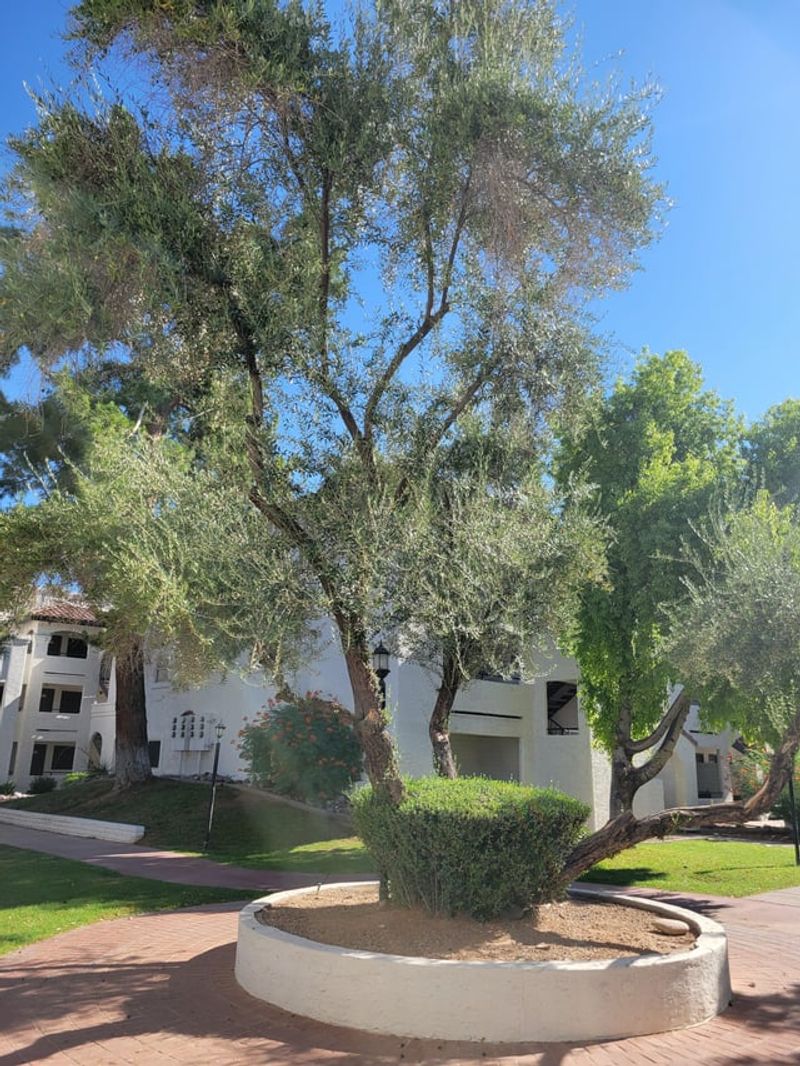
The easiest olive mistake to make happens before a shovel ever hits the ground: buying the tree first and checking the rules later. Regulations vary across Arizona, and some places restrict pollen-producing olives because of allergy concerns.
Tempe, for example, prohibits planting and replacement of pollen-producing olive trees while allowing pollenless and fruitless cultivars such as “Swan Hill” in that context.
Pima County’s code goes further by prohibiting sale and planting of olive trees in the county.
Phoenix also prohibits pollen varieties of olive trees by ordinance, with older plantings sometimes remaining because they were installed before the rule and are effectively grandfathered.
Allergy timing can also catch people off guard.
Olive trees typically pollinate in spring, often April and May, which lines up with the season when desert winds can carry pollen far beyond one yard.
The practical move is simple: check your city and county rules, then confirm the cultivar name on the tag before purchase. “Olive” on a label is not enough information in regulated areas.
Good sign: you can point to a specific cultivar name and it matches what your local rules allow.
Trouble sign: the nursery tag is vague, or the salesperson can’t confirm whether it’s a pollen-producing type in a city that restricts them.
2. Picking A Fruiting Olive When You Wanted Low Mess
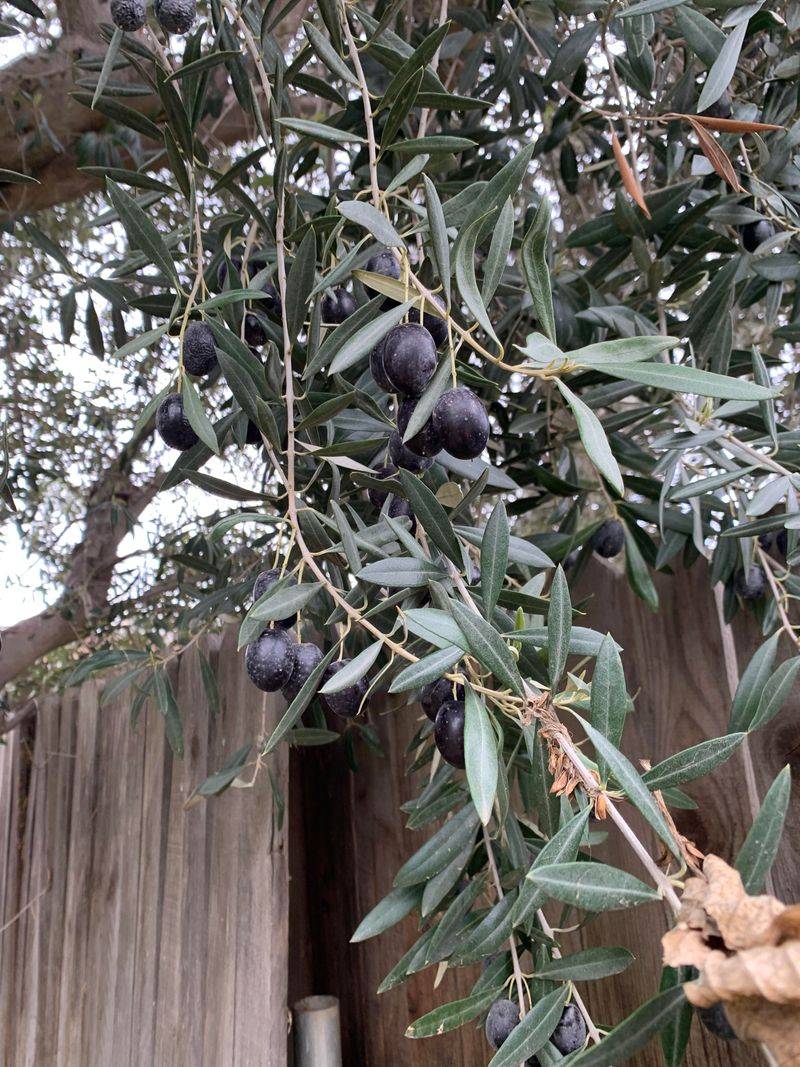
Fruit mess is the olive surprise that shows up later, usually right when you want your patio to be low-effort.
Fruiting olives can drop large numbers of small fruits, and the combination of stains on concrete, tracked-in smudges, and slick pits can turn walkways into a recurring cleanup chore.
That’s why “fruitless” landscape olives are so popular in many Arizona neighborhoods, especially near patios, pools, and entry paths where you want things tidy.
It’s worth setting expectations, though. “Fruitless” usually means dramatically reduced fruit, not a promise of zero cleanup every year, so an occasional small drop can still happen.
If you already have a fruiting olive and want to reduce the mess, a fruit-reducing growth regulator spray is available and it’s applied during bloom to limit fruit set.
Timing matters, so it helps to follow the label closely and plan ahead for the bloom window.
Your Arizona Garden Changes Every Week. Your Plan Should Too.
Gardening in Arizona changes quickly throughout the season. Every Friday you’ll receive a simple weekly plan showing exactly what to plant, prune, fertilize, harvest, and protect so you never miss the right timing.
Good sign: fruit drop stays light enough that hardscape doesn’t become a weekly problem.
Trouble sign: heavy drop over patios, driveways, or pool decks that makes staining and slipping a seasonal routine instead of an occasional annoyance.
3. Planting Into Caliche Without Testing Drainage
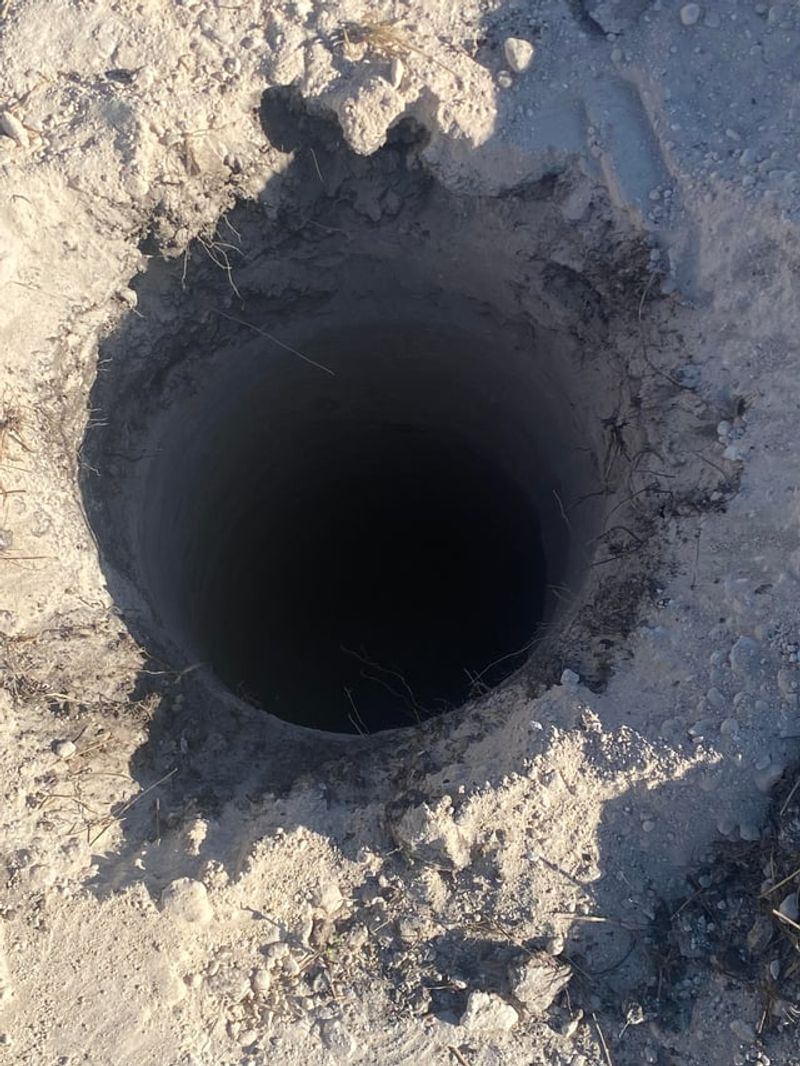
Caliche can make a healthy-looking planting spot behave like a bathtub, and olives tend to show stress in confusing ways when that happens.
The surface may look dry and crusty, so it’s tempting to water more, but water can be sitting below the root ball because a hard caliche layer slows downward movement.
Before planting, a drainage test gives you a reality check.
A University of Arizona caliche guide suggests partially filling the hole with water and watching the drop, with drainage considered adequate when the water level drops about four inches or more in four hours.
Another Arizona irrigation guideline recommends filling a hole, letting it soak, filling again, and then confirming it drains within about 24 hours, otherwise there may be caliche or another drainage restriction to address.
If the test suggests poor drainage, the fix is usually physical, not chemical.
Penetrating or removing caliche where practical helps, and raised berm planting can keep the main root zone above the restricted layer.
Compost can improve soil structure around new roots, but it doesn’t remove a hard barrier by itself, and mixing very different textures in the hole can create odd water movement patterns.
Good sign: your test hole drains steadily and doesn’t sit wet overnight.
Trouble sign: water lingers long after the test, especially after the second fill, which signals you’ll want a different spot, a berm, or caliche work before planting.
4. Putting Olives On A Lawn Watering Schedule
Olives and turf can coexist visually, but they rarely want the same irrigation rhythm.
Grass is typically watered in frequent, shallower cycles to keep the upper soil consistently moist, while trees generally benefit from deeper watering that encourages roots to expand outward and downward.
Arizona watering guidance notes that young plants should be watered more often than older plants, and after they become established in one or two years, allowing a slight drought between waterings can help plants adapt and become more drought tolerant.
The problem with lawn zones is that they can keep tree roots in a chronically damp pattern, especially in heavier soils or places with caliche that already slows drainage.
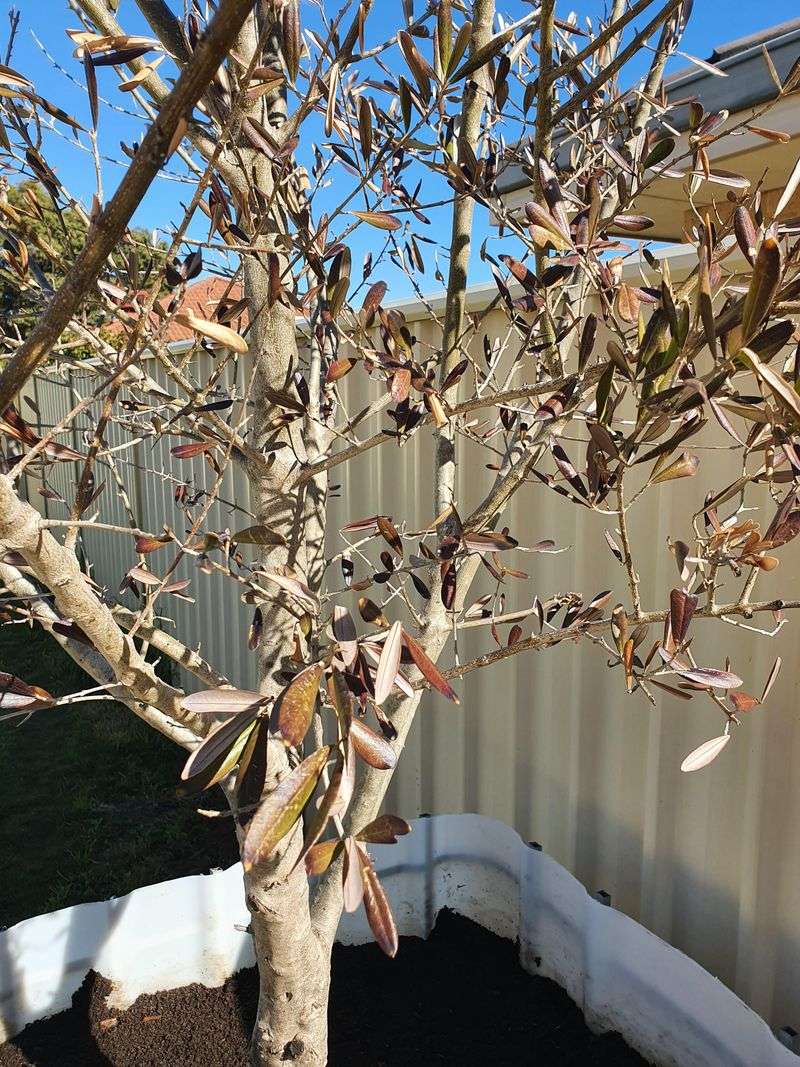
That can show up as yellowing leaves, sparse growth, or a tree that seems “stuck” even though you’re watering regularly. The most useful fix is separating irrigation zones when possible.
Putting olives on drip or bubbler irrigation that soaks deeper, then letting the soil dry down partway, is closer to what tree roots can use efficiently, and it avoids the constant shallow moisture turf systems deliver.
Seasonal changes matter too.
Arizona guidance points out plants use far more water in hot, dry, windy seasons than in winter, so a controller that stays on one summer-like schedule all year can create trouble.
Good sign: steady spring growth and leaves that hold color without staying limp or yellow.
Trouble sign: persistently damp soil near the trunk from shared lawn watering, especially when the tree shows stress that doesn’t match the “I watered yesterday” logic.
5. Letting New Trees Go Dry During Establishment
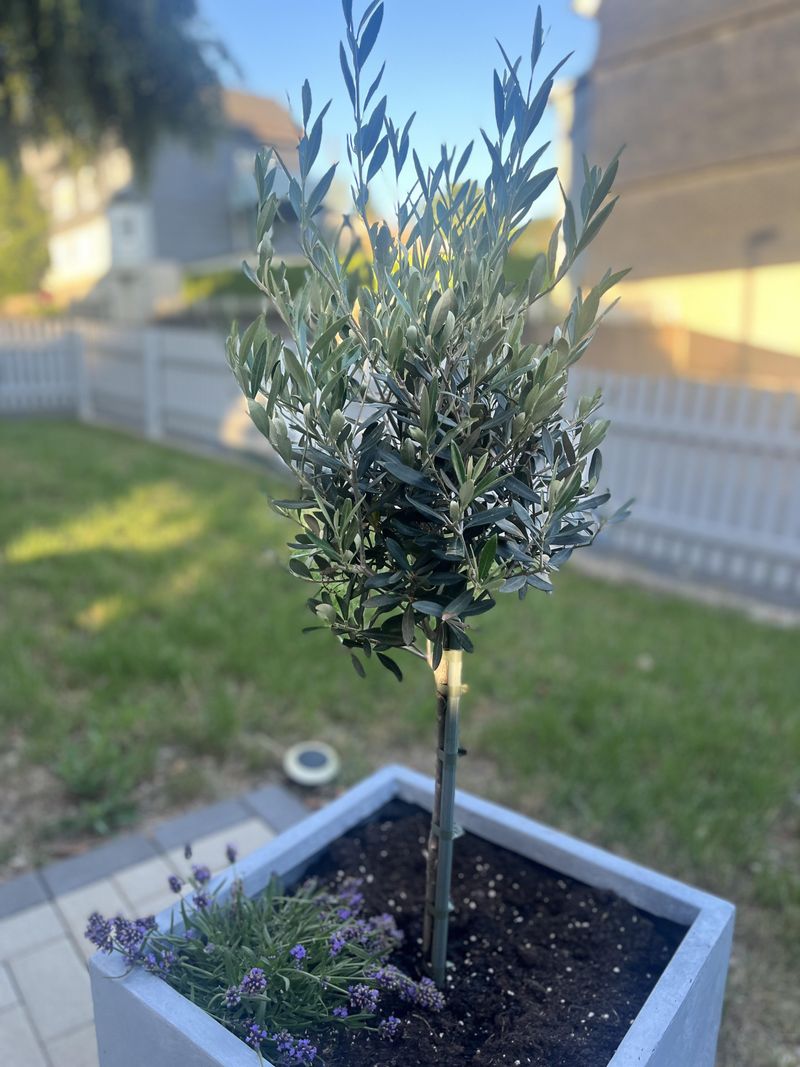
Olives have a tough reputation, and that can lead to a very Arizona mistake: under-watering new trees because you’re planning for “low water” too soon.
A newly planted tree is living mostly in the original root ball, and that soil can dry faster than the surrounding ground during hot, windy weather.
Establishment is a phase, not a vibe.
One Arizona watering schedule for Sonoran Desert landscapes lays out a realistic ramp-down: during weeks 1 and 2 in summer, watering every 1 to 2 days is suggested, then every 3 to 4 days in weeks 3 and 4, then stretching out further over the next month, with gradual extension after week 8 as plants establish.
It also notes that trees can take multiple years to fully establish, and emitter placement should move outward over time to encourage a broader root system.
The best way to avoid stress is watering deeply enough to wet the root ball and a little surrounding soil, then checking moisture at depth rather than guessing from the surface crust.
Mulch can help, but choose it thoughtfully. Organic mulch can reduce evaporation and moderate root-zone temperature, which is helpful during that first Phoenix or Tucson summer.
Keep mulch pulled back a few inches from the trunk to avoid moisture sitting against bark.
Good sign: new leaves stay firm, and the canopy doesn’t droop during heat spikes.
Trouble sign: leaf tip burn and curling during hot weather paired with dry soil several inches down, which suggests the root ball is drying between irrigations faster than the tree can handle while it’s still getting established.
6. Pruning Too Hard And Exposing Limbs To Sunburn
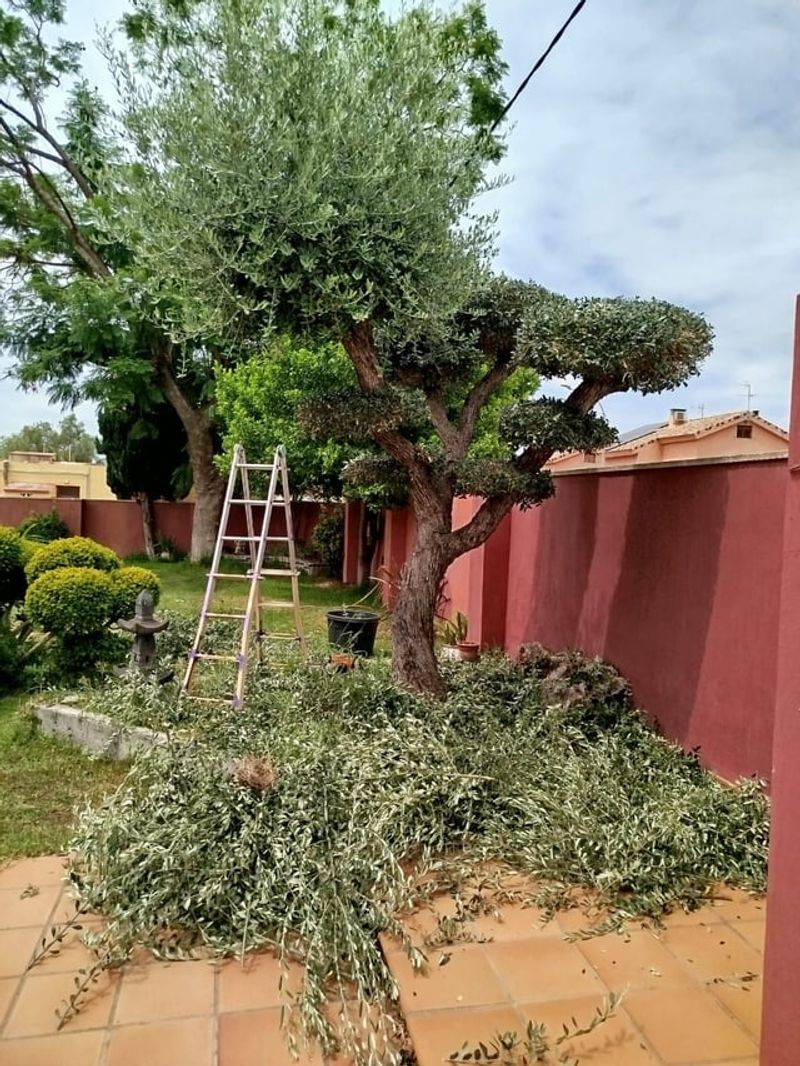
A heavy haircut can look neat for about five minutes, then Arizona sun turns it into a problem.
When an olive is pruned hard, interior limbs and trunk sections that were shaded by the canopy suddenly face direct sun, often on the south and west sides.
That exposure can lead to sunscald and bark injury, which shows up as bleached areas that can crack later.
Arizona guidance on pruning warns against removing more than about 25 to 30 percent of a plant’s canopy in a given year, which is a useful guardrail for desert conditions where sun exposure ramps up fast.
Timing matters, too. Late winter or early spring pruning often gives the tree time to push new growth that gradually shades vulnerable wood before the most intense heat arrives.
If you do end up with newly exposed bark that’s susceptible, whitewashing can help.
UC IPM recommends applying white interior latex paint diluted 1:1 with water to trunks of young trees and to older bark newly exposed to sun if it’s susceptible to sunburn.
The goal is reflecting light, not sealing wounds, so focus on exposed bark surfaces rather than using heavy coatings.
Good sign: the canopy stays balanced, and you see new growth filling in without large sun-exposed patches.
Trouble sign: bark on sun-facing sides turns pale, then begins cracking as the season heats up, especially after a major pruning that removed a lot of leaf cover at once.
7. Ignoring Suckers And Water Sprouts
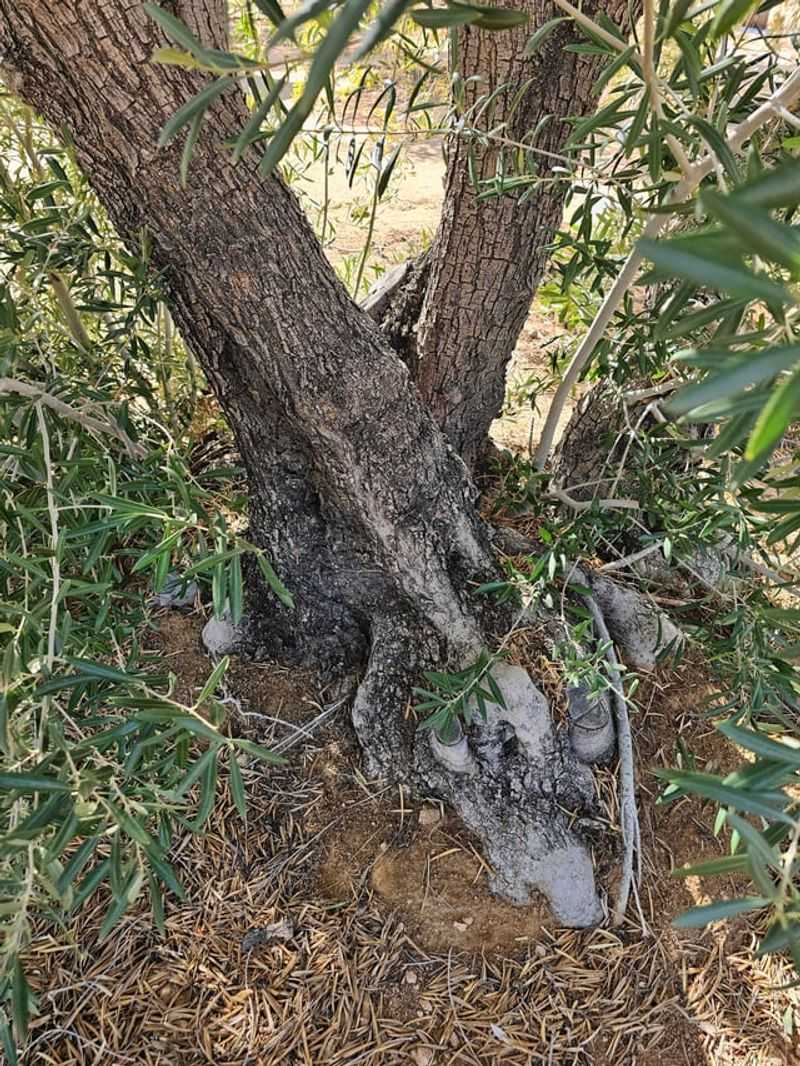
Olives can push vigorous shoots when they’re stressed, overwatered, or pruned hard, and those shoots can quietly turn a well-shaped tree into a messy, crowded outline.
Suckers typically come from the base or root zone, while water sprouts shoot straight up from branches.
They grow fast, steal energy from the structure you actually want, and often attach weakly, which matters in Arizona when monsoon winds show up. The best time to deal with them is early, when shoots are still small and flexible.
Pruning guidance commonly recommends removing suckers and similar unwanted vigorous growth rather than letting it become a bigger structural job later.
For small shoots, clean removal close to the parent tissue helps, and avoiding stubs reduces the chance of quick regrowth.
It also helps to look at what triggered the explosion. A sudden flush of water sprouts after a severe prune can be the tree’s response to lost canopy, and a flush after a watering change can be the tree chasing resources.
That doesn’t mean you did something “wrong,” but it does mean the tree is reacting, and a more gradual approach to pruning or irrigation changes can reduce the boom-and-bust cycle.
Good sign: the trunk base stays clean, and the canopy has well-spaced branches with light and air moving through.
Trouble sign: clusters of vertical shoots appear repeatedly after hard pruning or irrigation shifts, and the tree starts looking top-heavy or cluttered within a single season.
8. Forgetting Salt Management In Irrigated Desert Soils
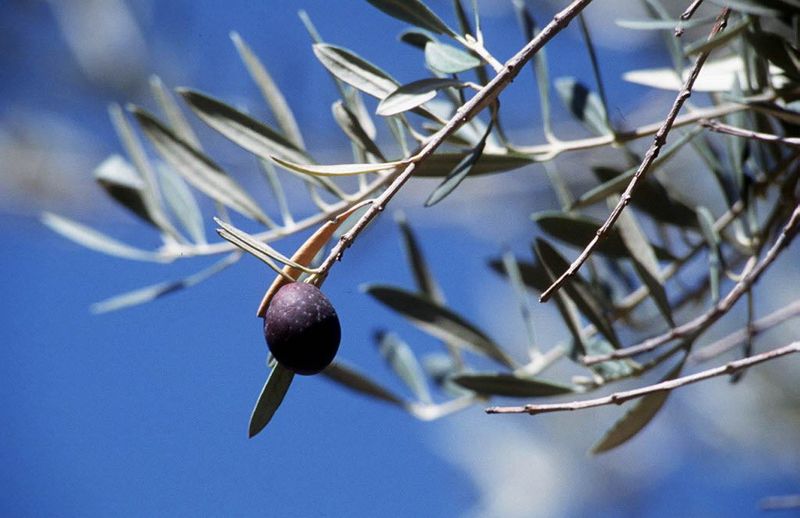
Salt buildup is one of the sneakiest Arizona landscape issues because it doesn’t show up overnight. Dissolved salts occur naturally in local water supplies, and fertilizers can add more salts to the root zone.
Over time, that accumulation can stress many landscape plants, and even moderately salt-tolerant trees can show leaf tip and edge burn when levels climb.
A practical desert-landscape approach is periodic leaching, which simply means running a longer irrigation occasionally so salts move below the active root zone.
One Arizona Sonoran Desert watering guide explains salt accumulation directly and recommends leaching salts every six to twelve months by irrigating about twice as long as usual, with more frequent leaching sometimes needed where water has higher salt concentrations.
Drainage and soil structure still matter here, because leaching works only when water can move downward rather than pooling above caliche or compacted layers.
Symptoms can be confusing because leaf scorch can look like drought stress or nutrient issues. That’s why checking the soil surface around emitters can help.
A white crust can be a clue that salts are concentrating where water evaporates. Also pay attention to where damage starts.
Salt stress often shows on older leaves first, while a sudden whole-tree wilt points you back toward irrigation function.
Good sign: foliage stays evenly green through heat and wind, and tip burn doesn’t creep inward over time.
Trouble sign: progressive margin burn despite consistent watering, especially when crusting shows up near emitters and the soil doesn’t drain well after a deep soak.