How To Prune African Violets For Fuller, Bushier Plants In California
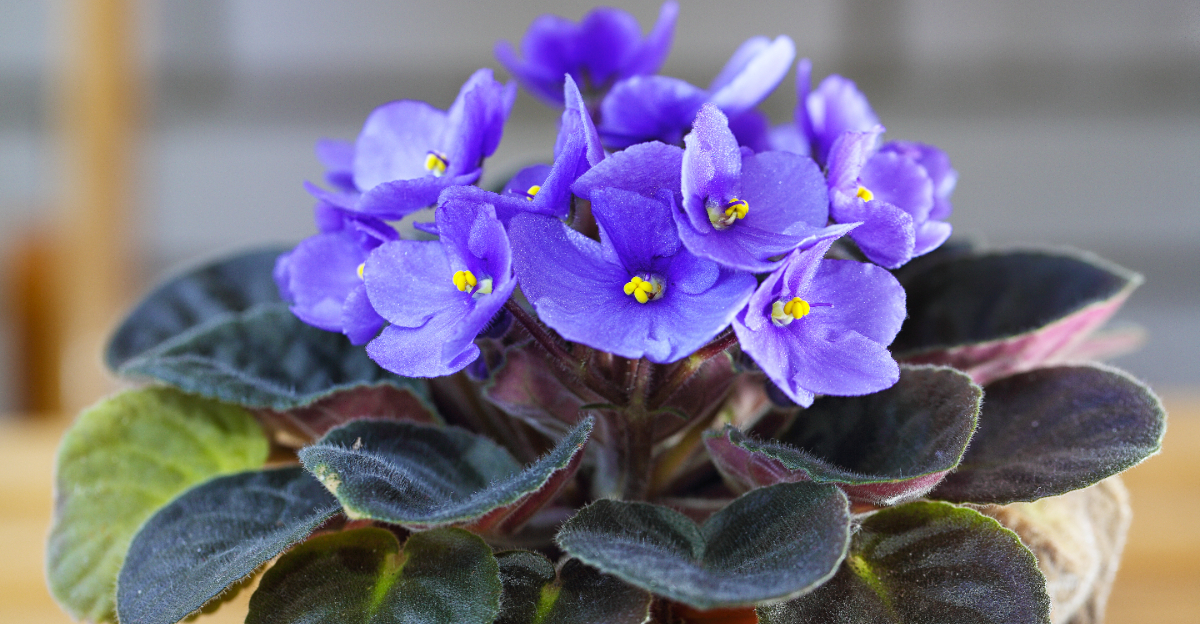
Imagine a tiny, velvet-leaved jungle sitting right on your windowsill while the California sun blazes outside. These vintage favorites are absolute classics for a reason, but they have a reputation for getting a little “necky” and awkward over time.
You might start with a perfect mound of purple blooms only to end up with a weird, leaning tower of stems a year later. Most indoor gardeners are terrified to touch them, fearing one wrong snip will end the show for good.
Getting a lush, carpet-like look actually requires a bit of bravery with the shears. Strategic grooming is the only way to keep your plants from looking like a science experiment gone wrong.
If you want a thick canopy of leaves and a constant explosion of flowers, you need to master the art of the tiny trim. Let’s look at how to turn your leggy survivors into the star of your indoor plant collection.
Pinch Central Leaves Early
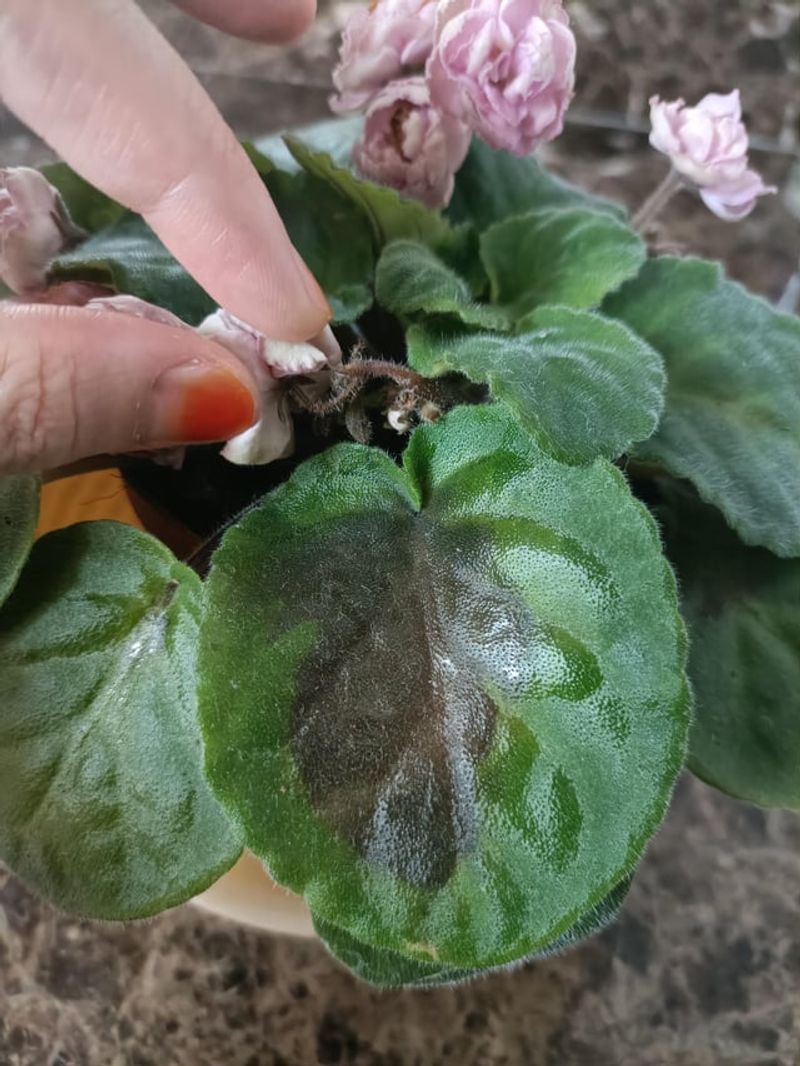
Most people wait too long before they start shaping their African violets, and that is where things go sideways. When your plant reaches about 8 to 10 leaves, it is the perfect time to step in and do a little early pinching.
Carefully remove one or two of the central leaves right at the base using clean fingers or small pruning scissors.
Removing these central leaves sends a signal to the plant to push energy outward instead of upward. This encourages the development of lateral shoots, which are the little side branches that eventually make your plant look full and lush.
Without this step, many African violets in California end up growing tall and sparse rather than wide and bushy.
You do not need any fancy tools for this. Clean hands and a steady grip work just fine.
Make sure you pull the leaf cleanly from the stem to avoid leaving a stub behind, which can invite unwanted moisture issues. This one small habit, done early and consistently, sets the foundation for a beautifully shaped plant.
Think of it as guiding your violet toward its best possible form right from the start.
Remove Withered Flowers And Leaves
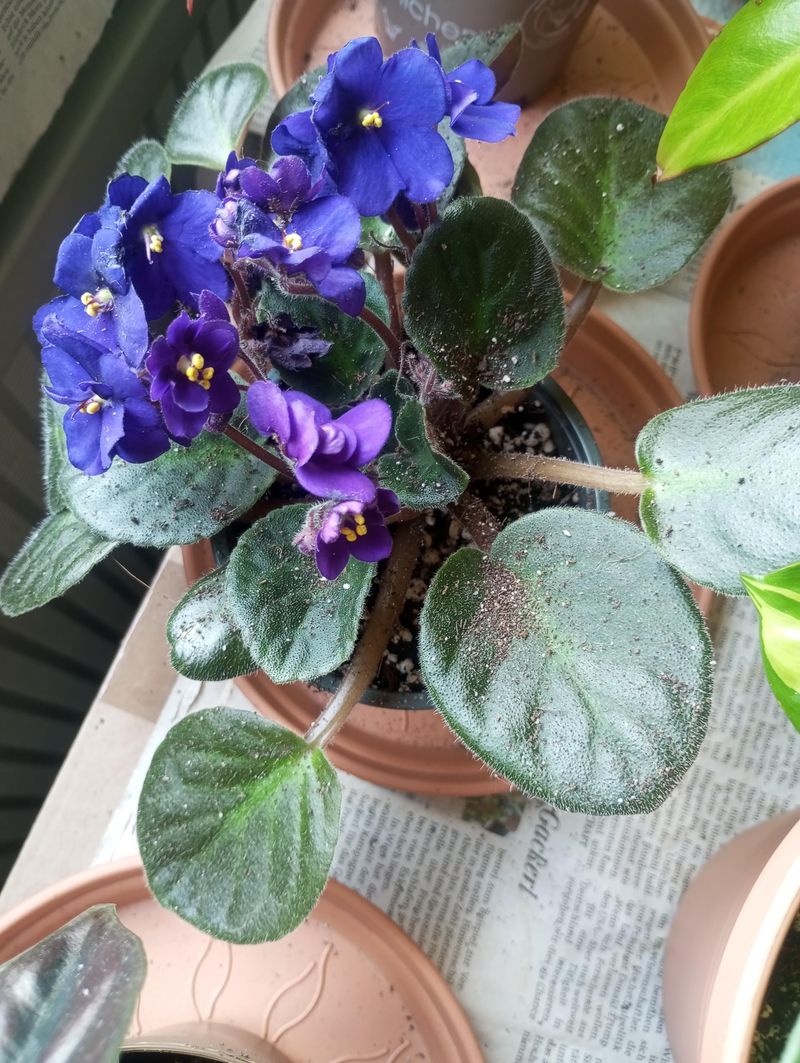
Every 3 to 4 weeks, take a few minutes to look over your African violet and clean it up. Spent blooms and damaged leaves are not just an eyesore.
They actually pull energy away from the healthy parts of the plant that are still growing and blooming. Removing them is one of the easiest and most rewarding things you can do.
Start by snipping or pinching off any flowers that have faded or turned brown. Then look at the leaves.
If any are yellowing, spotted, or mushy, remove those too. Always use clean scissors or pruning snips to avoid spreading any bacteria or fungal issues, which can be a concern in the warmer, sometimes humid parts of California.
This regular maintenance habit keeps your African violet looking neat and tidy. More importantly, it tells the plant to keep producing new growth and fresh flowers rather than spending resources on parts that are already past their prime.
Your California Garden Changes Every Week. Your Plan Should Too.
Gardening in California changes quickly throughout the season. Every Friday you’ll receive a simple weekly plan showing exactly what to plant, prune, fertilize, harvest, and protect so you never miss the right timing.
Once you get into a steady routine of checking your plants every few weeks, you will notice a real difference in how full and healthy they look. Small, consistent actions like this are what separate thriving plants from struggling ones.
Do A Light Reshaping Prune
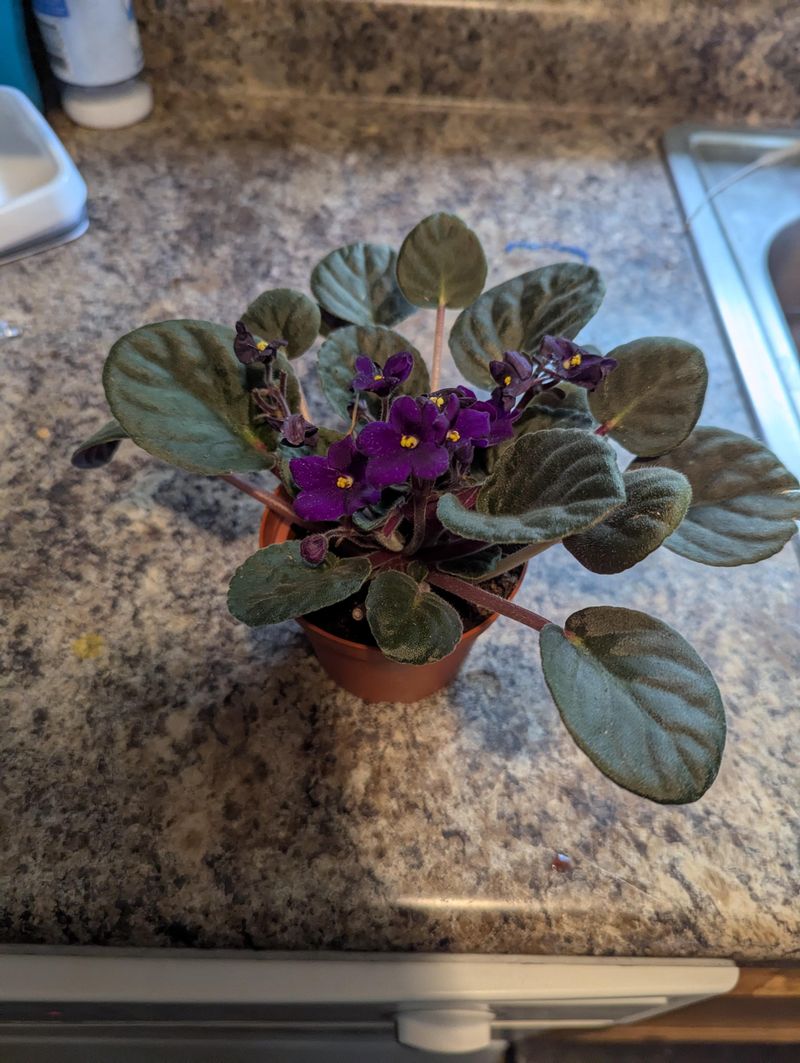
Fall is actually a great time to step back and take a good look at the overall shape of your African violet. After months of growth, some plants can start looking a little uneven, with one side heavier than the other or too many leaves crowding the center.
A light reshaping prune fixes all of that.
Focus on removing older leaves near the base of the plant, especially any that are growing outward at odd angles or covering newer growth underneath. You are not trying to strip the plant bare.
The goal is just to even things out and open up the center a bit so air and light can reach all parts of the plant. California growers especially benefit from this since the mild fall weather keeps plants actively growing longer than in colder states.
After your fall pruning, give the plant a little time to settle before expecting big changes. Within a few weeks, you should start seeing fresh growth filling in the gaps.
Reshaping once a year keeps your African violet looking intentional and well-cared-for rather than wild and overgrown. It is a small investment of time that pays off beautifully when your plant bounces back with thicker, more even foliage and a fresh round of blooms.
Deadhead Spent Blooms
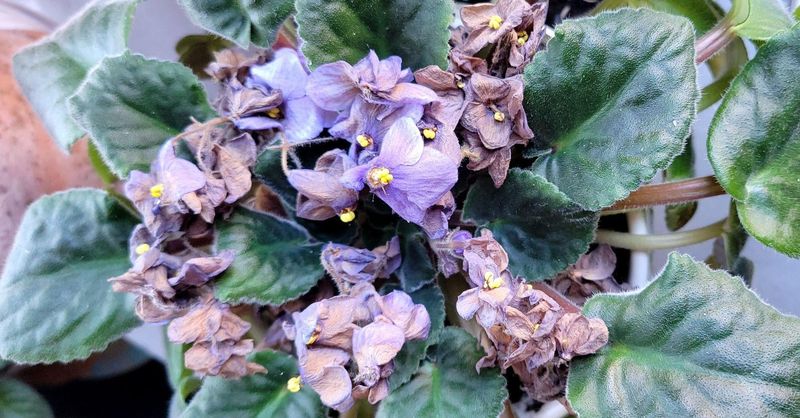
Did you know that leaving faded flowers on your African violet can actually slow down future blooming? Once a flower is done, the plant starts putting energy into forming seeds.
Deadheading, which just means removing those finished blooms, stops that process and redirects energy back into making new flowers.
To deadhead properly, pinch or snip the flower stem all the way down to where it meets the main stalk. Do not just remove the flower petals and leave the stem behind.
The whole stem needs to go so the plant can use that space and energy for fresh new growth. This is a quick task that takes only a minute or two each time you check on your plants.
For California gardeners who want their African violets blooming as much as possible throughout the year, deadheading is non-negotiable.
The mild climate here means your plants can bloom for extended periods, especially when they are not wasting resources on seed production.
Make deadheading part of your regular plant care routine, and you will be rewarded with a nearly constant display of colorful blooms.
Over time, you will notice that consistently deadheaded plants produce more flower clusters and look noticeably fuller than those left untended.
Give The Right Amount Of Light
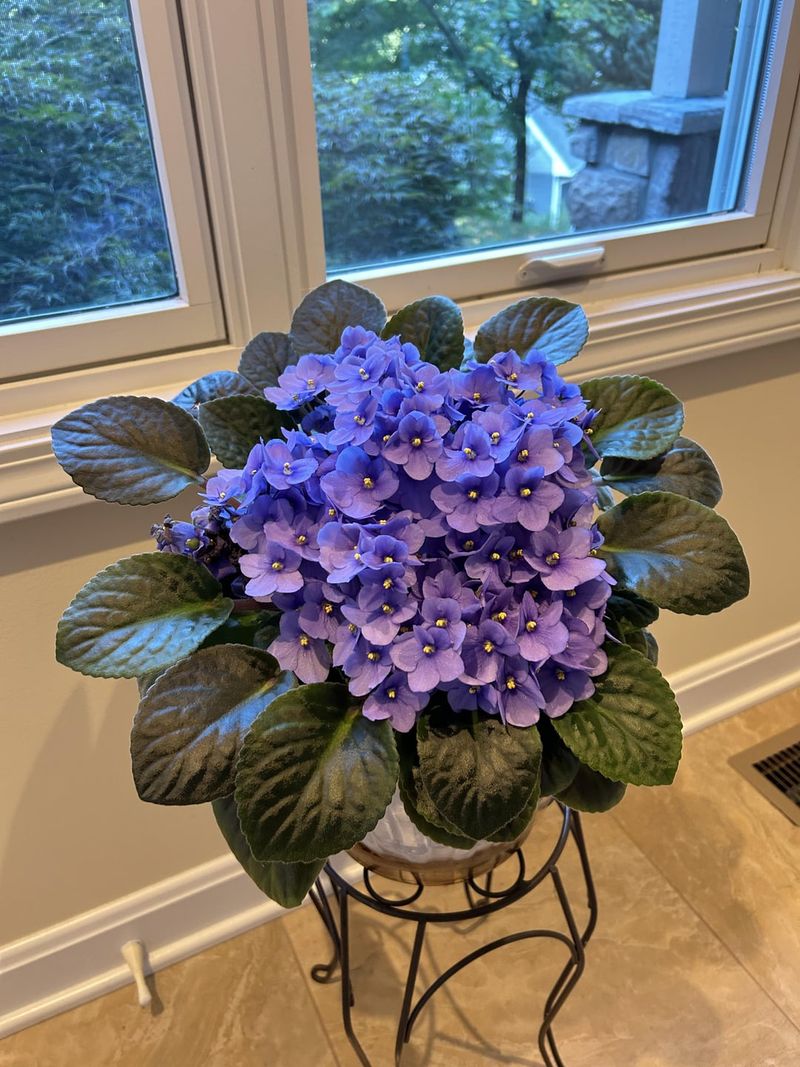
Light plays a bigger role in your African violet’s shape than most people realize. Too little light and the plant stretches upward looking for brightness, creating that leggy, sparse look that no one wants.
Too much direct sunlight, which is easy to get in sunny California, can scorch the leaves and leave them looking brown and crispy.
The sweet spot is bright, indirect light. A north or east-facing window works really well for most California homes.
If you only have south or west-facing windows, hang a sheer curtain to filter the intensity of the afternoon sun. Your African violet should get about 10 to 12 hours of indirect light per day for the best growth and blooming results.
Rotating your plant a quarter turn every week or two also helps. This ensures all sides of the plant get equal light exposure, which prevents one side from growing faster than the other.
Uneven light is one of the most common reasons African violets end up lopsided. Getting the lighting right does not require expensive equipment or complicated setups.
Just a little attention to placement and rotation makes a huge difference in how full, balanced, and healthy your plant grows over time.
Water Correctly
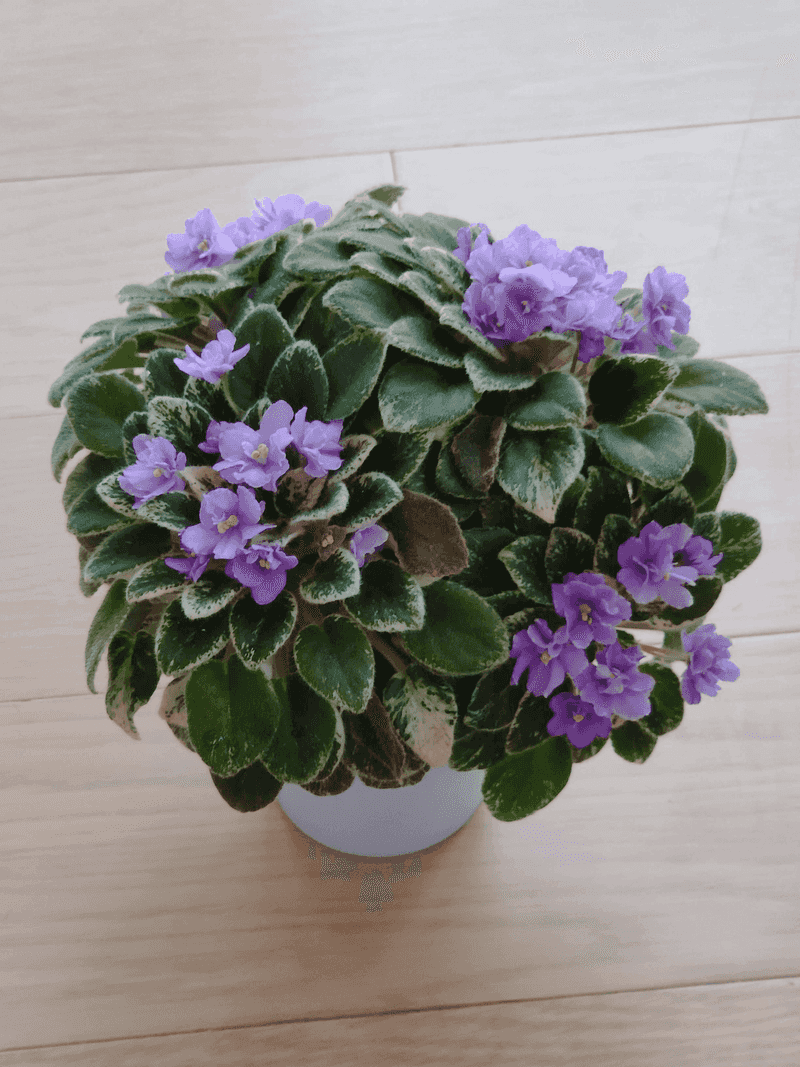
After pruning, your African violet needs proper watering to recover and push out new growth. Watering mistakes are surprisingly common and can undo all the good work your pruning does.
The key rule is simple: water when the top inch of soil feels dry to the touch, and never let the plant sit in standing water for too long.
Always use room-temperature water. Cold water can shock the roots and cause brown spots on the leaves.
More importantly, keep water off the leaves entirely. Wet foliage is a common cause of leaf spot disease, which spreads quickly in the sometimes humid coastal areas of California.
Bottom watering, where you set the pot in a shallow tray of water and let it absorb from the drainage holes, is one of the safest and most effective methods.
Good watering habits work hand in hand with pruning. A well-watered plant recovers faster after trimming and produces new leaves and blooms more quickly.
Overwatering, on the other hand, leads to root rot and soggy soil that suffocates the roots. Striking the right balance keeps your African violet energized and ready to fill out beautifully after every pruning session.
Consistent, careful watering is one of the simplest things you can do for long-term plant health.
Manage Humidity
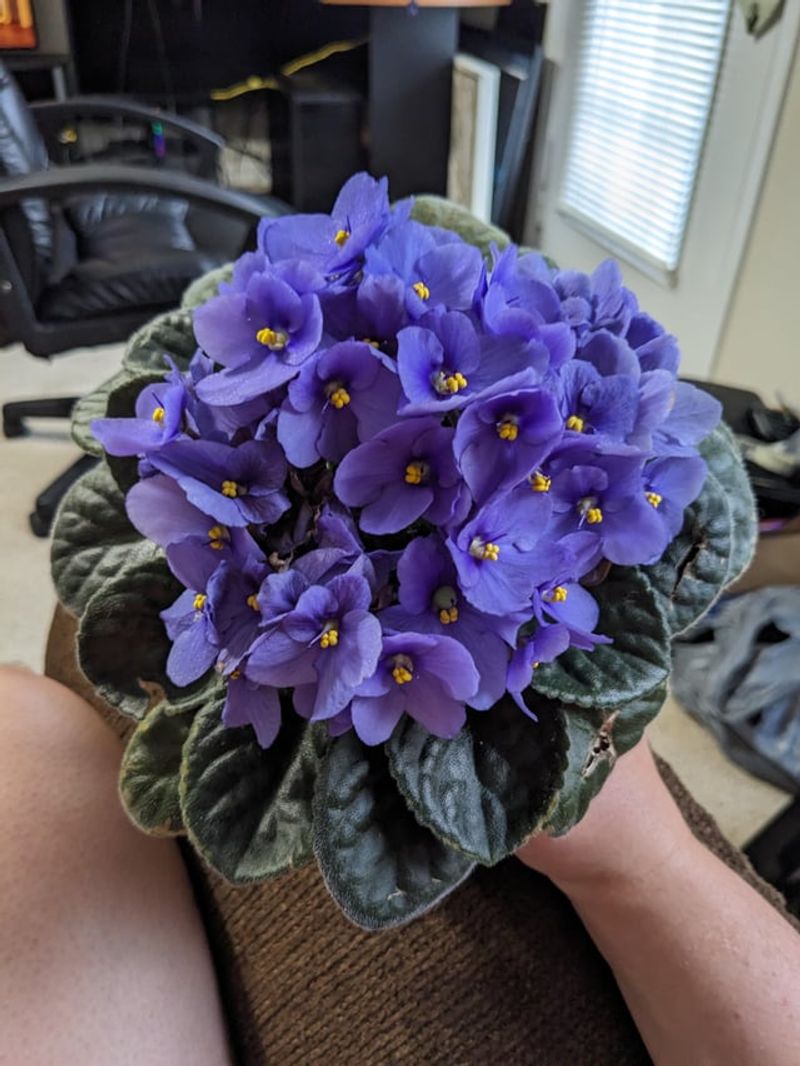
California has a wonderfully varied climate, from the dry inland valleys to the cool, misty coast. African violets prefer moderate humidity, around 40 to 60 percent, so knowing your local conditions really matters.
In drier inland areas, low humidity can stress the plant and slow down recovery after pruning.
One of the easiest ways to boost humidity around your plant is to use a pebble tray. Just fill a shallow tray with small stones, add water until it reaches just below the top of the pebbles, and set your pot on top.
As the water evaporates, it creates a gentle humid zone right around the plant. Avoid misting the leaves directly, since water droplets sitting on the foliage can cause spotting and fungal problems.
Temperature also matters a lot. African violets are happiest between 65 and 75 degrees Fahrenheit, which aligns nicely with the mild temperatures found throughout much of California.
Avoid placing your plant near drafty windows, air conditioning vents, or heating units. Sudden temperature swings can cause leaf curl and slow growth.
A stable, comfortable environment gives your plant the best chance to thrive after each pruning session, pushing out new shoots and blooms with steady, reliable energy throughout the growing season.