How To Grow Gardenias In Arizona With The Right Care Tips
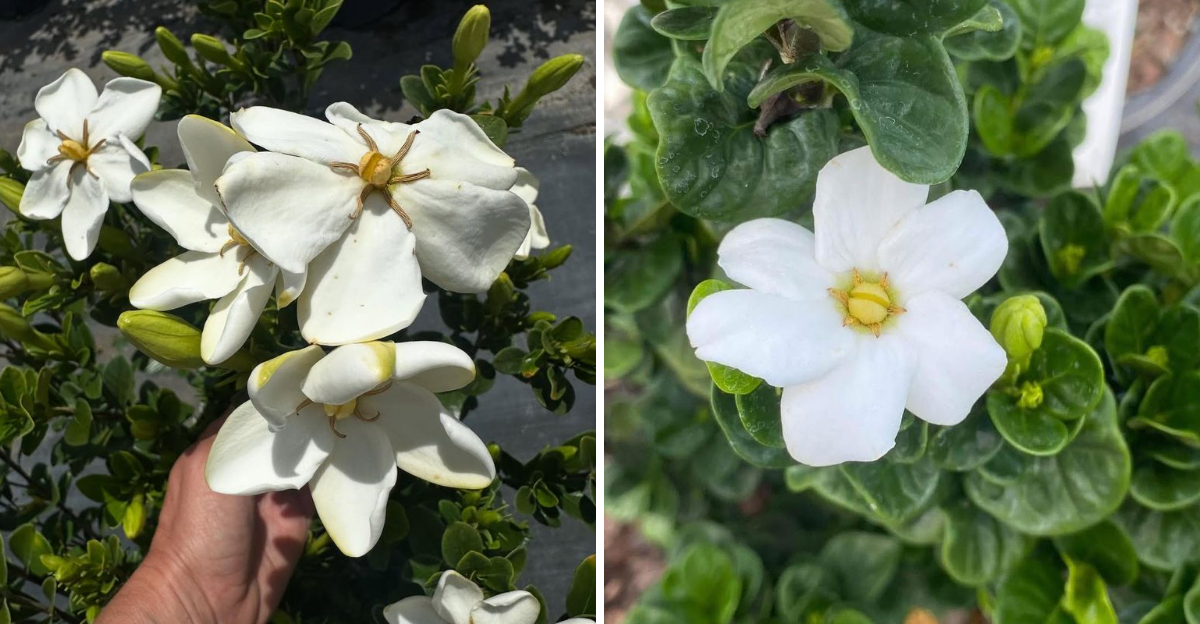
Gardenias are famous for their creamy white blooms and unforgettable fragrance, but growing them in Arizona can feel a little intimidating at first. Many gardeners assume the desert heat makes them too difficult to keep happy.
The truth is, gardenias can grow well in Arizona when a few important details are handled the right way.
It starts with understanding what these plants need. Gardenias prefer gentle morning sun, protection from intense afternoon heat, and soil that drains well while still holding some moisture.
When those conditions are right, they reward gardeners with glossy green leaves and incredibly fragrant flowers that stand out in the garden.
Many Arizona gardeners are surprised by how well gardenias can perform once they are planted in the right spot and given consistent care.
With a few simple adjustments, these classic flowering shrubs can thrive and bring their signature scent and elegant blooms into Arizona gardens.
1. Choose A Heat-Tolerant Gardenia Variety
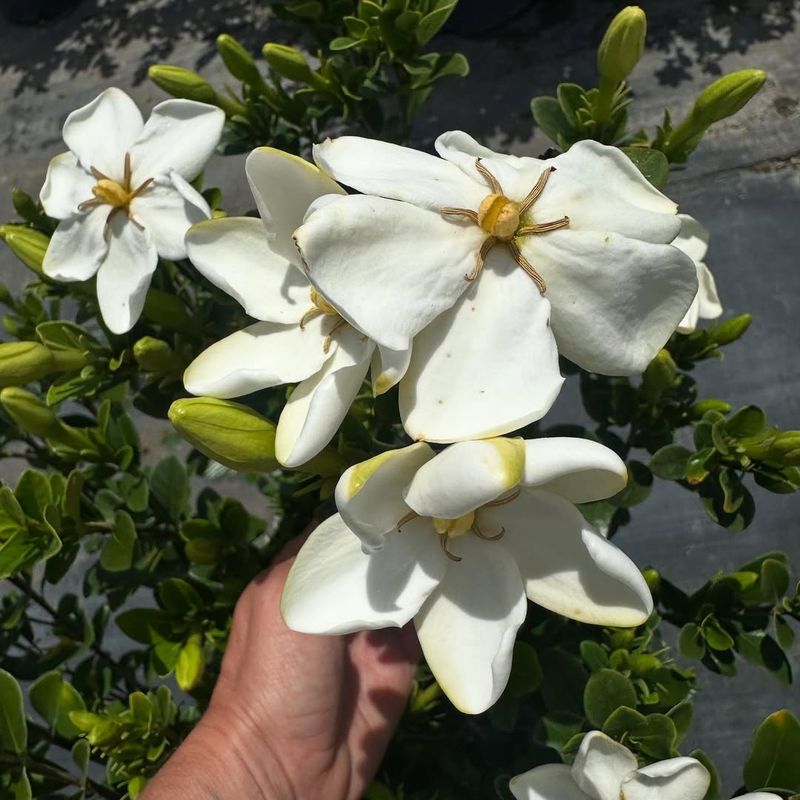
Not every gardenia is built for Arizona summers, and picking the wrong variety is where most people go wrong before they even get started. Some types struggle badly once temperatures push past 95 degrees, while others hold up surprisingly well with proper care.
Varieties like ‘Kleim’s Hardy’ and ‘Chuck Hayes’ have shown real toughness in hot, dry climates. ‘Kleim’s Hardy’ stays compact, which makes it a solid choice for container growing in Arizona backyards where you need flexibility.
‘Chuck Hayes’ handles both heat and brief cold snaps better than most, which matters in areas like Flagstaff where nights can get surprisingly chilly.
If you are in the low desert around Phoenix or Tucson, look for varieties labeled as suitable for USDA zones 8 to 10.
Avoid the standard ‘August Beauty’ unless you are ready to give it heavy shade and consistent moisture, because it tends to struggle more than the hardier types under intense Arizona sun.
Nurseries in Arizona sometimes carry locally tested varieties that perform better than what you might find at a big box store. Asking staff at a local garden center about what actually survives in your specific city or neighborhood is worth the five-minute conversation.
Growing conditions vary a lot across Arizona, so what works in Scottsdale might need a small adjustment in Yuma or Prescott. Start with a tough variety, and the rest of the care becomes a lot more manageable from day one.
2. Plant Gardenias Where They Get Morning Sun And Afternoon Shade
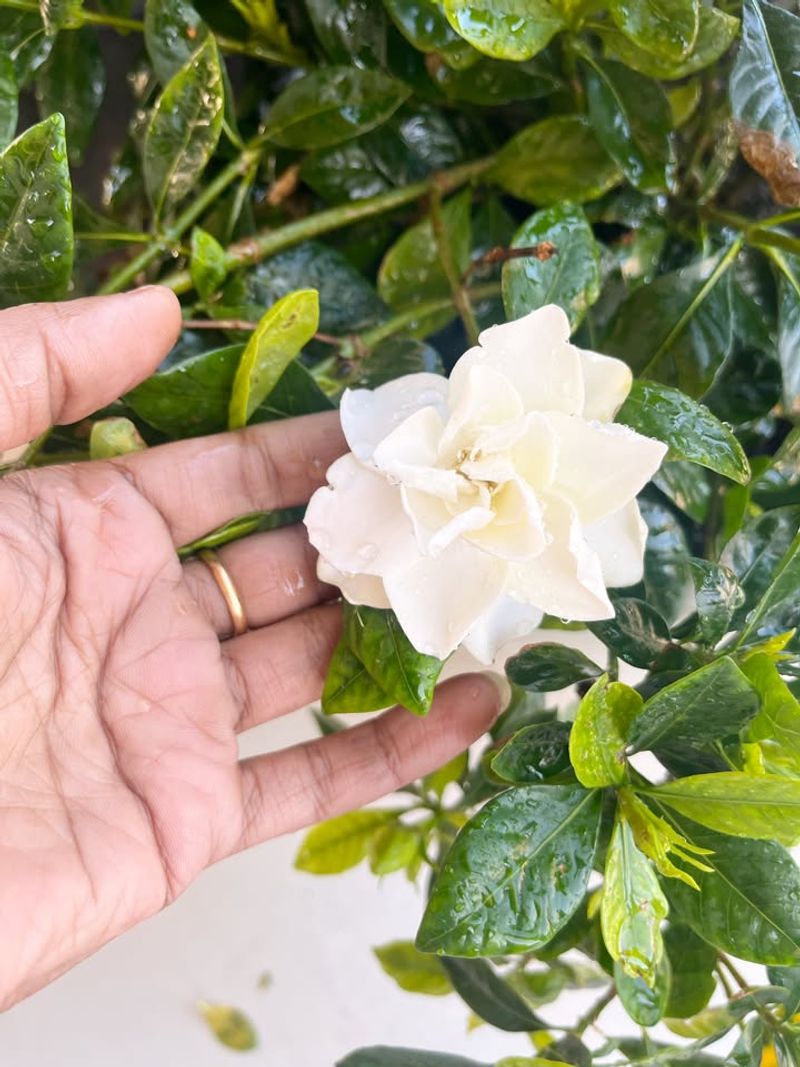
Arizona afternoons are brutal, and gardenias are not shy about showing you when they have had too much sun. Leaves turn yellow, buds drop before they open, and the whole plant looks stressed within just a few days of direct afternoon exposure.
East-facing spots are ideal across most of Arizona. The plant gets good light in the morning when temperatures are still manageable, and by the time the sun swings around and gets intense, the gardenia is already in shade.
A spot along the east side of your house, a block wall, or a tall fence works really well for this purpose.
Your Arizona Garden Changes Every Week. Your Plan Should Too.
Gardening in Arizona changes quickly throughout the season. Every Friday you’ll receive a simple weekly plan showing exactly what to plant, prune, fertilize, harvest, and protect so you never miss the right timing.
Planting under a patio cover or near a large tree that filters afternoon light is another approach that works.
Just make sure the tree does not compete too aggressively for water, because gardenias need consistent moisture and do not like being out-competed by thirsty roots nearby.
In areas like Mesa or Gilbert where summer heat is relentless from June through September, even morning sun can get intense by 10 a.m.
In those situations, a spot that gets only two to three hours of direct morning light and then full shade the rest of the day can actually produce better results.
Watch how your specific planting spot behaves during summer and be ready to move a container plant or add a shade cloth if the leaves start showing signs of heat stress. Observation beats any fixed rule when it comes to Arizona gardening.
3. Use Well-Draining Slightly Acidic Soil
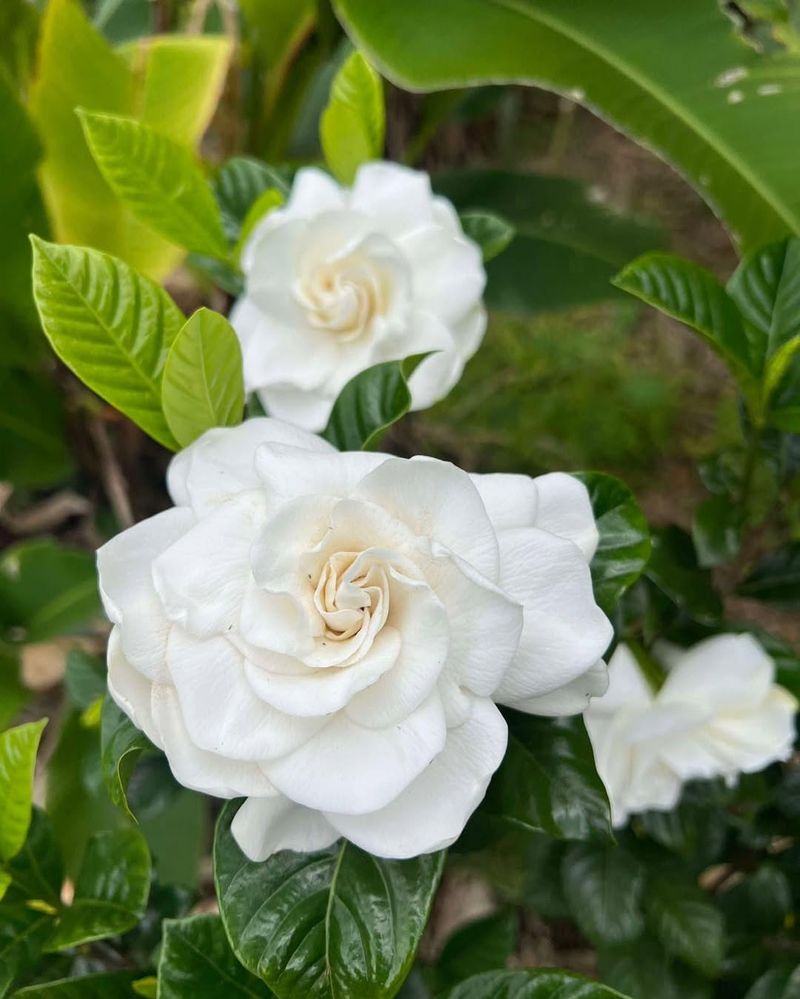
Arizona soil is one of the biggest hurdles for anyone trying to grow gardenias here. Native desert soil tends to be alkaline, often sitting at a pH of 7.5 or higher, while gardenias need something closer to 5.0 to 6.5 to absorb nutrients properly.
When the pH is off, gardenias cannot pull iron and other key minerals from the soil even if those minerals are present.
You end up with yellowing leaves and stunted growth, and adding fertilizer does not fix the problem because the roots simply cannot access what they need.
Fixing the soil first is the only way around this.
Work in plenty of peat moss or sulfur-treated compost before planting. Elemental sulfur can lower soil pH over time, but it works slowly, so mixing it in several weeks before planting gives it a head start.
Adding compost improves drainage too, which matters because gardenias hate sitting in soggy ground.
Raised beds are a smart option for Arizona gardeners who want more control. Fill them with a custom mix of peat moss, compost, and coarse perlite to get the drainage and acidity right from the start.
Container growing offers the same advantage, letting you use a quality acidic potting mix without battling native soil at all.
Test your soil pH every season using an inexpensive kit from a garden center. Arizona water is also alkaline, and regular irrigation can slowly raise soil pH over time, so staying on top of it throughout the year helps keep your gardenias healthy and productive.
4. Keep The Soil Evenly Moist But Not Waterlogged
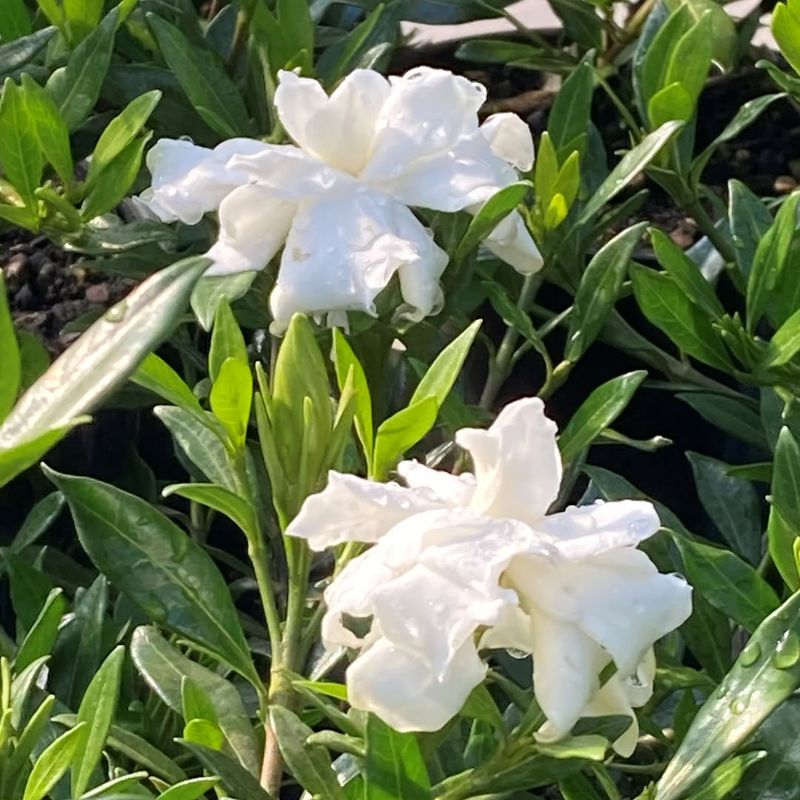
Watering gardenias in Arizona is a balancing act that catches a lot of gardeners off guard. Too little water and the buds drop before they open.
Too much and the roots start to rot, which shows up as wilting even when the soil is wet.
During Arizona summers, gardenias may need deep watering every three to four days depending on temperatures and how much shade they receive.
Shallow, frequent watering does not cut it because it keeps moisture near the surface and encourages weak root growth.
Water slowly and deeply so moisture reaches six to eight inches down into the soil.
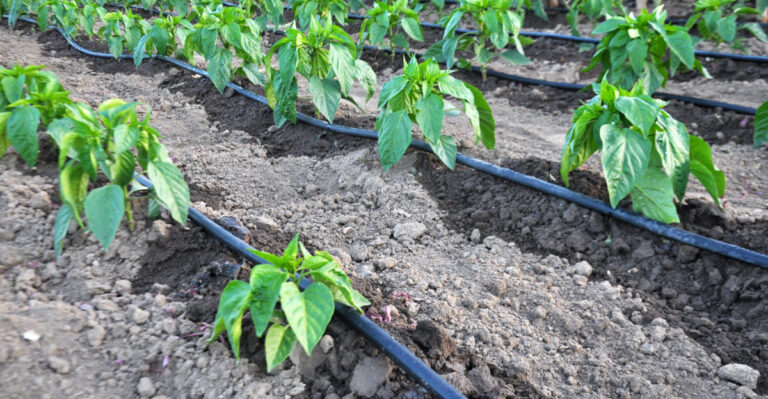
Drip irrigation works better than overhead watering for gardenias in Arizona. Keeping water off the leaves reduces the risk of fungal issues, which can develop in humid pockets even in a dry climate.
A timer on your drip system takes the guesswork out of consistency during the brutal summer months.
Mulching around the base of the plant makes a big difference. A two to three inch layer of organic mulch like wood chips or shredded bark slows evaporation and keeps the soil temperature from spiking.
Pull the mulch back slightly from the main stem to avoid moisture buildup right at the base.
In winter across most of Arizona, watering frequency drops significantly. Check the top inch of soil before watering, and only add water when it feels dry.
Overwatering in cooler months is a common mistake that causes more problems than the summer heat ever does.
5. Increase Humidity Around The Plant
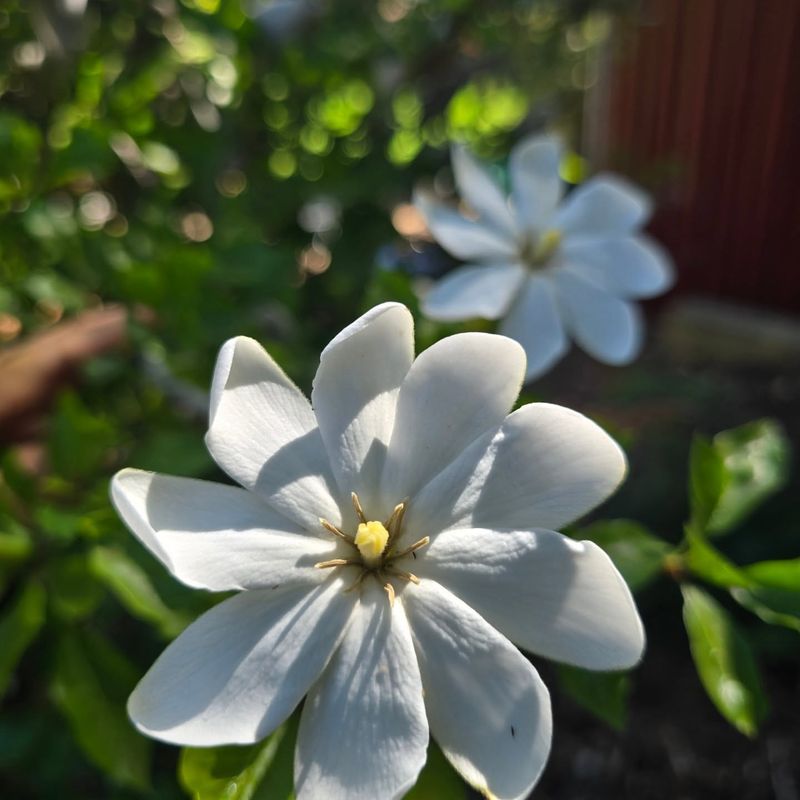
Arizona is dry, and gardenias come from humid environments, so there is always going to be a gap you need to bridge. Low humidity causes bud drop, crispy leaf edges, and a general look of unhappiness that no amount of fertilizer will fix.
Grouping plants together is one of the simplest ways to raise local humidity. Plants release moisture as they breathe, and a cluster of them creates a slightly more humid microclimate than a single isolated plant ever could.
Placing a few moisture-loving companions near your gardenia helps more than people expect.
Setting your container on a shallow tray filled with pebbles and water is another easy trick. As the water evaporates, it drifts upward around the plant and raises humidity right where it is needed.
Just make sure the bottom of the pot sits above the waterline so roots are not soaking in it.
Misting the leaves in the early morning works during the cooler months, but be careful doing this in summer. Wet leaves under strong Arizona sun can lead to scorching, and misting late in the day leaves moisture sitting on the plant overnight, which invites fungal problems.
If you keep gardenias on a covered patio, running a small outdoor misting system or a portable humidifier nearby during the hottest, driest weeks of the year can make a noticeable difference in how well the plant blooms.
Tucson and Phoenix gardeners dealing with especially arid conditions often find this extra step pushes their gardenias into much stronger flowering cycles.
6. Feed Gardenias With Fertilizer For Acid-Loving Plants
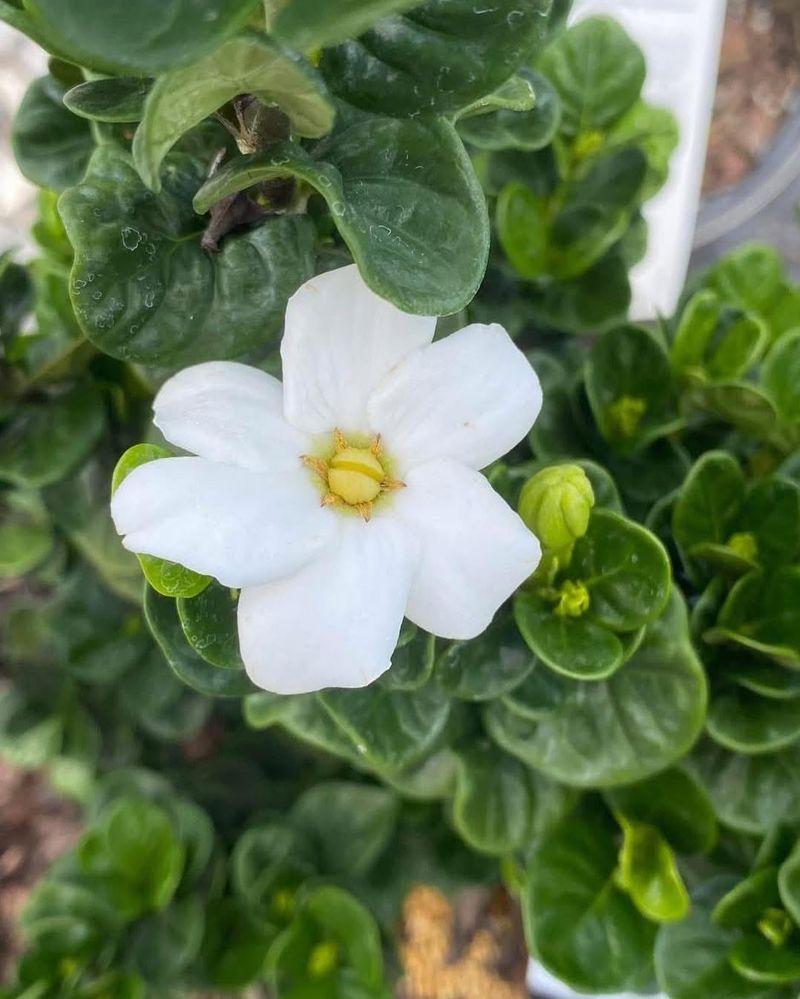
Gardenias are heavy feeders, and in Arizona’s alkaline conditions, they burn through nutrients faster than you might expect.
Skipping fertilizer or using the wrong type leads to pale leaves and weak flowering, which is frustrating after all the work you put into getting the soil right.
Look for fertilizers specifically labeled for acid-loving plants, azaleas, or camellias.
These blends are formulated with the right nutrient ratios and often include chelated iron, which is something Arizona gardenias genuinely need because iron deficiency is extremely common here due to high soil pH.
Apply fertilizer in early spring as new growth begins, and give a second feeding in late summer before the plant heads into its fall rest period.
Avoid feeding in fall or winter because pushing new growth during that time leaves tender shoots vulnerable to cold snaps that do happen in many parts of Arizona.
Slow-release granular fertilizers work well because they feed steadily over several months without the risk of burning roots. Liquid fertilizers work faster but need to be applied more frequently and carefully.
Either type works as long as you follow the label instructions and do not overdo it.
If your gardenia’s leaves are turning yellow between the veins while the veins themselves stay green, that is a classic sign of iron chlorosis.
A chelated iron supplement applied separately, either as a drench or foliar spray, can correct this faster than waiting for a regular fertilizer to work.
Catching it early makes a big difference in how quickly the plant recovers and resumes normal growth.
7. Protect Gardenias From Cold And Sudden Temperature Swings
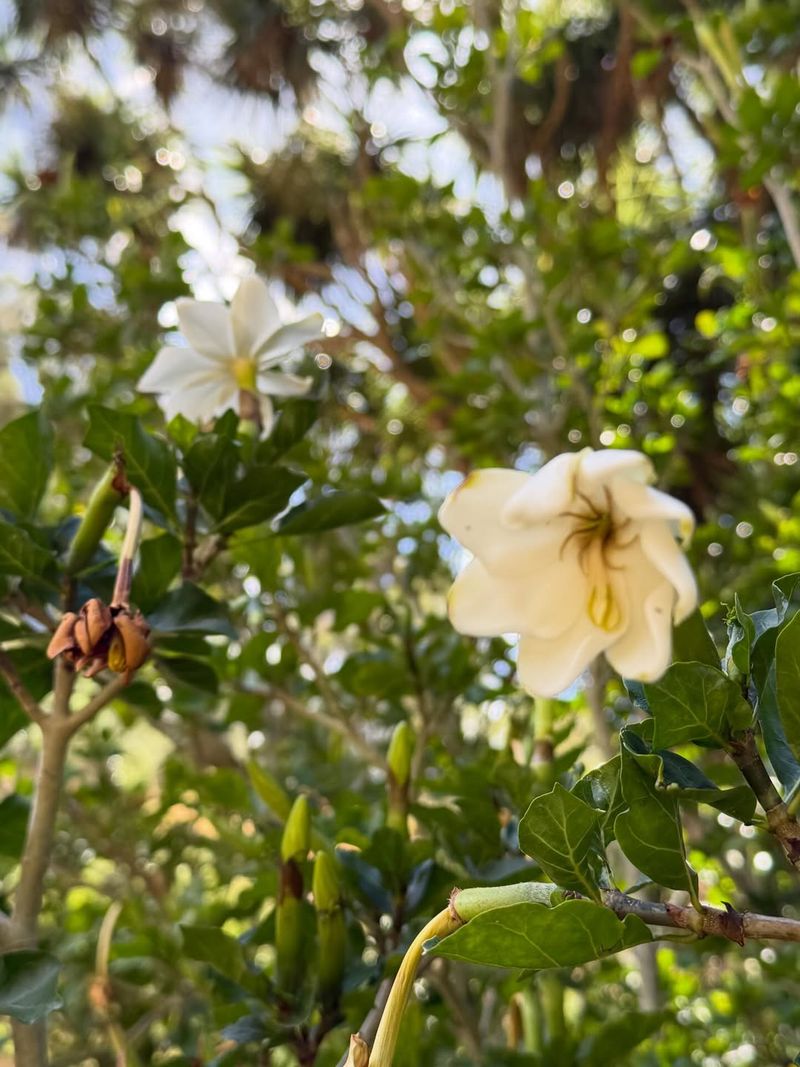
Arizona winters surprise a lot of people who assume the whole state stays warm year-round.
Temperatures in Phoenix can dip into the upper 30s on cold nights, and in places like Prescott or Flagstaff, hard freezes are a regular winter reality that gardenias absolutely cannot handle without protection.
Gardenias are sensitive to frost, and temperatures below about 28°F can damage buds and foliage.
Planting near a south or west-facing block wall helps because masonry absorbs heat during the day and releases it slowly at night, creating a slightly warmer microclimate around the plant.
When a cold front is forecast, cover the plant with frost cloth or an old bedsheet the evening before. Remove it in the morning once temperatures rise above freezing so the plant still gets light and airflow.
Leaving covers on too long on warm days can actually cause heat buildup under the fabric.
Container gardenias have a big advantage here because you can simply move them indoors or into a covered patio when cold weather hits. A garage with a window or a bright enclosed porch is enough to keep them safe through most Arizona cold spells.
Sudden swings in temperature are harder to manage than steady cold. A day that hits 75 degrees followed by a night that drops to 35 is rough on gardenias and often triggers bud drop.
Keeping the plant in a sheltered spot and using mulch to moderate soil temperature helps buffer against those rapid shifts that happen frequently in Arizona during late fall and early spring.