The Houseplant With The Cool Name That Handles Very Low Light In Arizona Homes
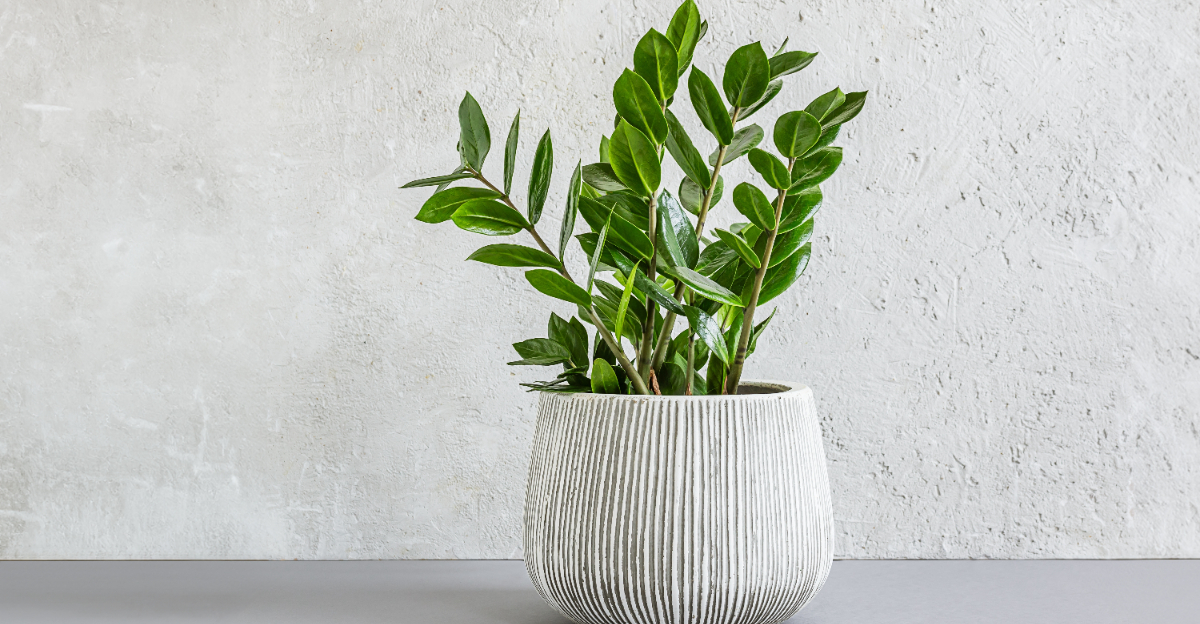
Some houseplants demand bright windows and constant attention. This one is completely different.
It has a cool name, thick glossy leaves, and a reputation for surviving where many other plants struggle.
Low light corners, shaded shelves, and rooms that rarely see direct sun are exactly where this plant tends to do just fine.
That is one reason it has quietly become a favorite in many Arizona homes. Dry indoor air does not bother it much, and it does not demand constant watering or complicated care routines.
Even people who usually struggle with houseplants often find this one surprisingly easy to keep alive. It is tough, attractive, and perfectly suited for spots where most plants simply refuse to grow.
1. ZZ Plant Tolerates Very Low Light In Arizona Homes
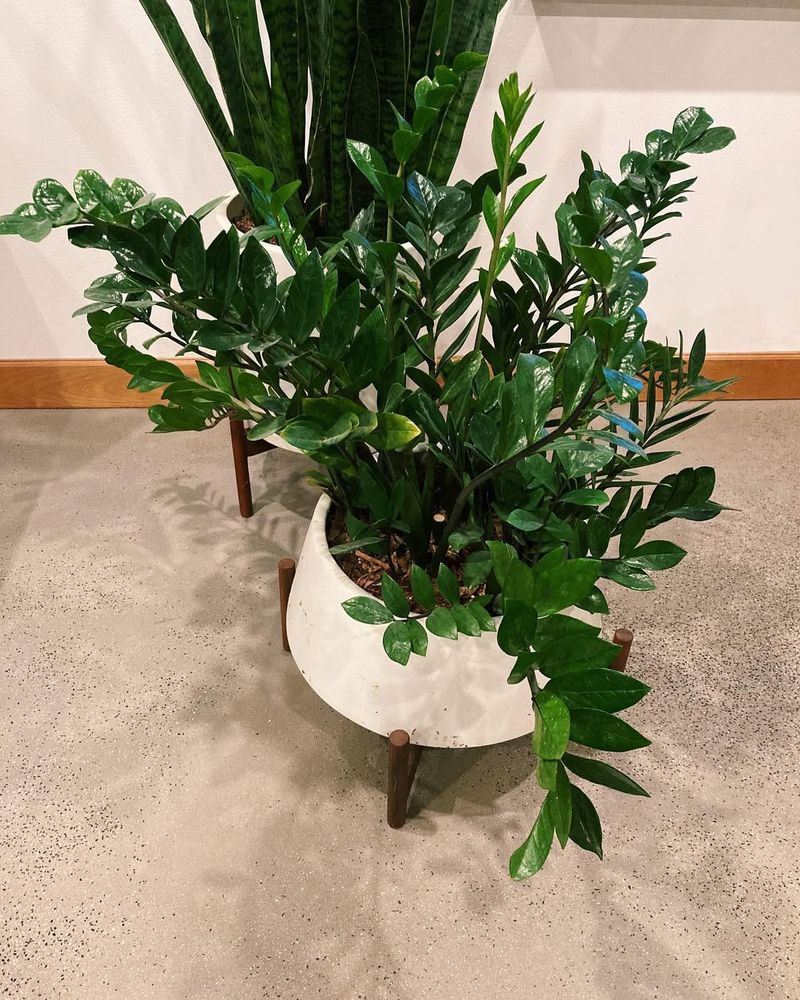
Most plants would give up fast in a dark corner of an Arizona home — but the ZZ plant barely notices.
Zamioculcas zamiifolia, or just “ZZ” if you don’t want to impress anyone at a dinner party, has built a real reputation among Arizona plant owners who deal with limited natural light indoors.
Arizona homes are often designed to block out the intense desert sun. Thick walls, small windows, and heavy blinds are common, which means rooms stay cool but don’t get much light.
A lot of houseplants can’t handle that. The ZZ plant actually does fine in those conditions, pulling through even when light is barely filtering in from a distant window.
It’s not magic — it’s biology. The ZZ plant evolved in East Africa, where it learned to survive under the shade of dense tree canopies.
That history makes it unusually capable of getting by on very little light without losing its shape or color.
In Tucson, Phoenix, or Scottsdale, where window treatments are almost always drawn during the hottest months, the ZZ plant keeps looking sharp. It doesn’t need a south-facing window or a grow light to stay healthy.
A bright hallway or a room with filtered light is honestly plenty.
If you’ve struggled to keep plants alive indoors in Arizona, starting with a ZZ plant is a smart move. It’s forgiving in ways most other houseplants simply aren’t, especially when it comes to light.
2. Thick Underground Roots Help The Plant Store Water
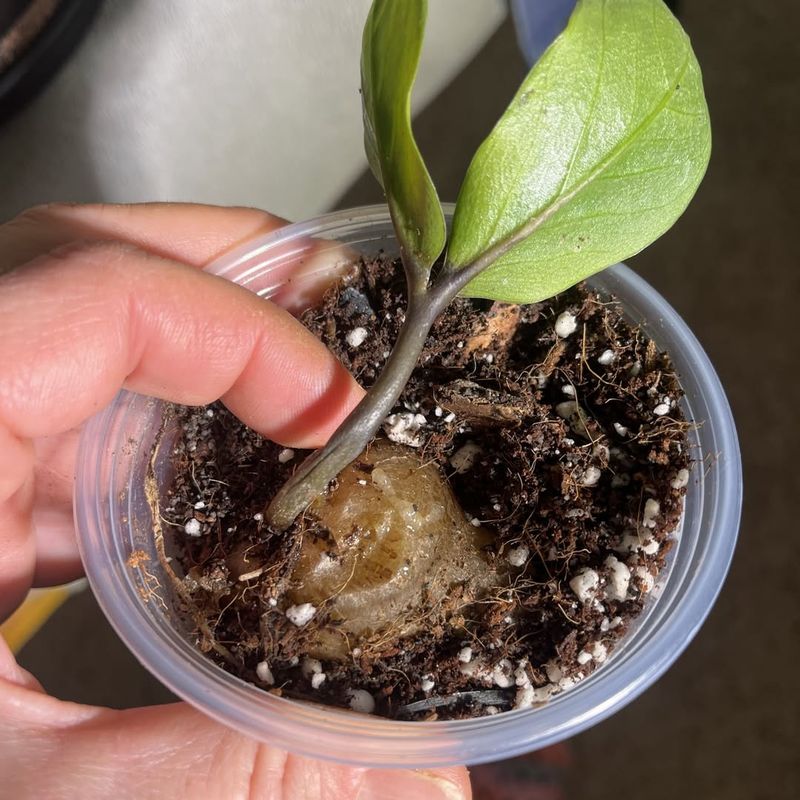
Underneath every ZZ plant is a secret weapon — a chunky, potato-shaped root system called a rhizome. Pull one out of its pot and you’ll immediately understand why this plant can go weeks without water and still look completely fine.
Rhizomes are basically underground storage tanks. When the ZZ plant does get watered, those thick roots soak up moisture and hold onto it.
Later, when the soil dries out — which happens fast in Arizona’s dry climate — the plant draws on those reserves instead of stressing out.
Arizona’s indoor air is notoriously dry, especially in summer when air conditioning runs constantly. Most plants lose moisture quickly through their leaves in that kind of environment.
The ZZ plant’s rhizomes help offset that loss, keeping the plant stable even when conditions aren’t ideal.
Your Arizona Garden Changes Every Week. Your Plan Should Too.
Gardening in Arizona changes quickly throughout the season. Every Friday you’ll receive a simple weekly plan showing exactly what to plant, prune, fertilize, harvest, and protect so you never miss the right timing.
You can actually feel the difference when you pick up a pot with a well-established ZZ plant. It’s surprisingly heavy compared to other plants the same size.
That weight is the rhizomes storing water below the soil surface, doing their job quietly.
For busy Arizona homeowners who travel, work long hours, or just forget to water regularly, this trait is a genuine lifesaver. Going on a week-long trip to Sedona?
No problem. The ZZ plant will manage just fine while you’re gone, drawing on what it stored last time you watered it.
No other feature of this plant is quite as practical as those underground roots.
3. Glossy Dark Leaves Stay Healthy Even In Dim Corners
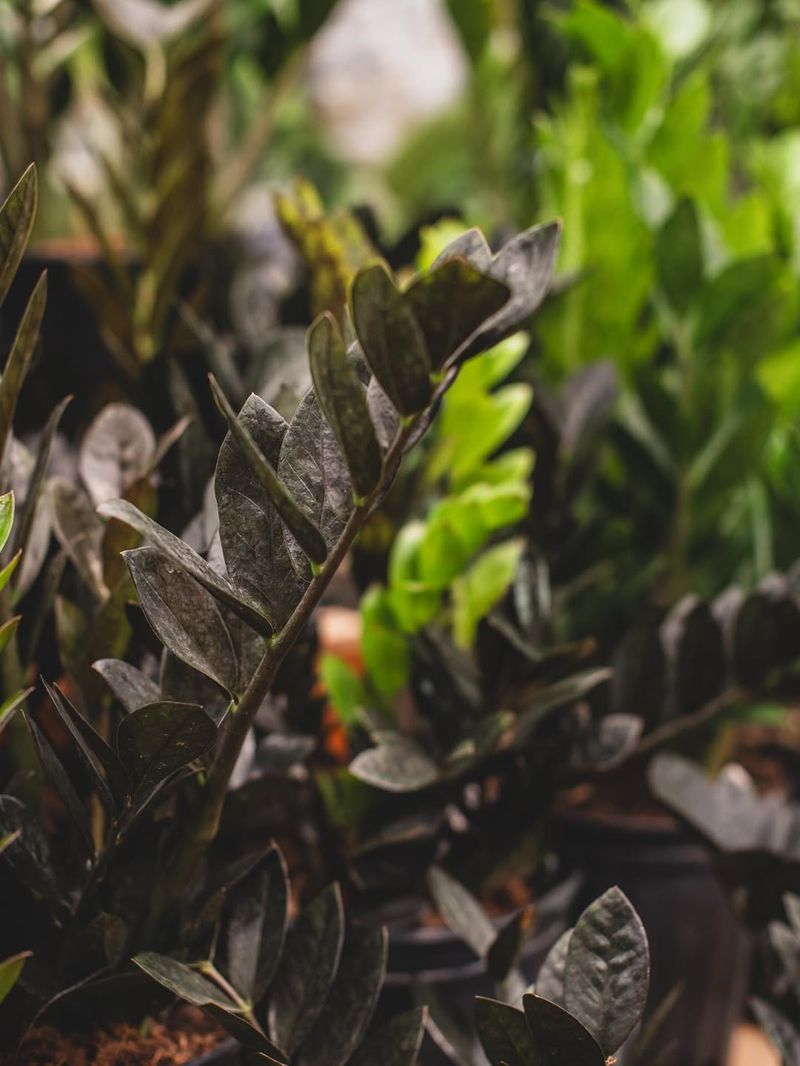
Walk past a ZZ plant and you’ll probably stop to look twice — those leaves have a shine to them that looks almost too good to be real. Some people actually mistake the ZZ plant for an artificial plant the first time they see one because the leaves look so clean and polished.
That glossy surface isn’t just for looks. It helps the plant absorb every bit of available light, which matters a lot when you’re sitting in a dim Arizona room with the blinds mostly shut.
The waxy coating on each leaf acts like a reflector, catching and using even low-level ambient light efficiently.
In places like Mesa or Chandler, where homes often have deep overhangs to block the brutal afternoon sun, interior rooms can get surprisingly dark during peak daylight hours. The ZZ plant’s leaves are built for exactly that kind of situation.
They stay dark green and firm even without direct sunlight hitting them.
Dust can dull that natural shine over time, which is worth knowing. A quick wipe with a damp cloth every few weeks keeps the leaves looking their best and actually helps the plant absorb light more effectively.
It takes about two minutes and makes a noticeable difference.
Unlike some plants that drop leaves or turn yellow when light drops, the ZZ plant holds its shape and color reliably. In a dim corner of your Arizona home, it’s one of the few plants that genuinely looks like it belongs there.
4. Dry Indoor Air Does Not Usually Bother This Houseplant
Arizona air conditioning is brutal on tropical houseplants. Humidity levels inside Arizona homes can drop below 20 percent during summer, which causes a lot of plants to develop brown leaf tips, drop leaves, or just slowly fade out.
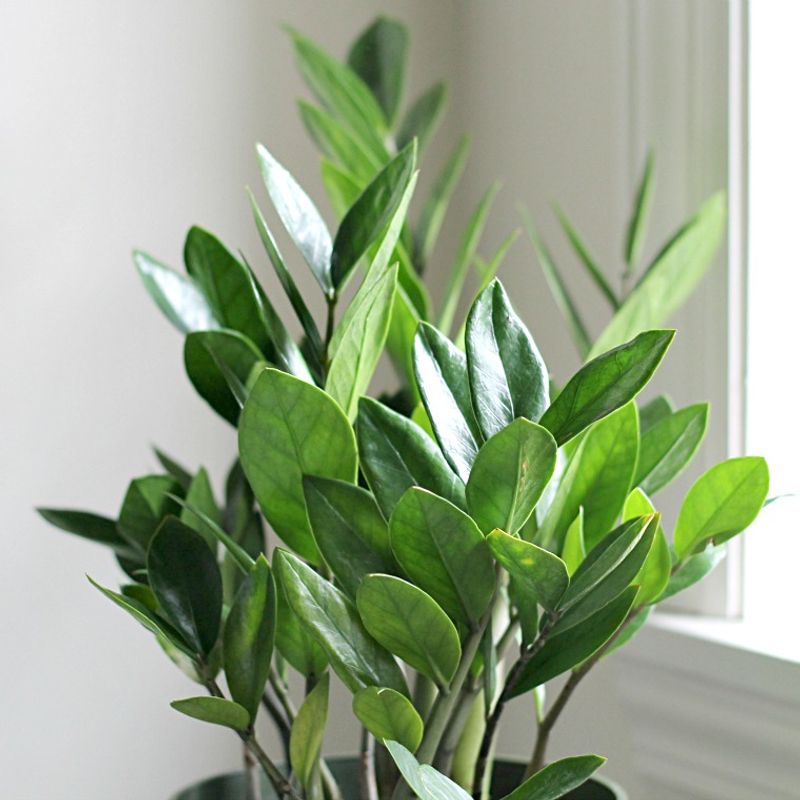
Surprisingly, the ZZ plant handles that dry air without much trouble. Its waxy leaves don’t release moisture the way thinner-leaved plants do, so it doesn’t suffer the same kind of dehydration stress.
You won’t see the crispy edges that show up on ferns or calatheas in the same conditions.
Part of why this works comes back to the plant’s African origins. It evolved in environments with unpredictable rainfall and dry periods.
That background gave it a tolerance for low humidity that most tropical houseplants simply don’t have. It’s not that the ZZ plant loves dry air — it just doesn’t panic when conditions aren’t ideal.
In Phoenix or Scottsdale during July and August, when AC runs around the clock and the air inside feels almost crackling dry, the ZZ plant keeps its composure. No misting required, no humidifier needed, no special placement near a water source.
Compare that to something like a peace lily or a Boston fern, which both need regular humidity boosts to stay looking decent in an Arizona home. The ZZ plant skips all of that.
Just set it somewhere with decent indirect light and let the plant do its thing without extra fussing.
5. Too Much Water Is The Most Common Problem Indoors
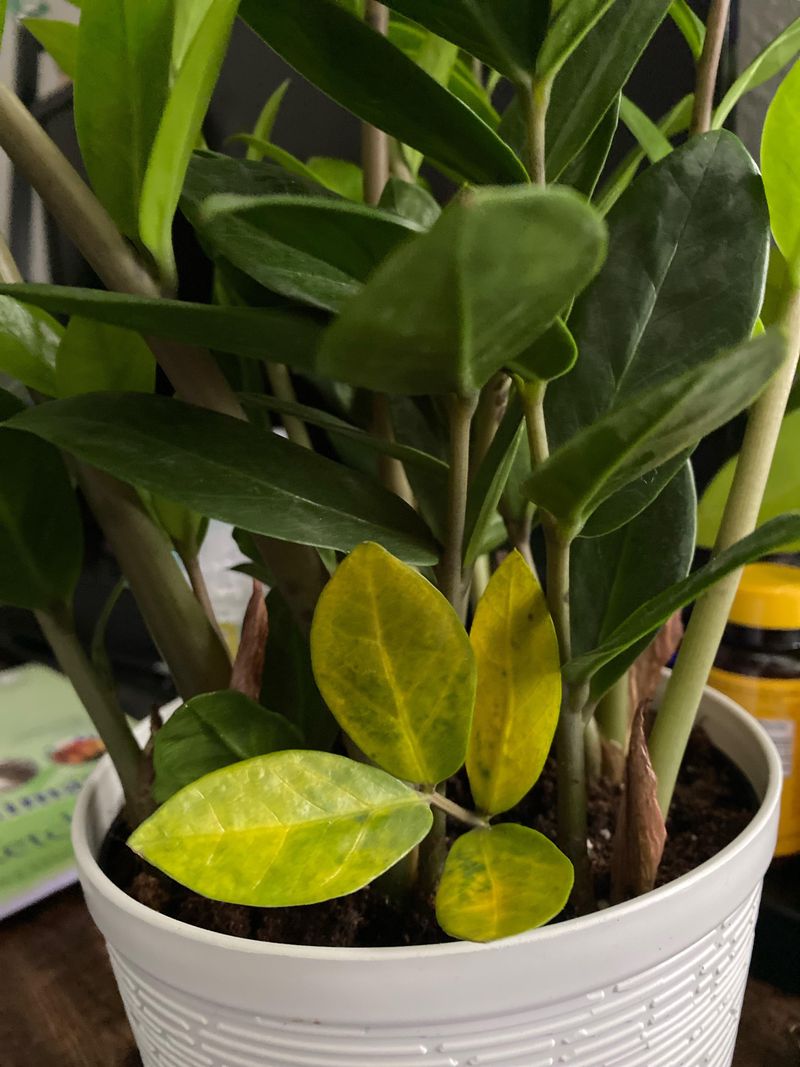
Here’s the one thing that actually trips people up with the ZZ plant — watering it too often. It sounds backwards, but giving this plant too much attention is genuinely more harmful than ignoring it.
Because the rhizomes store water so effectively, the ZZ plant doesn’t need frequent watering. In an Arizona home, watering once every two to three weeks during summer is usually enough.
In winter, when the plant slows down, even less is needed. Sticking to a weekly watering schedule will cause the roots to sit in soggy soil, which leads to rot.
Root rot is quiet and sneaky. By the time you notice yellow stems or mushy stalks at the base, the damage has already been building for weeks underground.
At that point, recovery is possible but takes real effort — repotting, trimming affected roots, and letting the plant dry out completely.
A simple test works better than any watering schedule: push your finger about two inches into the soil. If it still feels damp, wait.
If it’s dry, go ahead and water. That approach keeps the ZZ plant healthy without overthinking it.
Choosing the right pot matters too. Terra cotta pots work well because they let moisture evaporate through the sides, which helps prevent overwatering mistakes.
Plastic pots hold moisture longer, which can be a problem in a household where someone waters on instinct rather than need.
Getting the watering right is honestly the whole game with this plant.
6. Slow Growth Makes It Easy To Manage In Small Spaces
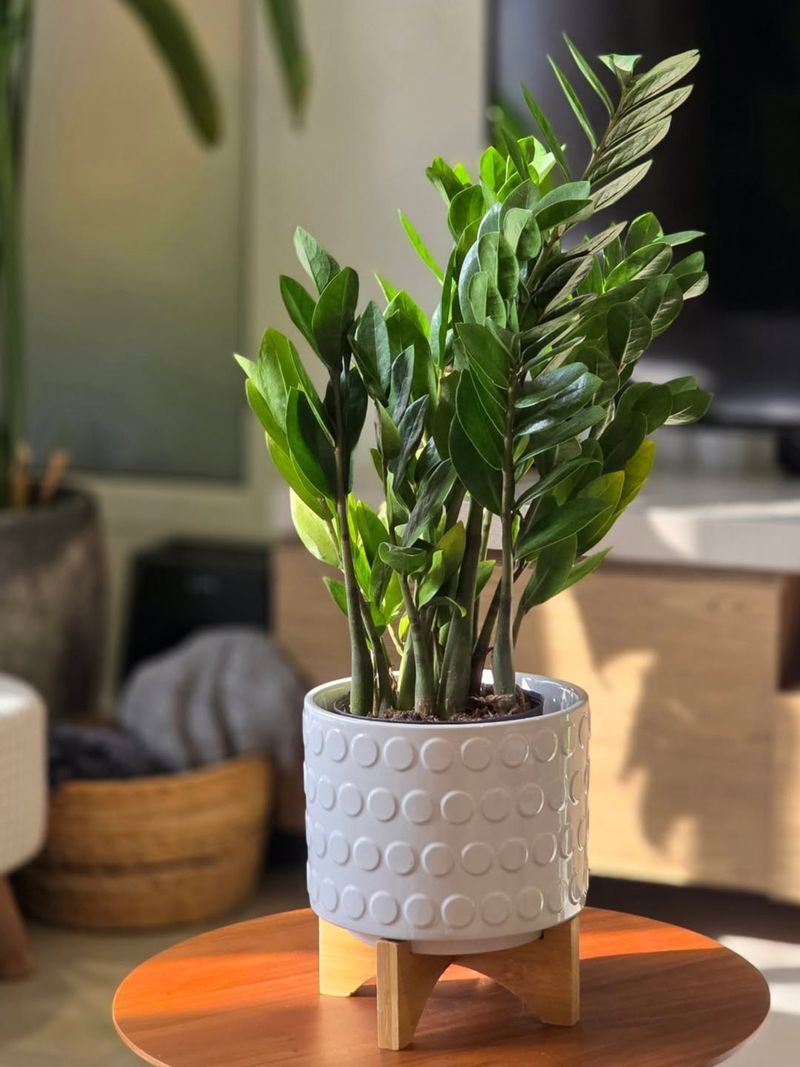
Not every Arizona home has a lot of floor space to give over to plants. Apartments in Tempe, condos in Scottsdale, and smaller homes in Tucson all have one thing in common — space is limited, and a fast-growing plant can quickly become a problem.
The ZZ plant grows slowly, and that’s actually a feature, not a flaw. Under low-light indoor conditions, it might produce just a few new stems per year.
That predictable pace means you can put it on a shelf, a side table, or in a corner and trust that it won’t outgrow the spot for a long time.
Repotting doesn’t need to happen often either. Most ZZ plant owners go two to three years between repottings, sometimes longer.
When the roots start visibly pushing out of the drainage holes, that’s usually the signal to size up — but there’s no rush. The plant handles being slightly root-bound without complaint.
Slow growth also means less mess. Fewer dropped leaves, fewer stems to trim, and a tidier overall appearance compared to faster-growing houseplants.
For Arizona homeowners who want greenery without constant maintenance, that’s a meaningful advantage.
Placed in a low-traffic corner or on a bookshelf, the ZZ plant just sits there looking clean and intentional. It doesn’t sprawl, it doesn’t shed constantly, and it doesn’t demand a bigger pot every season.
For small Arizona spaces, that kind of reliability is genuinely hard to find in a houseplant.
7. Minimal Care Helps This Plant Stay Healthy For Years
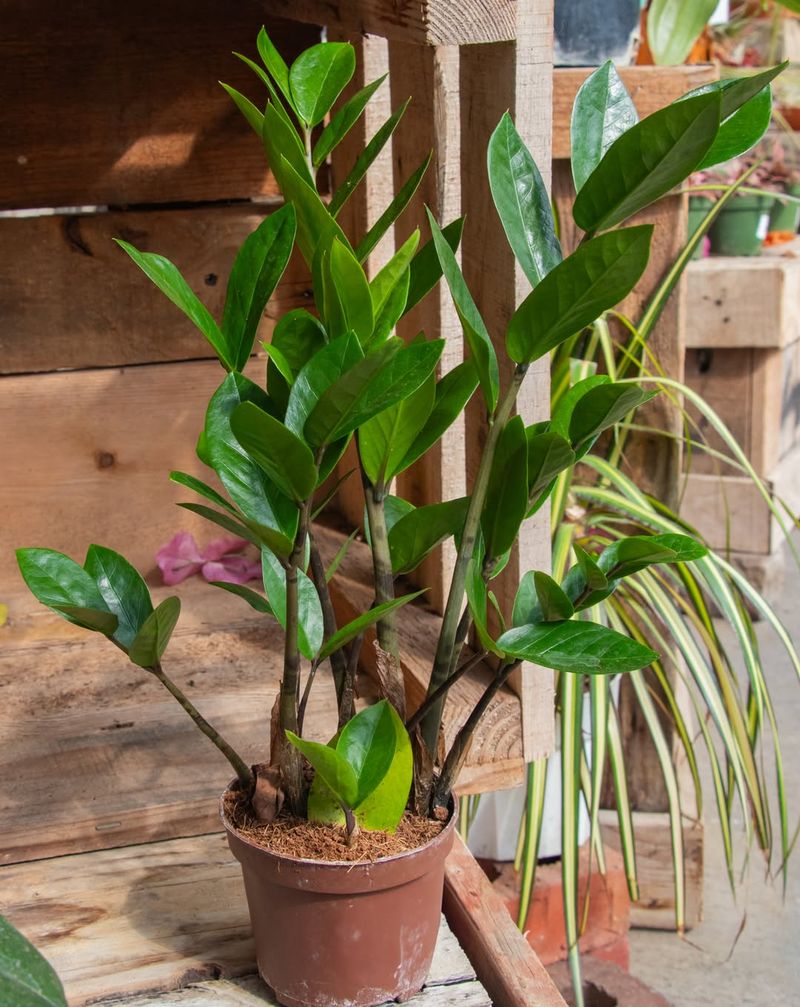
Some plants need constant attention — feeding schedules, humidity checks, seasonal adjustments, and regular inspections for pests. The ZZ plant is not one of those plants.
Put it in a reasonable spot inside your Arizona home and it’ll reward you by just quietly thriving.
Fertilizing is optional and infrequent. A light application of balanced liquid fertilizer two or three times during the growing season — spring through early fall — is plenty.
Some Arizona ZZ plant owners skip fertilizing entirely for years and still end up with a healthy, full-looking plant. It’s that forgiving.
Pests are rarely a serious issue. The ZZ plant doesn’t tend to attract spider mites, fungus gnats, or scale insects the way some other houseplants do.
Occasionally wiping down the leaves keeps things clean and also gives you a chance to spot any problems early, but full-blown infestations are uncommon.
Toxicity is worth mentioning, especially for households with curious pets or young kids. The ZZ plant contains calcium oxalate crystals, which can cause irritation if chewed or ingested.
Keeping it on a shelf or elevated surface solves that concern without much effort.
Arizona homeowners who have kept ZZ plants for five, seven, even ten years often say the same thing — they barely do anything to it and it keeps looking great.
That kind of long-term reliability is rare in the houseplant world, especially in a climate as demanding as Arizona’s.
For anyone wanting a plant that lasts, this one delivers.