9 Shade Casting Plants That Naturally Cool Arizona Yards
Arizona heat does not ease up, and once summer settles in, every patch of shade feels valuable.
The right plants can lower surface temperatures, soften reflected heat, and make outdoor areas noticeably more comfortable without relying on constant watering or heavy structures.
Broad leaves, layered canopies, and dense growth create protection that gravel and open soil cannot provide. In intense sunlight, plants that cast reliable shade change how a yard feels from morning through late afternoon.
Adding strong, heat tolerant growers that naturally create cover can transform exposed spaces into areas that feel calmer, cooler, and far more usable during Arizona’s longest months.
1. Velvet Mesquite Creates Wide Desert Canopy With Minimal Water
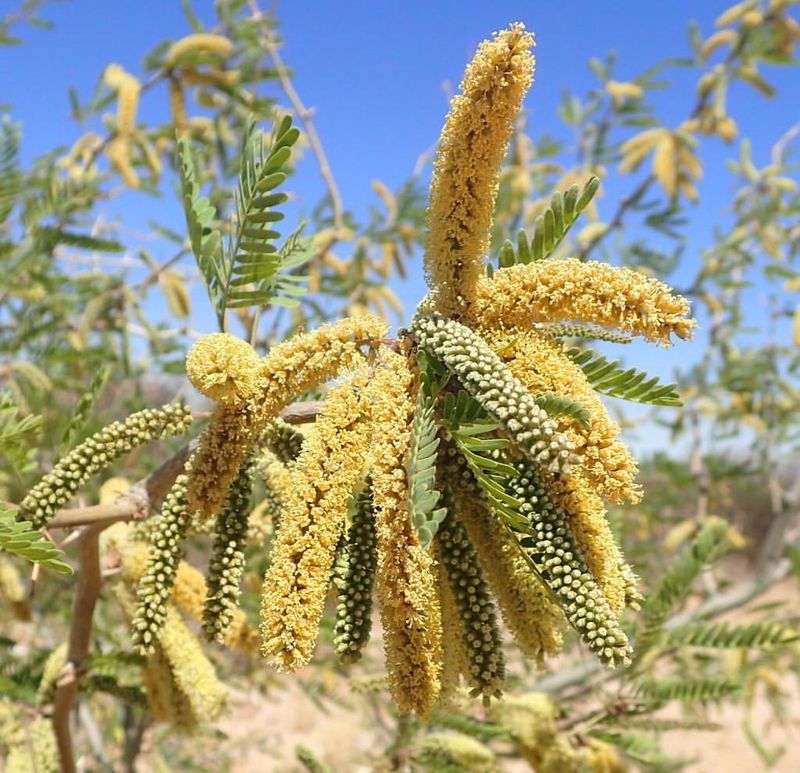
Ask any old-timer in Tucson what tree belongs in an Arizona yard, and Velvet Mesquite is almost always the first answer. Native to the Sonoran Desert, this tree has been shading desert soil long before anyone started landscaping around it.
Its canopy spreads wide and low, which is exactly what you want when the sun is hitting from every angle.
Velvet Mesquite gets its name from the soft, fuzzy texture on its seed pods and young stems. It is not just a good-looking tree — it actively improves the soil beneath it by fixing nitrogen, which helps other plants nearby grow stronger.
That is a bonus most shade trees cannot offer.
Water needs are genuinely low here. Deep, infrequent watering during the first couple of growing seasons helps the roots push down into the soil, and after that, rainfall in most Arizona regions handles most of the work.
Plan for a mature spread of 30 to 40 feet, so give it room. Plant it on the west or south side of your home for maximum afternoon shade where the heat hits hardest.
It grows quickly when young, helping new landscapes establish shade faster than many desert trees. The dappled light under its canopy keeps patios and garden beds noticeably cooler through long Arizona summers.
Over time, it becomes a reliable anchor in the yard, tying the entire landscape together with natural desert character.
2. Blue Palo Verde Lifts Light Filtered Shade Over Patios
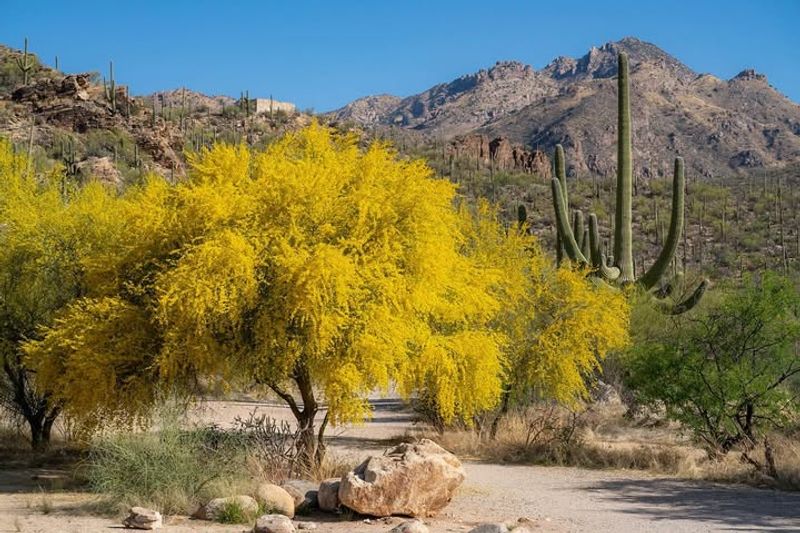
Few trees in Arizona stop people in their tracks quite like Blue Palo Verde in full bloom. Every spring, it explodes with bright yellow flowers that cover the entire canopy.
But outside of bloom season, what it really earns its spot for is the gentle, filtered shade it casts over patios and seating areas.
Unlike dense-canopy trees, Palo Verde lets some light through — which means it does not block winter sun when you actually want warmth. That balance is hard to find in a single tree.
Arizona homeowners with smaller patios especially appreciate this, since the tree never feels overwhelming in the space.
Blue Palo Verde is the official state tree of Arizona, which tells you something about how well it belongs here. It grows to around 25 feet tall with a similar spread, and its green trunk and branches photosynthesize even when the tree drops leaves during drought.
Your Arizona Garden Changes Every Week. Your Plan Should Too.
Gardening in Arizona changes quickly throughout the season. Every Friday you’ll receive a simple weekly plan showing exactly what to plant, prune, fertilize, harvest, and protect so you never miss the right timing.
Planting it near a patio on the south or west side gives you afternoon relief without plunging your space into full shadow. Water it deeply but sparingly, and it will handle Phoenix or Scottsdale summers without complaint.
3. Desert Ironwood Builds Dense Long Term Cooling Cover
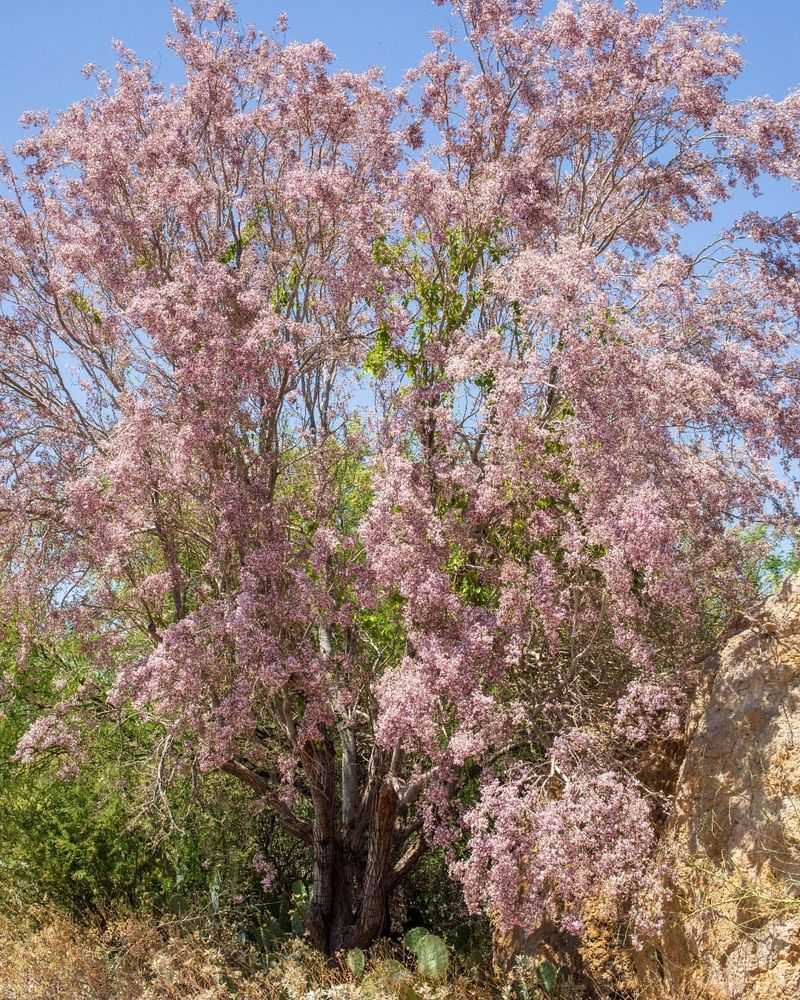
Patience pays off with Desert Ironwood. Slow to grow, yes — but once it fills in, nothing in the Arizona desert matches the density of shade it throws.
Mature specimens can reach 30 feet tall with a thick, layered canopy that genuinely drops the temperature underneath by several degrees on a hot afternoon.
Ironwood is one of the longest-living trees in the Sonoran Desert, with some individuals estimated at over 800 years old. That kind of longevity means you are not planting a tree for yourself — you are planting one for your property’s future.
Tucson and Phoenix neighborhoods with established Ironwoods feel noticeably cooler than areas without them.
Because it grows slowly, placement matters from day one. Put it where you want long-term, permanent shade — over a seating area, along a west-facing wall, or between your home and the afternoon sun.
It handles reflected heat from walls and pavement better than most trees. Water young trees every week or two during summer, then back off as they settle in.
The payoff is a tree that will still be shading your yard long after everything else has come and gone.
Its gray-green foliage stays attractive year-round, even through intense summer heat. In spring, soft lavender flowers appear along the branches and attract native bees and other pollinators.
Once established, Desert Ironwood asks for very little in return while providing some of the most dependable shade you can grow in Arizona.
4. Chilean Mesquite Grows Faster While Casting Broad Shade
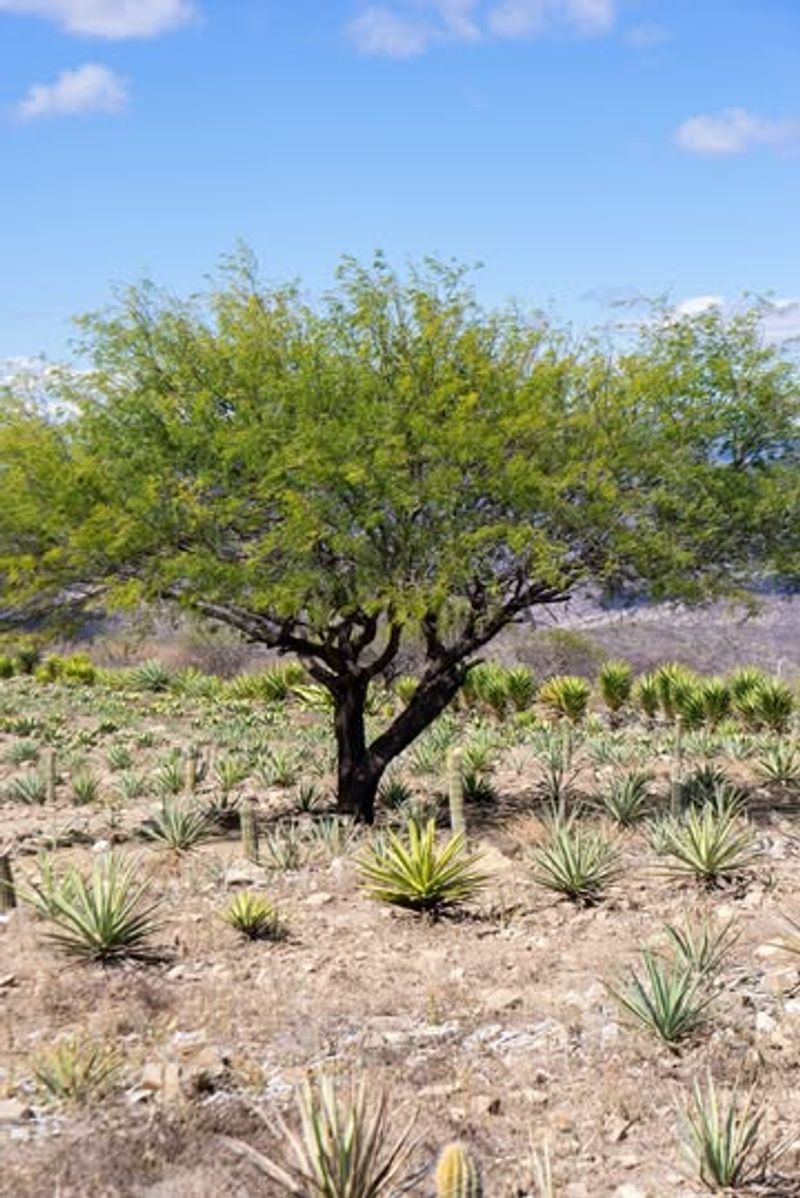
Speed matters when Arizona summers start in April and stretch through October. Chilean Mesquite is one of the fastest-growing shade trees available in the Southwest, and it does not sacrifice canopy size to get there.
Expect serious spread within just a few years of planting, which makes it a go-to choice for homeowners who need shade now, not a decade from now.
Compared to native Velvet Mesquite, the Chilean variety has a cleaner look with fewer thorns and a more arching, graceful branch structure.
It can reach 30 to 40 feet wide at maturity, which means a single well-placed tree can shade a large portion of a backyard or cover a west-facing wall entirely.
One thing to know upfront: Chilean Mesquite does need regular pruning to develop a strong structure. Without shaping early on, branches can get heavy and split in monsoon winds.
Hire an arborist or commit to annual pruning during the first five years. Plant it away from sewer lines since roots can travel.
In Phoenix, Chandler, and Mesa landscapes, this tree is everywhere for good reason — it performs reliably in extreme heat and keeps growing through conditions that would stress lesser trees.
5. Chinese Elm Forms A Large Summer Cooling Crown
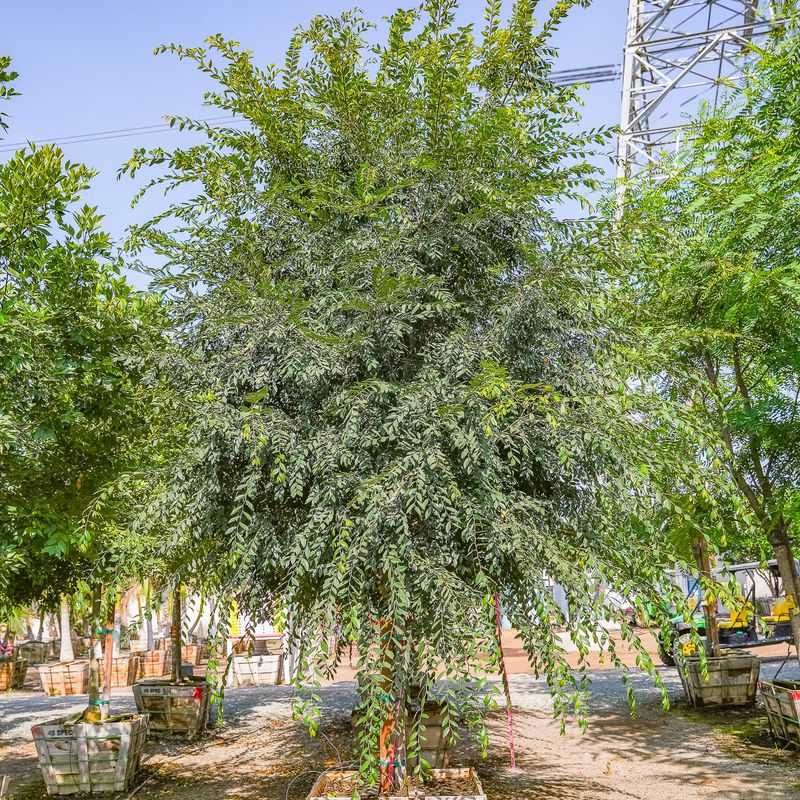
Walk through older neighborhoods in Tempe or Mesa and you will notice Chinese Elm everywhere — and for good reason.
It grows into a broad, rounded crown that fans out in every direction, creating the kind of dense summer canopy that actually makes sitting outside feel comfortable in Arizona heat.
Chinese Elm is semi-deciduous in Arizona, meaning it holds most of its leaves through winter and drops them briefly in late winter or early spring.
That works perfectly for Arizona homeowners who want summer shade but still need some winter sun to warm up a patio or south-facing wall.
It strikes a balance that fully evergreen trees cannot quite manage.
Growth rate is solid — expect two to three feet per year under good conditions. Mature trees reach 40 to 60 feet tall with a crown that stretches nearly as wide.
Water deeply every one to two weeks during the growing season, especially during the brutal stretch from June through August.
Chinese Elm handles reflected heat from concrete and block walls reasonably well, which makes it practical for typical Arizona suburban lots.
Prune for structure in the early years and you will end up with a tree that anchors your yard for decades.
6. Texas Ebony Develops Thick Shade In Intense Sun
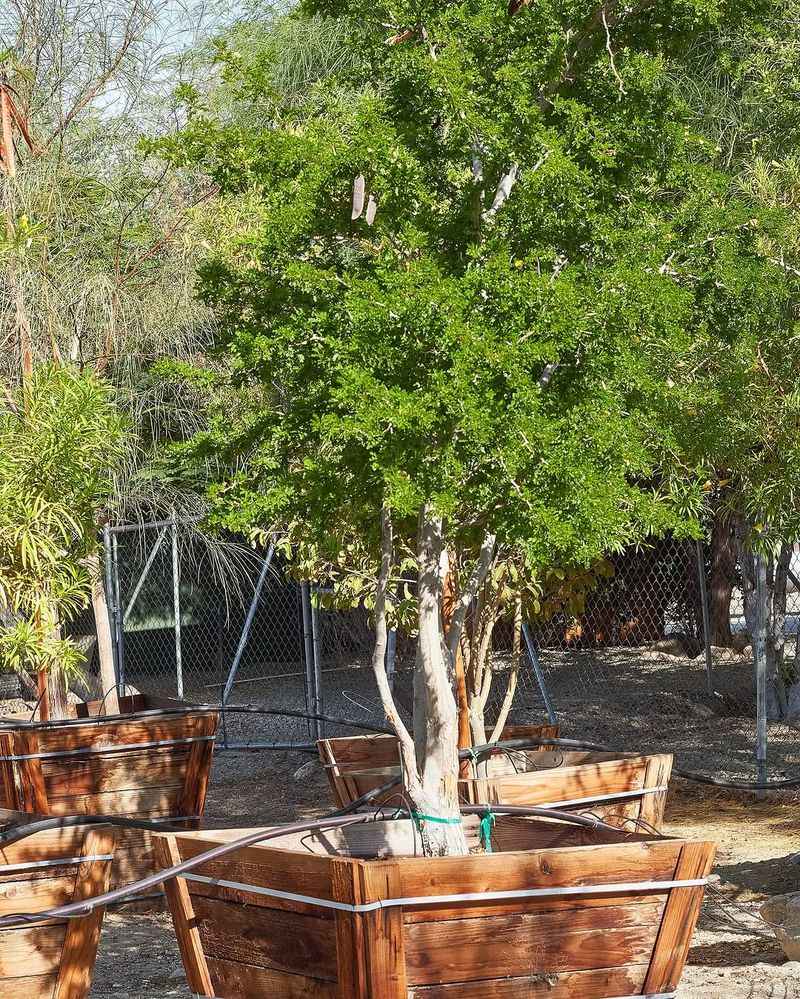
Some trees look stressed by the time August rolls around in Arizona. Texas Ebony looks completely unbothered.
Its dense, dark evergreen canopy holds its color and fullness through the worst of the summer heat, which sets it apart from trees that thin out or look ragged by mid-season.
Texas Ebony grows slowly, similar to Desert Ironwood, but what you get in return is a tight, full canopy that blocks light more completely than most other trees its size.
Mature trees reach about 25 to 30 feet, and the shade underneath feels noticeably cooler and darker than what you get from open-canopied alternatives.
For seating areas, covered patios that need additional shade, or a shaded spot for container plants, it is hard to beat.
Thorns are present, so placement near walkways or play areas requires some thought. Plant it where foot traffic is minimal and where you want permanent, dense coverage.
In Tucson and southern Arizona especially, Texas Ebony fits right into the native aesthetic while delivering real functional cooling. Water young trees consistently through summer and let them establish at their own pace.
Push them with too much water and they actually perform worse — steady and moderate is the right approach here.
7. African Sumac Handles Heat And Softens Reflected Light
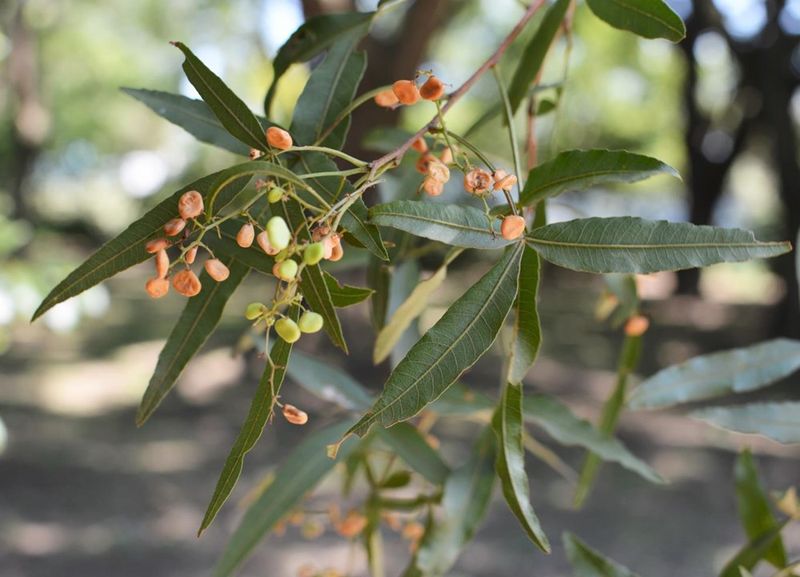
Reflected light off block walls and concrete is one of the most underrated sources of heat in Arizona yards. African Sumac is one of the few trees that actually buffers that reflected glare with its dense, weeping canopy.
Plant it near a south or west-facing wall and it starts intercepting both direct sun and bounced light almost immediately.
African Sumac is evergreen in most Arizona climates, which means year-round coverage without seasonal gaps.
Its dark green, narrow leaves create a canopy that moves nicely in the wind, which adds some visual softness to what can otherwise feel like a harsh landscape.
It grows to about 20 to 30 feet and spreads wide enough to create a full privacy screen along a property line.
Worth knowing: African Sumac produces small berries that can be messy on hardscape, and some people experience mild skin irritation from the sap.
Plant it where berry drop is not going to be a constant cleanup issue — over gravel or a planting bed rather than directly over a patio.
Scottsdale and Phoenix homeowners who have positioned it thoughtfully report it as one of their hardest-working trees. Water it deeply but not frequently once roots are settled in.
Give it space away from foundations, plumbing lines, and paved areas since mature roots can travel aggressively.
8. Shoestring Acacia Provides Airy But Effective Sun Relief
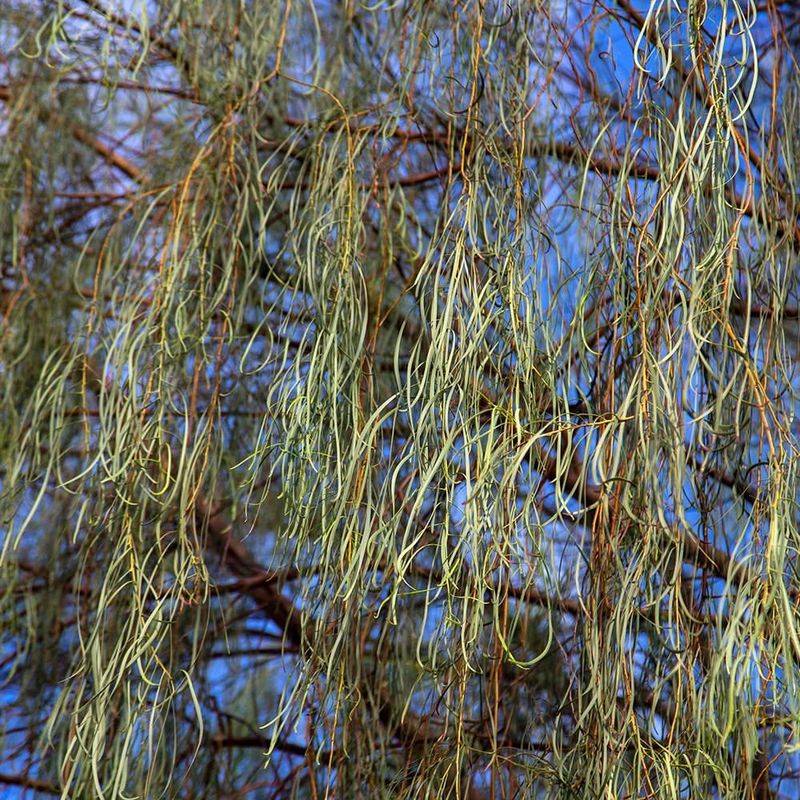
Not every yard needs a massive, ground-darkening canopy. Sometimes what you want is a tree that takes the edge off the sun without completely blocking it — and Shoestring Acacia does exactly that.
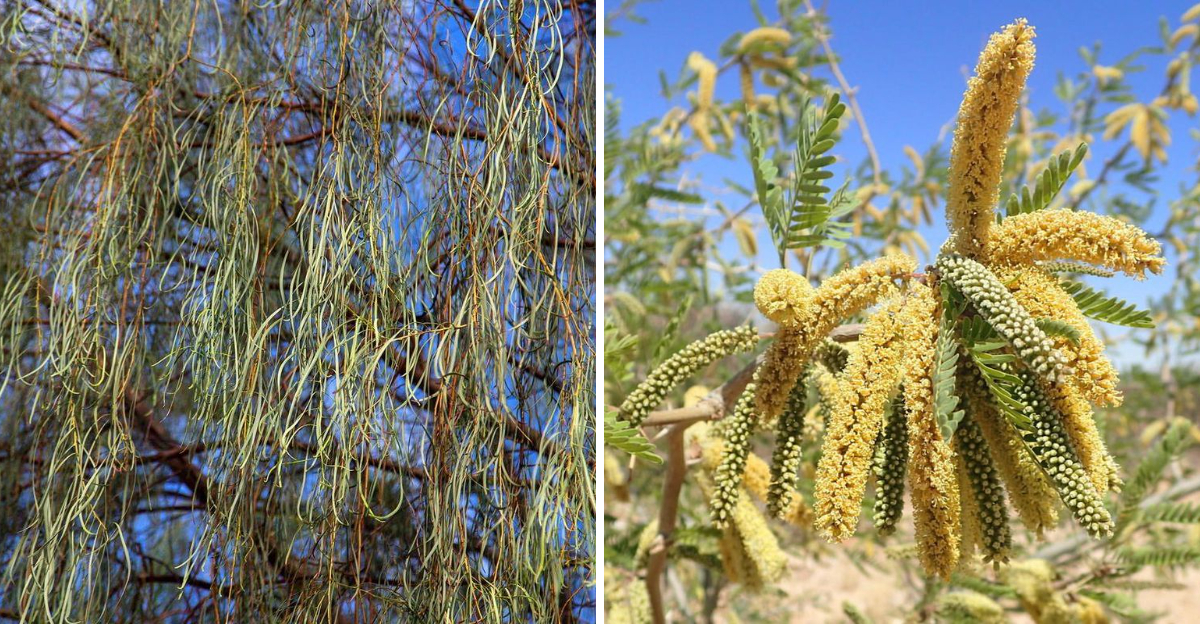
Its long, narrow, weeping leaves create a curtain of green that filters intense sunlight without turning your yard into a shaded tunnel.
Shoestring Acacia grows quickly and reaches 20 to 30 feet tall with a graceful, vertical shape. It works well in smaller Arizona yards where a spreading tree would take over the space.
Planted along a fence line or beside a patio, it creates a living screen that reduces sun exposure and adds real movement when the wind picks up during monsoon season.
Water needs are genuinely minimal after the tree settles in. It handles Phoenix heat, Tucson dry spells, and everything in between without much fuss.
Fragrant yellow flowers appear in winter and early spring, which is a nice bonus when most of the yard is still dormant. Pruning is rarely needed beyond removing any crossing branches.
For renters or newer homeowners who want fast results without committing to a massive tree, Shoestring Acacia hits a practical sweet spot that is easy to appreciate.
9. Tipu Tree Spreads Fast Growing Shade In Warm Climates
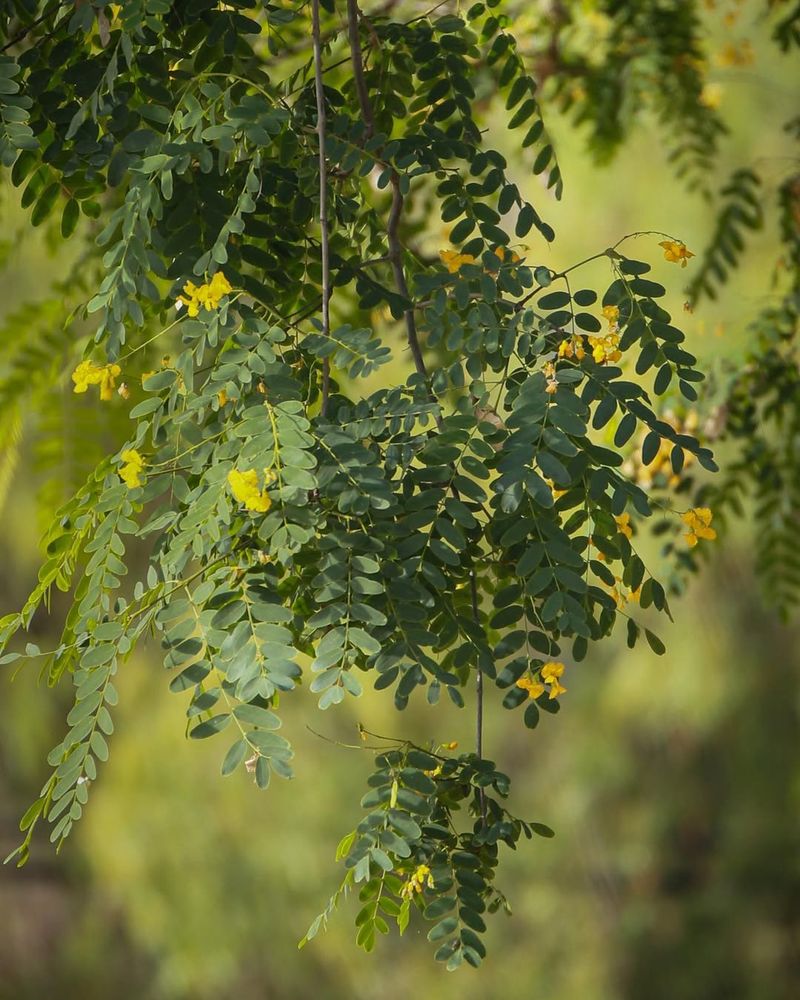
If you have ever driven through Tucson in summer and noticed a giant tree with orange flowers spilling over a wall, that was probably a Tipu.
Fast-growing and wide-spreading, Tipu trees fill in overhead space quickly and create some of the most impressive canopy coverage available in warm Arizona climates.
Tipu trees can reach 25 to 40 feet tall with a spread that sometimes exceeds their height. That broad, layered canopy is what makes them so effective at cooling.
On a 108-degree afternoon, sitting under a mature Tipu feels genuinely different than sitting in open sun. Arizona homeowners who have one often say it changed how they use their backyard entirely.
Tipu is not frost-tolerant, so it works best in the warmer zones of Arizona — Tucson, Phoenix, Yuma, and the lower elevations where hard freezes are rare.
Occasional cold snaps can damage young trees, so planting in a sheltered spot near a south-facing wall helps during the first few winters.
Water regularly during summer establishment, then taper off. Root spread can be aggressive near pavement, so keep it away from driveways and sidewalks.
It performs best in larger low-desert yards where winter freezes are rare and there is room for canopy and root expansion.