6 Beautiful Native Michigan Groundcovers That Might Replace Grass
The classic Michigan lawn is a demanding beast that requires constant mowing and expensive watering to survive the summer humidity.
In 2026, homeowners across the Mitten State are staging a quiet revolution by replacing thirsty turf with rugged native groundcovers that actually belong here.
These low-profile powerhouses are designed by nature to thrive in our unique mix of heavy clay and sandy lakefront soils without needing a drop of supplemental irrigation once established.
Whether you are looking to stabilize a steep, eroding slope with deep-rooted Wild Strawberry or transform a mossy, shaded corner with the lush carpet of Pennsylvania Sedge, these alternatives offer a “set and forget” solution.
By leaning into Michigan’s natural biology, you are not just cutting your weekend chores in half; you are creating a resilient sanctuary for local pollinators that can withstand everything from a rogue April frost to a July heatwave.
These native varieties prove that a stunning yard doesn’t have to be a full-time job.
1. Pennsylvania Sedge
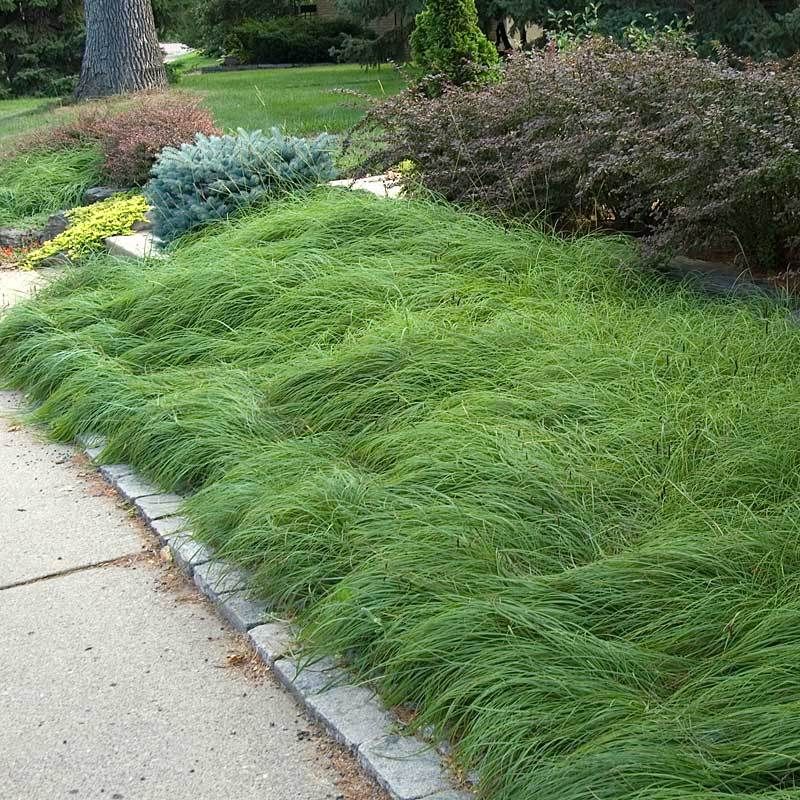
Not every groundcover gets to be both tough and graceful, but Pennsylvania Sedge pulls it off beautifully.
Carex pensylvanica is a native, grass-like perennial that grows in soft, arching clumps about six to twelve inches tall, giving any Michigan yard a natural, flowing look.
It is especially popular under large shade trees where traditional lawn grass struggles to survive.
One of the best things about Pennsylvania Sedge is its impressive tolerance for dry shade, which is one of the trickiest growing conditions in any Michigan garden.
Once it gets established, it handles drought surprisingly well and stays green through most of the growing season.
In fact, it often looks better than traditional lawn grass by midsummer when heat and dry spells start taking their toll on conventional turf.
Pennsylvania Sedge spreads slowly through underground rhizomes, eventually forming a dense, weed-smothering mat that looks tidy without much effort.
You can mow it once a year in early spring to keep it looking fresh, or simply leave it alone for a more natural, meadow-like appearance.
Either way, it rewards Michigan gardeners with year-round texture and quiet beauty. Wildlife benefits are a bonus worth mentioning.
Several native butterfly and moth caterpillars use sedges as host plants, making this groundcover a genuine contribution to Michigan’s local ecosystem.
Plant it along shaded borders, beneath oaks, or in naturalized garden beds for a low-maintenance, ecologically rich alternative to grass that looks effortlessly polished every single season.
2. Lowbush Blueberry
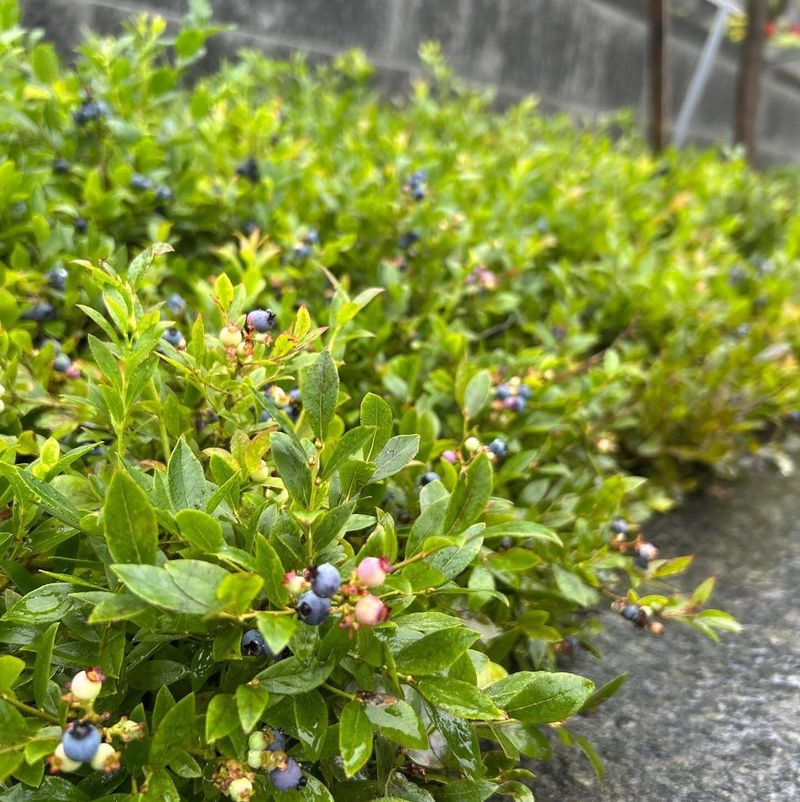
Imagine a groundcover that rewards you with a handful of sweet, fresh berries every summer.
Lowbush Blueberry, or Vaccinium angustifolium, does exactly that, making it one of the most exciting native groundcovers available to Michigan gardeners.
Growing just one to two feet tall, it spreads into a dense, attractive mat that looks wonderful in naturalized beds, along pathways, or on sunny slopes.
Spring brings delicate white bell-shaped flowers that attract native bees and pollinators across Michigan.
By late summer, those flowers turn into clusters of small, flavorful blueberries that birds, wildlife, and people all enjoy.
Your Michigan Garden Changes Every Week. Your Plan Should Too.
Gardening in Michigan changes quickly throughout the season. Every Friday you’ll receive a simple weekly plan showing exactly what to plant, prune, fertilize, harvest, and protect so you never miss the right timing.
Then, as temperatures cool in fall, the foliage shifts to brilliant shades of red and orange, giving your yard a spectacular seasonal display that no ordinary turfgrass can compete with.
Growing Lowbush Blueberry successfully does require one key condition: acidic soil with a pH between 4.5 and 5.5.
Michigan’s naturally sandy, acidic soils in many regions are actually ideal for this plant, which is part of why it grows so well here natively.
Adding sulfur or using acidic mulch like pine needles can help in areas where the soil needs adjustment.
Once established, this plant is surprisingly tough and drought-tolerant, requiring minimal watering or fertilizing.
It spreads gradually through underground stems called rhizomes, slowly filling in open areas with lush green coverage.
For Michigan gardeners who want beauty, wildlife value, and edible rewards all from one plant, Lowbush Blueberry is genuinely hard to beat as a grass replacement.
3. Barren Strawberry
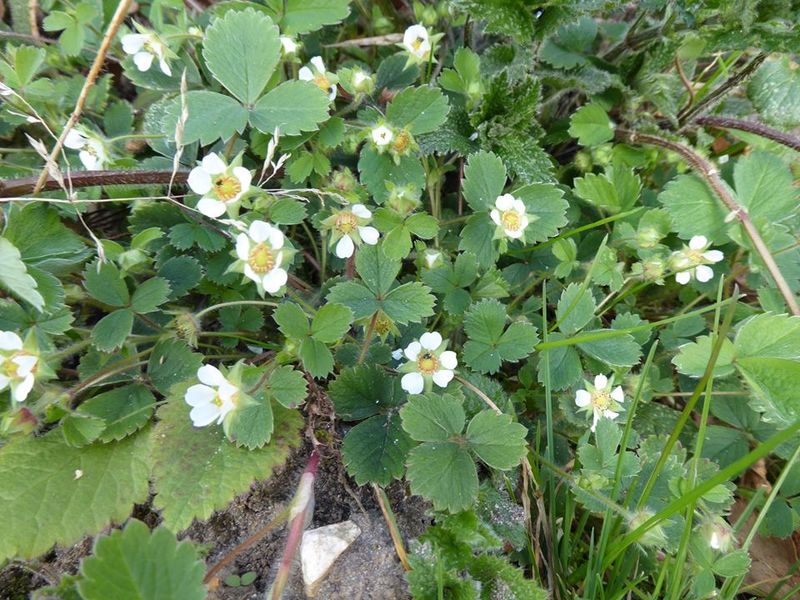
At first glance, Barren Strawberry looks so much like a real strawberry plant that visitors often do a double take.
Waldsteinia fragarioides is a native, low-growing perennial that produces glossy, three-leaflet foliage and cheerful yellow flowers each spring.
Despite the name, it does not produce edible fruit, but what it lacks in berries it more than makes up for in toughness and good looks.
Across Michigan, this plant performs well in spots where grass simply gives up, including dry, rocky areas, steep slopes, and areas with partial to full sun.
Its drought resistance is genuinely impressive, and once established, it rarely needs supplemental watering.
The evergreen foliage stays attractive through winter in many parts of Michigan, providing year-round ground coverage that keeps bare soil from washing away.
Barren Strawberry spreads through stolons, forming a tight, weed-resistant mat about four to six inches tall.
It is not invasive or aggressive, so it plays nicely alongside other native plants in mixed garden beds.
The spring flowers attract early-season pollinators, making it a small but meaningful contribution to Michigan’s native bee populations when food sources are still scarce.
Practical and attractive, this groundcover works beautifully along garden borders, under deciduous shrubs, or on sunny banks where mowing is difficult or unsafe.
Planting it in groups of three or more speeds up coverage and creates a more unified, polished look.
For Michigan gardeners wanting a dependable, no-fuss grass replacement with genuine seasonal charm, Barren Strawberry delivers consistent results year after year.
4. Wild Ginger
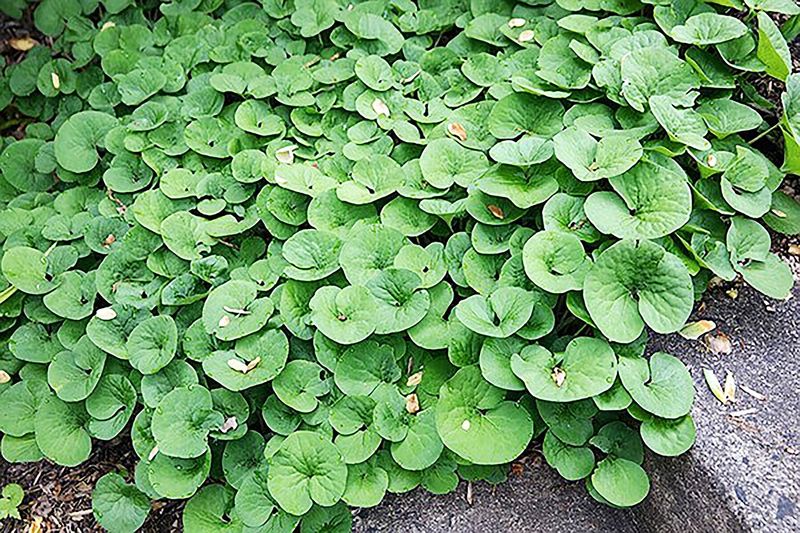
Tucked beneath towering trees in Michigan’s woodland gardens, Wild Ginger creates a lush, living carpet that grass simply cannot match in shaded spaces.
Known scientifically as Asarum canadense, this low-growing perennial spreads steadily through underground rhizomes, filling in bare patches with thick, velvety, heart-shaped leaves.
Gardeners who struggle with shaded areas under mature trees will find this plant to be a reliable and beautiful solution.
Wild Ginger thrives in moist, well-drained soil and handles the kind of deep shade that most groundcovers refuse to tolerate.
Each leaf grows about three to six inches wide, forming a dense canopy close to the ground that blocks out weeds naturally.
Once established, it requires almost no maintenance, which makes it a dream plant for busy Michigan homeowners who want a low-effort yard.
Here is a fun fact: Wild Ginger produces small, hidden maroon flowers at soil level each spring, but they are so tucked under the foliage that most people never notice them.
The plant is not related to culinary ginger, but it does have a faint spicy scent when the leaves are crushed.
Native to Michigan’s forests, it supports local insects and soil health in ways that traditional turfgrass never could.
For hard-to-mow areas along fences, under dense trees, or on shaded slopes, Wild Ginger is a natural fit.
Plant it in groups for faster coverage, and within a couple of seasons, you will have a gorgeous, weed-suppressing groundcover that looks like it belongs right there in the Michigan landscape.
5. Ground Plum
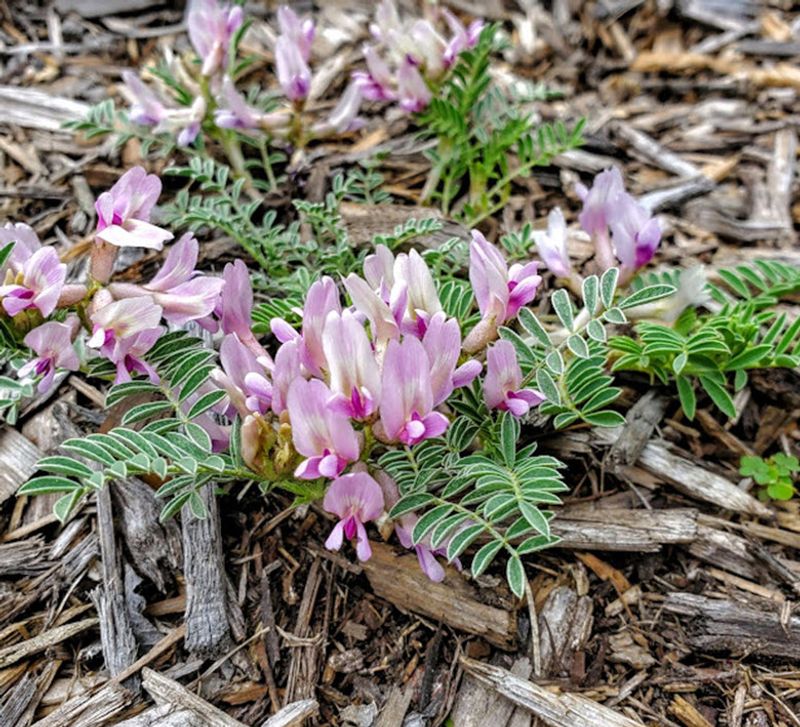
Ground Plum might be the most underrated native plant in Michigan’s entire groundcover lineup.
Astragalus crassicarpus is a low-growing legume native to open prairies and dry meadows, and it brings something truly unique to the garden: the ability to improve the soil while it grows.
As a nitrogen-fixing plant, it pulls nitrogen from the air and deposits it into the ground, naturally enriching the soil around it.
Each spring, Ground Plum bursts into clusters of showy purple and white flowers that attract native bees, including bumblebees and specialist legume pollinators found across Michigan.
After the flowers fade, plump, round seed pods develop that resemble tiny plums, which is exactly where the plant gets its name.
These pods are actually edible when young and were historically eaten by Indigenous peoples across the Great Plains and Midwest. Sandy, dry soils that defeat most groundcovers are exactly where Ground Plum thrives.
Michigan’s sandy lake-plain soils and well-drained upland sites are perfect environments for this resilient plant.
It spreads gradually and stays low to the ground, creating interesting texture and seasonal variety without requiring irrigation or fertilizer once it takes hold.
For gardeners looking to restore a naturalistic, prairie-style landscape in Michigan, Ground Plum fits right in alongside native grasses and wildflowers.
It is not commonly sold at every garden center, so sourcing it from a Michigan native plant nursery is the best approach.
The effort to find it is absolutely worth it for the unique color, ecological function, and low-maintenance beauty it brings to any yard.
6. Wild Strawberry
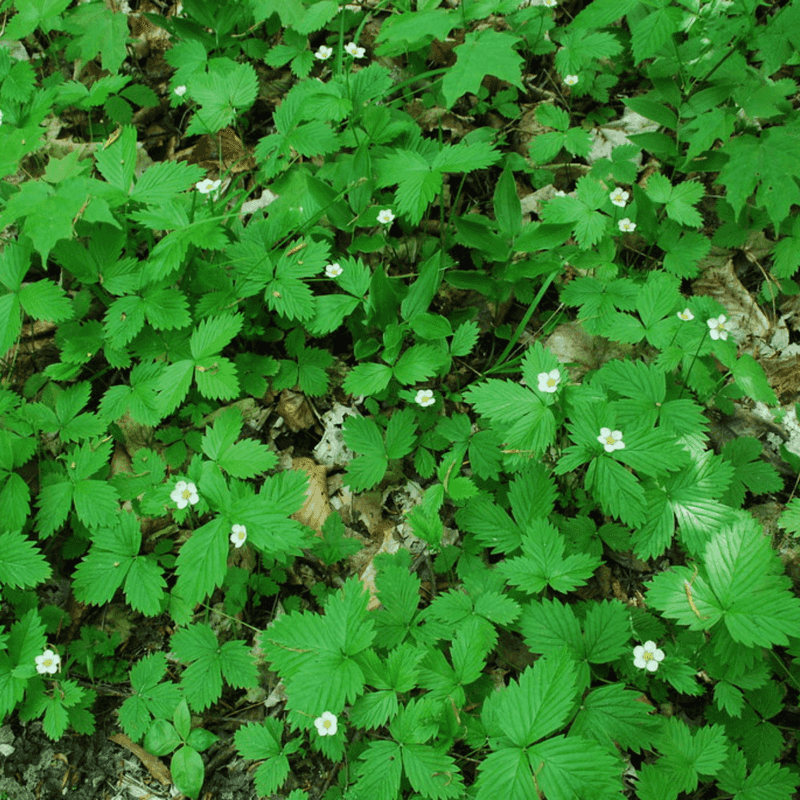
Few plants manage to be as charming and useful as Wild Strawberry.
Fragaria virginiana is a native perennial that forms dense, spreading mats of bright green, three-leaflet foliage, and in late spring it covers itself in small white flowers with cheerful yellow centers.
Then comes the real treat: tiny, intensely sweet wild strawberries that ripen in early summer and taste far better than anything you will find at a grocery store.
Wild Strawberry spreads through runners called stolons, quickly filling in open areas and creating a tight, weed-suppressing mat that stays about three to six inches tall.
It grows well in full sun to partial shade, which gives Michigan gardeners plenty of flexibility when choosing where to plant it.
Slopes, borders, flower beds, and naturalized areas all work beautifully, and the plant handles a wide range of soil types with ease.
Pollinators absolutely love the flowers, and the berries attract birds, chipmunks, and other Michigan wildlife throughout the summer.
The foliage often takes on warm reddish tones in fall before going dormant, adding one more layer of seasonal interest to the yard.
Unlike some aggressive spreaders, Wild Strawberry is easy to manage and does not become a nuisance in well-maintained garden spaces.
For Michigan homeowners who want a groundcover with real personality, Wild Strawberry delivers on every level.
Plant it along sunny walkway edges, let it spill over retaining walls, or use it to replace patchy lawn areas under light tree canopy.
Within one full growing season, you will have lush, living coverage that makes the whole yard feel alive and inviting.