9 Small Native Trees Perfect For Michigan Front Yards
Could a single tree turn your Michigan front yard into a four-season masterpiece without ever outgrowing its welcome?
Many homeowners struggle to find the perfect balance between vibrant beauty and manageable size, but the secret lies in Michigan’s own native species.
These small powerhouses offer everything from delicate spring blooms to fiery autumn foliage while fitting perfectly into compact landscapes.
Because they are already adapted to our harsh winters and unpredictable summers, these trees are lower-maintenance than most nursery imports.
They do more than just look good; they provide vital sanctuary for local birds and pollinators.
Choosing the right native species transforms your yard into a resilient, ecologically friendly space that thrives alongside the Great Lakes climate.
1. Serviceberry Delivers Spring Flowers And Summer Berries
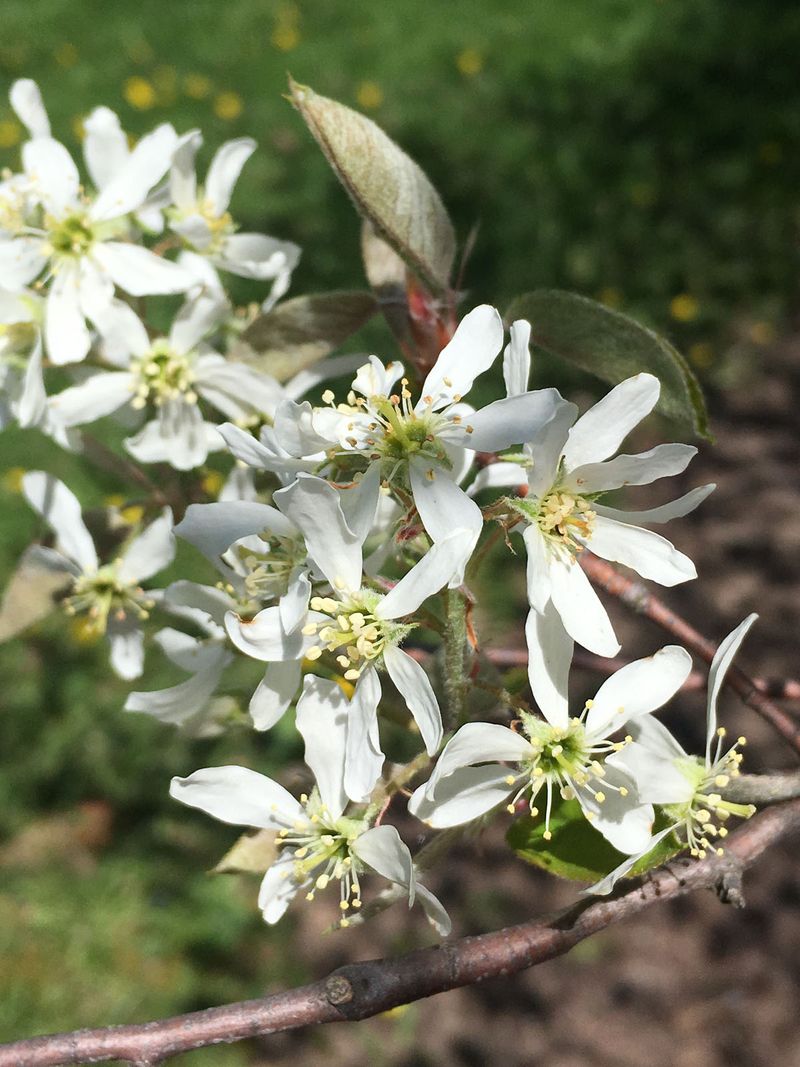
Few trees can match the early-season excitement that serviceberry brings to a Michigan front yard. White, star-shaped flowers burst open in April, often before most other trees have even woken up from winter.
That early show makes it one of the most eye-catching choices for a front yard planting.
Serviceberry grows between 15 and 25 feet tall at maturity, making it a comfortable fit near walkways or alongside a porch without crowding the space.
It handles Michigan’s heavy clay soils reasonably well, though it does best in moist, well-drained conditions.
Full sun to partial shade both work fine for this adaptable native.
By June, the tree produces small, sweet berries that ripen to a deep reddish-purple. Birds absolutely love them, so expect robins and cedar waxwings to visit regularly once the fruit appears.
Fall foliage shifts to warm shades of orange and red, giving the tree a third season of visual appeal.
Maintenance is minimal once the tree is established. Watering during dry spells in the first two years helps it settle in quickly.
After that, serviceberry is remarkably self-sufficient and a true standout in Michigan landscapes.
2. Eastern Redbud Lights Up Early Spring With Pink Blooms
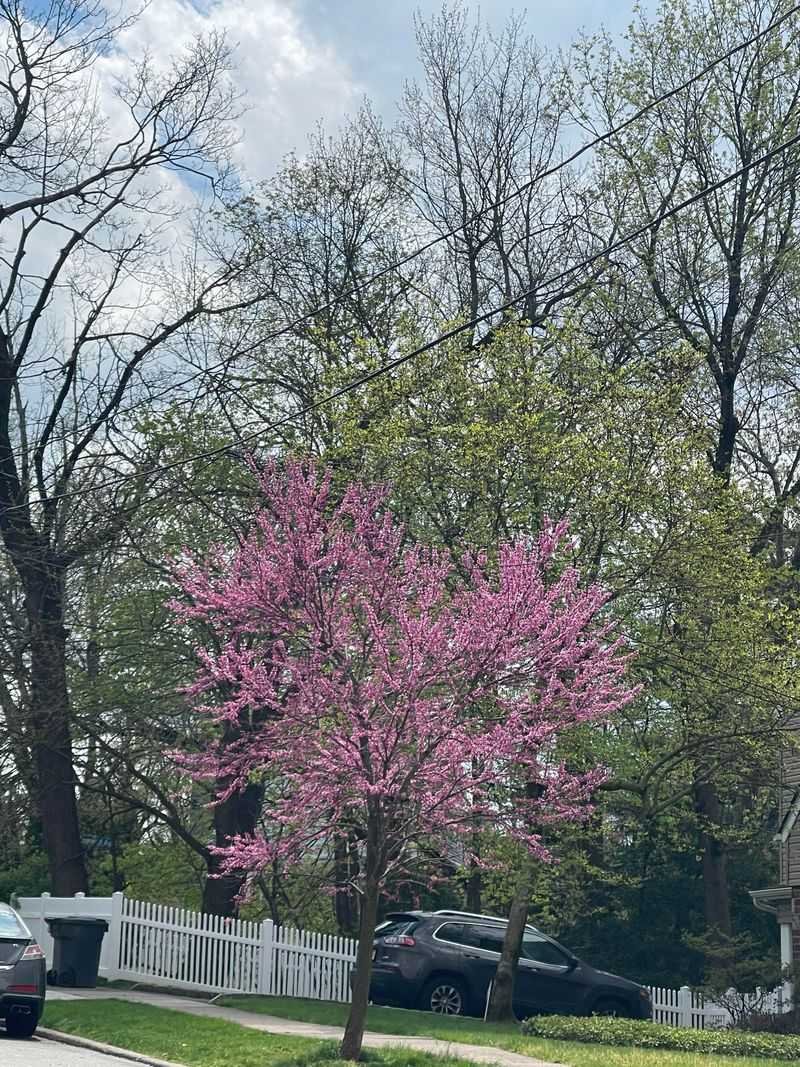
Before a single leaf appears, eastern redbud covers its bare branches with clusters of bright pink to rosy-purple flowers, creating a display that stops neighbors in their tracks.
Bloom time typically falls between late March and early May in Michigan, depending on the year.
Few native trees announce spring’s arrival with quite this much flair.
Eastern redbud reaches 15 to 25 feet tall and spreads nearly as wide, forming a rounded, graceful canopy. Heart-shaped leaves follow the flowers and stay attractive through summer, turning yellow in fall.
Plant it in full sun to partial shade and give it well-drained soil for the best results.
Michigan’s cold winters are well within this tree’s tolerance range, as it handles temperatures that drop well below freezing without any trouble.
Avoid low-lying spots where water pools after heavy rains, since soggy roots can cause problems over time.
A slightly elevated or gently sloped planting spot suits it perfectly.
Eastern redbud also attracts early-season bumblebees and other native pollinators that are hungry after winter. With very little pruning needed and no serious pest issues in most Michigan yards, it rewards gardeners with big seasonal impact for minimal effort.
Your Michigan Garden Changes Every Week. Your Plan Should Too.
Gardening in Michigan changes quickly throughout the season. Every Friday you’ll receive a simple weekly plan showing exactly what to plant, prune, fertilize, harvest, and protect so you never miss the right timing.
3. Flowering Dogwood Adds Classic Charm And Seasonal Color
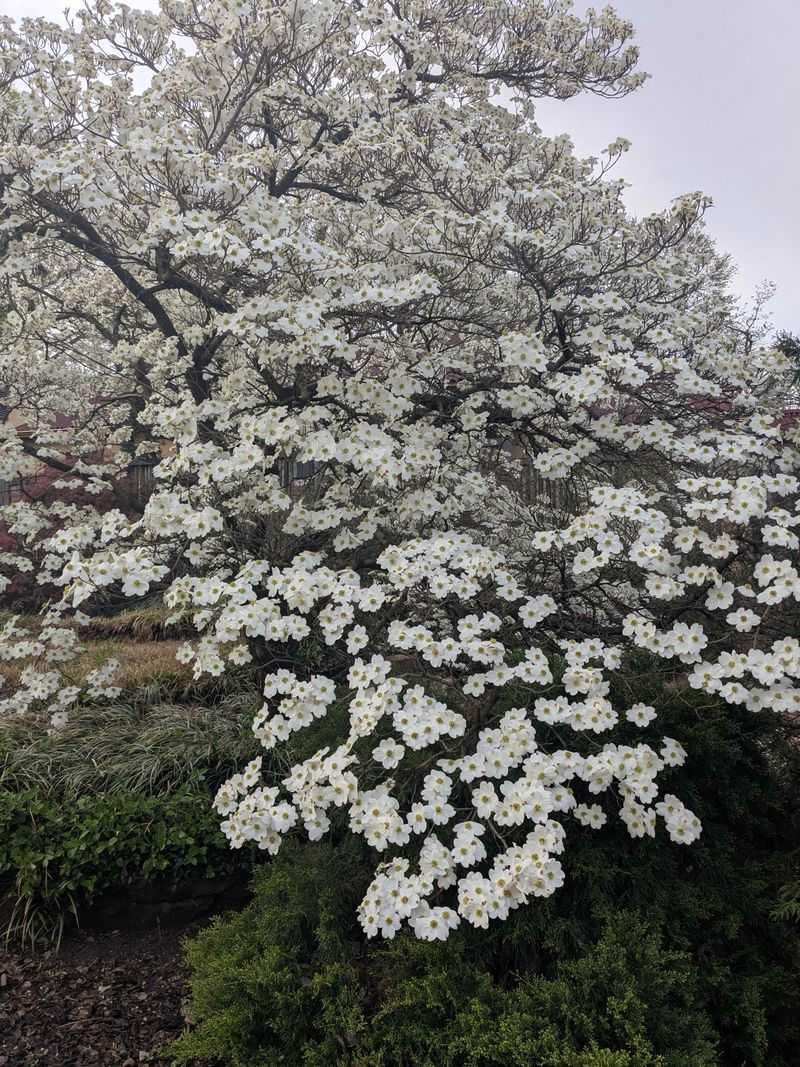
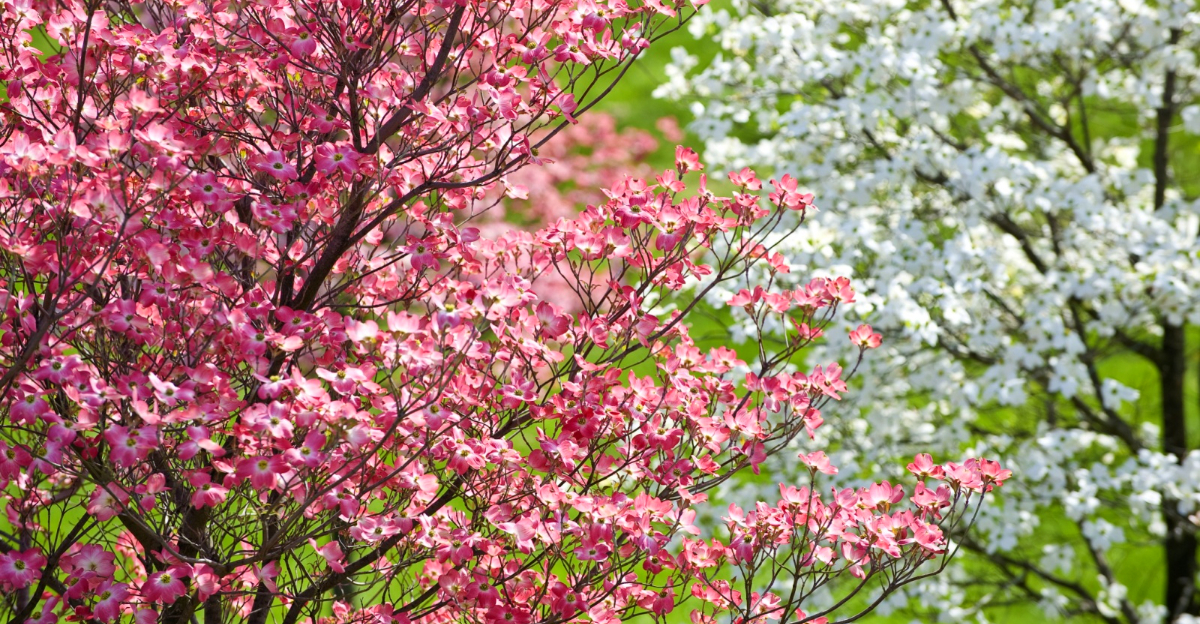
Flowering dogwood adds a touch of timeless elegance to Michigan front yards with its layered canopy and showy white or pink bracts in May.
This native tree prefers slightly acidic, well-drained soil and does best in areas with protection from harsh winter winds and late frosts.
While it thrives across much of southern and central Michigan, gardeners in the northern Lower Peninsula or Upper Peninsula should choose a sheltered site or consider extra winter protection, as the tree can be sensitive to extreme cold.
Growing 15 to 30 feet tall with a graceful spreading form, flowering dogwood produces bright red berries in summer that attract birds and provide valuable wildlife habitat.
Its rich wine-red fall foliage extends the season of visual interest, making it a standout choice for small native trees that deliver multi-season beauty and ecological benefits in Michigan yards.
Its delicate branching structure adds subtle architectural interest to smaller front yards, creating a natural focal point without overwhelming the space.
Pairing flowering dogwood with low-growing shade-tolerant perennials like hostas or ferns can enhance its beauty while filling in bare areas beneath its canopy.
4. Ironwood Offers Tough Shade And Graceful Form
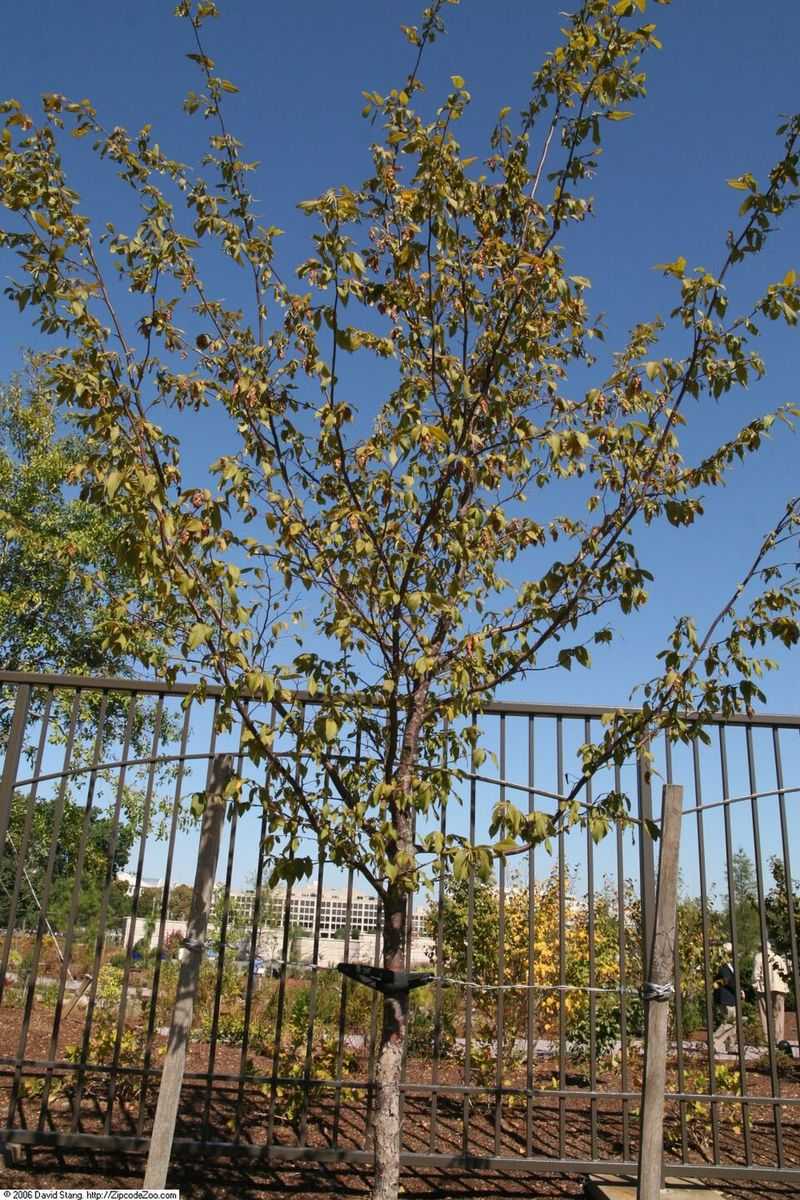
Ironwood earns its name honestly. The wood is so dense and hard that it has been used historically for tool handles and fence posts.
In a Michigan front yard, though, this tree earns its place through quiet elegance rather than brute strength, offering fine-textured leaves, interesting bark, and a graceful, airy canopy.
Mature ironwood trees reach 20 to 40 feet in height but grow slowly, so they stay manageable for many years after planting.
The shaggy, grayish-brown bark adds winter interest when leaves are gone, giving the tree a distinctive look even in the coldest months.
It grows naturally in Michigan’s understory forests, which means partial shade is perfectly comfortable for it.
Ironwood tolerates a wide range of soil conditions, including clay and dry, rocky sites where many other trees struggle. That toughness makes it a reliable choice for front yards with challenging soil or limited irrigation.
It also handles Michigan’s cold winters without any winter protection needed.
Catkins appear in spring and provide early food for small birds and mammals. The tree produces small, hop-like seed clusters through summer and fall that add texture to the canopy.
With essentially no serious pest or disease concerns in Michigan, ironwood is a low-maintenance native gem worth far more attention than it typically receives.
5. American Hornbeam Brings Elegant Shape And Fall Interest
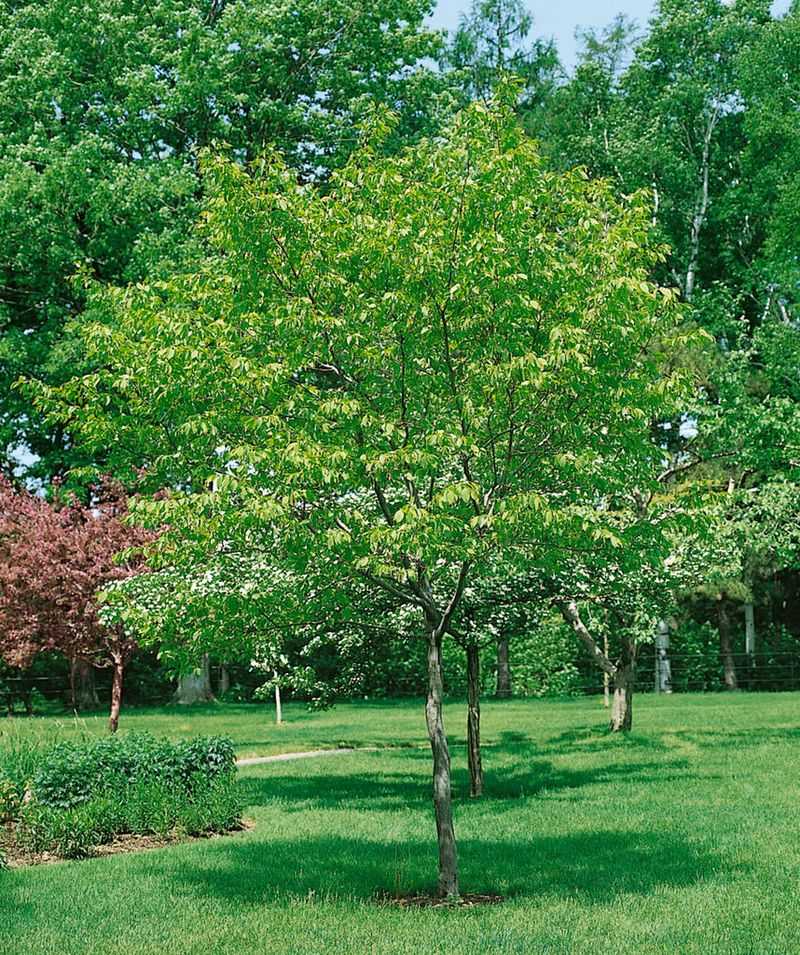
Run your hand along the trunk of an American hornbeam and you will immediately understand why it is also called musclewood.
The smooth, rippling gray bark looks exactly like a flexed muscle, giving this tree one of the most distinctive silhouettes in the Michigan native plant palette.
It is a conversation starter in any front yard.
American hornbeam grows 20 to 30 feet tall with a broad, irregular crown that provides filtered shade without completely blocking sunlight.
It thrives in partial shade and prefers moist, well-drained soils, making it a natural fit along the shaded north or east side of a Michigan home.
It also tolerates periodic flooding better than many other small trees.
Fall color is genuinely spectacular on this species. Leaves shift through yellow, orange, and deep red before dropping, often holding their color later into the season than nearby trees.
The clusters of leafy, winged nutlets that form in summer attract finches, ruffed grouse, and other seed-eating wildlife through fall and winter.
American hornbeam grows slowly, which means it will not overwhelm a front yard space anytime soon. Pruning needs are minimal, and established trees rarely need supplemental watering except during extended summer droughts.
For Michigan gardeners who want year-round structure and wildlife value, this is an underused native worth seeking out.
6. Witch Hazel Blooms When Winter Is Fading
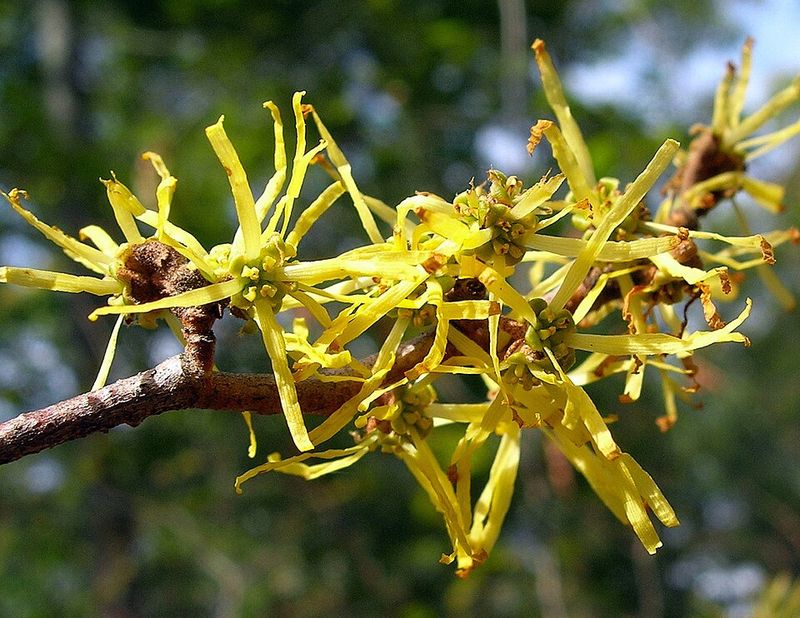
Imagine walking out your front door in February or early March and finding a tree covered in spidery, fragrant yellow flowers while snow still lingers on the ground.
That is exactly what witch hazel delivers, and it is one of the most surprising and delightful things a Michigan front yard can offer in the off-season.
Native witch hazel, known scientifically as Hamamelis virginiana, typically blooms in late fall through early winter, while the hybrid forms and vernal witch hazel extend that bloom window into late winter and early spring.
Most grow 15 to 20 feet tall and nearly as wide, forming a multi-stemmed, vase-shaped plant with a relaxed, naturalistic look.
Witch hazel grows well in partial shade and tolerates a range of soil types, including moist clay soils common across much of Michigan. It is also remarkably cold-hardy, shrugging off temperatures well below zero without damage.
Planting it near a front walk or entry area lets you enjoy the fragrance up close during those first warm days of late winter.
Fall color is another bonus, with leaves turning clear yellow before dropping. Wildlife value is solid too, as the small seeds provide food for birds and small mammals.
Pruning is rarely needed beyond removing any crossing or crowded branches after bloom.
7. Pagoda Dogwood Creates Layered Beauty And Wildlife Habitat
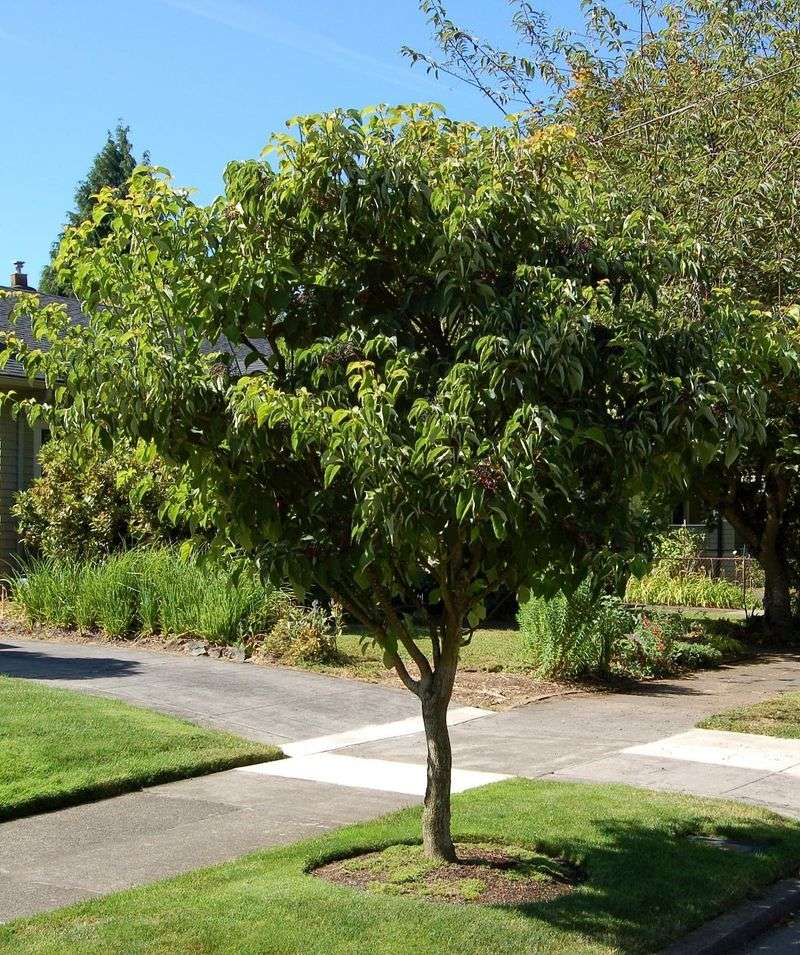
There is something almost architectural about the way pagoda dogwood grows.
Its branches spread outward in distinct horizontal tiers, stacking up like the layers of an Asian pagoda and creating a silhouette that looks intentionally sculpted even without any pruning.
That natural structure makes it one of the most visually interesting small trees available to Michigan gardeners.
Pagoda dogwood reaches 15 to 25 feet tall and grows well in partial shade, which makes it a smart choice for front yards that receive filtered light or afternoon shadow. It prefers moist, well-drained, slightly acidic soil.
Michigan’s woodland areas where this tree grows naturally often have loamy, organically rich soil, so amending heavy clay sites before planting improves establishment considerably.
Flat-topped clusters of creamy white flowers appear in late May and early June, attracting a wide variety of native bees and butterflies. By late summer, dark blue-black berries ripen on bright red stems, creating a striking color contrast.
More than 40 bird species are known to feed on the fruit, making pagoda dogwood one of the most wildlife-friendly small trees you can plant.
Fall foliage turns reddish-purple before dropping, and the horizontal branching structure remains attractive through winter.
Once established, this tree needs very little care beyond occasional watering during dry periods and a light layer of mulch each spring.
8. Pawpaw Serves Up Unique Foliage And Edible Fruit
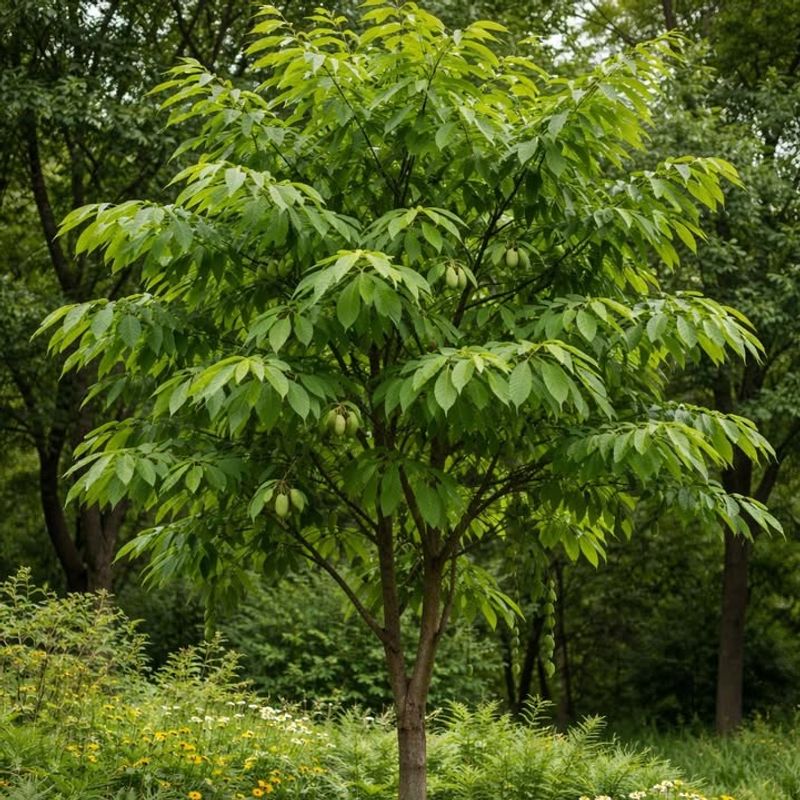
Growing a fruit tree in a Michigan front yard that produces something resembling a tropical banana-mango hybrid sounds almost too good to be true, but that is exactly what pawpaw delivers.
Native to the eastern United States and hardy throughout most of Michigan, pawpaw offers an unusual combination of ornamental appeal and genuine edibility that few other small trees can match.
Pawpaw grows 15 to 25 feet tall and produces large, drooping leaves up to 12 inches long that give the tree a lush, almost exotic appearance through summer. Small, dark maroon flowers emerge in early spring before the leaves fully open.
For fruit production, plant at least two genetically different pawpaw trees near each other to ensure cross-pollination.
The tree prefers moist, well-drained, slightly acidic soil and grows best with some afternoon shade, particularly when young. Rich, bottomland-style soils similar to those found along Michigan river corridors are ideal.
Established trees handle Michigan winters well, though late spring frosts can occasionally affect early blooms.
Pawpaw fruit ripens in late August through September and tastes sweet and custardy, with a texture unlike any other Michigan-grown fruit.
Zebra swallowtail butterfly larvae feed exclusively on pawpaw leaves, making this tree a critical host plant for one of the most beautiful butterflies in the region.
9. Sassafras Adds Fragrant Leaves And Striking Fall Color
Scratch a sassafras leaf and you get an immediate whiff of something warm and spicy, like root beer mixed with citrus.
That distinctive fragrance alone is reason enough to plant one near a Michigan front walk where passersby can brush against the foliage on warm days.
The sensory experience sassafras provides is genuinely unlike anything else in the native plant world.
Sassafras is also one of the most visually interesting trees in Michigan’s native flora.
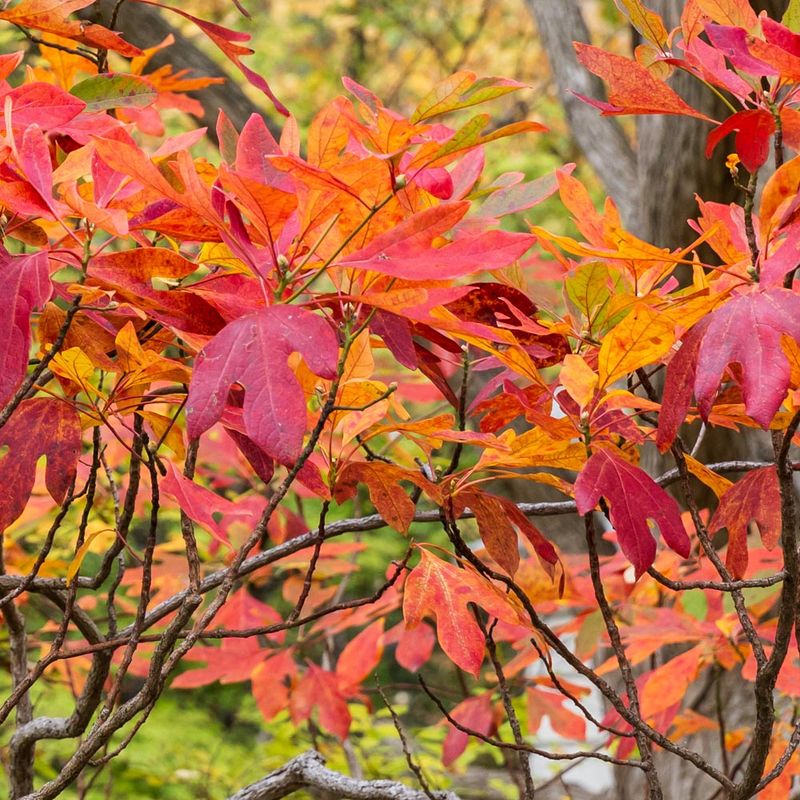
A single tree can produce three different leaf shapes simultaneously: simple oval leaves, mitten-shaped leaves with one lobe, and three-lobed leaves that look like a tiny outstretched hand.
That variation gives the canopy a playful, layered texture through the growing season.
Mature trees range from 30 to 60 feet tall in ideal conditions, but front yard specimens in average Michigan soils typically stay much shorter, around 20 to 30 feet, especially when given regular light pruning.
Sassafras spreads through root suckers and can form a small colony over time, so removing suckers around the base keeps it tidy in a formal front yard setting.
Fall color is absolutely stunning, shifting through yellow, orange, red, and deep purple all at once. Blue-black berries on bright red stalks ripen in late summer and attract several bird species.
Sassafras tolerates a range of soil types, including dry, sandy soils common in parts of west Michigan.