What North Carolina Butterfly Bush Needs In Spring For Maximum Flowering
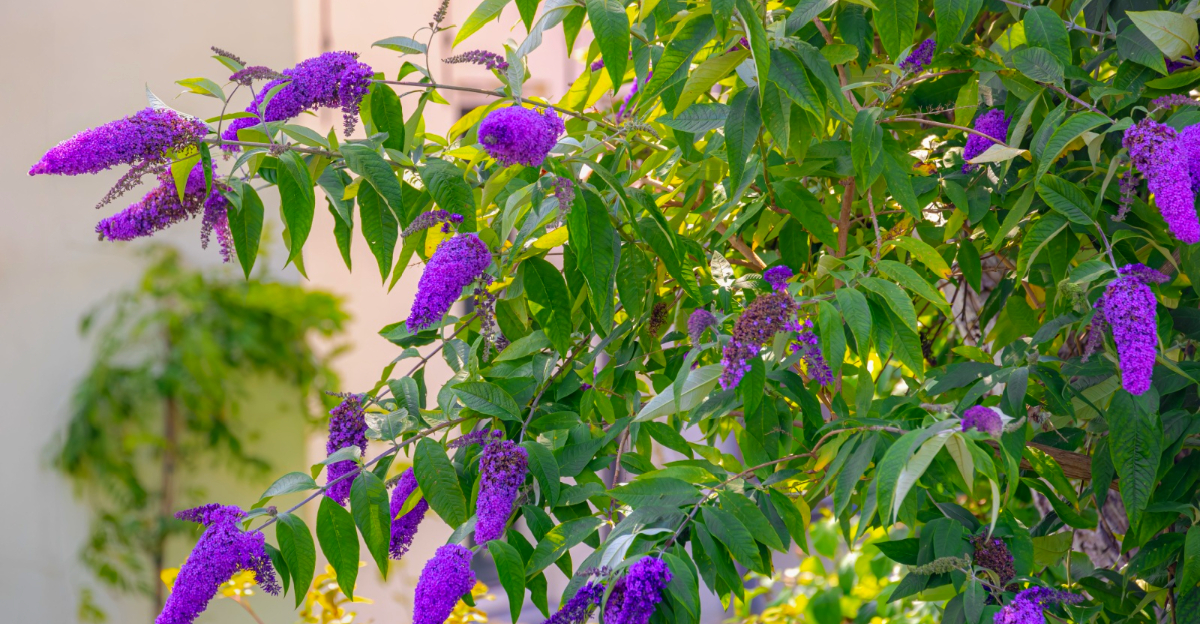
Spring in North Carolina is famously unpredictable – one day it’s in the 70s, and the next a late cold snap reminds gardeners why this season keeps everyone on their toes.
For butterfly bush (Buddleja davidii), this is the key time to set the stage for strong growth, vibrant flower spikes, and a long season of pollinator activity.
A little spring preparation goes a long way.
From careful pruning to soil improvement, watering, and light fertilization, giving your butterfly bush the right care early ensures healthy stems, abundant blooms, and a plant that thrives across the Piedmont, mountains, and coastal plain.
Early-season attention also helps the bush recover from any lingering winter stress while encouraging pollinator visits throughout the season.
1. Prune Early To Encourage Big Blooms
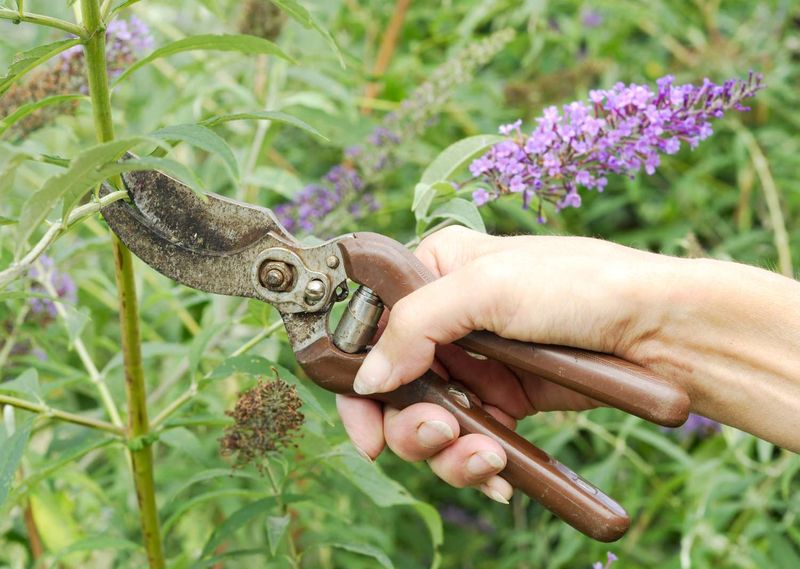
Sharp loppers and a clear morning in late February might be the best gift you can give your butterfly bush all year.
North Carolina gardeners in the Piedmont and coastal plain can often start pruning as early as mid-February, while those in the mountains should wait until early March when hard freezes are less likely.
Cutting back last year’s woody growth is what triggers the plant to push out strong, fresh stems loaded with bloom potential.
The goal is to cut the entire shrub back to roughly 12 inches from the ground.
That might feel drastic the first time you do it, but butterfly bushes bloom on new wood, meaning the fresh stems that grow after pruning are exactly where the flowers will appear.
Skipping this step often results in a tall, leggy plant with sparse blooms scattered at the tips of old, tired branches.
Use clean, sharp tools to make smooth cuts and reduce the chance of disease. After pruning, take a few minutes to rake away the old debris from around the base.
Leaving it tidy helps reduce overwintering pests and gives your bush a clean start.
Gardeners who prune consistently tend to see noticeably fuller, more colorful plants by midsummer compared to those who let their bushes go unchecked season after season.
2. Spot Winter Damage Before It Holds Back Growth
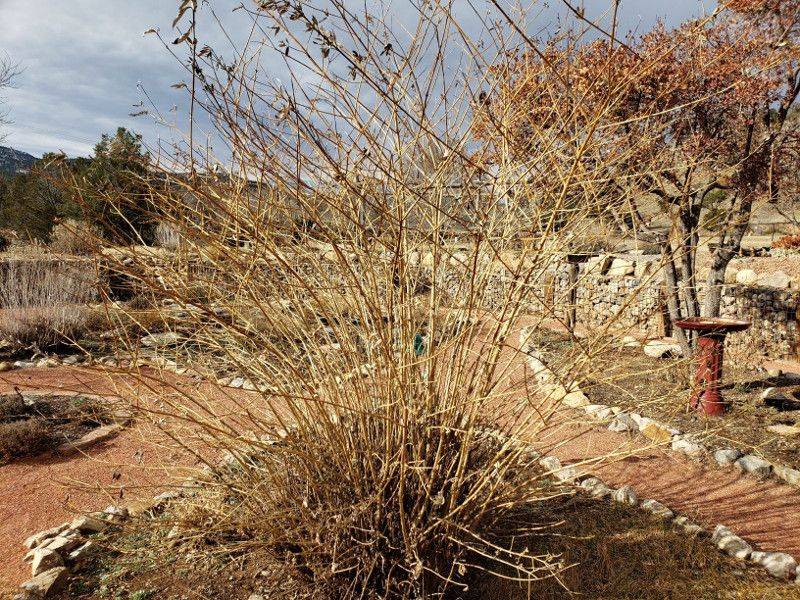
Not every stem that looks rough after winter is actually beyond saving, but knowing the difference can save you weeks of guessing.
In North Carolina, butterfly bushes in the mountains often experience harder freezes than those along the coast, which means the level of winter dieback can vary quite a bit depending on where you garden.
Checking your plant carefully in late February or early March gives you a clear picture of what survived and what needs to go.
Run your thumbnail lightly along a stem. If you see green just beneath the surface, that section is still alive and worth keeping.
Brown, hollow, or brittle stems that snap easily are good candidates for removal.
Cutting back to where you find healthy green tissue encourages the plant to focus its energy on productive growth rather than trying to revive sections that simply will not recover.
Sometimes a butterfly bush that looks completely finished after a rough winter will surprise you with fresh growth emerging from the base in April. Patience pays off here.
Your North Carolina Garden Changes Every Week. Your Plan Should Too.
Gardening in North Carolina changes quickly throughout the season. Every Friday you’ll receive a simple weekly plan showing exactly what to plant, prune, fertilize, harvest, and protect so you never miss the right timing.
Give it a few warm weeks before making any final decisions about stems that seem questionable. Removing only the clearly damaged wood and leaving the rest lets the plant show you what it can do.
Catching winter damage early means your butterfly bush spends the whole growing season building flowers instead of recovering from neglect.
3. Give Your Butterfly Bush Plenty Of Sun

Few flowering shrubs are as honest about their sunlight needs as the butterfly bush. Plant it somewhere shady and it will grow, but the bloom count will disappoint you every single time.
Butterfly bushes need a minimum of six to eight hours of direct sunlight daily, and honestly, more is better. In North Carolina’s warm climate, a south- or west-facing spot that catches full afternoon sun is often ideal for maximum flower production.
If your butterfly bush has been underperforming for a season or two, take a close look at how much sun it actually receives throughout the day.
Trees that have grown taller nearby, new structures, or even neighboring shrubs can gradually shade a spot that used to be sunny.
Spring is a smart time to reassess because you can track sun patterns before surrounding plants leaf out fully and change the light dynamics of your garden.
Transplanting an established butterfly bush is possible in early spring if you identify a sunnier location.
Keep in mind that moving a mature shrub will cause some temporary stress, so water it consistently after the move and give it a few weeks to settle in before expecting vigorous new growth.
Choosing the right spot from the beginning saves a lot of effort. A butterfly bush basking in full sun with good airflow will reward you with dense, fragrant flower spikes that last well into fall.
4. Improve Soil For Healthier Roots And Flowers
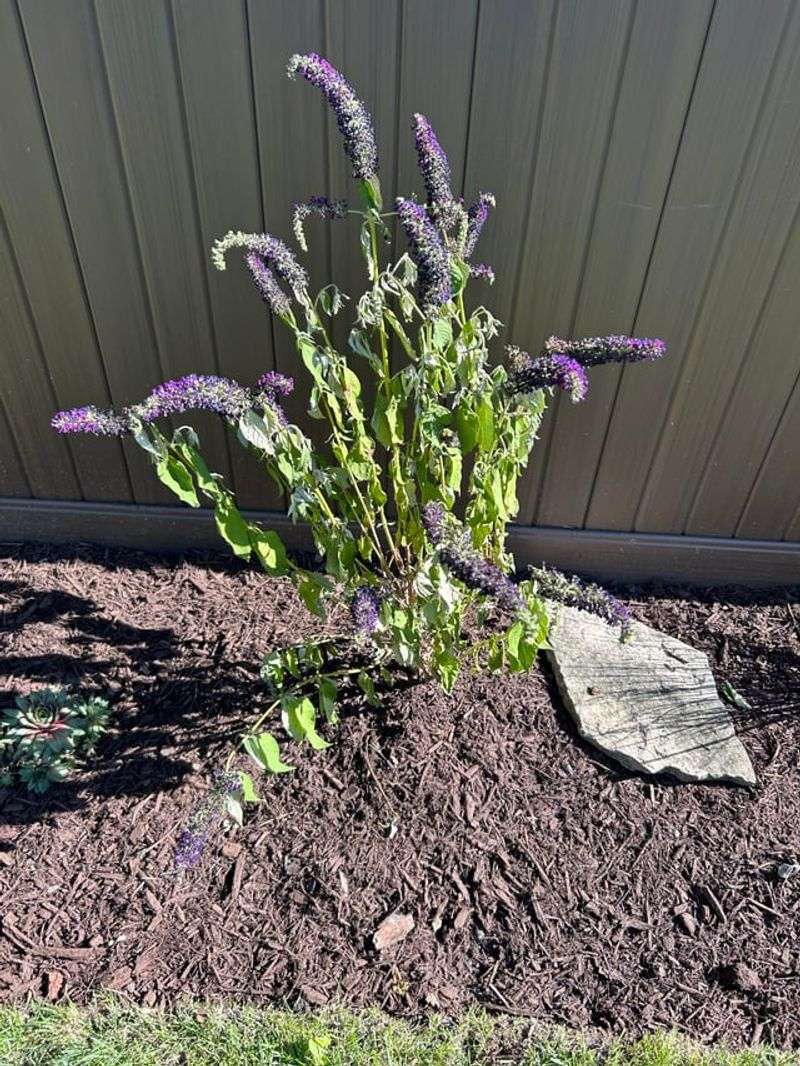
Healthy flowers start underground, and butterfly bushes are no exception to that rule. The good news is that these plants are adaptable to a wide range of soil types found across
North Carolina, from the heavy clay of the Piedmont to the sandy loam of the coastal plain.
Still, adaptable does not mean indifferent, and a few improvements in spring can make a noticeable difference in how vigorously your bush blooms through summer.
The most important quality your soil needs is good drainage. Roots sitting in waterlogged ground struggle to absorb nutrients efficiently, and overly wet conditions can invite root problems over time.
If your soil tends to hold water after rain, working in a few inches of compost before the growing season kicks off is one of the easiest ways to improve both drainage and overall soil structure.
Compost also adds a slow, steady supply of organic nutrients that feeds the plant gently over time.
Butterfly bushes prefer a soil pH somewhere between 6.0 and 7.0. If you have not tested your soil recently, a simple test kit from your local garden center or the NC Cooperative Extension office can give you a quick reading.
Lime raises pH in acidic soils, while sulfur can bring down overly alkaline readings. Matching your soil conditions to what the plant actually prefers sets the stage for deeper roots, stronger stems, and more abundant blooms all season long.
5. Feed Just Enough To Fuel Vibrant Blooms
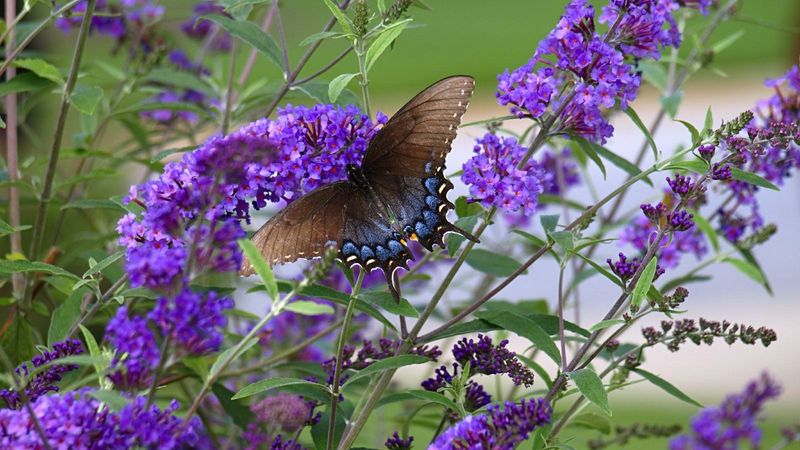
Here is something that surprises a lot of new butterfly bush growers: these plants do not need heavy feeding to bloom beautifully.
In fact, pushing too much fertilizer, especially nitrogen-rich formulas, tends to produce lush, oversized foliage at the direct expense of the flowers you are actually trying to grow.
A little restraint goes a long way when it comes to feeding this particular shrub.
The best approach for most North Carolina gardeners is to apply a balanced, slow-release granular fertilizer once in early spring, just as new growth begins to appear.
A 10-10-10 or similar balanced formula sprinkled around the drip line of the plant and watered in gives the roots a steady, gentle nutrient boost without overwhelming the plant.
Avoid fertilizers that are disproportionately high in nitrogen, which is the first number on any fertilizer label.
If your soil is already reasonably fertile from regular composting, you may find that a single light feeding in spring is all your butterfly bush needs for the entire season.
Gardeners who over-fertilize often end up with tall, floppy plants that require staking and produce fewer blooms than expected.
Pay attention to your plant’s leaf color and overall vigor as the season progresses.
Pale yellow leaves might suggest the plant could use a light nutrient boost, while deep green, leafy growth with few flowers often signals it has already received more than enough to eat.
6. Water Deeply When Spring Gets Dry
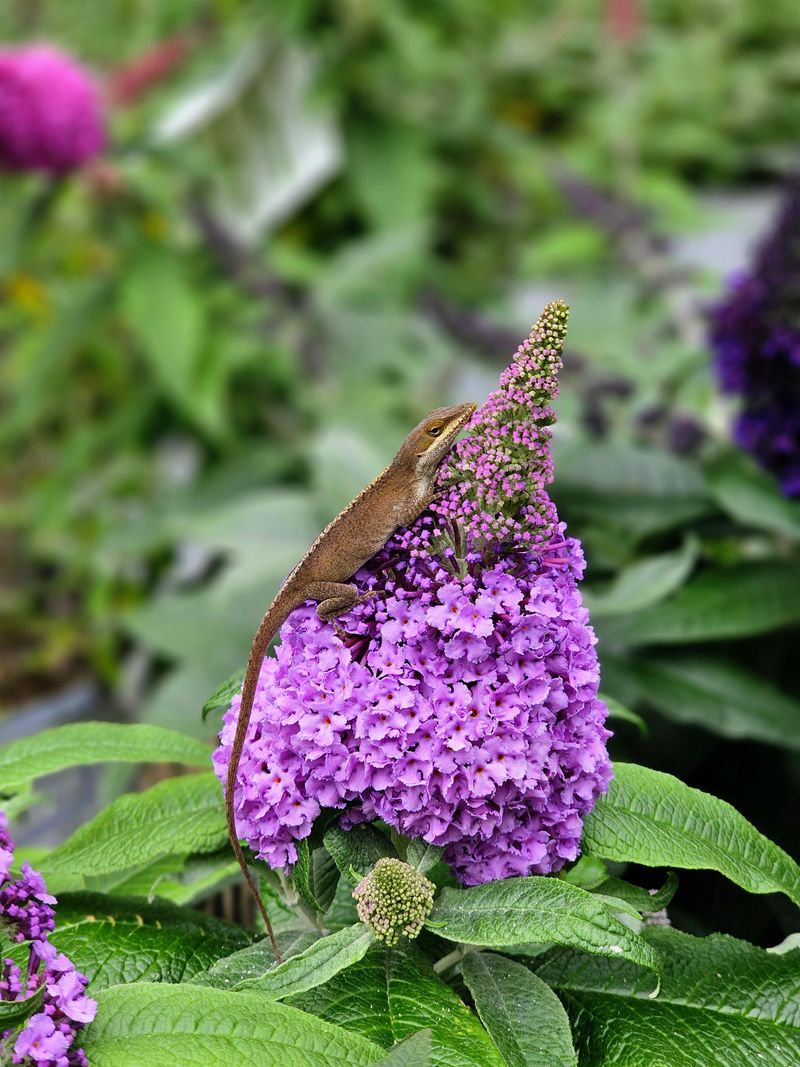
Spring in North Carolina can feel unpredictable. Some years bring steady rain that keeps garden beds nicely moist, while other springs turn dry and breezy earlier than expected, especially in the Piedmont and western regions.
Butterfly bushes that are still establishing or were recently pruned benefit most from consistent moisture during this window, because strong root development early in the season directly supports the blooming performance you will see later.
Rather than watering lightly every day, aim for deep, infrequent watering sessions that encourage roots to reach down into the soil.
A thorough soak once or twice a week during dry stretches is far more effective than a quick sprinkle each morning.
Deep watering trains roots to grow downward rather than staying shallow near the surface, which makes the plant more resilient during the hot, dry stretches that often arrive in North Carolina summers.
Once a butterfly bush is well established, it handles dry conditions better than many flowering shrubs.
But during the first spring after planting, or after a hard prune, it appreciates a bit more attention.
Watering in the morning is ideal because it gives foliage time to dry before evening, reducing the chance of fungal issues. Keep an eye on the soil a few inches below the surface.
If it feels dry at that depth, it is time to water. If it still feels damp, give it another day before reaching for the hose.
7. Mulch Around The Base To Protect Roots
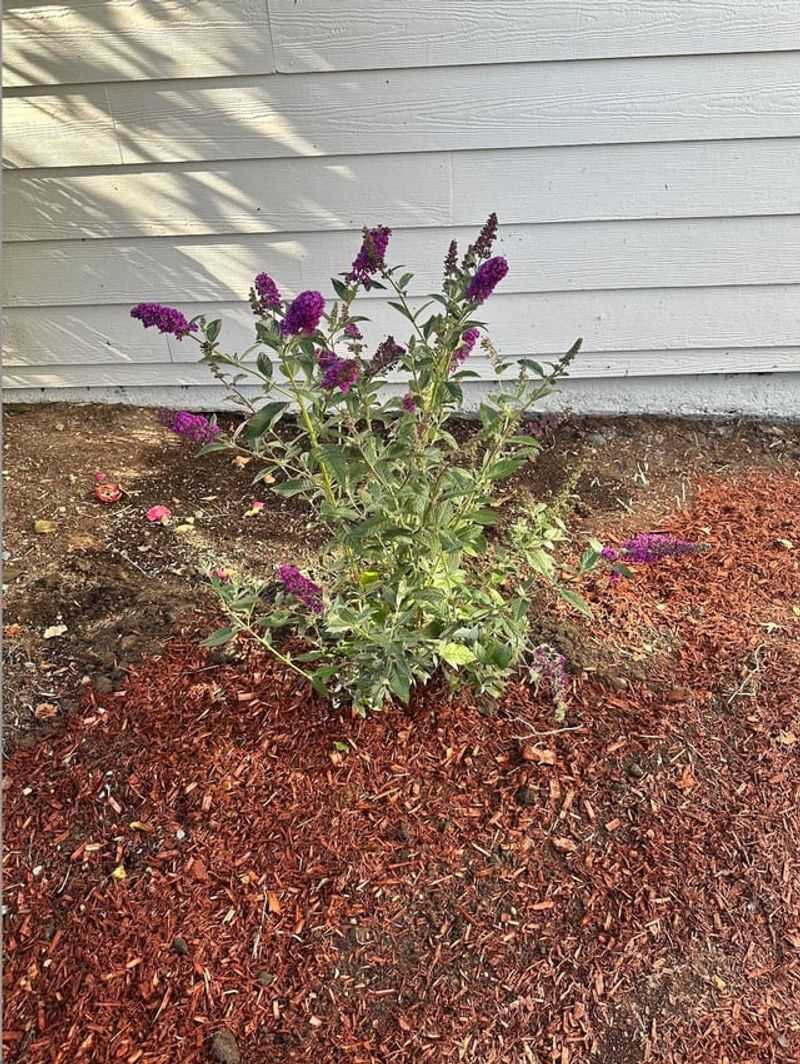
Spreading a fresh layer of mulch around your butterfly bush in early spring is one of those small tasks that quietly pays dividends all season long.
Mulch does several important jobs at once: it slows moisture evaporation from the soil, moderates soil temperature as warm days and cool nights alternate throughout spring, and gradually suppresses weeds that would otherwise compete with your bush for water and nutrients.
Shredded bark, wood chips, or pine straw all work well around butterfly bushes in North Carolina. Aim for a layer about two to three inches deep, spread out to the drip line of the plant but kept a few inches away from the main stems at the base.
Piling mulch directly against the stems can trap moisture against the bark and create conditions that invite rot and pest activity over time.
In the mountain regions of North Carolina, mulch also provides an extra layer of insulation for roots during the late cold snaps that sometimes arrive in April.
Along the coast, where spring warms up faster, mulch helps keep soil from drying out too quickly between rain events.
Refreshing your mulch each spring, rather than piling new material on top of old decomposed layers, keeps things looking tidy and functioning well.
It is a fifteen-minute job with a surprisingly positive impact on how your butterfly bush performs from early summer all the way through fall.
8. Space Plants For Better Airflow And Fewer Pests
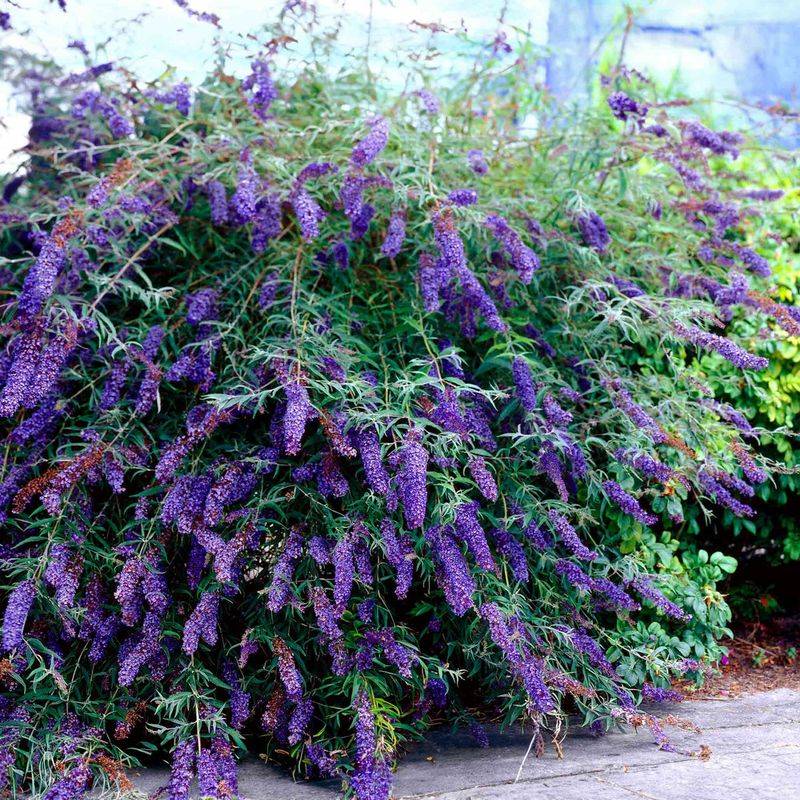
Crowded plants are an open invitation for problems, and butterfly bushes are not immune to that reality.
When shrubs are planted too close together, or when they are surrounded by dense plantings that block air movement, moisture lingers on leaves and stems longer than it should.
That kind of environment makes it easier for fungal issues to develop and gives common pests like aphids and spider mites a cozy, sheltered place to settle in and multiply.
Butterfly bushes can grow quite large, often reaching four to six feet wide at maturity depending on the variety. Giving each plant at least four to six feet of open space on all sides is a practical starting point.
If you are working with a smaller yard or a tight border, dwarf varieties bred for compact growth can deliver the same gorgeous blooms in a more manageable footprint without sacrificing airflow.
Spring is a good time to evaluate whether existing plants have outgrown their spacing.
If nearby shrubs, perennials, or structures have gradually closed in around your butterfly bush, selective pruning of neighboring plants can open things up without requiring you to move anything.
Better airflow is one of the simplest and most overlooked ways to reduce pest pressure naturally.
A butterfly bush with room to breathe tends to stay healthier through the season, which means less intervention on your part and more time enjoying those long, colorful flower spikes in full bloom.
9. Support Tall Stems So Flowers Stand Proud
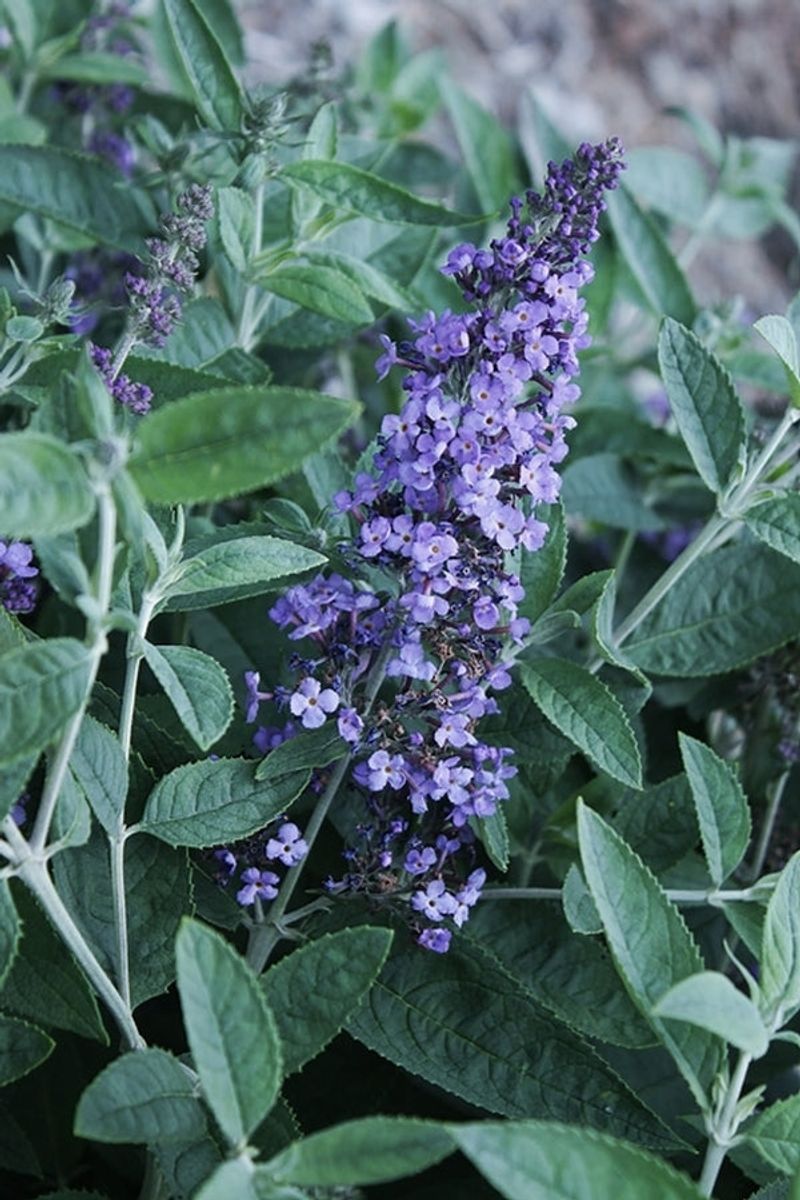
By late spring, a well-fed and well-pruned butterfly bush can put on impressive new growth fast, sometimes adding several inches in a week during warm stretches.
All that rapid vertical growth is exciting, but it can also lead to stems that lean heavily or flop over once the flower spikes develop at the tips and add weight to the plant.
A little support goes a long way toward keeping your butterfly bush looking its best through peak blooming season.
Simple bamboo stakes pushed into the soil beside the tallest stems and tied loosely with soft garden twine or stretchy plant tape are usually all you need. The goal is to guide the stem upright, not to bind it tightly.
Leaving a little slack in the tie allows the stem to flex naturally in the breeze without snapping, while still keeping it from drooping toward the ground where flower spikes can get damaged or dirty.
Gardeners in North Carolina who deal with afternoon thunderstorms in late spring will especially appreciate having their tallest stems supported before the weather turns dramatic.
Heavy rain combined with wind can knock over unsupported stems that are loaded with developing blooms.
A few minutes spent staking in late April or early May can protect weeks of growth. Once the stems thicken and lignify slightly as summer progresses, they generally hold themselves upright without additional help.