Pennsylvania Gardeners Plant These Small Conifers To Invite Birds In
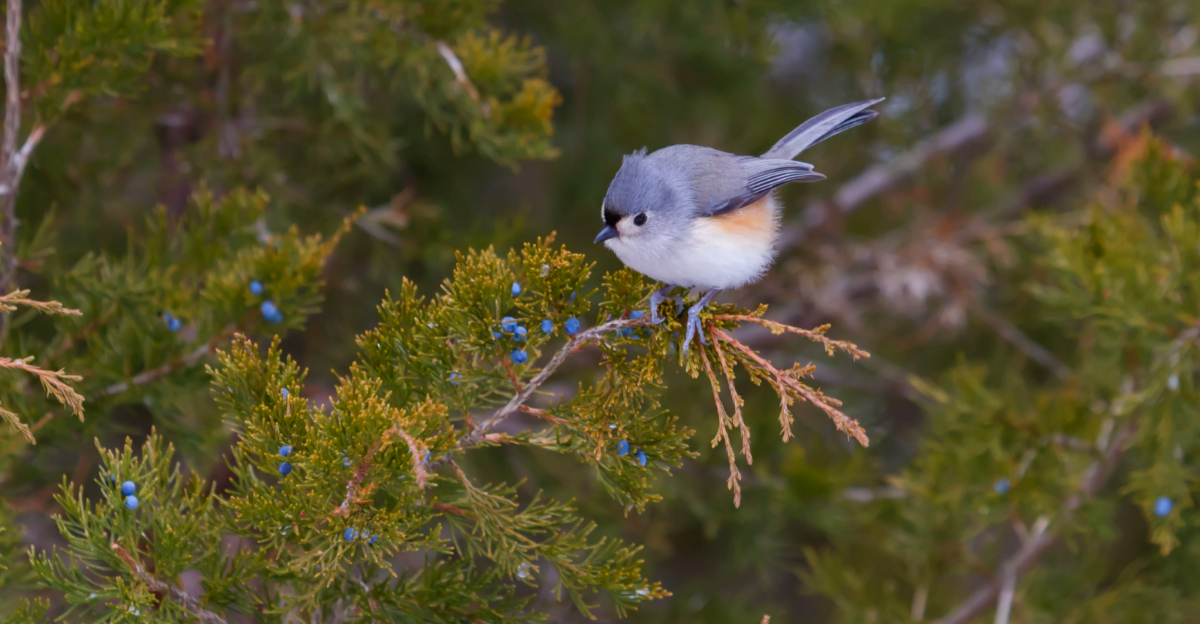
Ever wonder why some Pennsylvania yards stay full of life all winter while others go silent? The secret isn’t a better birdfeeder – it’s the needles.
Conifers act as a year-round fortress, providing a sturdy green sanctuary where local birds can hide from predators and nesting sites for the spring.
From the rugged Eastern Red Cedar to space-saving dwarf varieties, these compact evergreens offer high-impact charm without swallowing your lawn.
By tucking a few of these hardy stars into your landscape, you are doing more than just gardening; you are building a permanent habitat.
1. Eastern Red Cedar Shelters Birds Year-Round
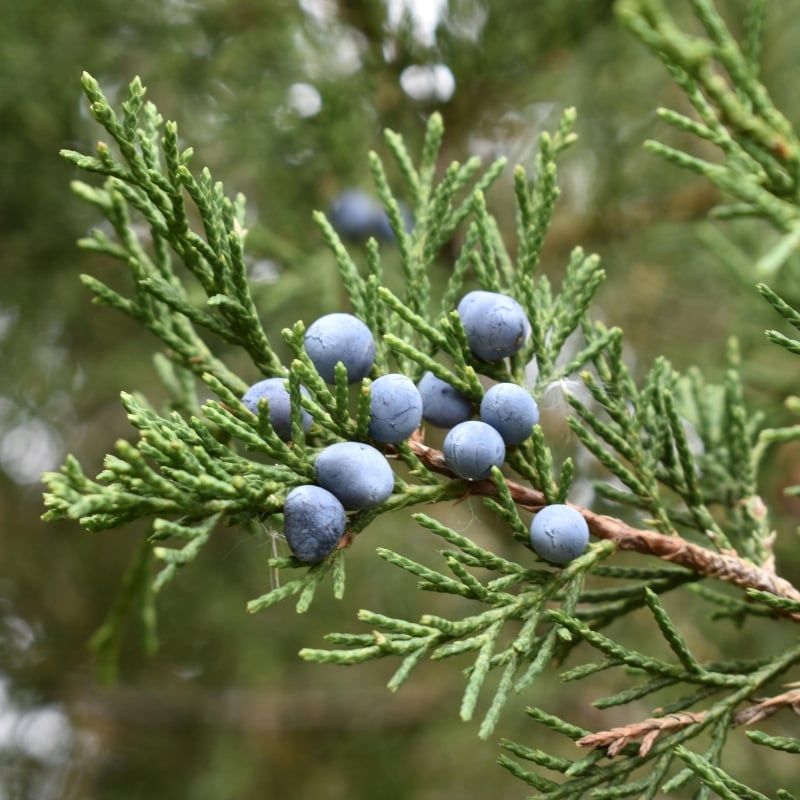
Few native trees pull their weight in the garden quite like the Eastern Red Cedar. This rugged evergreen is a magnet for birds, especially cedar waxwings, robins, and bluebirds that flock to its fleshy blue-gray cones, which look remarkably like berries.
During winter, when food is scarce, those cones become a critical food source for many species passing through Pennsylvania.
Beyond food, the Eastern Red Cedar offers incredibly dense foliage that acts like a natural fortress. Birds use its thick branches for roosting on cold nights and for building well-hidden nests in spring.
Because it is a native species, it fits naturally into Pennsylvania’s ecosystem without requiring much fuss from gardeners.
Eastern Red Cedar grows well in most Pennsylvania soils, tolerating both dry and clay-heavy conditions. It handles full sun beautifully and rarely needs supplemental watering once established.
Planting a few of these cedars near a bird feeder or water source creates a complete habitat zone that birds will return to season after season.
Compact cultivars are available if space is limited, making this tree a flexible and rewarding addition to any bird-friendly yard.
2. Dwarf Alberta Spruce Provides Compact Bird Cover
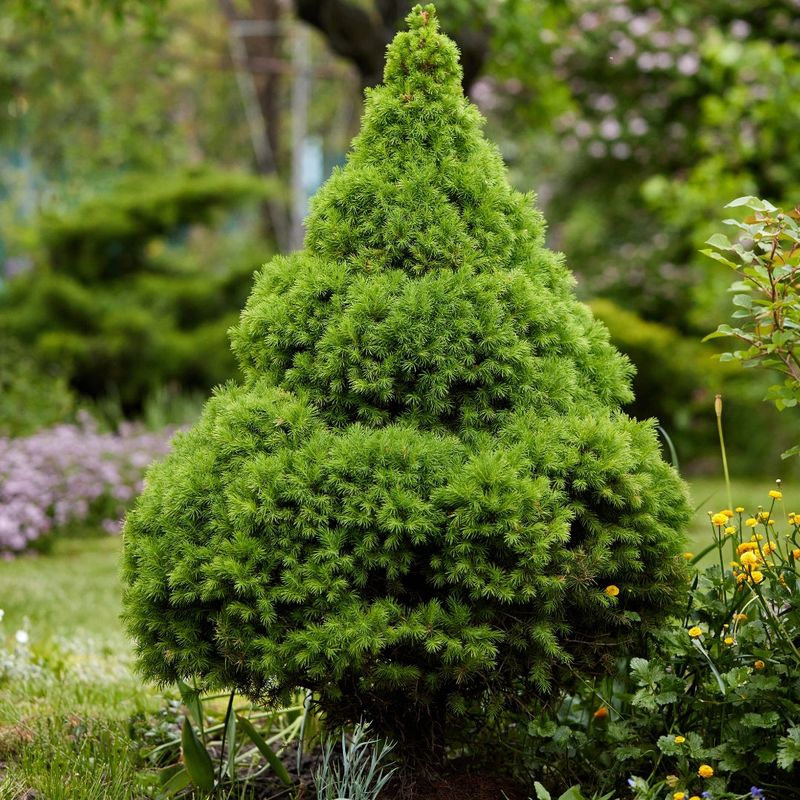
With its tidy, cone-shaped form and densely packed needles, the Dwarf Alberta Spruce is a favorite for gardeners who want big wildlife benefits from a small footprint.
This slow-growing spruce reaches only about six to eight feet tall over many years, making it a manageable option for suburban yards and garden borders across Pennsylvania.
Birds love this spruce because its thick interior branches create a sheltered microclimate that stays warmer and calmer than the surrounding air. Small songbirds like sparrows and chickadees duck inside during storms and roost there on frigid nights.
The tight branching also makes it a solid nesting spot for birds that prefer a little extra concealment when raising their young.
Caring for Dwarf Alberta Spruce is fairly straightforward. It prefers full sun to partial shade and well-drained soil, both of which are easy to provide in most Pennsylvania gardens.
Water it regularly during the first couple of seasons to help it establish strong roots. Once settled in, it is relatively low-maintenance and holds its neat shape without much pruning.
Pairing it with native shrubs nearby gives birds even more reasons to linger in your yard.
3. Norway Spruce ‘Nidiformis’ Creates Cozy Bird Nooks
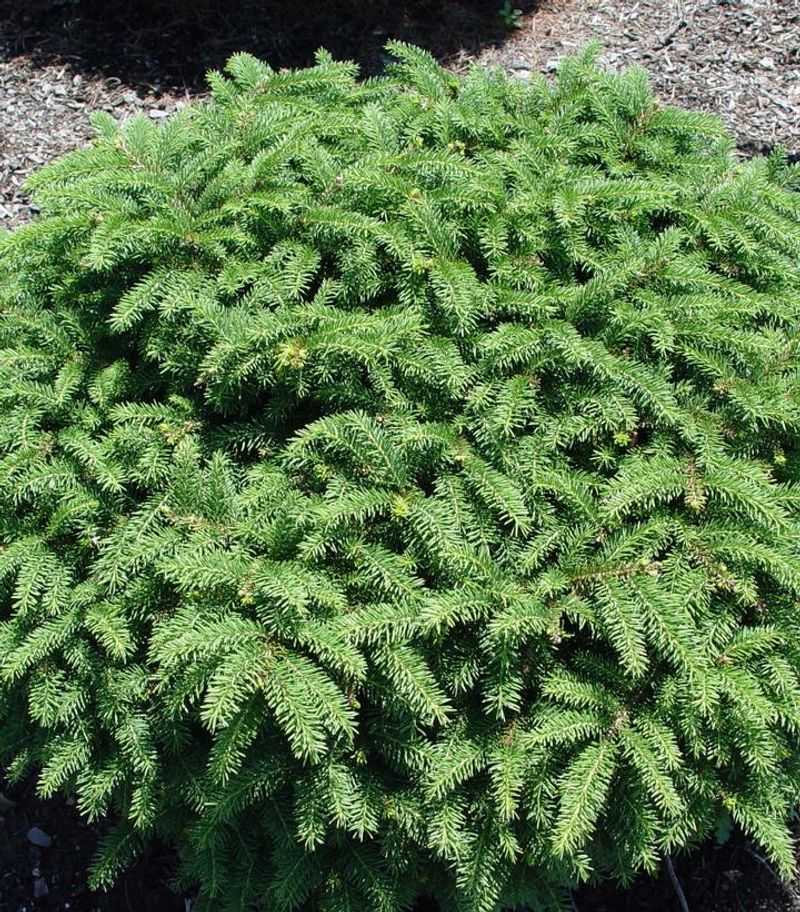
Nicknamed the Bird’s Nest Spruce for a very good reason, Norway Spruce ‘Nidiformis’ has a natural bowl-shaped hollow right at its center that looks almost tailor-made for nesting birds.
Your Pennsylvania Garden Changes Every Week. Your Plan Should Too.
Gardening in Pennsylvania changes quickly throughout the season. Every Friday you’ll receive a simple weekly plan showing exactly what to plant, prune, fertilize, harvest, and protect so you never miss the right timing.
This compact, spreading shrub rarely grows taller than three to four feet, but its low profile and wide spread give small birds plenty of room to explore, hide, and rest.
The dense, outward-spreading branches create a layered canopy that breaks wind and traps warmth, making the interior surprisingly sheltered even on blustery Pennsylvania days.
Ground-foraging birds like juncos and song sparrows are especially drawn to its low, accessible form.
In spring, some birds take the “nest” theme quite literally and set up home in its welcoming hollow.
This spruce thrives in full sun and prefers moist but well-drained soil. It grows slowly, so it will not outpace a small garden space.
Mulching around the base helps retain moisture and keeps roots comfortable through Pennsylvania’s unpredictable winters.
Because it stays low to the ground, it works wonderfully when planted in clusters or along garden borders, creating a connected corridor of shelter that encourages more bird activity across your entire yard.
4. Japanese Black Pine ‘Thunderhead’ Offers Strong Protection
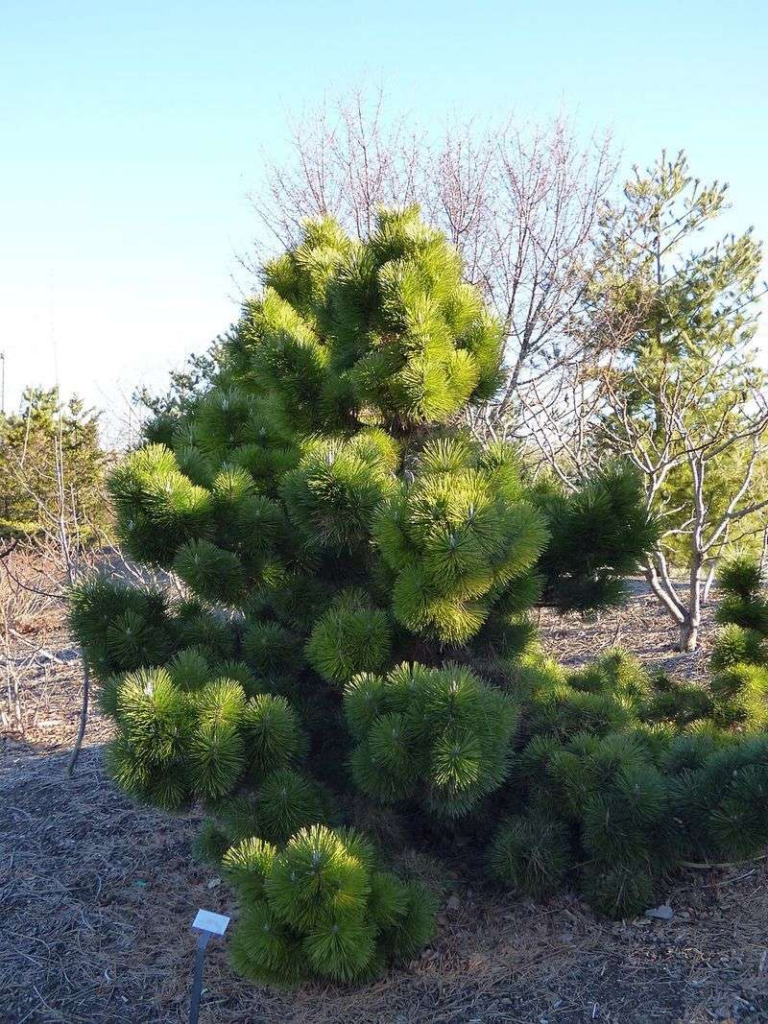
There is something boldly architectural about the Japanese Black Pine ‘Thunderhead’ that sets it apart from other small conifers.
Its striking dark green needles and bright white spring candles create a dramatic look, but beyond aesthetics, this pine is a genuinely tough protector for birds in Pennsylvania gardens.
Its stiff, dense branching provides a windbreak that smaller birds rely on during cold and rainy weather.
The ‘Thunderhead’ cultivar stays compact, typically reaching five to eight feet tall with a wider spread, giving it a broad, sheltering canopy at a manageable scale.
Birds like wrens, nuthatches, and even small woodpeckers are attracted to its rough bark and layered branches, which offer both perching spots and opportunities to search for insects tucked into the crevices.
This pine handles full sun very well and adapts to a range of soil types, including the sandy or slightly acidic soils common in parts of Pennsylvania.
It benefits from occasional shaping to maintain its layered form, which actually enhances its value as bird habitat by keeping branches dense and well-spaced.
Planting it near a garden path or patio gives you a front-row seat to all the bird activity it naturally draws in.
5. Blue Star Juniper Adds Silvery Shelter
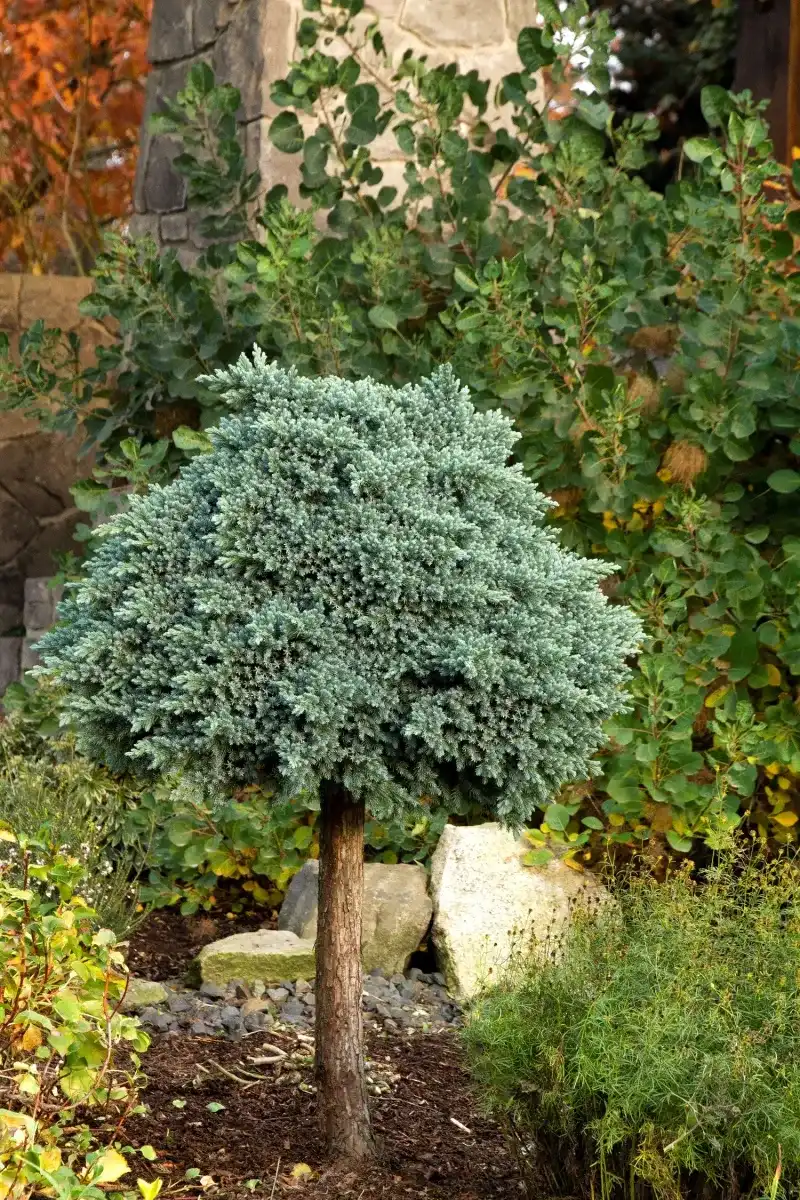
The Blue Star Juniper catches the eye immediately with its cool, silvery-blue foliage that shimmers in sunlight.
Beyond its visual appeal, this compact, mounding shrub provides genuine shelter for small birds that appreciate its prickly, dense branches as a safe refuge from predators and harsh weather.
It is a surprisingly effective little fortress for species like sparrows, wrens, and goldfinches.
Growing only about two to three feet tall and wide, Blue Star Juniper fits easily into rock gardens, mixed borders, or foundation plantings.
Its low, rounded shape stays close to the ground, which suits birds that prefer sheltering near the soil surface.
The evergreen foliage holds its color through Pennsylvania winters, maintaining visual interest and providing consistent cover when other plants go dormant.
This juniper thrives in full sun and well-drained soil, and it handles drought conditions reasonably well once established, making it a low-fuss choice for busy gardeners. It rarely needs pruning, naturally maintaining its tidy mounding form.
For maximum bird benefit, plant Blue Star Juniper in groups of three or more to create a connected band of low shelter.
Adding a nearby ground-level water dish encourages even more bird visits to this corner of your garden.
6. Mugo Pine Offers Perches And Groundcover For Birds
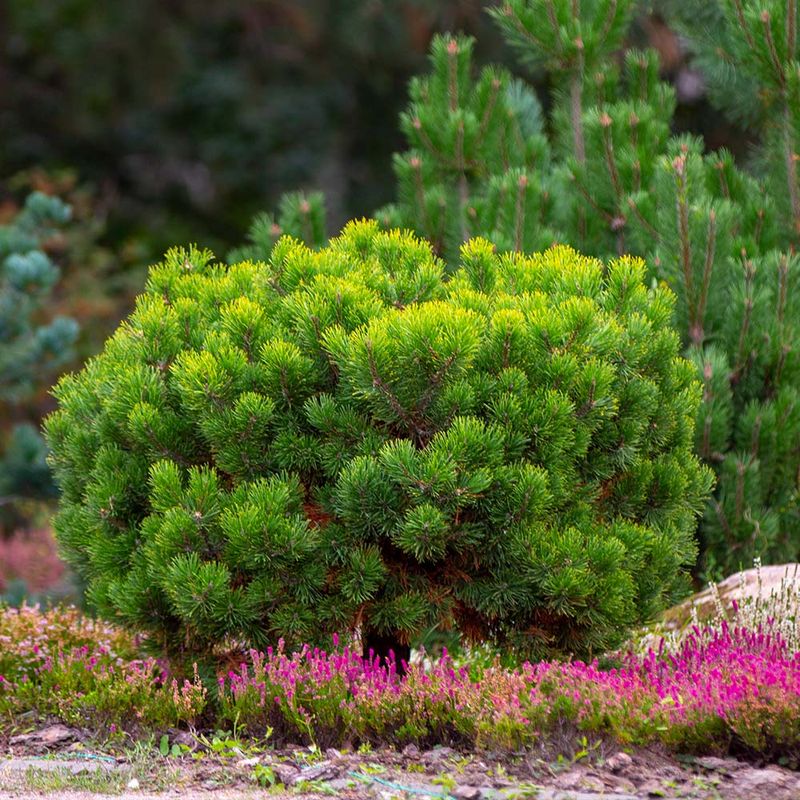
Sturdy, dependable, and wonderfully low-growing, the Mugo Pine has earned its place in Pennsylvania gardens as a multi-purpose habitat plant.
Its spreading, bushy form creates a natural stage for birds, offering both elevated perching branches and ground-level cover that suits a wide range of species.
Ground-feeding birds like white-throated sparrows and dark-eyed juncos are especially fond of foraging beneath its sheltering canopy.
What makes the Mugo Pine particularly valuable is its year-round reliability. Its thick, dark green needles stay dense through every season, and the plant holds up exceptionally well against Pennsylvania’s cold, snowy winters without losing its shape or color.
Birds roost in its branches during frigid nights, taking advantage of the warmth trapped within its dense interior.
Mugo Pines are available in several compact cultivars that stay under three feet tall, making them easy to fit into smaller gardens or use as edging plants.
They grow best in full sun with well-drained soil and tolerate urban conditions better than many other conifers.
Minimal pruning keeps them tidy, but even left to grow naturally, they maintain a pleasing rounded form. Pair them with taller conifers nearby to create layered habitat zones that attract an even wider variety of birds to your yard.
7. Eastern Hemlock ‘Jeddeloh’ Protects Birds With Soft Foliage
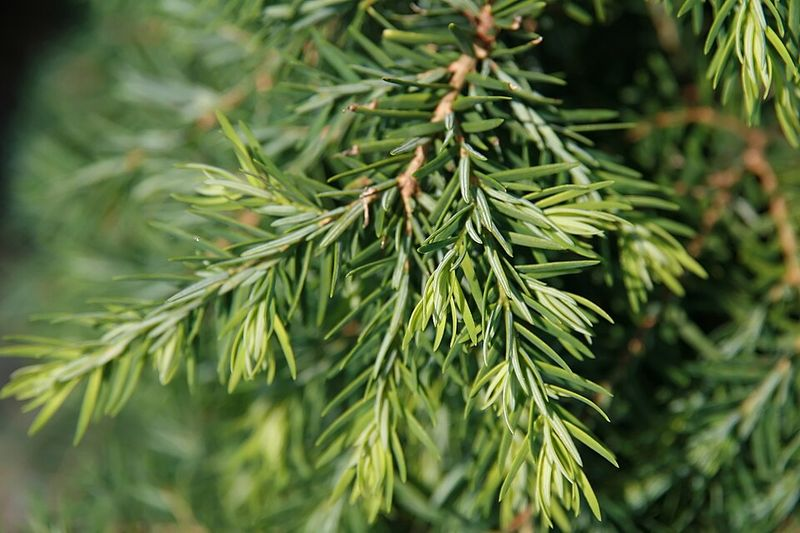
Pennsylvania’s state tree has a beloved dwarf cousin that brings all the wildlife value of a full-sized hemlock into a compact, garden-friendly package.
Eastern Hemlock ‘Jeddeloh’ forms a graceful, mounding shape with weeping inner branches and incredibly soft, fine-textured foliage that small birds find irresistible for shelter and nesting.
Its gentle, layered form creates a naturally cozy interior that feels tailor-made for wildlife.
Chickadees, brown creepers, and golden-crowned kinglets are among the birds most frequently spotted in and around hemlocks.
The small cones produced by ‘Jeddeloh’ provide a modest but valuable seed source, especially in late fall and winter when other food becomes less available.
Even insects sheltering in the soft foliage serve as an additional food source for insect-eating birds.
Unlike many conifers, Eastern Hemlock ‘Jeddeloh’ actually prefers partial to full shade, making it a standout choice for woodland gardens or shaded corners where other conifers struggle.
It grows best in moist, well-drained, slightly acidic soil, which is common across much of Pennsylvania.
Keeping it well-watered during dry spells helps it stay healthy and vigorous. At maturity, it reaches roughly three to four feet tall, remaining an approachable, manageable size for most garden spaces.
8. Creeping Juniper Forms Low Shelter For Birds
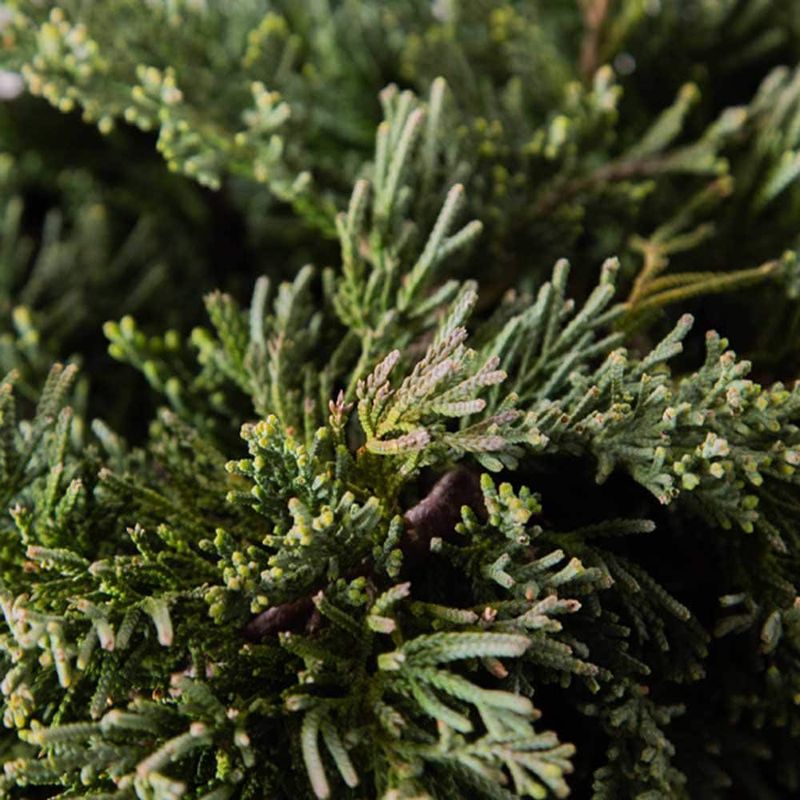
Spreading low and wide across the ground, Creeping Juniper is one of those plants that quietly does enormous good for garden birds without demanding much attention from the gardener.
Its flat, mat-forming growth hugs the soil surface and creates a dense carpet of evergreen cover that ground-nesting and ground-foraging birds find genuinely useful throughout the year, especially during harsh Pennsylvania winters.
Species like song sparrows, hermit thrushes, and fox sparrows are known to forage along the edges of creeping juniper patches, searching for insects and seeds hidden within the foliage.
The plant’s low profile also makes it harder for predators like cats or hawks to spot birds moving through it, giving smaller species a meaningful safety advantage.
Creeping Juniper is one of the most adaptable conifers available to Pennsylvania gardeners. It tolerates poor soils, slopes, full sun, and even light foot traffic, making it useful for erosion-prone areas, banks, and open borders.
Most cultivars stay under one foot tall but can spread six feet or more, filling in large areas with minimal effort. Water it well during the first growing season, and after that it generally manages well on its own.
Plant it alongside taller shrubs to create a layered habitat that welcomes birds at every level.
9. Rocky Mountain Juniper Provides Hardy Bird Protection
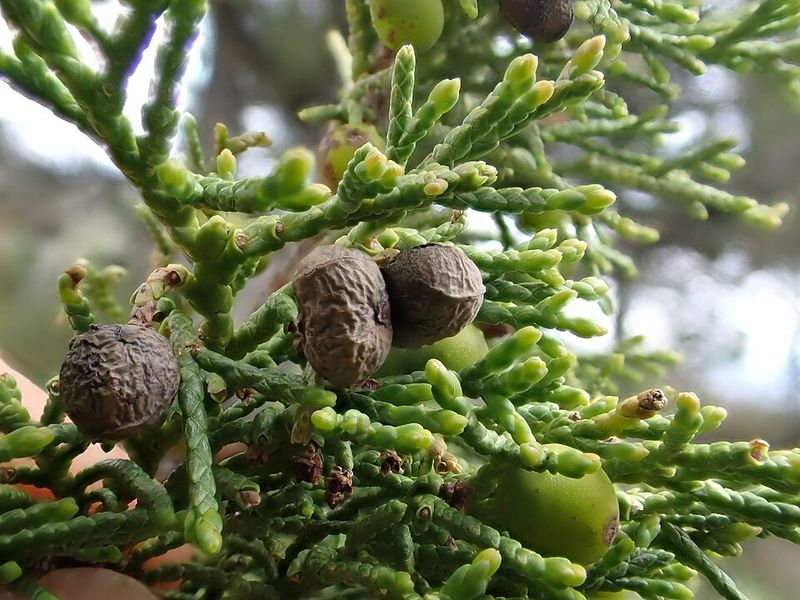
Tough as nails and loaded with bird-friendly features, the Rocky Mountain Juniper is a conifer that earns its keep in Pennsylvania gardens even through the harshest winters.
Its upright, columnar form makes it a useful windbreak and privacy screen, but its real value lies in the dense foliage and blue, berry-like cones that attract a wide range of bird species from fall through early spring.
Cedar waxwings, American robins, and various thrushes are drawn to the fleshy cones, which persist on the tree well into winter and provide a reliable food source when little else is available.
The tree’s tight branching also creates excellent roosting habitat, with birds tucking themselves deep into the foliage to escape wind and cold.
Some cavity-nesting birds have even been observed using hollows in older specimens.
Rocky Mountain Juniper adapts well to Pennsylvania’s climate, handling both dry summers and cold winters without complaint.
It prefers full sun and well-drained soil, and it is notably drought-tolerant once established, which is a real bonus during dry stretches.
Several compact cultivars are available, ranging from narrow columns to broader spreading forms, giving gardeners flexibility in how they incorporate this bird-friendly conifer into their landscape design.