8 Common Mistakes Arizona Gardeners Make With Fig Trees
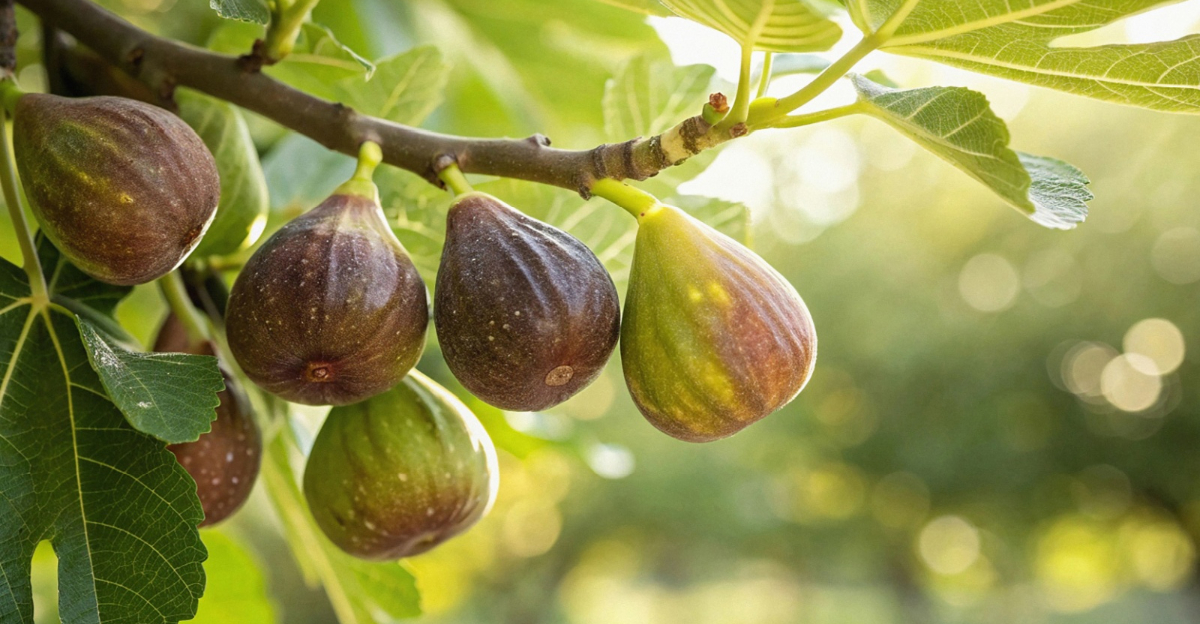
Few fruit trees feel as rewarding as a fig tree heavy with ripe, sweet fruit – especially in an Arizona backyard. But growing figs here isn’t as effortless as it looks.
Between scorching summer sun, fast-draining desert soil, dry winds, and inconsistent watering, even healthy trees can start to struggle.
The good news? Most problems are predictable – and preventable.
Once you know what to watch for and how to adjust your care, you can turn a struggling fig tree into a reliable, fruit-producing standout that thrives despite Arizona’s challenging conditions.
1. Planting Figs In Poorly Drained Soil Can Lead To Root Stress
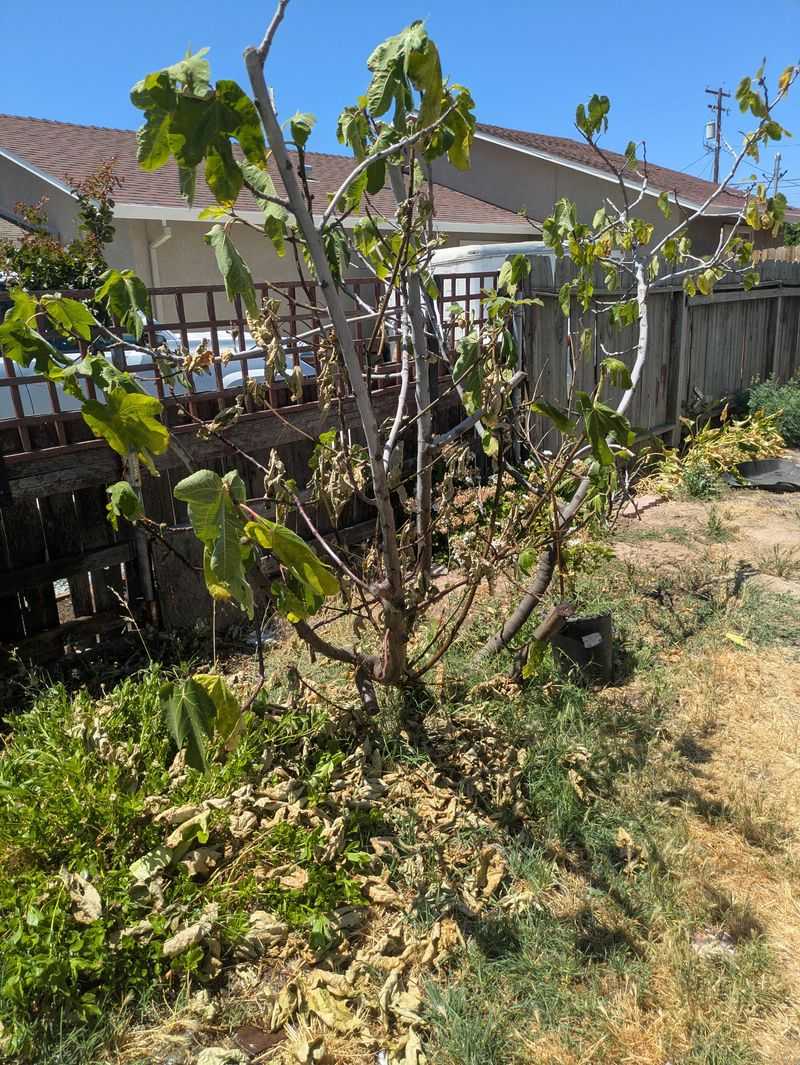
Soggy roots are a real problem in Arizona yards where clay hardpan or caliche layers sit just below the surface. Even though the desert looks dry on top, water can pool underground and stay there longer than most gardeners expect.
Fig tree roots need oxygen to function well, and soil that holds too much water cuts off that supply quickly.
In many Arizona neighborhoods, the soil profile changes dramatically just a foot or two down.
A layer of caliche – that chalky, cement-like mineral crust – can block drainage entirely and trap water right where the roots are growing.
This creates conditions where roots stay wet between waterings, which weakens the tree over time and can invite fungal problems.
Before planting, dig a test hole about 12 inches deep, fill it with water, and watch how fast it drains. If water is still sitting there an hour later, drainage is too slow for a fig tree.
Raised planting beds or amended planting holes with coarse sand and compost can improve drainage significantly in problem spots.
Good sign: water disappears from your test hole within 30 minutes.
Trouble sign: the soil around the base of your tree stays dark and wet for more than a day after watering.
2. Letting Young Fig Trees Dry Out Too Fast Slows Establishment
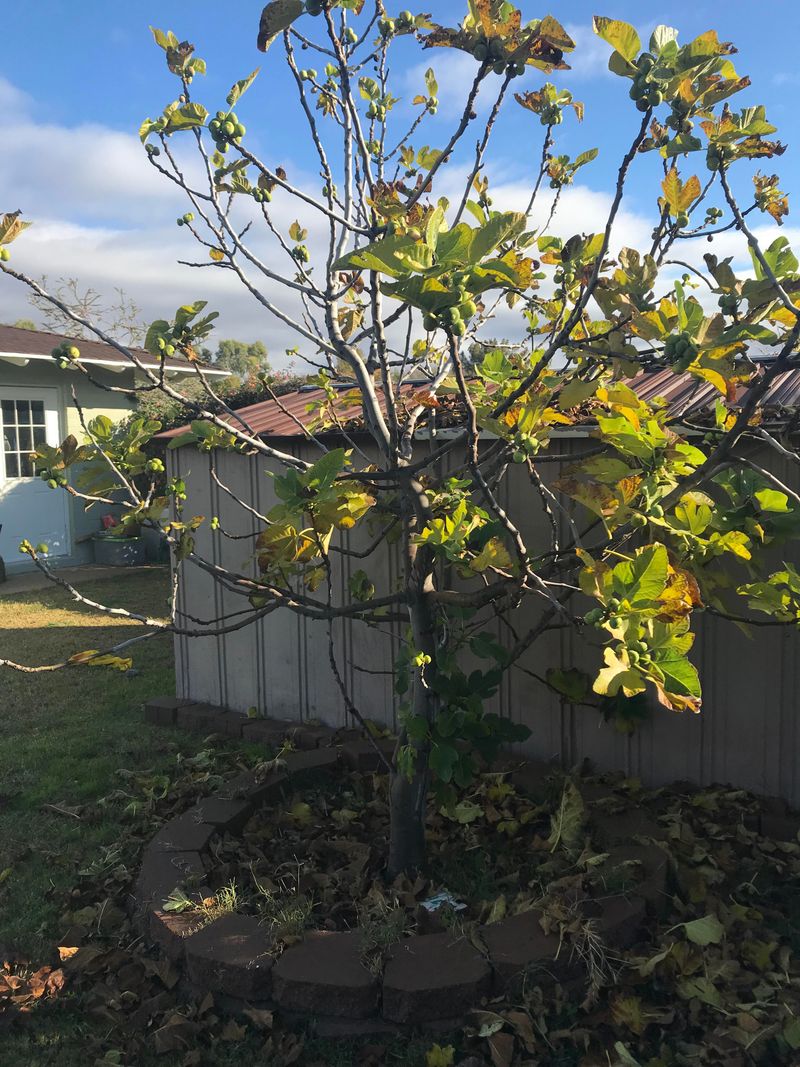
Spring planting in Arizona can fool you. Temperatures feel manageable in March and April, but the soil dries out surprisingly fast even before summer officially arrives.
A young fig tree planted in spring has a narrow window to grow roots deep enough to handle the heat that follows, and skipping even a few waterings during that stretch can set it back weeks.
Newly planted figs have not yet developed the deep, wide root systems that help established trees pull moisture from a larger area of soil. That means they depend almost entirely on what you give them.
In Arizona’s low desert, a young fig tree during its first summer may need water every two to three days depending on soil type, pot size if container-grown, and sun exposure. Sandy soils dry out faster than loamy ones.
Mulching around the base with three to four inches of wood chips or straw can make a meaningful difference by slowing evaporation and keeping the root zone cooler. Keep mulch a few inches away from the trunk itself.
Good sign: new leaf growth appearing within a few weeks of planting shows the roots are settling in.
Your Arizona Garden Changes Every Week. Your Plan Should Too.
Gardening in Arizona changes quickly throughout the season. Every Friday you’ll receive a simple weekly plan showing exactly what to plant, prune, fertilize, harvest, and protect so you never miss the right timing.
Trouble sign: leaves that look dull, slightly curled at the edges, or feel papery to the touch are telling you the tree needs more consistent moisture.
3. Overwatering Can Cause Weak Growth And Fruit Problems
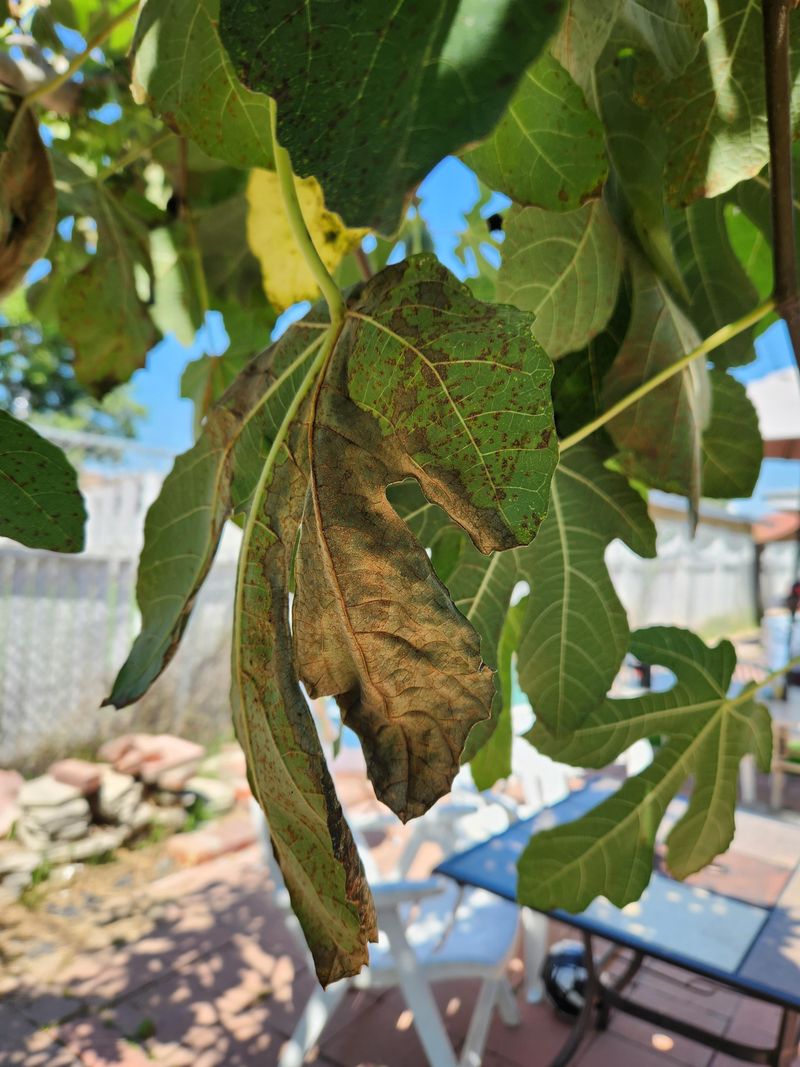
Watering more is not always better, especially in Arizona where summer heat makes gardeners feel like their trees are constantly thirsty. An established fig tree has a deeper, more efficient root system than most people give it credit for.
Flooding it with water every day can actually push the tree toward leafy, soft growth that produces fewer figs and is more vulnerable to stress later in the season.
One of the clearest signs of overwatering is yellowing leaves that drop off even when the weather is warm and the tree looks otherwise full. The roots may be sitting in soggy soil long enough to lose their ability to absorb nutrients properly.
In Arizona’s alkaline soils, this can also trigger nutrient deficiencies that show up as pale or yellowing leaves between the veins.
A good general habit for established fig trees in the low desert is deep, infrequent watering rather than frequent shallow watering.
Letting the top few inches of soil dry out between sessions encourages roots to grow deeper, which helps the tree handle Arizona’s dry winds and temperature swings more effectively.
Good sign: soil at three to four inches deep feels slightly moist but not wet a day after watering.
Trouble sign: soil near the roots stays soggy or smells musty, which points to drainage issues compounded by too much water.
4. Full Desert Sun Can Scorch Figs Without A Gradual Start
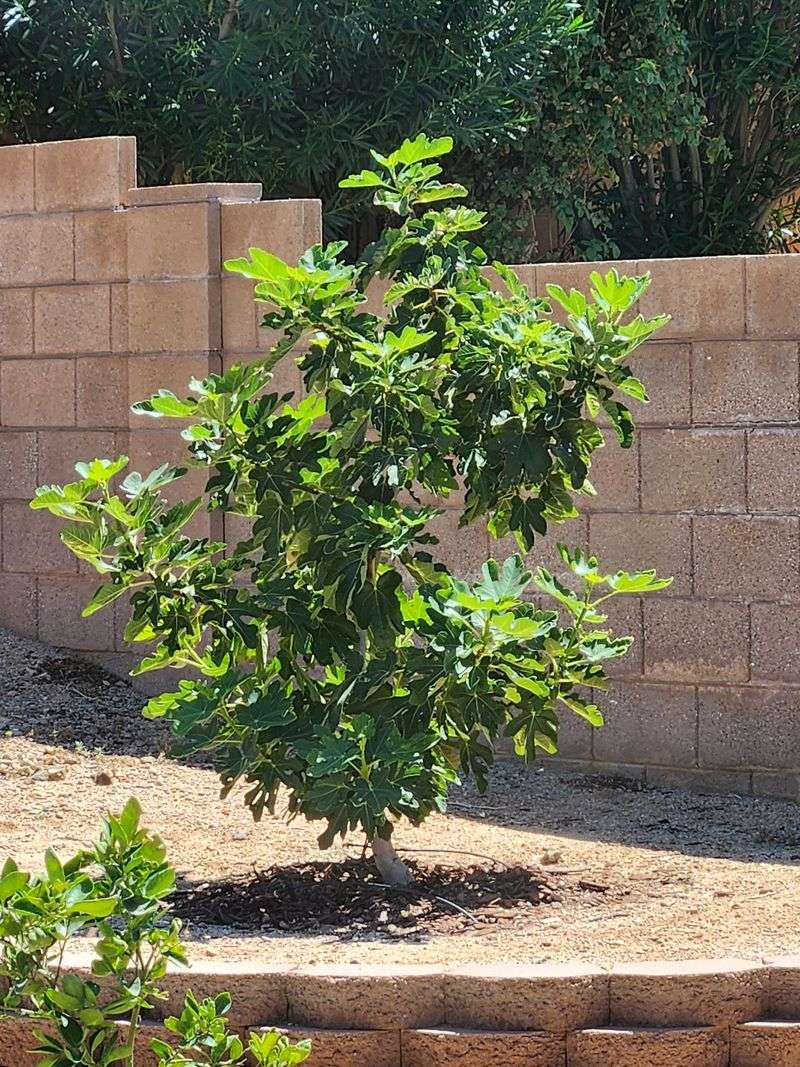
Arizona’s summer sun is not like the sun in most other places. Reflected heat off walls, patios, and gravel can push temperatures well past what a thermometer reads in the shade.
Fig trees love full sun in general, but a tree that was recently purchased from a shaded nursery and dropped straight into a blazing south-facing spot in June can show leaf scorch within days.
Sunscald often looks like bleached or brown patches on leaves, usually starting at the tips or edges. The fruit can also develop soft, sunburned spots that ruin it before it ripens.
Trees planted near white or tan stucco walls in Phoenix or Tucson face reflected heat from two directions at once, which intensifies the stress.
Hardening off a new fig tree over one to two weeks – gradually increasing its sun exposure before planting – gives the leaves time to adjust their structure.
Temporary shade cloth at around 30 to 40 percent during the first summer can protect a newly planted tree without blocking too much light for growth.
After the first full year in the ground, most fig varieties handle Arizona sun well on their own.
Good sign: leaves stay firm and deep green even on hot afternoons.
Trouble sign: pale, papery patches appearing on leaves or fruit skin that face the most intense afternoon sun.
5. Root Knot Nematodes Can Quietly Weaken Fig Trees
Beneath the surface of many Arizona gardens, microscopic roundworms called root knot nematodes are already living in the soil. They are especially common in sandy, warm soils – exactly the kind of conditions found across much of the low desert.
A fig tree can look perfectly healthy above ground for a season or two while nematodes are slowly reducing its ability to absorb water and nutrients below.
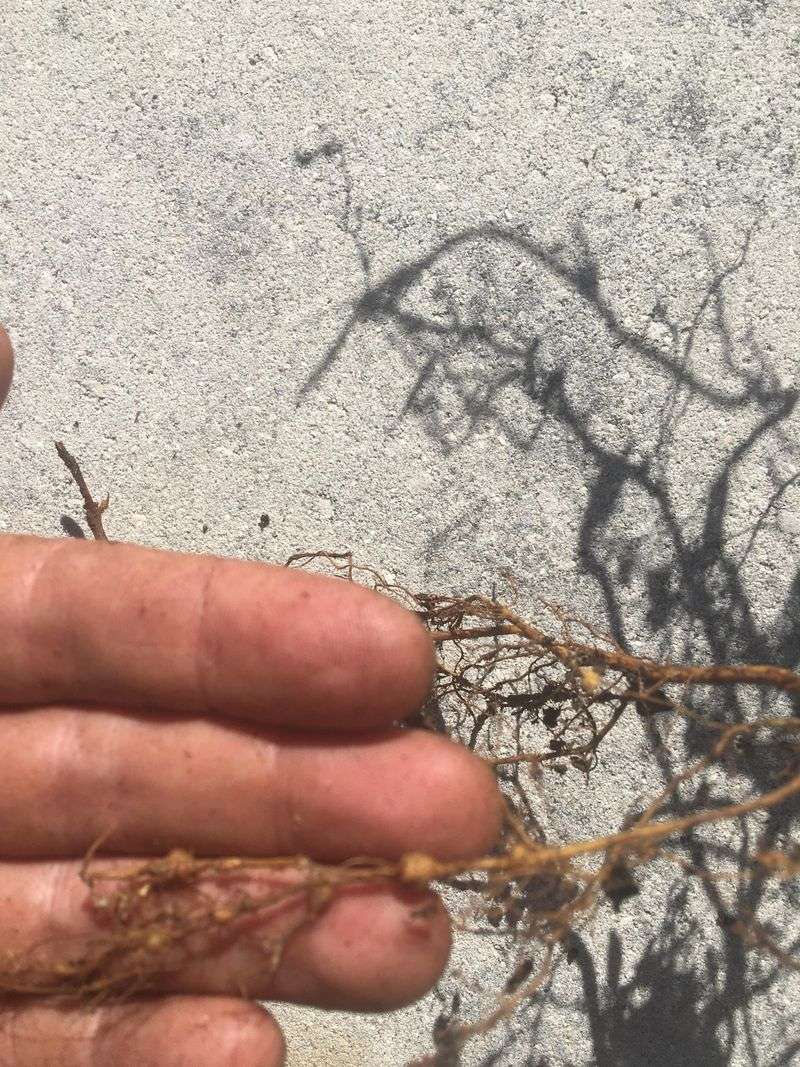
Root knot nematodes attach to roots and cause small galls – bumpy, swollen knobs – to form along them.
These galls interfere with the root’s normal function, making it harder for the tree to stay hydrated and nourished even when you are watering and fertilizing on schedule.
Trees affected by heavy nematode pressure often show slow, stunted growth and may produce smaller fruit than expected for their size and age.
Nematode-resistant rootstocks exist for some fruit trees, but common fig varieties are generally grown on their own roots, which makes selection of planting site and soil health more important.
Adding organic matter like compost to the soil over time supports beneficial microbial activity that can help suppress nematode populations naturally.
Good sign: roots pulled from the soil look smooth and white with healthy branching.
Trouble sign: visible galls or beaded swellings along the roots after digging, combined with unexplained slow growth above ground.
6. Heavy Pruning At The Wrong Time Can Reduce Fruit
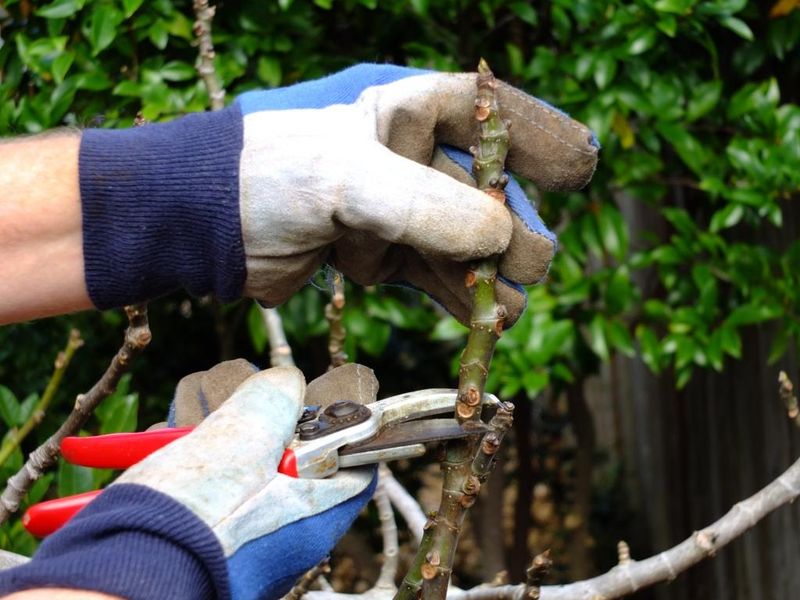
Pruning a fig tree too aggressively or at the wrong point in the season is one of the most common ways Arizona gardeners accidentally reduce their own harvest.
Fig trees produce fruit on wood that grew the previous year, known as the breba crop, as well as on new growth from the current season.
Cutting back a lot of last year’s wood in spring removes the very branches that were about to produce your first wave of figs.
In Arizona’s low desert, the ideal time for major pruning is during dormancy – typically late December through January before new growth begins.
Light shaping and removing crossing or damaged branches can be done at other times, but heavy structural cuts are best saved for that dormant window.
Pruning in late spring or early summer right when the tree is pushing energy into fruit development can set back production noticeably.
Keeping pruning moderate and purposeful rather than cutting for the sake of a tidy shape makes a real difference over time. Aim to open up the canopy for airflow and light penetration rather than reducing overall size dramatically in a single session.
Good sign: plentiful new shoot growth appearing after dormant pruning with visible bud development by late February.
Trouble sign: a tree that was pruned heavily in spring producing far fewer figs than in previous years, with lots of leafy growth but little fruit.
7. Uneven Watering Can Cause Figs To Split Before Harvest
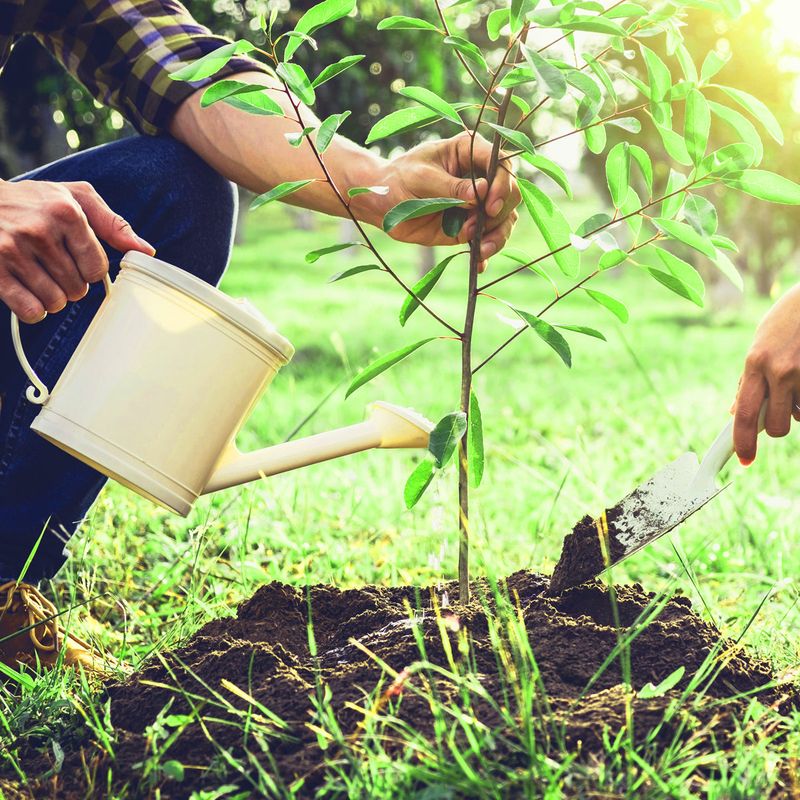
Watching figs swell up and nearly reach ripeness, only to find them split open and oozing a few days before harvest, is genuinely frustrating.
This happens most often when a period of dry soil is followed by a sudden surge of water – either from a monsoon storm, a skipped irrigation session, or switching from drip to flood watering.
The fruit takes up moisture faster than the skin can expand, and it cracks.
Arizona’s monsoon season, which typically arrives in July and runs through September, creates exactly this kind of uneven moisture pattern.
A tree that has been getting by on minimal irrigation through June suddenly receives heavy rainfall, and the figs respond by swelling rapidly.
Gardeners who rely only on rainfall during monsoon season without adjusting their irrigation schedule often see this problem show up every summer.
Keeping soil moisture as consistent as possible during the weeks when figs are sizing up and ripening is the most effective way to prevent splitting.
Drip irrigation on a steady schedule works better than hand watering or flood irrigation for maintaining that consistency.
Mulching the root zone also helps buffer the soil against the rapid wet-dry swings that trigger splitting. Good sign: figs that grow gradually and evenly, with skin that stays smooth and intact as they soften.
Trouble sign: figs that swell quickly after rain or a heavy watering session and develop cracks along the bottom or sides.
8. Birds Often Find Ripe Figs Before Gardeners
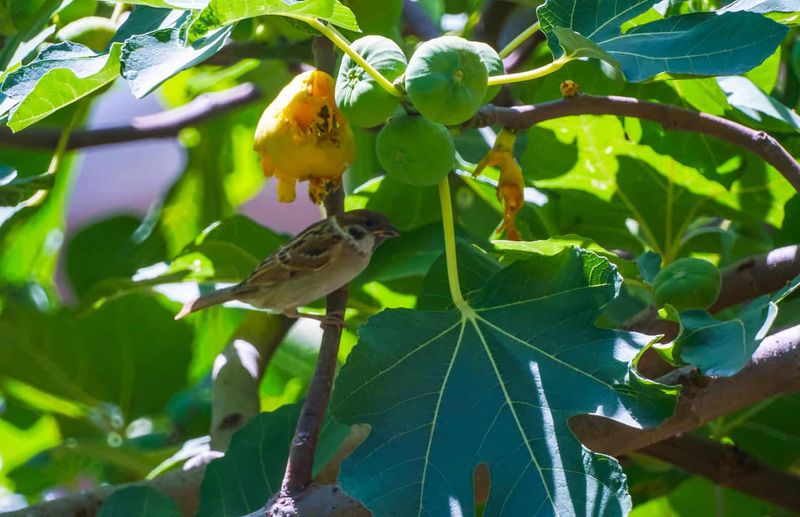
Arizona is home to a lively mix of birds – mockingbirds, grackles, house finches, and curve-billed thrashers among them – and most of them have figured out that a ripening fig tree is an excellent food source.
Figs do not announce their ripeness loudly, and birds often get there first, especially early in the morning before most people head outside to check on the garden.
The tricky part is that figs ripen unevenly across the tree. Some will be perfectly ready while others nearby still need several more days.
Birds tend to sample broadly, leaving partially eaten figs throughout the canopy that then attract insects or develop mold. By the time a gardener notices, a good portion of the crop may already be damaged or gone.
Netting is the most reliable physical barrier for protecting ripening figs. Lightweight bird netting draped over the canopy and secured at the base keeps most birds out without harming them.
Some gardeners also use reflective tape or hanging objects that move in the wind as a deterrent, though these tend to lose effectiveness after birds get used to them.
Checking the tree daily once figs begin to soften and droop slightly at the neck is the simplest habit you can build.
Good sign: figs that are intact, slightly soft, and drooping naturally at the stem.
Trouble sign: pecked or hollowed-out fruit scattered across the canopy before you have had a chance to harvest.