These 7 Native California Flowers Help Early Spring Bumble Bees The Most
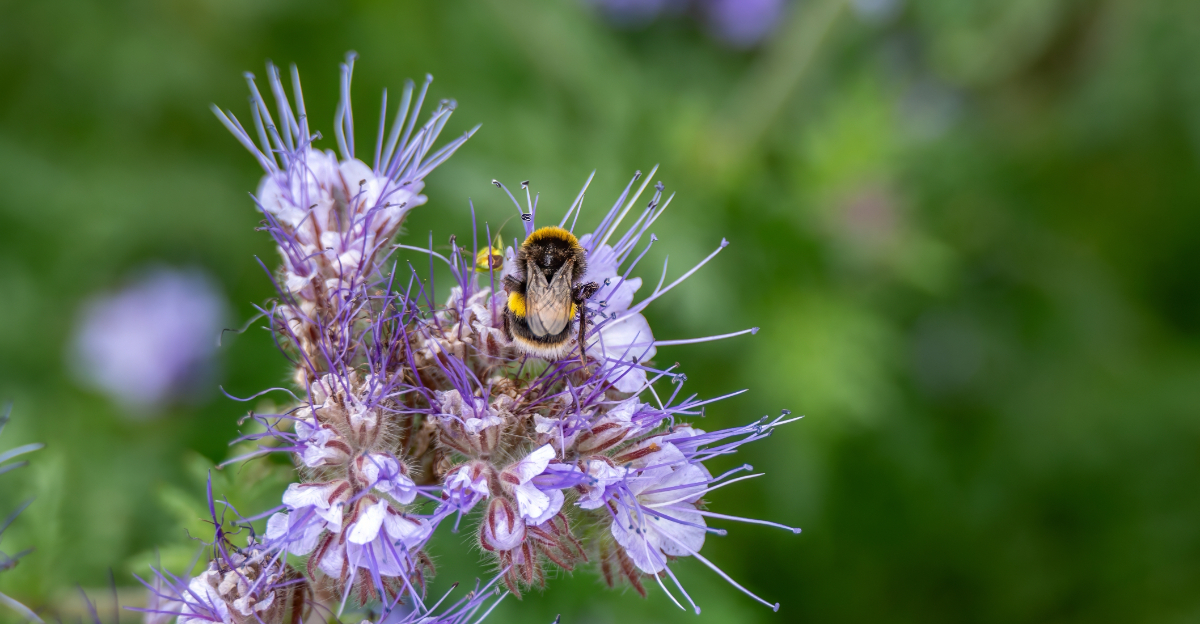
Every spring in California, bumble bees wake up hungry and ready to work. Queens emerge from their winter rest looking for nectar and pollen to start new colonies.
Without enough early-blooming flowers, these important pollinators struggle to survive the season. Luckily, California is home to some amazing native plants that bloom right when bumble bees need them most.
Planting even a few of these flowers in your yard or garden can make a real difference. Native plants are perfectly matched to local bees because they evolved together over thousands of years right here in California.
That means the flowers offer exactly the right kind of pollen and nectar that bumble bees are built to collect.
Supporting bumble bees is not just good for the bees. It helps fruits, vegetables, and wild plants get pollinated too.
1. California Poppy
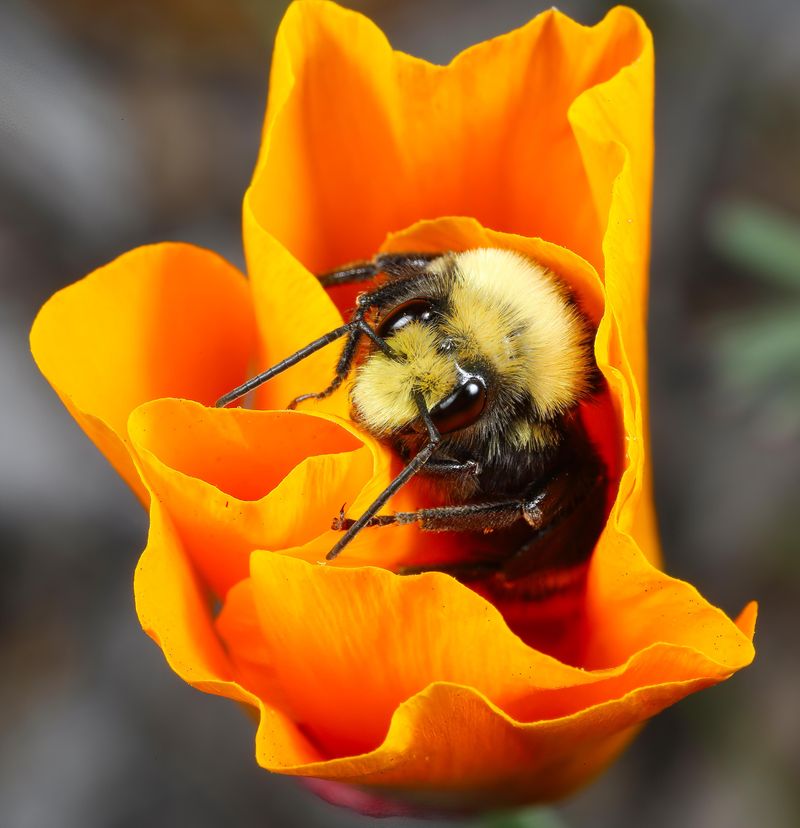
Few flowers say “California” quite like the golden-orange poppy. It is the official state flower, and it earns that title every single spring.
Starting as early as February, California poppies burst open across hillsides, roadsides, and home gardens all over the state. For bumble bees waking up from their winter rest, these blooms are like a welcome-back party.
The open, cup-shaped flowers make it incredibly easy for bumble bees to land and collect pollen. There is no hidden entrance or tricky structure.
The pollen is right there, bright and available. Bees can gather it quickly and efficiently, which matters a lot when they are still building up their energy in early spring.
California poppies grow best in full sun and well-drained soil. They actually prefer dry, sandy conditions, which makes them a perfect fit for many parts of California where water is limited.
You do not need to be an expert gardener to grow them. Just scatter seeds on bare soil in fall, and they will bloom by late winter or early spring.
One fun fact: California poppies close up at night and on cloudy days, which helps protect their precious pollen. Bumble bees quickly learn when these flowers are open and plan their visits accordingly.
Planting large patches gives bees a reliable, generous food source right when they need it most.
2. Lupine
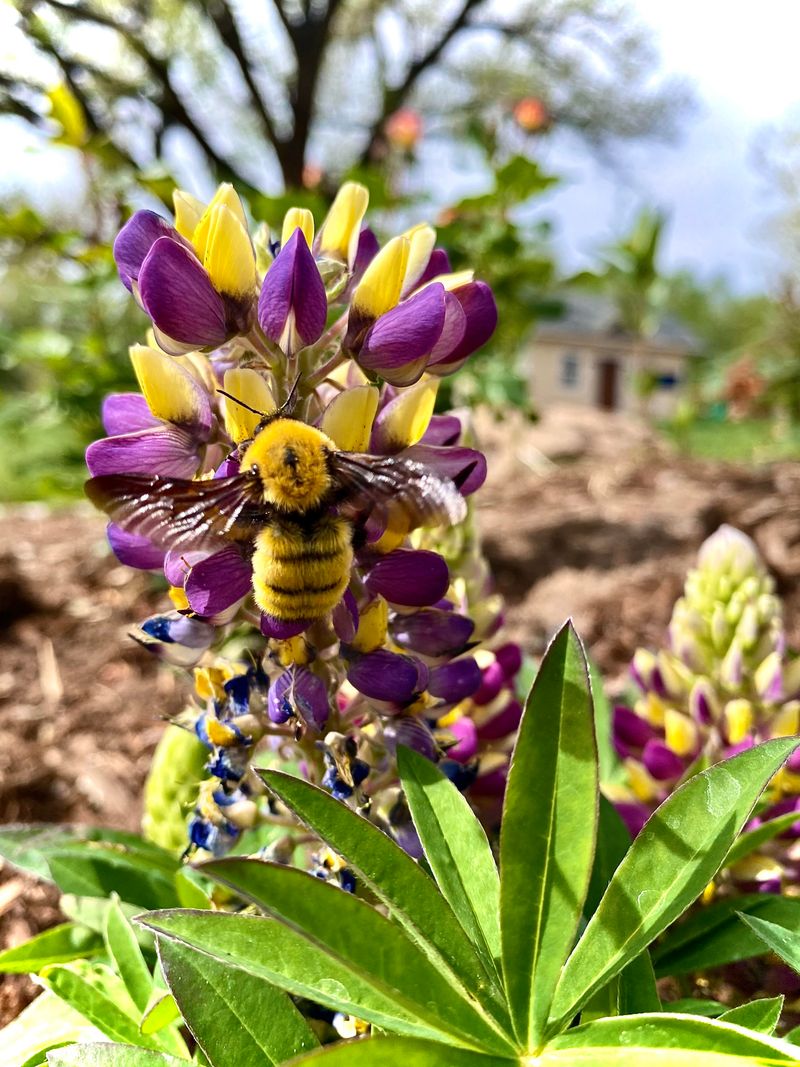
Walk through almost any wild California hillside in March or April and you will likely spot tall, colorful spikes of lupine reaching toward the sky. These bold plants come in shades of purple, blue, pink, and yellow, and they are a serious favorite among bumble bees across the state.
What makes lupine so special for bumble bees is a clever trick called buzz pollination. Bumble bees grip the flower and vibrate their flight muscles at just the right frequency to shake pollen loose.
Most other insects cannot do this. That means bumble bees get access to pollen that other pollinators simply cannot reach, giving them a real advantage.
Lupines belong to the legume family, which means they also help improve soil by fixing nitrogen. So planting lupine is good for your garden in more ways than one.
They grow well in sandy or rocky soil with full sun, and they need very little water once established. That makes them a smart, low-maintenance choice for California gardens.
Your California Garden Changes Every Week. Your Plan Should Too.
Gardening in California changes quickly throughout the season. Every Friday you’ll receive a simple weekly plan showing exactly what to plant, prune, fertilize, harvest, and protect so you never miss the right timing.
There are dozens of native lupine species found throughout California, from coastal bluffs to mountain meadows. Choosing a species native to your specific region gives bumble bees the best match possible.
Planting lupine in clusters rather than single plants creates a bigger visual target for bees and makes foraging trips much more rewarding for them.
3. Phacelia
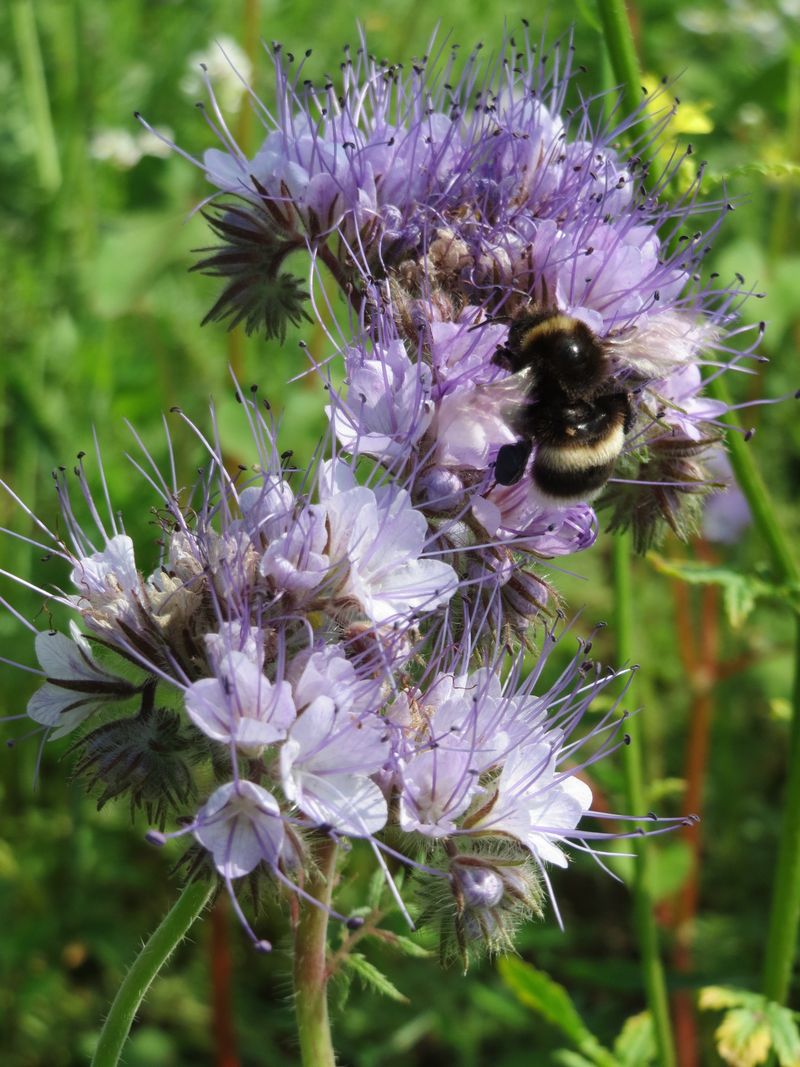
If you have never heard of phacelia, you are missing out on one of California’s most bee-friendly plants. Sometimes called scorpionweed because of its tightly coiled flower clusters, phacelia is absolutely packed with pollen and nectar.
Bumble bees go absolutely wild for it in early spring.
The flowers are usually a soft purple or lavender color with a slightly fuzzy texture. That fuzziness is not just for looks.
It helps pollen cling to visiting bees, making each flower visit more productive. Bumble bees visiting phacelia often leave with their bodies dusted in pale yellow pollen, which they carry back to their nests to feed developing larvae.
Phacelia grows quickly from seed and blooms in just a few weeks after planting. It thrives in sunny spots with well-drained soil, and it handles California’s dry spring conditions without much fuss.
Many gardeners in California use phacelia as a cover crop because it enriches the soil while also feeding pollinators.
There are many phacelia species native to California, and most of them bloom in late winter or early spring. That timing is perfect for bumble bee queens who are just starting their colonies.
Planting phacelia near vegetable beds is a smart strategy because the bees it attracts will also help pollinate your food crops. It is a true win for both your garden and local wildlife.
4. Baby Blue Eyes
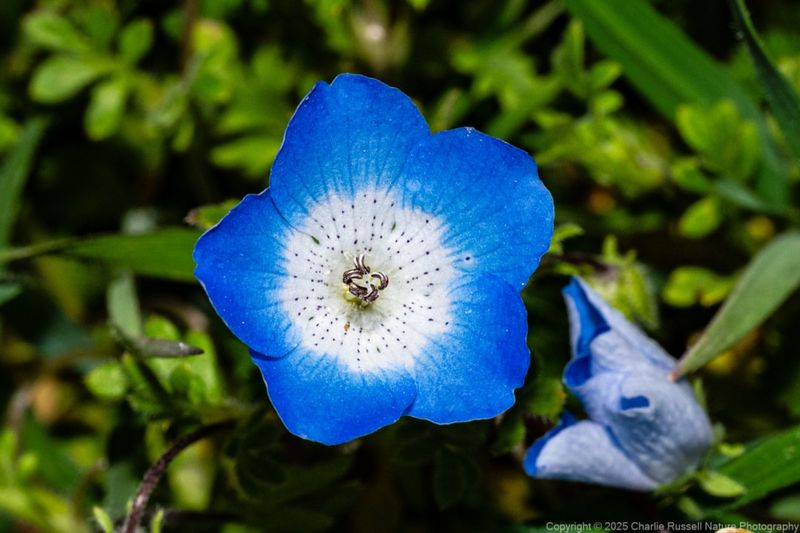
There is something almost magical about a patch of Baby Blue Eyes in full bloom. The small, sky-blue flowers with creamy white centers look like tiny works of art scattered across the ground.
Native to California, this charming wildflower blooms from late winter all the way through early summer, giving bumble bees a long and reliable food source.
Baby Blue Eyes, known scientifically as Nemophila menziesii, grows low to the ground and spreads into soft, lush mats of color. The open, bowl-shaped flowers are easy for bumble bees to access.
Queens searching for food in late February and March find these flowers especially useful because they bloom so early in the season.
This plant loves cool, moist conditions and partial shade, which makes it a great option for areas of your California garden that do not get full sun all day. It grows easily from seed scattered directly on the ground in fall.
By late winter, you will start to see the first blooms appear without much effort at all.
Beyond bumble bees, Baby Blue Eyes also attracts mason bees and other native pollinators. Planting it in large drifts creates a stunning visual display while also creating a rich feeding zone for early-season bees.
It pairs beautifully with California poppies for a wildflower garden that is both gorgeous and incredibly helpful to local pollinators throughout California.
5. Tidy Tips
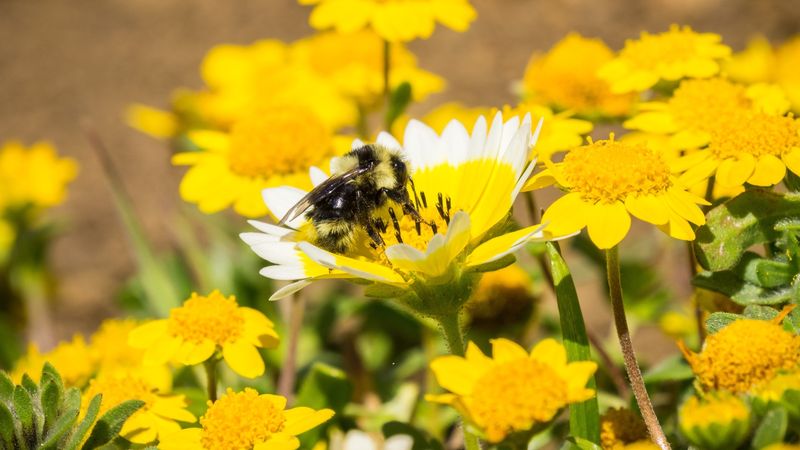
Cheerful, bright, and easy to grow, Tidy Tips is one of those wildflowers that just makes you smile. The yellow petals with neat white tips look like someone carefully painted each one by hand.
Native to California, this sunny little annual blooms from March through May, right in the middle of the bumble bee’s most critical feeding window.
Bumble bees are strongly attracted to yellow flowers, and Tidy Tips delivers big on that front. The flat, open flower heads are easy to land on and explore.
Bees can move quickly from one flower to the next, collecting both nectar and pollen with very little effort. In a garden full of Tidy Tips, you will often see multiple bees foraging at the same time.
Growing Tidy Tips is refreshingly simple. Scatter seeds in a sunny, open area with well-drained soil in fall or early spring.
They sprout and bloom fast, often within just a few weeks. They handle California’s dry conditions well and do not need much water or attention once they get going.
Tidy Tips also works beautifully as part of a native wildflower mix. Pairing them with lupine, phacelia, and California poppies creates a layered garden that blooms in waves throughout spring.
That means bumble bees always have something available to forage. A diverse planting strategy like this is one of the best things you can do for pollinators anywhere in California.
6. Douglas Iris
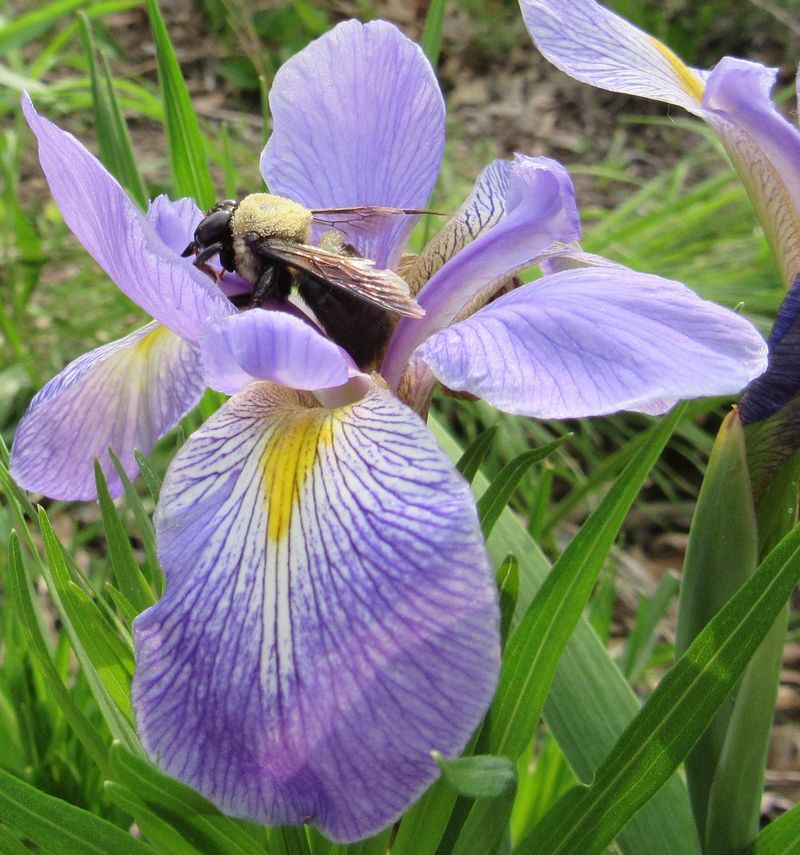
Not every bumble bee-friendly plant needs to grow in full sun. Douglas Iris is proof of that.
This elegant native California flower thrives in shady spots and along woodland edges, making it a perfect choice for gardens that do not get a lot of direct sunlight. It blooms from February through April, which lines up perfectly with early spring bumble bee activity.
The flowers are stunning, ranging from deep purple to pale lavender, with delicate veining on the petals. But their beauty is not just for show.
The flowers are structured in a way that guides bumble bees directly to the nectar. As bees push inside to feed, pollen gets deposited on their bodies, ready to be transferred to the next flower they visit.
Douglas Iris is a tough, drought-tolerant plant once it gets established in your California garden. It spreads slowly through underground rhizomes, forming clumps that grow bigger and more impressive each year.
You do not need to replant it every season. Just give it some shade, occasional water during dry spells, and it will reward you with blooms year after year.
This iris is especially valuable because it fills a niche that other early-spring bloomers do not. Shady garden corners often go unplanted, but Douglas Iris turns those spots into active pollinator habitats.
Planting it near streams, fences, or under trees makes great use of otherwise overlooked garden space across California.
7. Coyote Mint
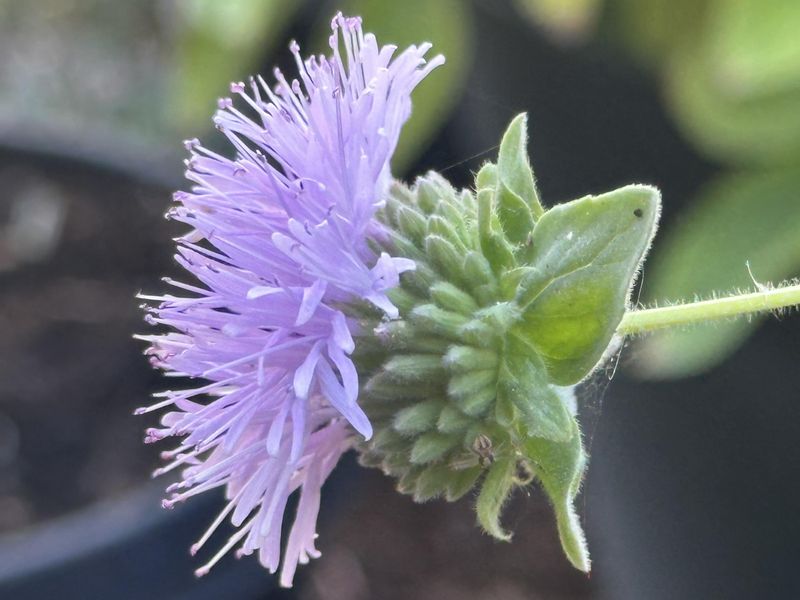
If you want to attract bumble bees and fill your garden with a fresh, pleasant scent at the same time, Coyote Mint is the plant for you. This native California perennial produces clusters of tiny lavender flowers that bumble bees absolutely cannot resist.
It typically blooms from late spring into early summer, extending the feeding season just as other early bloomers start to fade.
Bumble bees are especially drawn to mint-family plants, and Coyote Mint is no exception. The flowers are small but packed with nectar.
Bees visit them again and again, and on a warm afternoon, a healthy Coyote Mint plant can have dozens of bee visitors buzzing around it at once. Watching that activity is genuinely exciting.
One of the best things about this plant is how tough it is. Coyote Mint thrives in hot, dry conditions and rocky or sandy soil.
It is extremely drought-tolerant, which makes it a fantastic choice for low-water gardens throughout California. Once established, it needs almost no care and comes back stronger every year.
The aromatic leaves also have a pleasant minty smell that many gardeners love. Deer tend to avoid it, which is a bonus if you garden in areas where deer are a problem.
Planting Coyote Mint alongside earlier bloomers like California poppy and phacelia creates a continuous food chain for bumble bees that stretches from February all the way into summer across California.