10 Oregon Native Plants That Wake Your Garden Up Every Spring
Oregon gardens do not wait for the calendar to announce spring. They show you first.
One day the yard still looks half asleep, and the next, native plants are pushing up, leafing out, and blooming as if they know something the rest of us do not.
Long before many gardeners start planting in earnest, these early risers are already responding to longer days, warming soil, and the slow, steady moisture that shapes Oregon’s seasons.
From the Coast Range to the Willamette Valley and into the foothills, native plants have learned to read this climate better than anything else in the garden. Bringing them into your yard means more than early color.
It means more support for pollinators, less fuss once they settle in, and a spring garden that feels like it is waking up exactly when and where it should.
1. Red-Flowering Currant Brings Early Color And Hummingbird Appeal
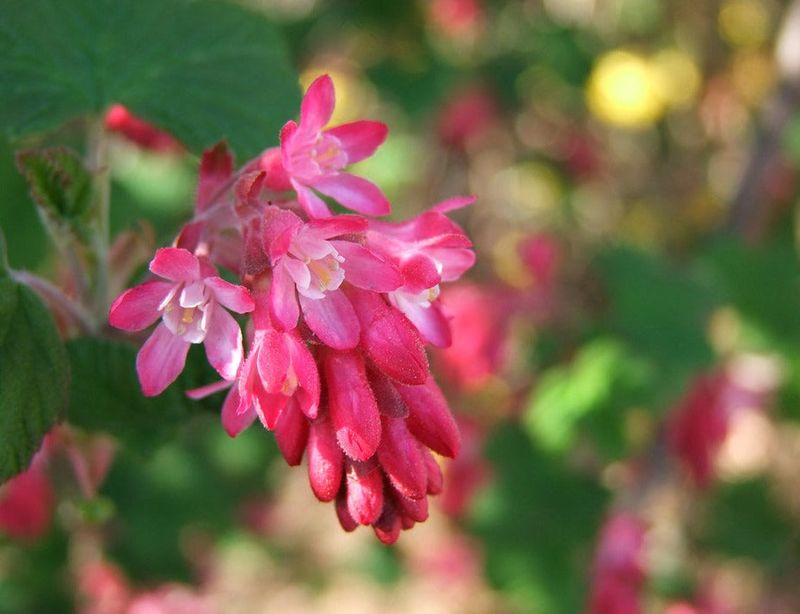
Before most shrubs have even thought about budding, Red-Flowering Currant is already putting on a show.
This deciduous native shrub bursts into clusters of deep pink to rosy-red flowers as early as February or March in many parts of Oregon, making it one of the most reliable early-season bloomers you can plant.
Hummingbirds seem to track its bloom schedule like clockwork. Anna’s Hummingbirds, which overwinter in Oregon, are drawn immediately to its tubular flowers, making this shrub a critical early food source before other nectar plants come online.
Bumblebees and native bees also visit regularly once temperatures rise just enough for them to fly.
Red-Flowering Currant grows well in full sun to partial shade and handles Oregon’s dry summers with minimal irrigation once established. It typically reaches six to ten feet tall and wide, so give it room to spread.
The grayish-green lobed leaves add texture throughout the growing season, and small dark berries follow the flowers in summer, offering food for birds.
Planting it near a window or along a path gives you a front-row seat to the earliest wildlife activity of the Oregon spring season.
2. Oregon Grape Wakes Up Spring With Bright Yellow Flowers
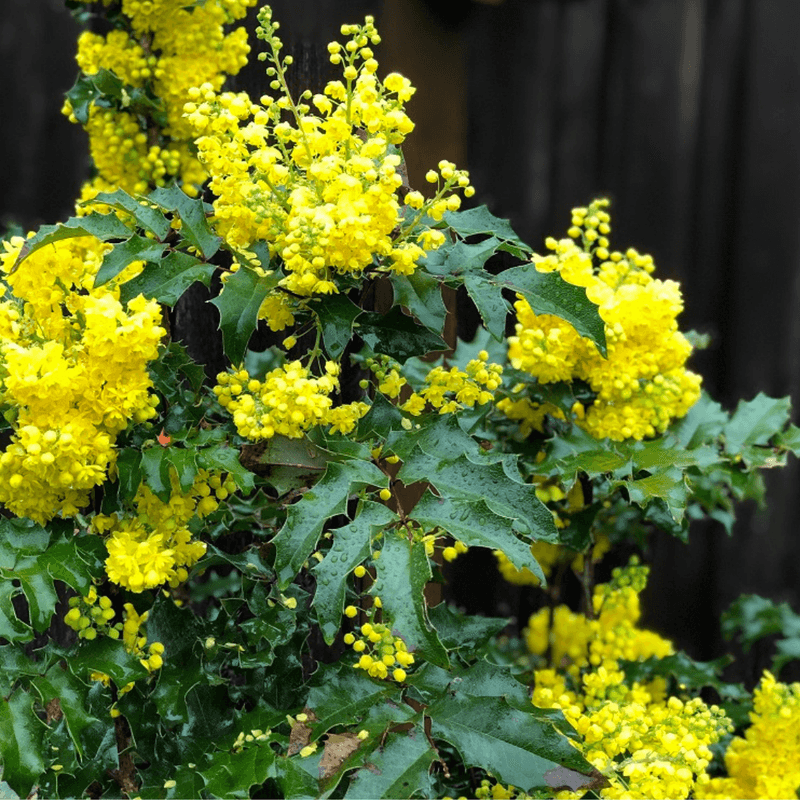
Walk through almost any Oregon woodland in late winter, and chances are good you will spot a flash of yellow tucked among the evergreen understory.
Oregon Grape, the state flower of Oregon, is one of the earliest shrubs to bloom, often pushing out its cheerful yellow flower clusters in February or March depending on elevation and location.
The flowers are small but packed together in upright racemes that glow even on overcast days, which are plentiful in Oregon at that time of year. Native bees and early-emerging queen bumblebees rely on these blooms as a key early pollen and nectar source.
By summer, the flowers give way to clusters of dusty blue-purple berries that birds eagerly consume.
Oregon Grape is incredibly adaptable. It thrives in partial shade under conifers, handles dry summer conditions well, and tolerates a range of soil types.
The glossy, holly-like leaves stay green year-round, adding structure and color even when nothing else is blooming.
Your Oregon Garden Changes Every Week. Your Plan Should Too.
Gardening in Oregon changes quickly throughout the season. Every Friday you’ll receive a simple weekly plan showing exactly what to plant, prune, fertilize, harvest, and protect so you never miss the right timing.
Shorter varieties like Mahonia nervosa work well as ground covers, while the taller Mahonia aquifolium can reach six feet or more.
Either way, this plant earns its place in any Oregon native garden with very little maintenance required.
3. Western Trillium Opens White Blooms In Woodland Gardens
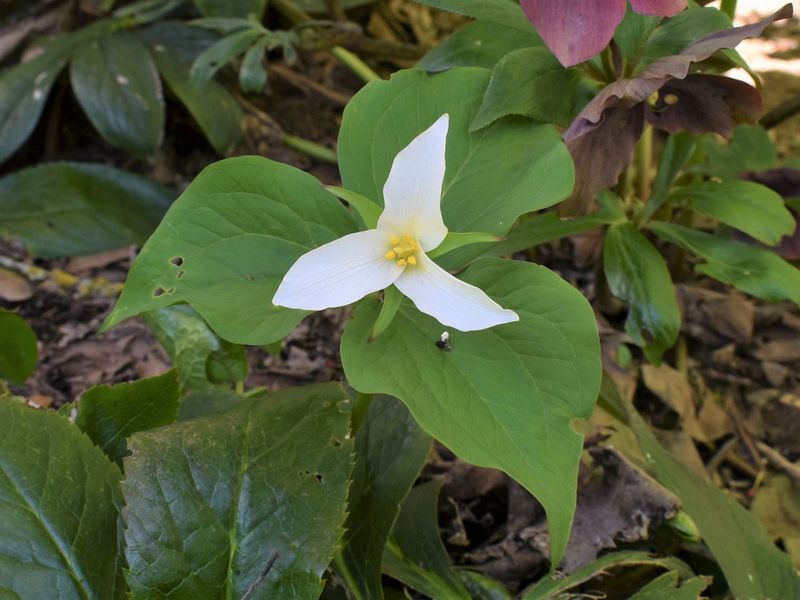
Few plants carry the quiet magic of a woodland spring quite like Western Trillium.
Emerging from the damp forest floor in late February through April, this perennial wildflower sends up a single stem topped with three broad leaves and one elegant white flower that gradually ages to pink or rose as the weeks pass.
In Oregon, Western Trillium is found naturally in moist, shaded forests west of the Cascades, often growing beneath Douglas fir, western red cedar, and big-leaf maple. It signals that the woodland season has truly shifted.
Ants play a fascinating role in spreading its seeds, carrying them to new locations where the plant may not germinate for several years.
Gardeners who want to grow Western Trillium should mimic its natural habitat as closely as possible. Deep, rich, moist soil with good organic matter and consistent shade are the key ingredients.
Avoid disturbing the roots once planted, since this species is slow to establish. It works beautifully beneath deciduous trees or in shaded border areas where spring moisture is reliable.
Once settled in, it spreads gradually into lovely colonies that return more robust each year, rewarding patient Oregon gardeners with one of spring’s most graceful native wildflowers.
4. Oregon Iris Adds Spring Flowers To Dry Native Beds
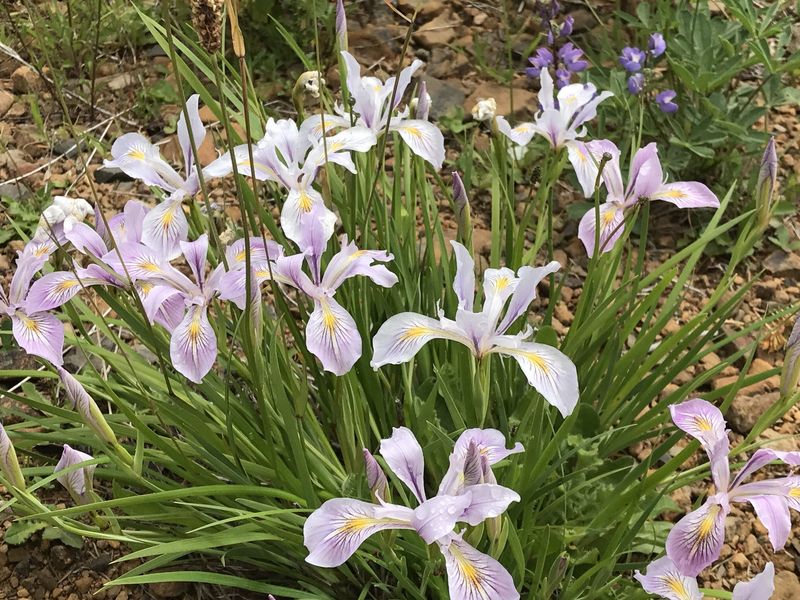
Tough, beautiful, and surprisingly drought-tolerant once established, Oregon Iris is a native gem that deserves far more attention in home gardens.
This low-growing perennial produces delicate purple, lavender, or occasionally white flowers in April and May, often appearing in grassy meadows, open woodlands, and roadside edges throughout western Oregon.
Oregon Iris, known botanically as Iris tenax, forms tidy clumps of slender, grass-like foliage that stay attractive even when the plant is not in bloom.
The flowers themselves are elegant, with the classic iris form of falls and standards that catch the light beautifully on sunny spring mornings.
Native bees and bumblebees visit the blooms regularly for pollen.
One of the most practical aspects of this plant is its adaptability to the dry summers that are common across much of Oregon. Once established in well-drained soil, it needs little to no supplemental watering.
It grows well in full sun to light shade and fits naturally into meadow plantings, rock gardens, or mixed native borders. Clumps can be divided every few years to spread the planting.
For gardeners working with slopes, dry banks, or sunny beds where other plants struggle, Oregon Iris is a reliable and rewarding choice that celebrates spring with understated elegance.
5. Camas Sends Up Blue Blooms As Spring Gains Momentum
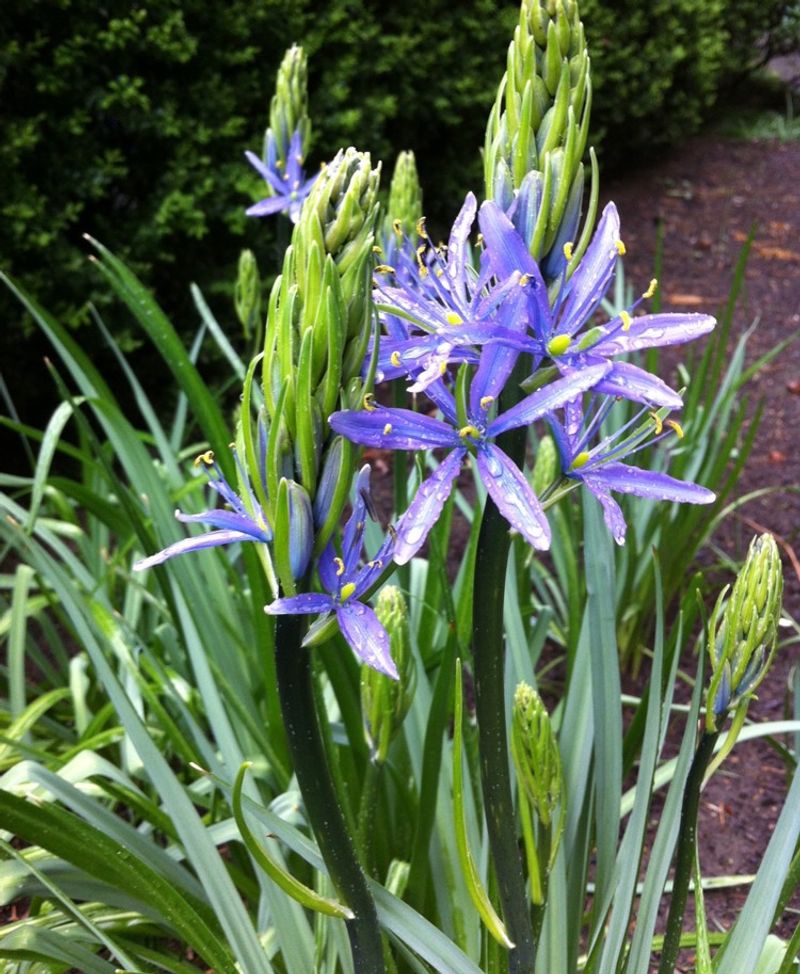
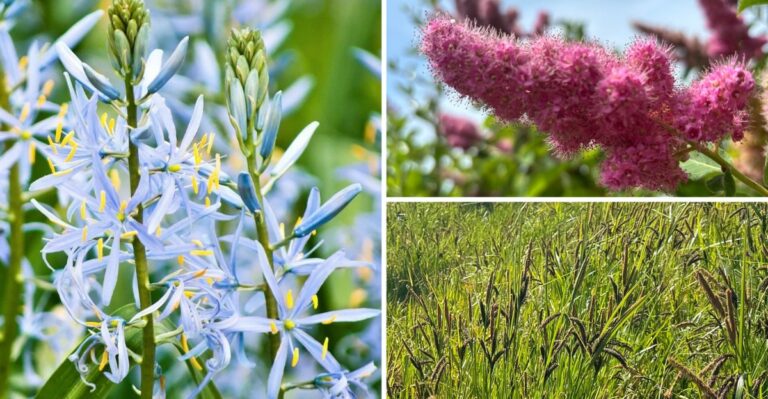
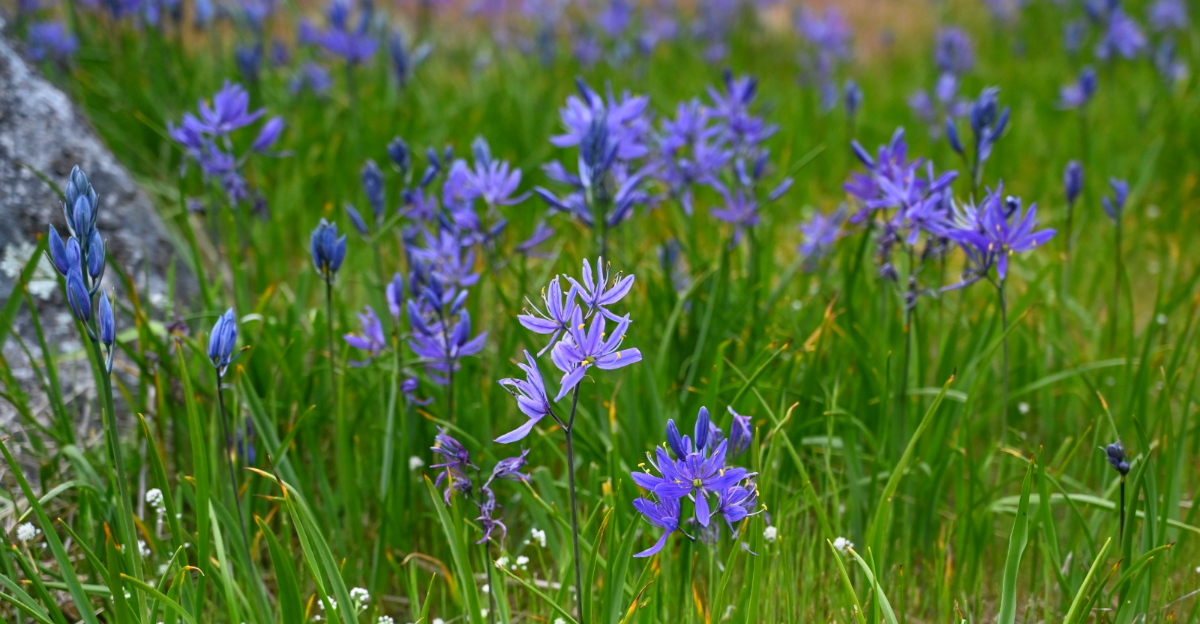
There is something almost surreal about a camas meadow in full bloom. Across Oregon’s wet prairies and valley grasslands, Camassia quamash sends up tall spikes of star-shaped violet-blue flowers in April and May.
These blooms can transform open fields into sweeping blue-purple landscapes that were historically significant to Indigenous peoples throughout the Pacific Northwest.
Camas bulbs were a staple food source for many Oregon tribes, and the plant holds deep cultural importance in the region. In the garden, camas works exceptionally well in moist, low-lying areas or spots that stay wet through spring before drying out in summer.
It naturalizes readily in lawn areas or meadow plantings where the grass is mowed only after the foliage has finished its seasonal growth.
From a wildlife perspective, camas is an important mid-spring nectar source for native bees, bumblebees, and butterflies. The tall flower spikes, which can reach two feet or more, create visual drama in borders and rain gardens.
Camas bulbs should be planted in fall for spring bloom. They prefer full sun to partial shade and rich, moisture-retentive soil.
Once established, they spread gradually and return more generously each year, making them a rewarding long-term investment for any Oregon native plant enthusiast.
6. Pacific Bleeding Heart Brightens Shade With Soft Spring Color
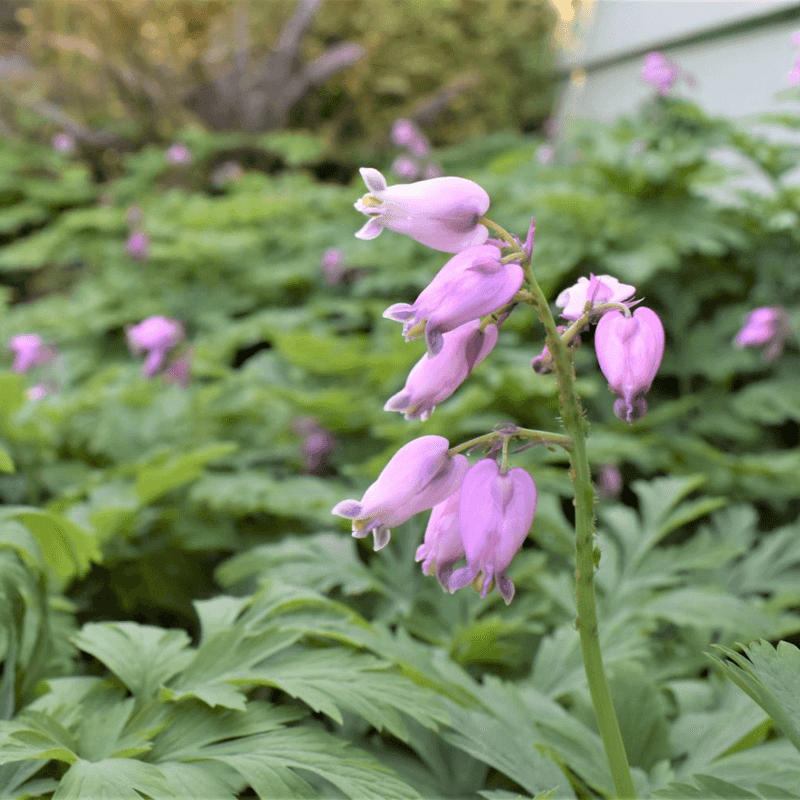
Shaded corners of Oregon gardens can feel forgotten in early spring, but Pacific Bleeding Heart has a way of making those spaces feel alive again.
This native perennial begins emerging in late winter and is often in full bloom by March or April, producing arching stems lined with dangling pink heart-shaped flowers above finely divided, blue-green foliage.
Pacific Bleeding Heart grows naturally in moist forest understories west of the Cascades, thriving in the kind of dappled shade and rich, humus-filled soil found beneath Oregon’s coastal and valley forests.
In the garden, it spreads gradually through rhizomes to form soft, flowing colonies that are especially lovely when paired with ferns, trilliums, or other woodland natives.
Hummingbirds and bumblebees visit the flowers regularly, and the foliage stays attractive well into summer in moist, cool spots. In drier or warmer locations, the plant may go dormant by midsummer, which is completely normal.
Planting it alongside summer-emerging perennials helps fill the gap. Pacific Bleeding Heart requires almost no maintenance once settled.
It asks only for shade, moisture, and well-drained organic soil. For gardeners in western Oregon looking to bring color and movement to shaded beds, this is one of the most rewarding native plants available.
7. Shooting Star Brings Unusual Blooms To Early Spring Beds
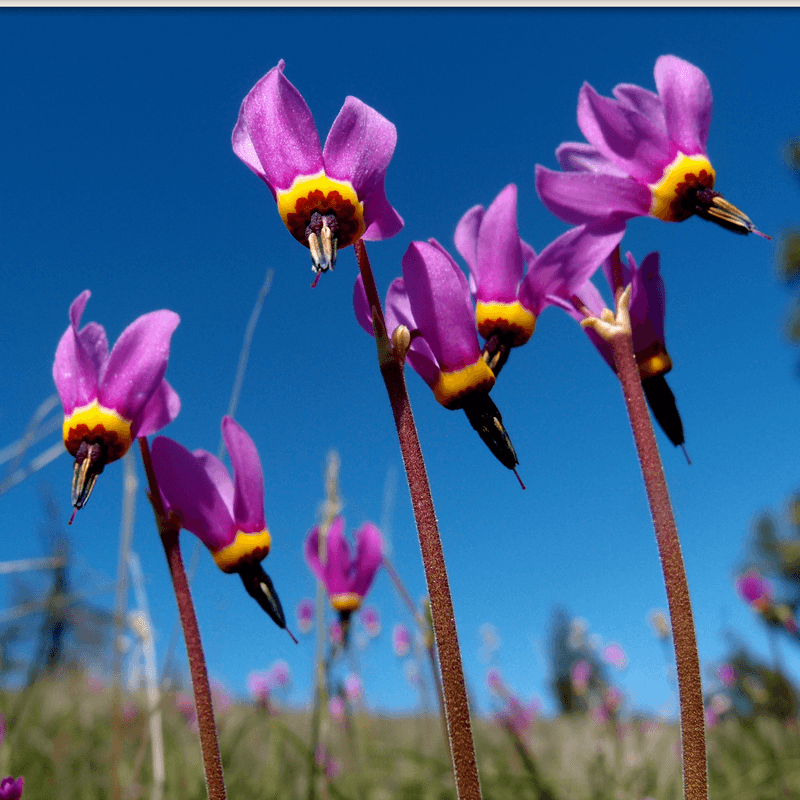
Few wildflowers stop people in their tracks quite like Shooting Star.
The swept-back petals and pointed magenta tips give each flower the look of a tiny comet streaking downward, which makes it one of the most visually distinctive native plants you can grow in an Oregon spring garden.
Henderson’s Shooting Star, or Dodecatheon hendersonii, blooms from February through April in open woodlands, grassy hillsides, and rocky slopes throughout western Oregon.
The flowers rise on slender reddish stems above a low rosette of leaves, creating a dramatic contrast against the still-bare soil of early spring.
Bumblebees are the primary pollinators and use a specialized buzz pollination technique to release pollen from the downward-facing anthers.
Shooting Star grows best in well-drained soil with partial shade to full sun and moisture during the winter and spring growing season.
Like many Oregon native bulb-like perennials, it goes dormant by summer, so pairing it with later-emerging plants helps maintain visual interest in the bed.
It works well in rock gardens, woodland edges, and mixed native perennial borders. Shooting Star can be slow to establish from seed but is long-lived once settled.
Its unusual beauty and early bloom time make it a standout conversation piece in any Oregon native planting.
8. Fawn Lily Signals Spring In Moist Woodland Gardens
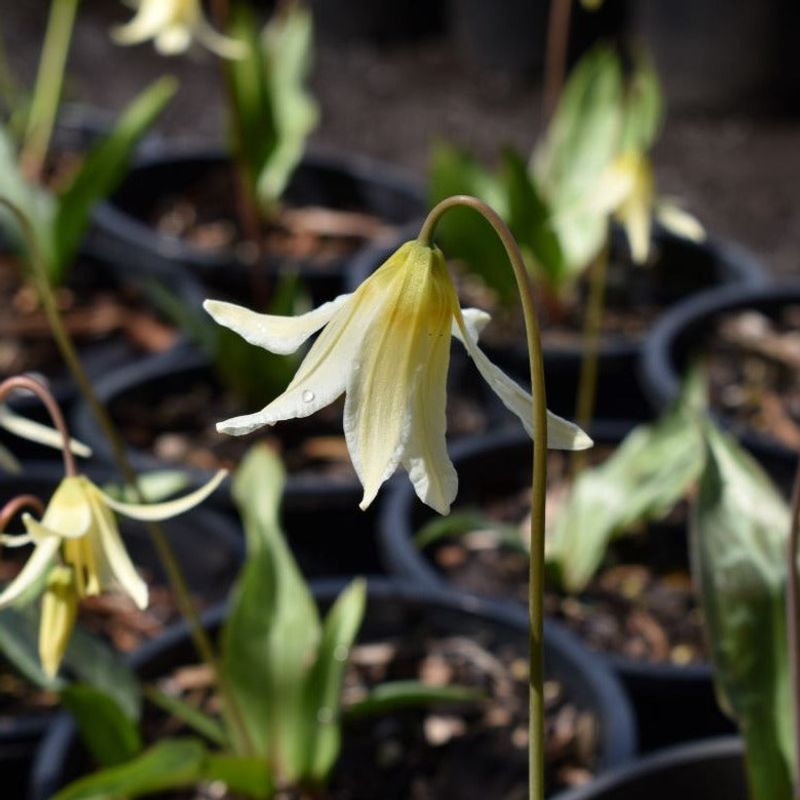
Spotting the mottled leaves of a Fawn Lily pushing through leaf litter in late winter feels like finding a small treasure.
Oregon’s native
Erythronium oregonum, commonly called Oregon Fawn Lily or White Fawn Lily, is one of the earliest woodland wildflowers to appear, often blooming from March into May beneath the canopy of Oregon’s mixed forests.The flowers are nodding and creamy-white with reflexed petals that curve gracefully backward, revealing yellow and orange markings at the base. Each plant typically produces one or two flowers on a slender stem above a pair of beautifully marbled basal leaves.
The mottling on the foliage resembles the spotted coat of a young deer, which is how the plant earned its common name.
Fawn Lily grows from a deep corm and prefers the rich, moist, well-drained soil of forest floors in western Oregon.
It does best in partial to full shade and benefits from consistent moisture through spring, followed by a drier summer dormancy period.
Planting it beneath deciduous trees or along shaded borders gives it the seasonal moisture cycle it prefers. Fawn Lily spreads slowly by offsets and seed, eventually forming charming clusters.
Patience is essential, but the reward of watching these delicate blooms return each spring makes every year of waiting worthwhile.
9. Blue-Eyed Grass Adds Small Flowers And Fresh Spring Growth
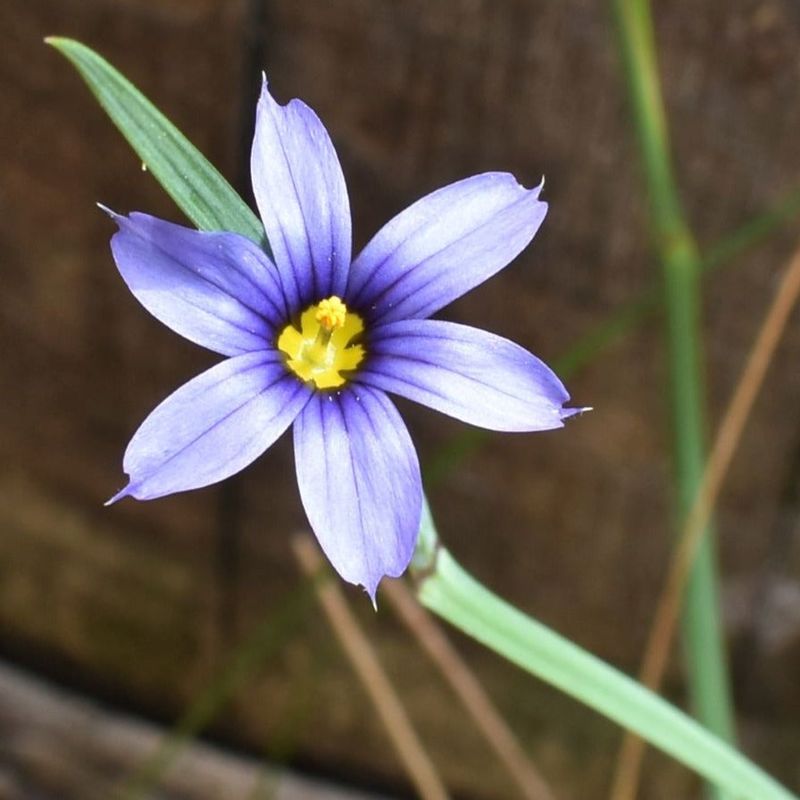
Do not let the modest size of Blue-Eyed Grass fool you. This cheerful little native perennial punches well above its weight when it comes to spring charm.
Despite its name, it is not actually a grass at all but a member of the iris family, producing clusters of small violet-blue flowers with a bright yellow center from April through June.
In Oregon, Blue-Eyed Grass grows naturally in moist meadows, grassy openings, and coastal bluffs, often forming loose colonies that shimmer with color when the flowers open in morning sun.
The slender, flat stems and grass-like foliage blend seamlessly into meadow plantings or lawn edges, making it a subtle but effective naturalizer for low-maintenance Oregon gardens.
Small native bees are the main pollinators, and the flowers open most fully on sunny days. Blue-Eyed Grass prefers moist to seasonally wet soil and full sun to light shade, making it a natural fit for rain gardens, swales, or areas that stay moist through spring.
It is relatively short, typically reaching six to eighteen inches, so it works well as a front-of-border plant or ground layer in mixed native plantings.
Easy to grow and reliably returning each year, Blue-Eyed Grass is a low-fuss way to bring fine-textured color to early spring beds across Oregon.
10. Douglas Aster Starts Strong Before Its Later Bloom Show
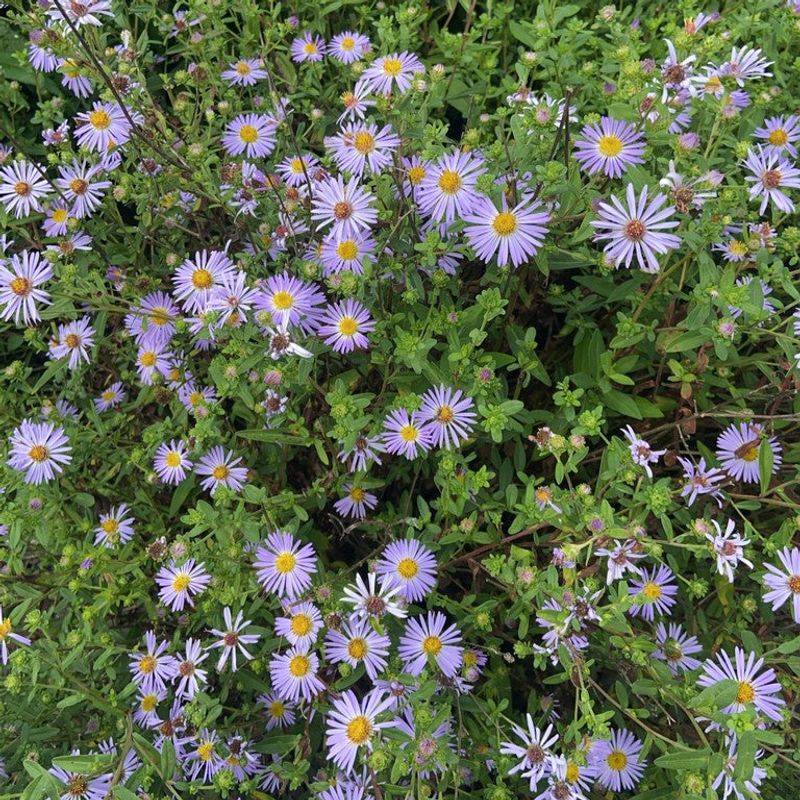
Most people know Douglas Aster for its late-summer and fall display of lavender-purple daisy-like flowers, but this native perennial actually earns its keep starting in early spring.
As soon as Oregon’s soil begins to warm, Douglas Aster pushes up fresh leafy growth that quickly fills space in garden beds and provides early season structure before most other perennials have even emerged.
Native to western Oregon and the Pacific Coast, Douglas Aster thrives in a wide range of conditions, from moist coastal bluffs and streambanks to drier inland meadows.
It adapts well to garden settings and grows vigorously once established, reaching two to four feet in height.
The early foliage is lush and dense, making it useful for suppressing weeds and creating a green backdrop for earlier-blooming spring natives.
When its blooms finally arrive in late summer, they attract an impressive range of pollinators including native bees, painted lady butterflies, and swallowtails. The dried seed heads also provide food for songbirds into fall and winter.
Douglas Aster grows best in full sun to partial shade with moderate moisture, though it handles Oregon’s dry summers reasonably well once rooted in.
For gardeners looking for a native plant that contributes across multiple seasons, Douglas Aster delivers from the first warm days of spring all the way through autumn.