The Meaning Behind Seeing Cactus Wrens In Your Arizona Yard
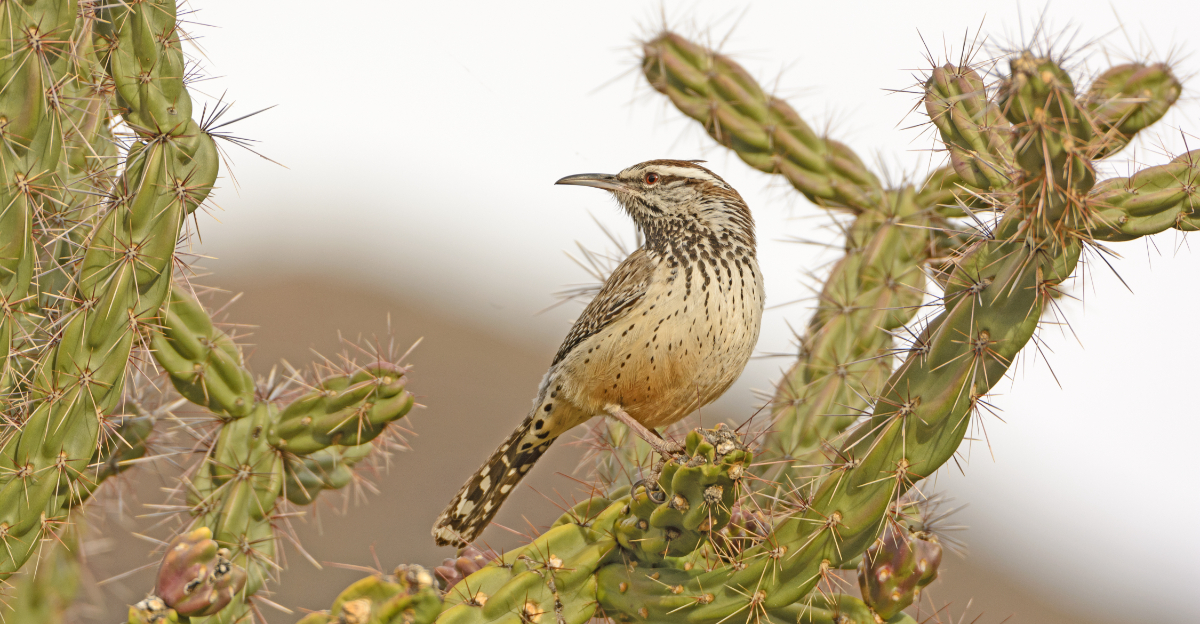
You hear a sharp call echo across your Arizona yard, and before you even spot it, you know something is watching from the cactus. Cactus wrens have a way of making their presence known without asking for attention.
They move with purpose, disappear into spiky cover, then pop back out like they own the place. It is hard not to wonder why they keep showing up and what draws them in so consistently.
In Arizona, where every plant and patch of shade matters, even small changes in a yard can attract the same birds again and again. A cactus wren is not just passing through at random.
There is usually a reason it chose that exact spot.
Once you start noticing their patterns, your yard begins to look a little different, and their visits start to feel less like coincidence and more like a sign.
1. A Cactus Wren Nest Means The Area Feels Safe And Protected

Finding a Cactus Wren nest in your yard is not an accident — it is a deliberate choice this bird makes after carefully sizing up the space. Cactus Wrens build their nests almost exclusively inside thorny plants like cholla, saguaro, or prickly pear.
Those spines act as a natural barrier that keeps most predators from getting close enough to cause trouble.
What makes this especially interesting is that a single pair of Cactus Wrens can build multiple nests in one season. Not all of them are used for raising chicks — some serve as decoys or roosting spots.
So if you see more than one nest on your property, that is actually a sign of a very active, well-established pair that trusts your yard completely.
Arizona homeowners with native desert landscaping tend to attract nesting Cactus Wrens more often than those with manicured lawns. Leaving cholla or other spiny cacti standing instead of clearing them out gives these birds exactly what they need.
A nest in your yard also signals that food, water, and cover are all within a comfortable range for the birds. Essentially, your outdoor space passed their inspection.
That kind of endorsement from a wild bird that evolved to survive the brutal Sonoran Desert says a lot about the quality of your environment.
2. Loud Calls Usually Signal An Established Territory Nearby

You will hear a Cactus Wren before you ever see one. Their call sounds like a low, raspy churring noise — some people compare it to a car engine struggling to start on a cold morning.
It is repetitive, persistent, and surprisingly loud for a bird that measures under nine inches long.
When a Cactus Wren calls from your yard regularly, it is not just making noise for fun. Calling from a high perch like a saguaro or fence post is how this bird broadcasts ownership over a patch of desert territory.
Other Cactus Wrens in the area hear that call and know the space is already spoken for. In Arizona neighborhoods with mature desert landscaping, these territorial calls can go on for most of the morning.
Your Arizona Garden Changes Every Week. Your Plan Should Too.
Gardening in Arizona changes quickly throughout the season. Every Friday you’ll receive a simple weekly plan showing exactly what to plant, prune, fertilize, harvest, and protect so you never miss the right timing.
Hearing frequent calls near your home means a Cactus Wren has claimed the surrounding area as its own, which takes time and familiarity with the space. Birds do not invest energy defending territory they do not plan to stay in.
Noticing which direction the calls come from most often can give you a rough idea of where the bird is nesting or roosting. If the calling shifts location over several weeks, the bird may be expanding its range or responding to a new neighbor moving in nearby.
Either way, consistent vocalizations near your Arizona property are a clear sign that a resident Cactus Wren has made itself at home.
3. Frequent Sightings Point To A Steady Food Source
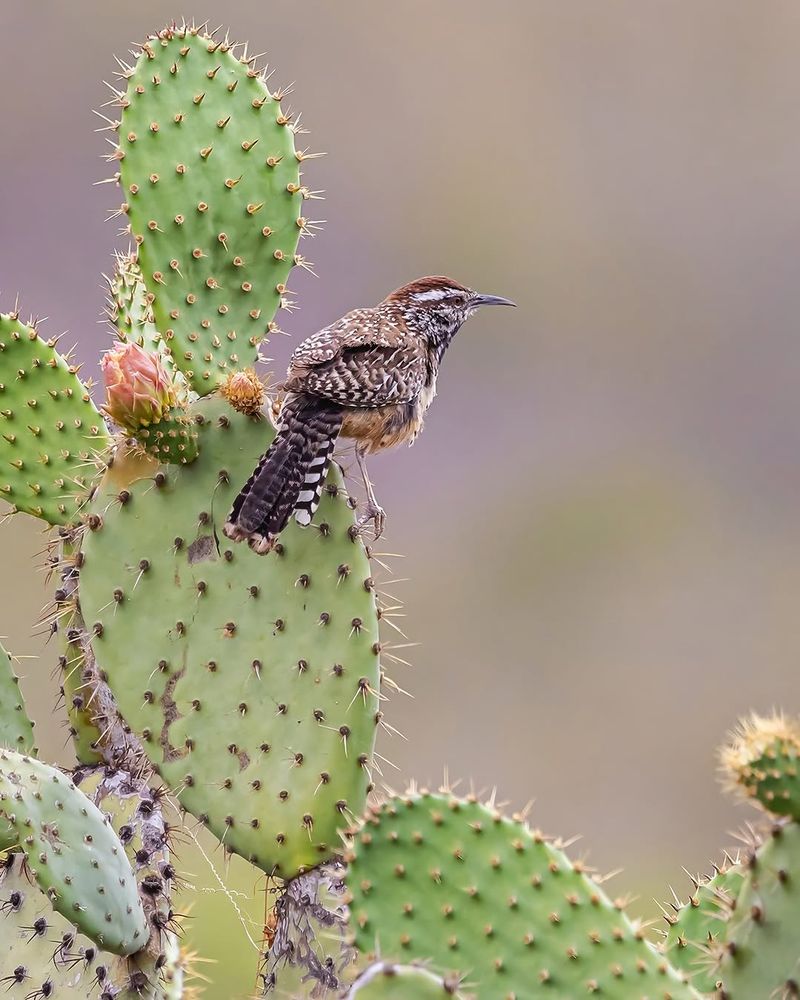
Cactus Wrens are not the type of bird to waste energy flying back and forth to a spot that has nothing to offer. Seeing one regularly in the same part of your yard almost always means insects are plentiful there.
Beetles, ants, grasshoppers, and spiders make up a huge portion of their diet, and they hunt by flipping over rocks, fallen leaves, and debris to find what is hiding underneath.
Arizona’s warm climate keeps insect activity going for most of the year, which is a big reason Cactus Wrens stay put rather than migrating. Your yard might be producing more food than you realize, especially if you have organic mulch, decomposing plant matter, or a garden bed with loose soil.
Those are prime foraging zones for a hungry Cactus Wren working through its morning routine.
Fruit and seeds also make the menu when insects are harder to find. If you grow native plants like prickly pear or desert hackberry, the fruits those plants produce become a reliable snack.
Cactus Wrens rarely drink from standing water sources the way other birds do — they pull most of their moisture directly from the food they eat. So spotting one repeatedly in a specific corner of your Arizona property is basically the bird telling you that corner is productive.
Keeping that area natural and undisturbed encourages them to keep coming back throughout the season.
4. Their Presence Suggests Shelter Is Easy To Find
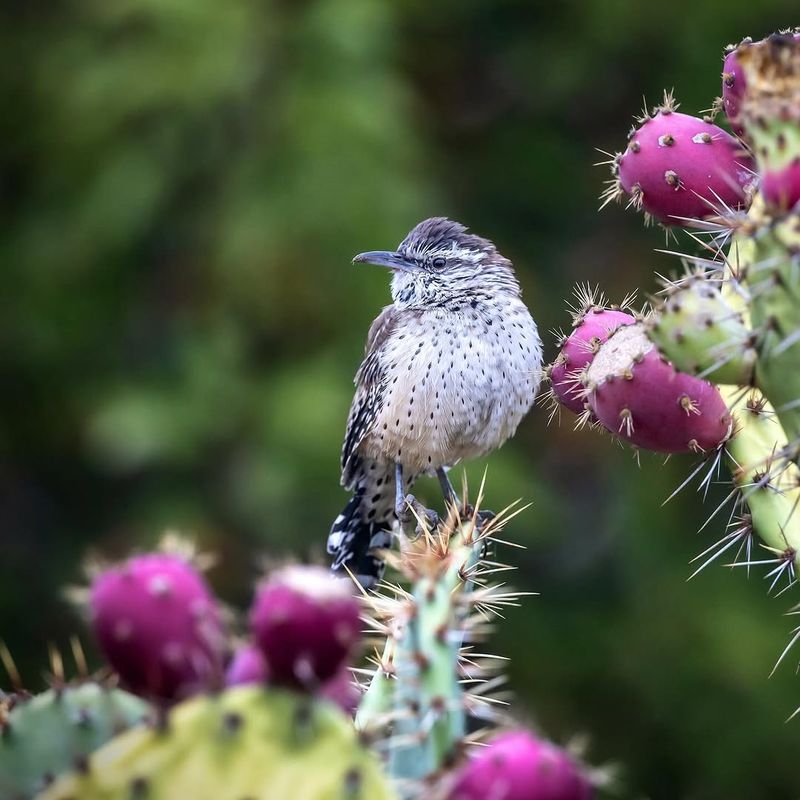
Shelter matters more to a Cactus Wren than most people realize. Unlike birds that can handle open, exposed spaces, Cactus Wrens need dense, spiny vegetation nearby to feel secure enough to stick around.
Cholla, prickly pear, and jumping cactus are not just nesting material — they are the architecture of this bird’s entire lifestyle in Arizona.
A yard that consistently attracts Cactus Wrens almost always has some form of structural cover the birds can retreat into quickly. Predators like roadrunners, snakes, and hawks are common in Arizona neighborhoods, and a Cactus Wren that cannot reach shelter fast is a vulnerable one.
Spiny plants solve that problem immediately because most threats cannot follow the bird inside without getting hurt.
Homeowners who have noticed Cactus Wrens hanging around often find that the birds cycle through a predictable route between a few key shrubs or cacti throughout the day.
That pattern is not random wandering — it is a mapped-out network of safe zones the bird has memorized over time.
Removing or trimming back dense native vegetation can disrupt that network and push the bird to find another yard. Keeping thorny native plants in place, even in corners of your property that feel messy or overgrown, gives Cactus Wrens the cover they depend on.
In the Sonoran Desert, that kind of layered, spiny landscape is exactly what makes a yard feel like home to this species.
5. Seeing A Pair Often Means The Area Supports Long-Term Nesting

Cactus Wrens pair up and tend to stay together for more than one breeding season, which makes spotting two of them in your yard a meaningful sign.
A bonded pair does not settle into an area casually — they scout it out, test the food supply, and evaluate the shelter before committing.
Seeing them together regularly means your Arizona yard cleared all those checkboxes.
Breeding season in Arizona generally runs from late winter through early summer, with pairs sometimes raising two or three broods in a single year. Both the male and female take part in nest building, which is a lengthy and deliberate process.
Watching two Cactus Wrens working together near a cholla or saguaro on your property is a strong indicator that active nesting is either underway or being planned nearby.
Something worth paying attention to is the way a pair moves through your yard together. They often stay within calling distance of each other, trading short vocalizations back and forth as they forage or move between perches.
If you notice that pattern consistently over a few weeks, the pair has likely established your yard as a core part of their home range. Disturbing their nesting area during this period can cause them to abandon the site, so giving them space is the best thing you can do.
Arizona yards with stable native plant structure tend to support the same bonded pairs returning year after year, which is genuinely rewarding to witness.
6. Activity Around Your Yard Can Signal Nearby Nesting Spots

Watching a Cactus Wren dart back and forth across your yard carrying dry grass, feathers, or plant fibers is one of the clearest signals that a nest is being built somewhere close by.
Nest construction is not a quick project for these birds — it can take several weeks to complete a single structure, and they make dozens of trips daily to gather material.
In Arizona, Cactus Wrens often build their nests surprisingly close to human activity. Back patios, garden walls, and low-traffic corners of a yard are all fair game if the right spiny plant is nearby.
Noticing increased bird movement near a specific cactus, especially if the bird keeps returning to the same spot with material in its beak, is a reliable clue that a nest is going up right there.
Paying attention to the direction the bird flies after leaving your yard can also help you map out where an existing nest might be located.
Cactus Wrens do not travel far from their nesting sites while actively raising young, so repeated exits in the same direction suggest the nest is just a short distance away.
Arizona residents who track this kind of behavior often find nests tucked into cacti that back up to their property line or sit just inside a neighboring lot.
Staying observant during the early morning hours, when these birds are most active, gives you the best chance of spotting the full picture of what is happening in your immediate neighborhood.
7. Regular Visits Show The Space Meets Their Basic Needs
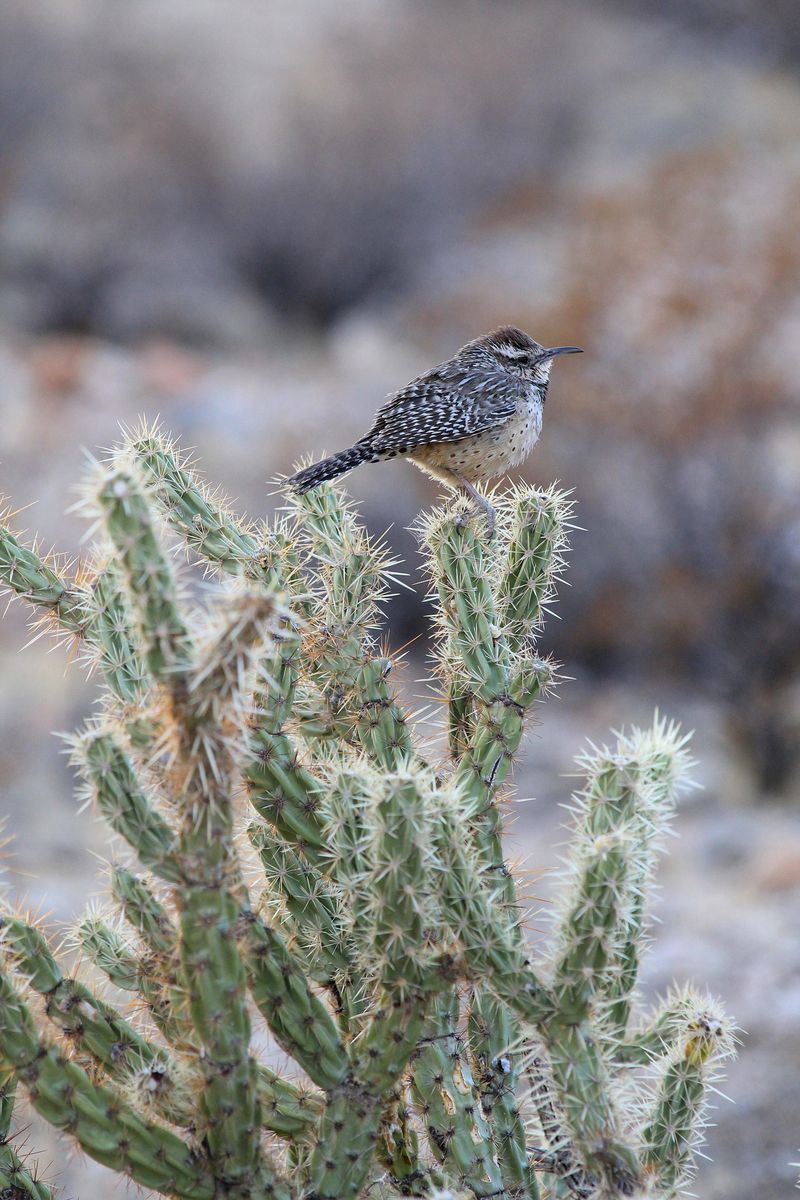
A Cactus Wren that keeps showing up in your yard is not being sentimental — it is being practical. These birds run tight daily routines built around food, cover, and safety.
When a yard consistently delivers on all three, the bird keeps coming back, sometimes visiting the same spots at nearly the same time each morning.
Arizona’s Sonoran Desert is full of competition for resources, and Cactus Wrens hold their territories firmly against other birds. A regular visitor to your yard has decided that space is worth defending, which means rival birds are being kept out.
That level of commitment from a wild bird signals that your outdoor space is genuinely functional desert habitat, not just a patch of decorative landscaping.
Small changes in your yard can either strengthen or weaken that relationship with the bird. Adding native flowering plants that attract insects boosts the food supply without any extra effort on your part.
Avoiding pesticide use keeps the insect population healthy, which directly benefits a Cactus Wren that depends on bugs for both food and hydration.
Keeping at least some areas of your yard in a natural, undisturbed state gives the bird the foraging ground it needs.
Over time, a yard that earns regular Cactus Wren visits becomes part of a living desert corridor that supports not just this bird but the broader ecosystem around your Arizona home.
That kind of connection to wild desert life is something worth protecting and nurturing through simple, thoughtful choices.