Grow More Potatoes In Your Ohio Garden With These 9 Easy Planting Tips
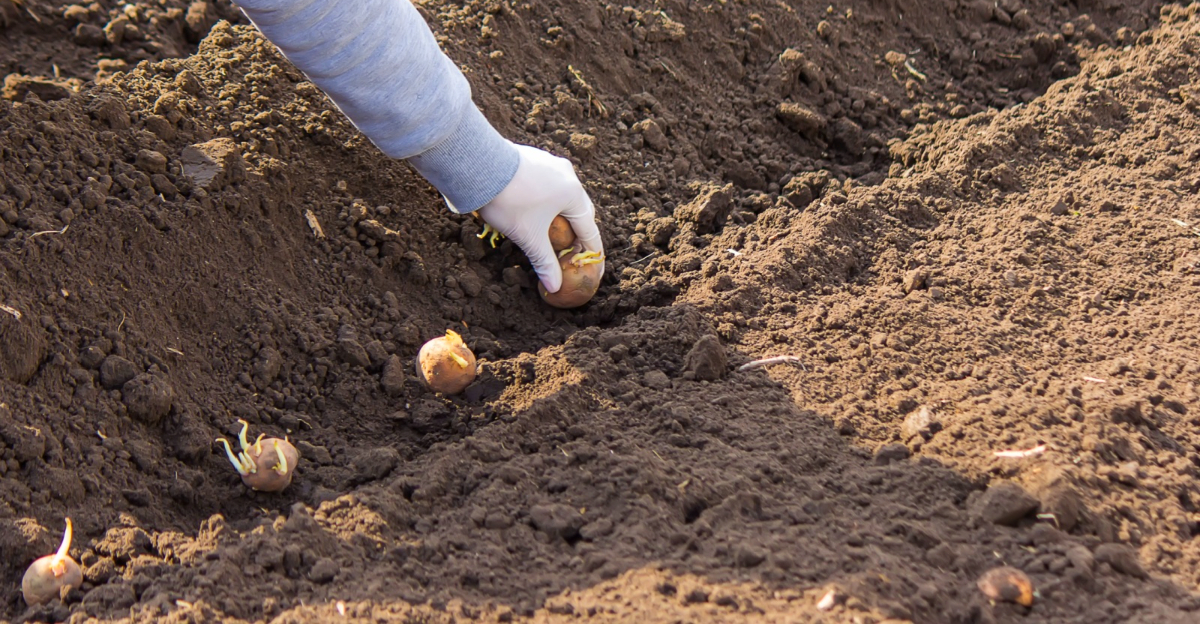
Potatoes can be one of the most satisfying crops to grow in Ohio, but they reward gardeners who get the early steps right.
A cool, wet spring can make planting feel like a guessing game, and it is easy to rush the job before the soil is truly ready.
That matters more than many people think. The way you handle seed potatoes, spacing, soil prep, and early care can shape the size and quality of the harvest months later.
The good news is that growing more potatoes does not come down to gimmicks.
In Ohio gardens, better yields usually start with a few simple planting habits that help the crop get off to a stronger, steadier start.
1. Certified Seed Potatoes Give The Crop A Stronger Start
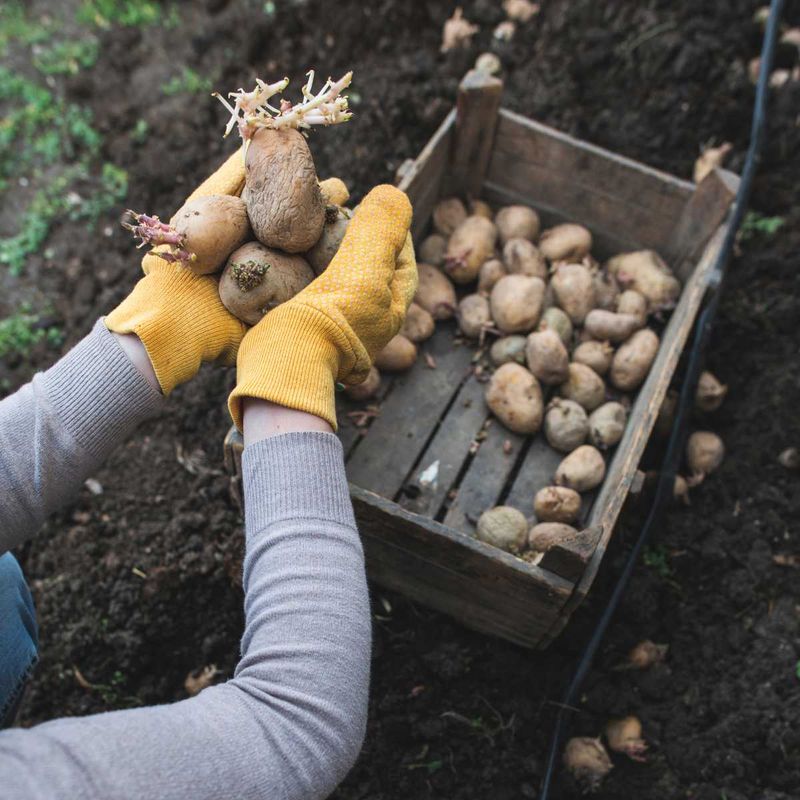
Walking into an Ohio garden center in early spring and spotting bags of certified seed potatoes on the shelf is a good sign that the planting season is getting close. Certified seed potatoes are not the same as the grocery store potatoes sitting in your kitchen.
They are grown under controlled conditions specifically to be free of common soil-borne diseases and viruses that can quietly reduce your yield before you even realize something is wrong.
Grocery store potatoes are often treated with sprout inhibitors to extend shelf life, which can slow or prevent sprouting altogether. Certified seed potatoes, on the other hand, are ready to grow and have been inspected to meet specific health standards.
Starting with clean, disease-free seed material gives your crop a much more reliable foundation from the very beginning of the season.
Ohio gardeners who skip this step sometimes wonder why their plants look weak or produce small, disappointing tubers at harvest time.
The variety matters too, since early-season types tend to do well in Ohio’s shorter growing windows, while mid-season varieties can offer solid yields when conditions cooperate.
Choosing certified seed potatoes suited to your region is one of the simplest ways to improve your results.
2. Warmer Workable Soil Sets Planting Up For Better Results
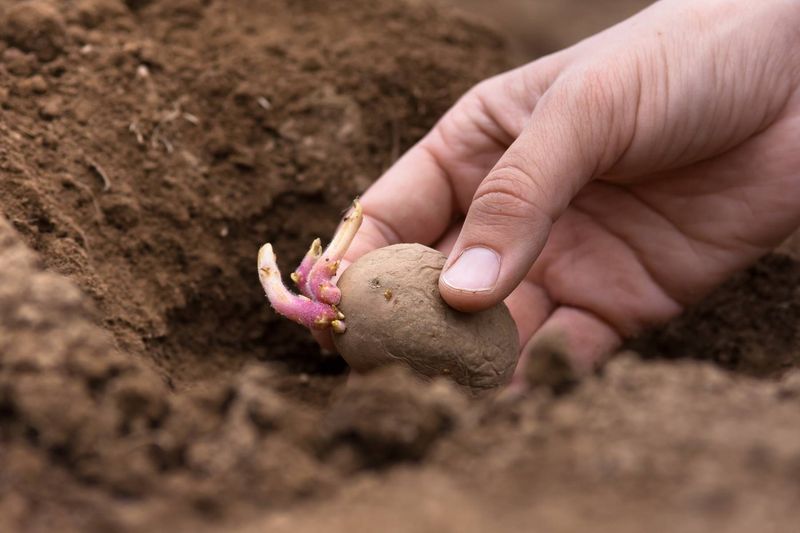
Ohio spring weather has a way of making gardeners impatient. A few warm days in March can feel like an invitation to get outside and start planting, but rushing potatoes into cold, wet soil often leads to disappointing results.
Seed pieces sitting in soggy, cold ground are much more likely to rot before they ever get a chance to sprout.
Potatoes generally do best when soil temperatures have reached somewhere around 45 to 55 degrees Fahrenheit before planting.
In most parts of Ohio, that window tends to fall somewhere in early to mid-April, though it can shift depending on where you are in the state and what kind of spring the region is having.
A simple soil thermometer, available at most garden centers, takes the guesswork out of timing and is well worth the small investment.
Beyond temperature, the soil should also be workable without clumping heavily or sticking to your boots. Planting into compacted, waterlogged soil can cause poor root development and uneven sprouting across the row.
Your Ohio Garden Changes Every Week. Your Plan Should Too.
Gardening in Ohio changes quickly throughout the season. Every Friday you’ll receive a simple weekly plan showing exactly what to plant, prune, fertilize, harvest, and protect so you never miss the right timing.
Waiting an extra week or two for conditions to improve is usually a smarter move than planting early and losing seed pieces to rot. Patience at this stage tends to pay off noticeably by harvest time.
3. Loose Well-Prepared Soil Gives Tubers More Room To Grow
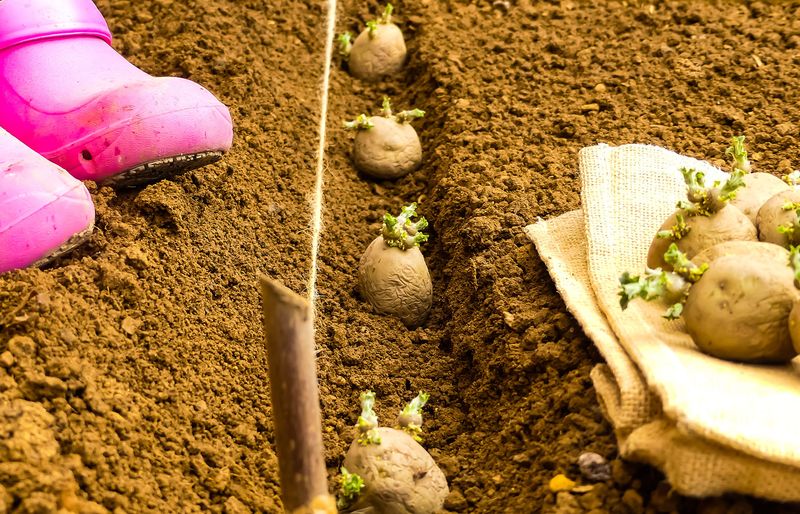
Potatoes are underground crops, which means the quality of what is below the surface matters far more than what is visible above it. Tubers need loose, well-drained soil to expand properly as they develop through the growing season.
When soil is compacted or heavy with clay, tubers often end up misshapen, smaller than expected, or difficult to dig at harvest time.
Preparing the bed thoroughly before planting makes a real difference. Working the soil to a depth of about 8 to 10 inches and breaking up any large clumps helps create the open structure that developing tubers prefer.
Adding compost or other organic matter improves both drainage and soil fertility, which supports steady plant growth from early in the season through harvest.
Ohio soils vary quite a bit across the state, from heavier clay soils in the northwest to sandier ground in other regions. Knowing what you are working with helps you decide how much amendment your bed needs.
A soil pH between about 5.5 and 6.5 is generally a good target for potatoes, and a basic soil test can tell you where your garden stands before you plant.
Taking time to prepare the soil properly is one of the highest-return investments an Ohio gardener can make for the potato crop.
4. Properly Sized Seed Pieces Help Plants Get Going Evenly
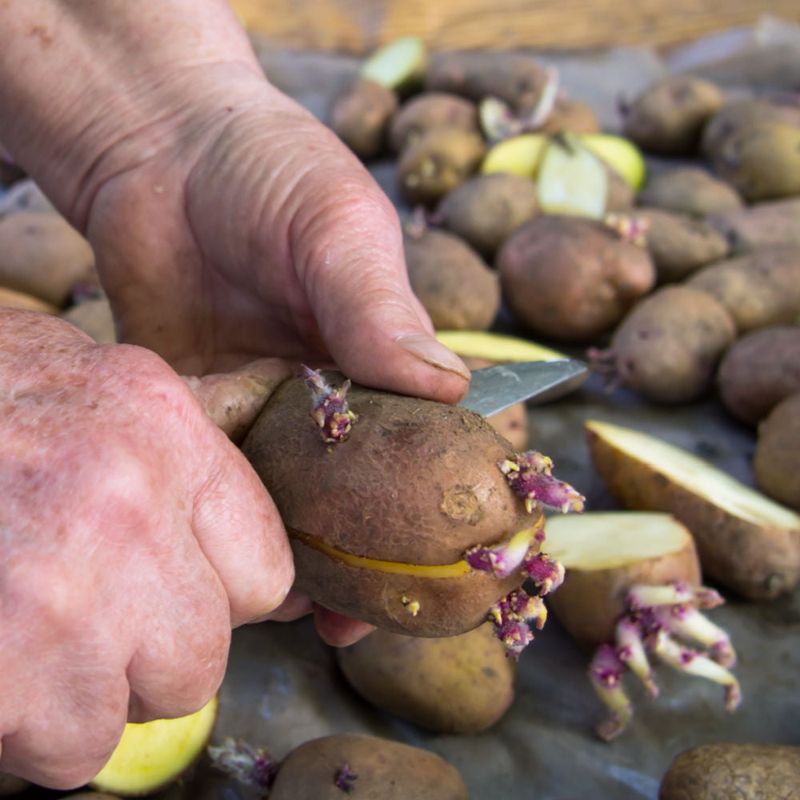
Seed potatoes come in different sizes, and how you handle them before planting has a meaningful effect on how evenly your plants emerge and grow.
Small seed potatoes about the size of a golf ball can often be planted whole, which avoids the need for cutting altogether.
Larger ones, however, benefit from being cut into pieces so that each piece has enough energy stored to support a strong start.
Each cut piece should ideally weigh around 1.5 to 2 ounces and have at least one or two healthy eyes. Eyes are the small indentations on the surface of the potato where sprouts emerge.
Pieces that are too small may not have enough stored energy to push through the soil reliably, while very large pieces do not necessarily produce proportionally better plants.
Using a clean, sharp knife when cutting seed potatoes helps reduce the risk of spreading any potential pathogens from one piece to another.
Cutting all your seed pieces to a fairly consistent size also helps the row develop more evenly, which makes managing the crop throughout the season a bit easier.
Uneven emergence can lead to some plants shading others out early, which affects overall productivity. Taking a little care at this step sets the whole planting up on steadier ground.
5. A Short Healing Period Helps Cut Seed Pieces Hold Up Better
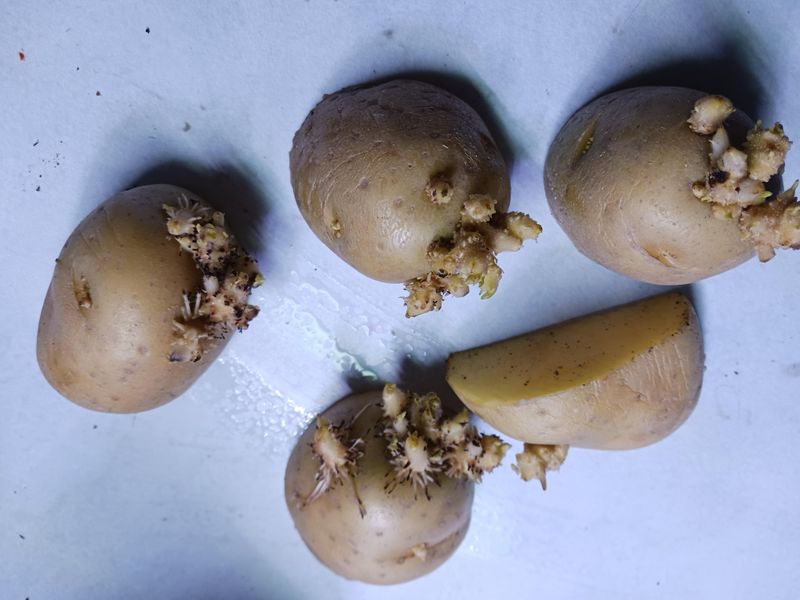
After cutting seed potatoes into pieces, many experienced gardeners let them sit for a day or two before putting them in the ground. That short rest period allows the cut surfaces to form a dry, corky layer called a callus.
This natural protective layer helps reduce the chance of the cut end rotting once it is planted in cool spring soil.
The process does not require anything special. Simply spread the cut pieces out in a single layer in a dry, well-ventilated space out of direct sunlight and let them rest.
A garage shelf, a shaded porch, or a potting shed all work well. Temperatures somewhere in the range of 50 to 65 degrees Fahrenheit tend to support good callus formation without stressing the pieces.
Skipping this step is a common mistake, especially when a gardener is eager to get the season started.
Freshly cut pieces placed directly into cold, damp soil face a higher risk of rotting before they sprout, which can leave gaps in the row and reduce overall plant count.
A day or two of patience at this stage can meaningfully improve the number of plants that emerge successfully. It is a small habit with a noticeable effect on early-season results for Ohio gardeners.
6. Wider Spacing Can Improve Tuber Size And Plant Performance
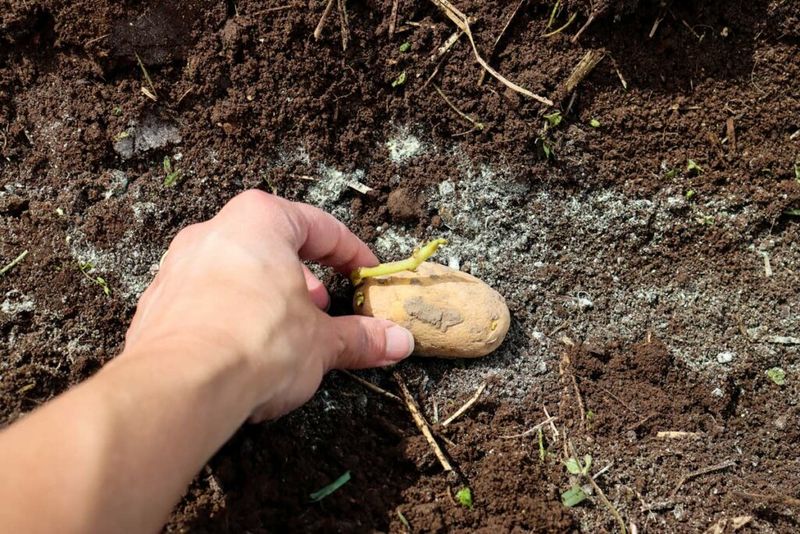
Crowding potato plants together might seem like a way to get more out of a small garden space, but it often works against you.
When plants are too close together, they compete for water, nutrients, and light, and the result is usually smaller tubers and weaker plants overall.
Giving each plant a reasonable amount of room to spread out tends to produce better individual tubers and a stronger harvest per plant.
A common recommendation is to space seed pieces about 12 inches apart within the row, with rows set roughly 2 to 3 feet apart.
That wider row spacing allows room for hilling later in the season and also improves air circulation around the plants, which can help reduce the risk of foliar disease during Ohio’s occasionally humid summers.
Some gardeners who are working with limited space try tighter spacing and then compensate with extra hilling and consistent watering, though results can vary.
If your main goal is producing larger, well-formed tubers rather than maximizing plant count, leaning toward the wider end of the spacing range is usually the smarter approach.
Fewer plants with more room to develop will often outperform a crowded row of plants struggling to share resources. Spacing is one of those decisions that is easy to overlook but genuinely shapes the harvest.
7. The Right Planting Depth Helps Shoots Emerge More Smoothly
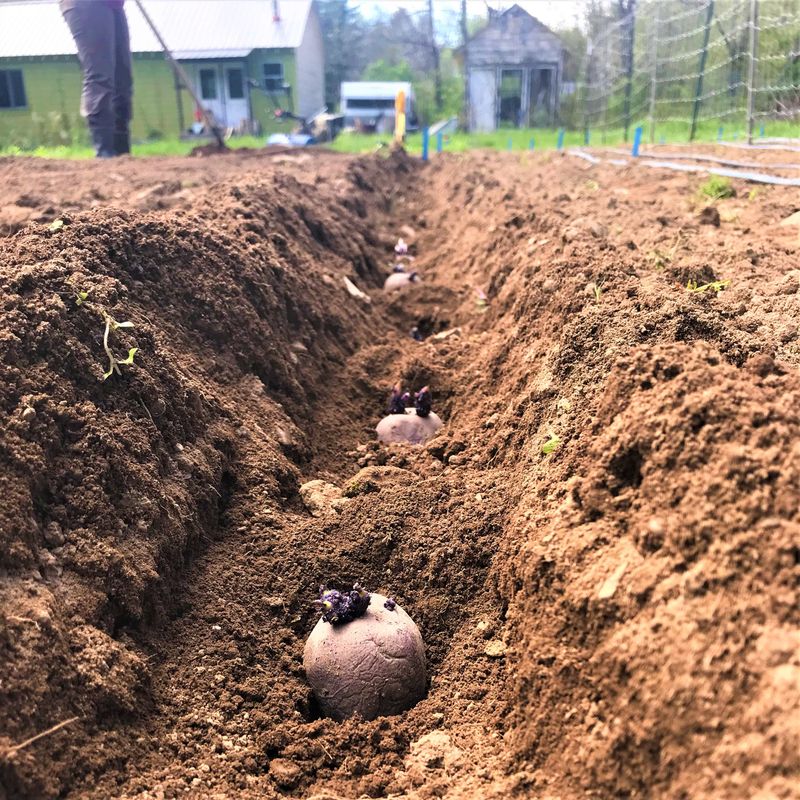
Planting depth is one of those details that does not get talked about as much as it should, but it has a real effect on how well your potato crop gets started.
Plant seed pieces too shallow and the developing tubers may push up through the soil surface and turn green from sun exposure.
Plant them too deep and the shoots have to work harder to reach the surface, which can slow emergence and stress the young plant.
For most home garden situations, planting seed pieces about 4 to 6 inches deep tends to work well.
At that depth, the soil provides enough insulation and moisture retention to support sprouting, while still allowing shoots to emerge within a reasonable time frame.
In Ohio’s spring conditions, where soil temperatures can still fluctuate in April, that moderate depth offers a reasonable balance.
The texture of your soil also plays a role. In heavier clay soils, planting slightly shallower can help since dense soil makes it harder for shoots to push through.
In looser, sandier ground, planting at the deeper end of the range helps maintain adequate moisture around the seed piece.
Paying attention to your specific soil type when deciding on depth is a practical habit that can make emergence noticeably more consistent across the entire row.
8. Hilling Gives Developing Potatoes Better Protection And Space
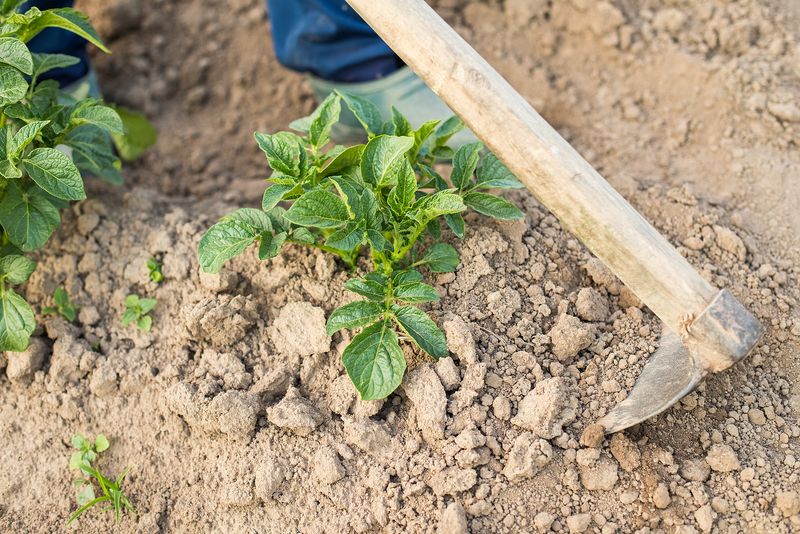
One of the more satisfying tasks in a potato garden is hilling, and it is also one of the most important.
As potato plants grow taller through the early weeks of the season, mounding soil up around the base of each plant encourages more tuber formation along the buried stem.
More stem covered by soil means more sites where tubers can develop, which directly supports a larger overall harvest.
Hilling also protects tubers from sunlight exposure as they develop. Potatoes that push through to the surface and get hit by direct sunlight turn green and develop solanine, a compound that makes them bitter and unsuitable for eating.
Keeping developing tubers well covered with loose, mounded soil prevents this from happening and keeps the crop in better condition all the way to harvest.
A good time to begin hilling is when plants reach about 6 to 8 inches tall. Using a hoe or garden rake, pull soil from between the rows up around the base of the plants, leaving the top few inches of foliage exposed.
This process can be repeated every couple of weeks as the plants continue to grow. Ohio gardeners who hill consistently tend to end up with better-covered tubers, more productive plants, and a noticeably cleaner harvest at the end of the season.
9. Even Moisture Keeps Growth Steadier Through The Season
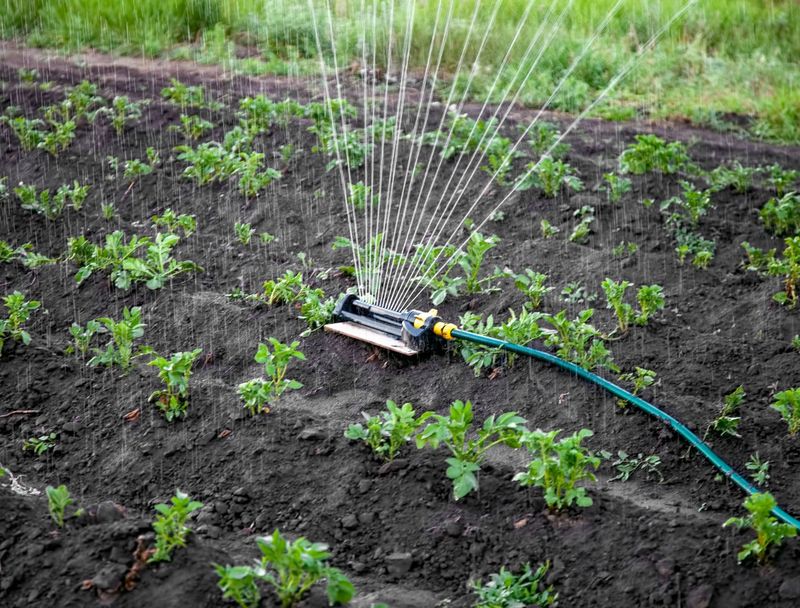
Water consistency matters more to potato plants than most gardeners initially expect.
Tubers develop underground during a fairly specific window in the growing season, and uneven moisture during that period can cause problems that show up clearly at harvest.
Irregular watering, with wet spells followed by dry stretches, is one of the more common reasons for hollow heart, cracking, or knobby, misshapen tubers.
Aiming for roughly 1 to 2 inches of water per week, accounting for rainfall, gives the crop a steady supply to work with.
Drip irrigation or soaker hoses work particularly well for potato rows because they deliver water directly to the root zone without wetting the foliage, which can help reduce the risk of foliar disease during Ohio’s warmer, more humid summer months.
Mulching between rows with straw or shredded leaves helps the soil hold moisture longer between waterings and also moderates soil temperature fluctuations that can stress developing tubers.
Ohio summers can bring stretches of dry weather that catch gardeners off guard, so having a consistent watering habit established early in the season makes it easier to keep the crop on track.
Potatoes do not need to be babied, but steady, reliable moisture from planting through the end of tuber development makes a clear difference in the quality and size of what you dig up at harvest.