If You See This Caterpillar In Michigan Gardens Do Not Touch It
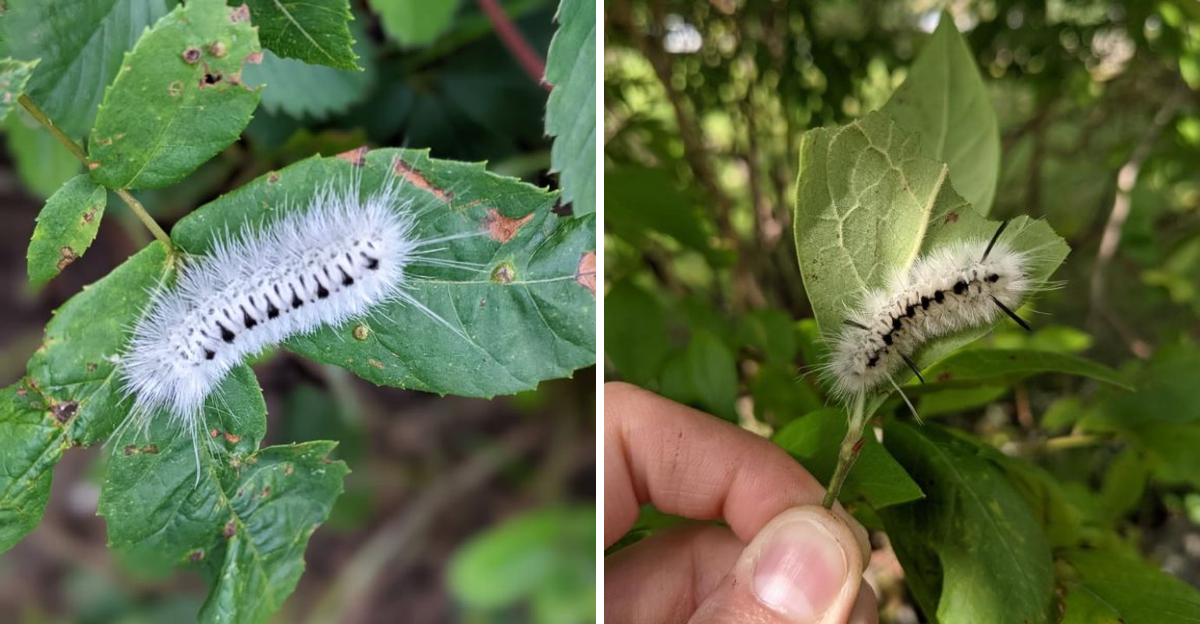
Something small, fuzzy, and bright white can catch your eye fast in a Michigan garden, especially when it looks more like a soft toy than a pest. The hickory tussock moth caterpillar is one of those insects people notice right away.
Its hairy body and bold black markings make it stand out on leaves, fences, and garden plants in late summer and fall. At first glance, it may seem harmless, and that is exactly why so many people make the mistake of getting too close.
The problem is that this caterpillar comes with a hidden defense that can leave skin irritated and painful after contact. That surprising risk makes it far more than just an interesting garden sight.
In Michigan yards, spotting one can be both fascinating and a little risky, which is why this eye catching caterpillar deserves a closer look before anyone reaches out to touch it.
1. It Is The Hickory Tussock Moth Caterpillar
Not every fuzzy caterpillar crawling through a Michigan yard is harmless, and the Hickory Tussock Moth caterpillar is a perfect example of that.
Its scientific name is Lophocampa caryae, and it is a native North American species that shows up regularly in Michigan gardens each year. Knowing its name is the first step toward understanding what you are dealing with.
Most Michigan gardeners spot this caterpillar between August and October, which is late summer rolling into early fall. That timing is important because it means you will rarely see it in spring or early summer when many other caterpillars are active.
It tends to appear when trees are already winding down for the season.
During this window, the caterpillar spends its time feeding on the leaves of hardwood trees before eventually wandering down to the ground. Michigan yards with mature trees are especially likely to have them crawling across lawns and garden beds.
Spotting one on your property is actually pretty common in many parts of the state.
Young caterpillars tend to feed together in groups on the same branch, while older ones go solo. By the time they reach full size, they are impressive-looking creatures that are hard to miss.
Understanding what this insect is and when it appears helps Michigan residents stay prepared and make smarter choices outdoors.
2. The Fuzzy Hairs Can Irritate Skin
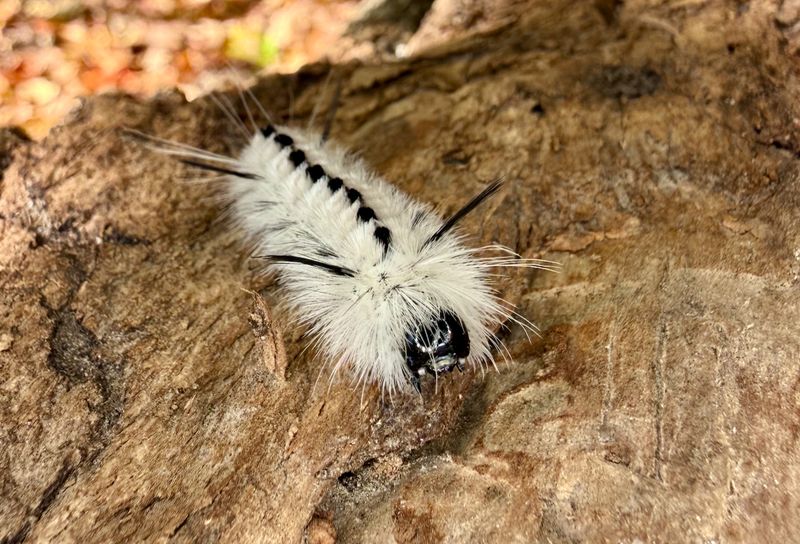
That soft, fluffy white coat looks incredibly touchable, but it is actually the caterpillar’s defense system working against you.
The white fuzz covering the Hickory Tussock Moth caterpillar is made up of tiny urticating hairs, which are specially designed to cause irritation on contact. They are not like normal hairs you would find on a pet or a stuffed animal.
When these hairs touch bare skin, they can embed themselves just below the surface and trigger an uncomfortable reaction. Most people experience itching, redness, or a mild rash shortly after contact.
The caterpillar does not sting or bite in the traditional sense, but that does not make the encounter painless.
Sensitive individuals, especially those with allergies or reactive skin, may notice stronger symptoms than others. Even a brief brush against the caterpillar while gardening in Michigan can be enough to start the irritation.
Your Michigan Garden Changes Every Week. Your Plan Should Too.
Gardening in Michigan changes quickly throughout the season. Every Friday you’ll receive a simple weekly plan showing exactly what to plant, prune, fertilize, harvest, and protect so you never miss the right timing.
The hairs can also transfer to your skin from leaves or surfaces the caterpillar has rested on.
Gardeners in Michigan should treat this caterpillar the same way they would treat a plant covered in thorns. You would not grab a thorny rose stem with bare hands, so the same caution applies here.
Keeping a respectful distance is the smartest and easiest way to enjoy watching this fascinating insect without any unpleasant aftereffects.
3. It Has A Very Distinct Look
Once you see a Hickory Tussock Moth caterpillar, you will never mistake it for something else. The combination of features it carries is unlike most other caterpillars you will encounter crawling around Michigan gardens and wooded areas.
That distinctive appearance actually works in your favor as a gardener.
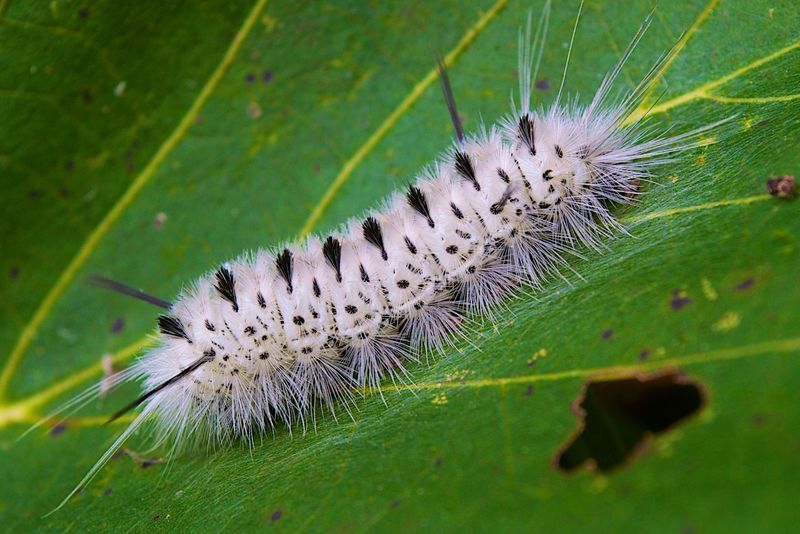
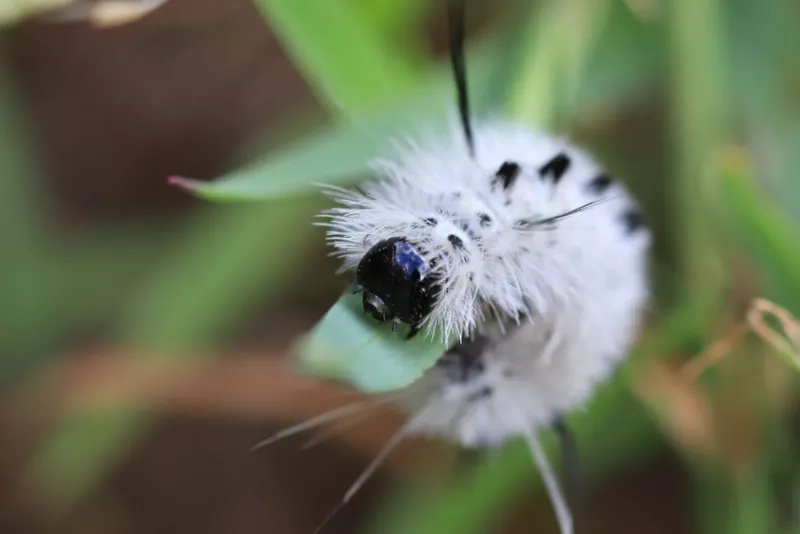
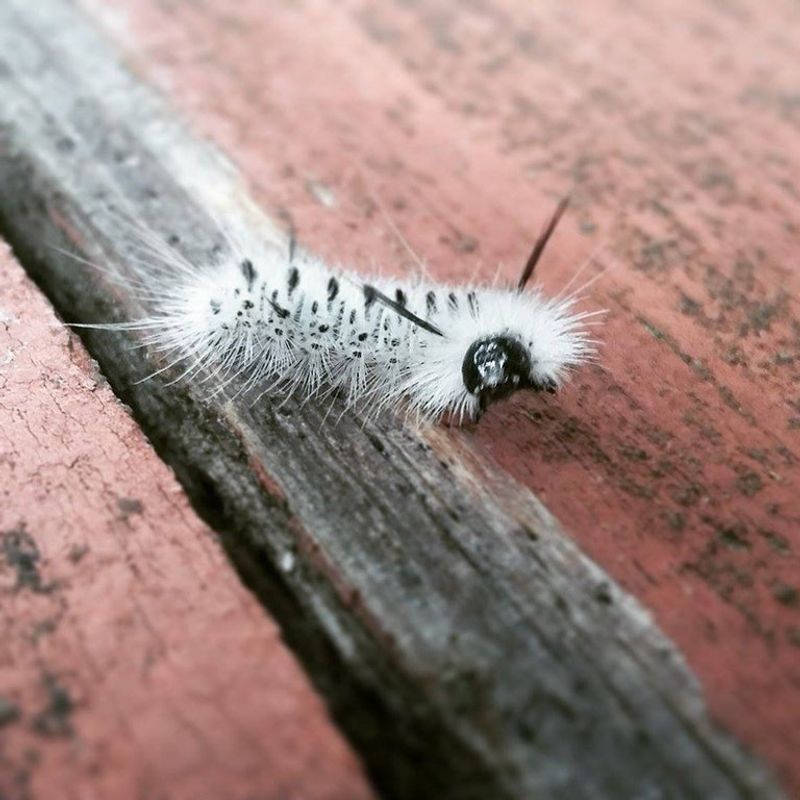
The body is covered in dense white hairs that give it a fluffy, almost cottony look from a distance. Running along the center of its back is a row of black spots or a dark stripe, which stands out sharply against all that white.
At both the front and the rear of the body, long black hair tufts stick out like little pencils or antennae.
These black pencil tufts are one of the most reliable identification features you can look for. No other common caterpillar in Michigan shares that exact combination of white body, black markings, and those bold black tufts at each end.
Once you know what to look for, a quick glance is all you need to make a confident identification.
Michigan gardeners who learn to recognize this caterpillar quickly are in a much better position to protect themselves and their families. You do not need to be an entomologist to tell this one apart from harmless species.
The markings are bold, clear, and consistent across nearly every individual you will come across during the fall season.
4. It Feeds On Common Michigan Trees
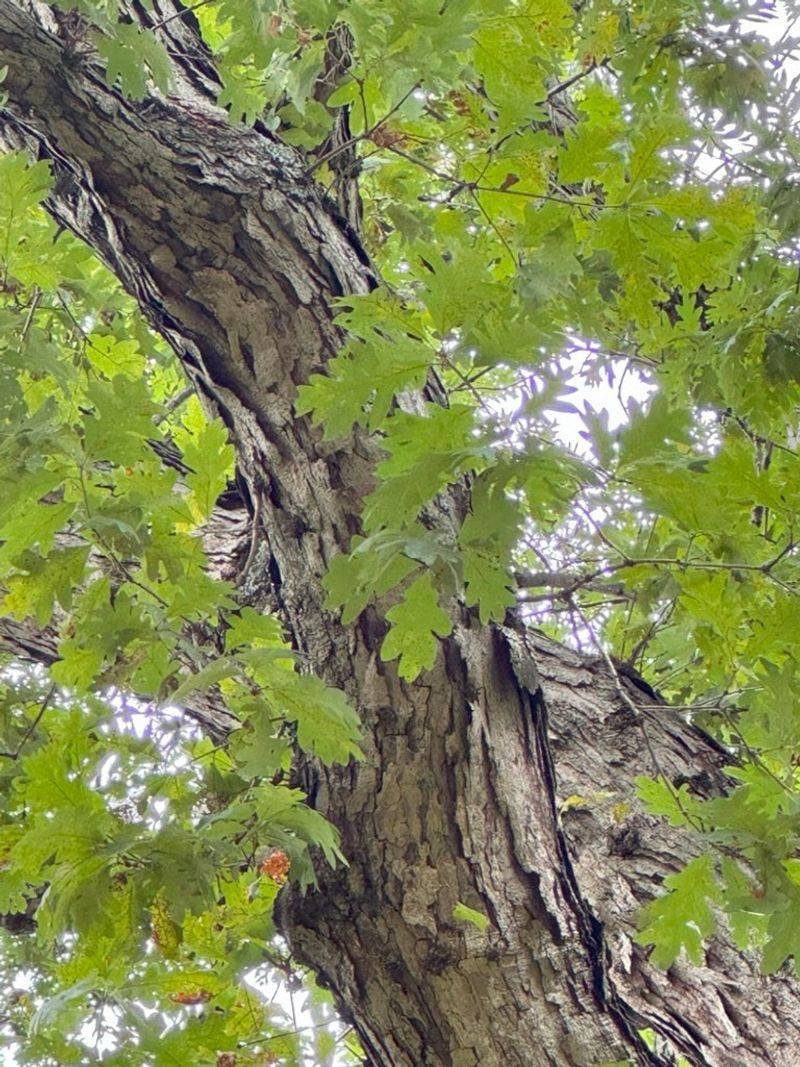
Backyard trees in Michigan are basically an all-you-can-eat buffet for the Hickory Tussock Moth caterpillar. This species has a broad appetite when it comes to deciduous trees, and many of the most beloved trees found across Michigan happen to be on its menu.
Hickory is obviously the most famous host, but the list goes well beyond that.
Oak, walnut, elm, and ash trees are all fair game for this caterpillar, and all of these species grow widely across Michigan.
If your yard or neighborhood has any of these mature hardwoods, there is a real chance this caterpillar will show up at some point during late summer. Large, established trees tend to attract the most activity.
Young caterpillars start high up in the tree canopy, feeding together on leaves in small clusters. As they grow and eventually prepare to pupate, they make their way down the trunk and out onto the ground.
That downward migration is often when Michigan gardeners first notice them crossing lawns or garden paths.
Seeing one or two caterpillars on your trees is generally nothing to worry about from a plant health standpoint. The feeding that happens this late in the season rarely causes lasting damage to mature trees.
Still, knowing which trees attract them helps Michigan homeowners keep a watchful eye in the right places each fall.
5. Most Reactions Are Mild But Uncomfortable
Good news first: the Hickory Tussock Moth caterpillar is not going to send most people to the emergency room.
The reactions people experience after touching one are almost always temporary and manageable, which is reassuring for Michigan families who spend a lot of time outdoors in fall.
That said, uncomfortable is still uncomfortable, and it is worth knowing what to expect.
The most common symptoms after skin contact include itching, a light rash, and redness around the area that touched the hairs. Some people also notice a mild burning sensation that tends to fade within a few hours.
For most healthy adults, symptoms clear up completely within a day or two without any special treatment.
People with more sensitive skin or existing skin conditions might notice a stronger reaction that lasts a bit longer. Rubbing the affected area actually makes things worse by pushing the tiny hairs deeper into the skin.
Resist the urge to scratch and follow the simple care steps instead.
Keeping a cool head and knowing the reaction is temporary makes the whole situation much easier to handle. Michigan gardeners who encounter this caterpillar regularly during fall cleanup should feel reassured that the risk is low as long as they avoid direct contact.
Awareness truly is the best tool in your outdoor safety kit when it comes to this fuzzy little insect.
6. Children And Pets Are More Likely To Be Affected
Kids and curious pets have one thing in common when it comes to the Hickory Tussock Moth caterpillar: they both want to touch it immediately. That fluffy white appearance is practically irresistible to a young child who has never seen anything like it before.
Michigan parents and pet owners need to stay especially alert during late summer and fall when these caterpillars are most active.
Children tend to pick up fuzzy things without hesitation, and their skin is often more sensitive than an adult’s. A reaction that causes mild itching in a grown-up could feel much more intense and upsetting for a small child.
Pets, especially curious dogs that sniff and paw at things on the ground, can also get hairs embedded in their nose or paws.
Teaching kids about this caterpillar before they encounter one is one of the best things Michigan parents can do. Show them a picture, explain that it looks cool but should not be touched, and make the lesson fun rather than scary.
Children who understand the reason behind a rule are much more likely to follow it.
When spending time in Michigan yards during August through October, a quick scan of the ground and nearby trees goes a long way. Spotting the caterpillar before your child or dog does gives you time to redirect attention safely.
A little awareness during outdoor time makes the whole fall season more enjoyable for everyone in the family.
7. You Don’t Need To Remove Them From Your Garden
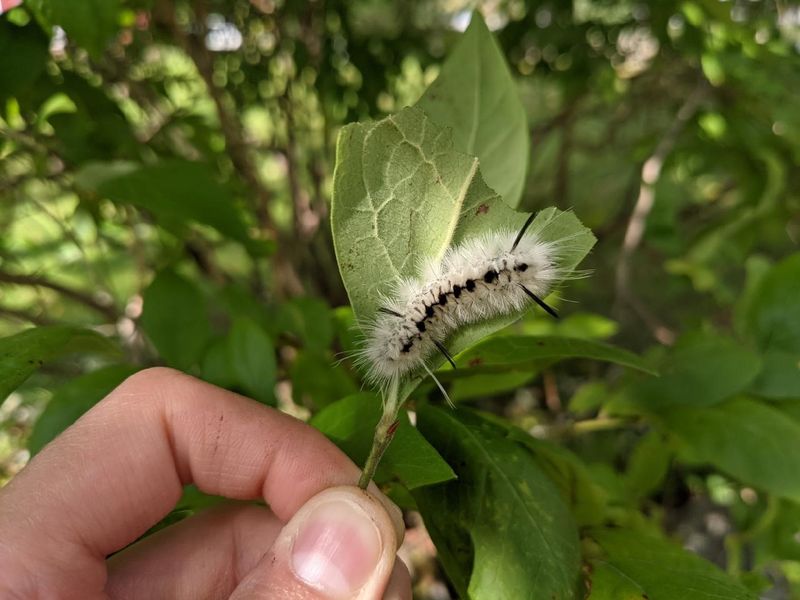
Seeing a Hickory Tussock Moth caterpillar in your Michigan garden might trigger the urge to remove it immediately, but that step is usually not necessary at all.
These caterpillars show up late in the growing season, when most plants and trees are already slowing down and preparing for winter. The timing works in your garden’s favor more than you might think.
By the time August and September roll around in Michigan, deciduous trees have already done the majority of their growing for the year. Even if a small group of caterpillars feeds on some leaves, the tree has enough stored energy to handle that without any real stress.
Significant damage to healthy, mature trees from this species is genuinely rare.
Trying to remove them can actually create more problems than leaving them alone. Handling the caterpillars without proper protection risks skin irritation, and disturbing them unnecessarily stresses both you and the insect.
Nature has a way of balancing things out, and these caterpillars play a role in the local food web as prey for birds and other wildlife.
Michigan gardeners who practice a hands-off approach with this species are making a smart, low-effort decision. Simply observing from a distance and letting the caterpillar complete its natural cycle is perfectly fine in most situations.
Save your energy for tasks that actually need attention, and let this one be.
8. Simple Precautions Keep You Safe
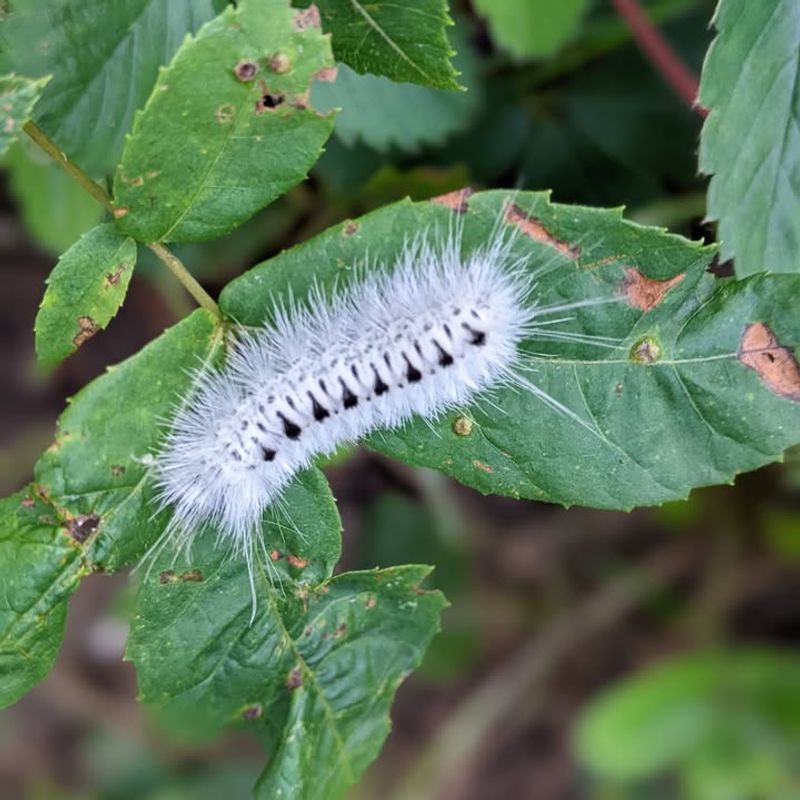
Staying safe around the Hickory Tussock Moth caterpillar in Michigan really comes down to a few straightforward habits that take almost no extra effort. You do not need special gear or expert knowledge to handle an encounter with this insect confidently.
A little preparation goes a long way when you are spending time in the yard during fall.
The golden rule is simple: never touch the caterpillar with your bare hands. If you absolutely need to move one, a pair of garden gloves provides all the protection you need.
Thick rubber or leather gloves work best since the hairs have a harder time penetrating those materials compared to thin fabric options.
If skin contact does happen by accident, head inside and wash the area thoroughly with soap and water right away. Avoid rubbing the skin, since that drives the hairs in deeper and makes irritation worse.
A piece of tape pressed gently onto the affected area and then peeled off can help lift embedded hairs from the surface of the skin.
Michigan families who spend time raking leaves or doing fall garden cleanup are most likely to encounter this caterpillar unexpectedly. Wearing gloves as a standard part of your outdoor routine during August through October is the easiest protective step you can take.
A quick check of your gloves, clothing, and tools before heading inside also helps prevent accidentally carrying hairs indoors on your gear.