Benefits Of Using Arizona River Rock Decorative Gravel In Landscaping
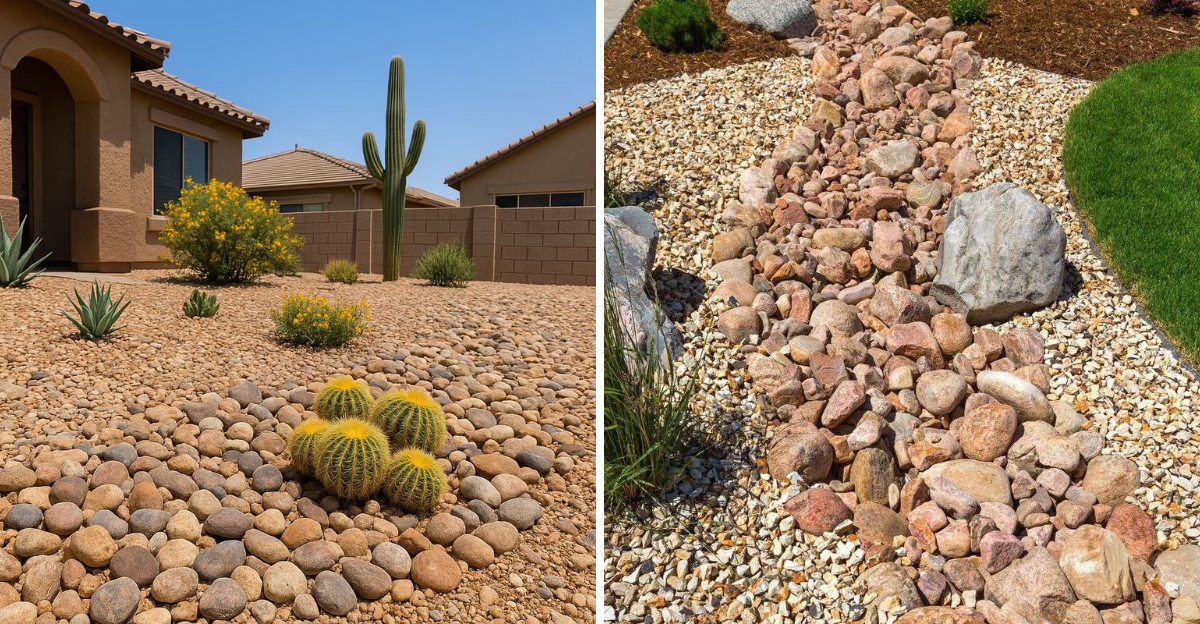
Across Arizona, more homeowners are swapping out their traditional lawns for smarter, tougher ground cover that can handle the intense sun, dry soil, and water restrictions that come with desert living.
Arizona river rock decorative gravel has become one of the most popular choices for this shift, and it is easy to see why.
Many people assume that a yard covered in gravel will look harsh or feel lifeless, but well-placed river rock can actually bring warmth, texture, and visual contrast that makes a landscape feel thoughtfully designed.
Whether you are starting fresh or updating an existing yard, Arizona river rock offers a practical and attractive solution built for the realities of the desert Southwest.
1. Natural Color And Texture Bring The Yard To Life
Walk through almost any well-designed Arizona neighborhood and you will notice that the yards standing out the most are rarely the ones with the most plants.
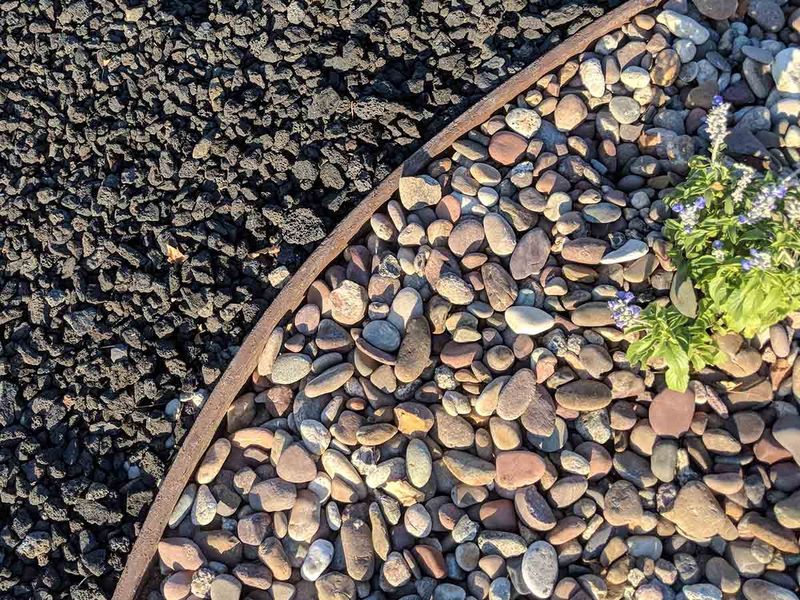
Smooth, rounded river rock brings a kind of quiet richness to a landscape that flat gravel simply cannot match.
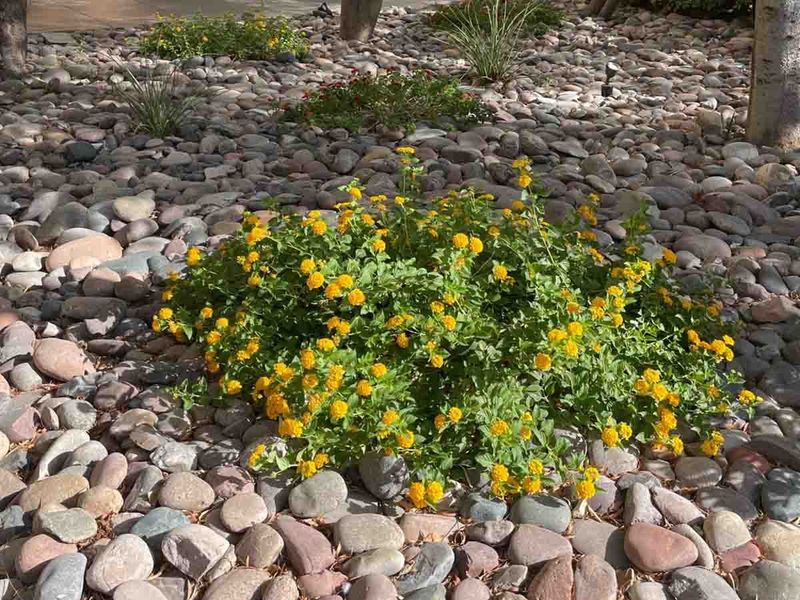
The natural tones found in Arizona river rock, ranging from warm tans and dusty pinks to soft grays and earthy blues, work with the surrounding desert palette rather than against it.
One common mistake homeowners make is choosing a single size and color and spreading it uniformly across the entire yard. That approach can make a space feel flat and uninviting.
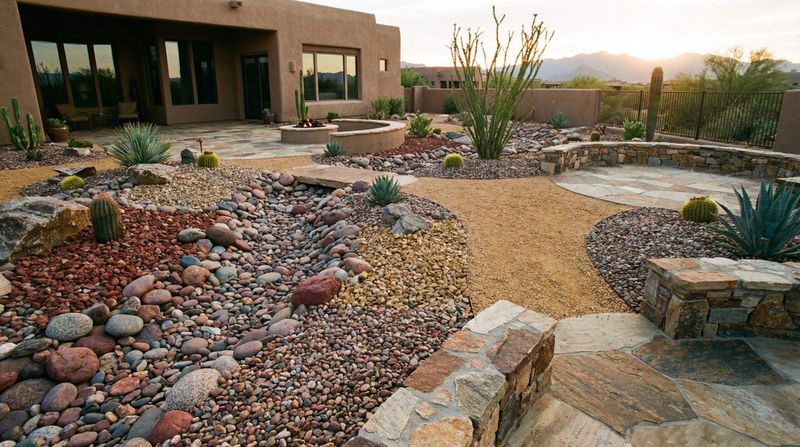
Mixing sizes, layering lighter and darker tones, or using larger stones to frame planting areas adds depth and keeps the eye moving across the space.
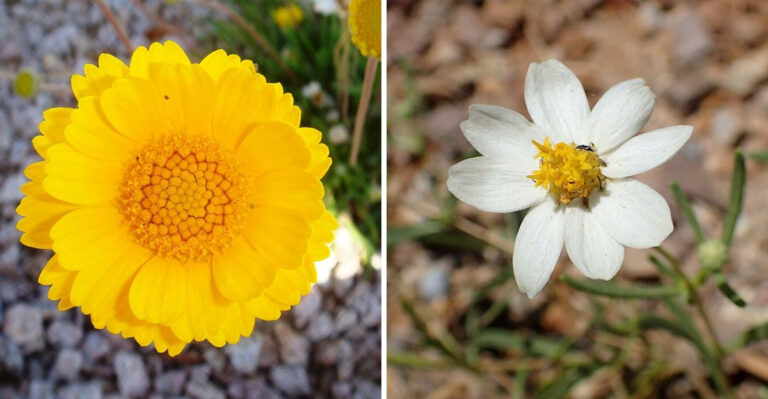
River rock pairs especially well with native desert plants like brittlebush, desert marigold, and palo verde, where the contrast between soft stone and bold plant texture creates a natural, lived-in feel.
2. A Flexible Choice For Many Landscaping Styles
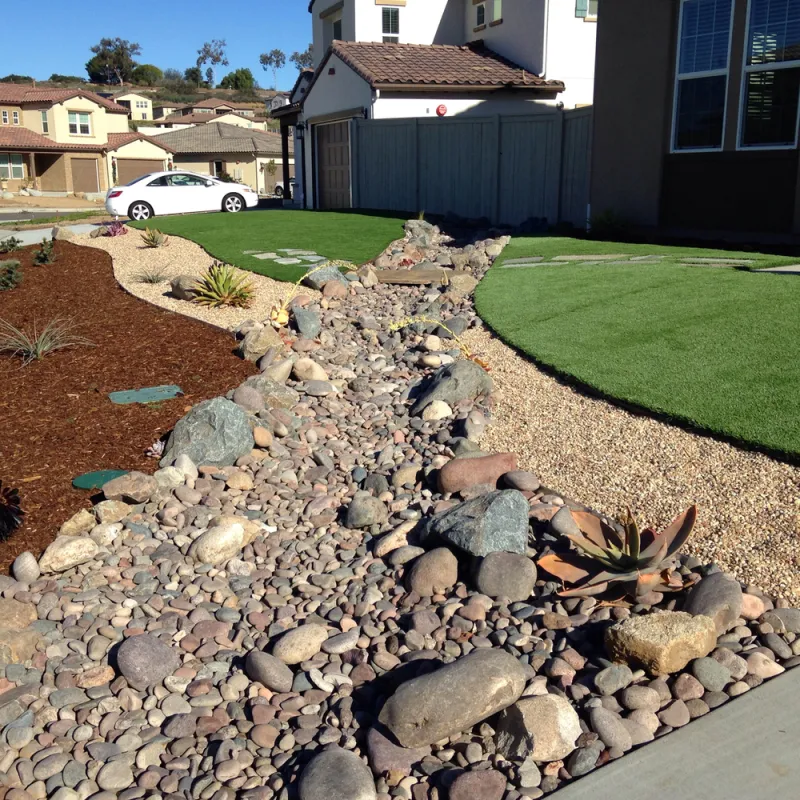
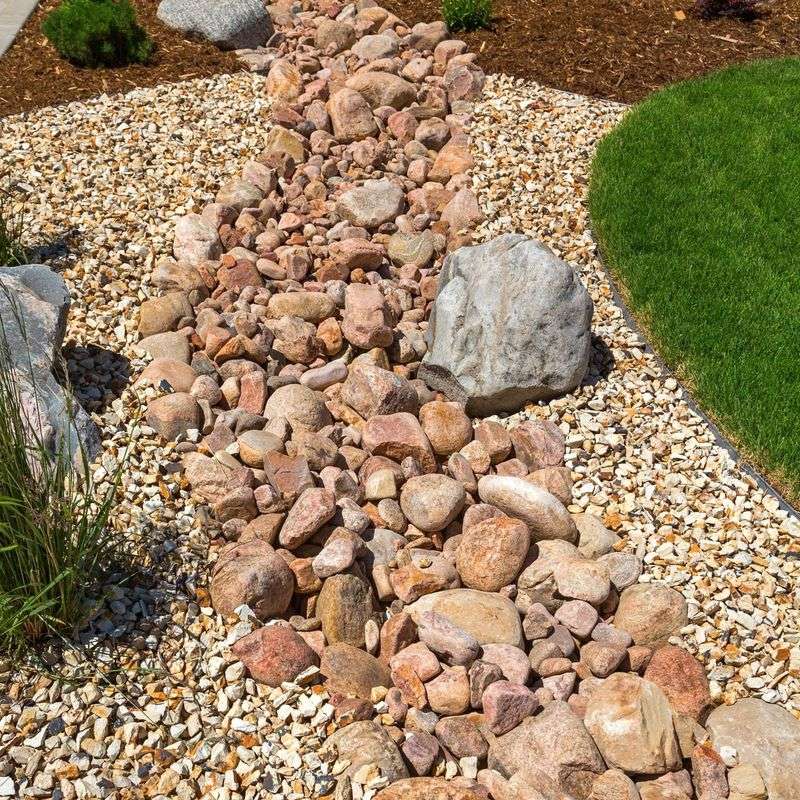
Few landscaping materials can pull off as many different roles as Arizona river rock. In one yard it might line a dry creek bed running along the side of the house.
In another, it fills the space between raised garden beds or defines the edge of a patio. That kind of flexibility makes it a genuinely useful material rather than just a decorative one.
Homeowners sometimes assume river rock only works in a strictly desert-modern design, but that is not the case.
It fits naturally into Southwestern adobe styles, contemporary minimalist layouts, cottage-inspired gardens, and even Mediterranean-influenced yards with terracotta pots and olive trees.
The key is choosing the right size and color to match the overall feel of the space.
Smaller river rock, roughly three-quarters of an inch to one and a half inches, works well as ground cover between plants.
Larger cobbles in the two-to-four-inch range are better suited for borders, dry creek beds, and accent areas where visual weight matters.
Design tip: use edging material like steel or concrete borders to keep river rock from migrating into adjacent areas over time.
3. Less Upkeep For A Cleaner, Simpler Yard
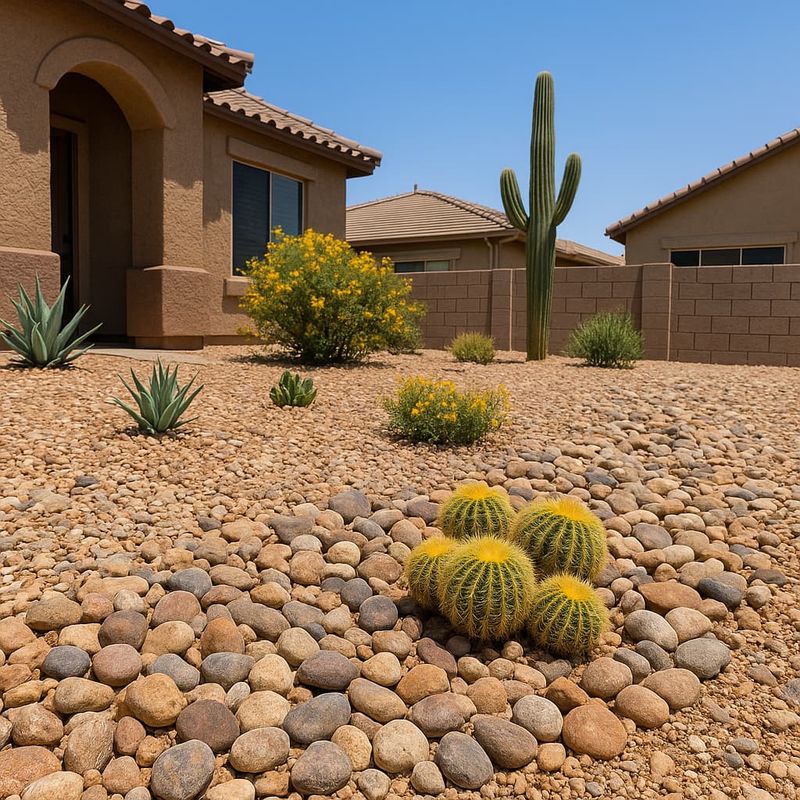
Spending every weekend watering, mowing, edging, and weeding is not most people’s idea of enjoying their outdoor space.
Your Arizona Garden Changes Every Week. Your Plan Should Too.
Gardening in Arizona changes quickly throughout the season. Every Friday you’ll receive a simple weekly plan showing exactly what to plant, prune, fertilize, harvest, and protect so you never miss the right timing.
One of the biggest reasons Arizona homeowners turn to river rock is the dramatic drop in routine yard work that comes with it.
Unlike organic mulch, river rock does not break down, blow away in monsoon winds, or need to be replaced every season.
That said, river rock is not completely maintenance-free, and expecting zero effort is one of the most common misconceptions.
Dust and debris will settle between the stones over time, especially after Arizona’s monsoon storms blow through.
A periodic rinse with a garden hose or a light rake-through keeps the surface looking clean and prevents organic matter from building up in a way that encourages weed growth.
Leaf litter from nearby trees can also collect in the rock, so placement near heavy-shedding trees like mulberry or cottonwood requires a little more attention. Choosing the right area for river rock matters.
Open, sunny sections of the yard with minimal overhead canopy stay cleaner and require far less intervention.
4. A Practical Layer That Helps Limit Weeds
Weeds popping up through gravel is one of the most frustrating surprises for homeowners who expected a carefree yard.
River rock does help reduce weed growth, but understanding how and why it works makes the difference between a yard that stays clean and one that turns into a constant battle.
The stones block sunlight from reaching the soil surface, which makes it harder for weed seeds to germinate and establish.
The most effective setup pairs river rock with a quality landscape fabric installed underneath. The fabric acts as a physical barrier while still allowing water and air to pass through to plant roots.
Skipping the fabric is one of the most common beginner mistakes, and it almost always leads to more weeds within a season or two as wind-blown seeds settle into the gaps between stones.
Even with fabric in place, some weeds will find their way through gaps near plant bases or edges where the barrier is cut.
Catching them early, while they are still small, makes removal much easier and prevents root systems from anchoring deeply into the soil below.
5. Smart Support For Water-Wise Arizona Landscaping
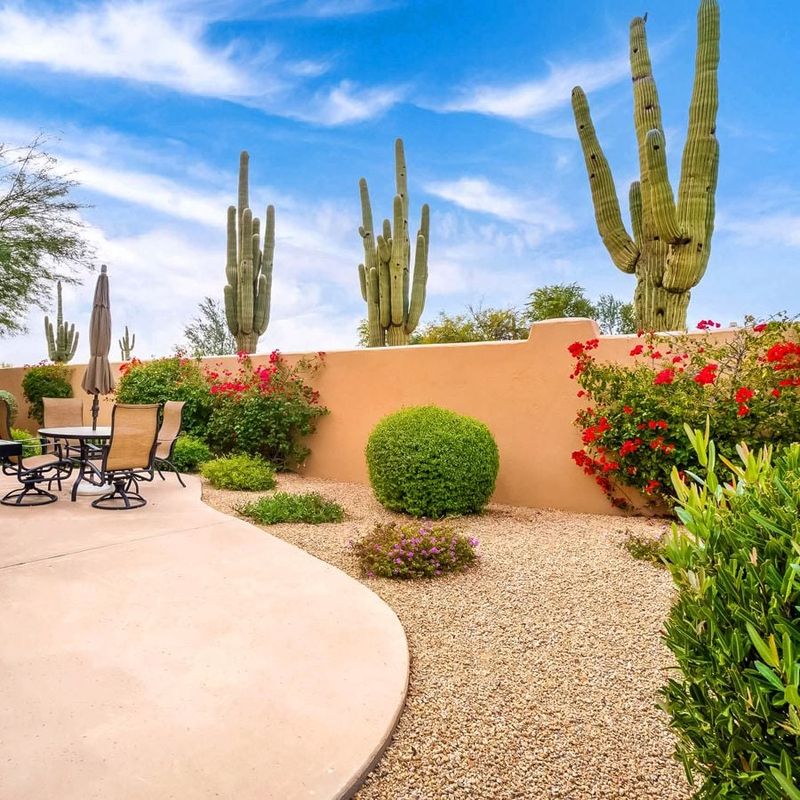
Water is one of the most valuable resources in Arizona, and how a yard is designed directly affects how much of it gets used.
River rock plays a quiet but meaningful role in water conservation by reducing the rate at which soil moisture evaporates from the surface.
When the sun is beating down at 110 degrees, bare soil loses water fast. A layer of river rock acts as insulation, slowing that evaporation and keeping moisture available to plant roots longer.
River rock also improves how water moves through a yard. Because the stones are porous and allow gaps between them, rainfall and irrigation water can filter down into the soil rather than running off across a hardened surface.
During Arizona monsoon season, when intense rain can hit suddenly and hard, this infiltration benefit helps reduce the kind of surface flooding that damages plant beds and erodes soil.
Pairing river rock with a drip irrigation system is one of the most water-efficient combinations available for Arizona yards.
The drip system delivers water directly to plant roots, and the rock cover above slows evaporation so more of that water actually reaches where it is needed.
6. Extra Protection For Soil On Slopes And Open Areas
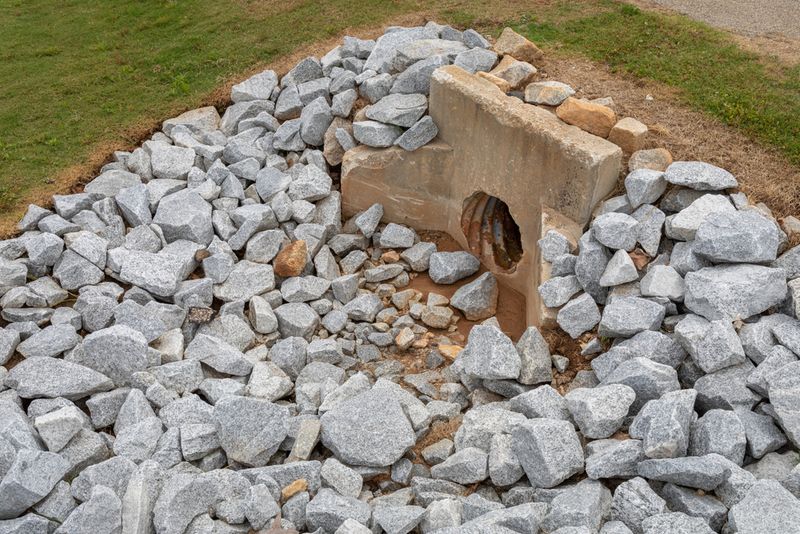
Monsoon season in Arizona is not subtle. When those storms roll in, they can drop significant rainfall in a very short time, and yards without proper ground cover take the hit directly.
Bare soil on slopes or open flat areas gets hammered by raindrops, which loosens the top layer and sends it washing downhill. River rock serves as a physical buffer, absorbing the impact and slowing the movement of water across the surface.
On sloped sections of a yard, this erosion control function is especially valuable.
Larger river cobbles in the two-to-four-inch range hold their position better on inclines than smaller gravel, which can shift and scatter during heavy runoff.
Combining rock with native groundcover plants like desert marigold or trailing lantana adds root structure to the soil beneath, which further stabilizes the slope over time.
Flat open areas also benefit from river rock coverage, particularly in yards where wind erosion during dry months can lift and carry fine soil particles. Rock coverage keeps that soil anchored.
Placement tip: when covering a slope, start at the base and work upward, and consider using a French drain or swale at the bottom to redirect water flow away from structures.
7. Ground Coverage That Also Holds Warmth
Stone absorbs heat during the day and releases it slowly after the sun goes down, and in Arizona that thermal behavior plays a real role in how a yard functions through the seasons.
During the cooler months, river rock that has soaked up daytime warmth can provide a mild buffer of radiated heat overnight, which benefits cold-sensitive plants like citrus trees, bougainvillea, and certain succulents that do not handle frost well.
This is not a substitute for frost cloth or other protective measures during a hard freeze, but it does create a slightly warmer microclimate around plant bases that can make a difference during mild cold snaps.
Placing river rock close to south or west-facing walls amplifies this effect because those surfaces also absorb and radiate heat, creating a pocket of warmth that cold-sensitive plants can take advantage of.
During Arizona’s scorching summer months, the heat retention quality works in the opposite direction. Rock near plant crowns can get extremely hot and cause stress or damage to shallow-rooted plants if placed too close.
Keeping a small gap between the rock and plant stems allows air to circulate and prevents heat buildup at the base.
8. A More Earth-Friendly Option For Decorative Ground Cover
Choosing what goes on the ground in a yard has real environmental consequences, and river rock holds up well when compared to many alternatives.
Unlike dyed wood mulch or rubber mulch products, Arizona river rock is a natural material that does not leach chemicals into the soil or break down into microplastics over time.
It is quarried and minimally processed, which means its production footprint is relatively low compared to manufactured landscaping products.
Because river rock does not decompose, it does not need to be replaced regularly the way organic mulch does. That longevity means fewer deliveries, less material consumption over time, and less waste heading to landfills.
For Arizona homeowners who are already reducing their water use and pulling out grass, adding river rock is a logical next step toward a yard with a lighter environmental footprint overall.
One thing worth being realistic about is that no landscaping material is without some environmental trade-off. Quarrying stone does use energy and can affect local habitats depending on where and how it is sourced.
Asking suppliers about sourcing practices and choosing locally quarried material when possible helps reduce the impact further.