9 Low-Maintenance Perennials That Handle Arizona Heat With Less Fuss
Arizona gardening can feel like a constant test of heat, dry air, and stubborn soil.
Summer temperatures climb fast, moisture disappears quickly, and high-maintenance plants can turn into more work than most people want.
That is why so many Arizona gardeners look for perennials that bring color and structure without needing nonstop care. The right ones can settle in, handle the heat well, and return year after year with less fuss once established.
Better yet, an easy-care Arizona yard does not have to look plain.
Native and desert-adapted perennials can fill a space with texture, seasonal blooms, and even a little extra wildlife activity while keeping the overall landscape far more manageable.
1. Desert Globemallow Brings Soft Color Through The Heat
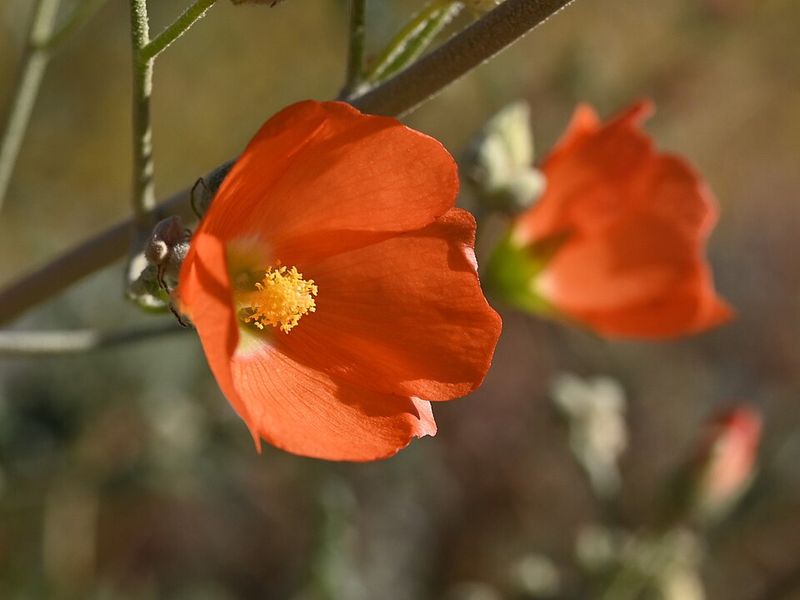
Few plants light up an Arizona yard quite like globemallow, with its clusters of soft, poppy-like blooms in shades of orange, pink, red, and coral appearing even during the hottest stretches of the year.
Native to the Sonoran and Chihuahuan deserts, Sphaeralcea ambigua has spent thousands of years adapting to punishing heat and lean, fast-draining soils.
That heritage shows once it settles in – it simply does not need much from a gardener to perform well.
One common mistake is overwatering globemallow during summer. Established plants prefer to dry out completely between watering sessions, and soggy roots are far more likely to cause trouble than dry ones.
Plant it in full sun and gravelly, well-drained soil, and give supplemental water only during extended dry spells once it has been in the ground for a full season.
A good sign is when the plant produces multiple flowering stems over a long bloom window, which in Arizona can stretch from late winter into early summer and sometimes again after monsoon rains.
A trouble sign is yellowing foliage with soft stems near the base, which usually points to drainage problems rather than heat stress.
Cutting back spent stems after flowering encourages fresh growth and keeps the plant looking tidy without much effort.
2. Desert Marigold Keeps Blooming With Very Little Fuss
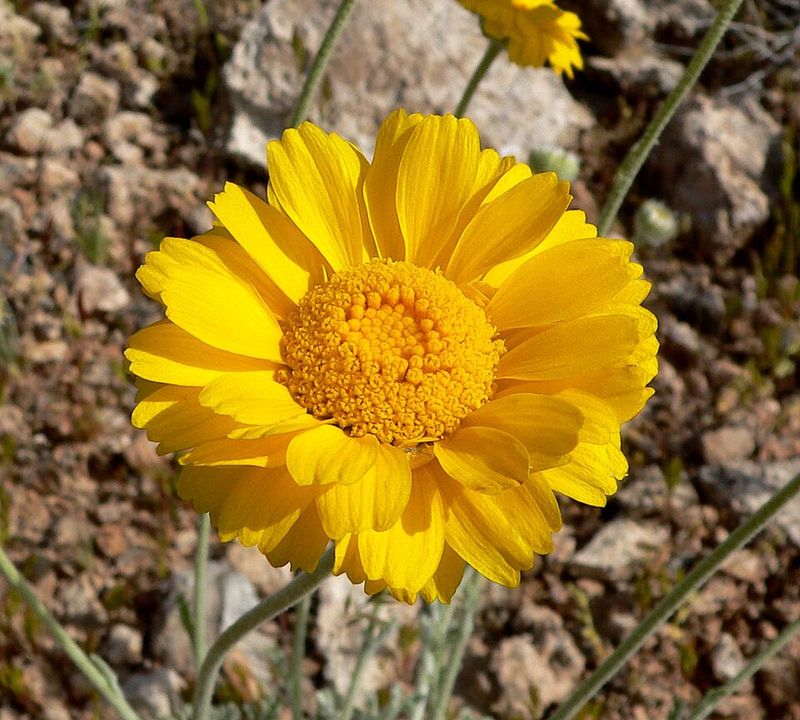
Bright yellow flowers on a compact, silver-leafed plant that blooms for months at a stretch – desert marigold is one of the most reliable performers in the Arizona perennial lineup.
Baileya multiradiata grows naturally along roadsides, dry washes, and open desert flats across the state, which tells you a lot about its tolerance for reflected heat, compacted gravel, and very little rainfall.
Gardeners sometimes make the mistake of treating it like a typical flowering annual and giving it rich amended soil or regular fertilizer.
Desert marigold actually performs better in lean, well-drained ground where it does not get pushed into lush but weak growth.
Full sun is non-negotiable – plants placed in partial shade tend to become leggy and produce fewer flowers over time.
Once established, deep watering every two to three weeks during summer is generally enough in low-elevation Arizona. At higher elevations, natural rainfall may cover most of its needs during the monsoon season.
Your Arizona Garden Changes Every Week. Your Plan Should Too.
Gardening in Arizona changes quickly throughout the season. Every Friday you’ll receive a simple weekly plan showing exactly what to plant, prune, fertilize, harvest, and protect so you never miss the right timing.
A good sign is steady bloom production from late winter through fall with minimal spent-flower removal needed.
A trouble sign is a plant that looks washed out or stops flowering during peak summer, which sometimes indicates it needs a slightly better-draining spot rather than more water.
Shearing back by about one-third after major bloom cycles encourages fresh flowering stems.
3. Desert Zinnia Adds A Neat Look To Dry Garden Spaces
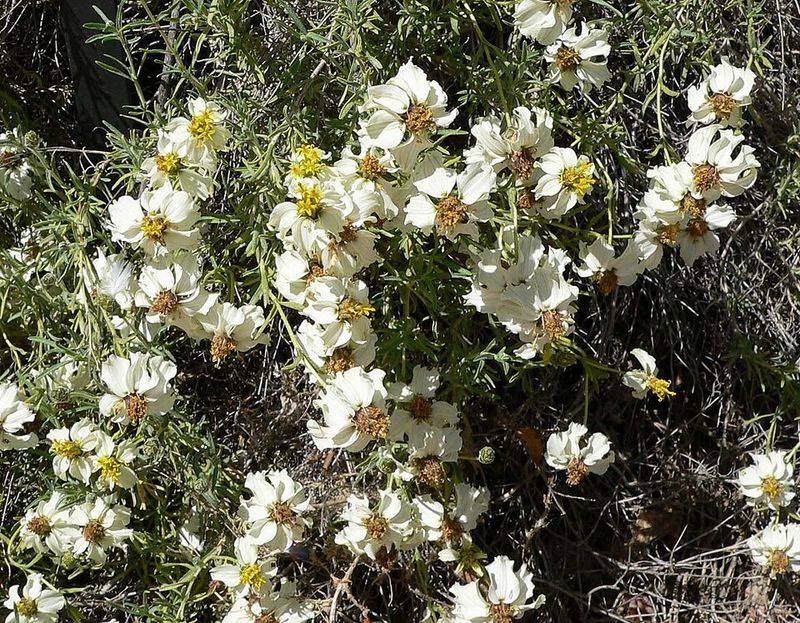
Along rocky slopes and sun-baked flats across Arizona, desert zinnia quietly does something impressive – it stays compact, blooms cheerfully, and asks for almost nothing in return.
Zinnia acerosa is a native subshrub-like perennial that stays low to the ground, rarely exceeding about a foot in height, making it a natural fit for borders, rock gardens, or the edges of gravel pathways where a tidy appearance matters.
What surprises many gardeners is how well desert zinnia handles reflected heat from walls, pavers, and light-colored gravel. South and west-facing exposures that bake other plants into decline are actually well-suited to this species.
Plant it in shallow, rocky, or sandy soil with excellent drainage, and skip the amended planting mix that might work for other perennials – desert zinnia does not need it.
Watering every two to three weeks during the hottest months is usually sufficient once the plant is established, and during cooler months it can go even longer between sessions.
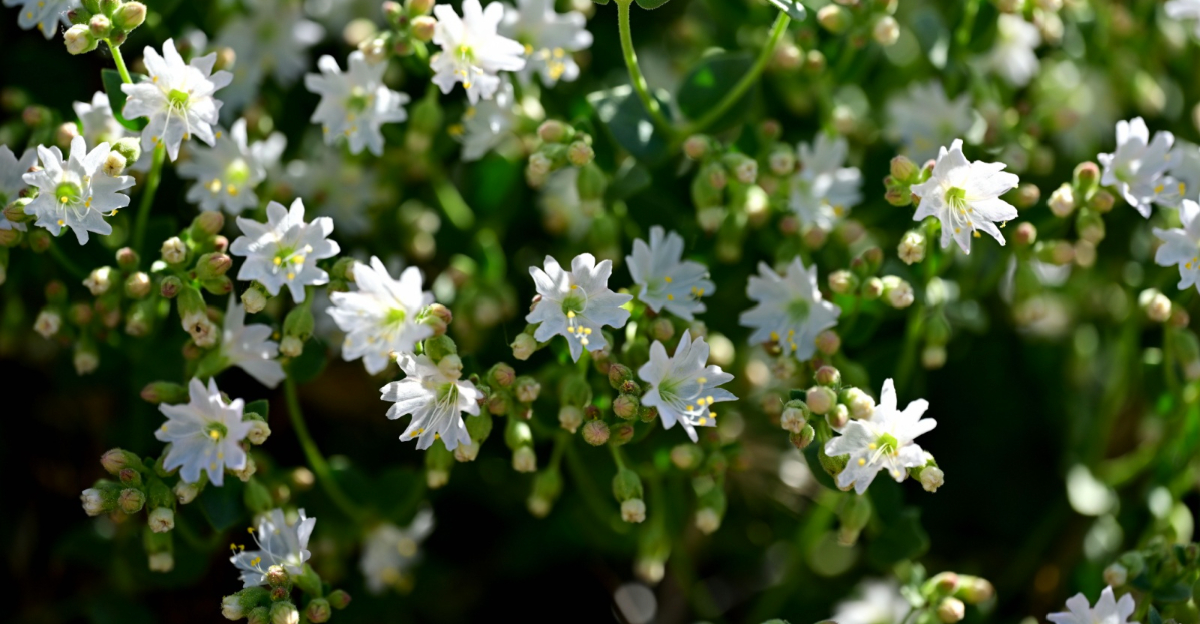
A good sign is dense, mounding growth covered in small white flowers with yellow centers from spring through early summer and again after monsoon rains arrive.
A trouble sign is a plant that flops open in the center or produces sparse blooms, which usually means it has received too much water or shade. Light trimming after bloom cycles helps maintain its naturally neat shape.
4. Desert Wishbone Spreads Gently Without Taking Over
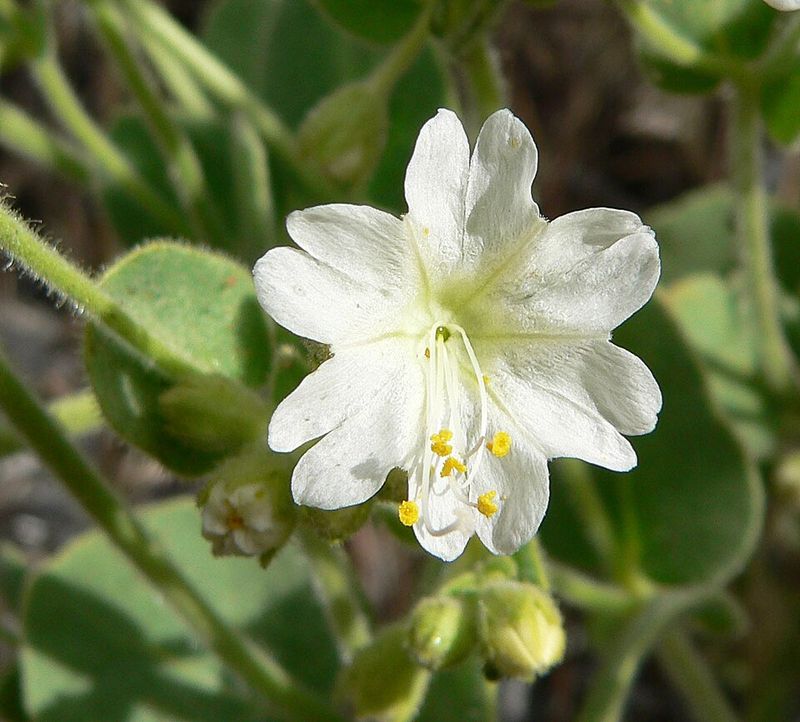
Mirabilis laevis, commonly called desert wishbone bush, earns its place in Arizona yards by doing something many plants struggle with in extreme heat – spreading gracefully without becoming a maintenance burden.
Its fine, gray-green foliage and small but cheerful yellow flowers create a soft, natural texture that works beautifully in rock gardens, dry slopes, and naturalized desert areas where a relaxed, native look is the goal.
Placement matters more than most people realize with this plant. It performs best in full sun with excellent drainage, and it genuinely thrives on neglect once it has had a season to establish a deep root system.
Avoid planting it near irrigation heads or in areas that collect standing water, as prolonged moisture at the root zone is more likely to cause issues than Arizona’s notorious summer heat.
Established plants typically need supplemental water only during extended dry spells outside of the monsoon season.
In cooler, higher-elevation parts of Arizona, it may go semi-dormant in winter and return with fresh growth in spring.
A good sign is spreading, arching stems covered in foliage and scattered bloom throughout the warmer months.
A warning sign is sudden stem decline paired with mushy base tissue, which indicates drainage problems.
Minimal pruning – just removing non-viable or damaged stems in late winter – is usually all the maintenance this plant ever needs.
5. Chuparosa Brings Bright Color And A Wildlife Bonus
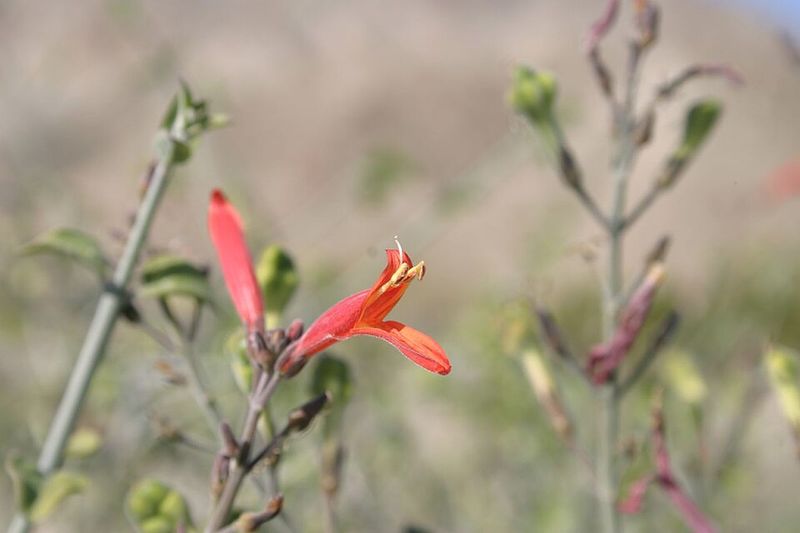
Walk past a chuparosa in bloom and you will likely hear it before you see what is visiting – hummingbirds are absolutely drawn to its tubular red and orange flowers, making this native perennial one of the most wildlife-friendly choices an Arizona gardener can make.
Justicia californica grows naturally in washes, canyon edges, and low-elevation desert zones across southern and central Arizona, and it brings a burst of warm color at a time of year when many other plants are still waking up.
One thing gardeners often underestimate is how structural chuparosa becomes as it matures.
Its arching, nearly leafless stems create an interesting silhouette even when not in bloom, and the plant fills in nicely when planted with other desert-adapted shrubs or perennials.
It works well near boulders, dry rock walls, or as a backdrop for lower-growing plants.
Full sun and fast-draining soil are the two most important placement factors. In the hottest parts of the low desert, light afternoon shade from a nearby structure or tree can extend the bloom season without reducing overall plant health.
A good sign is heavy flowering from late winter into spring followed by sporadic bloom after monsoon rains.
A trouble sign is a plant that drops most of its stems in summer – that is typically normal summer dormancy behavior rather than a health concern.
Deep, infrequent watering every few weeks in summer keeps it going without encouraging weak growth.
6. Desert Spoon Adds Bold Shape With Minimal Care
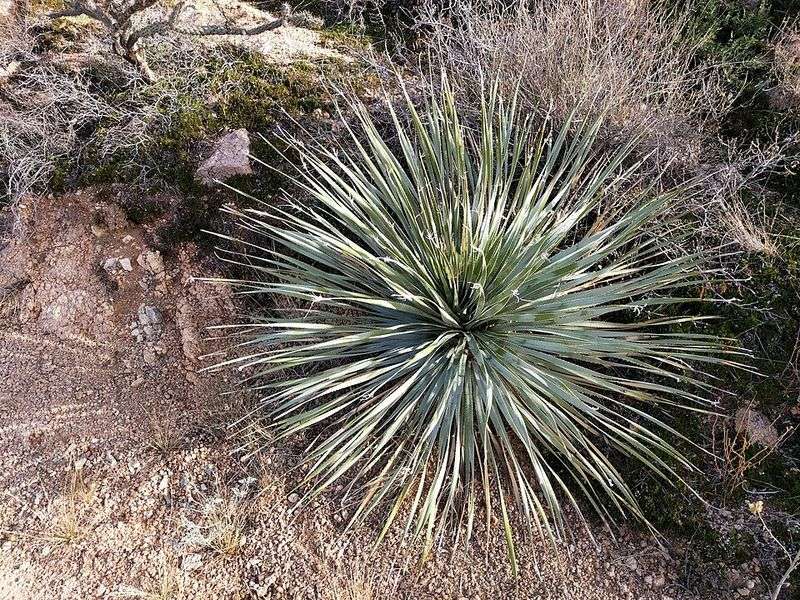
Structure and drama are not always easy to achieve in a low-water Arizona garden, but desert spoon – Dasylirion wheeleri – delivers both without asking for much in return.
Its fountain-like rosette of long, narrow, saw-edged leaves creates a striking focal point that looks equally at home in a formal desert landscape or a naturalized yard with gravel and native plantings scattered around it.
One of the more interesting things about desert spoon is how well it handles poor, rocky soils that would challenge most ornamentals. It actually prefers those conditions.
Planting it in rich, amended soil tends to push it toward root problems rather than better growth.
Full sun is where it thrives, and it can handle intense reflected heat from walls and light-colored hardscaping without showing much stress.
Established plants need very little supplemental irrigation – perhaps a deep soak every three to four weeks during the hottest months in low-elevation Arizona, and even less at higher elevations where monsoon rainfall is more reliable.
A good sign is firm, upright leaves with a consistent blue-green or gray-green color.
A trouble sign is leaves that soften near the base or show rot at the crown, which almost always traces back to overwatering or poor drainage.
Occasional removal of older outer leaves is the only grooming it typically needs, and even that is optional.
7. Banana Yucca Makes A Strong Statement In Tough Spots
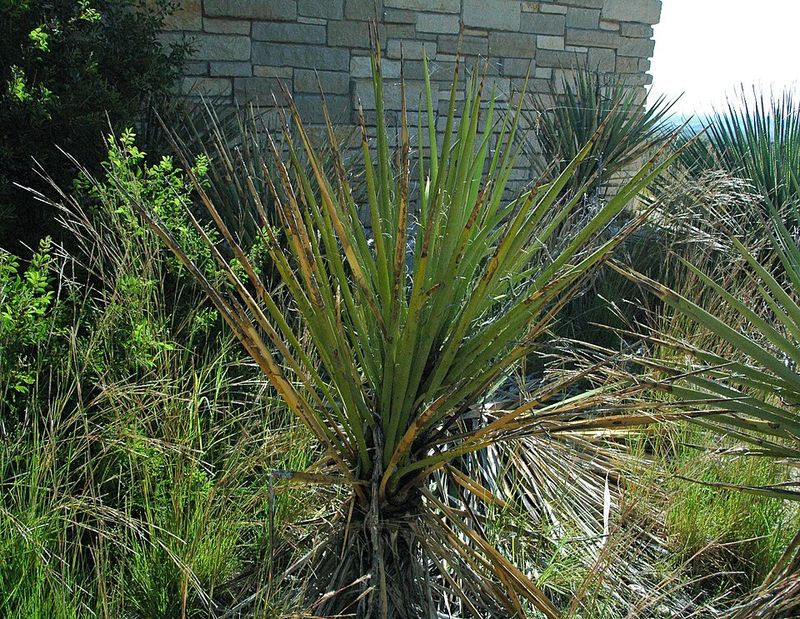
Tough, sculptural, and surprisingly versatile, banana yucca – Yucca baccata – is one of those plants that looks like it belongs in Arizona because it genuinely does.
Found naturally across a wide elevation range, from desert grasslands to pinyon-juniper woodlands, it adapts to a broader set of Arizona conditions than many gardeners expect, including higher elevations where winters get cold and summers stay slightly cooler than the low desert.
The broad, blue-green leaves with curling white fibers along their edges give banana yucca a distinctive look that works well as a specimen plant or grouped with other native species.
Its tall flower spikes, which appear in spring and early summer, produce large, creamy white blooms that are genuinely striking – and the fleshy fruit that follows is edible, which made it an important food source for Indigenous communities across the Southwest.
Planting banana yucca in well-drained, rocky or sandy soil in full sun sets it up for long-term success. It needs little to no supplemental water once established at appropriate elevations, and it handles periods of drought with ease.
A good sign is firm, upright leaves and a steady rosette that slowly expands outward. A trouble sign is mushy leaf bases or crown rot, which almost always results from poor drainage.
Removing spent flower stalks after bloom is the main maintenance task most gardeners ever need to do.
8. Parry’s Agave Keeps The Landscape Striking And Simple
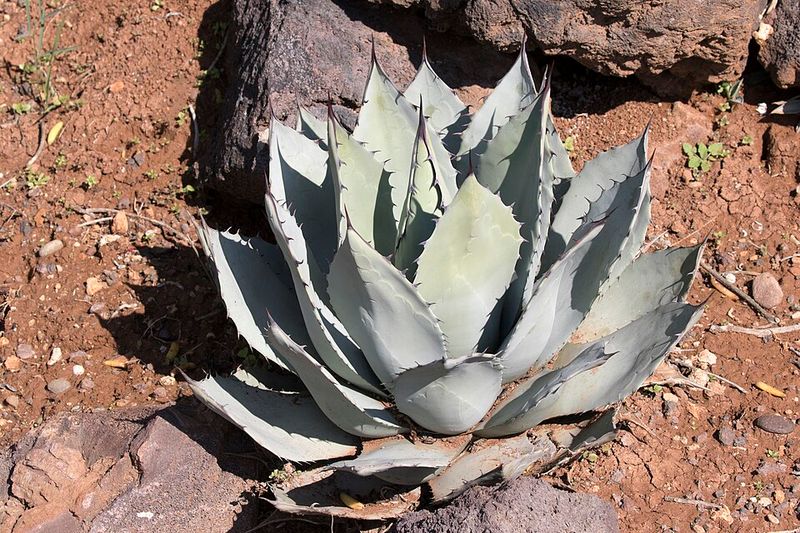
Some plants earn their place in an Arizona yard through sheer reliability, and Parry’s agave – Agave parryi – is one of the clearest examples.
Its tight, symmetrical rosette of thick, blue-gray leaves creates a bold geometric statement that looks intentional and polished even when the gardener has not touched it in months.
That combination of visual impact and low demand makes it one of the most practical choices available for Arizona landscapes.
Parry’s agave is more cold-hardy than many agave species, which makes it suitable across a wider range of Arizona elevations – including areas that experience hard freezes in winter.
It grows naturally in grassland and oak woodland zones across central and southeastern Arizona, which means it is accustomed to seasonal temperature swings that would stress less adaptable plants.
Soil drainage is the single most important factor for long-term success. Rocky, gravelly, or sandy soils work best, and raised planting areas can help in yards where native soil tends to hold moisture.
Full sun is ideal, though light shade during the hottest afternoon hours is tolerable. Established plants need deep watering only every few weeks in summer and very little during cooler months.
A good sign is firm, upright leaves with consistent color and clean margins. A trouble sign is softening at the leaf base or a collapsed center, which signals root zone moisture problems.
Removing pups – the small offsets that form around the base – keeps the planting tidy if a more manicured look is desired.
9. Parry’s Penstemon Lights Up Spring In Arizona Yards
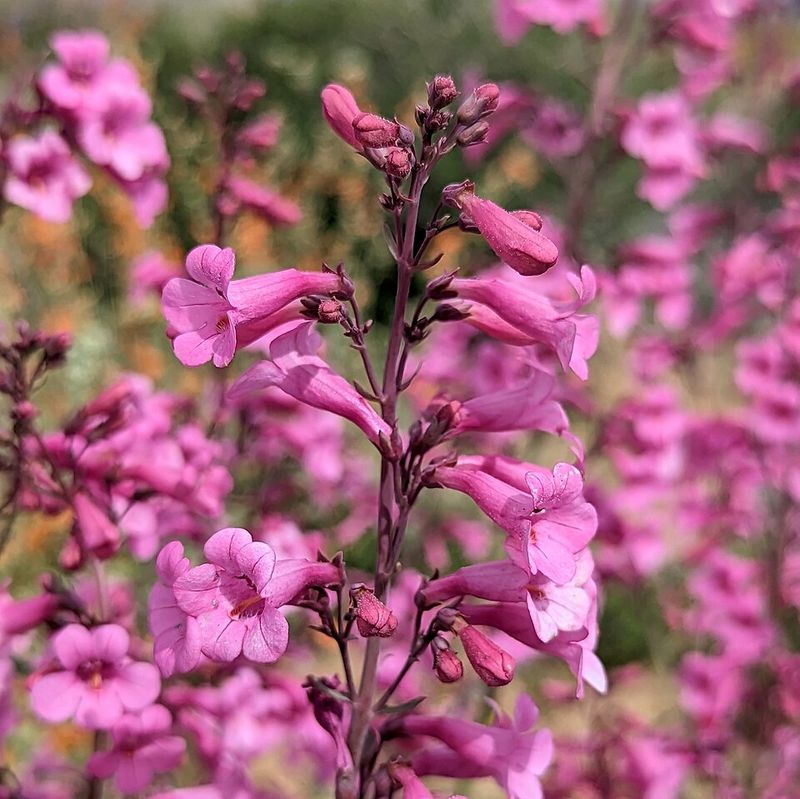
Spring in Arizona moves fast, and Parry’s penstemon – Penstemon parryi – makes the most of every warm week it gets.
Tall, upright flower spikes covered in tubular pink to rose-red blooms shoot up from a low basal rosette of gray-green leaves, creating a vertical accent that draws the eye and attracts hummingbirds on their spring migration routes through the state.
It is one of those plants that stops people in their tracks when they see it blooming in a well-placed Arizona yard.
This penstemon is native to the Sonoran Desert region of southern Arizona and northern Mexico, which means it is well-suited to low and mid-elevation landscapes in the state.
It tends to perform best in areas below about 5,000 feet in elevation, where winters are mild and spring arrives early.
In higher, colder zones, other penstemon species may be a better fit.
Plant it in full sun with lean, well-drained soil and give it space to spread its basal foliage without crowding.
Overwatering is the most common misstep – established plants need only occasional deep watering during the dry months and usually get enough moisture from monsoon rains in summer.
A good sign is a strong flush of flower spikes in late winter to early spring, often with multiple stems per plant. A trouble sign is floppy, weak stems or sparse flowering, which typically points to too much shade or water.
Letting seed heads remain on the plant after bloom encourages natural reseeding in nearby gravel areas.