These Fast-Growing Oregon Vines Attract Pollinators And Look Great On Fences
Blank walls and boring chain-link fences are basically wasted real estate in a garden. If you want to transform those flat surfaces into lush, living tapestries, fast-growing vines are your new best friends.
In the Pacific Northwest, we have the perfect environment for climbers that can skyrocket up a trellis in a single season, providing instant privacy and a massive boost to your curb appeal.
The real magic happens when these vertical beauties start to bloom. Oregon gardeners are increasingly choosing varieties that double as all-you-can-eat buffets for local bees, butterflies, and hummingbirds.
These vines do not just sit there looking pretty; they turn your backyard into a buzzing, fluttering sanctuary.
Options include fragrant native honeysuckle and the otherworldly flowers of the passion vine, which offer the perfect blend of rapid coverage and ecological impact.
It is time to stop looking at your fence as a boundary and start seeing it as a vibrant high-rise for nature.
1. Clematis
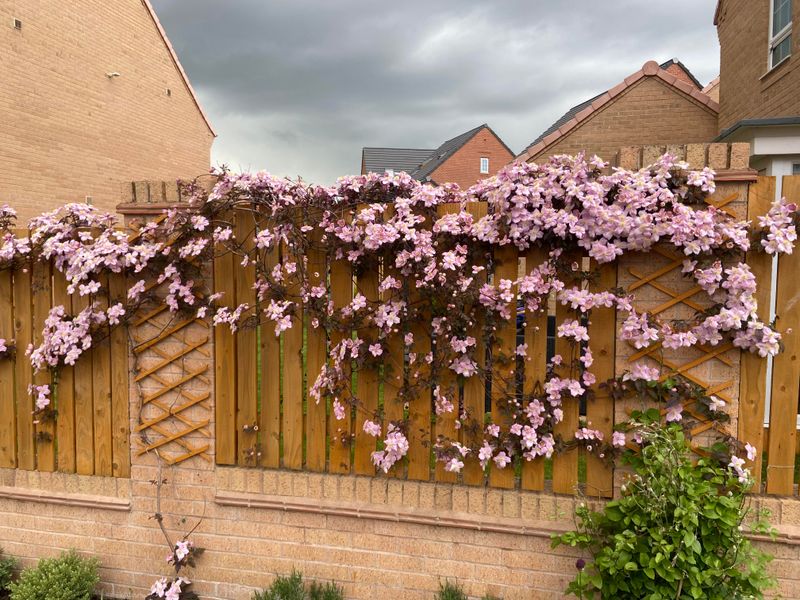
Few vines put on a show quite like Clematis. With blooms that can stretch up to six inches wide, this vine turns an ordinary fence into something truly eye-catching.
Oregon’s mild summers give Clematis exactly what it needs to thrive and bloom repeatedly throughout the season.
There are hundreds of Clematis varieties to choose from, so you can pick colors ranging from deep purple to soft pink or bright white. The ‘Empress’ variety is a standout, offering large pink flowers with a fluffy center pompom.
It grows to about seven feet tall, making it easy to manage on a fence or trellis without constant cutting back.
Clematis loves having its roots shaded while its vines reach for full sun. A simple layer of mulch around the base keeps the soil cool and moist.
Pollinators absolutely love these blooms. Bees and butterflies visit regularly, making your Oregon yard a buzzing, fluttering paradise.
Plant it in well-drained soil, give it something to climb, and watch it reward you with stunning color year after year.
2. Honeysuckle (Non-Invasive Types)
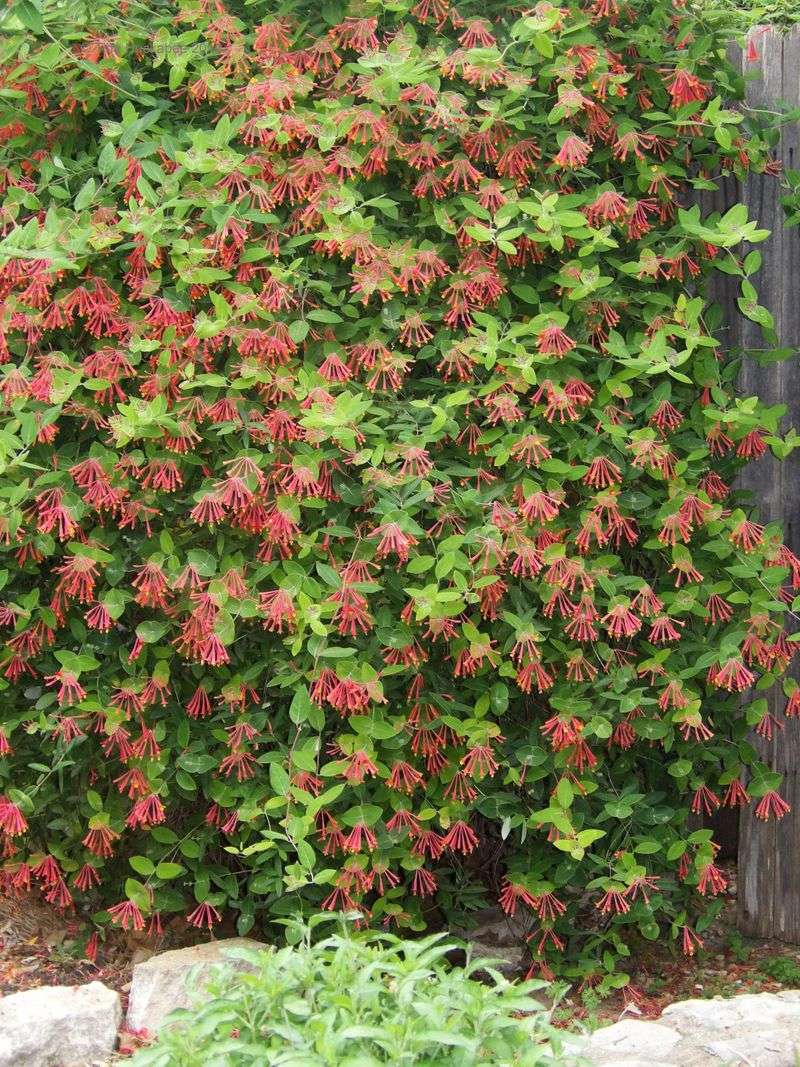
Hummingbirds go absolutely wild for honeysuckle. The ‘Major Wheeler’ variety is one of the best choices for Oregon gardeners who want fast color without worrying about the vine taking over.
It grows up to seven feet tall and produces striking red-gold blooms from June all the way through September.
What makes this variety special is that it stays well-behaved in the garden. Some honeysuckle types spread aggressively and crowd out native plants, but non-invasive types like ‘Major Wheeler’ grow in a tidy, controlled way.
That makes it a responsible and beautiful choice for Oregon’s diverse ecosystems, especially near natural areas along the coast or in the Willamette Valley.
Beyond hummingbirds, butterflies flock to the nectar-rich flowers throughout the summer. In fall, the vine produces small red berries that songbirds love to snack on.
So even after the blooms fade, your fence keeps serving the local wildlife. Plant it in full sun or partial shade, water it regularly during dry spells, and enjoy one of Oregon’s most rewarding fence vines season after season.
Your Oregon Garden Changes Every Week. Your Plan Should Too.
Gardening in Oregon changes quickly throughout the season. Every Friday you’ll receive a simple weekly plan showing exactly what to plant, prune, fertilize, harvest, and protect so you never miss the right timing.
3. Trumpet Vine
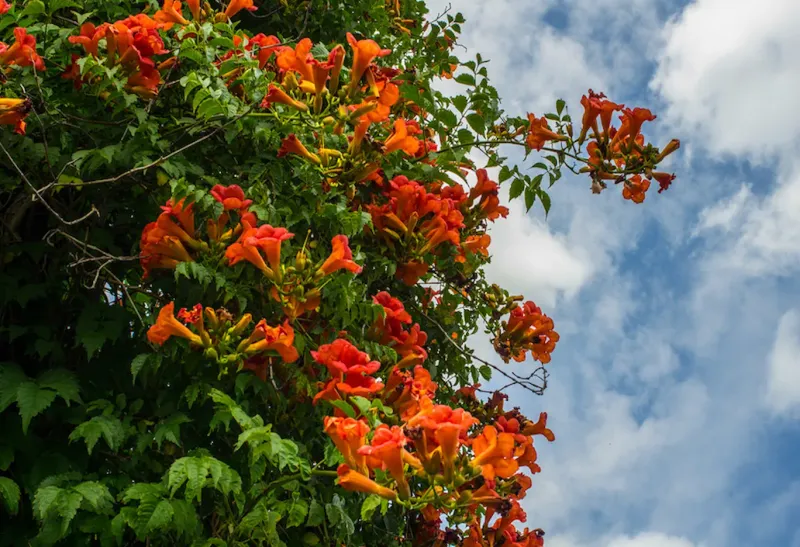
Bold, loud, and absolutely loved by hummingbirds, Trumpet Vine is the vine that makes a statement. Its large, trumpet-shaped flowers come in fiery shades of orange, red, and yellow, and they cover the vine in thick clusters all summer long.
Once established, this vine grows fast and strong, easily covering a long fence section in just one season.
In Oregon, Trumpet Vine performs best in full sun locations with warm soil, making it ideal for south-facing fences in the Willamette Valley or other inland areas. It can grow up to 30 feet if left unchecked, so regular pruning keeps it looking tidy and manageable.
Cutting it back in late winter helps control its size and encourages fresh, healthy new growth each spring.
One thing to keep in mind is that Trumpet Vine spreads through underground runners, so planting it in a contained area or checking around the base occasionally is a smart habit. Despite needing a little management, the payoff is huge.
Hummingbirds treat it like their personal buffet, and the bold color adds dramatic flair to any fence. It is a true showstopper in any Oregon landscape.
4. Scarlet Runner Bean
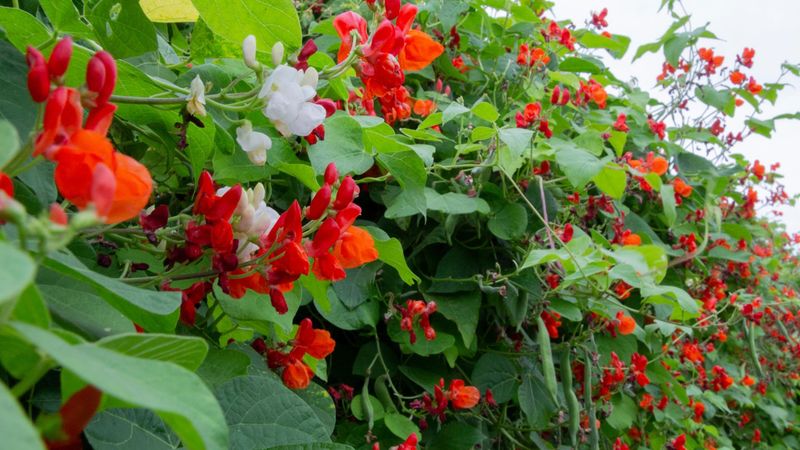
Not every fast-growing vine is just for looks. Scarlet Runner Bean pulls double duty as a gorgeous flowering vine and a productive food plant.
The vivid scarlet-red flowers are absolutely stunning against a green fence, and they attract bumblebees and hummingbirds like a magnet from early summer through fall.
This annual vine grows incredibly fast in Oregon’s warm summer months, often reaching six to ten feet in a single season. The large, heart-shaped leaves create a dense, lush wall of green that gives gardens a tropical feel.
After the flowers fade, long seed pods develop and can be harvested and eaten as beans, which makes this plant extra useful in a kitchen garden.
Starting Scarlet Runner Bean from seed is easy and inexpensive. Direct sow seeds into the ground after the last frost, give them a fence or trellis to grab onto, and they will take off quickly.
Oregon gardeners in the Portland area and the Willamette Valley have great success with this plant. Water consistently during dry stretches, and the vine will reward you with weeks of brilliant blooms, buzzing bees, and a healthy harvest all in one.
5. Morning Glory (Annual Types)
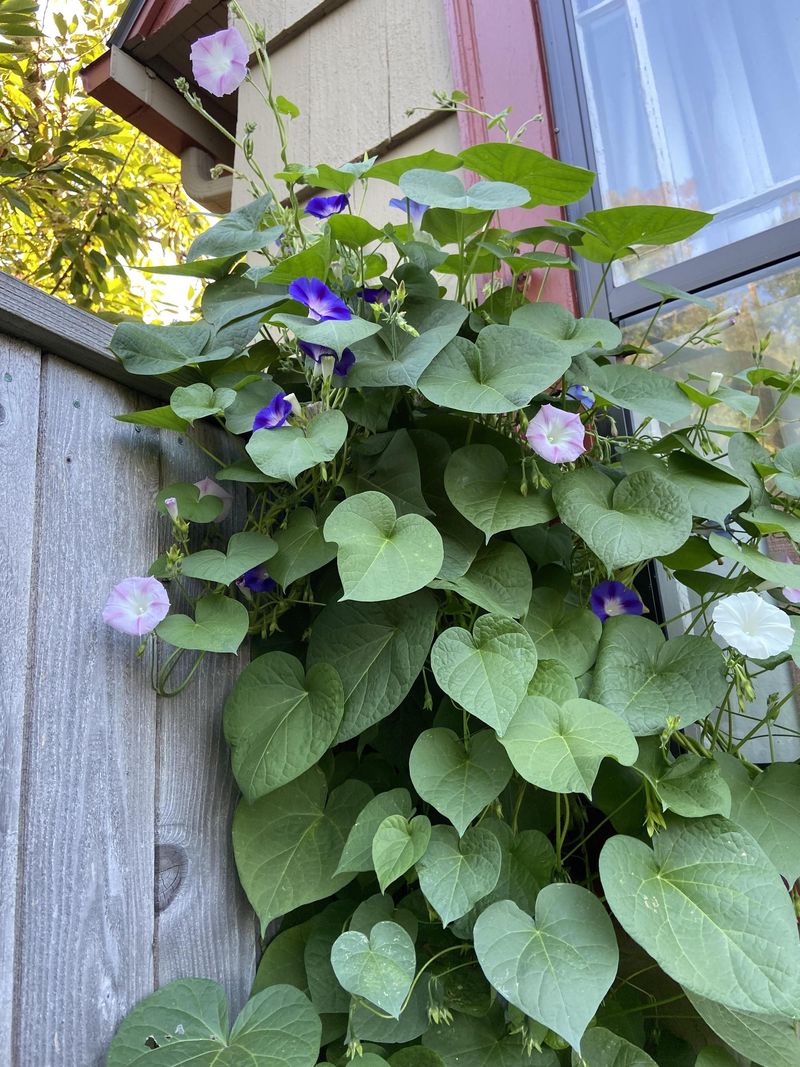
There is something almost magical about stepping outside on a summer morning and seeing a fence completely covered in bright blue, purple, or pink funnel-shaped blooms. Morning Glory is one of the fastest-growing annual vines available to Oregon gardeners, and it can cover a large fence section in just a few weeks after sprouting.
Annual types like ‘Heavenly Blue’ and ‘Grandpa Ott’ are especially popular because they grow quickly, bloom heavily, and do not spread invasively like some perennial relatives. Bees and butterflies are drawn to the wide-open flowers, which provide easy access to nectar throughout the morning hours.
As the day heats up, the blooms close and rest until the next morning.
Planting Morning Glory in Oregon is simple. Sow seeds directly into the soil after the last spring frost, ideally in a spot with full sun and good drainage.
Soaking seeds overnight before planting speeds up germination. Along Oregon’s coast, morning fog can slow growth a bit, so inland gardens in the valley tend to get the most vigorous results.
Give this vine something to twist around, keep it watered, and enjoy a fence full of cheerful color from July through the first fall frost.
6. Sweet Pea (Climbing Types)
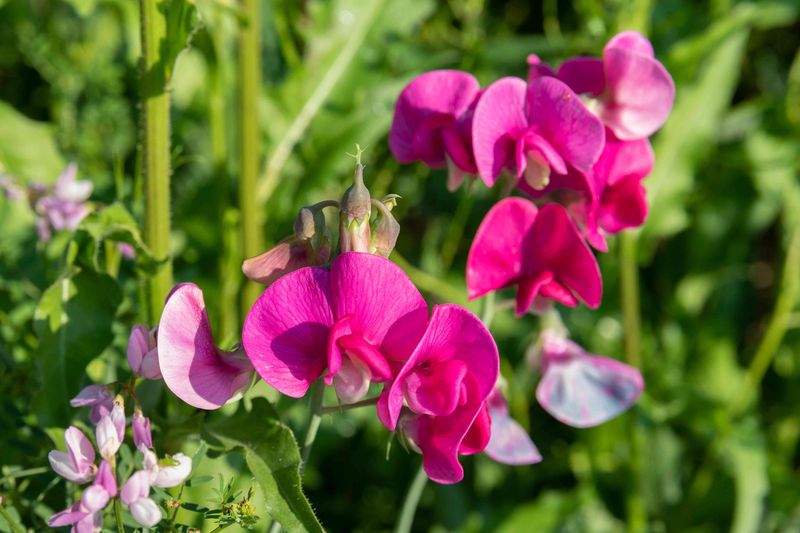
Few flowers smell as wonderful as Sweet Pea in full bloom. Climbing types send long, twining tendrils up fences and trellises, producing clusters of ruffled, butterfly-shaped flowers in shades of pink, lavender, white, and deep red.
The fragrance is sweet and old-fashioned, the kind that makes you stop and breathe deeply every time you walk past.
In Oregon, Sweet Pea thrives as a cool-season annual, which means it performs best in spring and early summer before the heat sets in. Coastal areas of Oregon with their mild temperatures are especially ideal for keeping Sweet Pea blooming longer.
Inland gardeners can get a jump start by planting seeds in early spring as soon as the soil can be worked.
Bumblebees are the primary pollinators for Sweet Pea, and they visit the blooms constantly on warm spring days. Regular cutting of the flowers actually encourages the plant to produce even more blooms, so keep a vase handy.
Deadheading spent flowers is also important for extending the blooming season. Give climbing Sweet Pea a sunny fence with good air circulation, enrich the soil with compost, and enjoy one of the most fragrant, beautiful vines Oregon’s spring season has to offer.
7. Passionflower
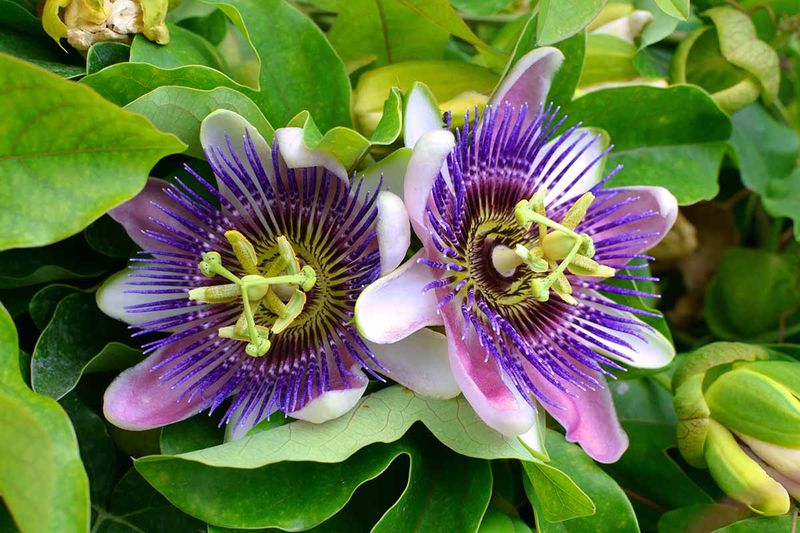
If there is one vine that makes people stop in their tracks and ask what on earth that flower is, it is Passionflower. The blooms look almost alien, with layered rings of purple and white petals surrounding a crown of colorful filaments.
Up close, it looks more like a piece of art than a garden plant.
The hardy variety known as Passiflora incarnata can handle Oregon’s winters in many parts of the state, especially in milder inland regions. It grows quickly in summer, easily climbing eight to fifteen feet up a fence or trellis.
Bees, bumblebees, and butterflies are all drawn to the large, open flowers, which provide plenty of nectar and pollen throughout summer.
Beyond the flowers, Passionflower also produces edible fruits called maypops, which are small, egg-shaped fruits with a sweet tropical flavor inside. Birds and wildlife enjoy them too.
Plant Passionflower in a warm, sunny spot with well-drained soil. In colder parts of Oregon, a south-facing fence can provide extra warmth and protection through winter.
Once established, this vine is surprisingly low-maintenance and returns reliably each spring with fresh growth and those unforgettable, one-of-a-kind blooms.
8. Chocolate Vine
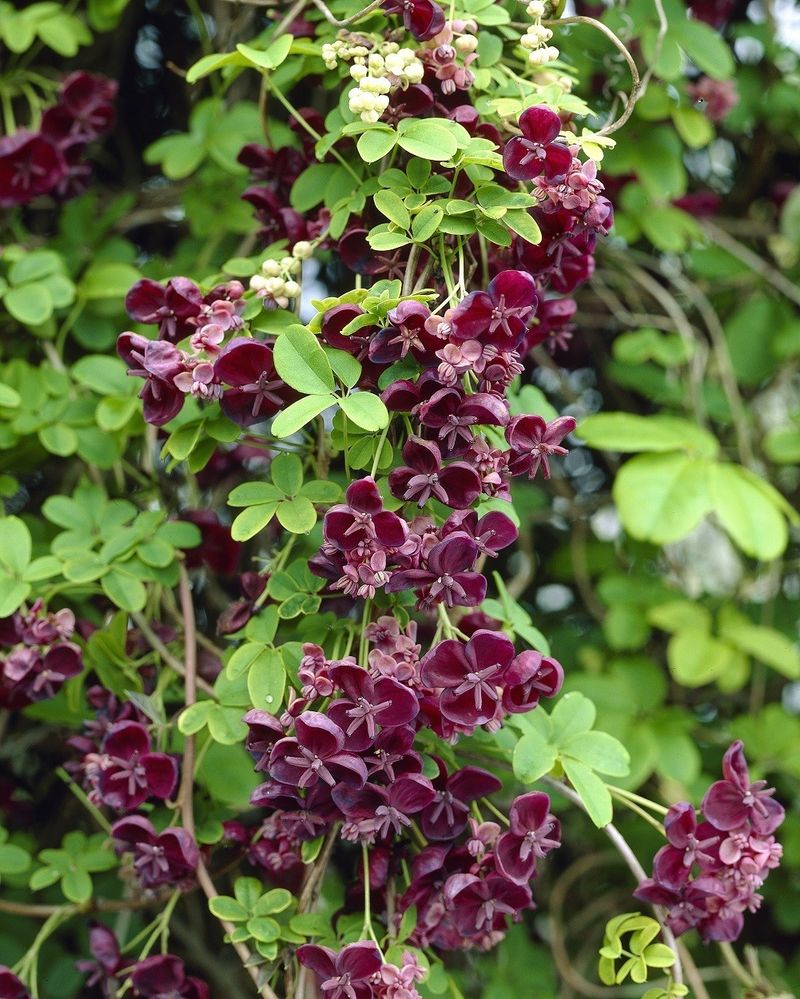
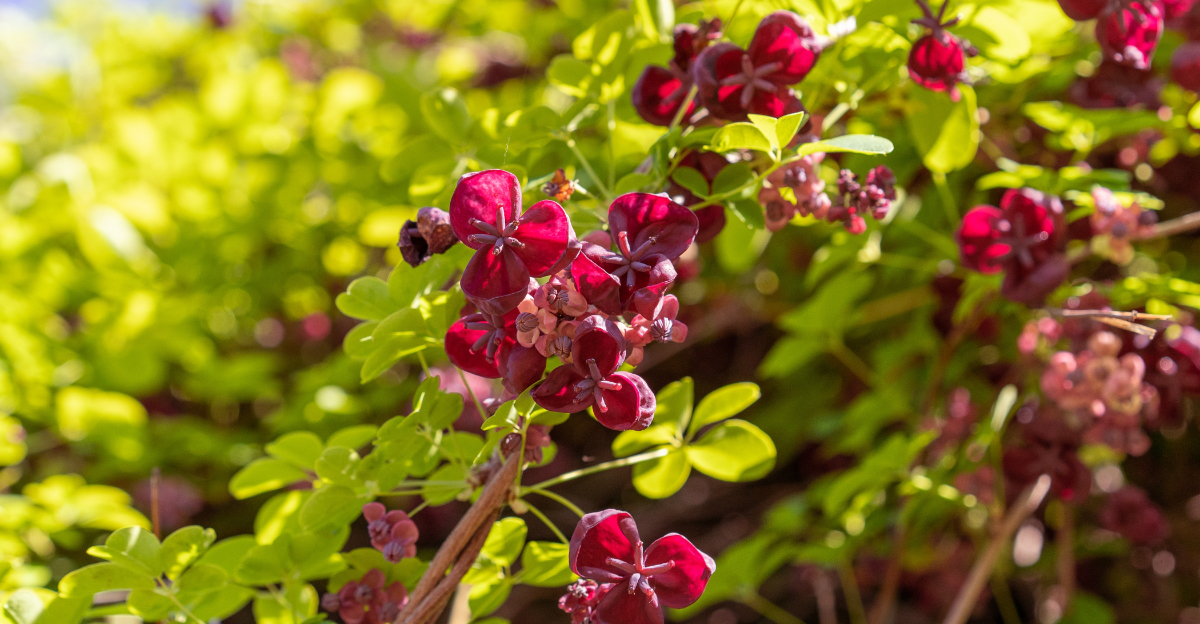
The name alone makes people curious. Chocolate Vine, known scientifically as Akebia quinata, gets its name from the faint chocolate-vanilla scent its small, dark maroon flowers produce in early spring.
The blooms are subtle and elegant rather than flashy, hanging in drooping clusters that sway gently in the breeze.
This semi-evergreen vine grows vigorously in Oregon’s climate, often putting on several feet of new growth each season.
It works beautifully on fences, pergolas, and trellises, creating a dense, attractive screen of attractive lobed leaves that stay green through much of the year.
Bees and other early-season pollinators love visiting the flowers, which bloom when not much else is open yet in the garden.
One important note for Oregon gardeners is that Chocolate Vine can spread aggressively if not managed. Pruning it back after it blooms keeps the growth in check and prevents it from overwhelming neighboring plants.
In controlled conditions, it is a truly lovely and unique vine with real character. Plant it in full sun to partial shade, give it sturdy support, and enjoy both the sweet spring fragrance and the lush greenery it brings to your Oregon fence throughout the entire growing season.