These 8 Underrated Spring-Blooming Shrubs Deserve A Spot In Arizona Gardens
Spring in Arizona has a way of sneaking up fast, and suddenly the garden either feels full of life or a little too quiet. Some shrubs put on a show every year, while others get overlooked even though they handle the heat and dry air just as well, sometimes even better.
What makes it tricky is that not every spring bloomer thrives in Arizona’s conditions.
A plant that looks great elsewhere can struggle here, while a less talked about shrub can settle in and bloom right when everything else is just getting started.
That is where a few underrated picks can completely change how a garden feels during the season. They do not always get the attention they deserve, but once they start blooming, they are hard to ignore.
These are the kinds of shrubs that quietly stand out when spring arrives.
1. Texas Sage Brings Soft Color And Handles Tough Conditions
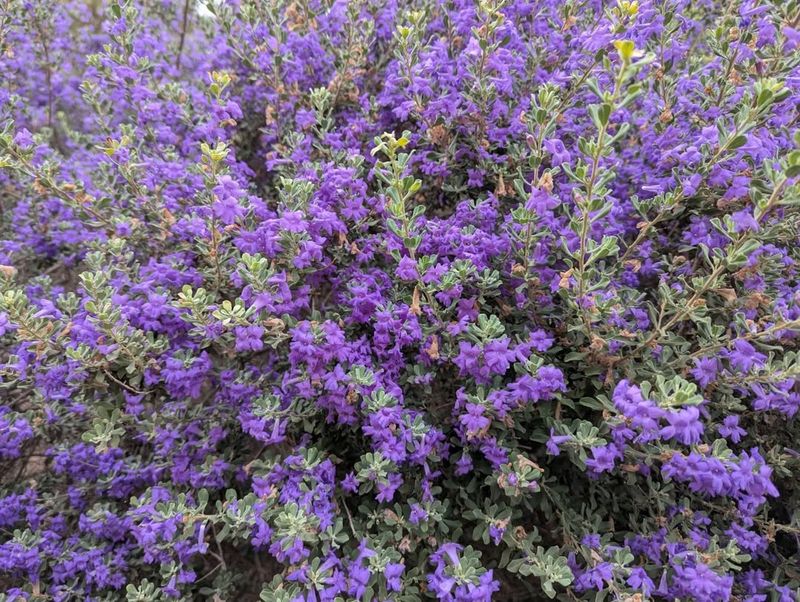
Forget needing perfect soil or a fancy watering schedule — Texas Sage practically thrives on neglect. Tucson and Phoenix gardeners have relied on this tough shrub for years, and once you see it covered in lavender-purple blooms after a monsoon tease, you’ll understand why.
It’s one of those plants that surprises you every single time.
Silver-gray leaves give it a soft, almost dusty look that pairs well with bold desert plants like agave or prickly pear. Blooms tend to burst out right before or after rain, which in Arizona feels like a little magic trick the plant does on cue.
Plant it in full sun with fast-draining soil and step back.
Spacing matters with Texas Sage — give it room to fill out naturally without crowding. Pruning too aggressively can actually reduce blooms, so a light trim to shape it is all it really needs.
Heights typically range from three to eight feet depending on the variety, so pick one that fits your space before planting.
Arizona nurseries usually carry at least two or three cultivars, and some are more compact than others, which is helpful for smaller yards or border plantings where space is tight.
Once established, it barely needs supplemental watering, which makes it one of the easiest choices for low water Arizona landscapes. It also handles heat without stress, holding its shape and color even during the hottest parts of summer.
2. Fairy Duster Adds Bright Blooms And Draws In Hummingbirds
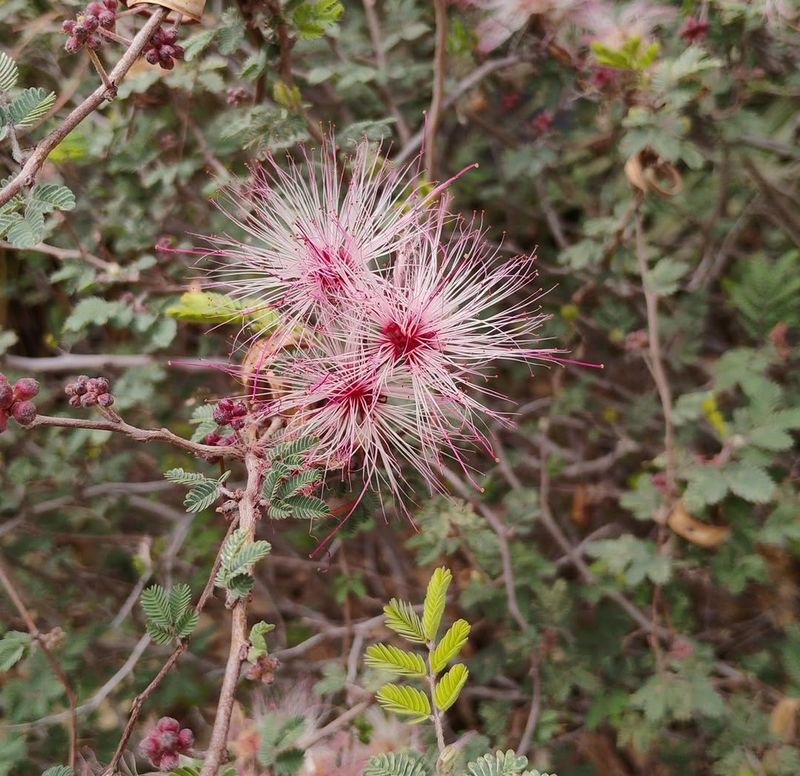
Walk past a Fairy Duster in bloom and you’ll stop cold — those fluffy, hot-pink flower clusters look almost too wild to be real. Native to the Sonoran Desert, this shrub fits right into Arizona gardens without any special treatment.
It blooms heavily in spring and often pushes out scattered flowers well into the warmer months.
Hummingbirds absolutely zero in on it. If you’ve been trying to attract them without much luck, this shrub changes things fast.
Plant a few near a patio or window where you can actually watch the action, because the birds visit constantly when blooms are peaking. Butterflies show up too, which only adds to the appeal.
Your Arizona Garden Changes Every Week. Your Plan Should Too.
Gardening in Arizona changes quickly throughout the season. Every Friday you’ll receive a simple weekly plan showing exactly what to plant, prune, fertilize, harvest, and protect so you never miss the right timing.
Fairy Duster stays relatively compact, usually topping out around three to four feet, making it a solid choice for smaller Arizona yards or mixed desert borders. Full sun is non-negotiable — put it in shade and it sulks, blooms poorly, and loses its shape.
Sandy or rocky soil suits it perfectly, and supplemental irrigation during extreme dry spells helps it perform better through the season. Avoid overwatering, which is the most common mistake people make with this shrub.
A little drought stress actually seems to push it to bloom harder, which is exactly what you want from a spring showstopper in the desert Southwest.
3. Baja Fairy Duster Keeps Color Going As The Season Warms Up
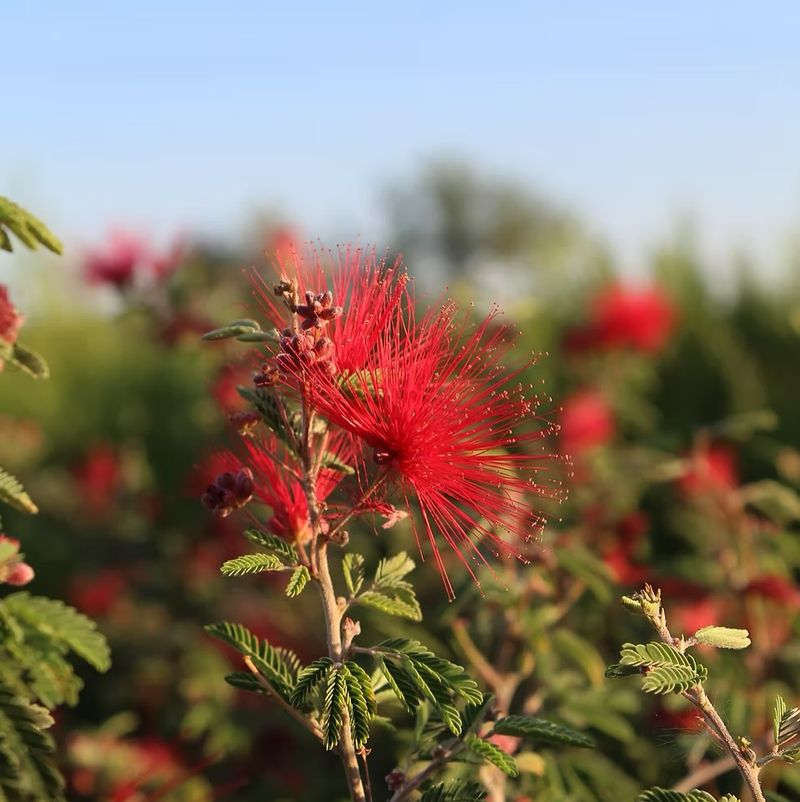
Most spring bloomers in Arizona tap out once temperatures climb past 90 degrees. Baja Fairy Duster doesn’t get that memo.
Related to the standard Fairy Duster but pushing deeper red and orange tones, this shrub keeps flowering longer into the season when most other plants have already called it quits for the year.
Bigger than its cousin, Baja Fairy Duster can reach five or six feet wide over time, so give it space to spread. It tends to look best when allowed to grow naturally rather than being clipped into a tidy shape.
The loose, arching branches and feathery blooms give it a wild, textured look that works really well in naturalistic Arizona landscapes.
Pollinators go wild for it — bees, butterflies, and hummingbirds all visit regularly throughout the bloom season. Plant it along a south or west-facing wall where heat reflects and the soil stays dry.
Established plants handle full desert exposure without complaint, and they rarely need any supplemental feeding. Baja Fairy Duster is also a smart pick for erosion-prone slopes in Tucson-area yards, where its root system holds soil without needing irrigation to stay put.
If you want a shrub that bridges the gap between spring and early summer color in Arizona, this one earns its spot in the ground every year.
4. Yellow Bells Fills Gardens With Bold Blooms For Months
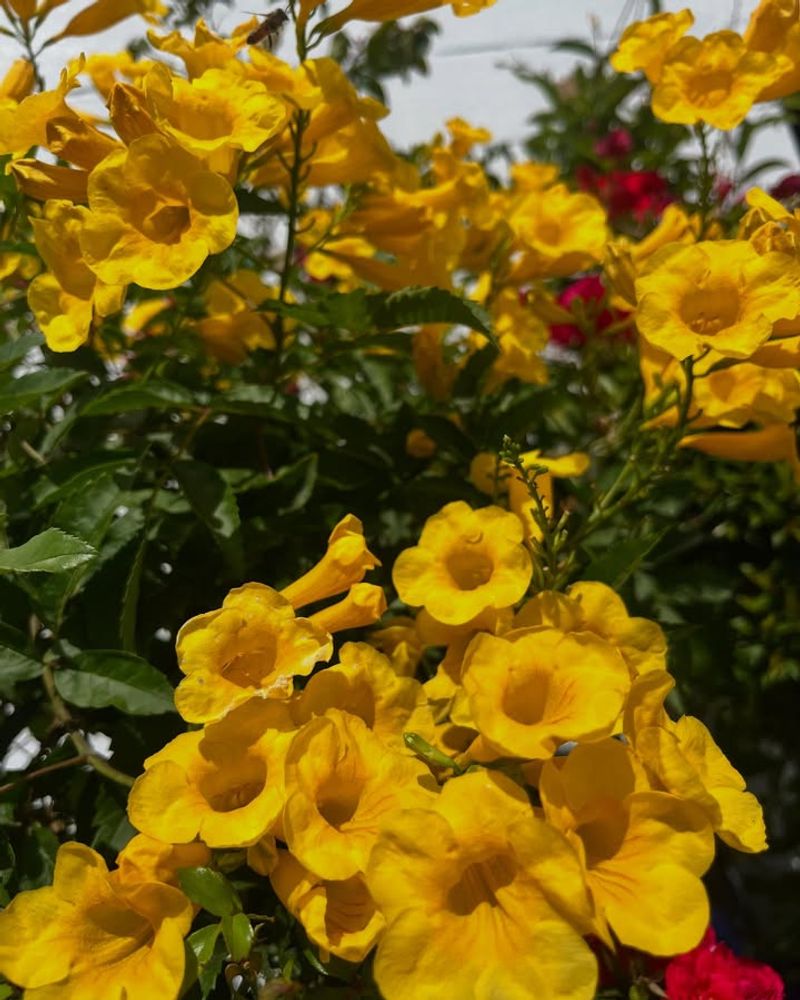
Few shrubs in Arizona put on a longer show than Yellow Bells. From spring straight through fall, those trumpet-shaped golden flowers just keep coming — wave after wave with barely a break.
It’s the kind of plant that makes neighbors slow down and ask what it is, because the color is genuinely hard to ignore.
Yellow Bells can get large, sometimes reaching eight to ten feet tall and just as wide, so plant it where it has room to grow without constant cutting back. It works beautifully as a backdrop shrub, a privacy screen, or a bold anchor in a mixed desert border.
In Phoenix and the lower desert elevations, it performs especially well because it absolutely loves heat.
Hummingbirds and bees visit the flowers constantly throughout the season. Deadheading isn’t required, but a light trim in late winter before new growth starts helps keep the shape tidy and encourages a stronger flush of blooms in spring.
Yellow Bells drops its leaves in colder winters, which surprises people who expect it to stay evergreen year-round. Don’t panic — it comes back reliably and often pushes out fresh growth quickly once temperatures warm up again.
Regular deep watering during the hottest months helps it sustain that heavy bloom load without stressing the plant too much.
5. Valentine Bush Stands Out With Early Season Color
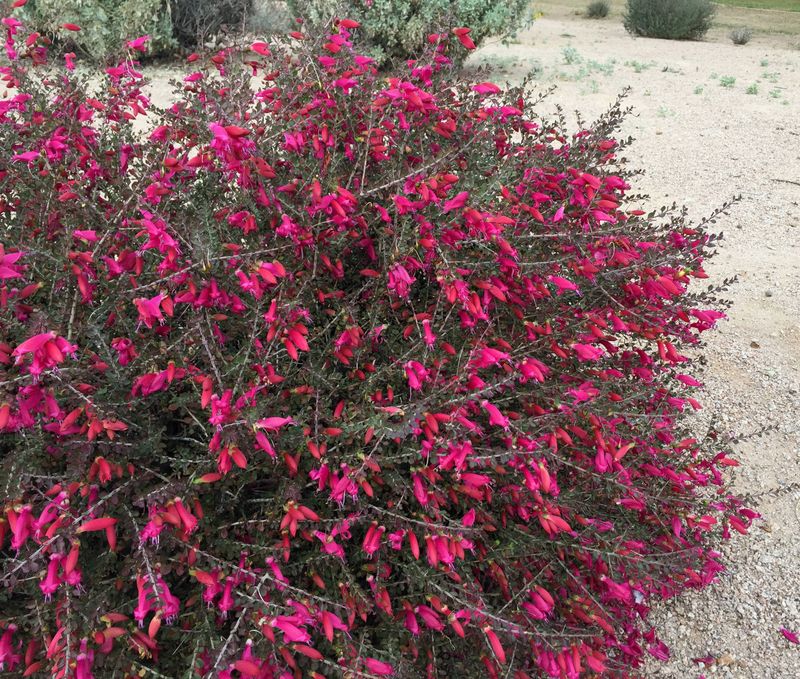
Red flowers in February? Valentine Bush pulls it off.
One of the earliest bloomers in the Arizona desert, it starts pushing out clusters of bright red tubular flowers while most other plants are still dormant.
Spotting one in full bloom against a clear winter sky is genuinely striking, and it sets the tone for the whole spring season ahead.
Hummingbirds arrive before most people even realize spring is close, drawn straight to those early blooms when food sources are still limited. Planting Valentine Bush near a window or sitting area means you get front-row seats to the action.
It grows to about five or six feet tall and wide, with dense evergreen foliage that keeps the yard looking full even when it’s not in peak bloom.
Full sun suits it best, though it tolerates some afternoon shade in hotter parts of Arizona. Avoid planting it in areas with heavy clay or poor drainage — wet roots are its biggest weakness.
Sandy, well-draining soil and occasional deep watering through dry spring stretches is really all it needs to stay healthy and productive. Valentine Bush is native to the Chihuahuan Desert, so it’s genuinely adapted to the heat and dry conditions that define so much of Arizona’s growing environment.
Once it finds its footing in your yard, it rewards you with reliable early color year after year without demanding much in return.
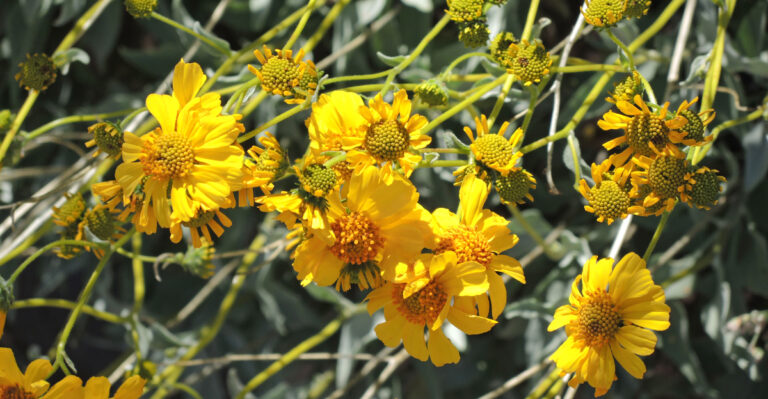
6. Brittlebush Lights Up The Landscape With Yellow Spring Blooms
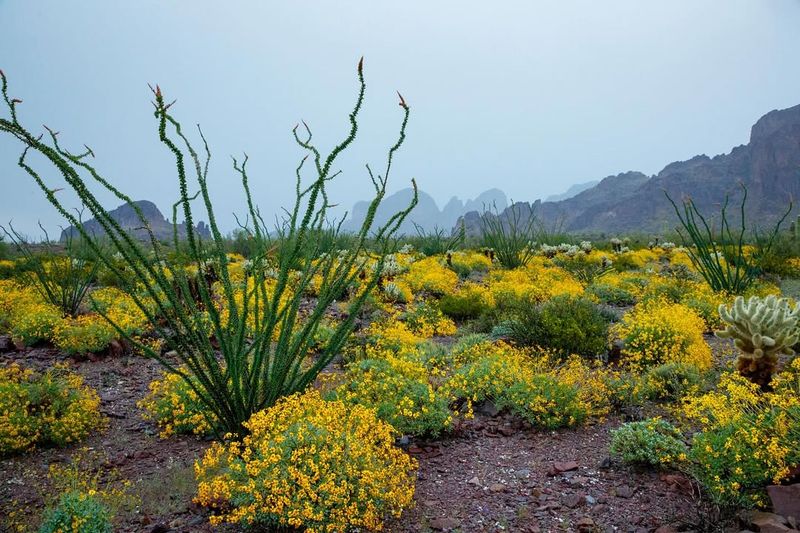
Drive through the Sonoran Desert in March and April and you’ll see Brittlebush painting entire hillsides yellow — it’s one of the most dramatic spring displays Arizona has to offer. Bringing that same energy into a home garden is easy, and the plant asks for almost nothing in return.
Silver-gray leaves contrast beautifully against the bright yellow blooms that shoot up on tall bare stems above the foliage mound.
Brittlebush stays compact, usually two to three feet tall and wide, making it a great option for smaller spaces or front-of-border planting. It pairs naturally with other desert natives like penstemon, globe mallow, and desert marigold for a layered, low-water spring display.
In Arizona gardens, it tends to bloom heaviest from late February through April depending on elevation and rain patterns.
Sharp drainage is critical — soggy soil shortens its lifespan significantly. Rocky slopes, gravel gardens, and raised beds all suit it well.
After blooming finishes, cutting the spent flower stalks back to the foliage keeps things tidy and encourages fresh silver leaf growth through summer. Brittlebush may go semi-dormant in extreme heat, which is completely normal behavior for a plant adapted to desert conditions.
Water sparingly through summer and it bounces back strong when fall temperatures drop. Arizona gardeners who haven’t tried it yet are genuinely missing one of the best native bloomers available.
7. Chuparosa Brings Early Color And Supports Pollinators
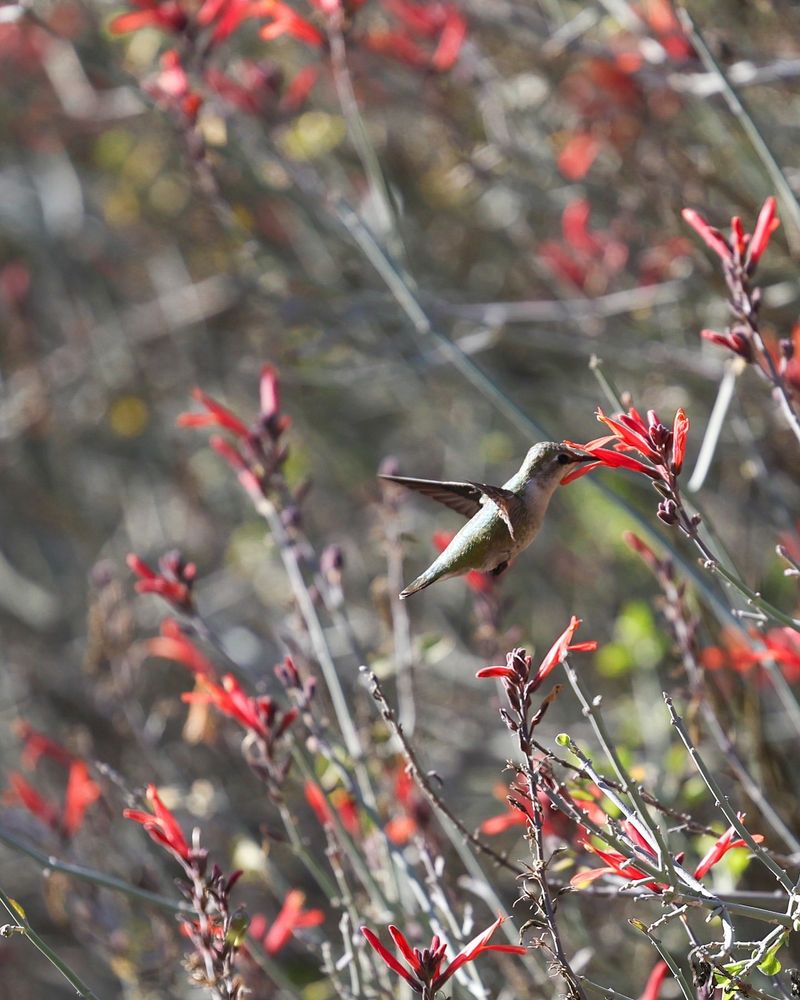
Chuparosa starts blooming when almost nothing else in the Arizona garden has woken up yet, which makes it genuinely valuable. Those tubular red flowers appear on bare green stems in late winter, often as early as January in the lower desert, and hummingbirds track them down fast.
Watching a hummingbird work through a Chuparosa in February feels like a real reward for planting something thoughtful.
Stems stay green year-round, giving the plant a photosynthetic advantage even when leaves are minimal or absent.
It grows loosely and openly, reaching about four to five feet in both height and spread, with a natural sprawling habit that looks best in casual desert-style plantings rather than formal hedges.
Trying to force it into a tight shape tends to reduce blooms and stress the plant unnecessarily.
Plant Chuparosa in full sun with excellent drainage — it grows wild along desert washes in Arizona and Baja California, so it’s built for dry, rocky conditions.
Supplemental water during dry spring stretches keeps blooms coming longer, but it handles drought better than most shrubs once its root system is established in the ground.
Bees and orioles also visit the flowers regularly, so Chuparosa earns its place as a pollinator magnet in any Arizona garden. If early-season wildlife activity is a priority for you, this shrub belongs somewhere in your yard.
8. Desert Senna Adds Bright Yellow Flowers With Little Effort
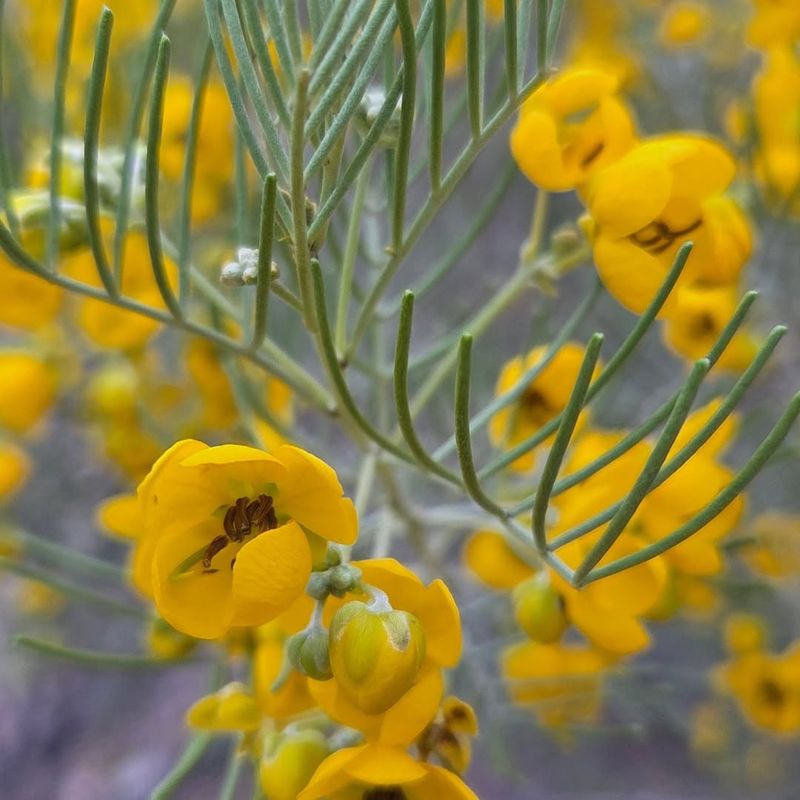
Bright yellow flowers, zero fuss, and a genuine love for Arizona heat — Desert Senna checks every box a desert gardener could want from a spring bloomer.
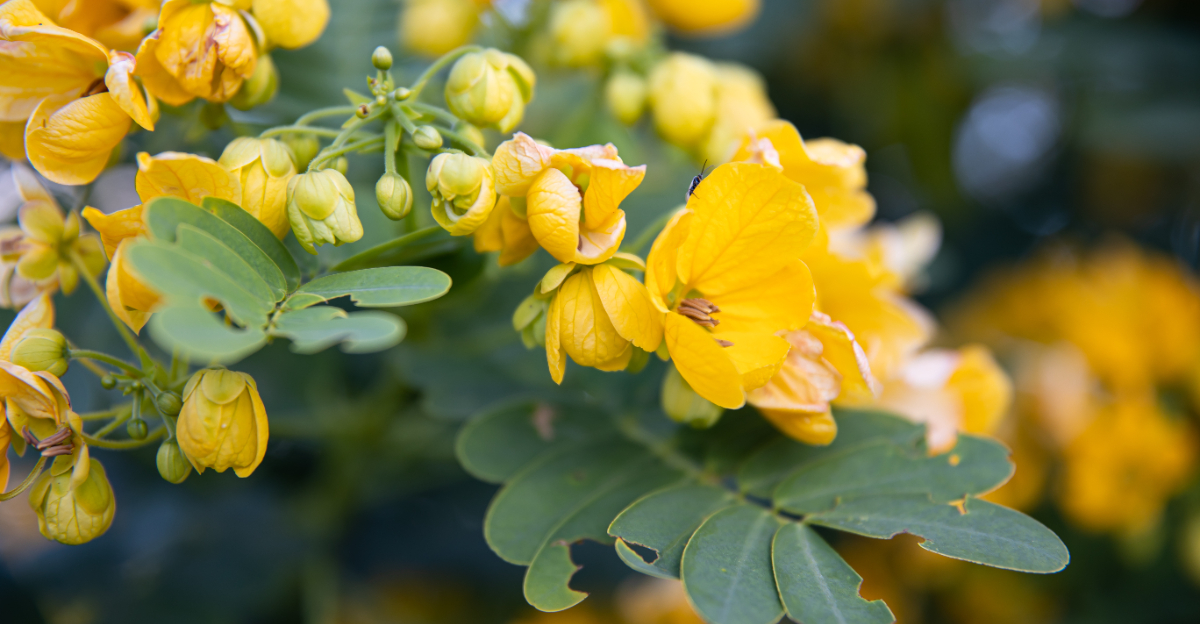
Clusters of cheerful yellow blooms appear in spring and attract sulfur butterflies in particular, which use the plant as a host for their larvae.
Planting it means you’re not just adding color — you’re actively supporting local butterfly populations.
Desert Senna grows fast and can reach four to six feet tall depending on water and soil conditions. In sandy, well-drained spots with full sun exposure, it settles in quickly and starts putting on a show within its first or second season.
Avoid heavy clay soils where water pools — that’s the one condition it genuinely struggles with in Arizona landscapes.
Pruning after the main bloom period helps control size and encourages fresh growth, but don’t cut it back too hard or too late in the season. A light shape trim is all it usually needs to stay tidy without sacrificing next year’s flower buds.
Desert Senna is native to the Sonoran Desert region, which means it evolved alongside the same soil, heat, and seasonal rain patterns that define Arizona gardening.
No fertilizer is needed, supplemental watering can be minimal once roots are settled, and the plant rewards patience with increasingly impressive bloom displays as it matures over the years.