The 13 Best Vegetables To Grow In Raised Beds In Oregon
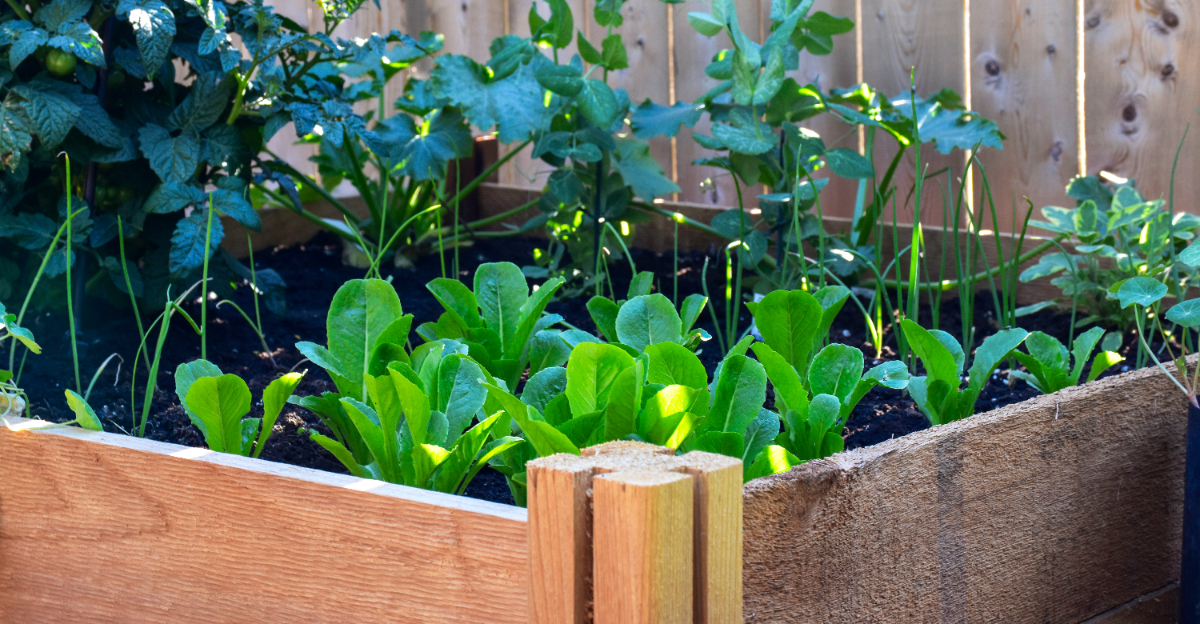
Raised beds and Oregon gardens are a perfect match. The soil warms up faster, drains better, and gives you way more control over what goes into your plants.
That means bigger harvests, fewer headaches, and a whole lot more fun getting your hands dirty.
Oregon’s mix of cool springs, mild summers, and plenty of rain can be a dream for some veggies and a struggle for others. The trick is picking the ones that actually thrive here, not just survive.
Some vegetables explode with growth in raised beds, soaking up that improved soil and consistent moisture like they were made for it. Others stay compact, productive, and easy to manage, which is exactly what you want when space matters.
Once you know which ones perform best, your raised bed can turn into a steady source of fresh, homegrown flavor all season long.
1. Lettuce
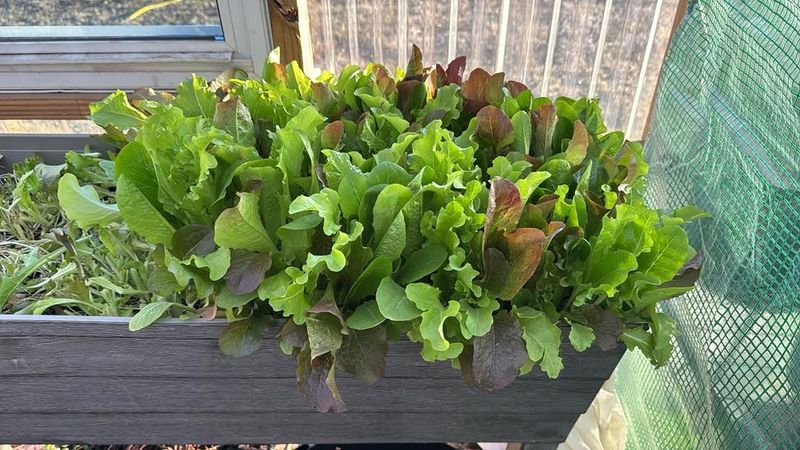
Few vegetables are as rewarding to grow as lettuce, especially in Oregon’s cool, mild climate. It grows fast, takes up little space, and you can start harvesting leaves in as little as four weeks.
That makes it one of the most beginner-friendly crops you can plant in a raised bed.
Loose-leaf varieties like Black Seeded Simpson and Butterhead are especially popular with Oregon gardeners. They handle the state’s cool springs and mild falls without much fuss.
You can even plant lettuce in early spring, harvest it, and then replant for a second round in late summer.
Raised beds are perfect for lettuce because the soil warms up faster than ground soil, giving seeds a better start. Keep the soil moist and make sure your bed gets at least four to six hours of sunlight each day.
In warmer parts of Oregon, a little afternoon shade can help prevent the leaves from turning bitter. Plant seeds about six inches apart and thin them as they grow.
With just a little care, you will have crisp, fresh salad greens right outside your door.
2. Spinach
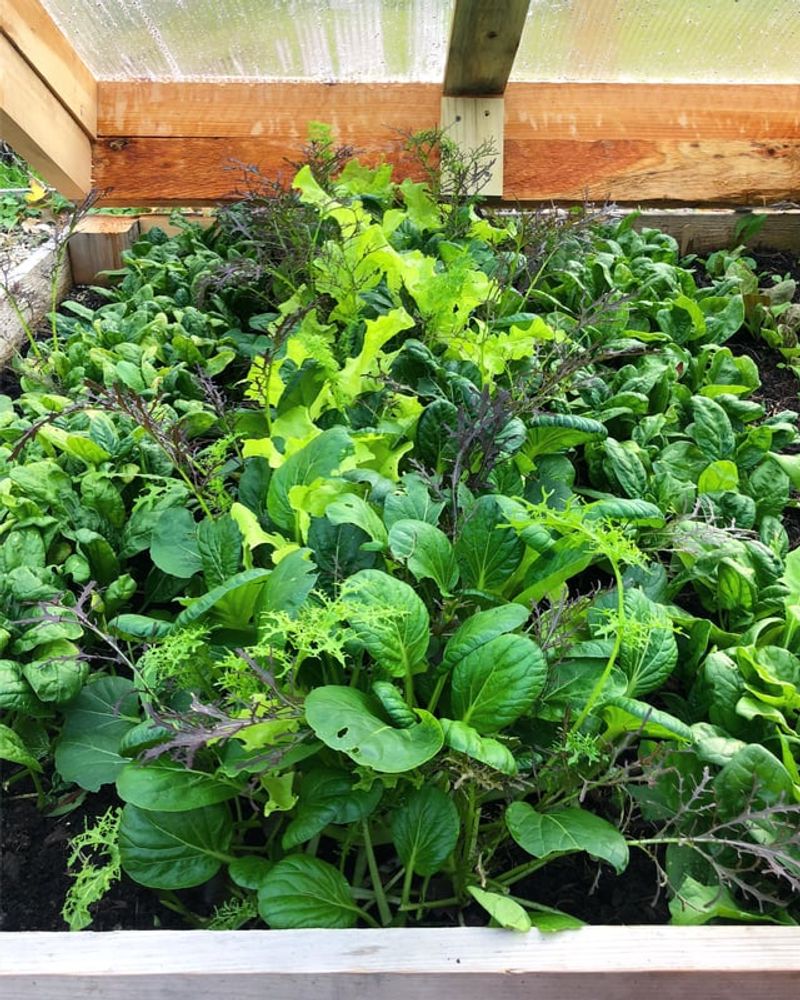
Spinach is a cool-weather champion, and Oregon’s climate is practically made for it. It thrives in the mild temperatures of spring and fall, making it one of the best crops to plant early in the season.
In fact, you can sow spinach seeds as soon as the soil can be worked, sometimes as early as February in western Oregon.
Bloomsdale Long Standing and Tyee are two varieties that do especially well here. Both resist bolting, which means they keep producing leaves longer before going to seed when the weather warms up.
That extra production time is a huge bonus for Oregon gardeners who want to get the most out of their raised beds.
Raised beds give spinach exactly what it needs: well-drained, fertile soil with good moisture retention. Plant seeds about two inches apart and keep the bed consistently watered.
Spinach roots are shallow, so the loose, deep soil of a raised bed makes a big difference. Harvest outer leaves regularly to encourage new growth.
Rich in iron and vitamins, spinach is not just easy to grow, it is also one of the most nutritious vegetables you can add to your plate.
Your Oregon Garden Changes Every Week. Your Plan Should Too.
Gardening in Oregon changes quickly throughout the season. Every Friday you’ll receive a simple weekly plan showing exactly what to plant, prune, fertilize, harvest, and protect so you never miss the right timing.
3. Kale
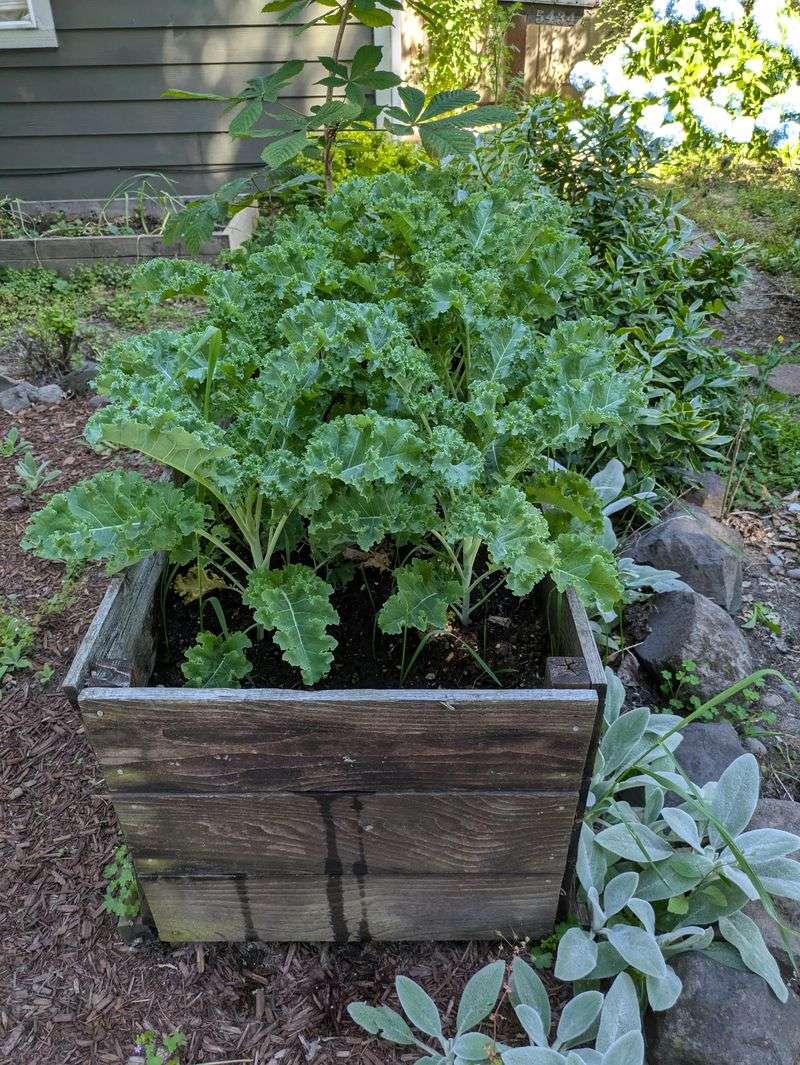
Kale has earned its reputation as one of the toughest, most productive vegetables you can grow in Oregon. It handles cold, rain, and even light frost without skipping a beat.
Some gardeners in the Pacific Northwest harvest kale well into December and beyond, making it a true year-round performer.
Two standout varieties for Oregon raised beds are Lacinato, often called dinosaur kale for its bumpy, dark leaves, and Red Russian, which has a sweeter, more tender flavor. Both varieties are reliable producers that keep giving you harvests week after week.
Did you know that kale actually tastes sweeter after a frost? The cold temperatures convert some of the plant’s starches into sugars, improving the flavor naturally.
In a raised bed, kale grows best with full sun and rich, well-draining soil. Space plants about 18 inches apart so each one has room to spread out.
Regular feeding with a balanced fertilizer helps keep the leaves lush and tender. Harvest the lower, outer leaves first and leave the center of the plant intact so it keeps growing.
Kale is packed with vitamins and makes a great addition to soups, salads, and smoothies all across Oregon.
4. Swiss Chard
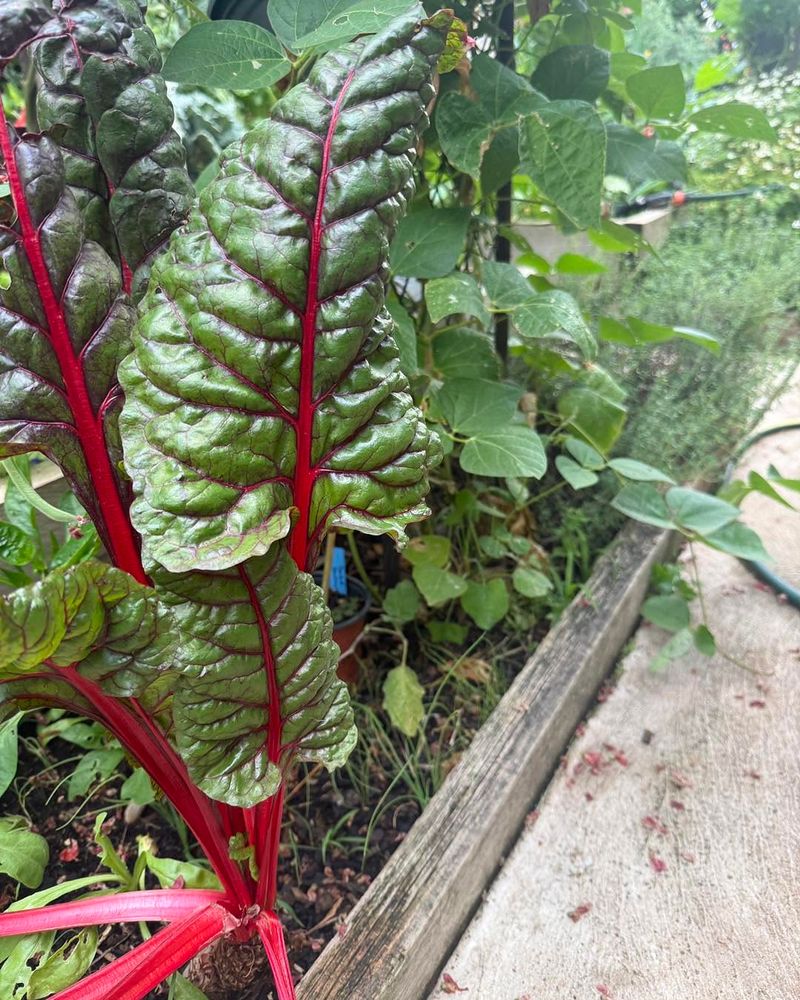
Walk past a raised bed full of Rainbow Chard on a sunny Oregon morning and it almost looks like a bouquet of flowers. The stems come in brilliant shades of red, yellow, orange, and white, making it one of the most visually stunning vegetables you can grow.
But Swiss chard is not just pretty, it is also incredibly productive and easy to manage.
Fordhook Giant is another trusted variety that Oregon gardeners have relied on for generations. It produces large, dark green leaves with thick white stems that hold up well in cooking.
Swiss chard bridges the gap between cool-season and warm-season growing, tolerating both light frosts and summer heat better than many other leafy greens.
Raised beds suit Swiss chard perfectly because the improved drainage prevents the root rot that can happen in heavy, wet ground soil. Plant seeds about six inches apart and thin seedlings to about 12 inches once they sprout.
Keep the soil evenly moist and fertilize lightly every few weeks. Harvest outer leaves as needed and the plant will keep producing for months.
Whether you saute it, add it to pasta, or toss it in a stir-fry, Swiss chard is a versatile Oregon garden staple.
5. Carrots
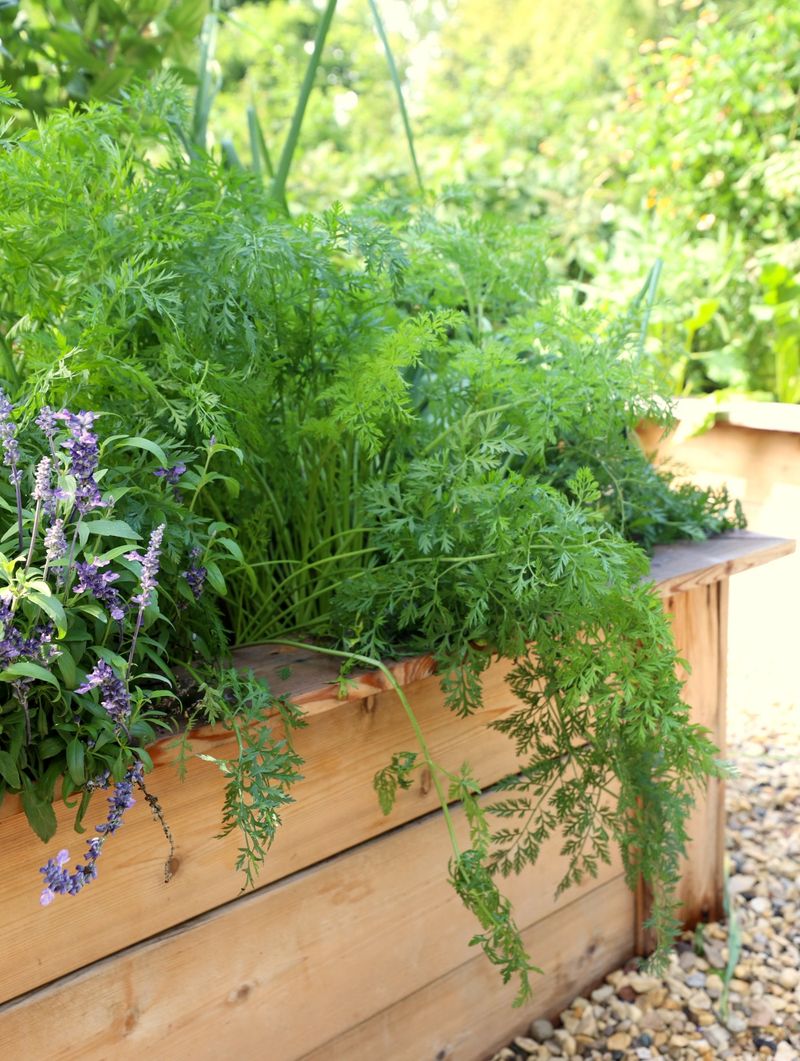
Carrots love raised beds, and Oregon gardeners quickly discover why. The deep, loose, rock-free soil of a raised bed lets carrot roots grow long and straight without hitting obstacles.
In regular garden soil, carrots often end up forked or stunted. A raised bed solves that problem almost completely.
Oregon-friendly varieties like Danvers 126 and Nantes are consistent performers that produce sweet, crisp roots. Danvers handles heavier soils better than most, while Nantes is known for its smooth skin and exceptional sweetness.
Both varieties are great choices whether you are growing in the Willamette Valley or in a drier part of eastern Oregon.
Sow seeds directly into the bed about a quarter inch deep and keep the soil moist until germination, which can take up to two weeks. Thin seedlings to about two to three inches apart once they reach a couple of inches tall.
Thinning is important because crowded carrots will not develop properly. Avoid high-nitrogen fertilizers, which push leafy top growth at the expense of the root.
Carrots are ready to harvest in about 70 to 80 days. Pull one to check the size before harvesting the whole batch for the best results.
6. Radishes
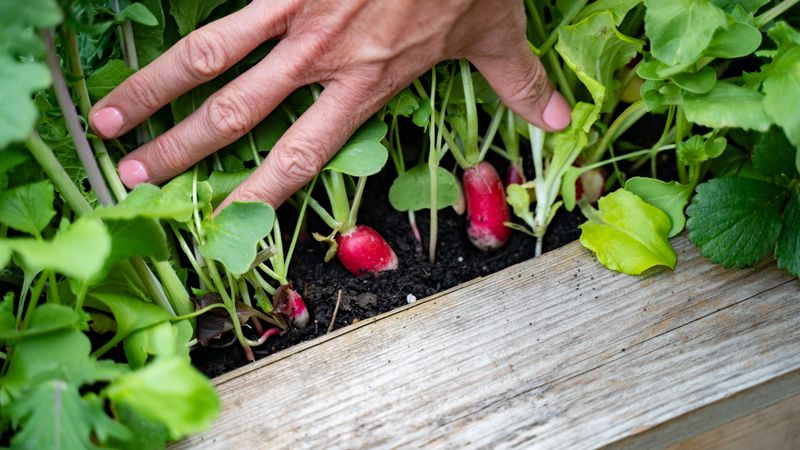
If you want instant gardening gratification, radishes are your answer. Cherry Belle radishes can go from seed to table in as little as 22 days, making them one of the fastest-maturing vegetables you can plant in an Oregon raised bed.
For new gardeners especially, that quick turnaround is incredibly satisfying and encouraging.
Cherry Belle and French Breakfast are two classic varieties that perform well across Oregon’s diverse growing regions. Cherry Belle produces round, bright red roots with a mild, crisp flavor.
French Breakfast is slightly longer and oval-shaped, with a slightly spicier bite. Both handle Oregon’s cool springs and mild falls without any trouble at all.
Radishes do best when planted in cool weather, so aim for early spring or late summer in Oregon. Sow seeds about half an inch deep and one inch apart in your raised bed.
Thin them to about two inches apart once they sprout. Raised beds warm up faster, which helps seeds germinate quickly.
Water consistently because uneven watering can make radishes crack or turn pithy. Radishes are also great companion plants, helping deter pests from nearby crops.
Plant a short row every two weeks for a steady, continuous supply throughout the growing season.
7. Beets
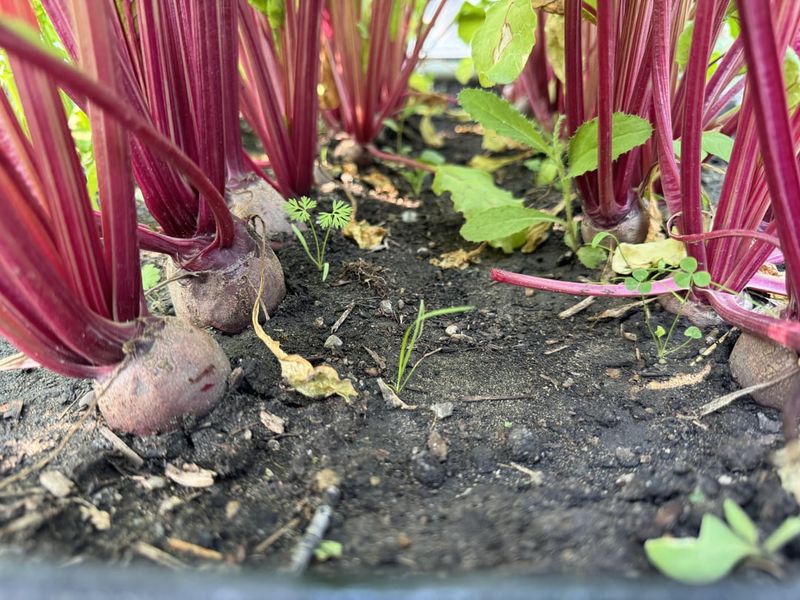
Beets are a two-for-one vegetable that Oregon gardeners absolutely love. You get the sweet, earthy root to roast or pickle, and you also get the tender greens, which taste a lot like Swiss chard.
Eating both parts of the plant means nothing goes to waste, and your raised bed gives you maximum value for every square foot.
Beets are cool-season crops that perform beautifully in Oregon’s spring and fall weather. Detroit Dark Red and Golden Beet are two popular varieties worth trying.
Detroit Dark Red is a classic with deep, rich flavor, while Golden Beet has a milder, slightly sweeter taste and will not stain your hands or cutting board like the red variety does.
Plant beet seeds about half an inch deep and three inches apart. Each beet seed is actually a cluster of seeds, so you will likely need to thin the seedlings once they sprout.
Thin them to about four to six inches apart so the roots have room to develop fully. Raised beds are ideal because beets need loose, well-drained soil free of rocks and hard clumps.
Keep the bed consistently watered throughout the season. Beets are ready to harvest when the roots are about two to three inches across, usually around 55 to 70 days after planting.
8. Turnips
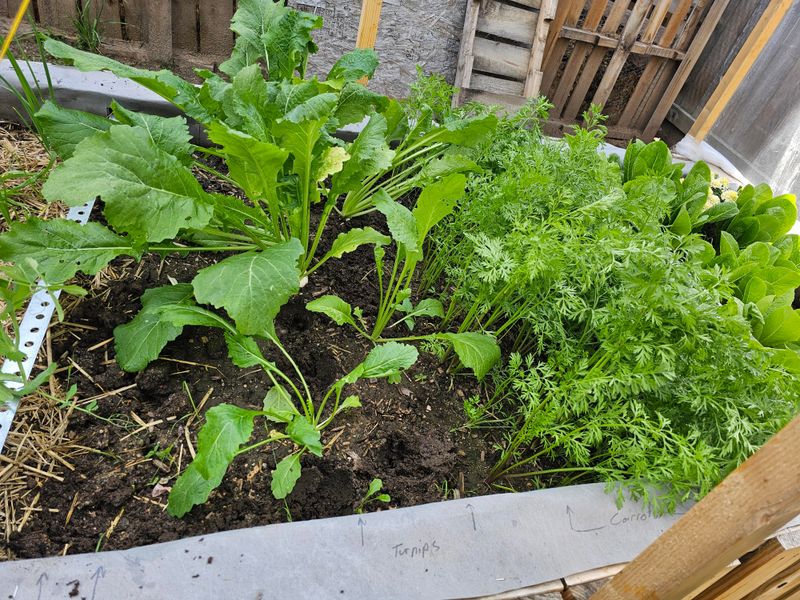
Turnips might not get the same attention as tomatoes or zucchini, but Oregon gardeners who grow them quickly become fans. They are fast-growing, cold-hardy, and incredibly versatile in the kitchen.
Like beets, you can eat both the roots and the greens, which means one plant gives you two different vegetables to enjoy.
Purple Top White Globe is one of the most popular turnip varieties for raised beds in Oregon. It matures in about 45 to 60 days and produces round roots with a purple top and creamy white bottom.
The flavor is mild and slightly sweet when harvested young. Older roots tend to get woodier and more pungent, so harvesting on time makes a big difference in taste.
Turnips are a cool-season crop, so plant them in early spring or late summer for a fall harvest in Oregon. Sow seeds about half an inch deep and two inches apart.
Thin seedlings to four to six inches once they emerge. Raised beds are great for turnips because the loose soil allows roots to expand evenly without resistance.
Keep the soil moist but not waterlogged. A light layer of mulch helps retain moisture and keeps the roots from getting too hot during unexpected warm spells in the Oregon growing season.
9. Green Onions
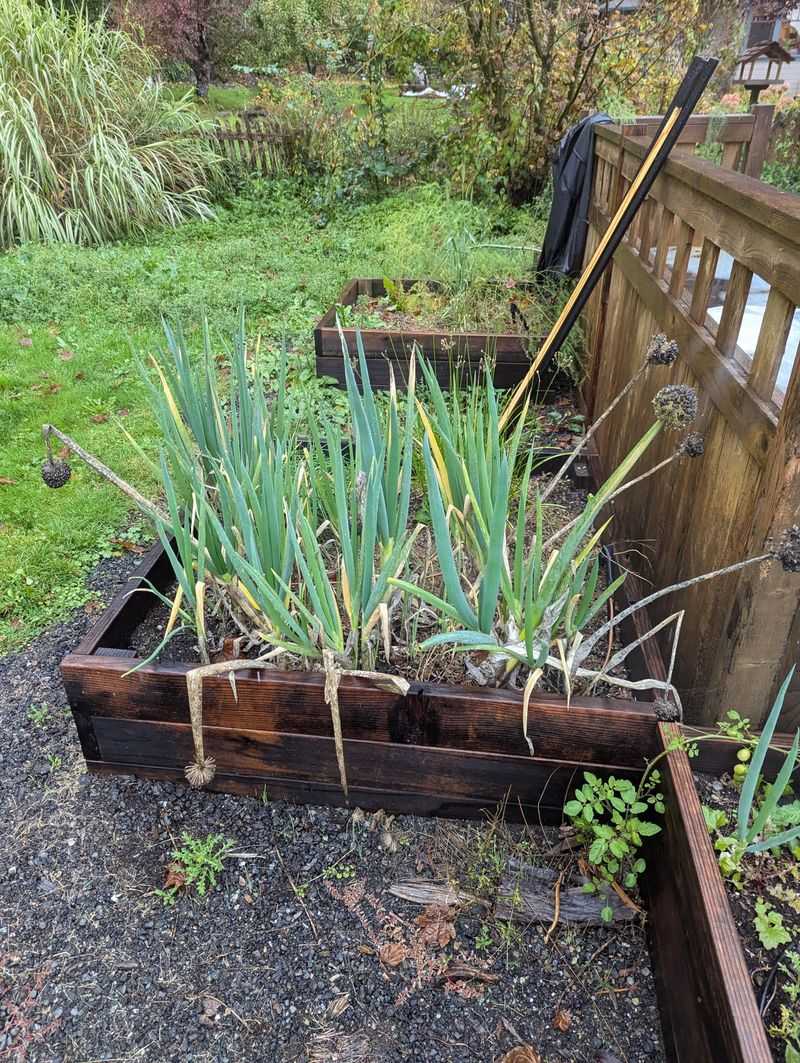
Green onions, also called scallions, are one of the most space-efficient vegetables you can grow in an Oregon raised bed. They grow upright and slim, so you can tuck them in along the edges of a bed or plant them in tight rows without wasting valuable growing space.
And since they mature quickly, usually in about 60 to 80 days, you can fit multiple rounds of planting into one season.
Green onions prefer light, fertile, well-drained soil, which is exactly what a well-prepared raised bed provides. In Oregon, you can start planting them as early as March in western regions.
They handle cool temperatures well and can even tolerate a light frost, making them a reliable early-season crop across most parts of the state.
You can grow green onions from seeds, sets, or transplants. Starting from seed gives you the widest variety selection, but sets and transplants get you to harvest faster.
Plant seeds about a quarter inch deep and one inch apart. As they grow, thin them to about two inches apart.
Water consistently and make sure the bed drains well. Harvest by pulling the whole plant or cutting the tops and letting the base regrow.
Either way, green onions add fresh, mild flavor to everything from salads to stir-fries.
10. Cucumbers
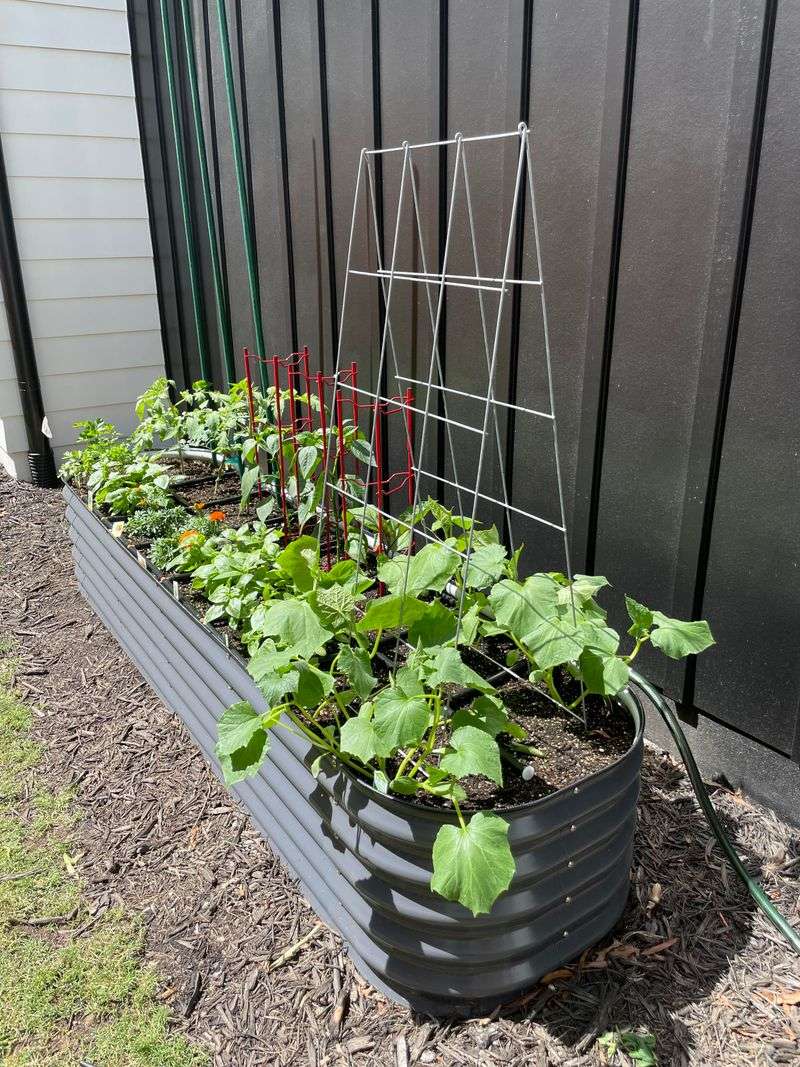
Cucumbers are sun-lovers, and in Oregon, they thrive when given a warm, sheltered spot with plenty of direct light. Raised beds are a perfect match because the soil warms up faster in spring, giving cucumber seeds and transplants the heat they need to get growing strong right from the start of the season.
Bush Pickle and Straight Eight are two reliable varieties for Oregon raised beds. Bush Pickle stays compact and is great for smaller beds, while Straight Eight produces long, smooth cucumbers that are perfect for fresh eating.
Both varieties do well in the Willamette Valley and other warmer parts of Oregon where summer temperatures climb enough to keep cucumbers happy.
Plant cucumbers after the last frost date, usually around mid-May in western Oregon. Sow seeds or set out transplants about 12 inches apart.
Adding a small trellis to your raised bed lets the vines grow vertically, saving space and keeping the fruit off the soil. Water deeply and consistently because cucumbers are mostly water and need steady moisture to develop properly.
Avoid watering the leaves to reduce the risk of mildew. Pick cucumbers when they are firm and fully sized, because leaving them too long on the vine can slow down new fruit production significantly.
11. Zucchini
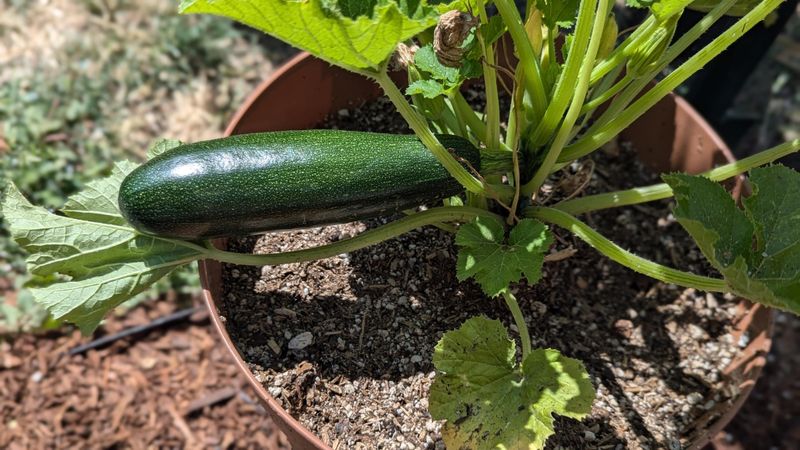
Zucchini is famous for being almost too productive. Oregon gardeners often joke that you can never grow just one zucchini because a single healthy plant will produce more than enough for the whole neighborhood.
In a raised bed, zucchini gets the warm, rich soil it craves, and the results are impressive from mid-summer all the way into fall.
Black Beauty and Patio Star are two varieties well-suited for raised beds in Oregon. Black Beauty is a classic with dark green skin and creamy white flesh, while Patio Star is a more compact bush variety that works well in smaller raised beds.
Both produce abundantly and handle Oregon’s summer weather without too much trouble.
Plant zucchini after the last frost, usually in late May in most parts of Oregon. Each plant needs a good amount of space, at least 24 to 36 inches, so plan accordingly.
Raised beds with deep, fertile soil help zucchini roots establish quickly and support the plant’s vigorous growth. Water at the base of the plant and keep the soil consistently moist.
Harvest zucchini when it reaches about six to eight inches long for the best flavor and texture. Leaving them to grow too large makes them less tender and can reduce how many new fruits the plant produces.
12. Tomatoes
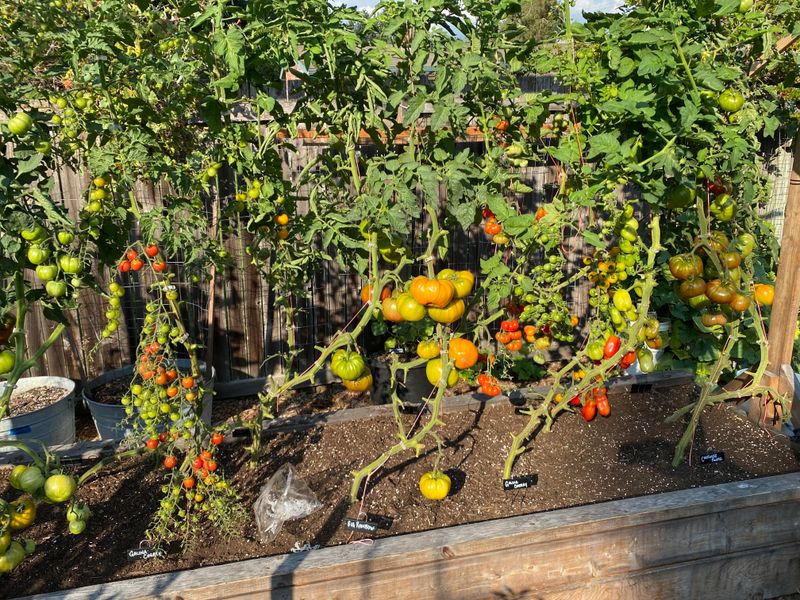
Nothing beats biting into a sun-warmed tomato you grew yourself, and Oregon raised beds make that experience possible even in a state not always known for blazing summer heat. The key is choosing the right varieties.
Willamette and Siletz were both developed with the Pacific Northwest climate in mind, and they perform exceptionally well in Oregon’s cooler summers.
Raised beds give tomatoes a serious advantage in Oregon because the soil warms up faster than in-ground beds. Tomatoes need warm roots to thrive, and that early warmth helps them establish quickly and start producing sooner.
Adding a black plastic mulch on top of the soil can boost warmth even further, which is a popular trick among experienced Oregon gardeners.
Start tomato seeds indoors six to eight weeks before the last frost date, then transplant seedlings outside after mid-May. Plant them deep, burying about two-thirds of the stem, because tomatoes can grow roots all along their buried stem.
Space plants about 24 to 36 inches apart in the raised bed. Use a sturdy cage or stake to support the plants as they grow.
Water deeply and evenly to prevent blossom end rot, a common problem caused by inconsistent moisture. With the right care, Oregon raised bed tomatoes can produce generously from late July through October.
13. Eggplant
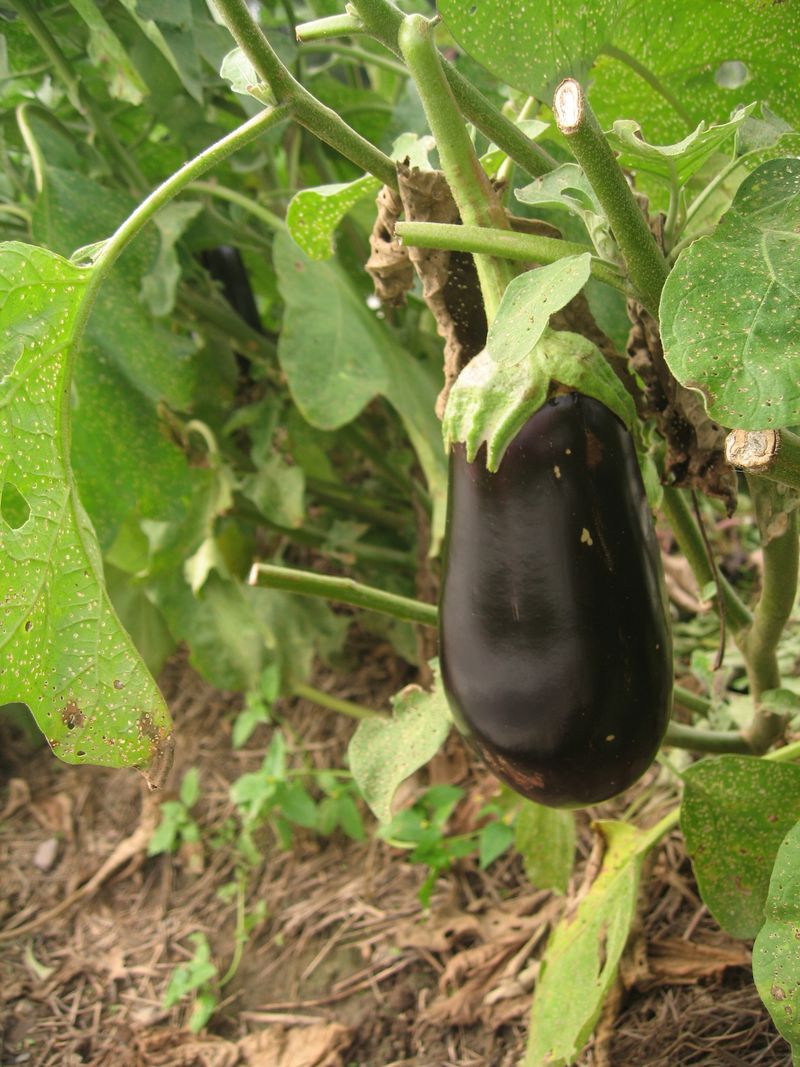
Eggplant is the most heat-loving vegetable on this list, which makes raised beds in Oregon especially important for growing it successfully. In-ground soil in Oregon can stay cool well into summer, but a raised bed absorbs and holds heat much more efficiently.
That warmth is exactly what eggplant needs to set fruit and grow well in the Pacific Northwest.
Ichiban, a long and slender Japanese variety, and Classic, a traditional large oval type, are both solid choices for Oregon raised beds. Ichiban tends to mature faster, which is an advantage in areas of Oregon where summers are shorter or cooler.
Both varieties have smooth, glossy skin and rich, creamy flesh that holds up well in roasting, grilling, and stir-frying.
Start eggplant seeds indoors eight to ten weeks before the last frost date. Transplant seedlings outside only after the soil and air have warmed up, usually late May or early June in western Oregon.
Space plants about 18 to 24 inches apart in the raised bed. Use dark mulch to hold heat in the soil and water consistently throughout the season.
Eggplant is a slow starter but rewards patient Oregon gardeners with a generous harvest from late summer through early fall. Adding a row cover early in the season can also help boost warmth and protect young plants.