Plant These Red Perennials In Arizona Once And Enjoy Them Forever
Finding plants that can handle Arizona’s blazing sun, dry air, and gritty soils can feel like a constant challenge. Many gardeners across Arizona want color that lasts without turning watering into a daily task.
That’s where well-adapted red perennials come in. Once established, many of these plants can return year after year, bringing bold color back to your landscape with less effort.
Their vibrant blooms can also draw in hummingbirds, butterflies, and native bees, adding life to your yard.
From the low desert heat of Phoenix to the cooler elevations around Flagstaff and Prescott, the right choices can help create a colorful, easygoing garden that fits Arizona conditions.
1. Red Yucca Adds Coral Flower Spikes And Desert Toughness
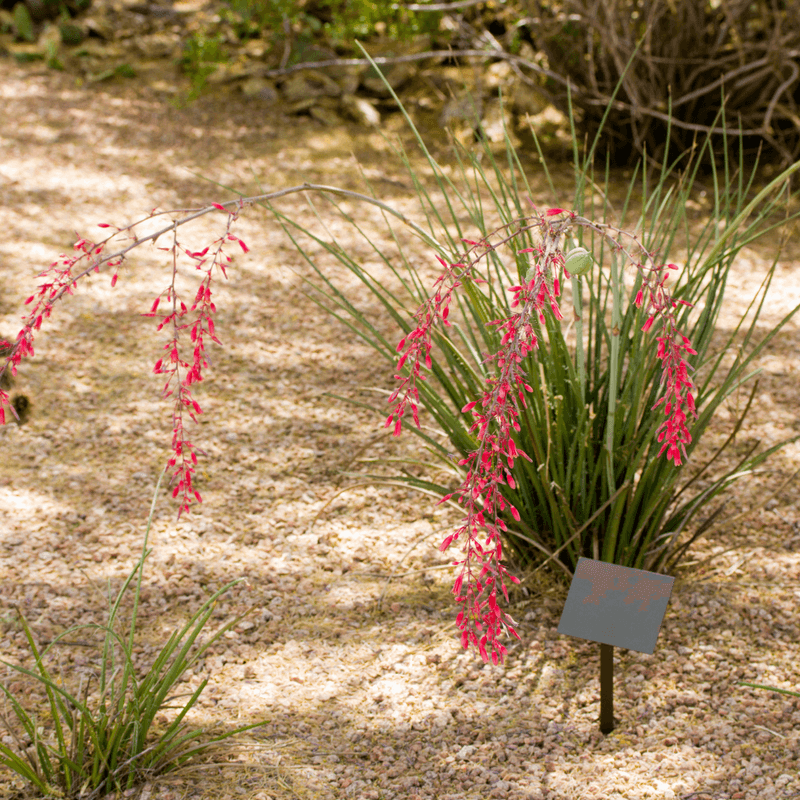
Few plants embody Arizona’s rugged desert character quite like Red Yucca, known botanically as Hesperaloe parviflora.
Despite its common name, Red Yucca is not a true yucca at all – it belongs to the agave family and produces graceful, arching grass-like leaves topped with tall flower spikes that range from coral-pink to deep red.
Those spikes can reach five to eight feet tall and attract hummingbirds in impressive numbers throughout spring and into early summer.
Red Yucca thrives in full sun and handles Arizona’s extreme heat with ease. It prefers well-drained soils, including the rocky, caliche-heavy ground common across the low desert.
Once established, it needs very little supplemental irrigation, making it a standout choice for xeriscaping projects in the Phoenix metro area and surrounding communities.
In higher elevation zones like Prescott, it still performs well but may need some protection during unusually harsh winters.
Gardeners often use Red Yucca as a focal point in rock gardens, along dry creek beds, or massed together for a dramatic landscape effect. Its evergreen foliage provides year-round structure even when it is not blooming.
Container planting is another option for smaller spaces.
Beyond its beauty, this plant genuinely rewards low-maintenance gardeners who want reliable color without heavy watering schedules or frequent replanting.
2. Firecracker Penstemon Brings Early Red Blooms And Native Charm
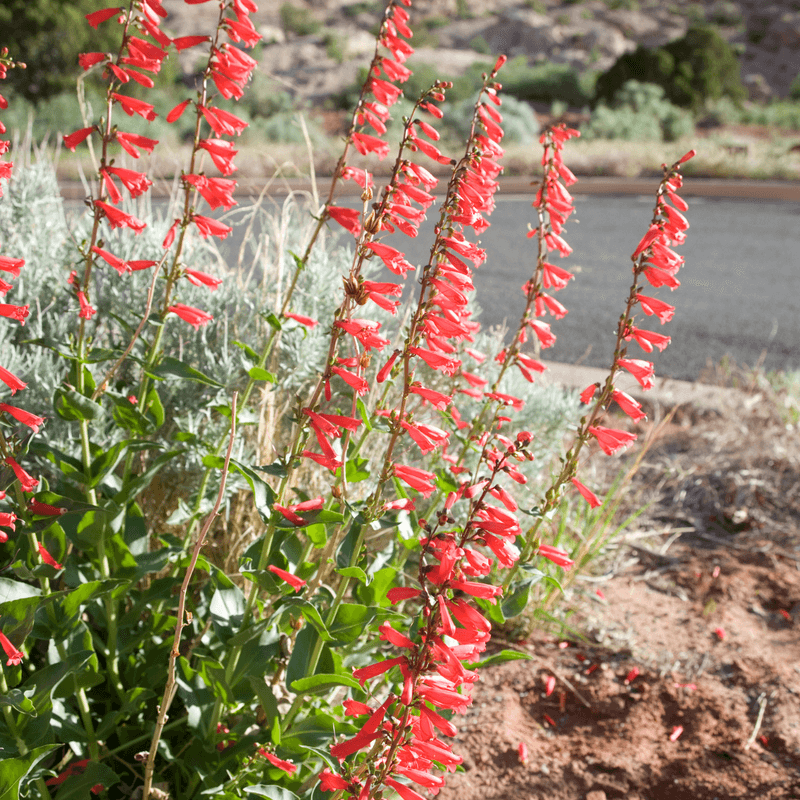
When most Arizona gardens are still waking up from winter, Firecracker Penstemon is already putting on a show.
Penstemon eatonii, commonly called Firecracker Penstemon, produces vivid scarlet-red tubular flowers on upright stems that can reach three feet or more, typically blooming from late winter through spring.
Hummingbirds discover these flowers quickly, making this plant a reliable early-season food source for migrating and resident birds alike.
Native to the American Southwest including parts of Arizona, this penstemon is well adapted to the state’s varied terrain.
It grows naturally in rocky, well-drained soils and handles full sun exposure without much complaint.
The University of Arizona Cooperative Extension recognizes native penstemons as strong choices for low-water landscapes, and Firecracker Penstemon fits that description well once it establishes its root system during the first season.
Gardeners in both the low desert and mid-elevation areas of Arizona report good results with this plant, though it tends to appreciate some afternoon shade during the most brutal summer months in Phoenix and Tucson.
Your Arizona Garden Changes Every Week. Your Plan Should Too.
Gardening in Arizona changes quickly throughout the season. Every Friday you’ll receive a simple weekly plan showing exactly what to plant, prune, fertilize, harvest, and protect so you never miss the right timing.
Planting in fall or early spring gives roots time to settle before heat peaks.
Firecracker Penstemon works beautifully in native plant borders, pollinator gardens, and informal desert landscapes.
Allowing seed heads to remain after blooming can encourage natural reseeding, helping the plant spread gradually over time.
3. Valentine Bush Offers Bright Red Winter Flowers In Full Sun
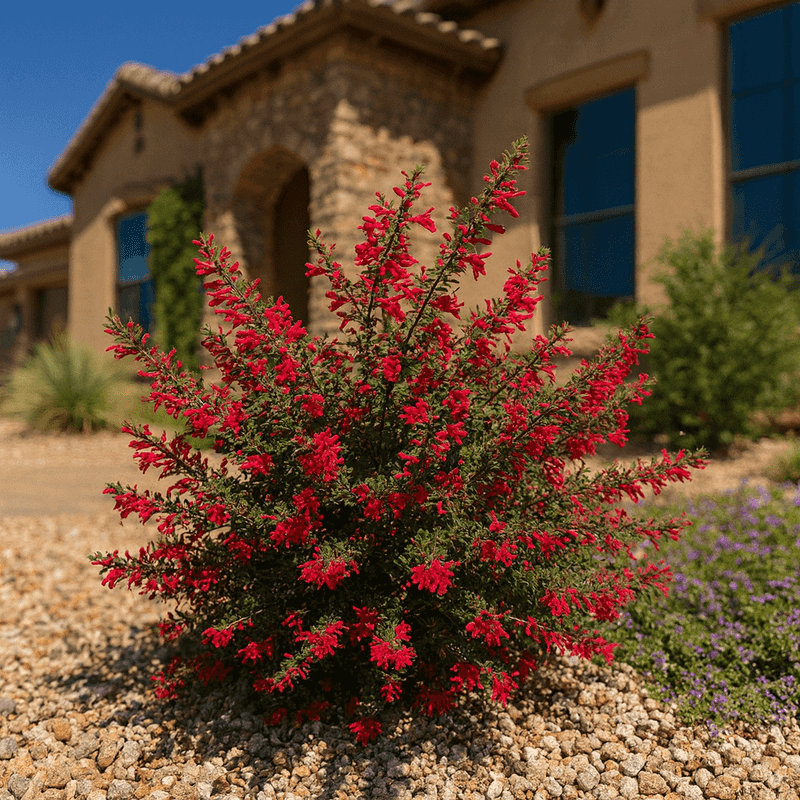
Blooming boldly through the cooler months when most perennials have gone quiet, Valentine Bush earns its romantic name by delivering vivid red flowers right around the time the rest of the garden looks bare.
Eremophila maculata, an Australian native that has found a devoted following among Arizona gardeners, produces tubular red blooms from late fall through early spring.
That winter bloom window makes it genuinely valuable in the low desert, where gardens can feel colorless during the cooler season.
Valentine Bush thrives in full sun and adapts well to Arizona’s alkaline, fast-draining soils. Once established, it is notably drought-tolerant and requires minimal irrigation during dry periods.
The plant typically reaches four to six feet in height and spread, making it useful as an informal hedge, a background shrub in mixed borders, or a standalone focal point in a xeriscape design.
Hummingbirds and native bees are drawn to the flowers consistently.
In the Phoenix and Tucson areas, Valentine Bush performs especially well in low desert conditions.
Gardeners in higher elevation zones should be aware that it has limited cold hardiness and may struggle with hard freezes above 4,000 feet.
Planting near a south-facing wall in cooler climates can provide helpful warmth. Pruning lightly after the main bloom cycle encourages tidy growth.
With minimal care requirements, Valentine Bush rewards Arizona gardeners with months of cheerful red color during the season when it matters most.
4. Autumn Sage Produces Red Blooms Through Warm Seasons
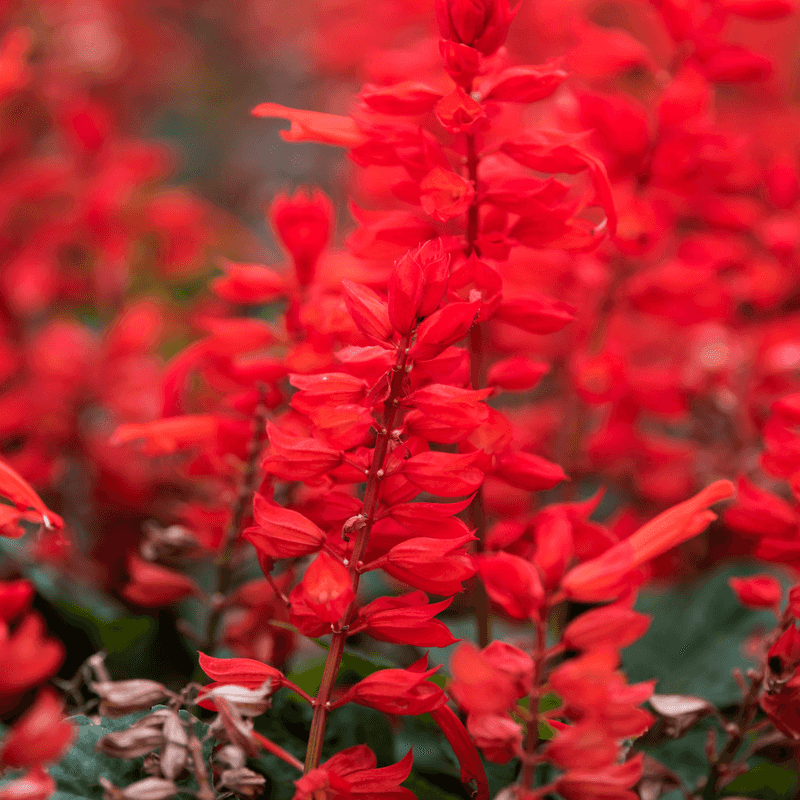
Walk through almost any well-designed Arizona garden and there is a solid chance you will spot Autumn Sage tucked into a sunny border or spilling over a rock wall.
Salvia greggii is a workhorse of the Southwest landscape world, producing clusters of small but vivid red flowers from spring through fall, often with only a brief pause during the most intense summer heat.
Its long bloom season makes it one of the most useful red perennials available to Arizona gardeners.
Autumn Sage is native to the Chihuahuan Desert region spanning parts of Texas, New Mexico, and northern Mexico, which means it naturally understands dry conditions and intense sun.
It grows well in full sun to light shade and performs best in well-drained soils.
Once established, it needs very little supplemental water, though light irrigation during prolonged dry spells can extend the bloom period.
The University of Arizona lists Salvia greggii among its recommended low-water plants for residential landscapes.
Hummingbirds and butterflies visit Autumn Sage blooms reliably throughout the season, making it a favorite for pollinator gardens.
The plant typically reaches two to three feet tall and wide, fitting neatly into borders, container arrangements, and informal hedges.
In higher elevation areas like Prescott and Flagstaff, Autumn Sage generally handles cooler temperatures well.
Cutting plants back by about one-third in late winter encourages fresh growth and more abundant flowering through the coming warm season.
5. Blanket Flower Adds Bright Red Color Through The Heat
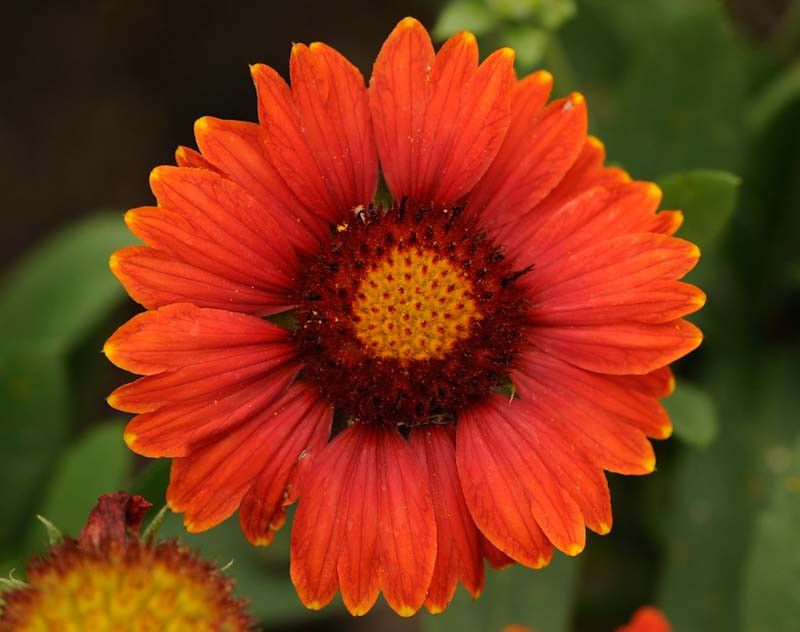
Summer heat that sends many flowering plants into retreat barely slows down Blanket Flower.
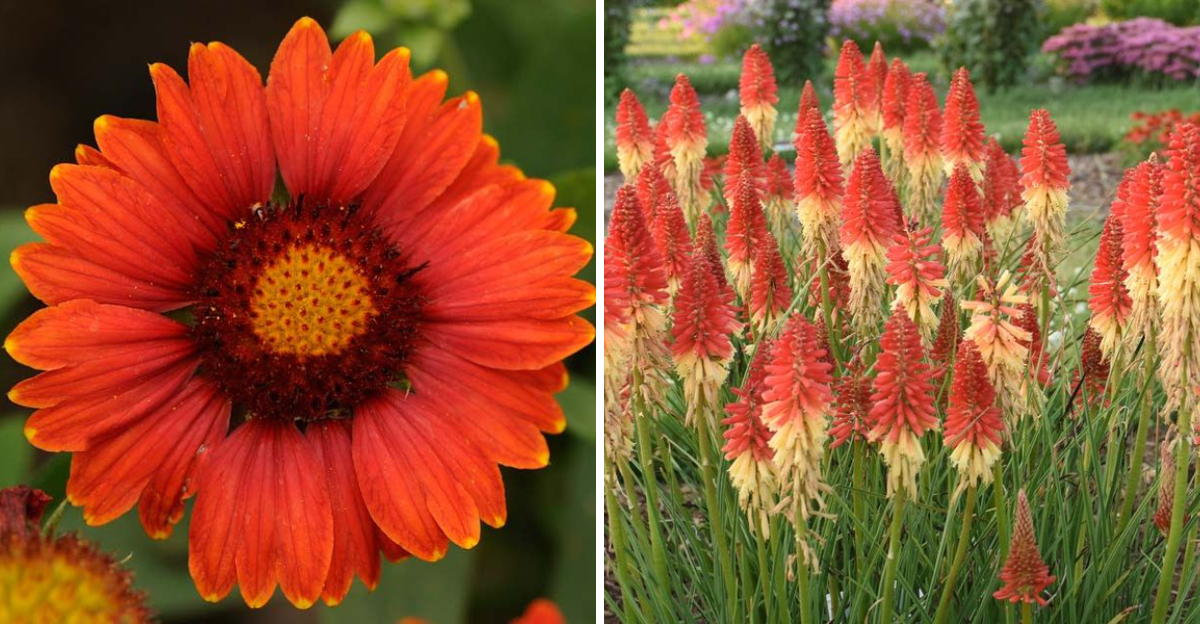
Gaillardia, particularly the Arizona Red Shades variety, produces bold crimson-red blooms with darker centers from early summer well into fall, thriving right through the scorching weeks that challenge so many other garden plants.
That ability to bloom reliably during Arizona’s hottest months sets Blanket Flower apart from a lot of the competition.
Gaillardia grows best in full sun and insists on well-drained soil – soggy roots are far more of a concern than dry conditions for this plant.
It handles Arizona’s alkaline soils reasonably well and, once established, tolerates extended dry periods without much fuss.
The compact growth habit of the Arizona Red Shades variety, typically reaching about one foot tall, makes it well suited for container gardening, front-of-border planting, and rock garden settings across the Phoenix, Tucson, and Scottsdale areas.
Butterflies and native bees are frequent visitors to Blanket Flower blooms, adding lively pollinator activity to any yard.
Removing spent flowers regularly encourages continuous blooming and keeps plants looking tidy.
Even without it, Gaillardia tends to rebloom reasonably well on its own. Gardeners in mid-elevation areas of Arizona should find Blanket Flower equally rewarding, as it handles both heat and moderate cold with flexibility.
For anyone wanting reliable red color through the harshest part of the Arizona summer, Gaillardia belongs near the top of the planting list.
6. Red Hot Poker Creates Bold Flower Spikes In Sunny Beds
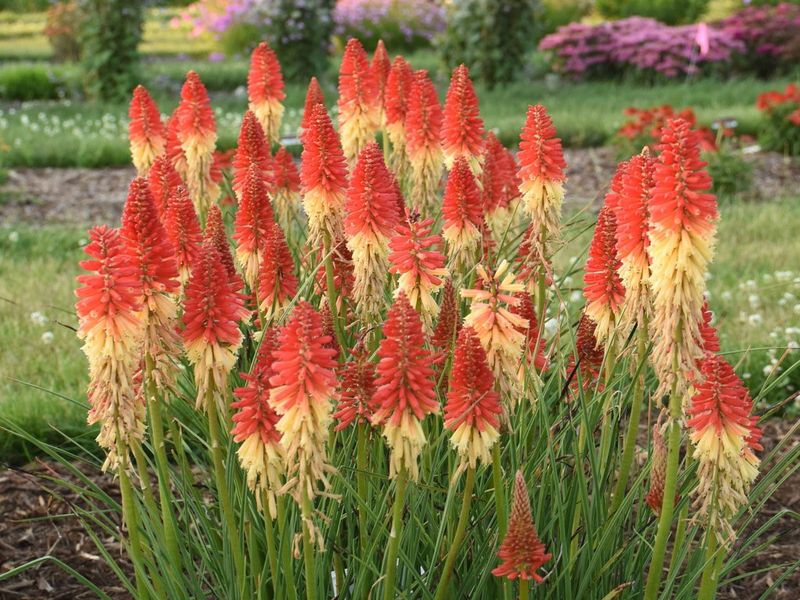
There is nothing subtle about Red Hot Poker, and that is exactly the point.
Kniphofia, commonly called Torch Lily or Red Hot Poker, sends up striking flower spikes that glow in shades of red, orange, and yellow, creating a dramatic vertical element that draws the eye immediately.
The flower spikes can reach two to four feet tall above a clump of grass-like foliage, making them one of the most visually striking perennials available for Arizona landscape beds.
Red Hot Poker grows well in full sun and prefers soil with good drainage, which suits Arizona’s naturally fast-draining desert soils nicely.
It handles heat reasonably well and, once established, requires only moderate supplemental watering.
In the low desert around Phoenix, some afternoon shade during peak summer can help maintain plant vigor through the most intense heat weeks.
In mid-elevation areas like Prescott, Red Hot Poker often thrives with less shade accommodation needed.
Hummingbirds are strongly attracted to the tubular flowers along each spike, making this plant a reliable traffic magnet in pollinator-friendly yards. Planting in groups of three or more creates a bold, cohesive display rather than a single isolated clump.
Red Hot Poker works well in mixed perennial borders, along fence lines, and in rock garden settings where its vertical form contrasts nicely with lower, mounding plants.
Removing spent spikes after blooming keeps the plant tidy and can encourage additional flowering cycles through the growing season.
7. Hardy Hibiscus Brings Large Red Blooms With A Tropical Feel
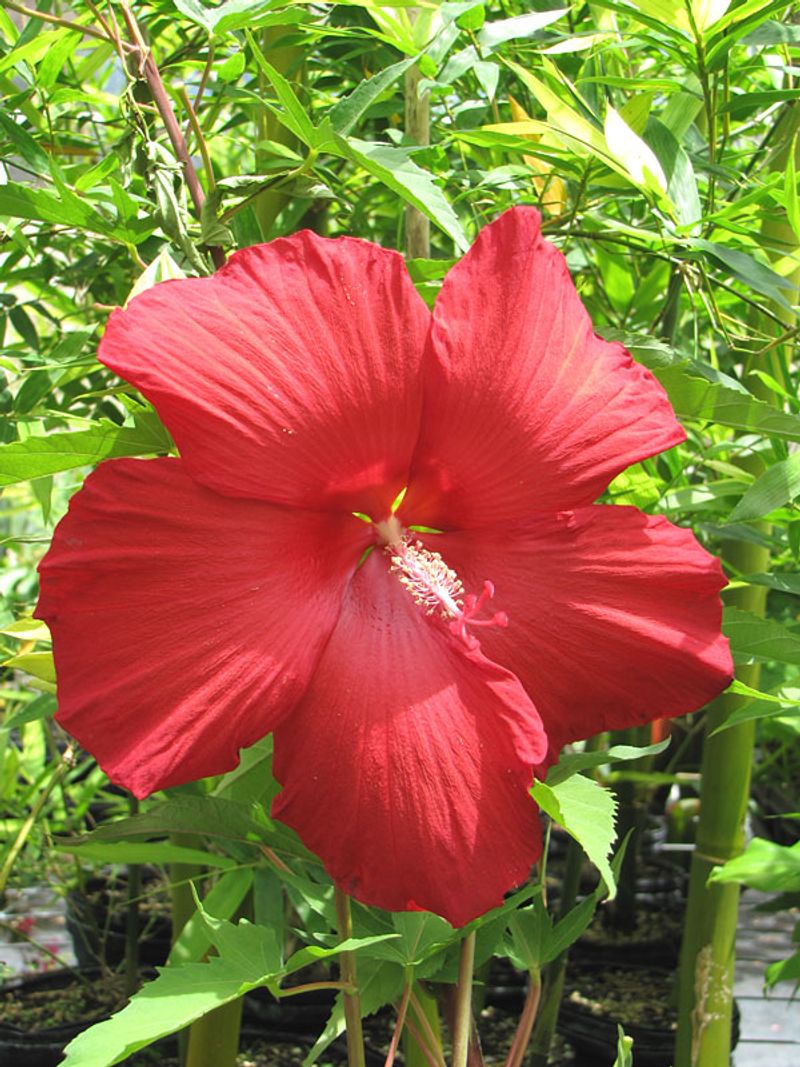
Gardeners who want a dramatic, tropical-looking focal point without constantly babying a tender plant often find their answer in Hardy Hibiscus.
Hibiscus moscheutos varieties produce enormous blooms – sometimes reaching ten to twelve inches across – in deep, saturated shades of red that look almost too vivid to be real.
The flowers are short-lived individually, lasting just a day or two, but plants produce them in continuous succession throughout summer and into fall, creating an ongoing display that commands attention.
Hardy Hibiscus grows best in full sun and appreciates consistently moist, well-amended soil, which means Arizona gardeners may need to water more regularly than with strictly desert-adapted plants.
Incorporating organic matter into planting beds helps retain some moisture in Arizona’s fast-draining soils.
Despite its need for more water than a cactus, Hardy Hibiscus is still a rewarding perennial that returns reliably each year from its root system, making the watering investment worthwhile over multiple seasons.
In the low desert areas of Arizona, planting Hardy Hibiscus in a spot with morning sun and light afternoon shade can reduce heat stress and extend the bloom season.
In higher elevation areas like Flagstaff or Prescott, full sun exposure is generally beneficial.
Cutting plants back in late winter to about six inches from the ground encourages vigorous new growth each spring.
Butterflies and hummingbirds visit the blooms regularly, adding extra life to the garden during peak summer months.
8. Red Gaura Adds Light Airy Flowers That Move In The Breeze
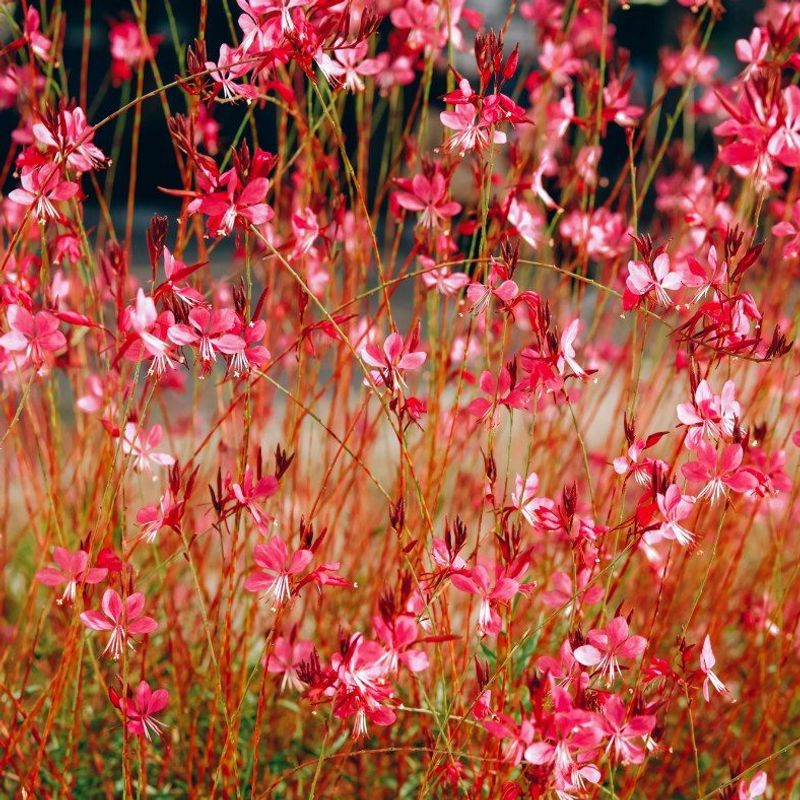
On a warm Arizona afternoon when the breeze picks up, Red Gaura becomes one of the most charming plants in the garden.
Oenothera lindheimeri, formerly classified as Gaura lindheimeri, produces slender wiry stems topped with small butterfly-shaped flowers that dance and sway with every movement of air.
The red and deep pink varieties bring a soft, romantic quality to the landscape that contrasts beautifully with the bold, solid forms of desert succulents and boulders.
Red Gaura thrives in full sun and well-drained soils, both of which Arizona provides in abundance. It handles heat well and, once its root system is established, manages on relatively modest irrigation.
Overwatering or poorly drained soil is a more common problem than drought for this plant, so Arizona’s naturally fast-draining terrain often suits it well.
Blooming typically runs from spring through fall with only brief pauses, giving gardeners an exceptionally long season of interest.
Gardeners across the low desert and mid-elevation areas of Arizona use Red Gaura in mixed borders, cottage-style plantings, and as a soft counterpoint to more structured xeriscape elements.
It pairs especially well with ornamental grasses, Autumn Sage, and desert marigold.
Cutting plants back by about half in midsummer can refresh growth and encourage another flush of blooms heading into fall.
Butterflies frequently visit the flowers, and the plant’s airy movement adds a dynamic, living quality to any garden space that static plants simply cannot replicate.